

In This Article
Somewhere around 2 a.m., every new parent has the same thought: is that little chest still rising and falling? A smart sleep sack newborn is a wearable sleep garment — a swaddle or sleeping bag — that pairs with a sensor, camera, or under-mattress pad to track breathing motion, movement, or vitals and send alerts to a phone. It’s the wearable-tech answer to a 3 a.m. crib check.
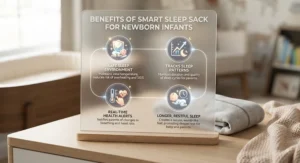
That anxiety is completely rational, by the way, not a personality flaw. It’s also exactly why an entire category of connected baby gear exploded almost overnight. A decade ago, “checking on the baby” meant tiptoeing down a dark hallway. Now it can mean glancing at a phone screen that shows breathing motion in real time, without waking anyone up.
But here’s the catch nobody puts in the marketing copy: not every “smart” sleep sack is actually smart, and not every sensor claim is backed by the kind of research that matters at 3 a.m. Some products track genuine vitals with FDA clearance. Others are a nicely printed cotton swaddle that only works because a $250 camera is pointed at it. Both can be excellent — but you should know which one you’re buying.
This guide breaks down seven real, currently available products across budget, mid-range, and premium tiers, based on published specifications and aggregated customer sentiment rather than marketing promises. We’ll also cover what pediatric safety groups actually say about wearable monitors, because that part matters more than any spec sheet.
Quick Comparison: Smart Sleep Sack Newborn Options at a Glance
Before diving into the deep-dive reviews, here’s a scannable snapshot of how these seven options stack up on price, technology, and best-fit buyer.
| Product | Monitoring Type | Price Range | Best For |
|---|---|---|---|
| SNOO Sleep Sack | Motion-responsive bassinet integration | $30–$40 (sack only) | Full-ecosystem responsive sleep |
| Owlet Dream Duo 2 | FDA-cleared pulse oximetry + video | $400–$450 | Real-time heart rate & oxygen tracking |
| Nanit Breathing Wear Swaddle | Sensor-free camera pattern tracking | $25–$35 | Newborns who are still swaddled |
| Nanit Breathing Wear Sleeping Bag | Sensor-free camera pattern tracking | $30–$40 | Post-swaddle, rolling babies |
| Babysense True Sleep Bundle | Under-mattress movement pads | $150–$200 | Parents who don’t want a wearable |
| Sense-U Pro Baby Monitor | Clip-on movement & rollover sensor | $60–$90 | Budget-friendly wearable tracking |
| Nanit Breathing Band | Sensor-free camera pattern tracking | $25–$35 | Layering over existing pajamas |
A few things jump out here. The price gap between the cheapest and most expensive option is roughly tenfold, but that gap doesn’t map cleanly onto “better” — it mostly maps onto what kind of data you’re getting, camera-based motion tracking versus clinical-grade vitals versus simple movement alerts. The Owlet Dream Duo 2 is the only option here with FDA clearance for measuring pulse rate and oxygen, which is a meaningfully different category of product than a breathing-motion swaddle. Meanwhile, budget shoppers should note that both Nanit garments require the separately sold Nanit Pro camera to function at all, so the sack price alone understates the real entry cost.
📌 Ready to compare features side by side? Scroll down to see exactly how each pick performs where it counts.
Top 7 Smart Sleep Sacks for Newborns: Expert Analysis
Here’s the full rundown of all seven, specs translated into what they actually mean for a sleep-deprived household, plus honest coverage of the trade-offs. Coverage spans budget clip-ons through premium ecosystem builds, so there’s a realistic option here whatever the newborn budget looks like.
| # | Product | Monitoring Tech | TOG / Material | Price Range | Rating Signal |
|---|---|---|---|---|---|
| 1 | SNOO Sleep Sack | Motion pickup for bassinet response | Cotton, multiple warmth options | $30–$40 | Widely praised parent-brand loyalty |
| 2 | Owlet Dream Duo 2 | FDA-cleared pulse oximetry, HD video | Compatible sleeper/swaddle, cotton | $400–$450 | High satisfaction, price is top complaint |
| 3 | Nanit Breathing Wear Swaddle | Sensor-free pattern tracking | 100% cotton | $25–$35 | Consistently positive on comfort |
| 4 | Nanit Breathing Wear Sleeping Bag | Sensor-free pattern tracking | Cotton, 2.5 TOG quilted option | $30–$40 | Praised for post-swaddle transition |
| 5 | Babysense True Sleep Bundle | Under-mattress dual sensor pads | N/A (non-wearable) | $150–$200 | Favored by non-wearable-averse parents |
| 6 | Sense-U Pro Baby Monitor | Clip-on rollover/temp/movement sensor | Attaches to any garment | $60–$90 | Mixed on fit-related false alerts |
| 7 | Nanit Breathing Band | Sensor-free pattern tracking | Cotton band, worn over pajamas | $25–$35 | Praised as a low-cost add-on |
Looking at the table, the split is really between three philosophies: wearable vitals (Owlet Dream Duo 2), sensor-free camera tracking (both Nanit products and the Nanit Breathing Band), and non-contact under-mattress detection (Babysense True Sleep Bundle). The SNOO Sleep Sack sits in its own category since its “smart” behavior lives mostly in the bassinet, not the fabric. Budget-conscious families should note that the Sense-U Pro Baby Monitor is the only true wearable clip sensor here under $100, which matters if a dedicated camera system isn’t in the cards.
1. SNOO Sleep Sack — best for full-ecosystem responsive sleep
The standout feature here isn’t the fabric — it’s what the fabric plugs into. The SNOO Sleep Sack is designed by Happiest Baby to clip directly into the SNOO Smart Sleeper bassinet, letting the bassinet detect fussing through motion and respond with rocking and white noise automatically.
On its own, the sack is a well-constructed, breathable cotton wearable blanket with wing-style attachment points and a range of TOG-equivalent thicknesses for different room temperatures. Worn without the bassinet, it functions like any quality zip-up sleep sack — safe, but not “smart” in any measurable sense. The intelligence only activates once it’s clipped into the SNOO hardware.
Based on the spec comparison, this is really a bassinet-ecosystem accessory rather than a standalone smart sleep sack newborn product, and that distinction should shape expectations before buying. Families who already own or are considering the SNOO bassinet get real functional value; families who don’t will be paying swaddle prices for a swaddle, nothing more.
Reviewers consistently report that the sack itself feels premium and holds up well to repeated washing, and aggregated feedback around the broader SNOO system frequently cites better stretches of uninterrupted sleep once the bassinet is dialed in to a baby’s fuss patterns.
Pros:
- ✅ Genuinely responsive when paired with the SNOO bassinet
- ✅ Soft, breathable cotton that survives frequent washing
- ✅ Multiple warmth tiers available for different seasons
Cons:
- ❌ Delivers zero smart functionality without the separate bassinet
- ❌ Full ecosystem cost is dramatically higher than the sack alone
At around $30–$40 for the sack, this is inexpensive in isolation — but the honest value verdict depends entirely on whether the $1,000-plus bassinet is already part of the household setup.
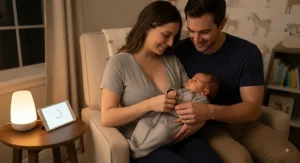
2. Owlet Dream Duo 2 — best for real-time vitals tracking
The standout feature is clinical-grade data: this is the only pick on this list where the “smart” claim is backed by FDA De Novo clearance for tracking actual pulse rate and blood oxygen, not just motion.
The bundle pairs the Dream Sock sensor — worn on the foot, compatible with a sized sleeper or swaddle — with an HD camera and a base station that glows a status color without requiring a phone check. What most buyers overlook about this model is that predictive sleep analytics are built from accumulated heart-rate data over time, not a single night’s reading, so the real value compounds the longer it’s used.
Based on the spec comparison, this is squarely aimed at families who want the deepest data layer available in a consumer device, particularly those with a health-anxious first-time-parent profile or a baby with a known medical watch-point. It is meaningfully more capable — and more expensive — than any camera-only or motion-only alternative on this list.
Reviewers consistently note two things: genuine peace-of-mind value for anxious parents, and occasional false alarms from sensor displacement during active sleep rather than real vital-sign changes, which independent testers have flagged as an adjustment-period quirk rather than a dealbreaker.
Pros:
- ✅ FDA-cleared pulse rate and oxygen tracking, not just motion
- ✅ Predictive sleep windows improve as data accumulates
- ✅ Base-station glow means no forced phone-checking at 3 a.m.
Cons:
- ❌ Highest total cost of ownership on this list by a wide margin
- ❌ Nightly sock charging adds a chore to an already tired routine
In the $400–$450 range for the bundle, this is a genuine investment rather than an impulse buy — but for families who specifically want vitals data, nothing else here matches the depth.
3. Nanit Breathing Wear Swaddle — best sensor-free newborn swaddle
The standout feature is what’s missing: no electronics touch the baby at all. The Nanit Breathing Wear Swaddle uses a custom-printed fabric pattern that the separately sold Nanit Pro camera reads to calculate breathing motion, translating tiny torso movements into a live breaths-per-minute number in the app.
Key specs worth unpacking: it’s 100% cotton, machine washable, and fits newborns still in the arms-in swaddle stage. The tracking accuracy depends entirely on camera angle and lighting, so this is a whole-system product, the swaddle by itself is inert fabric.
Here’s what the spec sheet won’t tell you, but reviewers note: comfort ratings for this swaddle consistently outperform its tech reputation, largely because it looks and feels like an ordinary high-quality swaddle rather than a piece of medical equipment strapped to a newborn. That’s a real advantage for parents wary of anything touching delicate skin.
Pros:
- ✅ Zero electronics or hardware touching the baby’s body
- ✅ Machine washable, ordinary 100% cotton construction
- ✅ Comfortable, low-bulk fit for the newborn swaddle stage
Cons:
- ❌ Requires the separately purchased Nanit Pro camera to function
- ❌ Tracking accuracy is sensitive to camera angle and room lighting
At $25–$35, the swaddle itself is one of the cheapest items here, but the honest total cost only makes sense once the camera — sold separately in the $200–$280 range — is factored into the decision.
4. Nanit Breathing Wear Sleeping Bag — best for post-swaddle transition
The standout feature is continuity: this sleeping bag uses the identical sensor-free pattern-tracking approach as the swaddle above, but it’s cut for babies who’ve outgrown arms-in swaddling and started rolling.
The quilted 2.5 TOG version is built for cooler rooms, while lighter versions suit warmer climates, and the two-way zipper handles diaper changes without fully undressing a squirming toddler-in-training. Based on the spec comparison, the real advantage here is continuity of data: a family already using the Nanit swaddle can transition to this bag without losing their sleep-tracking history or learning a new system.
A common theme in aggregated review sentiment is that parents appreciate not needing to “graduate” to an entirely different monitor brand once rolling starts, since so many competing products are swaddle-only and leave a monitoring gap right when movement — and parental anxiety — increases.
Pros:
- ✅ Purpose-built for active, rolling post-swaddle babies
- ✅ Two-way zipper simplifies nighttime diaper changes
- ✅ Keeps sleep-tracking data continuous within the Nanit app
Cons:
- ❌ Still fully dependent on the separately sold Nanit Pro camera
- ❌ Warmer quilted version isn’t ideal for hot summer nurseries
Priced around $30–$40, it’s an easy add-on for existing Nanit households, though new-to-the-brand buyers should price in the camera before committing.
5. Babysense True Sleep Bundle — best non-wearable option
The standout feature is what never touches the baby at all: two sensor pads slide under the crib mattress and detect micro-movements associated with breathing, no clip, sock, or fabric pattern required.
Key specs with real-world meaning: the system triggers an alarm if no movement is detected for about 20 seconds, runs on batteries rather than Wi-Fi, and pairs with an included HD video display so parents get both a visual and a movement-based safety net. Based on the spec comparison, this is the strongest option for parents who specifically don’t want anything wearable, clipped, or camera-dependent, and it also sidesteps hacking concerns since there’s no internet connection required.
Reviewers consistently mention needing a firm mattress surface for the pads to work correctly, occasionally adding a thin rigid board under a springy crib base, which is a real setup step worth planning for rather than a flaw discovered at 2 a.m.
Pros:
- ✅ No wearable device or camera pattern needed at all
- ✅ No Wi-Fi dependency, reducing hacking and outage risk
- ✅ HSA/FSA eligible, which softens the effective price
Cons:
- ❌ Requires a firm, rigid mattress surface to read accurately
- ❌ Bulkier setup than a simple wearable clip or swaddle
In the $150–$200 range for the bundle, this lands mid-pack — pricier than a simple clip sensor, but noticeably cheaper than the vitals-tracking premium tier.

6. Sense-U Pro Baby Monitor — best budget clip-on tracker
The standout feature is flexibility: this small clip-on sensor attaches to the front of any onesie or sleep sack, tracking rollover position, breathing movement, and room temperature without requiring a dedicated smart garment at all.
It runs on a rechargeable battery rated for extended overnight use, sends gentle vibration alerts alongside app and audible notifications, and — unlike the camera-dependent Nanit products — needs no separate hardware purchase beyond the clip itself. Based on the spec comparison, this is arguably the most budget-efficient path to wearable-style tracking on this entire list, since it converts literally any existing sleep sack into a monitored one.
A recurring theme in aggregated customer sentiment is that fit matters enormously here: loose or incorrect clip placement is the leading cause of false alerts, a pattern echoed across multiple retailer review sections rather than an isolated complaint.
Pros:
- ✅ Works with any existing sleep sack, no proprietary garment needed
- ✅ Meaningfully cheaper entry point than full monitor ecosystems
- ✅ No monthly subscription required for core alert features
Cons:
- ❌ False alerts are common when the clip isn’t seated correctly
- ❌ Lacks the FDA clearance behind Owlet’s pulse oximetry claims
At roughly $60–$90, this is the most accessible true wearable-sensor option here, particularly for budget-focused households who already own a sleep sack they like.
7. Nanit Breathing Band — best low-cost add-on accessory
The standout feature is versatility: rather than replacing a sleep sack entirely, this band straps over whatever pajamas or sleeping bag a baby is already wearing, extending sensor-free breathing tracking to garments that weren’t designed for it.
It uses the same printed-pattern approach as the rest of the Nanit Breathing Wear line, meaning it inherits both the strengths (no electronics on the baby) and the dependency (still needs the Nanit Pro camera) of its siblings on this list. What most buyers overlook about this option is that it’s genuinely the cheapest way into the Nanit ecosystem for a family that already owns non-Nanit sleepwear they don’t want to replace.
Reviewers consistently note that the band is easy to add to an established bedtime routine without disrupting whatever sleep sack a baby has already bonded with, which matters more than it sounds for babies with strong sleep-association preferences.
Pros:
- ✅ Layers over any existing pajamas or sleep sack
- ✅ Cheapest single item in the entire Nanit lineup
- ✅ Preserves an established sleep-sack routine and association
Cons:
- ❌ Adds a strap layer some babies resist at first
- ❌ Still fully reliant on the separately sold Nanit Pro camera
At $25–$35, it’s the lowest floor-price entry point into camera-based breathing tracking, provided the camera itself is already owned or budgeted separately.
How to Choose a Smart Sleep Sack for Newborns
What’s the fastest way to pick the right smart sleep sack newborn option? Match the monitoring type to what actually reduces anxiety for your household, then confirm size, TOG rating, and total ecosystem cost before checking out. Here’s the step-by-step reasoning:
- Decide what “smart” needs to mean to you. Vitals tracking (Owlet), motion-only tracking (Nanit, Babysense), or purely mechanical response (SNOO) solve different worries — pick the anxiety you’re actually trying to address.
- Price the whole ecosystem, not just the sack. Both Nanit Breathing Wear Swaddle and Nanit Breathing Wear Sleeping Bag require a camera sold separately; factor that in before comparing sticker prices.
- Match TOG rating to your nursery’s real temperature. A 1.0 TOG works for a room around 68–72°F; go lighter for warmer climates and heavier only in a consistently cool room.
- Check the size range against your baby’s growth curve. Some monitors, like the Owlet Dream Duo 2, include multiple sock sizes; others require separate purchases as baby grows.
- Consider whether a wearable is actually the right fit. If clip-on sensors or fabric contact make you nervous, the non-wearable Babysense True Sleep Bundle sidesteps that entirely.
- Read the fine print on subscriptions. Several of these systems offer optional paid tiers for deeper analytics; core safety alerts generally don’t require one, but confirm before assuming.
- Never treat any of these as a medical necessity. Pediatric guidance is explicit that consumer monitors are not a substitute for safe sleep practices — more on that below.
Tech-Enabled Swaddle Sack vs Traditional Swaddle: What’s Actually Different
A tech enabled swaddle sack and a plain cotton swaddle look nearly identical folded on a shelf. The difference only shows up once a camera, sensor, or under-mattress pad is added to the equation.
A traditional swaddle does exactly one job: it contains the startle reflex and mimics womb-like snugness so a newborn sleeps more soundly. It has no data layer, no app, and no alert system — if breathing changes, a caregiver in the room is the only detection method available. A tech-enabled version keeps that same containment job but adds a passive information layer on top, whether that’s a printed pattern for camera tracking or an embedded-friendly cut designed to pair with a clip sensor.
Here’s what most comparisons miss: the swaddle fabric itself is rarely the meaningful upgrade. The Nanit Breathing Wear Swaddle is, materially, a well-made cotton swaddle — its intelligence lives entirely in the camera reading it. Traditional swaddles from brands like HALO or SwaddleMe are often just as well constructed, sometimes at a fraction of the price, if the buyer has no interest in the monitoring layer at all. The real decision point isn’t fabric quality; it’s whether the household wants a data feed alongside the sleep garment, and whether that data feed will reduce anxiety or, for some parents, quietly increase it.
Monitoring Sleep Sack Newborn Data: What the Numbers Really Mean
Once a monitoring sleep sack newborn system is running, it starts generating numbers — breaths per minute, sleep-state transitions, wake windows, movement counts. What do those numbers actually translate to in a real nursery at 3 a.m.?
Breathing-motion counts, the kind produced by Nanit’s camera system or Babysense’s under-mattress pads, are best read as a trend indicator rather than a moment-to-moment diagnostic. A single dip doesn’t mean crisis; a sustained flatline for the alert threshold (typically around 20 seconds for non-contact systems) is what actually triggers a notification. Pulse-oximetry data, the kind the FDA-cleared Owlet Dream Duo 2 produces, is a different animal entirely — it’s tracking an actual physiological vital sign, which is why it required clinical clearance in the first place rather than a general wellness-device label.
On paper, this means two households running two different “smart sleep sacks” are getting fundamentally different information, even if both apps show a green checkmark. A common complaint in user reviews across this category is alert fatigue: sensitive systems occasionally flag normal newborn breathing irregularity — genuinely common and typically benign in healthy infants — as an event worth a notification. Reviewers consistently suggest a short adjustment period of a week or two before fully trusting a new system’s baseline.
Sensor Sleep Sack Baby: How the Technology Actually Works
Peeling back the marketing layer, a sensor sleep sack baby product generally relies on one of three underlying technologies, and understanding which one is doing the work changes how much confidence to place in the alerts.
Camera-based pattern tracking, used by all three Nanit products on this list, analyzes subtle pixel-level movement of a printed fabric pattern rather than anything embedded in the garment. It’s genuinely sensor-free on the baby’s body, but accuracy depends on unobstructed camera line-of-sight, meaning a blanket draped over the crib rail or an oddly angled bassinet can degrade readings without any hardware failure occurring.
Contact-based physiological sensing, used by the Owlet Dream Duo 2‘s foot sock, measures actual pulse rate and blood oxygen through direct skin contact using pulse oximetry — the same underlying principle hospitals use, adapted into a consumer wearable and FDA-cleared for that specific claim.
Non-contact pressure/motion sensing, used by the Babysense True Sleep Bundle, sits beneath the mattress and detects the mechanical vibration of chest movement transmitted through the mattress surface. It never touches the baby at all, trading a slightly less direct signal for zero-contact peace of mind.
Reviewers consistently note that no single approach is universally “most accurate” — each has known failure modes, whether that’s camera obstruction, sock displacement during active sleep, or the need for a rigid mattress surface underneath a pressure pad.
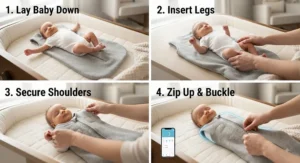
Setting Up Your Connected Wearable Baby Monitor: First 30 Days
A connected wearable baby monitor is only as good as its setup, and the first month is where most of the friction — and most of the false alarms — tends to happen. Here’s a realistic first-30-days playbook.
Week one is entirely about baseline-building. Run the system every night even if it feels unnecessary while a newborn is still being watched closely anyway; most apps need several nights of data before predictive features like Owlet’s sleep-window suggestions become meaningfully accurate. Expect a handful of false alerts as the algorithm learns typical movement patterns — this is normal, not a defect.
Week two is fit-and-placement week. If using a clip-on sensor like the Sense-U Pro Baby Monitor, double-check clip tightness nightly, since loose placement is the single most common cause of nuisance alerts according to aggregated review feedback. Camera-based systems need a lighting and angle check as daylight patterns shift.
Weeks three and four are when most families settle into a rhythm, charging routines become automatic, and the alert threshold starts to feel calibrated rather than alarming. This is also the point to test what happens during travel or a grandparent’s house visit, since Wi-Fi-dependent systems in particular can behave differently on unfamiliar networks.
A common first-month mistake worth flagging explicitly: swapping monitoring systems mid-adjustment because week-one false alerts feel discouraging. Reviewers who stuck with a single system past the two-week mark consistently reported far fewer nuisance notifications than those who judged a product on its opening nights alone.
✨ Ready to Build Your Nursery Monitoring Setup?
🔍 Compare the seven options above side by side, check current pricing and availability on any highlighted pick, and build a setup that actually reduces 3 a.m. anxiety instead of adding to it.
Intelligent Swaddle Technology for Every Family: Real-World Scenarios
Intelligent swaddle technology isn’t one-size-fits-all, and the “right” pick genuinely depends on who’s using it and why. Three quick scenarios illustrate how the same seven products serve very different households.
The health-anxious first-time parent, urban apartment, moderate budget. This household is losing sleep to worry more than to actual newborn wakefulness. The Owlet Dream Duo 2‘s FDA-cleared vitals and glowing base station are built exactly for this profile — real physiological data replaces guesswork, even at a premium price point, because the anxiety reduction is the actual product being purchased.
The budget-conscious family with an existing sleep sack they love. Replacing a beloved, already-broken-in sleep sack isn’t appealing, and it doesn’t need to happen. The Sense-U Pro Baby Monitor clips onto whatever’s already working, delivering wearable-style tracking without a wardrobe overhaul, for a fraction of the premium-tier price.
The family with a rolling, older infant transitioning out of swaddling. Once a baby starts rolling, arms-in swaddles become unsafe regardless of brand, and a monitoring gap often opens right as movement — and parental worry — increases. The Nanit Breathing Wear Sleeping Bag exists precisely for this transition, preserving continuous tracking history from the swaddle stage into active, rolling sleep.
Monitored Safe Sleep: Solving Common Newborn Sleep Problems
Monitored safe sleep systems solve real problems, but only when matched correctly to the actual issue. Here are five common pain points and the specific fix for each.
Problem: constant anxious crib-checking is destroying parental sleep. Solution: a camera-based system like the Nanit Breathing Wear Swaddle, checked via phone rather than a hallway walk, at least removes the physical disruption from the checking ritual, even if the underlying anxiety needs its own attention too.
Problem: baby has a known health watch-point flagged by a pediatrician. Solution: this is the specific use case the FDA-cleared Owlet Dream Duo 2 was built and clinically tested for — genuine vitals data belongs here more than any camera-only alternative.
Problem: newborn frequently wiggles out of a standard swaddle. Solution: look at fit and technique before blaming the product; a properly sized swaddle from any of the tested brands, snug around the chest with room at the hips, solves most escape issues without upgrading anything.
Problem: false alerts are causing alert fatigue and disrupted sleep for parents. Solution: for clip-on systems like the Sense-U Pro Baby Monitor, recheck placement nightly; for camera systems, recheck lighting and angle; both are the leading fixable causes identified in aggregated review feedback.
Problem: wanting monitoring without anything touching the baby’s body. Solution: the Babysense True Sleep Bundle‘s under-mattress pads solve this directly, provided the crib has a sufficiently firm, rigid base for accurate readings.
Common Mistakes When Buying a Smart Sleep Sack for Newborns
The most expensive mistake in this category is buying the camera-dependent swaddle without pricing the camera. Both Nanit Breathing Wear products look inexpensive in isolation, but the Nanit Pro camera required to activate their tracking runs well beyond the swaddle’s own price tag — a detail easy to miss while comparison-shopping on sack price alone.
A second common misstep is buying for the current age instead of the next one. A newborn-sized swaddle purchased in month one is frequently outgrown within six to eight weeks, and rolling typically begins somewhere in the three-to-five-month window — right when arms-in swaddles must be retired entirely regardless of brand. Buying with the next size or the post-swaddle transition already in mind avoids a second unplanned purchase.
A third mistake is treating any monitor’s “medical-grade” language as interchangeable. Only the Owlet Dream Duo 2 on this list carries FDA clearance for the specific vitals it measures; the rest are marketed and regulated as wellness or consumer devices, a distinction with real regulatory weight that’s easy to gloss over in marketing copy.
Long-Term Cost & Maintenance
The sticker price on any of these products is rarely the full financial picture. Camera-dependent systems like the Nanit Breathing Wear Swaddle carry a hidden upfront cost in the required Nanit Pro camera, plus an optional ongoing subscription for deeper analytics beyond core alerts. The Owlet Dream Duo 2 has the highest total cost of ownership here between hardware and its optional Owlet360 subscription tier, though core health alerts function without any subscription at all.
Non-wearable and clip-on systems tend to age more gracefully from a cost standpoint. The Babysense True Sleep Bundle runs on replaceable batteries rather than requiring proprietary charging hardware, and the Sense-U Pro Baby Monitor has no subscription layer whatsoever, which meaningfully lowers its multi-year cost compared to the vitals-tracking premium tier.
Maintenance-wise, wearables need the most day-to-day attention: nightly charging for the Owlet sock, correct clip placement for Sense-U, and periodic firmware updates across every connected system. Camera and under-mattress systems trade that daily fuss for an occasional lighting or mattress-firmness check instead — less frequent, but easy to forget between checks.
Features That Actually Matter (And Those That Don’t)
Cutting through the spec-sheet noise, a few features genuinely move the needle. FDA clearance for a specific physiological claim (heart rate, oxygen) matters enormously if that’s the data being trusted; a vague “clinical-grade” label on a wellness device does not carry the same weight, and the difference is worth confirming before paying a premium for it. Battery life matters in daily practice — a system requiring nightly charging adds a real chore, while one with multi-night endurance quietly reduces friction.
Features that generate excitement but rarely change outcomes: elaborate app dashboards with dozens of charts, for instance, look impressive but rarely change what a tired parent does differently at 3 a.m. compared to a simple red/green alert. Similarly, marketing language like “AI-powered” doesn’t automatically mean better accuracy than a well-tuned motion threshold; the underlying sensor technology and its known failure modes matter far more than the buzzword attached to it.
Safety, Regulations & Compliance Guide
This is the section worth reading most carefully, because pediatric guidance on this exact category is more nuanced than most product pages suggest. The American Academy of Pediatrics’ 2022 safe sleep policy explicitly states that home cardiorespiratory monitors should not be used specifically to reduce SIDS risk, and separately notes that many wearable heart-rate and pulse-oximetry devices sold to consumers are FDA-certified as wellness devices rather than medical devices — a distinction that matters because wellness-device certification carries a different evidentiary bar than a medical clearance. The Owlet Dream Duo 2 stands apart here specifically because its Dream Sock earned FDA De Novo clearance as an actual medical claim, not just a wellness label.
None of this means these products are unsafe or not worth buying — it means they should be understood as peace-of-mind and information tools, not substitutes for established safe sleep fundamentals: back-sleeping for every nap and night, a firm flat surface, and a bare crib free of loose blankets, pillows, and bumpers. Wearable blankets, including every smart sleep sack on this list, are explicitly considered a safer alternative to loose blankets under current pediatric guidance, which is genuinely good news for the category as a whole.
Mattress firmness deserves a specific mention for anyone considering the Babysense True Sleep Bundle, since its under-mattress pads require a rigid surface to function correctly, which happens to align with the federal firmness standard crib mattresses are already required to meet. In practice, a compliant crib mattress and a Babysense pad are a natural pairing rather than a workaround.
Benefits vs Traditional Sleep Sacks
| Feature | Traditional Sleep Sack | Smart Sleep Sack | Best For |
|---|---|---|---|
| Breathing/motion data | None | Camera, sensor, or under-mattress tracking | Anxious first-time parents |
| Real-time phone alerts | No | Yes, across all seven picks | Households wanting remote checks |
| Upfront cost | $20–$40 typically | $25–$450 depending on system | Budget-first buyers → traditional |
| Ongoing cost | None | Varies; some optional subscriptions | Cost-conscious → non-subscription picks |
| FDA-cleared vitals option | Not applicable | Only Owlet Dream Duo 2 | Health-watch-point situations |
The honest takeaway from this table is that a traditional sleep sack is not an inferior safety product — it simply carries no data layer. For a well-rested, low-anxiety household with no specific health concern, a plain wearable blanket meets every current pediatric safe-sleep standard on its own. The upgrade to a smart sleep sack newborn system is best understood as an anxiety-management and information tool layered on top of, not a replacement for, the sleep fundamentals that actually drive safety outcomes.
Frequently Asked Questions
❓ Is a smart sleep sack newborn worth the extra cost over a regular one?
❓ Do smart sleep sacks actually prevent SIDS?
❓ What TOG rating should a newborn smart sleep sack be?
❓ Can a smart sleep sack be used without Wi-Fi?
❓ How long can a baby safely use a swaddle-style smart sleep sack?
Conclusion: Choosing the Right Smart Sleep Sack Newborn Setup
There’s no single “best” answer in this category, and honestly, that’s the right outcome. A health-anxious family with a pediatrician’s watch-point genuinely benefits from the Owlet Dream Duo 2‘s clinical-grade data. A budget-focused household that already loves its current sleep sack gets real value from clipping on a Sense-U Pro Baby Monitor instead of replacing anything. A family wary of anything touching their newborn’s skin will sleep better, literally, with the Babysense True Sleep Bundle‘s under-mattress approach.
What matters most is buying with eyes open: knowing which products carry real medical clearance versus wellness-device status, pricing the full ecosystem rather than just the garment, and remembering that every smart sleep sack newborn purchase is a peace-of-mind layer sitting on top of — never a substitute for — the back-to-sleep, firm-surface, bare-crib fundamentals pediatric guidance has settled on. Get those fundamentals right first, then let the technology do what it does best: quiet the 3 a.m. worry a little.
Recommended for You
- 7 Best sleep quality score baby monitor Picks for Exhausted Parents (2026)
- Sleep Cycle Tracking Baby Device: 7 Best Picks for 2026
- 7 Best Baby Sleep Analytics App Picks for 2026: Data Over Guesswork
Disclaimer: This article contains affiliate links. As an Amazon Associate, I earn from qualifying purchases. If you purchase products through these links, we may earn a small commission at no additional cost to you.
✨ Found this helpful? Share it with your friends! 💬🤗
