
In This Article
Somewhere around 2 a.m. on night four of parenthood, you start doing math you never wanted to do. How many times did she wake up? Was that a real cry or the “just checking” cry? Did he actually sleep, or did he just lie there staring at the mobile like it owed him money? A baby sleep insights mattress setup — the umbrella term for under-mattress pads, sensor-equipped monitors, and wearables that turn a night of guessing into a night of actual data — exists precisely because exhausted parents are terrible at estimating sleep by feel alone. In fact, research on parental sleep perception consistently finds that caregivers underestimate or misjudge how much their baby actually slept, which is exactly the gap these systems are built to close.
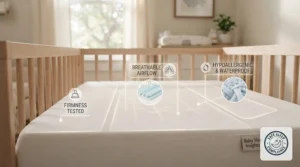
So what is a baby sleep insights mattress, really? It’s any system — a sensor pad under the crib mattress, a wearable sock or clip, or a camera with motion-tracking software — that converts your baby’s overnight movement, breathing, or heart rate into readable sleep data, delivered through an app. None of these products replace supervision or the basics of a safe crib, and the American Academy of Pediatrics is explicit that no wellness device is a substitute for a firm, flat sleep surface — a point we’ll return to later. What these tools genuinely add is pattern recognition: nap lengths, wake windows, and long-term trends that are almost impossible to track by memory at 4 a.m.
This guide breaks down seven real, currently available systems — from budget movement monitors to FDA-cleared wearables — with honest analysis of who each one actually suits, what the aggregated reviews say, and where the marketing outruns the reality. We’ll also cover setup, common mistakes, and how to read the data you get without turning into the kind of parent who panics over a single restless nap.
Quick Comparison Table
| Product | Type | Price Range | Best For |
|---|---|---|---|
| Nanit Pro Smart Baby Monitor & Wall Mount | Overhead camera + AI analytics | $200-$300 range | Full sleep dashboard without wearables |
| Owlet Dream Sock | Wearable pulse oximeter | $280-$320 range | Vitals-based sleep quality tracking |
| Owlet Dream Duo (Gen 3) | Camera + wearable bundle | $380-$430 range | Combined video and vitals data |
| Cubo Ai Sleep Sensor Pad | Under-mattress motion pad | $80-$110 range | Camera owners wanting extra motion data |
| Babysense Connect Sleep Monitor | Under-mattress pad + app | $90-$130 range | App-based analytics without wearables |
| Babysense 7 | Under-mattress movement monitor | $50-$80 range | Budget-friendly breathing motion alerts |
| Sense-U Smart Sock Shoe 2 | Wearable heart-rate sock | $60-$90 range | Affordable wearable sleep pattern data |
Looking at the spread above, the pattern is pretty clear: cameras and pads collect ambient data without touching the baby, while wearables like the Owlet Dream Sock and Sense-U Smart Sock Shoe 2 get closer to medical-style vitals at the cost of putting something on a foot every night. Budget shoppers gravitate toward the Babysense 7 because it does one job — flagging breathing motion — without a subscription or an app you have to obsess over. Families chasing genuine sleep analytics, meanwhile, tend to land on the Nanit Pro or the Owlet Dream Duo, since both convert raw overnight data into trends you can actually act on.
💬 Already leaning toward one? Tap its name above to check today’s availability and current price.
💬 Just one click — help other golfers find the right club for their game too!😊
Top 7 Baby Sleep Insights Mattress Systems: Expert Analysis
1. Nanit Pro Smart Baby Monitor & Wall Mount — best all-around sleep analytics platform
The standout here isn’t the 1080p camera — it’s what Nanit’s computer vision does with the footage once it’s captured. Mounted overhead on the included wall mount, the camera tracks sleep duration, efficiency, and disturbances automatically, then layers in temperature, humidity, and cry detection so the nursery’s whole environment gets folded into one report. Based on the spec comparison against pad-based competitors, the overhead angle matters: because Nanit reads posture and movement visually rather than through mattress vibration, it keeps working even as your baby grows from a swaddled newborn into a rolling, standing toddler, which is where under-mattress pads start to lose accuracy. This makes it a strong fit for data-driven parents who want one dashboard instead of juggling multiple gadgets, and less essential for anyone who just wants a simple audio monitor and nothing more.
Reviewers consistently report that the “NextNap” prediction feature and the nightly trend charts are the most-used part of the subscription, while a recurring complaint is that full sleep analytics require the paid Insights plan once the trial period ends. Nanit Pro Smart Baby Monitor & Wall Mount sits in the mid-to-premium price range once you factor in a subscription, and for parents who want longitudinal data across the whole first year, that ongoing cost tends to pay off in fewer 2 a.m. guessing games.
Pros:
- ✅ Sensor-free tracking that scales as baby grows and rolls
- ✅ Combines video, sleep data, and room conditions in one app
- ✅ Multi-caregiver access for shared parenting schedules
Cons:
- ❌ Full analytics locked behind an ongoing subscription
- ❌ Requires precise wall or floor mount placement for accuracy
Expect to pay in the $200-$300 range for the camera and mount, with subscription tiers priced separately — check current price before buying, since bundle contents shift often.
2. Owlet Dream Sock — FDA-cleared vitals tracking
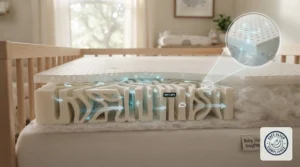
What most buyers overlook about the Dream Sock is that it isn’t really competing with camera monitors at all — it’s closer to a consumer-grade pulse oximeter that happens to log sleep. The sock wraps around baby’s foot and streams live pulse rate and oxygen saturation to a base station and app, and Owlet has stated the sensor has been clinically evaluated for accuracy within a few percentage points of hospital-grade arterial blood gas measurements across skin tones. That’s a meaningfully different value proposition than a pad that infers movement: it’s measuring a physiological signal directly, which is why it earned FDA clearance as a wellness-adjacent device rather than a toy.
The honest caveat, and one the AAP has raised directly, is that no consumer wearable — including this one — is proven to reduce the risk of sleep-related infant death, so it should never replace safe-sleep basics. Aggregated customer sentiment is largely positive on comfort and battery life, with a common thread being that some parents find the sock triggers more false alarms during the newborn phase when circulation in tiny feet is still stabilizing. Owlet Dream Sock is best suited to anxious first-time parents who want a physiological safety net layered on top of — never instead of — supervision and a safe crib setup.
Pros:
- ✅ Tracks live heart rate and oxygen, not just motion
- ✅ No subscription required for core live readings
- ✅ HSA/FSA eligible, easing the upfront cost
Cons:
- ❌ Not a substitute for safe sleep practices
- ❌ Some newborns show more false-alarm readings early on
Priced in the $280-$320 range, the Dream Sock is a premium pick — worth comparing against the bundle below if you also want video.
3. Owlet Dream Duo (Gen 3) — most complete data set in one system
If Dream Sock and a wall-mounted camera had a baby, it would be this bundle. Pairing the wearable sock’s live pulse and oxygen stream with a 2K video feed means you get two independent data sources confirming the same night — sleep quality indicators from the foot, visual context from the crib. Here’s what to weigh: that redundancy is genuinely useful when one sensor gives an ambiguous reading, since the camera can confirm whether an alert is a real event or just a sock that slipped. On paper, this makes the Dream Duo the most “complete” data set of anything in this roundup, at the cost of managing two apps’ worth of settings.
A common complaint in user reviews is the higher price point relative to buying either component separately down the line, and some parents note the video quality, while solid, isn’t the primary reason to buy — it’s a companion to the vitals data, not a standalone monitor competing with dedicated camera-only systems. Owlet Dream Duo (Gen 3) suits data-driven households who’ve already decided they want both vitals and video and don’t want to manage two separate purchases or apps.
Pros:
- ✅ Combines wearable vitals with full video context
- ✅ Cross-checks alerts across two independent sensors
- ✅ Single ecosystem instead of mismatched apps
Cons:
- ❌ Highest price point of any bundle in this roundup
- ❌ Camera features feel secondary to the vitals tracking
Expect a $380-$430 range at the time of research — a genuine investment, so weigh it against buying the sock and a separate camera individually.
4. Cubo Ai Sleep Sensor Pad — widest motion coverage for existing camera owners
The Cubo Ai pad’s whole pitch is coverage: four motion sensors spread under the mattress, picking up movement across an area the company says is several times wider than comparable single-sensor pads. Placed between the mattress and crib slats, it’s genuinely invisible to the baby, which matters if you’re trying to avoid changing anything about the sleep environment itself. The real-world meaning of that wider sensor spread is fewer blind spots as your baby shifts toward the crib rail overnight, something a two-sensor pad can miss entirely.
The catch, and it’s a significant one: this pad only functions when paired with a Cubo Ai smart camera, so it’s an add-on rather than a standalone system — you can’t buy this alone and expect full functionality. Reviewers who already own a Cubo Ai camera report that the combined AI-plus-motion alerts feel more reliable than either sensor alone, since the pad backs up the camera’s visual read with physical movement data. Cubo Ai Sleep Sensor Pad is best for existing Cubo households layering in more granular data, not a first purchase for someone starting from zero.
Pros:
- ✅ Four-sensor design covers more of the mattress surface
- ✅ Fully hidden installation under the mattress
- ✅ Cross-verifies data against the paired camera’s AI
Cons:
- ❌ Requires an existing Cubo Ai smart monitor to function
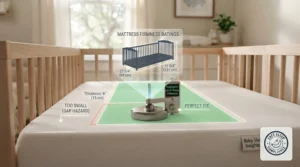
- ❌ Mattress thickness range is fairly narrow for compatibility
Look for it in the $80-$110 range, on top of whatever you’ve already spent on the camera itself.
5. Babysense Connect Sleep Monitor — app-based analytics without a wearable
Babysense built its reputation on the no-frills movement monitor below, but the Connect model exists for parents who want that same non-contact philosophy with a proper analytics layer bolted on. Two under-mattress pads detect breathing motion and feed it into an app that logs sleep sessions over time, rather than just sounding a local alarm and forgetting the data existed. What this means in practice is you get a genuine sleep analytics platform — trend lines, session summaries — without ever putting a sensor on your baby’s body, which some parents strongly prefer for comfort and simplicity reasons.
Based on the spec comparison with the base Babysense 7, the Connect’s main upgrade is data retention and remote app access rather than raw sensitivity, so buyers should treat it as “Babysense 7 plus history,” not a fundamentally different detection technology. A commonly cited theme in aggregated reviews is appreciation for the two-pad system growing with the baby — one pad for a newborn, both once they’re mobile — alongside occasional notes about app sync hiccups on older phones. Babysense Connect Sleep Monitor suits parents who want data-driven parenting insights but are wary of wearables or camera subscriptions.
Pros:
- ✅ Non-contact design with no wearable required
- ✅ App-based history adds real analytics over time
- ✅ Two-pad system adapts as baby becomes mobile
Cons:
- ❌ Detection technology mirrors the cheaper Babysense 7
- ❌ App connectivity depends on stable home WiFi
Typically found in the $90-$130 range, it’s a reasonable middle ground between the bare-bones alarm below and full camera-based platforms.
6. Babysense 7 — best budget entry point
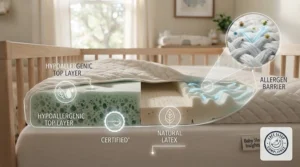
Sometimes the honest answer is that you don’t need a dashboard — you need an alarm that works. The Babysense 7 strips things down to two sensitive under-mattress pads that detect breathing motion and sound an alert if no movement registers within about 20 seconds, no WiFi, no app, no ongoing subscription. What that lack of connectivity buys you is reliability that isn’t dependent on your router staying up at 3 a.m., which is a real advantage over app-dependent systems when your priority is a dead-simple safety net rather than sleep data collection for its own sake.
The tradeoff is exactly what you’d expect: there’s no historical data, no trend charts, no export-to-pediatrician report. Reviewers consistently praise the peace-of-mind factor and the FSA/HSA eligibility, while a recurring caveat is that it explicitly won’t work properly on memory foam mattresses, since the sensors need to detect vibration transmitted through firmer material. Babysense 7 is the right call for budget-conscious parents whose main goal is a safety alert, not analytics — if you want the “insights” half of “baby sleep insights mattress,” look higher on this list.
Pros:
- ✅ No WiFi dependency, so it can’t be knocked offline
- ✅ Straightforward one-button setup and operation
- ✅ Widely trusted with millions of units in homes
Cons:
- ❌ No sleep data logging or app-based trends
- ❌ Incompatible with memory foam mattress types
At around $50-$80, it’s the most affordable system in this roundup and a sensible starting point before upgrading to a data-focused platform.
7. Sense-U Smart Sock Shoe 2 — most affordable wearable with real metrics
Wearables tend to command a premium, which is what makes the Sense-U stand out — it tracks heart rate and sleep patterns via a transmissive PPG foot sensor at a price that undercuts the Owlet Dream Sock by a wide margin. The spec sheet won’t tell you this, but user reports suggest the tradeoff for that lower price is a narrower feature set: you’re getting heart rate and movement-based sleep pattern data, not FDA-cleared oxygen saturation readings, so it’s positioned as a lighter-touch alternative rather than a medical-grade competitor.
For families who want infant sleep metrics beyond simple motion — actual heart rate trends alongside sleep sessions — without committing to Owlet’s price point, this fills a real gap in the market. Aggregated reviews commonly mention comfortable sizing across the 1-12 month range and appreciate the lack of a subscription requirement, while some parents note the companion app’s interface feels less polished than the bigger brands’ offerings. Sense-U Smart Sock Shoe 2 works well as a starter wearable for parents curious about vitals-adjacent data who aren’t ready to spend Owlet money.
Pros:
- ✅ Heart rate and sleep pattern tracking in one wearable
- ✅ Meaningfully cheaper than FDA-cleared alternatives
- ✅ No required subscription for basic functionality
Cons:
- ❌ Not FDA-cleared like the Dream Sock
- ❌ App polish lags behind larger competitors
Expect a $60-$90 range, making it one of the more accessible ways to add wearable data to a nursery setup.
Practical Usage Guide: Getting Real Data From Night One
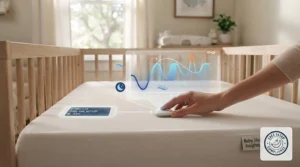
Getting useful data out of any sleep insights mattress system starts before the first nap. For pad-based systems like the Babysense 7 or Babysense Connect Sleep Monitor, double-check mattress compatibility first — most brands explicitly rule out memory foam, since the sensors rely on vibration transmission that dense foam absorbs. Run a test alert during the day, while you’re awake and watching, so you know what the alarm sounds like before you’re relying on it at 2 a.m. For camera systems like Nanit Pro, mounting angle is everything: an overhead, centered view dramatically improves sleep-stage detection accuracy compared to an off-angle side view, so it’s worth the extra ten minutes to get the mount positioned correctly rather than propping the camera on a shelf.
The first 30 days are where most setup mistakes happen. Common missteps include placing a wearable sock too loosely (leading to false vitals alerts), forgetting to update the companion app after a firmware push, and — with subscription-based platforms — not checking whether the free trial is about to lapse before you’ve decided if the paid tier is worth it. A simple maintenance rhythm helps: wipe down wearables weekly per the manufacturer’s cleaning instructions, recharge base stations on a fixed schedule rather than waiting for a low-battery alert mid-night, and review your app’s weekly summary once a week rather than obsessively checking nightly data, which tends to fuel anxiety more than insight.
Real-World Scenarios: Matching Families to the Right System
Consider a first-time parent with a newborn who’s anxious about SIDS risk and wants reassurance beyond visual checks — this profile tends to gravitate toward the Owlet Dream Sock, since live pulse and oxygen readings offer a physiological layer that a motion-only pad can’t provide, even though it’s not a substitute for safe sleep practices. Contrast that with a budget-conscious family expecting their second child, who already knows the ropes and mainly wants a dependable movement alarm without monthly fees — the Babysense 7 fits that use case precisely, delivering the core safety function without asking for a subscription or an app.
Now picture a data-driven parent managing multiple caregivers — a nanny during the week, grandparents on weekends — who wants a shared dashboard everyone can check without texting “did the baby sleep well?” fifteen times a day. That’s the Nanit Pro‘s sweet spot, thanks to its multi-user access controls and centralized app history. Finally, think about a family with a mobile, rolling nine-month-old for whom under-mattress pads are starting to miss movement near the crib edges — that’s exactly when camera-based tracking or a wearable like the Sense-U Smart Sock Shoe 2 picks up the slack that pad sensors were built for smaller, more stationary newborns.
Problem → Solution: Fixing Common Sleep Data Frustrations
Problem: False alarms disrupting your own sleep. This is especially common with wearables in the newborn phase, when circulation is still stabilizing. Solution: check sizing guidance carefully — a sock that’s slightly loose is the single most common cause, and most brands, including Owlet and Sense-U, publish size charts by weight rather than age.
Problem: Data feels overwhelming rather than useful. Solution: pick one weekly metric to actually track — total sleep hours or number of wakings — rather than obsessing over nightly graphs. Platforms like Nanit Pro and Babysense Connect Sleep Monitor both offer weekly trend summaries specifically to pull you out of the nightly-data spiral.
Problem: Pad-based systems not detecting movement reliably. Solution: confirm mattress type first, since memory foam is the most common culprit, and reposition pads centrally under the crib rather than toward one edge.
Problem: Subscription costs creeping up unexpectedly. Solution: calendar the end date of any free trial the moment you unbox a camera system, and decide before it lapses whether the paid analytics are worth it for your family, rather than defaulting into an auto-renewal.
Problem: Multiple caregivers getting inconsistent alerts. Solution: use a platform with proper multi-user permissions, like Nanit Pro‘s shared access, rather than passing around a single login and hoping notifications sync correctly.
How to Choose a Baby Sleep Insights Mattress System
- Decide whether you want data or just an alert. If peace of mind through a simple alarm is the goal, a no-frills pad like the Babysense 7 covers it; if you want trends and history, look at app-based or camera platforms instead.
- Check mattress compatibility before anything else. Memory foam rules out most under-mattress movement pads, so confirm your crib mattress type first.
- Weigh wearable comfort against data depth. Wearables like the Owlet Dream Sock capture vitals a pad simply can’t, but require nightly attachment, which some babies tolerate better than others.
- Factor in the real cost of subscriptions. A camera priced attractively upfront can cost considerably more over a year once analytics subscriptions are added — budget for the whole picture, not just the hardware.
- Think about how your baby will grow into (or out of) the system. Pads generally suit newborns best; cameras and wearables tend to track more reliably as babies become mobile.
- Consider how many caregivers need access. Multi-user support matters more than it seems once grandparents, nannies, or co-parents are all checking in.
- Match the system to your actual anxiety level, not your ideal one. Buying the most data-heavy platform won’t help if checking it constantly makes you more anxious rather than less — be honest about your own tendencies here.
Common Mistakes When Buying Sleep Data Collection Mattress Tech
The single most common mistake is buying a wearable expecting it to prevent SIDS outright — no consumer device, including FDA-cleared ones like the Dream Sock, has been shown to reduce that risk, and treating any gadget as a replacement for safe sleep basics is a mistake with real stakes. A close second is skipping the mattress-type check entirely; parents buy a pad-based system, unbox it, and only then discover memory foam blocks accurate readings, which is an avoidable and fully preventable disappointment.
Another frequent misstep is underestimating ongoing costs — buying a camera on sale without checking what the sleep analytics subscription costs annually, then feeling blindsided a year later. Parents also commonly over-index on brand reputation without checking whether the specific model fits their crib setup or mattress thickness, since compatibility specs vary meaningfully even within one manufacturer’s lineup. Finally, many buyers skip reading the aggregated review sentiment around false-alarm rates, which varies noticeably between wearables and pads and directly affects how much disrupted sleep the “sleep tech” ironically causes.
Sleep Data Collection Mattress vs Wearable Sleep Trackers
The core tradeoff between under-mattress sleep data collection systems and wearable sleep trackers comes down to what they’re actually measuring. Pads infer sleep state from vibration and movement transmitted through the mattress — useful, but indirect, since a baby can be still while awake or moving while asleep, and the sensor can’t always tell the difference. Wearables like the Owlet Dream Sock or Sense-U Smart Sock Shoe 2 measure something closer to source, whether that’s pulse rate, oxygen saturation, or direct movement at the foot, which tends to produce more granular vitals data at the cost of putting a physical device on the baby every night.
In practice, pads win on convenience and comfort — nothing touches the baby, nothing needs charging on a foot, and there’s no risk of a sock working its way loose. Wearables win on data specificity, particularly for parents who want heart rate trends or oxygen readings rather than inferred movement patterns. Camera-based systems like Nanit Pro occupy a middle ground, offering visual confirmation and motion-based analytics without physical contact, though they can’t capture vitals the way a wearable does. The right choice really depends on whether your priority is minimal intrusion or maximal physiological detail — few families need both at once, which is part of why bundles like the Owlet Dream Duo (Gen 3) exist for the minority who do.
Features That Actually Matter (And Those That Don’t)
Real-world useful: non-contact detection that doesn’t require attaching anything to the baby, mattress-type compatibility clearly stated upfront, and weekly trend summaries that surface patterns without demanding nightly obsessive checking. Multi-caregiver access is another feature that sounds minor on a spec sheet but matters enormously in households juggling shared childcare duties.
Largely marketing hype: precise minute-by-minute sleep-stage breakdowns (light versus deep sleep) marketed with clinical-sounding confidence, when the underlying detection is inferred from movement rather than measured directly via EEG-grade sensors, the way adult sleep studies work. Similarly, “AI-powered” branding on cry detection or motion alerts sounds impressive, but the practical value comes down to false-alarm rates in aggregated reviews, not the marketing language used to describe the underlying algorithm. Buyers should weigh actual review sentiment on accuracy over feature lists that sound sophisticated but don’t change nightly outcomes.
Infant Sleep Metrics, Sleep Analytics Platforms & Data-Driven Parenting
The metrics that actually move the needle for data-driven parenting are simpler than the dashboards suggest: total overnight sleep duration, number and length of night wakings, and consistency of nap timing across a week. These three infant sleep metrics, tracked over two to three weeks rather than judged night to night, reveal actual patterns — whether a “rough patch” is a one-off or a real regression — in a way that a single night’s data never can. Sleep analytics platforms like Nanit Pro‘s Insights or Babysense Connect Sleep Monitor‘s app history exist specifically to surface these trends automatically instead of asking exhausted parents to keep a manual log.
Here’s what most sleep analytics dashboards won’t tell you outright: the value of data-driven parenting isn’t in reacting to every blip, it’s in noticing slow trends — a nap that’s been shrinking by five minutes a day for two weeks, or wakings that cluster consistently around the same hour. That kind of pattern recognition is genuinely hard to do from memory, and it’s the strongest, most honest case for these platforms — not the promise of preventing every bad night, but the ability to distinguish a real trend from ordinary variability. Parents chasing this kind of insight should prioritize systems with clear weekly or monthly trend views over ones that only show a single night’s raw numbers.
Long-Term Cost & Maintenance
Total cost of ownership varies dramatically across this category, and it’s worth running the actual math before buying. A Babysense 7 at the low end has essentially no ongoing cost — no subscription, no consumable parts beyond batteries — making its total cost of ownership close to its sticker price. Camera-based platforms tell a different story: a Nanit Pro priced attractively upfront can accumulate significant additional cost once an annual Insights subscription is factored in across a baby’s first two years, so the real total often lands well above the hardware price alone.
Wearables carry their own maintenance considerations — fabric socks wear out and need periodic replacement as a baby grows through sizes, and base stations require regular charging cycles. Cost-per-use math favors simple pads for parents planning to use a system for only a few months, while subscription camera platforms tend to offer better long-term value for parents who want data across the full first year or longer, since the per-month cost drops the longer the subscription is used. Weigh how long you realistically plan to rely on the system against the ongoing fees before committing.
Safety, Regulations & Compliance for Baby Sleep Tech
It bears repeating clearly: the Safe to Sleep campaign, led by NICHD in collaboration with the AAP, emphasizes that a firm, flat, non-inclined sleep surface and back sleeping remain the foundation of infant sleep safety — no monitor, pad, or wearable changes that baseline requirement. Consumer wellness devices, including wearables like the Dream Sock, are explicitly categorized differently from medical devices under FDA rules, and the AAP has stated plainly that there’s no current data showing these products reduce the risk of sleep-related death, so they should be treated as reassurance tools, not safety guarantees.
Compliance-wise, always check that any crib, bassinet, or playard used alongside these systems meets current Consumer Product Safety Commission standards, since federal rules require many infant sleep products to meet strict flat, firm, non-inclined criteria. A broader academic review of infant sleep guidance notes that recommendations continue to evolve as new research emerges, which is a good reminder to periodically re-check guidance rather than assuming a setup that was compliant a year ago still reflects the latest standards.
Frequently Asked Questions
❓ Does a baby sleep insights mattress prevent SIDS?
❓ Can I use a sleep data collection mattress pad with a memory foam mattress?
❓ Are wearable sleep trackers accurate for infants?
❓ Do I need a subscription for baby sleep analytics?
❓ How long should I track sleep data before making changes to my baby's routine?
Conclusion
There’s no single “best” baby sleep insights mattress system, because the honest answer depends on what kind of reassurance you actually need. If your priority is a dependable alarm without ongoing fees, the Babysense 7 remains hard to beat for the price. If you want physiological data — heart rate, oxygen — layered on top of motion tracking, the Owlet Dream Sock or the more complete Owlet Dream Duo (Gen 3) deliver that at a premium. And if a full sleep analytics dashboard shared across caregivers is the goal, Nanit Pro remains the most complete platform in this lineup.
Whatever you choose, keep the framing straight: these tools are for insight and reassurance, not a substitute for the fundamentals of safe infant sleep. Use the data to spot real trends, not to panic over a single rough night, and you’ll get the actual value these systems were built to provide.
✨ Don’t Miss These Exclusive Deals!
🔍 Take your baby’s sleep tracking setup to the next level with these carefully selected systems. Click on any highlighted product above to check current pricing and availability. These tools help data-driven parents build calmer, more confident nights! 🌙
Recommended for You
- Wifi Enabled Crib Mattress: 7 Smart Picks for Safer Sleep in 2026
- 7 Best Smart Crib Mattress With Sensors Picks for 2026
- Lockable Caster Crib: 7 Secure Rolling Picks for 2026
Disclaimer: This article contains affiliate links. As an Amazon Associate, I earn from qualifying purchases. If you purchase products through these links, we may earn a small commission at no additional cost to you.
✨ Found this helpful? Share it with your friends! 💬
