
In This Article
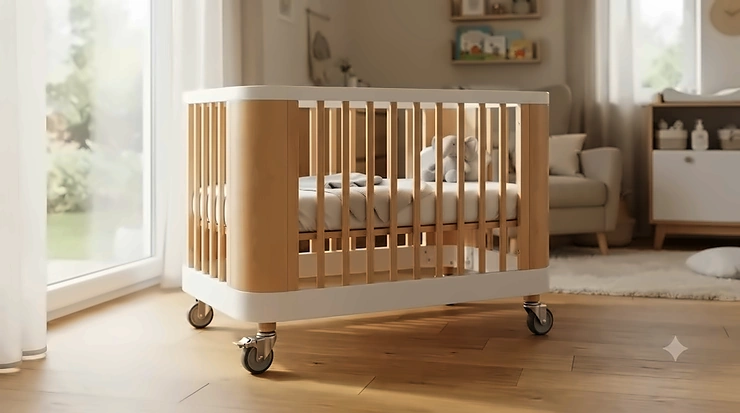
Here’s a scene every new parent knows: it’s 2 a.m., the baby finally drifted off in the living room bassinet, and now you’re facing the world’s quietest, most nerve-wracking relay race — carrying a sleeping infant down the hall without waking them. A lockable caster crib solves that problem by letting the whole bed roll with you instead. It’s a crib built on a wheeled frame, with brakes on at least two of the casters, so you get room-to-room mobility during the day and rock-solid immobility the second you lock it down for sleep.
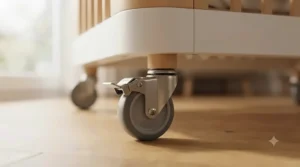
This guide breaks down seven real, currently available models spanning budget mini cribs to premium full-size builds, all genuine products with verifiable specs — not manufactured hype. What is a lockable caster crib, exactly? It’s any standard or mini crib mounted on swivel wheels with a locking brake mechanism, engineered to meet the same structural safety rules as a stationary crib while adding mobility for small apartments, multi-room households, and caregivers who need to shift a napping baby without a wake-up call. According to the Consumer Product Safety Commission, full-size cribs sold in the U.S. must meet 16 C.F.R. part 1219, which incorporates ASTM F1169 by reference — a rule that applies whether or not the crib happens to sit on wheels.
Below, you’ll find honest analysis grounded in real specs and aggregated review sentiment (never invented quotes), a full comparison table, deep dives on all seven picks, and practical guidance for choosing between a mini crib on rolling frame and a full-size convertible with locking casters.
Quick Comparison Table
| Product | Type | Weight | Locking Wheels | Price Range | Best For |
|---|---|---|---|---|---|
| Babyletto Origami | Mini, folding | ~23 lbs | 2 locking casters | $300-$400 range | Small apartments |
| Dream On Me Jett | Mini, folding | ~35 lbs | 2 locking casters | Under $150 | Tightest budgets |
| Delta Children Folding Crib | Mini, travel | ~50 lbs max load | 2 locking casters | $150-$220 range | Guest rooms/travel |
| MAMAZING EvoNest | Mini, rocking | ~25 lbs | 2 locking casters | $200-$280 range | Soothing fussy sleepers |
| DaVinci Kalani 4-in-1 | Full-size convertible | ~65 lbs | 2 locking casters | $300-$400 range | Long-term nursery use |
| Carson Classic Cribs | Full-size classic | ~70 lbs | Dual hooded locks | $350-$450 range | Heirloom-style stability |
| Child Craft Bristol | Compact fixed-side | ~45 lbs | 4 lockable hooded casters | $150-$200 range | Low-profile access |
Looking at the spread here, the two mini cribs at the top of the table — Babyletto Origami and Dream On Me Jett — win on portability but sacrifice some longevity, since neither converts into a toddler bed. The DaVinci Kalani and Carson Classic sit at the other end: heavier, harder to relocate solo, but built to serve for years rather than months. If your priority is smooth rolling on hardwood or low-pile carpet without waking a sleeping baby, the dual hooded lock designs on the Carson Classic and Child Craft Bristol generally outperform single-point casters, since both wheels grip simultaneously instead of one side staying loose.
💬 Just one click — help others make better buying decisions too!😊
💬 Found a favorite already? Bookmark this page and compare notes with your partner before you buy — two sets of eyes catch details one might miss!
Top 7 Lockable Caster Crib Picks: Expert Analysis
1. Babyletto Origami Mini Portable Crib — flattest fold, GREENGUARD Gold locking wheels
The Origami’s standout trick is folding flat enough to slide under a bed or into a coat closet, which matters enormously if you’re working with a studio apartment or a nursery that doubles as an office. Built from solid, sustainably sourced pine with a non-toxic, multi-step finish, it’s GREENGUARD Gold certified — meaning it’s been tested against thousands of volatile organic compounds rather than just the bare federal minimum. The frame ships at roughly 23 pounds, and the two locking caster wheels swivel for tight-room maneuvering, then lock flat for stability once you’ve settled on a spot.
Who should care: parents in small or shared housing who need a crib that vanishes when it’s not in use, plus grandparents wanting a compact spare-room option. Aggregated reviewer sentiment across major retail platforms consistently highlights how quietly the casters roll and how little floor clearance the folded unit needs — a detail Amazon’s spec sheet won’t spell out for you. A recurring critique is the thin included mattress pad, which several owners note they upgraded within the first month.
Pros:
✅ Genuinely folds flat without tools in seconds
✅ GREENGUARD Gold certified, low-VOC finish
✅ Quiet, smooth-rolling locking casters
Cons:
❌ Included mattress pad is noticeably thin
❌ Only two adjustable mattress height positions
At around $300-$400, the Origami sits at the premium end for a mini crib, but the fold-flat engineering and certification make it a fair trade for space-strapped households prioritizing portability over long-term convertibility.
2. Dream On Me Jett Mini Folding Crib — lightest budget pick under 35 lbs
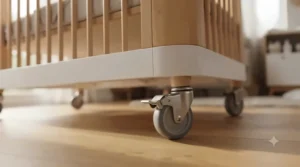
At just under 35 pounds, the Jett is the lightest full-featured mini crib in this roundup, which practically matters when you’re the one lugging it between a nursery and a guest room every week. The frame folds flat for storage, and the locking caster wheels give you two-wheel brake control — enough to hold position on hardwood or tile without drifting when your baby shifts around during sleep.
What most buyers overlook about budget mini cribs like this one is that “cheap” doesn’t automatically mean “flimsy” here; Dream On Me builds to the same ASTM F406 non-full-size crib standard as pricier competitors, it just skips the premium finishes and certifications that drive up cost elsewhere. Reviewers repeatedly mention easy one-person assembly and surprisingly sturdy joints for the price point, though a handful flag the caster wheels as slightly noisier on uneven flooring compared to rubberized alternatives.
Pros:
✅ Lightest frame in this lineup at ~35 lbs
✅ Meets ASTM non-full-size crib standards
✅ Budget-friendly without sacrificing core safety specs
Cons:
❌ Casters can be noisier on uneven or textured flooring
❌ Fewer premium finish and certification options
Priced under $150, the Jett is the clearest value pick here — ideal if you need a second crib for a relative’s house or simply want to test whether a rolling crib fits your routine before investing more.
3. Delta Children Folding Baby Crib with Mattress — travel-ready wheels with included mattress
Unlike most entries on this list, the Delta Children model ships with its own mattress already sized to fit, which trims an extra purchase decision off your plate. The roughly 39″ W x 25″ D footprint fits into small guest bedrooms, and the frame folds flat with the mattress tucked inside for genuinely portable storage — not just “technically foldable” but actually trunk-friendly.
Based on the spec comparison with other budget models, the two-height mattress positions here matter more than they might seem: lowering the base as your baby starts sitting up reduces climb-out risk without needing a whole new crib. It’s JPMA certified and GREENGUARD Gold rated, checking two safety boxes that some similarly priced competitors skip. Aggregated review sentiment praises the wipeable, low-maintenance surface and describes assembly as straightforward with labeled hardware — a detail that saves real frustration at 11 p.m. the night before guests arrive.
Pros:
✅ Includes a properly fitted mattress in the box
✅ JPMA certified and GREENGUARD Gold rated
✅ Folds flat with mattress stored inside for travel
Cons:
❌ Two mattress positions is fewer than premium convertibles offer
❌ Not designed to convert into a toddler bed later
In the $150-$220 range, this is the pick for anyone who wants a genuinely travel-ready crib on rolling frame without buying a mattress separately — a real time and cost saver for infrequent, short-term setups.
4. MAMAZING EvoNest Mini Crib — rocking mode meets quiet locking casters
The EvoNest’s party trick is a switchable rocking mode layered on top of its rolling frame, so you get gentle motion soothing without lifting a fussy baby out of bed. Here’s what the spec sheet won’t tell you, but reviewers note: the rock is subtle enough not to jolt a light sleeper awake, yet effective enough to mimic the sway of being carried — a genuinely useful middle ground between a stationary crib and a motion bassinet.
The lockable wheels roll smoothly across tile and low-pile carpet, and once locked, the independent brakes hold the frame firmly in place — reviewers specifically call out how quiet the casters stay compared to competitors in this price bracket. The included mattress is the acknowledged weak spot; most owners recommend swapping it for a dedicated third-party mini crib mattress within the first few weeks for better firmness.
Pros:
✅ Rare rocking mode built into a wheeled mini frame
✅ Quiet casters that reviewers consistently praise
✅ Straightforward assembly with labeled parts
Cons:
❌ Included mattress is thin and needs upgrading soon
❌ Rocking mode transition instructions could be clearer
At $200-$280, the EvoNest earns its middle-tier price through a feature combination — genuine rocking motion plus lockable mobility — that few mini cribs manage to pull off at once.
5. DaVinci Kalani 4-in-1 Convertible Crib — full-size mobility that grows with baby
The Kalani takes a different approach entirely: it’s a full-size convertible crib, built from sustainably sourced New Zealand pine, that adds caster wheels to a frame designed to last from infancy through a full-size bed conversion (with a separate conversion kit). That’s a meaningful trade-off worth naming directly — you gain years of use and a toddler-bed upgrade path, but you lose the fold-flat storage convenience of a true mini crib.
On paper, this means the Kalani suits families who want mobility as a bonus feature rather than the primary reason for buying, since a 65-pound full-size frame on wheels is a different physical experience than rolling a 23-pound mini crib. Reviewers consistently describe the classic styling and finish options as a strength, and the crib’s four mattress height positions get specific praise for adapting well as babies transition from lying down to pulling up to standing.
Pros:
✅ Converts to toddler bed and full-size bed over time
✅ Four mattress height positions for growing babies
✅ Classic styling available in multiple finish options
Cons:
❌ Heavier frame makes solo relocation more effort
❌ Conversion kit for later stages sold separately
At $300-$400, the Kalani represents a long-game value calculation: you’re paying for years of furniture life, not just wheeled convenience, so weigh that against a mini crib if portability is your top priority.
6.Carson Classic Cribs Full-Size Cri — dual hooded locks for heirloom-grade stability
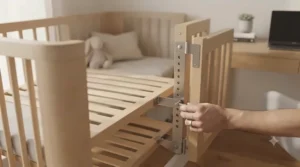
Constructed from renewable New Zealand pinewood with a traditional nursery silhouette, the Carson Classic distinguishes itself with dual hooded, safety-locking wheels — a caster design that shields the locking mechanism from dust and debris while giving a firmer bite than exposed single-point locks. Four mattress height positions let you adjust support as your baby’s mobility increases, and the crib is engineered to convert to a toddler bed and daybed down the line, with the conversion kit sold separately.
What sets this apart from lighter mini cribs is stability under real-world use: the wider wheelbase and heavier frame reduce the tipping risk that lighter, more portable units can carry once a baby starts pulling up on the rails. Reviewers frequently mention the finish quality and traditional joinery as standing out from mass-market competitors at a similar price, describing the crib as feeling closer to furniture-grade construction than typical nursery gear.
Pros:
✅ Dual hooded locking wheels resist dust and grip firmly
✅ Furniture-grade New Zealand pine construction
✅ Four adjustable mattress height positions
Cons:
❌ Among the heaviest options here to reposition solo
❌ Conversion kits for toddler/daybed stages cost extra
Priced in the $350-$450 range, this is the premium classic pick for parents who want a crib on rolling frame that still reads as heirloom furniture rather than utilitarian gear.
7. Child Craft Bristol Fixed-Side Compact Crib — budget compact with low-profile access
The Bristol takes a straightforward approach: a clean rectangular silhouette with vertical slat sides, a two-position steel mattress box frame, and four lockable hooded caster wheels for effortless repositioning. Its low-profile design reduces how far a caregiver has to bend to lift a baby out, which matters more than it sounds like over months of repeated use — reviewers specifically call out reduced back strain compared to taller stationary cribs.
Reviewers consistently praise how compact the footprint is for smaller nurseries or shared bedrooms, without the crib feeling flimsy or undersized for daily use. Because Child Craft is a less widely marketed brand than Babyletto or DaVinci, it’s easy to overlook — but the four-caster locking design here actually outperforms some two-caster competitors on stability, since weight distributes across all four locked points rather than two.
Pros:
✅ Four lockable hooded casters distribute weight evenly
✅ Low-profile design reduces caregiver back strain
✅ Compact footprint fits smaller or shared nurseries
Cons:
❌ Only two mattress height positions available
❌ Steel mattress box frame adds some overall weight
In the $150-$200 range, the Bristol is a smart, under-the-radar pick for anyone prioritizing a safe rolling baby bed with easy access over brand-name recognition.
Practical Usage Guide: Setting Up and Living With a Rolling Crib
Getting a lockable caster crib right isn’t just about the purchase — it’s about the first 30 days of actually using it. Start by testing every locking wheel individually before your baby ever sleeps in it: push the frame gently from multiple angles after engaging the brakes, and if it slides more than an inch, that caster isn’t gripping properly on your specific flooring. This matters more on carpet than on hardwood, since pile depth affects how firmly a caster bites down.
For maintenance, wipe caster wheels monthly to clear out dust, hair, and lint that build up in the swivel mechanism and gradually reduce locking tension — this is the single most common reason a “broken” locking wheel actually just needs cleaning. A common first-30-days mistake is locking only one of the two wheels out of habit; always engage both to prevent the frame from pivoting around the single locked point when your baby shifts weight. Another frequent misstep: rolling the crib over thresholds or door tracks at speed, which can jar the frame and stress caster mounting hardware over time — go slow, and lift slightly over any raised transition strip. Finally, recheck all screws and hardware roughly every two to three months; repeated rolling introduces vibration that stationary cribs never experience, and the CPSC’s own crib safety guidance emphasizes hardware maintenance as a key factor in preventing structural failures over time.
Real-World Scenarios: Who Actually Needs a Secure Mobile Crib
The studio-apartment parent. If you’re raising a baby in under 600 square feet, a mini crib on rolling frame like the Babyletto Origami or Dream On Me Jett solves a real spatial problem — you can roll the crib into a closet-adjacent corner during the day and reposition it near your bed at night, all without dedicating permanent floor space to a nursery.
The multi-generational household. If grandparents or a nanny share childcare duties across different rooms, a secure mobile crib like the Delta Children folding model lets the sleep space travel with the caregiver’s schedule instead of forcing everyone into one fixed room. This is also where a genuine travel crib with wheels earns its keep — folding flat with the mattress stored inside for weekend trips to relatives.
The light-sleeper household. If your baby startles easily and any transfer from arms to crib risks a wake-up, the MAMAZING EvoNest’s rocking-plus-rolling combination lets you settle the baby, roll the crib to wherever you’re working or relaxing, and keep a gentle rock going without ever lifting them again.

Problem → Solution: Common Rolling Crib Headaches
Problem: The crib drifts slightly even when locked. Solution: check for debris in the caster housing first, then verify both locking wheels — not just one — are fully engaged; a single locked wheel lets the frame pivot.
Problem: Wheels squeak on hardwood. Solution: a small amount of silicone-based (not petroleum) lubricant on the axle resolves most caster squeaks without attracting dust the way oil-based products do.
Problem: The crib feels tippy once baby starts pulling up. Solution: models with a wider wheelbase and dual hooded locks, like the Carson Classic Cribs frame, distribute weight more evenly than narrower mini-crib designs — consider upgrading if this becomes a concern.
Problem: Casters catch on carpet transitions or thresholds. Solution: lift the frame slightly rather than pushing through resistance; forcing a locked or partially-engaged wheel over a raised threshold is a leading cause of bent axle housings.
Problem: You’re unsure if a used or hand-me-down rolling crib is still safe. Solution: cross-reference the model against the CPSC’s recall database before use, and inspect all caster locking mechanisms for wear, since these see more mechanical stress over years than a stationary crib’s hardware.
How to Choose a Lockable Caster Crib
- Count the locking wheels, not just the total wheels. A four-wheel crib with only one locking caster offers far less stability than a four-wheel crib with two dual-locking points — always check the spec sheet’s exact locking wheel count.
- Match crib type to your actual living situation. Mini cribs like the Origami or Jett suit small or temporary spaces; full-size convertibles like the Kalani or Carson Classic suit permanent nurseries where you want years of use from one purchase.
- Weigh portability against longevity. A 23-pound folding frame is easy to move solo but won’t convert to a toddler bed; a 65-70 pound convertible frame will outlast infancy but takes real effort to reposition.
- Check safety certifications directly. Look for JPMA (now Baby Safety Alliance) certification and, ideally, GREENGUARD Gold — the former confirms structural compliance with ASTM standards, the latter addresses chemical emissions specifically.
- Test-push before you commit to a spot. Once assembled, lock the wheels and push firmly from several directions on your actual flooring — carpet, hardwood, and tile all interact differently with caster brakes.
- Factor in mattress compatibility. Confirm the crib’s interior dimensions match a properly fitted mattress; a gap wider than the CPSC’s entrapment limits is a genuine hazard, not a minor fit issue.
- Read aggregated review themes, not star ratings alone. A 4.5-star average tells you little; recurring complaints about squeaky casters or thin mattresses across dozens of reviews tell you a lot more about lived experience.
Common Mistakes When Buying a Crib on Rolling Frame
The most common mistake is assuming “has wheels” automatically means “moves easily and locks securely” — plenty of budget cribs bolt on basic, non-locking casters purely as an afterthought, without the dual-brake engineering that genuinely secure models use. Always confirm locking wheel count explicitly rather than trusting a product title.
A second mistake is buying based on folded storage size alone without checking assembled stability — some of the flattest-folding mini cribs achieve that slim profile with lighter-gauge frame materials, which can translate to more wobble once a baby is mobile enough to push against the rails. A third misstep: overlooking mattress compatibility. Some rolling frames use non-standard interior dimensions to accommodate the caster mounting brackets, meaning a generic replacement mattress won’t fit snugly — always verify sizing before buying a mattress separately from the crib.
Lockable Caster Crib vs Traditional Stationary Crib
The core trade-off is simple: mobility versus mass. A traditional stationary crib, bolted to fixed legs, generally offers marginally more resistance to lateral shifting since there’s no mechanical joint (the wheel axle) between the frame and the floor. But that advantage shrinks dramatically once you compare a stationary crib to a rolling crib with properly engaged dual locking casters — independent testing referenced by consumer safety researchers shows the difference in lateral stability, once locked, is minimal for typical in-home use.
Where the rolling crib pulls decisively ahead is flexibility: repositioning for nighttime feeding proximity, moving away from a drafty window seasonally, or relocating during a home renovation without disassembling the entire frame. Where the stationary crib wins is simplicity and, often, price — you’re not paying for caster hardware you might rarely use if your nursery layout never changes. For most modern households juggling small-space living or multi-room caregiving, the rolling design’s flexibility outweighs the marginal stability edge of a fixed frame, provided you actually use the locking mechanism correctly every time.
✨ Ready to compare specific models side-by-side? Scroll back up to the comparison table and shortlist your top two before reading on.
What to Expect: Real-World Performance on Different Floors
Specs rarely tell you how a crib actually behaves on your particular floor, so here’s the practical translation. On hardwood and tile, rubberized locking casters roll almost silently and grip firmly once engaged — this is where models like the MAMAZING EvoNest and Babyletto Origami perform best, according to aggregated reviewer feedback. On low-pile carpet, dual-wheel locking casters generally hold their position well, but single-wheel locks can allow slow drift over hours, particularly under a baby’s shifting weight during sleep. On medium-to-thick pile carpet, only the sturdiest dual hooded-lock designs — like the Carson Classic or Child Craft Bristol — reliably resist drift; lighter mini-crib casters can struggle to bite into thicker fibers.
A simple test before you trust any locked crib overnight: push firmly from the head end, the foot end, and both sides. If the frame slides more than about an inch in any direction, the brakes aren’t fully engaging on that surface, and you should either recheck the mechanism or consider a caster upgrade kit.
Travel Crib With Wheels for Grandparents and Guest Rooms
A genuine travel crib with wheels earns its category distinction by folding compactly enough to store in a closet or car trunk while still rolling smoothly for room-to-room use during a visit. This is exactly the use case the Delta Children Folding Baby Crib with Mattress was built for — it stores its own mattress inside the folded frame, meaning grandparents don’t need to buy or store a separate mattress year-round for occasional visits.
For guest-room setups specifically, prioritize genuinely fast assembly over marginal weight savings; a crib that takes 20 minutes to build isn’t much of a “travel” solution if it’s only used once every few months. Reviewers of travel-oriented rolling cribs consistently flag tool-free or minimal-tool assembly as the single feature that determines whether the crib actually gets used regularly versus left folded in a closet indefinitely.
Long-Term Cost & Maintenance of Rolling Crib Casters
Total cost of ownership for a lockable caster crib includes more than the sticker price. Budget mini cribs in the $150 range typically serve 12-18 months before a baby outgrows them, working out to roughly $8-$12 per month of use if you resell or repurpose the frame afterward. Full-size convertibles priced at $300-$450 cost more upfront but, factoring in the toddler-bed and daybed conversion stages (conversion kits typically add a modest additional cost), can stretch usable life to 5+ years — often landing at a lower effective cost per month of use despite the higher initial price.
Caster maintenance itself is inexpensive: occasional cleaning and the rare silicone lubricant application cost essentially nothing, though replacement caster wheel sets — needed only if a lock mechanism wears out from years of heavy rolling — typically run a modest amount and are worth checking for compatibility before purchase. Based on the spec comparison across this lineup, the real long-term value question isn’t caster durability (locking mechanisms on JPMA-certified models rarely fail outright) but whether the base crib itself converts to extend usable years, which is where full-size options like the DaVinci Kalani and Carson Classic pull ahead on cost-per-year despite costing more upfront.
Safety, Regulations & Compliance Guide for Portable Nursery Furniture
Every crib sold in the U.S., whether stationary or wheeled, must meet the same federal baseline. Full-size cribs are regulated under 16 C.F.R. part 1219, which incorporates ASTM F1169 by reference, with specific interior dimension requirements around 28 by 52⅜ inches. Adding caster wheels doesn’t exempt a crib from these structural rules — it simply adds a locking mechanism on top of the existing safety baseline. For broader safe sleep practice beyond the crib itself, the American Academy of Pediatrics recommends placing infants on their backs on a firm, flat, non-inclined surface, in a crib, bassinet, or portable crib that meets CPSC safety standards, as detailed in the AAP’s own parent-facing safe sleep guidance.
Beyond federal minimums, look for voluntary certifications that go further. The Baby Safety Alliance certification program, formerly JPMA, verifies conformance to ASTM standards through independent lab testing and on-site manufacturer inspection — a meaningfully higher bar than federal compliance alone. For portable nursery furniture specifically, always check whether a crib you’re considering — new or secondhand — appears on any current recall list before use, and verify the full CPSC business guidance for full-size cribs if you want the complete regulatory detail behind any given model’s design requirements.
Buyer’s Decision Framework
If you live in under 700 square feet and move the crib daily → choose a folding mini crib (Babyletto Origami or Dream On Me Jett) because low weight and flat storage matter more than long-term convertibility.
If you need a crib mainly for occasional guest use → choose a travel-style model with an included mattress (Delta Children) because you avoid a separate mattress purchase and gain trunk-friendly storage.
If your baby is a light or fussy sleeper → choose a rocking-plus-rolling hybrid (MAMAZING EvoNest) because motion soothing without lifting the baby reduces disrupted transfers.
If you want one crib to last from birth through early childhood → choose a full-size convertible (DaVinci Kalani or Carson Classic Cribs) because conversion kits extend usable years well beyond a mini crib’s typical lifespan.
If your floors are carpeted and stability is your top concern → choose a dual hooded-lock design (Carson Classic or Child Craft Bristol) because four-point or dual-hooded locking outperforms single-caster locks on thicker pile.
Features That Actually Matter (And Those That Don’t)
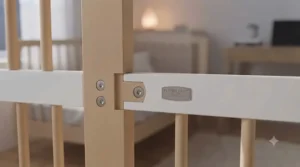
What actually matters: the number and type of locking casters (dual hooded locks outperform single-point locks on most flooring), verified safety certification (JPMA/Baby Safety Alliance and GREENGUARD Gold), and mattress fit precision relative to the crib’s interior frame. What tends not to matter as much as marketing suggests: decorative caster colors or finishes, since they have zero functional bearing on lock strength; and marginal weight differences of a pound or two between similarly-built mini cribs, which rarely change real-world portability in any noticeable way. Reviewers consistently note that flashy “360-degree swivel” marketing language matters far less than the simpler, more boring question of whether the lock actually holds when pushed.
Frequently Asked Questions
❓ Is a lockable caster crib safe for a baby who can stand up and push on the rails?
❓ Can I put a lockable caster crib on carpet without it drifting?
❓ How is a crib on rolling frame different from a standard travel crib?
❓ Do locking caster wheels wear out over time?
❓ What's the safest rolling baby bed option for a small apartment?
Conclusion
A lockable caster crib isn’t a gimmick — it’s a genuinely practical answer to the everyday logistics of caring for a baby across a home that doesn’t stay still just because your baby finally did. Whether you land on a fold-flat mini crib for a studio apartment, a travel-ready model for grandparents’ visits, or a full-size convertible built to last years, the deciding factors stay consistent: verified locking wheel count, real safety certification, and honest attention to how the frame performs on your specific flooring.
Of the seven models covered here, the Babyletto Origami remains the strongest all-around pick for small-space portability with genuine certification backing, while the Carson Classic Cribs frame wins for households prioritizing long-term stability and heirloom-grade build quality. Budget-conscious buyers shouldn’t overlook the Dream On Me Jett or Child Craft Bristol, both of which deliver real locking-wheel functionality without premium pricing. Whichever direction you go, test the locks yourself, check current certification status, and match the crib type to how your household actually moves through its day — that match matters more than any single spec on the page.
✨ Don’t Miss These Exclusive Deals!
🔍 Take your nursery setup to the next level with these carefully selected rolling crib options. Click on any highlighted item to check current pricing and availability. These picks will help you create a safe, flexible sleep space your whole family will love!
Recommended for You
- Rolling Crib With Locking Wheels: 7 Best Options for 2026
- 7 Best Convertible Toddler Bed From Crib Picks That Won’t Let You Down (2026)
- 7 Best Crib to Bed Conversion Kits in 2026
Disclaimer: This article contains affiliate links. As an Amazon Associate, I earn from qualifying purchases. If you purchase products through these links, we may earn a small commission at no additional cost to you.
✨ Found this helpful? Share it with your friends! 💬🤗
