
In This Article
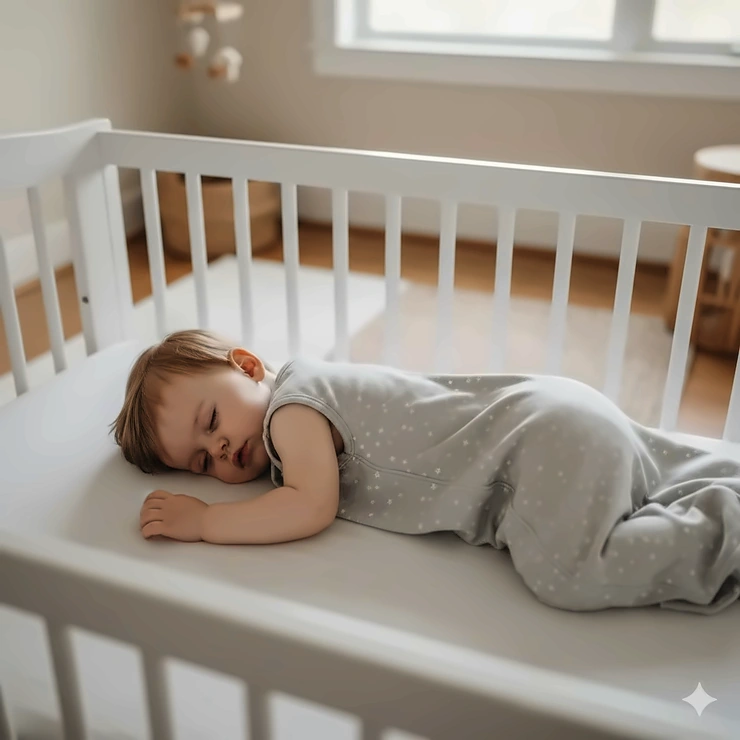
Remember that moment when your little one first rolled over? Pride mixed with panic, right? I get it. Once babies master rolling, everything changes—including how they sleep. Suddenly, those adorable swaddles become safety hazards, and you’re left wondering how to keep your tiny acrobat warm without loose blankets.

Here’s the thing: a sleep sack for babies who roll isn’t just another baby product—it’s your ticket to peaceful nights. Think of it as a wearable blanket that gives your baby freedom to move while keeping them safely tucked in. No more midnight wake-ups because they’ve kicked off their covers or gotten tangled in fabric.
According to the American Academy of Pediatrics, wearable blankets are the preferred choice for keeping babies warm during sleep, especially once they start rolling. The AAP emphasizes that traditional blankets pose suffocation risks, making sleep sacks the gold standard for safe sleep.
But here’s where it gets tricky: not all sleep sacks work for rolling babies. You need one that’s specifically designed for active sleepers—roomy enough for those midnight tumbles but secure enough to prevent tangling. In this guide, I’ll walk you through the seven absolute best options for 2025, covering everything from budget-friendly picks to premium splurges.
Quick Comparison Table: Top Sleep Sacks for Rolling Babies
| Product | Material | Price Range | Best For | TOG Rating | Key Feature |
|---|---|---|---|---|---|
| HALO SleepSack | 100% Cotton | $20-30 | Budget-conscious parents | 0.5-3.0 | Hospital trusted |
| Kyte Baby Sleep Bag | Bamboo Rayon | $45-65 | Eczema-prone skin | 0.5-2.5 | J-shaped zipper |
| Burt’s Bees Beekeeper | Organic Cotton | $20-40 | Eco-conscious families | 0.5, 1.5 | GOTS certified |
| Woolino 4 Season | Merino Wool | $70-109 | Year-round use | Universal | Temperature regulating |
| Gunamuna Sleep Bag | Bamboo Rayon | $55-70 | Easy diaper changes | 1.0, 2.6 | 4-way WONDERZiP |
| HALO SuperSoft Bamboo | Bamboo Rayon | $35-50 | Luxury comfort | 1.5 | Ultra-plush fabric |
| Love to Dream Transition | Cotton Blend | $30-45 | Swaddle graduates | 1.0, 2.5 | Zip-off arms |
💬 Just one click – help others make better buying decisions too! 😊
Top 7 Sleep Sacks for Babies Who Roll: Expert Analysis
1. HALO SleepSack 100% Cotton Wearable Blanket
The HALO SleepSack isn’t just popular—it’s legendary. As the number one choice of hospitals nationwide, this sleep sack has helped millions of babies (and parents) sleep better since the 1990s. What makes it perfect for rolling babies? The inverted zipper opens from the bottom, allowing easy diaper changes without disturbing your sleeping roller.
Key Specifications:
- Material: 100% cotton interlock (double-knit construction)
- Available TOG ratings: 0.5, 1.5, and 3.0
- Sizes: Newborn through XL (birth to 24 months, up to 36 lbs)
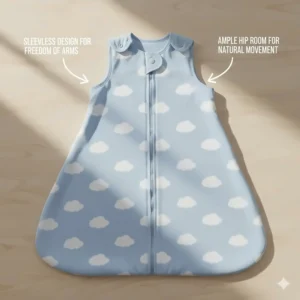
Customer feedback consistently praises its durability and safe design. Parents love that the hip-healthy sack design allows free leg movement—crucial for babies who roll and reposition throughout the night. The sleeveless design reduces overheating risk, while the arm and neck openings are precisely sized for safety.
✅ Pros:
- Trusted by hospitals nationwide
- Multiple TOG options for all seasons
- Hip-healthy design approved by International Hip Dysplasia Institute
❌ Cons:
- Basic design compared to bamboo alternatives
- May require sizing up sooner than adjustable options
Price: $20-30 depending on TOG and size
2. Kyte Baby Sleep Bag Bamboo Rayon
If butter could become fabric, it would feel like Kyte Baby. This bamboo rayon sleep sack is the premium choice for parents who want the absolute softest material against their baby’s skin. The signature J-shaped double zipper is a game-changer—you can unzip from top or bottom without exposing your rolling baby’s entire body to cold air.
Key Specifications:
- Material: 97% bamboo rayon, 3% spandex
- TOG options: 0.5 (summer), 1.0 (year-round), 2.5 (winter)
- Sizes: XS (0-6 months) through Large (18-36 months)
Parents rave about how this sleep sack helps with eczema and sensitive skin. The temperature-regulating properties mean your rolling baby stays comfortable whether they’re sleeping in a warm spot or cooler area of the nursery. One mom shared that her daughter went from waking every two hours to sleeping nine-hour stretches the first night!
✅ Pros:
- Incredibly soft, gets softer with each wash
- Excellent for babies with eczema or sensitive skin
- Temperature-regulating bamboo keeps baby comfortable
❌ Cons:
- Premium price point
- Requires careful washing (hang dry recommended)
Price: $45-65 depending on TOG and size
3. Burt’s Bees Baby Beekeeper Organic Cotton
Eco-conscious parents, meet your match. The Burt’s Bees Baby Beekeeper combines sustainability with safety at a surprisingly accessible price point. This GOTS-certified organic cotton sleep sack proves you don’t need to compromise your values or your budget when shopping for your rolling baby.
Key Specifications:
- Material: 100% GOTS-certified organic cotton
- TOG options: 0.5 (lightweight) and 1.5 (medium weight)
- Sizes: S (0-6M), M (6-12M), L (12-18M), XL (18-24M)
Customer feedback highlights the ultra-durable YKK zipper that’s guaranteed for life—no joke! The interior zipper guard protects delicate skin, and the snap tab zipper pull cover keeps curious little hands from unzipping themselves mid-roll. Parents appreciate that it’s machine washable and maintains its shape wash after wash.
✅ Pros:
- Affordable organic option under $30 on sale
- Lifetime zipper warranty
- Gentle on sensitive skin
❌ Cons:
- Limited TOG options compared to competitors
- Less stretchy than bamboo alternatives
Price: $20-40 (frequently on sale for $19-30)
4. Woolino 4 Season Ultimate Merino Wool Sleep Bag
The Woolino 4 Season Ultimate is the investment piece that eliminates the need for multiple sleep sacks. With its universal sizing from 2 months to 2 years, this merino wool and organic cotton blend grows with your baby. Here’s the magic: merino wool naturally regulates temperature, keeping babies warm in winter and cool in summer without needing different TOG ratings.
Key Specifications:
- Material: Australian merino wool lining with GOTS organic cotton outer
- Universal size: One size fits 2-24 months
- Features: Closable seat-belt openings for car seat compatibility
A University of Sydney study found that sleeping in wool leads to better sleep quality, and parents confirm this. Customers report their babies sleeping 8-10 hour stretches after switching to Woolino. The adjustable shoulder snaps and two-way zipper make it perfect for active rollers who need room to move.
✅ Pros:
- One size fits for nearly 2 years (excellent value long-term)
- Natural temperature regulation for year-round use
- Car seat compatible with seat-belt openings
❌ Cons:
- Higher upfront cost ($70-109)
- Hand wash or delicate cycle recommended
Price: $70-109 for universal size
5. Gunamuna Sleep Bag with WONDERZiP Technology
Meet the sleep sack designed by moms who were fed up with nighttime struggles. The Gunamuna Sleep Bag features revolutionary WONDERZiP technology—a 4-way zipper that opens all the way around, meaning you can change diapers without removing the entire sack. For rolling babies who protest getting dressed and undressed, this is pure genius.
Key Specifications:
- Material: Soft bamboo rayon with down alternative fill
- TOG options: 1.0 and 2.6
- Sizes: 3-9 months, 9-18 months, 18-36 months
Customer reviews are glowing: “The minute I put this on my daughter, she slept 9 hours straight! Prior to this, I could only get 4-hour stretches.” The OEKO-TEX Standard 100 certification guarantees it’s free from harmful chemicals. The built-in belly band helps control the startle reflex, which can be helpful during the rolling transition phase.
✅ Pros:
- Innovative 4-way zipper for easiest diaper changes
- Generous fit provides plenty of rolling room
- OEKO-TEX certified for chemical safety
❌ Cons:
- Similar price to Kyte Baby but less widely available
- Heavier feel may not suit all babies
Price: $55-70 depending on TOG and size
6. HALO SuperSoft Bamboo SleepSack
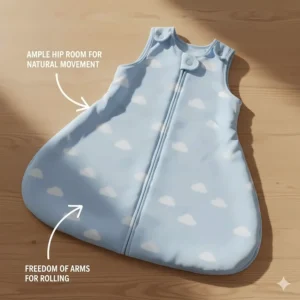
Think of this as the HALO SleepSack’s luxury cousin. The HALO SuperSoft Bamboo version takes everything parents love about the original and upgrades the fabric to buttery-soft bamboo viscose. It’s plush, it’s cozy, and it photographs beautifully (because let’s be honest, we’re all taking a million baby photos).
Key Specifications:
- Material: Viscose made from bamboo
- TOG rating: 1.5
- Sizes: Small (0-6 months) through Large (12-18 months)
Parents note this feels significantly softer than the standard cotton version while maintaining HALO’s signature safety features. The inverted zipper, hip-healthy design, and sleeveless construction make it perfect for babies who roll. The 1.5 TOG rating works well for most year-round nursery temperatures (68-72°F).
✅ Pros:
- Premium bamboo feel at mid-range price
- Trusted HALO safety design
- Machine washable and dryer safe
❌ Cons:
- Only available in 1.5 TOG (not ideal for very warm or cold rooms)
- Some parents find sizing runs slightly small
Price: $35-50
7. Love to Dream Swaddle UP Transition Bag
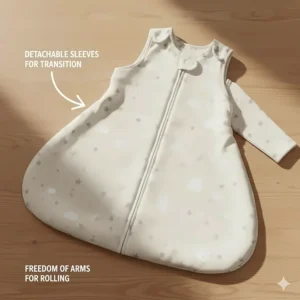
If your baby is still figuring out this whole rolling thing, the Love to Dream Swaddle UP Transition Bag bridges the gap beautifully. This innovative design features zip-off arms, allowing you to transition gradually from swaddle to sleep sack. Remove one arm at a time, or zip both off when your little roller is ready for full arm freedom.
Key Specifications:
- Material: Cotton blend
- TOG options: 1.0 (standard) and 2.5 (warm)
- Unique features: Removable wings for gradual transition
The arms-up design is perfect for babies who love having their hands near their faces—even while rolling. Customer feedback highlights how this eases the often-difficult swaddle transition. One parent noted: “My baby went from fighting every sleep to settling immediately because he could still self-soothe with his hands.”
✅ Pros:
- Gradual transition helps ease swaddle dependency
- Arms-up design supports natural self-soothing
- Twin zipper for easy changes
❌ Cons:
- Transition features eventually become unnecessary
- Not as roomy as traditional sleep sacks for very active rollers
Price: $30-45 depending on TOG
✨ Don’t Miss These Exclusive Deals!
🔍 Take your baby’s sleep to the next level with these carefully selected sleep sacks. Click on any highlighted product name to check current pricing and availability. These sleep sacks will help create safe, cozy nights your whole family will love!
Understanding TOG Ratings: What Rolling Babies Need
Let’s decode the mysterious TOG (Thermal Overall Grade) system. It’s simpler than you think!
TOG 0.5 (Room temp 74-78°F): Lightweight and breathable, perfect for summer or warm nurseries. Your rolling baby stays cool without overheating risk.
TOG 1.0-1.5 (Room temp 69-73°F): The sweet spot for year-round use. Most parents find this ideal for standard nursery temperatures. Great for babies who are active rollers and generate body heat.
TOG 2.5-3.0 (Room temp 61-68°F): Winter warmth for cold climates or cooler nurseries. Quilted layers trap heat while maintaining breathability.
Here’s the golden rule: feel your baby’s chest or back of neck to check temperature. If they’re sweating or feel hot, they’re overdressed. Cool extremities (hands and feet) are normal—focus on core temperature. For rolling babies, slightly lighter TOG is often better since active movement generates heat.
Why Sleep Sacks Beat Traditional Swaddles for Rolling Babies
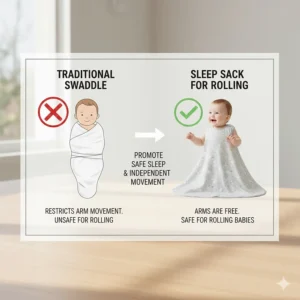
Once your baby shows signs of rolling (typically 3-4 months), swaddling becomes dangerous. Here’s why sleep sacks are the safer alternative:
Freedom of Movement: Unlike swaddles that restrict arms, sleep sacks allow babies to reposition themselves. If your roller ends up face-down, they need arm mobility to lift their head or turn it. The American Academy of Pediatrics specifically states that swaddling should be discontinued when infants show signs of rolling to prevent suffocation risks.
Temperature Regulation: Swaddles can cause overheating, especially in active rollers who generate body heat through movement. Sleep sacks provide warmth without the compression that leads to temperature issues.
Self-Soothing Support: Babies who can roll often discover they sleep better in certain positions. Sleep sacks allow this natural exploration while traditional swaddles force one position all night. Your baby might roll to their side or tummy and back again throughout the night—totally safe in a proper sleep sack!
Long-Term Use: While swaddles only work for newborns, a good sleep sack for babies who roll can be used well into toddlerhood. Some parents continue sleep sack use until age two or beyond, making it a better investment.
Material Matters: Bamboo vs Cotton vs Wool
Bamboo Rayon (Kyte Baby, Gunamuna, HALO SuperSoft)
Bamboo feels like a cloud. It’s naturally hypoallergenic and temperature-regulating, making it ideal for babies with eczema or those who sweat during active rolling sessions. The silky-soft texture gets even softer with washing. However, it requires more careful laundering—cold water washes and air drying extend its life.
Best for: Sensitive skin, temperature regulation, luxury feel
Organic Cotton (Burt’s Bees, HALO Original)
Cotton is the tried-and-true workhorse of sleep sacks. It’s breathable, durable, and machine-wash-friendly. Organic varieties like those in the Beekeeper avoid pesticide exposure. Cotton doesn’t regulate temperature as effectively as bamboo or wool, but it’s reliable and affordable. The double-knit construction adds softness without sacrificing durability.
Best for: Easy care, affordability, chemical-free options
Merino Wool (Woolino)
Wool sounds counterintuitive for baby sleep, but merino is magical. It naturally wicks moisture, regulates temperature across a wide range, and even has antibacterial properties. A study by the University of Sydney
confirmed better sleep quality in wool. It’s more expensive upfront but often pays for itself through longer use and year-round versatility.
Best for: All-season use, temperature extremes, investment piece
Cotton Blends (Love to Dream)
Blended materials add stretch and durability to pure cotton. These typically cost less than bamboo while offering more give than 100% cotton. The stretch helps accommodate growing babies and active rollers who need flexibility.
Best for: Transition periods, active movers, budget-conscious parents
Safety Features Every Rolling Baby Sleep Sack Needs
Hip-Healthy Design
Look for the International Hip Dysplasia Institute’s “hip healthy” designation. Sleep sacks should be roomy in the bottom, allowing natural leg positioning and movement. Tight, restrictive sacks can force babies’ legs straight, potentially affecting hip development. Your rolling baby needs space to draw legs up naturally.
Secure But Not Tight Neckline
The neck opening should fit snugly enough that baby can’t slip down inside but loose enough that it doesn’t restrict breathing. Always check the fit when sizing up—what worked at 4 months might be too snug at 6 months after rolling becomes more vigorous.
Quality Zippers with Guards
Inverted zippers (opening from bottom) make diaper changes easier. Zipper guards prevent pinching delicate skin. Some innovative designs like Gunamuna’s 4-way zipper allow changes without exposing baby’s whole body to cold air—a blessing for night wakings.
No Added Weights
This is critical: never use weighted sleep sacks. The AAP explicitly warns against weighted products for infant sleep. Babies who roll need to be able to reposition freely, and any added weight restricts this natural movement.
Proper Sizing
Sleep sacks should fit around armholes and neck but be roomy in the body. Too-small armholes can restrict shoulder movement when baby rolls. Too-large neck openings pose slip-down risks. Always check manufacturer sizing charts based on both weight and length.
When to Transition from Swaddle to Sleep Sack
The Rolling Readiness Signs
Your baby is ready to transition when they:
- Consistently roll from back to belly during tummy time
- Show signs of attempting to roll during sleep (rocking side to side)
- Break free from swaddles regularly
- Become fussy when arms are confined
Most babies hit these milestones between 3-4 months, though some early birds start sooner. Don’t wait until your baby successfully rolls over during sleep—transition as soon as you see those first rolling attempts.
Making the Switch Smooth
Cold Turkey Method: Simply stop swaddling and start the sleep sack. Some babies adapt immediately, especially if they seemed frustrated by swaddle restriction.
Gradual Approach: Use transitional products like the Love to Dream Swaddle UP with removable wings. Start with one arm out, then both, then full sleep sack.
Timing Strategy: Make the switch at the start of a weekend when you can handle a few rough nights. Pair it with other positive sleep associations (white noise, bedtime routine) so the sleep sack becomes part of the comfort equation.
Consistency is Key: Use the sleep sack for all sleeps—naps and nighttime. This helps baby recognize it as a sleep cue, just like the swaddle was.
Sleep Sack Safety Checklist for Rolling Babies
✅ Back to Sleep: Always place baby on back initially, even in sleep sack. Once they can roll both ways independently, it’s safe to leave them in whatever position they choose.
✅ Firm, Flat Surface: Use sleep sacks only on approved crib mattresses, bassinets, or play yards. Never use on soft surfaces, couches, or adult beds where rolling creates suffocation risks.
✅ Bare Crib: The sleep sack replaces blankets. Keep crib free of pillows, toys, bumpers, or other items. As outlined by Safe Sleep Missouri, the sleep environment should contain only the baby in their sleep sack.
✅ Temperature Check: Feel baby’s chest or back of neck. They should feel warm but not sweaty. Adjust TOG rating or room temperature accordingly.
✅ Proper Fit: Check armholes monthly—babies grow fast! Armholes should be snug enough that baby can’t slip arms inside the sack body.
✅ Regular Inspection: Check zippers, snaps, and seams for wear. Replace sleep sacks that show damage.
✅ Room Sharing: Keep baby’s crib in your room for at least the first 6 months, ideally the first year, as recommended by the AAP.
Budget Guide: When to Splurge vs Save
Save Money On:
Multiple Sizes: Don’t buy every size if choosing sized options. Many babies can wear size Small (0-6 months) until 8-9 months with proper fit checks. Invest in one or two key sizes.
Single Season Use: If you live in consistent climate, you might only need one TOG rating. A Texas family probably skips the 2.5 TOG winter weight.
Brand Loyalty: Just because you loved one brand doesn’t mean you need every product. Mix and match based on needs and sales.
Worth the Splurge:
Universal Sizing: Products like Woolino cost more upfront but last 2+ years without sizing up. The math works out favorably long-term.
Sensitive Skin Solutions: If your baby has eczema or severe sensitivities, bamboo or organic materials prevent flare-ups and doctor visits—worth every penny.
Temperature Extremes: Living somewhere with harsh winters or sweltering summers? Invest in proper TOG ratings. Poor sleep costs more in everyone’s sanity than a $50 sleep sack.
Backup Options: Having 2-3 sleep sacks means you’re never caught without one during laundry emergencies or nighttime accidents.
The Sweet Spot Strategy
Buy one budget option (Burt’s Bees or HALO Cotton) and one premium choice (Kyte Baby or Woolino). Use the premium for nighttime sleep when comfort matters most, and the budget option for naps or daycare. This gives you flexibility without breaking the bank.
Common Sleep Sack Mistakes to Avoid
Mistake #1: Sizing Up Too Soon
I know babies grow fast, but oversized sleep sacks pose safety risks. Those loose armholes? Your baby can slip arms inside and get tangled. That baggy neck opening? Potential slip-down hazard. Always choose current fit over “room to grow.”
Mistake #2: Ignoring TOG in Temperature Control
Your baby feels hot? Don’t just remove layers underneath—check if your TOG rating matches room temperature. A 2.5 TOG in a 74°F room will overheat even a naked baby. The TOG rating IS the blanket equivalent—treat it accordingly.
Mistake #3: Forgetting Supervised Tummy Time
Sleep sacks are for sleeping, not play. Your rolling baby needs plenty of supervised tummy time throughout the day to build the strength they need for safe rolling. Aim for 15-30 minutes daily by 7 weeks, as recommended by pediatricians.
Mistake #4: Using Sleep Sacks in Car Seats
Most sleep sacks shouldn’t be worn in car seats because they interfere with proper harness fit. The exception? Products with designated seat-belt openings like Woolino. Otherwise, dress baby warmly, buckle safely, then add a blanket OVER the harness straps if needed.
Mistake #5: Transitioning Too Late
Some parents wait until baby fully masters rolling before ditching swaddles. Wrong move. The risk window is when baby is attempting to roll but can’t get back. Transition at the first sign of rolling efforts, not after mastery.
Extending Sleep Sack Use: From Rolling to Walking
Good news: sleep sacks aren’t just for rolling babies. Many toddlers use them happily until age 2-3, and some products accommodate even older kids.
Benefits for Toddlers
Prevents Climbing: A sleep sack makes it harder for adventurous toddlers to swing legs over crib rails. It’s not a substitute for lowering the mattress, but it’s an added deterrent.
Eliminates Blanket Battles: Toddlers kick off blankets constantly. Sleep sacks keep them covered without nighttime wake-ups.
Sleep Association: The sleep sack becomes a powerful bedtime cue. My friend’s 2-year-old literally asks for her “sleep bag” as part of bedtime routine.
Walking-Friendly Options
Look for sleep sacks with foot openings once your toddler stands confidently. Brands like Woolino, Gunamuna, and HALO offer “walking sleep sack” versions for 18+ months. These allow toddlers to stand safely in their crib without tripping while maintaining the cozy sleep environment.
When to Stop
There’s no magic cutoff age. Transition out when:
- Your child requests it
- They consistently escape the sleep sack
- They outgrow the largest available size
- They need full leg mobility for potty training
Some kids transition at 18 months; others keep using sleep sacks until 3-4 years. Follow your child’s lead.
Travel Tips: Sleep Sacks On-the-Go
Pack Light Strategy: Bring one sleep sack for every 2 nights of travel. Do quick hand-washes in hotel sinks if needed. Bamboo and merino dry faster than cotton.
Car Seat Compatibility: For long drives where baby might nap, choose a sleep sack with seat-belt openings (Woolino) or skip the sleep sack until you reach your destination.
Familiar Comfort: The sleep sack provides consistency in unfamiliar environments. It’s like bringing a piece of home, helping your roller sleep in new places.
Airport Security: Sleep sacks pass through security without issues. Wear baby in a carrier through security, then put them in their sleep sack once you’re at the gate or on the plane.
Temperature Variability: Hotels and relatives’ homes often have different temperatures than your nursery. Pack a lighter TOG (0.5 or 1.0) that can be layered over warmer pajamas if needed.
Laundering Your Sleep Sacks: Care Tips for Longevity
Bamboo Rayon Care
- Wash in cold water on gentle cycle
- Use mild, fragrance-free detergent
- Skip fabric softener (reduces absorbency)
- Air dry flat or hang to maintain softness
- Avoid high heat, which can damage fibers
Cotton Care
- Machine wash warm or cold
- Tumble dry low to medium
- Wash inside out to protect outer prints
- Pre-treat stains with baby-safe stain remover
- Can handle more frequent washing than bamboo
Wool Care
- Hand wash or use gentle cycle in cold water
- Use wool-specific or very mild detergent
- Never use fabric softener or bleach
- Lay flat to dry (avoid hanging, which can stretch)
- Wool naturally resists odors—wash less frequently
General Tips
Frequency: Wash after 3-4 uses unless there’s a diaper leak or spit-up. Over-washing shortens lifespan.
Stain Treatment: Act fast on blowouts. Rinse immediately in cold water, then treat with enzyme-based baby stain remover.
Storage: Store clean, dry sleep sacks in breathable containers. Avoid plastic bags that trap moisture.
Rotation: Having 2-3 sleep sacks in rotation means less wear on each one. Alternate regularly.
FAQ: Your Sleep Sack Questions Answered
❓ Can my baby sleep on their stomach in a sleep sack once they can roll?
❓ How do I know which TOG rating to choose for my rolling baby?
❓ Is it safe to use sleep sacks with babies who can stand in their crib?
❓ My baby hates the sleep sack and fights it every time. What should I do?
❓ Can I use a sleep sack over footed pajamas?
Conclusion: Finding Your Perfect Sleep Sack Match
Choosing a sleep sack for babies who roll doesn’t have to feel overwhelming. Let me simplify it for you:
If budget matters most: Go with Burt’s Bees Beekeeper or HALO SleepSack Cotton. Both deliver safety and quality under $30, with proven track records.
If your baby has sensitive skin: Kyte Baby or HALO SuperSoft Bamboo are worth the investment. The bamboo rayon is genuinely game-changing for eczema-prone babies.
If you want one-and-done simplicity: Woolino 4 Season eliminates TOG confusion and sizing up. Yes, it costs more upfront, but you’ll use it for two full years.
If diaper changes are your nemesis: Gunamuna’s WONDERZiP technology makes midnight changes dramatically easier. Your sleep-deprived self will thank you.
If you’re transitioning from swaddles: Love to Dream provides the gentlest path forward with removable wings that let you control the pace.
Remember, the “best” sleep sack is the one that works for YOUR baby and YOUR family. What helps one roller sleep through the night might frustrate another. Don’t be afraid to try different options—most retailers have generous return policies.
The goal isn’t perfection; it’s safe, comfortable sleep for your rolling baby. With the right sleep sack, you’re giving your little tumbler the freedom to move naturally while staying cozy all night. And when your baby sleeps better, everyone sleeps better.
Sweet dreams are coming, friend. You’ve got this! 💤
Recommended for You
- Best 7 Sleep Sacks for 3 Month Old: 2025 Expert Guide
- 7 Best Newborn Sleep Sacks for Safe Sleep & Peaceful Nights 2025
- 7 Best Stainless Steel Sippy Cups for Toddlers 2025 Guide
Disclaimer: This article contains affiliate links. If you purchase products through these links, we may earn a small commission at no additional cost to you.
✨ Found this helpful? Share it with your friends! 💬🤗
