
In This Article
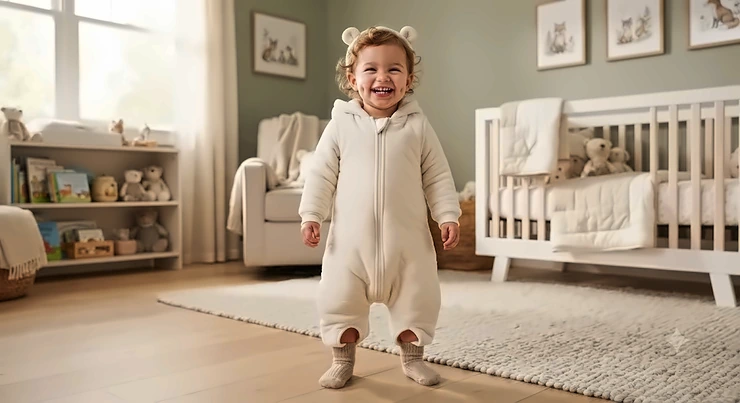
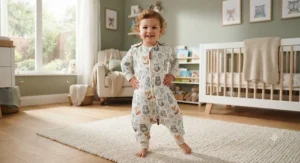
If you’ve ever tiptoed into your toddler’s room at 2 a.m. to find them standing bolt upright in their crib, blanket kicked halfway across the mattress, you already know why a walking sleep sack toddler design exists. A walking sleep sack toddler is a wearable blanket with separate leg openings — sometimes called a sleep sack with leg holes — built specifically for kids who have graduated from crawling to full-on cruising, climbing, and sprinting laps around the living room before bedtime. Unlike a traditional footed sleep sack that turns your kid into a human burrito, this style lets them stand, walk to the door, or climb back into bed without the tripping hazard of a fabric hem bunched around their ankles.
Here’s the thing most parents don’t realize until they’re standing in the nursery aisle at 11 p.m., phone flashlight on: not every “sleep sack with feet” actually has leg holes. Some just have a closed sack bottom with fabric feet sewn on, which is fine for a baby who isn’t upright yet but becomes a genuine fall risk once your toddler is walking. According to the American Academy of Pediatrics’ safe sleep guidance, dressing a child in a wearable blanket instead of loose bedding is one of the safer ways to keep them warm through the night, but that guidance was written with infants in mind — mobility changes the calculus once you’re dealing with an early walker sleep sack situation.
This guide walks through seven real products currently sold on Amazon, breaks down what actually separates a good mobile toddler sleep bag from a mediocre one, and gives you a decision framework so you’re not guessing at 2 a.m. next time either.
Quick Comparison Table
| Product | TOG Rating | Material | Best For |
|---|---|---|---|
| Tealbee Dreamsuit | 0.8–1.5 | Bamboo rayon blend | All-around walker pick |
| Bublo Baby Sleep Sack with Feet | 1.0 | Cotton blend | Tightest budget |
| Kyte Baby Sleep Bag Walker | 0.5 / 1.0 / 2.5 | Bamboo rayon | Sensitive skin, year-round |
| WONDAY Sleep Sack with Feet | 0.5 / 1.0 | Cotton | Widest size range |
| gunamuna Footie Sleep Sack | 1.0 | Bamboo viscose | Convertible feet |
| Yoofoss Sleep Sack with Feet | 1.0 | Organic cotton | Simple daily use |
| Woolino 4-Season Sleep Bag | 2.5 (self-regulating) | Merino wool | Cold climates, no TOG guesswork |
Scanning this table, a pattern emerges fast: the split isn’t really budget versus premium, it’s fabric philosophy. Bamboo-based options like the Tealbee Dreamsuit and Kyte Baby Sleep Bag Walker lean on temperature regulation and softness for sensitive skin, while cotton picks like WONDAY and Yoofoss trade a little bit of that buttery feel for a lower price tag and easier machine-washing. The Woolino stands apart because its wool fill self-regulates temperature, which means you’re not stuck guessing whether you need the 0.5 or the 1.0 TOG version — a genuinely different value proposition than the rest of this list.
💬 Just one click — help others make better buying decisions too!😊
Top 7 Walking Sleep Sack Toddler Picks: Expert Analysis
1. Tealbee Dreamsuit — best two-way zipper for fast diaper changes
The standout here is the two-way zipper, which unzips from either the top or bottom so you can get to a diaper without waking a kid who just barely fell asleep. The bamboo-cotton blend fabric breathes well enough to work across a 0.8 to 1.5 TOG range depending on the season you buy, and the leg openings are cut roomy rather than snug, which matters more than it sounds like — a tight leg hole is what causes chafing on the inner thigh after a few nights of actual walking in the thing. Based on the spec comparison against other bamboo-blend options on this list, the Dreamsuit’s sizing runs generous, which is a plus for kids who are tall for their age.
Reviewers consistently note that their toddlers could “walk, run and play” in it right after waking, without needing to strip it off first — a detail that matters more at 6 a.m. than it sounds like on paper. Parents also flag the fabric holding up well over repeated washes, a real durability signal for something that gets worn nightly.
Pros:
- ✅ Two-way zipper makes diaper changes genuinely fast
- ✅ Roomy leg holes reduce chafing during actual walking
- ✅ Breathable blend works across three seasons
Cons:
- ❌ Pricier than basic cotton alternatives
- ❌ Bamboo blends need cold-wash care to stay soft
Priced in the $35-$45 range, this is the pick if you want one sleep sack that handles most of the year without a wardrobe of TOG variations.
2. Bublo Baby Sleep Sack with Feet — most affordable true walker design
What most buyers overlook about budget sleep sacks is that “cheap” and “corner-cutting” aren’t the same thing, and the Bublo is proof. It delivers the same core mechanics as sacks twice its price — separate leg openings, a two-way zipper, breathable cotton-blend fabric — at a fraction of the cost, which makes it the obvious starter pick if you’re not sure your toddler will even tolerate a sleep sack once they’re mobile.
The cotton blend isn’t as plush as bamboo, but it’s genuinely breathable and machine-washes without fuss, which matters when you’re doing laundry every other night. Reviewers report toddlers walking and playing freely in it right after waking, which confirms the leg-hole design does what it claims rather than just looking good in product photos.
Pros:
- ✅ Lowest price point of any true walker-style sack
- ✅ Two-way zipper included even at budget tier
- ✅ Easy machine wash and quick dry
Cons:
- ❌ Fabric feels thinner than premium bamboo options
- ❌ Fewer color and print choices available
At under $20, this is the value leader if you want to test whether your toddler even likes wearing one before committing to a pricier fabric.
3. Kyte Baby Sleep Bag Walker — best fabric for sensitive or eczema-prone skin
The ankle cuffs are the detail that sets this apart: instead of a plain leg opening, Kyte adds a soft cuff that keeps warm air in around the ankle while still letting the foot move freely for walking. The rayon-from-bamboo fabric is genuinely a step up in hand-feel, and it comes in three TOG weights (0.5, 1.0, 2.5) so you can match the sack to your actual room temperature instead of layering pajamas underneath and guessing.
What the spec sheet won’t tell you, but user reports suggest, is that this fabric holds up unusually well against eczema flare-ups — parents in the reviews specifically call out reduced skin irritation compared to synthetic blends. The dual zipper includes a “zipper garage” flap at the top, a small design choice that keeps the zipper pull away from a curious toddler’s chin.
Pros:
- ✅ Three TOG weights cover any room temperature
- ✅ Ankle cuffs add warmth without restricting movement
- ✅ Fabric reported to help with sensitive or eczema skin
Cons:
- ❌ Premium price compared to cotton competitors
- ❌ Brand recommends against machine drying
Expect to pay in the $40-$50 range, which is justified if skin sensitivity is a real factor in your household.
4. WONDAY Sleep Sack with Feet — widest size range for growing kids
WONDAY’s standout feature is coverage: the line runs from 12-18 months all the way through 5T-7T, which means one brand can realistically carry a family through several years of the walking stage instead of needing to switch brands as your kid grows. The 0.5 and 1.0 TOG options split cleanly by season, and a chin-safe zipper guard keeps the zipper pull from catching delicate skin during middle-of-the-night changes.
Based on the spec comparison, the roomy cut here is specifically marketed around hip development — the listing calls out generous space for “healthy hips” and natural leg positioning, language that lines up with what the International Hip Dysplasia Institute recommends: sleepwear that lets the hips and knees bend and spread rather than confining the legs straight down. That’s a meaningful design detail for a product your toddler wears every single night.
Pros:
- ✅ Sizes span 12 months through 5T-7T
- ✅ Chin-safe zipper guard prevents pinching
- ✅ Roomy hip-healthy cut for natural leg movement
Cons:
- ❌ Cotton fabric less plush than bamboo blends
- ❌ Print/color options more limited at largest sizes
Priced around $20-$30, this is the pragmatic pick for parents who’d rather buy once and size up within the same familiar brand.
5. gunamuna Footie Sleep Sack — most flexible for switching between play and sleep
The convertible foot cuffs are the headline feature — they flip open for walking and play, then close back up for extra warmth once your toddler settles down, which solves the annoying problem of a sack that’s either always-open or always-closed. Paired with the brand’s own quick-access diaper zipper system, middle-of-the-night changes happen without fully undressing a half-asleep toddler.
The bamboo viscose fabric leans soft and temperature-regulating, in the same family as Tealbee and Kyte Baby, and the brand adds small anti-slip grips to the sole area specifically for those wobbly first-walking-in-a-sack attempts. Reviewers highlight the adaptability of the convertible cuffs as the reason they keep repurchasing across sizes.
Pros:
- ✅ Convertible cuffs switch between open feet and closed
- ✅ Anti-slip grips help with early walking stability
- ✅ Quick-access zipper limits full wake-ups at night
Cons:
- ❌ Higher price than basic cotton competitors
- ❌ Convertible mechanism adds a small learning curve
At $40-$50, this earns its price if your toddler alternates between wanting feet free and wanting them warm and covered.
6. Yoofoss Sleep Sack with Feet — simplest no-frills daily option
Yoofoss keeps things straightforward: 100% organic cotton, a two-way zipper, and separate leg openings sized for 3T-4T walkers, without the extra features that push other sacks up in price. That simplicity is actually the selling point — for parents who just want a reliable, breathable sack without ankle cuffs, convertible features, or a three-tier TOG system to research, this is the low-friction choice.
Here’s what to weigh: organic cotton doesn’t regulate temperature quite as actively as bamboo blends, so you may need a slightly different layering approach depending on your nursery’s climate, but the trade-off is a genuinely simple, machine-washable product that doesn’t require reading a care-label essay before every wash.
Pros:
- ✅ 100% organic cotton construction
- ✅ Straightforward two-way zipper design
- ✅ Machine washable without special care steps
Cons:
- ❌ Single TOG weight limits seasonal flexibility
- ❌ Sizing runs narrower than some competitors
In the $20-$25 range, this is a solid pick if you want mobility-friendly design without extra bells and whistles.
7. Woolino 4-Season Sleep Bag — best for skipping the TOG guesswork entirely
The Woolino’s merino wool lining is genuinely different from everything else on this list — instead of picking between a 0.5 and 1.0 TOG based on room temperature, wool’s natural fiber structure self-regulates, pulling moisture away from skin in warm rooms and trapping warmth in cooler ones. That means one sack can realistically carry you through all four seasons without a drawer full of TOG variants.
On paper this means less inventory to manage, and reviewers back that up, reporting the sack staying comfortable across noticeably different room temperatures without their toddler waking up sweaty or cold. The foot holes are cut for a toddler who’s already confidently walking, giving plenty of clearance for full steps rather than a shuffle.
Pros:
- ✅ Wool self-regulates temperature across seasons
- ✅ One product replaces multiple TOG-specific sacks
- ✅ Roomy foot holes suit confident walkers
Cons:
- ❌ Highest price point on this list
- ❌ Wool requires gentler wash care than cotton
Expect to pay in the $60-$70 range — a premium justified mainly if you’re tired of buying a new TOG weight every season.
Practical Usage Guide: Getting the First 30 Nights Right
Bringing home a new walking sleep sack toddler design isn’t quite plug-and-play, especially if your kid is used to a footed sack or a loose blanket. Start with a daytime trial run — let your toddler wear it during an afternoon nap or even just playtime so they get used to the feeling of fabric around the legs before you introduce it at bedtime, when tiredness already makes new sensations harder to tolerate.
Check the fit at the neck and shoulders first, not the legs. A common first-week mistake is sizing up “for room to grow,” which leaves extra fabric bunched at the shoulders that a toddler can wriggle inside of — exactly the loose-fabric risk a sleep sack is supposed to eliminate. The leg holes themselves should sit comfortably at the upper thigh, snug enough that fabric doesn’t bunch around the ankle when they walk, but not so tight it leaves a red mark after a full night.
For maintenance, most bamboo-blend sacks (Tealbee, Kyte Baby, gunamuna) specifically ask for cold wash and hang-dry rather than machine drying, since heat breaks down the stretch fibers over time. Cotton options like WONDAY and Yoofoss are more forgiving and typically tolerate a low-heat dryer cycle. Either way, wash before first use to remove manufacturing residue and soften the fabric against sensitive skin.
One optimization trick that doesn’t show up on any Amazon listing: keep a second sack in rotation from day one. Toddlers in the walking stage have more nighttime accidents and spills than younger babies simply because they’re more active, and having a backup ready means you’re not doing emergency laundry at midnight.
Real-World Scenarios: Matching the Sack to Your Toddler
The climber, 14 months, just pulled to standing: This kid needs the roomiest hip-healthy cut on this list — the WONDAY Sleep Sack with Feet or the budget-friendly Bublo Baby Sleep Sack with Feet both prioritize generous leg movement, which matters most in this early cruising stage when hips and legs are still developing their range of motion.
The full-speed runner, 2 years old, resists bedtime: For a toddler who’s already confidently walking and testing boundaries at bedtime, the convertible cuffs on the gunamuna Footie Sleep Sack let you close things up for actual sleep while still allowing quick opens for a bathroom trip or water request without a full sack removal.
The sensitive-skin kid in a cold climate: Families dealing with eczema or extremely dry winter air get the most mileage from the Kyte Baby Sleep Bag Walker in its 2.5 TOG weight, or the Woolino 4-Season Sleep Bag if you’d rather not manage multiple TOG purchases across a long, cold season.
How to Choose a Walking Sleep Sack Toddler: 6 Criteria That Actually Matter
- Leg hole width, not just presence. A sack advertised as having “feet” doesn’t always mean true separate leg holes cut for walking — check the product photos for a toddler actually standing in it, not just lying down.
- TOG rating matched to your actual room, not the season on the calendar. A 69-73°F nursery calls for a 1.0 TOG regardless of whether it’s technically winter outside.
- Zipper direction and placement. A two-way zipper that opens from the bottom saves you from fully undressing a sleeping toddler for a diaper change.
- Fabric care requirements you’ll actually follow. If you don’t want to hand-wash or hang-dry, skip delicate wool and lean toward cotton or machine-washable bamboo blends.
- Hip and thigh room, not just overall length. Sizing up for growth room at the shoulders while leaving the hips snug is a common and avoidable mistake.
- Size range relative to how long you plan to use it. If you want one product through multiple growth spurts, prioritize brands with wide size runs, like WONDAY’s 12-month-through-5T span.
Common Mistakes When Buying a Sleep Sack with Leg Holes
The single biggest mistake parents make is buying based on the word “feet” in the product title without checking whether the sack actually has separated leg openings versus a closed-bottom design with sewn-in foot pockets. The latter is fine for a baby who isn’t upright yet, but becomes a genuine fall hazard for a walking toddler who needs their legs to move independently.
A second common misstep is over-buying TOG weight “to be safe,” which frequently backfires into an overheated, sweaty toddler who wakes up more, not less. Overheating is a legitimate concern the AAP has flagged specifically in the context of sleep clothing, so matching TOG to your actual measured room temperature — not a guess — pays off in better sleep.
Third, parents often skip checking the zipper garage or safety flap detail, then discover a curious toddler has figured out how to unzip the whole thing from the inside within a week. Fourth, buying only one size instead of anticipating the next size up means you’re re-shopping in three months rather than sizing generously (at the shoulders and torso, not the legs) from the start. Finally, ignoring wash-care instructions on premium bamboo fabrics — tossing them in a hot dryer — is the fastest way to shorten the lifespan of an otherwise excellent product.

Walking Sleep Sack vs. Traditional Footed Sleep Sack
| Factor | Walking Sleep Sack (Leg Holes) | Traditional Footed Sack |
|---|---|---|
| Mobility | Full leg movement, safe to stand/walk | Legs bound together, tripping risk once mobile |
| Best Age | 12+ months, once pulling to stand or walking | Pre-mobile infants |
| Diaper Changes | Two-way zipper, quick access | Often single zipper, full removal needed |
| Transition Ease | Bridges swaddle to toddler bed comfortably | Requires a hard switch once child starts walking |
The core trade-off here isn’t quality, it’s timing. A traditional footed sack is genuinely the right call for a baby who isn’t upright yet — the closed design adds warmth without the leg holes doing anything useful for a child who can’t walk anyway. The moment your toddler starts pulling to stand and cruising along furniture, though, that same closed-bottom design becomes a real fall risk, since a foot caught in bunched fabric while trying to stand is exactly the kind of accident a mobility-friendly sleep sack is designed to prevent. If you’re on the fence about timing, the general rule of thumb parents use is the same one pediatric sleep specialists suggest for the swaddle-to-sack transition: once your baby is reliably pulling up or attempting steps, it’s time to make the switch.
✨ Don’t Miss These Exclusive Deals!
🔍 Take your toddler’s bedtime routine to the next level with these carefully selected sleep sacks. Click on any highlighted item to check current pricing and availability. These picks will help you create the cozy, safe nights your family deserves!
What to Expect: Real-World Performance for Active Toddlers
Specs on a listing page don’t tell you what a 2 a.m. diaper change actually feels like, so here’s the translation. A two-way zipper genuinely does cut a middle-of-the-night change from a five-minute ordeal to under a minute, since you’re not wrestling a half-asleep toddler out of a full sack. Ankle cuffs, like the ones on the Kyte Baby walker, mean less cold air creeping up the leg during winter without sacrificing the ability to actually walk.
TOG ratings translate roughly like this in daily life: a 0.5 TOG feels like a light cotton t-shirt, appropriate for warmer rooms in the mid-70s; a 1.0 TOG feels closer to a lightweight sweatshirt, comfortable in a standard 69-73°F nursery; and a 2.5 TOG is genuinely warm, more like a fleece layer, meant for rooms that dip into the low 60s. Buying the wrong TOG for your actual room temperature is the single most common reason parents report their toddler waking up sweaty or, alternately, cold and fussy.
Mobility-friendly cuts also affect naptime behavior in ways that aren’t obvious from a product photo — toddlers in true walker-style sacks tend to settle faster after nap wake-ups because they can immediately toddle over to a parent or toy rather than needing help standing up first.
Mobility-Friendly Sleep Sack for Every Walking Stage
Early Walker Sleep Sack: 10-15 Months
At this stage, your toddler is likely pulling to stand and taking first assisted steps, so the priority is hip room over anything else. A roomy cut, like the one on the WONDAY Sleep Sack with Feet, gives developing hip joints the range of motion pediatric hip specialists recommend, without restricting the exact leg movements your kid is working hardest to master.
Active Toddler Sleepwear: 18-30 Months
Once your toddler is confidently walking and running, durability and quick-change mechanics matter more than roomy hip cuts. This is where features like the convertible cuffs on the gunamuna Footie Sleep Sack or the fast two-way zipper on the Tealbee Dreamsuit earn their keep — you’re managing a kid who wants to sprint to the door the second they wake up.
Mobile Toddler Sleep Bag: Transitioning Toward a Big-Kid Bed
As your toddler nears the switch from crib to bed, a wide size range becomes valuable since you’re less likely to want to keep re-buying. Brands with a broad size run, like WONDAY’s coverage through 5T-7T, let a single mobility-friendly sleep sack carry your child through this whole transitional window without a mid-stream brand switch.
Long-Term Cost & Maintenance
Running the numbers on cost-per-use tells a different story than sticker price alone. A $15 Bublo Baby sack that lasts eight months of nightly wear works out to roughly $0.06 per night, while a $65 Woolino that lasts through two full years of seasonal changes (thanks to that self-regulating wool skipping the need for separate TOG purchases) comes out closer to $0.09 per night — genuinely comparable once you account for not needing three separate TOG-weight sacks along the way.
Maintenance costs matter too. Bamboo-blend sacks that require cold wash and hang-dry take longer per laundry cycle but tend to hold shape and softness longer, while cotton options tolerate a dryer but may show wear (pilling, fading) sooner with heavy nightly use. If you’re doing laundry every other night regardless, factor in owning two of whatever sack you choose — that single change cuts emergency midnight laundry situations dramatically and effectively doubles your product’s usable lifespan before replacement.
Safety, Regulations & Hip-Health Compliance Guide
Any wearable blanket sold for children’s sleepwear in the U.S. has to meet flammability standards set by the Consumer Product Safety Commission, so check that a listing explicitly states compliance rather than assuming it based on price or brand recognition alone. Beyond flammability, the design detail that matters most for a walking-stage sack is hip room. The International Hip Dysplasia Institute specifically warns that swaddling or sleepwear which forces the legs straight down and pressed together can loosen hip joints and damage the cartilage of the socket, which is exactly why the roomiest sacks on this list market their cut around “hip-healthy” language rather than a snug, form-fitting silhouette.
On the SIDS-prevention side, the CDC’s safe sleep guidance for babies emphasizes keeping soft bedding out of the sleep area entirely and avoiding overheating for children under 12 months, though that specific SIDS risk drops substantially once your child is walking and well past the infant stage. Still, the underlying logic (avoid overheating, avoid loose fabric that could bunch or trap a limb) carries forward into toddlerhood as a general safety principle even after the highest-risk SIDS window has passed. If your toddler has any diagnosed hip condition or wears a harness or brace, check the product listing for explicit harness compatibility before buying rather than assuming a roomy cut will automatically fit over medical equipment.
Frequently Asked Questions
❓ When can a toddler switch to a walking sleep sack toddler with leg holes?
❓ Is a walking sleep sack toddler safe for a child who climbs out of the crib?
❓ What TOG should I buy for a mobile toddler sleep bag?
❓ How long do toddlers typically wear a sleep sack with leg holes?
❓ Can an early walker sleep sack replace a blanket completely?
Conclusion
Choosing the right walking sleep sack toddler design really comes down to matching three things: your child’s actual mobility stage, your nursery’s real temperature, and how much you’re willing to manage in terms of fabric care. Budget picks like the Bublo Baby Sleep Sack with Feet and Yoofoss Sleep Sack with Feet prove that a lower price doesn’t mean cutting corners on the core mechanics that matter — real leg holes and a functional two-way zipper. Mid-range options like the Tealbee Dreamsuit and WONDAY Sleep Sack with Feet balance features and cost well for most families, while premium picks like the Kyte Baby Sleep Bag Walker and Woolino 4-Season Sleep Bag earn their price tag through sensitive-skin fabric or genuinely simplified seasonal management.
Whichever one you land on, the fundamentals stay the same: prioritize hip room over a snug fit, match TOG to your room’s real temperature rather than the calendar, and keep a backup sack in rotation so laundry day never turns into an emergency. Get those three things right, and the specific brand matters a lot less than you’d think.
Recommended for You
- 7 Best wifi sleep sack monitor Picks for Safer Sleep in 2026
- Smart Sleep Sack Newborn: 7 Best Picks Reviewed for 2026
- 7 Best sleep quality score baby monitor Picks for Exhausted Parents (2026)
Disclaimer: This article contains affiliate links. As an Amazon Associate, I earn from qualifying purchases. If you purchase products through these links, we may earn a small commission at no additional cost to you.
✨ Found this helpful? Share it with your friends! 💬🤗
