
In This Article
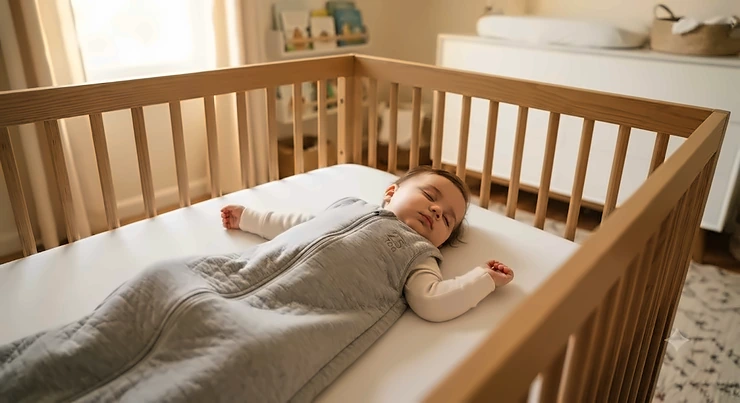
Somewhere around 2 a.m., you’ve probably stood over the crib with your hand pressed against your baby’s chest, whispering the question every parent asks eventually: is she too cold? Too warm? Just right? A 2.5 TOG sleep sack was invented to answer that question so you don’t have to guess in the dark — literally. TOG stands for Thermal Overall Grade, a fabric-warmth measurement borrowed from the duvet industry, and a tog value simply tells you how much heat a garment traps. A 2.5 TOG sleep sack sits in the “medium-weight winter” zone, built for rooms running 61–68°F (16–20°C) — think drafty nurseries in October through March across most of the U.S.

Unlike a loose blanket that can bunch, slip, or cover a baby’s face, a sleep sack zips into a wearable pouch that stays put all night. That single design choice is why pediatric groups have spent the last several years pushing wearable blankets as the default way to add warmth. But not every 2.5 TOG sleep sack is built the same — fabric, fit, zipper placement, and price all vary wildly between brands, and picking wrong means either a sweaty, restless baby or a 3 a.m. wake-up call from the cold. This guide breaks down seven real, currently available options — budget, mid-range, and premium — with honest analysis of what each one actually delivers, so you can stop scrolling product listings and just pick one that fits your nursery and your budget.
What Is a 2.5 TOG Sleep Sack?
A 2.5 TOG sleep sack is a sleeveless (or long-sleeve) wearable blanket rated for cooler room temperatures, typically 61–68°F. It’s the “winter weight” option in most brands’ lineups, sitting between lightweight 0.5–1.0 TOG summer bags and heavier 3.5 TOG deep-winter versions — warm enough for chilly nights without the sweat-soaked wakeups a too-thick bag can cause.
Quick Comparison Table
Before diving into the deep dives below, here’s the fast version for anyone skimming on a phone with a baby monitor in the other hand.
| Sleep Sack | Material | Price Range | Best For |
|---|---|---|---|
| Kyte Baby Bamboo Sleep Bag 2.5 TOG | Bamboo rayon | $45-$55 range | Best all-rounder for cool nurseries |
| HALO SleepSack Micro-Fleece 2.5 TOG | Micro-fleece | Under $35 | Best budget pick, hospital-trusted |
| ergoPouch Sleep Suit Bag 2.5 TOG | Organic cotton | $70-$85 range | Best for travel and car seats |
| Loulou Lollipop TENCEL Sleep Bag 2.5 TOG | TENCEL Lyocell | $60-$70 range | Best sustainable, award-winning pick |
| Woolino 4 Season Ultimate Sleep Bag | Merino wool + cotton | $90-$105 range | Best year-round, one-and-done option |
| Kaiya Baby Camel Wool Sleep Sack 2.5 TOG | Camel wool + cotton | $35-$45 range | Best budget double-layer warmth |
| Dreamland Baby Bamboo Classic Sleep Sack 2.5 TOG | Bamboo viscose | $55-$65 range | Best mid-range bamboo value |
Looking at the spread above, the gap between the cheapest and priciest options isn’t really about warmth — every one of these is rated to the same 2.5 TOG standard — it’s about fabric feel, longevity, and how many seasons a single bag can realistically cover. Budget picks like HALO and Kaiya Baby nail the core job (safe, warm sleep) without extras, while premium options like ergoPouch and Woolino add features like convertible legs or true four-season wear that can offset their higher price tag over time. If you’re buying your very first sleep sack and aren’t sure your baby will tolerate one, starting with a lower-cost pick before investing in a premium bamboo or wool version is a reasonable way to hedge your bet.
✨ Ready to stop guessing and start sleeping? Scroll down to see which pick fits your nursery best.
Top 7 2.5 TOG Sleep Sacks: Expert Analysis
1. Kyte Baby Bamboo Sleep Bag 2.5 TOG — best all-rounder for cool nurseries
The Kyte Baby Bamboo Sleep Bag 2.5 TOG built its reputation on one thing: fabric that feels genuinely different from anything else on this list. Made from bamboo-derived rayon, it has a buttery drape that regular cotton just can’t replicate, and it’s rated for the standard 61–68°F winter range.
On paper, the specs read simply — 95% bamboo rayon, 5% spandex, double zipper — but in practice that spandex blend is what gives it four-way stretch, letting a squirmy baby kick and roll without the fabric bunching around the hips. The dual zipper design also means 2 a.m. diaper changes don’t require fully undressing anyone, which matters more than it sounds like at midnight.
Based on the spec comparison with cotton-based competitors, bamboo rayon tends to run slightly cooler against skin while still hitting the same TOG rating, which is likely why it’s become a favorite for babies who run warm. This is a strong pick for parents dealing with eczema-prone skin or babies who sleep hot, and less essential if your baby already sleeps comfortably in basic cotton. Reviewers consistently report that the fabric holds up well through repeated washes without pilling, though a handful note the sizing runs generous, so checking the brand’s size chart before ordering matters more here than with some other picks.
Pros:
- ✅ Ultra-soft bamboo rayon feels premium against sensitive skin
- ✅ Four-way stretch fabric moves with an active sleeper
- ✅ Dual zipper simplifies nighttime diaper changes
Cons:
- ❌ Runs large compared to some competing size charts
- ❌ Bamboo fabric requires gentle wash cycles to maintain softness
Prices for the Kyte Baby Bamboo Sleep Bag 2.5 TOG typically fall in the $45-$55 range depending on size and print, and given the fabric quality and stretch, it’s a solid value for a bag your baby may wear nightly for months.
2. HALO SleepSack Micro-Fleece 2.5 TOG — most trusted budget pick
The HALO SleepSack Micro-Fleece 2.5 TOG is the sleep sack most parents have actually seen in real life, since HALO built its brand as the go-to wearable blanket recommended in hospital nurseries nationwide. This winter-weight version swaps the brand’s lightweight cotton for micro-fleece, rated for the cooler end of the 2.5 TOG range around 61–64°F.
What most buyers overlook about this model is that its sleeveless, roomy-bottom design was one of the earliest to earn recognition from hip-health organizations for allowing natural leg movement — a detail that matters more than the fleece texture itself. The inverted zipper (opening from the bottom) means diaper changes don’t require unzipping past baby’s chin, and the “Back is Best” embroidery is a small but pointed reminder of safe sleep positioning printed right on the bag.
Here’s what to weigh: micro-fleece traps more heat than woven cotton at the same TOG rating, so this pick tends to run warmer in practice than its number suggests — worth knowing if your baby already runs hot or your nursery occasionally climbs above 68°F. Aggregated review sentiment across retailers is overwhelmingly positive on durability and softness, with recurring praise for how well it survives years of machine washing without losing shape, though some parents note the fleece can trap heat if paired with heavy pajamas underneath.
Pros:
- ✅ Widely used in hospitals — a genuinely proven, familiar design
- ✅ Inverted zipper makes diaper changes fast and easy
- ✅ Roomy bottom supports healthy hip movement
Cons:
- ❌ Fleece runs warmer than woven fabrics at the same TOG
- ❌ Fewer premium fabric options compared to bamboo competitors
At under $35 in most sizes, the HALO SleepSack Micro-Fleece 2.5 TOG is one of the most budget-friendly entries here, and the trade-off — slightly warmer fabric, fewer luxury touches — is a fair one for parents who just want a dependable, tested option without overthinking it.
✨ Don’t Miss These Exclusive Deals! 🔍 Take your nursery routine to the next level with these carefully selected sleep sacks. Click on any highlighted pick to check current pricing and availability. These picks help create the cozy, safe sleep your baby (and you) deserve!
3. ergoPouch Sleep Suit Bag 2.5 TOG — best convertible for travel and car seats
The ergoPouch Sleep Suit Bag 2.5 TOG stands apart because it isn’t really one product — it’s two. A patented four-way zipper system converts the sack from a legless sleeping bag into a full suit with legs, which means it’s also one of the only sleep sacks on this list that’s designed to work safely with a five-point car seat harness.
Made from GOTS-certified organic cotton with fleece sleeves rated at 1.0 TOG for extra warmth, the Australian-designed bag layers a lighter cotton body with warmer arms — a smart bit of engineering, since babies lose a surprising amount of heat through bare arms and shoulders. What most buyers overlook is that the “suit mode” isn’t just a novelty; it’s genuinely useful for toddlers who’ve started climbing or walking overnight, since grip pads on the feet add traction for sleepy bathroom trips.
Based on the spec comparison with simpler sleep sacks, the ergoPouch’s convertibility effectively replaces two products (a sleep sack for younger babies, a sleep suit for mobile toddlers), which helps justify its higher price over a multi-year timeline. Reviewers frequently mention the included room thermometer and dressing guide as genuinely useful for first-time parents nervous about overdressing or underdressing their baby, while a smaller number note the zipper placement near the groin can be fiddly with a squirming toddler.
Pros:
- ✅ Converts from sack to sleep suit for car seat safety
- ✅ Organic cotton body with warmer fleece sleeves
- ✅ Grip-pad feet support safe overnight walking
Cons:
- ❌ Higher price point than simpler sleep sacks
- ❌ Zipper near the groin can be tricky with wriggly toddlers
At around $70-$85, the ergoPouch Sleep Suit Bag 2.5 TOG costs more than most entries here, but for families who travel often or have an early walker, the suit conversion genuinely extends its useful life well past what a standard bag offers.
4. Loulou Lollipop TENCEL Sleep Bag 2.5 TOG — best sustainable, award-winning pick
The Loulou Lollipop TENCEL Sleep Bag 2.5 TOG leans hard into sustainable materials, built from TENCEL Lyocell — a fiber derived from eucalyptus pulp through a closed-loop process that reuses over 99% of its solvents. It picked up a Good Housekeeping Parenting Award, which is a meaningful signal given how crowded this category has become.
The fabric itself (a blend that’s shifted over recent production runs between roughly 68-94% TENCEL Lyocell with organic cotton and spandex) is prized for a silky hand-feel that’s noticeably different from cotton or bamboo rayon, and the bag is insulated with Dupont Sorona rather than down or polyester fill. A two-way bottom zipper handles diaper changes, and the sleeveless cut keeps arms free.
What most buyers overlook about TENCEL specifically is that its moisture-wicking properties tend to outperform standard cotton in humid climates, pulling sweat away from skin rather than holding it against the body — a genuine advantage for babies in warmer coastal regions who still need winter-weight warmth on occasional cold snaps. Reviewers commonly cite the fabric’s softness and the brand’s print designs as standout features, with a smaller number of reviews noting that some prints, being darker dyes on natural fiber, require slightly more careful laundering to avoid fading over time.
Pros:
- ✅ Sustainable TENCEL Lyocell fabric with silky texture
- ✅ Good Housekeeping-recognized brand and design quality
- ✅ Strong moisture-wicking for humid climates
Cons:
- ❌ Darker prints need gentler laundering to prevent fading
- ❌ Premium fabric commands a higher price than basic cotton
Expect to pay in the $60-$70 range for the Loulou Lollipop TENCEL Sleep Bag 2.5 TOG, which lands it solidly mid-premium — a fair ask for parents who prioritize sustainable sourcing alongside warmth.
5. Woolino 4 Season Ultimate Sleep Bag — best year-round, one-and-done option
The Woolino 4 Season Ultimate Sleep Bag takes a genuinely different approach than every other entry on this list: instead of a fixed TOG rating, it relies on merino wool’s natural temperature-regulating properties to work across all four seasons in room temperatures of roughly 63–75°F, with parents layering pajamas underneath to fine-tune warmth.
This matters for the “versatile TOG rating” question a lot of parents search for, because a merino wool blend behaves differently from synthetic or cotton insulation — it wicks moisture, breathes in warmer conditions, and traps heat in cooler ones, all through the fiber’s structure rather than a fixed thickness. The bag uses universal sizing from 2 months to 2 years (with a separate 2-4 year toddler size), meaning families theoretically buy one bag instead of cycling through multiple TOG-rated sizes and weights as seasons change.
Here’s what to weigh: the “no fixed TOG” design is a genuine trade-off, not just marketing. Parents still need to reference the included room thermometer and dressing guide to layer correctly, so it removes the multiple-bag hassle but doesn’t eliminate the need to think about warmth entirely. Aggregated customer sentiment is notably strong, with recurring themes around babies sleeping less sweaty than in synthetic alternatives and long-term satisfaction with the extended sizing reducing the total number of bags purchased — reviewers describe skipping repeated repurchases as one of the more concretely useful outcomes of the universal-size design.
Pros:
- ✅ True year-round wear without switching TOG weights
- ✅ Merino wool naturally regulates temperature and wicks moisture
- ✅ Universal sizing spans 2 months to 2 years in one bag
Cons:
- ❌ Highest price point of any option on this list
- ❌ Requires layering guidance rather than a fixed TOG number
At $90-$105, the Woolino 4 Season Ultimate Sleep Bag is the priciest pick here, but when you consider it can replace two or three TOG-specific bags over a baby’s first two years, the long-term cost per month of use often comes out competitive — a point we’ll dig into further in the cost analysis section below.

6. Kaiya Baby Camel Wool Sleep Sack 2.5 TOG — best budget double-layer warmth
The Kaiya Baby Camel Wool Sleep Sack 2.5 TOG takes an unusual approach for this price point: a double-layer construction filled with camel wool, wrapped in organic cotton, aimed squarely at the 61–68°F range that defines this category.
Camel wool has long been used in outdoor gear for its warmth-to-weight ratio, and here it functions similarly — trapping air between the double layers without adding the bulk you’d expect from a similarly warm synthetic fill. The organic cotton exterior keeps the skin-facing surface breathable, which helps offset any risk of overheating from the wool filling underneath.
Based on the spec comparison with single-layer cotton bags at the same TOG rating, the double-layer camel wool construction tends to feel noticeably cozier against the skin during the coldest stretch of winter, which is likely why this option appeals to parents in colder climates who find standard 2.5 TOG bags aren’t quite warm enough on the worst nights. It’s a reasonable option for budget-conscious families in genuinely cold regions, though it may run a touch warm for milder winter climates or well-insulated homes. Reviewers note the wool fill holds warmth well through the night, with some mentioning the fabric takes slightly longer to dry after washing due to the double-layer construction — a minor inconvenience worth planning around if you only own one.
Pros:
- ✅ Double-layer camel wool adds cozy warmth in cold climates
- ✅ Organic cotton exterior keeps skin-facing fabric breathable
- ✅ Budget-friendly price for a double-insulated design
Cons:
- ❌ Can run warm in milder climates or heated homes
- ❌ Longer dry time due to double-layer construction
Priced around $35-$45, the Kaiya Baby Camel Wool Sleep Sack 2.5 TOG is one of the better value picks here for parents specifically dealing with genuinely cold nurseries.
7. Dreamland Baby Bamboo Classic Sleep Sack 2.5 TOG — best mid-range bamboo value
The Dreamland Baby Bamboo Classic Sleep Sack 2.5 TOG (the non-weighted version, which is the only kind we’d recommend — more on that in the safety section below) rounds out this list as a solid middle-ground bamboo option, priced right around $60 in most colorways.
Made from bamboo viscose, it shares some of the same soft-fabric appeal as the Kyte Baby pick above but positions itself with a slightly simpler design and a smaller color lineup. The brand built its reputation initially on weighted sleep products, and while the non-weighted Classic line addresses the safety concerns pediatric groups have raised about weight near a sleeping infant, it’s worth explicitly seeking out the non-weighted version when shopping this brand, since both are sold side by side.
What most buyers overlook here is that “bamboo viscose” and “bamboo rayon” are essentially the same fiber processed similarly across brands, so the fabric experience between this pick and pricier bamboo competitors is genuinely comparable — the price gap often comes down to brand extras and print variety rather than a meaningful difference in warmth or softness. Aggregated review sentiment sits notably high, with parents frequently citing the fabric’s softness and breathability as reasons for repeat purchases, while a smaller subset mention wishing for more print options compared to competitors with larger seasonal collections.
Pros:
- ✅ Soft bamboo viscose comparable to pricier competitors
- ✅ Non-weighted design aligns with current safe sleep guidance
- ✅ Strong customer satisfaction on comfort and breathability
Cons:
- ❌ Smaller print and color selection than some rivals
- ❌ Easy to accidentally select the weighted version by mistake
At $55-$65, the Dreamland Baby Bamboo Classic Sleep Sack 2.5 TOG offers a genuinely competitive bamboo option for parents who want that fabric feel without paying the premium some other bamboo brands command.
Practical Usage Guide: Getting Your 2.5 TOG Sleep Sack Set Up Right
Buying the right bag is half the job — using it correctly is the other half, and it’s the part most product listings skip entirely.
Check the room, not just the calendar. A 2.5 TOG sleep sack is designed for 61–68°F rooms, so the first move before your baby’s first night in it should be checking an actual room thermometer, not guessing based on the season. Many brands, including ergoPouch and Woolino, ship a thermometer specifically because “it feels cold in here” is a notoriously unreliable gauge for adults, who tend to run warmer than infants overnight.
Dress for the layer underneath, not on top of it. The TOG system assumes a specific base layer — usually a short-sleeve bodysuit or lightweight pajamas — so piling on a thick fleece sleeper underneath a 2.5 TOG bag effectively pushes the total warmth well past what the rating suggests, risking overheating, which remains one of the more preventable environmental risk factors parents can control.
Do the neck-and-chest check for the first week. Feel the back of your baby’s neck or chest (not hands or feet, which run cooler naturally) after an hour or two of sleep. Sweaty or hot to the touch means size down the layers underneath; cool or clammy means add a layer, not swap the bag itself.
Wash before first use, and follow the fabric-specific care. Bamboo and TENCEL fabrics generally want cold water and low heat drying to preserve softness and prevent shrinkage, while cotton and fleece options tend to be more forgiving. A common first-30-days mistake is tossing a delicate bamboo bag through a hot dryer cycle, which can visibly shrink the fit within just a few washes.
Size up sooner than you think. Sleep sacks should allow room for airflow but shouldn’t be so loose that a baby can slide down inside the bag toward the head opening. If shoulder seams sit at the upper arm instead of the shoulder, it’s time to size up — a common early mistake is holding onto a bag “for a few more months” out of attachment to a print pattern.
Real-World Scenarios: Which 2.5 TOG Sleep Sack Fits Your Family?
The first-time parent in a converted nursery with unpredictable heating. If your house runs on an older HVAC system that swings a few degrees overnight, the HALO SleepSack Micro-Fleece 2.5 TOG is a sensible starting point — it’s affordable enough to size up through several stages without a big financial commitment, and the fleece runs slightly warmer, offering a small buffer if the room dips colder than expected.
The family that travels often or has an early walker. If weekend trips to grandma’s or frequent flights are part of your routine, the ergoPouch Sleep Suit Bag 2.5 TOG‘s convertible legs solve a real logistical problem — no separate travel sleep suit needed, and it works in a car seat harness without the loose-fabric risk a standard sleep sack poses in a moving vehicle.
The budget-conscious parent trying to avoid buying five bags over two years. If minimizing total spend across your baby’s first two years matters more than a specific fabric feel, the Woolino 4 Season Ultimate Sleep Bag‘s universal sizing is worth the higher upfront cost, since it can plausibly replace two or three TOG-specific bags most families end up buying as babies grow and seasons change.
How to Choose a 2.5 TOG Sleep Sack
- Confirm your room temperature falls in the 61–68°F range. A TOG rating only works as intended within its designed temperature band — check with a real thermometer, not a guess, before assuming 2.5 is the right weight for your nursery.
- Match fabric to your baby’s tendency to run hot or cold. Bamboo and TENCEL wick moisture well for babies who sleep warm; fleece and camel wool trap more heat for babies (or rooms) that run cold.
- Check the zipper direction and placement. Bottom-opening or dual zippers make nighttime diaper changes dramatically easier than a single top-down zipper that requires undressing further.
- Consider how many months of use you’ll realistically get. A snug newborn size may only fit for 8-10 weeks; a roomier or adjustable/universal size can stretch that usable window considerably.
- Skip anything weighted, regardless of marketing claims. Current pediatric guidance is unambiguous on this point, and it’s worth prioritizing over any perceived calming benefit.
- Factor in wash-and-care demands realistically. A more delicate fabric that requires cold-wash-only care may not suit a household doing daily laundry loads from newborn spit-up and blowouts.
- Decide if convertibility (legs, travel-use) is worth the premium. If your baby will spend real time in a car seat or stroller in the bag, a convertible design like ergoPouch’s may pay for itself in avoided purchases of a separate travel product.
Common Mistakes When Buying a 2.5 TOG Sleep Sack
The single most common mistake is buying based on TOG number alone without accounting for fabric type — a 2.5 TOG fleece bag and a 2.5 TOG cotton bag can feel meaningfully different in practice, even though the rating is identical on paper. Another frequent misstep is sizing purely by age range printed on the label rather than actual height and weight, since babies vary enormously and most brands provide more precise size charts than the blanket “0-6 months” label suggests.
Parents also commonly overlook the base-layer assumption baked into TOG ratings, effectively doubling up on warmth by adding a fleece sleeper underneath a winter-weight bag, then wondering why their baby wakes up flushed and sweaty. And a mistake worth naming directly: choosing a weighted sleep sack for its marketed calming effect without registering that current pediatric guidance advises against any weighted product on or near a sleeping infant, given the potential to restrict natural chest movement during sleep.
Medium Weight TOG Sleep Bag: How 2.5 TOG Compares to Other Ratings
Calling a 2.5 TOG sleep sack a “medium weight TOG sleep bag” is a fairly accurate way to think about where it sits in the broader lineup most brands offer. At the light end, 0.2–0.5 TOG bags are built for rooms above 75°F, using thin, breathable single-layer fabric for hot summer nights. A step up, 1.0 TOG bags target the 68–75°F range — spring, fall, or moderately climate-controlled homes. Then comes 2.5 TOG, the medium-weight tier most brands market specifically as their “winter” option for 61–68°F rooms. At the heaviest end, 3.5 TOG bags are reserved for genuinely cold rooms in the 53-65°F range, often layering long sleeves or fleece linings on top of the same base construction.
What most buyers overlook about the “medium weight” positioning is that 2.5 TOG isn’t actually the midpoint of available ratings — it’s closer to the second-heaviest tier most brands sell, sitting just one step below the true deep-winter option. That distinction matters if your home runs a chilly 58°F in January; a 2.5 TOG bag might not be quite warm enough on the coldest nights, and layering thicker pajamas underneath the same bag is generally the safer fix rather than assuming the next TOG tier up is automatically better.
All Season TOG Sleep Bag: Can One Sack Really Work Year-Round?
The idea of an all season TOG sleep bag — one product that works whether it’s July or January — sounds appealing mostly because buying, storing, and eventually donating four separate weight-specific bags per size is genuinely tedious. Two approaches solve this differently. Some brands, like Loulou Lollipop, market a 1.0 TOG option specifically as their “year-round” middle-ground pick, reasoning that most homes with climate control rarely swing far outside the 68-75°F band that 1.0 TOG suits. Others, like Woolino, sidestep the TOG system entirely, relying on merino wool’s natural regulating properties to handle a wider temperature swing without a fixed rating at all.
Based on the spec comparison between these approaches, a fixed 1.0 TOG “year-round” bag genuinely works well for households with reliable climate control but can fall short during a real cold snap or heat wave, when room temperature drifts outside its comfort band. A wool-based option adjusts more gracefully to temperature swings but asks parents to actively layer pajamas underneath based on conditions, rather than trusting a single number. Neither approach eliminates the need to think about warmth entirely — but for parents in regions with genuine season-to-season temperature swings, a true year-round sleep sack option can meaningfully reduce the number of bags cluttering a nursery drawer.
What to Expect: Real-World Performance of a 2.5 TOG Sleep Sack
On the spec sheet, 2.5 TOG is just a number. In practice, it translates to a baby who stays comfortably warm through a typical 8-12 hour overnight stretch in a 61-68°F room, without the sweaty-neck wakeups that come from overdressing, or the restless, fussy wake-ups from being underdressed. What the spec sheet won’t tell you, but reviewers note across brands, is that fit matters nearly as much as fabric — a properly sized bag that allows some airflow around the legs and torso tends to outperform an ill-fitting bag of a “better” fabric, since trapped, still air (not fabric alone) is what actually generates warmth.
Parents transitioning a baby out of swaddling into a first sleep sack commonly report an adjustment period of a few nights to a couple of weeks, since the change in tactile sensation — from snug wrap to looser sack — can initially disrupt sleep before becoming the new normal. Reviewers across several of the brands above note that keeping the transition timing consistent with an existing bedtime routine (same time, same room, same sequence of steps) tends to shorten that adjustment window more than the specific sleep sack brand chosen.
Long-Term Cost & Maintenance: Is a Versatile TOG Rating Worth the Investment?
Running the actual math on cost per month of use tells a more interesting story than sticker price alone. A budget pick like HALO at roughly $30 might need replacing two to three times across a baby’s first two years as sizes change, landing total spend somewhere around $70-$90 for equivalent coverage. A premium option with a genuinely versatile TOG rating, like the Woolino 4 Season Ultimate Sleep Bag at roughly $95, covers that same two-year window in a single purchase thanks to its universal sizing — meaning the premium price actually undercuts the cheaper option’s total cost once repeat purchases are factored in.
| Approach | Typical Total Spend (2 Years) | Bags Needed | Best For |
|---|---|---|---|
| HALO SleepSack Micro-Fleece 2.5 TOG (budget, re-buy as sizes change) | ~$70-$90 | 2-3 | Families comfortable re-purchasing as baby grows |
| Kyte Baby Bamboo Sleep Bag 2.5 TOG (mid-range, size up once or twice) | ~$90-$140 | 2 | Balance of fabric quality and moderate re-buying |
| Woolino 4 Season Ultimate Sleep Bag (universal size, one purchase) | ~$90-$105 | 1 | Families who want to buy once and be done |
Looking at the numbers above, the “cheapest” option isn’t necessarily the lowest total-cost option once you account for how many times you’ll realistically need to size up or replace a worn-out bag. Maintenance costs matter too — bamboo and TENCEL fabrics generally hold up well to repeated gentle washing but can shrink or pill under high heat, while fleece and cotton options tend to tolerate more aggressive laundry routines without visible wear, which is worth weighing against how meticulous your household laundry habits realistically are.
Safety and Regulations: What Every Parent Should Know
Sleep sacks exist largely because pediatric guidance has shifted decisively away from loose blankets in a crib. Recent AAP recommendations explicitly note that families concerned about their infant being cold should add layers of clothing or use a wearable blanket, since this approach reduces the risk of head covering or entrapment compared to loose bedding — and the same guidance is direct in stating that weighted objects, including weighted blankets, sleepers, or swaddles, are not recommended on or near a sleeping infant.
That last point deserves its own callout, since weighted sleep sacks are marketed heavily on a calming premise. As Consumer Reports has covered, pediatric sleep specialists have specifically flagged concerns about weighted infant sleep products restricting natural movement, which is why every non-weighted option featured in this guide was chosen deliberately over any weighted alternative from the same brands. Beyond weight, fit matters for hip health specifically — a roomy design through the hips and legs supports natural joint development, a principle the International Hip Dysplasia Institute has documented extensively in its research on infant hip positioning, and it’s part of why several bags on this list, including HALO’s, were specifically designed with a wider lower cut.
Beyond weight and fit, check for a snug (not tight) fit around the neck and shoulders so there’s no risk of the bag riding up over the face, confirm any zippers have covered pulls or garages to prevent skin irritation, and always place a baby on their back for every sleep — a rule that applies regardless of which sleep sack you choose.
Moderate Warmth Sleepwear: Benefits vs Traditional Blankets
For parents still weighing whether moderate warmth sleepwear like a 2.5 TOG sleep sack is worth switching to over a traditional blanket setup, the comparison below lays out the practical differences.
| Factor | 2.5 TOG Sleep Sack | Traditional Blanket |
|---|---|---|
| Suffocation/entrapment risk | Low — fitted, wearable design | Higher — loose fabric can shift or cover face |
| Warmth consistency overnight | Stays in place all night | Frequently kicked off, warmth inconsistent |
| Ease of temperature control | TOG rating guides precise fit | Guesswork based on blanket thickness/layering |
| Crib climbing deterrence | Roomy-bottom bags limit leg-over-rail attempts | No deterrent effect |
| Cost over time | One bag per size/season | Ongoing blanket + sheet replacements |
The clearest takeaway from this table is consistency: a sleep sack solves the “kicked-off-blanket-at-2am” problem simply by not being removable the way a loose blanket is, which is a meaningful factor in why moderate warmth sleepwear has become the standard recommendation over traditional bedding for infants under 12 months. Traditional blankets aren’t without merit for older toddlers who’ve transitioned to a bed, but for anyone still in a crib, the safety and consistency case for a wearable option is difficult to argue against.
💬 Just one click — help other parents make a safer, cozier choice tonight!😊
Features That Actually Matter (And Those That Don’t)
Zipper direction and coverage matters more than most marketing copy suggests — a bottom-opening or dual zipper genuinely changes the 2 a.m. diaper-change experience, while a covered zipper garage prevents chin and chest irritation that a bare zipper pull can cause. Fabric breathability matters, particularly for babies prone to eczema or heat rash, where bamboo, TENCEL, or merino options tend to outperform standard polyester fleece. Roomy hip and leg construction matters for both comfort and the hip-health reasons discussed above.
What matters far less: seasonal print variety, despite how much shelf space brands devote to it, since a plain sleep sack performs identically to a printed one in terms of warmth and safety. Brand-name recognition alone also matters less than actual fit and fabric — a lesser-known brand using the same base materials as a heavily marketed competitor will typically perform comparably. And weighted features, regardless of how they’re marketed as sleep-improving, are a feature actively advised against by current pediatric guidance rather than a genuine benefit worth paying extra for.
FAQ
❓ What temperature is a 2.5 TOG sleep sack good for?
❓ Can I use a 2.5 TOG sleep sack all year?
❓ What should my baby wear under a 2.5 TOG sleep sack?
❓ Are weighted sleep sacks safe?
❓ How do I know if my baby is too warm in a sleep sack?
Conclusion
Picking the right 2.5 TOG sleep sack really comes down to matching fabric and features to your actual nursery conditions and budget, not chasing whichever bag has the trendiest print. If you want the most tested, familiar option, the HALO SleepSack Micro-Fleece 2.5 TOG is hard to beat for the price. If travel and mobility matter, the ergoPouch Sleep Suit Bag 2.5 TOG‘s convertible design earns its higher cost. And if you’d rather buy once and stop thinking about TOG ratings entirely, the Woolino 4 Season Ultimate Sleep Bag makes a genuinely compelling case despite the upfront price.
Whichever you choose, the underlying goal is the same one pediatricians have been pushing for years: a safer, more consistent night’s sleep without loose bedding in the crib. None of these seven picks get that job done better through marketing — they get it done through fit, fabric, and honest attention to how your baby actually sleeps.
Recommended for You
- 0.5 TOG Sleep Sack: 7 Best Picks for Summer 2026
- Adjustable Swaddle Transition: 7 Best Picks for Safer 2026 Sleep
- Swaddle Transition Bag: 7 Best Picks to End 3AM Wake-Ups (2026)
Disclaimer: This article contains affiliate links. As an Amazon Associate, I earn from qualifying purchases. If you purchase products through these links, we may earn a small commission at no additional cost to you.
✨ Found this helpful? Share it with a fellow tired parent! 💬🤗
