
In This Article
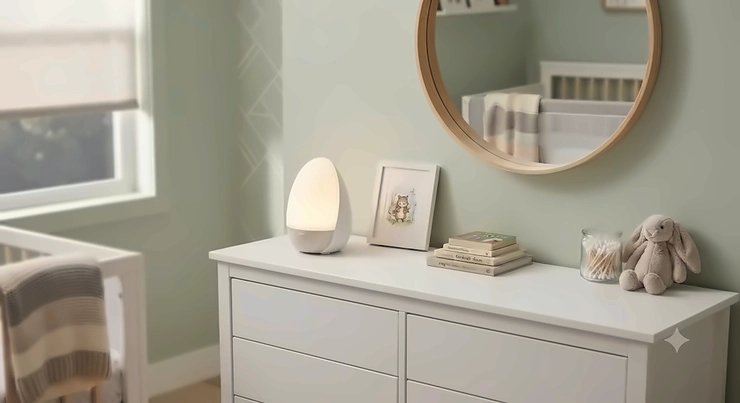
Somewhere around 2 a.m., you will find yourself standing in a doorway, phone flashlight cupped in your palm like a tiny campfire, trying to figure out if your baby is actually awake or just doing that fussy pre-sleep wiggle. This is the exact moment a smart LED nursery night light earns its keep. A smart LED nursery night light is a WiFi- or Bluetooth-connected lighting device that lets parents dim, color-shift, schedule, or remotely control a soft glow from an app or voice assistant, instead of fumbling for a wall switch. Unlike the plug-in nightlights our own parents used, today’s versions blend app control, sleep-friendly color science, and (in some cases) sound machines into one nursery gadget.
We spent time digging through real product listings, manufacturer specs, and aggregated customer feedback across Amazon, Walmart, and Best Buy to find seven genuinely useful options — not a rehashed spec sheet, but an honest look at who each one actually fits. You will find a smart LED nursery night light for the “just get me something that works” parent, the smart-home enthusiast who wants everything on one app, and everyone dimming the lights in between.
Below, we break down pricing tiers, real feature differences, and the everyday tradeoffs that Amazon listings tend to gloss over — like which lights need a stable WiFi connection to function at all, and which ones happily run on battery in a blackout. We’ll also walk through setup tips, common buying mistakes, and a simple framework to help you land on the right pick for your household without spending three nights reading forum threads.
Quick Comparison Table
| Product | Connectivity | Price Range | Best For |
|---|---|---|---|
| Govee Smart WiFi Night Light for Kids | WiFi + app | $15-$25 | Budget-friendly color changing |
| LB2 Smart Night Light | WiFi + Alexa/Google | $20-$30 | Voice-controlled egg lamp |
| VAVA Baby Night Light VA-CL009 | Touch-only, no app | $20-$30 | Simplicity over smart features |
| Hatch Rest Mini | WiFi + app | $55-$65 | Compact all-in-one on a budget |
| Hatch Rest 2nd Gen | WiFi + app | $75-$90 | Best overall value |
| Hatch Rest+ 2nd Gen | WiFi + app + battery backup | $90-$110 | Reliability during power outages |
| Philips Hue Go | WiFi/Bluetooth + Hue ecosystem | $90-$105 | Whole-home smart lighting integration |
Looking at the spread above, the price gap between the cheapest and most expensive pick isn’t really about “better light” — it’s about how much nursery-adjacent functionality gets bundled in. The Govee Smart WiFi Night Light for Kids and LB2 Smart Night Light compete almost entirely on color range and app polish, while the Hatch lineup and Philips Hue Go justify their higher price with sound machines, sleep-training clocks, or full smart-home ecosystem integration. If your nursery already has a sound machine and baby monitor, you may not need to pay extra for a light that duplicates those features.
💬 Found a favorite already? Bookmark this table so you can compare prices again before you check out!😊
Top 7 Smart LED Nursery Night Lights: Expert Analysis
1. Govee Smart WiFi Night Light for Kids — best budget color-changing pick
The standout here is straightforward: full app-based color control for less than the cost of a diaper bag refill. The RGBWW LED engine covers a warm-white range plus a full color wheel, and the touch panel on the base lets you skip the app entirely for quick adjustments during a 3 a.m. feeding. It connects over home WiFi rather than needing a separate smart-home hub, which matters if you don’t already own an Alexa or Google Nest device.
On paper, the “40+ scene” claim sounds like marketing fluff, but the practical value is that you can lock in one dim, warm scene for sleep and a separate brighter, cooler scene for daytime diaper changes without re-programming anything each time. It won’t sync with music playback since this model skips the built-in speaker — a deliberate tradeoff Govee made to keep the price down.
Based on the spec comparison with pricier competitors, this is the light for parents who want color customization and app scheduling without paying for a sound machine they may already own separately. Reviewers consistently report that the touch controls feel a little sensitive at first, requiring a light tap rather than a firm press, and a common theme in aggregated feedback is that the WiFi pairing process can take a few tries on 5GHz-only routers, since the light needs a 2.4GHz network.
Pros:
- ✅ Full app color control at an entry-level price
- ✅ Touch panel works even if WiFi drops
- ✅ Runs on standard home WiFi, no hub needed
Cons:
- ❌ No built-in speaker or sound machine
- ❌ Requires 2.4GHz WiFi, which trips up some routers
Priced in the $15-$25 range depending on the retailer and any active promotions, the Govee Smart WiFi Night Light for Kids is easily the best value entry point if color customization is your main priority and you’re not looking for extra sleep-training features.
2. LB2 Smart Night Light — most voice-assistant friendly on a budget
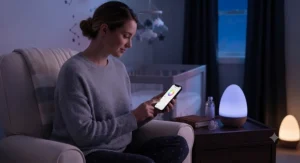
What most buyers overlook about this egg-shaped lamp is that it doubles as a genuine Alexa and Google Assistant device, not just an app-controlled gadget — meaning “Alexa, dim the nursery light to 20 percent” actually works without a third-party bridge. The compact, lightweight shell is designed to sit on a dresser or shelf without hogging space, and the app includes a scheduling feature so the light can auto-dim at a set bedtime.
The built-in soft lullaby and white-noise playback is a nice bonus layer, though it’s clearly secondary to the lighting features rather than a full sound-machine replacement. Here’s what to weigh: the LB2 only supports 2.4GHz WiFi, a limitation shared by most budget smart lights in this space, so households with strict WiFi network segmentation may need to set up a dedicated IoT network band.
Reviewers note the automatic timer function as one of the more genuinely useful features for establishing a bedtime routine, since it removes the “did I remember to turn it off” question at 11 p.m. A common complaint in user feedback is that the companion app occasionally needs a fresh login after firmware updates, which is a minor but real annoyance during a already-stressful newborn phase.
Pros:
- ✅ True Alexa and Google Assistant voice control
- ✅ Scheduling feature for consistent bedtime routines
- ✅ Compact, lightweight design for small shelves
Cons:
- ❌ App occasionally requires re-login after updates
- ❌ Music playback is basic compared to dedicated sound machines
At around $20 to $30, the LB2 Smart Night Light earns its spot as the pick for households that already talk to Alexa or Google constantly and want that same convenience extended to the nursery.
3. VAVA Baby Night Light VA-CL009 — best for parents skeptical of smart features
Not every nursery light needs an app, and the standout feature of this model is that it deliberately skips WiFi in favor of dead-simple touch controls and a genuinely portable, rechargeable design. A single touch dims the warm-light mode, a double-tap toggles standby, and flipping the physical switch cycles through eight RGB colors in an automatic carousel — no pairing screen required.
The rechargeable battery is rated for up to 100 hours on the lowest brightness setting, which in practice means most families charge it maybe once every week or two rather than nightly, based on the spec sheet’s runtime figures. Made from toy-grade silicone-adjacent plastic, it’s also one of the few in this roundup marketed as safe for a baby to actually hold and mouth during the day, not just glow from a shelf.
Reviewers consistently note that the touch sensitivity takes a night or two to get used to, and a recurring theme in aggregated feedback is that the battery indicator light (which blinks to help you locate it in the dark) can itself be distracting for very light sleepers. What most buyers overlook is that the built-in 1-hour auto-off timer is genuinely handy for daytime naps, since it prevents the light from running down unattended.
Pros:
- ✅ No app, no WiFi, no setup friction
- ✅ Long-lasting rechargeable battery life
- ✅ Toy-safe materials for handheld use
Cons:
- ❌ No app scheduling or remote control
- ❌ Locating blink indicator can bother light sleepers
Sitting in the $20-$30 range, the VAVA Baby Night Light VA-CL009 is the honest choice for parents who want dimmable, color-changing convenience without adding one more device to a home WiFi network.
4. Hatch Rest Mini — best compact all-in-one on a budget
The Hatch brand built its reputation on combining sound machine, night light, and sleep-training clock into a single app-controlled device, and the Mini brings that formula down to a smaller, more affordable footprint. The standout advantage here is squeezing genuine multi-function value — light plus sound plus scheduling — into a device priced closer to a standalone color bulb than a full sleep system.
What the spec sheet won’t tell you, but the broader Hatch product family reviews suggest, is that the app’s routine-building feature is where the real value lives: parents can program a wind-down glow, a steady sleep color, and a wake-up signal without touching the device itself once it’s set. That kind of “set it and mostly forget it” workflow matters more at 4 a.m. than any individual color option does.
Based on the spec comparison with its larger Hatch Rest siblings, the Mini trades away the digital clock face and some premium build materials to hit its lower price point — a sensible cut for a nursery that’s likely to swap to a different nightlight once the child is a toddler with different needs anyway. Aggregated reviewer sentiment across the broader Hatch product line frequently highlights the ease of app setup, though some note the smaller speaker means sound volume tops out lower than the full-size Rest.
Pros:
- ✅ Full app-based light and sound routines
- ✅ Compact size fits smaller nursery shelves
- ✅ Lower price than the full Hatch Rest lineup
Cons:
- ❌ Smaller built-in speaker, lower max volume
- ❌ No digital clock display included
Typically priced in the $55-$65 range, the Hatch Rest Mini is the smart pick for parents who want the Hatch ecosystem experience without committing to the full-size Rest budget.
5. Hatch Rest 2nd Gen — best overall value for a growing family
This is the model most sleep-focused parenting outlets point to as the category leader, and for good reason: it bundles a WiFi-enabled night light, a ten-sound white-noise machine, a programmable time-to-rise alarm, and a dimmable digital clock into one $79.99 device with no competitor matching that exact feature set at the same price point. The nightlight itself supports a full custom color range plus a curated set of sleep-friendly presets.
Here’s what to weigh: the free 6-month Hatch+ subscription trial unlocks bedtime stories, lullaby playlists, and personalized goodnight messages, but after that it runs roughly $49.99 a year. The core light and sound machine functions work fully without any subscription, so this is more of a “nice extra” than a paywall on basic use. What most buyers overlook is that the time-to-rise feature — which teaches an older toddler that a specific color means “okay to get up” — often outlasts the light’s usefulness as a simple nightlight, extending the device’s relevance by a couple of years.
Reviewers consistently report years of daily reliable use, and a common theme in feedback is that the app-based routine builder saves real decision fatigue during the newborn stretch when every choice feels exhausting. A recurring critique is that families who only want white noise, without WiFi or an app at all, may find dedicated sound machines like a Yogasleep Dohm deliver punchier sound for less money.
Pros:
- ✅ Combines light, sound machine, and sleep clock in one
- ✅ No competitor matches this exact feature set at the price
- ✅ Grows with the child from newborn through toddler years
Cons:
- ❌ Full feature set nudges toward the optional subscription
- ❌ Dedicated sound machines offer louder pure white noise
At $75 to $90 depending on retailer promotions, the Hatch Rest 2nd Gen remains the benchmark against which every other smart nursery light in this roundup gets measured.

6. Hatch Rest+ 2nd Gen — best for power-outage peace of mind
The standout advantage of the Plus version is a built-in rechargeable battery rated for up to 8 hours of runtime, meaning a storm-related power flicker doesn’t mean scrambling for a backup nightlight mid-nap. Everything else mirrors the standard Rest 2nd Gen — WiFi app control, the same sound library, the same time-to-rise scheduling — layered on top of that added resilience.
What the spec sheet won’t tell you, but real-world usage patterns suggest, is that the battery backup earns its price premium fastest in regions with unreliable grid power, where losing white noise mid-nap can mean losing the nap entirely. For families in areas with stable power, the Plus mostly functions as extra insurance rather than a daily-use feature difference.
Based on the spec comparison, the jump from Rest 2nd Gen to Rest+ 2nd Gen adds roughly $10-$20 to the price for that battery alone, which is a reasonable premium if you’ve already had a middle-of-the-night outage disrupt a sleep routine. Reviewers who’ve used the device across multiple years report it holding up well through repeated daily charge cycles, and aggregated sentiment suggests the battery indicator in the app is a genuinely useful touch for knowing when to top it off.
Pros:
- ✅ Up to 8 hours of battery backup during outages
- ✅ Identical feature set to the standard Rest 2nd Gen
- ✅ App shows battery status for peace of mind
Cons:
- ❌ Premium price mainly pays for the battery, not new features
- ❌ Battery backup adds bulk versus the standard model
Landing around $90-$110, the Hatch Rest+ 2nd Gen is worth the extra spend specifically for households in storm-prone or grid-unstable areas — otherwise the standard Rest may deliver equal daily value for less.
7. Philips Hue Go — best for whole-home smart lighting integration
The Philips Hue Go stands apart from every other pick here because it isn’t a baby-specific product at all — it’s a portable, rechargeable smart lamp from the broader Hue smart-lighting ecosystem, which happens to work beautifully in a nursery. The standout feature is that with a Hue Bridge, it joins the same app controlling every other Hue light in your home, letting you build a single “bedtime” automation that dims the whole house at once, nursery included.
Without the Bridge, it still connects over Bluetooth directly to the Hue app and works with Alexa or Google voice commands, offering millions of color options and a genuinely long battery life — up to 48 hours per charge on lower brightness settings, based on manufacturer specifications. The silicone grip and IP54 splash resistance rating also mean it survives an accidental knock better than more delicate nursery-specific lamps.
On paper, this looks like overkill for “just a nightlight,” and honestly, it partly is — you’re paying for ecosystem integration, not baby-specific features like sound machines or sleep clocks. What most buyers overlook is that for households already invested in Hue lighting elsewhere, adding the Go to the nursery is often cheaper in total cost of ownership than buying a separate single-purpose nursery gadget, since it shares the existing Bridge and app. Reviewers frequently praise the color range and battery life, while a recurring critique is that the full smart-home experience genuinely requires the separate Hue Bridge purchase, which stings if you don’t already own one.
Pros:
- ✅ Joins existing Hue smart-home automations instantly
- ✅ Long battery life, up to 48 hours per charge
- ✅ Splash-resistant, portable build for multi-room use
Cons:
- ❌ Full smart features require a separate Hue Bridge
- ❌ No baby-specific sound machine or sleep-clock features
At roughly $90-$105, the Philips Hue Go makes the most sense for tech-forward households that want the nursery light to plug into a lighting system they’re already building out, rather than standing alone.
Top 7 at a Glance: Specs and Value
| Product | Standout Feature | Price Range | Best For |
|---|---|---|---|
| Govee Smart WiFi Night Light for Kids | 40+ app scene modes | $15-$25 | Budget color customization |
| LB2 Smart Night Light | True Alexa/Google voice control | $20-$30 | Voice-first households |
| VAVA Baby Night Light VA-CL009 | No-app touch simplicity | $20-$30 | WiFi-skeptical parents |
| Hatch Rest Mini | Compact light + sound combo | $55-$65 | Small nursery shelves |
| Hatch Rest 2nd Gen | All-in-one sleep system | $75-$90 | Best overall value |
| Hatch Rest+ 2nd Gen | 8-hour battery backup | $90-$110 | Storm-prone regions |
| Philips Hue Go | Whole-home Hue integration | $90-$105 | Existing smart-home setups |
Reading across this table, the clearest pattern is that price climbs with either bundled functionality (sound, sleep clock) or ecosystem depth (Hue’s broader smart-home footprint), not with light quality alone. If you’re choosing based purely on “will this glow softly and change color,” the Govee Smart WiFi Night Light for Kids and VAVA Baby Night Light VA-CL009 already cover that at a third of the price of the premium options.
✨ Don’t Miss These Exclusive Deals!
🔍 Take your nursery lighting setup to the next level with these carefully selected products. Click on any highlighted item to check current pricing and availability. These smart LED nursery night lights will help you create authentic, calming bedtime routines your family will love!
Practical Usage Guide: Setting Up Your Smart Nursery Light
Getting a smart LED nursery night light out of the box is the easy part; getting it to behave reliably at 2 a.m. takes a little more planning. Start by connecting the device to a dedicated 2.4GHz WiFi band if your router broadcasts both 2.4GHz and 5GHz separately — most budget smart lights, including the Govee Smart WiFi Night Light for Kids and LB2 Smart Night Light, only support the slower band, and pairing failures are almost always a band mismatch rather than a defective unit.
In the first 30 days, the most common mistake is over-programming the app before you actually know your baby’s sleep patterns. Set one simple wind-down color and one steady sleep color to start, then adjust the schedule after a week of real use rather than guessing upfront. For maintenance, wipe touch-control surfaces monthly with a dry cloth (never anything wet on models with exposed charging contacts, per manufacturer guidance for the VAVA Baby Night Light VA-CL009), and check firmware update prompts in the app every few weeks, since Hatch and Govee both push periodic bug fixes.
A genuinely useful optimization trick: name each smart light clearly in its app (“Nursery” rather than a default device ID) before setting up any voice assistant routines, since misnamed devices are the number-one cause of “Alexa, turn off the nursery light” failing to work on the first attempt.
🔍 Explore Top-Rated Nursery Lights Today
Real-World Scenarios: Matching the Right Light to Your Family
If you’re a first-time parent in a small apartment with thin walls and a partner who works night shifts, a quiet, no-speaker option like the Govee Smart WiFi Night Light for Kids avoids adding any extra sound into an already sound-sensitive space, while still giving you app-based dimming control from another room.
If you’re managing two kids under three and constantly juggling bedtime routines between rooms, the Hatch Rest 2nd Gen‘s scheduling feature genuinely earns its keep — building separate light-and-sound routines for each child’s app profile means you’re not manually adjusting anything nightly.
If you live somewhere with frequent storms or rolling power interruptions, the calculus shifts fast: the Hatch Rest+ 2nd Gen‘s battery backup isn’t a luxury, it’s the difference between a nap continuing uninterrupted and a toddler waking up disoriented in total darkness mid-thunderstorm. And if your household already has Hue bulbs in the living room and bedroom, extending that same ecosystem into the nursery with the Philips Hue Go means one app, one automation schedule, and one less thing to relearn during sleep-deprived weeks.
How to Choose a Smart LED Nursery Night Light
Choosing the right smart LED nursery night light comes down to matching a handful of practical criteria to your household’s actual routine, not chasing the longest feature list. Here’s the expert-reasoning breakdown:
- Decide if you need WiFi at all. If remote scheduling matters to you, prioritize WiFi models like Hatch or Govee; if simplicity wins, a touch-only option like VAVA skips setup headaches entirely.
- Check your router’s band support. Most budget smart lights need 2.4GHz specifically, so confirm your network supports it before ordering.
- Match brightness range to room size. A larger nursery may need a brighter maximum output than a compact apartment room, since dimmed light in a big space can feel too faint.
- Consider battery backup if power is unreliable. Storm-prone regions benefit disproportionately from models like the Hatch Rest+.
- Factor in whether you want bundled sound. If you already own a separate white-noise machine, paying extra for a built-in speaker may be redundant.
- Look at long-term flexibility. Devices with sleep-training clock features, like the Hatch lineup, tend to stay useful well past infancy.
- Weigh ecosystem lock-in. If you’re already invested in a smart-home platform, a light like the Philips Hue Go that plugs into that ecosystem often delivers more value than a standalone gadget.
Features That Actually Matter (And Those That Don’t)
Marketing copy tends to flatten every feature into equally exciting bullet points, but in a real nursery, some genuinely change your nightly routine while others are closer to novelty.
Color Changing Baby Night Light Options
A color changing baby night light isn’t just a fun visual — sleep researchers note that warmer, redder tones interfere less with melatonin production than cooler blue-leaning light, based on circadian rhythm research from the University of Colorado Boulder’s Sleep and Development Lab, which found that even dim light before bedtime measurably suppressed melatonin in young children (read the full study). Practically, that means the color range on models like the VAVA Baby Night Light VA-CL009 and Govee Smart WiFi Night Light for Kids is most useful when you actually pick a warm amber or red preset for overnight use, not when you’re cycling through blues and greens for fun during the day.
Dimmable Smart Night Light Performance
A dimmable smart night light matters most in the first few weeks postpartum, when even a small amount of light can feel jarring during a 3 a.m. feeding. Every product in this roundup offers some form of dimming, but the granularity differs — app-based sliders on the Hatch Rest 2nd Gen and Philips Hue Go allow finer control than the fixed-step touch dimming on the VAVA model.
WiFi Enabled Nursery Light Considerations
A WiFi enabled nursery light adds real convenience (remote control from another room, scheduling, voice assistant integration) but also adds a genuine point of failure if your home network is spotty. Reviewers consistently flag WiFi pairing hiccups as the most common frustration across nearly every connected model tested here, which is worth factoring in if your router placement is already shaky.
Adjustable Lighting Nursery Setups
Adjustable lighting nursery setups benefit from a light that can shift its color temperature and brightness together, rather than only one or the other. This matters more as your child transitions from newborn feeding schedules to toddler bedtime resistance, since the same device needs to serve very different lighting needs across a few years.
Ambient Baby Room Light Placement
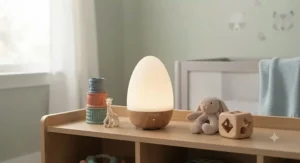
An ambient baby room light works best positioned low in the room and out of direct line of sight from the crib, rather than mounted high or aimed straight at where the baby’s eyes will open. This placement advice shows up consistently across pediatric sleep guidance, and it applies regardless of which smart light you choose.
Customizable Illumination for Growing Kids
Customizable illumination becomes more valuable as children get older and start expressing preferences — a toddler who suddenly loves purple isn’t unusual, and devices with a full app-based color wheel, like the Hatch Rest 2nd Gen or Philips Hue Go, adapt to that shift without requiring a new purchase.
Common Mistakes When Buying a Nursery Night Light
The most frequent mistake is buying based on brightness alone, when in practice color temperature and dimming range matter more for actual sleep quality than raw lumen output. A second common misstep is skipping the WiFi band check — plenty of buyers discover only after unboxing that their router’s guest network or 5GHz-only setup won’t pair with a budget smart light.
A third mistake, ironically, is over-buying: picking a premium sound-machine-plus-light combo when a simple, no-frills option like the VAVA Baby Night Light VA-CL009 would have covered the actual use case for less money. On the flip side, some parents under-buy, choosing a basic plug-in light and later wishing for app-based scheduling once nighttime routines solidify. Finally, don’t overlook placement — even the best smart LED nursery night light performs poorly if it’s positioned where it casts a bright glare directly into the crib rather than a soft ambient wash across the room.
Smart Nursery Lights vs Traditional Nightlights
| Factor | Smart LED Nursery Night Light | Traditional Plug-In Nightlight |
|---|---|---|
| Remote/app control | Yes, on most models | No |
| Color customization | Extensive, often 8+ colors | Usually fixed single color |
| Scheduling | Yes, via app | Manual or basic dusk-to-dawn sensor only |
| Upfront cost | $15-$110 | Often under $15 |
| Setup complexity | Moderate (WiFi pairing) | Minimal, plug and go |
The clear tradeoff here is convenience and customization versus setup simplicity and upfront cost. A traditional nightlight wins on pure ease-of-use — plug it in and it works — while a smart LED nursery night light wins on flexibility, letting you adjust brightness and color remotely without walking into a dark room. For families juggling a newborn’s unpredictable schedule, that remote adjustment capability often outweighs the extra five minutes of app setup.
What to Expect: Real-World Performance
On paper, “8 colors” or “16 million colors” sound like abstract specs, but in daily use, most parents settle into one or two go-to settings and rarely touch the rest of the range — a pattern that shows up repeatedly in aggregated review sentiment across nearly every product here. Battery-powered models like the VAVA Baby Night Light VA-CL009 genuinely do last close to their advertised runtime on the lowest brightness setting, though high-color-intensity modes drain noticeably faster.
WiFi-connected models generally respond within a second or two to app commands on a stable connection, but expect occasional lag or dropped connections during router restarts or ISP outages — a real-world quirk that spec sheets never mention. Reviewers of the Hatch product line frequently note that the physical touch controls on the device itself serve as a reliable backup when the app briefly misbehaves, which is worth checking for on any smart light you’re considering.
Safety, WiFi Reliability, and Regulations Guide
Nursery lighting safety starts with basic electrical precautions that apply whether a device is “smart” or not. The Consumer Product Safety Commission recommends plugging nightlights into well-ventilated, exposed outlets rather than tucking them behind furniture, and cautions against letting young children handle plug-in models directly (see CPSC’s childproofing guidance). Battery-powered, rechargeable options like the VAVA Baby Night Light VA-CL009 sidestep some of these outlet-related risks entirely, which is part of why it’s marketed as safe for direct handling.
On the smart-home side, WiFi-enabled models introduce a different category of consideration: firmware updates matter for security, so it’s worth keeping the companion app current on any connected device. The American Academy of Pediatrics’ safe sleep guidance doesn’t specifically regulate night lights, but its broader sleep environment recommendations emphasize keeping the crib area free of cords and hanging objects, which applies directly to how you route any nightlight’s charging cable (review the AAP’s safe sleep resources). In practice, that means running any charging cable along a wall and securing it well outside crib-reach, regardless of which smart LED nursery night light you choose.
Long-Term Cost & Maintenance
| Product | Upfront Price | Ongoing Cost | Long-Term Value Note |
|---|---|---|---|
| Govee Smart WiFi Night Light for Kids | $15-$25 | None | Lowest total cost of ownership |
| Hatch Rest 2nd Gen | $75-$90 | Optional $49.99/yr subscription | Full features work without subscribing |
| Hatch Rest+ 2nd Gen | $90-$110 | Optional $49.99/yr subscription | Battery adds resilience, not recurring cost |
| Philips Hue Go | $90-$105 | Optional Hue Bridge (~$60 one-time) | Cheaper if Bridge already owned |
Looking at total cost of ownership rather than sticker price alone changes the value picture considerably. The Hatch Rest 2nd Gen‘s optional subscription is genuinely optional — the core light, sound machine, and clock work fully without it — so budget-conscious buyers shouldn’t assume they’re locked into an annual fee. Meanwhile, the Philips Hue Go‘s long-term value depends heavily on whether you already own a Hue Bridge; without one, that extra one-time cost should be factored into your comparison against dedicated nursery-only options.
Buyer’s Decision Framework
If you want the absolute simplest setup with zero app or WiFi involved, choose the VAVA Baby Night Light VA-CL009, because its touch controls work identically every single night with no connectivity variable to troubleshoot.
If you want maximum bundled value — light, sound, and a sleep-training clock — choose the Hatch Rest 2nd Gen, because no other single device in this roundup matches that combination at its price point.
If your area experiences frequent power interruptions, choose the Hatch Rest+ 2nd Gen, because its battery backup keeps the routine intact through outages that would otherwise reset a fragile sleep schedule.
If you’re already deep into a smart-home ecosystem, choose the Philips Hue Go, because it folds directly into automations you’ve likely already built for the rest of your house.
💡 Ready to Light Up Your Nursery the Smart Way?
🌙 Whichever pick fits your family, these smart LED nursery night lights make those middle-of-the-night moments a little softer and a lot easier to manage. Tap any product above to check today’s price and availability!
FAQ
❓ Do smart LED nursery night lights need WiFi to work at all?
❓ What color light is best for a baby's sleep?
❓ Can I use a smart nursery light without a smart-home hub?
❓ How long do rechargeable nursery lights last on one charge?
❓ Is a subscription required for Hatch night lights to function?
Conclusion
Choosing a smart LED nursery night light really comes down to being honest about which features you’ll actually use at 2 a.m., rather than which ones look impressive in a product listing. Budget-conscious parents who mainly want app-based color and dimming control land well with the Govee Smart WiFi Night Light for Kids, while those who’d rather skip WiFi entirely find real peace of mind in the straightforward VAVA Baby Night Light VA-CL009.
For an all-in-one system that covers light, sound, and sleep training, the Hatch Rest 2nd Gen remains the category’s benchmark, with the Hatch Rest+ 2nd Gen adding genuine value for storm-prone households through its battery backup. And if your home is already wired into a broader smart-lighting ecosystem, the Philips Hue Go extends that convenience into the nursery without duplicating gadgets you don’t need.
Whichever direction you go, prioritize warm, dimmable light placed low and out of direct crib sight, keep charging cables well clear of the crib itself, and give yourself a week of real use before over-programming any app schedule. The right smart LED nursery night light won’t fix every rough night, but it removes one small source of friction from an already exhausting stretch of parenting — and some nights, that’s exactly the win you need.
Recommended for You
- 7 Best Smartphone Controlled Sleep Sounds Machines for 2026
- Alexa Compatible Sound Machine: 7 Best Picks for 2026
- Nature Sounds Sleep Machine Baby: 7 Trusted Picks for 2026
Disclaimer: This article contains affiliate links. As an Amazon Associate, I earn from qualifying purchases. If you purchase products through these links, we may earn a small commission at no additional cost to you.
✨ Found this helpful? Share it with your friends! 💬🤗
