
In This Article
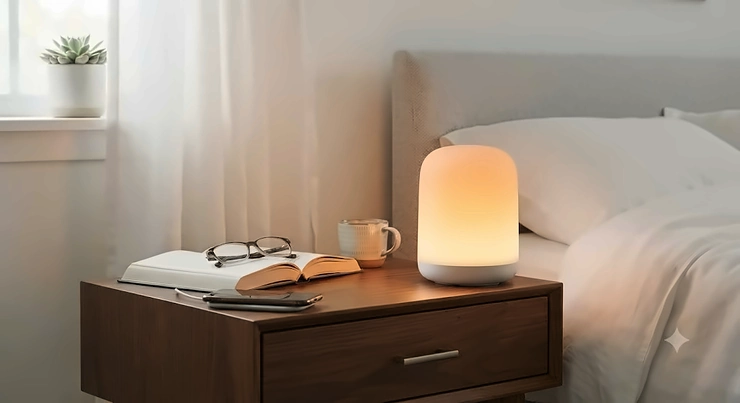
A sunrise simulator night light is a bedside lamp that gradually brightens before your alarm and dims slowly at bedtime, mimicking natural dawn and dusk to ease the transition between sleep and wakefulness instead of jolting you awake with noise. That’s the whole concept in one sentence, and yet an entire industry has grown up around getting those two transitions right. If you’ve ever woken up to a screeching alarm feeling like you got hit by a bus, you already understand the appeal of a sunrise simulator night light — it’s the difference between being yanked out of sleep and being coaxed out of it.
Here’s the thing nobody tells you when you start shopping: the category is a mess of marketing claims. Every box says “clinically proven” or “mimics the sun,” but the actual light output, the color shift, and the honesty of the sunset feature vary wildly between a $30 clock radio and a $200 smart lamp. Your body’s internal clock doesn’t care about marketing copy — it runs on internal circadian clocks that typically follow a 24-hour rhythm and respond to environmental light cues, and a poorly designed light simply won’t move the needle.
This guide skips the fluff. We researched seven real, currently available sunrise simulator night lights spanning budget, mid-range, and premium tiers, pulled their actual specs, and cross-referenced aggregated customer sentiment so you can see exactly what you’re buying before you click “add to cart.” We’ll also dig into the science of color temperature, circadian rhythm support, and sunset dimming — the secondary features that separate a genuinely useful sleep tool from a glorified lava lamp with an alarm bolted on.
Quick Comparison Table
Before the deep dive, here’s the 30-second version for anyone who just wants the shortlist.
| Product | Best For | Price Range | Sunrise Duration |
|---|---|---|---|
| Hatch Restore 3 | Best overall smart pick | $160-$185 | 15-60 min, app-controlled |
| Philips SmartSleep HF3520 | Clinically-proven simplicity | $50-$70 | Up to 30 min |
| Lumie Bodyclock Shine 300 | Brightest light output | $165-$200 | 15-90 min |
| Philips Hue Twilight | Deepest smart-home integration | $130-$160 | Fully customizable via app |
| JALL Wake Up Light | Best budget option | $30-$40 | 10, 20, 30, or 60 min |
| REACHER Wood Grain Alarm Clock | Best nightstand aesthetic | $50-$70 | 5-60 min |
| Lumie Bodyclock Glow 150 | Most compact/travel-friendly | $80-$100 | Fixed 30-45 min |
Notice the spread here: price and brightness don’t move together in a straight line. The JALL Wake Up Light punches well above its price bracket on raw sunrise customization, while the Philips Hue Twilight charges a premium mostly for smart-home integration rather than a fundamentally better light. If your priority is simply the strongest wake-up signal for the dollar, the mid-tier options often beat the flagship ones on value — a pattern we’ll unpack product by product below.
💬 Found a pick you like already? Scroll to the full breakdown before you decide — the pros and cons below might change your mind.
Top 7 Sunrise Simulator Night Lights: Expert Analysis
1. Hatch Restore 3 — best all-around smart sunrise and sound system
The standout here isn’t the light alone, it’s how tightly the sunrise simulation is woven into a full wind-down and wake-up ecosystem controlled entirely through the Hatch app. Specs-wise, you get an adjustable sunrise ramp from 15 to 60 minutes, a companion sunset wind-down mode, a built-in sound machine with a large sound library, and phone-free physical controls once your routines are programmed — meaning you’re not tethered to your phone every night despite the smart features. Based on the spec comparison against cheaper clocks, the phone-free button control is the detail that actually matters day to day: most smart lamps force you to unlock your phone at 6 a.m. just to snooze, which defeats the entire purpose of unplugging at bedtime. This is the pick for tech-comfortable sleepers who want one device replacing an alarm clock, a sound machine, a reading lamp, and a nightlight, and who don’t mind an app-based setup process. Reviewers consistently note the sound quality and the ambient light options as standout strengths, while the recurring complaint centers on the optional Hatch+ subscription gating some sleep content and sounds behind a paywall.
Pros:
- ✅ Phone-free button controls after initial setup
- ✅ Excellent sound machine library and audio quality
- ✅ Sleek, minimal design that doubles as a reading lamp
Cons:
- ❌ Full sound library requires a paid Hatch+ subscription
- ❌ Needs Wi-Fi and the app for programming routines
Expect to pay in the $160-$185 range at the time of research, and for buyers who value the all-in-one sound-plus-light package, that price earns its keep against buying a separate sound machine and lamp.
2. Philips SmartSleep HF3520 — clinically-referenced, no-frills reliability
What sets this model apart on paper is the color progression: it doesn’t just ramp brightness on a single white LED, it shifts color temperature through the sunrise, moving from a deep red glow through orange into a bright yellow-white over the wake window. In practice that means the light itself is doing double duty — early red tones are less disruptive to your remaining sleep, while the later warm-white stage carries enough intensity to actually break through eyelids. The unit offers 20 brightness settings, which is more than most competitors, and a sunset wind-down feature that runs the ramp in reverse for bedtime. Here’s what the spec sheet won’t tell you but reviewers note repeatedly: the complete absence of Wi-Fi, Bluetooth, and an app is a feature, not a limitation, for anyone who wants something that just works without a setup phase. Physicians and sleep specialists have referenced this Philips wake-up light line in recommendations, which lends it more third-party credibility than most competitors in this category can claim. Aggregated reviews consistently praise reliability over the long haul and the simplicity of the interface, with the main gripe being the lack of any smart or app-based scheduling for people who want multi-day routines.
Pros:
- ✅ Gradual color-temperature shift, not just brightness ramp
- ✅ No app or Wi-Fi setup required — plug and go
- ✅ Referenced by sleep physicians in product recommendations
Cons:
- ❌ No Bluetooth, app, or smart scheduling
- ❌ Single alarm sound option limits variety
Typically priced in the $50-$70 range, this is the value anchor of the category — you’re paying primarily for the color-shifting sunrise mechanism itself, with none of the smart-home markup.
3. Lumie Bodyclock Shine 300 — the brightest light at the bedside
The defining number here is brightness: independent light-meter testing measured this model at roughly 840 lux at one foot and around 395 lux at 18 inches from the unit, which puts it at or near the top of the category for raw output. That matters more than it sounds — natural outdoor daylight sits around 400 lux even on an overcast morning, so a sunrise lamp that can’t get close to that number at a realistic bedside distance is really just a mood light with an alarm clock attached. On paper, this means the Shine 300 is the pick for people who’ve tried a cheaper wake-up light and found it “not bright enough to actually wake me up,” which is one of the most common complaints in this product category. The sunrise ramp is adjustable from 15 to 90 minutes, giving unusually fine control for people who want a slow, drawn-out wake window versus a faster one. Reviewers and light-meter testers alike flag this as one of the few models that delivers a genuinely realistic dawn simulation rather than a dim approximation, though several note the interface and button layout feel dated compared to app-controlled competitors.
Pros:
- ✅ Among the highest measured lux output in its class
- ✅ Sunrise duration adjustable from 15 to 90 minutes
- ✅ Doubles effectively as a bright reading or task lamp
Cons:
- ❌ Physical button interface feels dated next to app-based rivals
- ❌ Premium price for a non-smart, standalone device
Expect a price in the $165-$200 range — a real premium, but for anyone whose main complaint about cheaper sunrise lights is “it just wasn’t bright enough,” this is the spec that actually fixes that problem.
4. Philips Hue Twilight — the smoothest sunrise if you’re already in the Hue ecosystem
This one earns its spot through polish rather than raw specs: testers measured it as both the brightest at true bedside distance and the smoothest color-shifting ramp of any model evaluated, moving convincingly from deep blue-toned dusk light through to warm morning light. The catch, and it’s a significant one, is that full functionality requires the Philips Hue Bridge hub — without it, you lose the smooth automated scheduling and app-based customization that justify the price tag. Based on the spec comparison, this is best understood less as a standalone alarm clock and more as a smart bulb with sunrise/sunset behavior, which is exactly why it earns “sunset dimming night light” as a search term better than almost anything else on this list — the dusk-to-dark transition is genuinely programmable down to the minute. If you already own Hue lights or a Hue Bridge, the marginal cost and setup friction basically disappear and this becomes one of the most customizable options available. Reviewers who already live in the Hue ecosystem describe the app control and scene automation as the standout advantage, while those without a hub report frustration at needing to buy additional hardware just to unlock the core sunrise/sunset scheduling.
Pros:
- ✅ Smoothest, most gradual color-temperature transition tested
- ✅ Deep app-based scheduling for both sunrise and sunset
- ✅ Genuinely useful as a standalone smart light beyond wake-up duty
Cons:
- ❌ Requires the Hue Bridge hub for full functionality
- ❌ Ecosystem lock-in raises total cost of ownership
Pricing typically lands in the $130-$160 range for the bulb or lamp itself, before factoring in a roughly $60 hub if you don’t already own one — a real consideration for the value math below.
5. JALL Wake Up Light Sunrise Alarm Clock — best budget entry point
The standout feature is the full-screen LED panel, which produces noticeably more room-filling light than most other clocks in its price bracket — reviewers repeatedly compare its brightness favorably to sunrise lamps costing several times more. Key specs include a sunrise ramp adjustable to 10, 20, 30, or 60 minutes, 20 adjustable brightness levels, a 5-watt Bluetooth speaker, and a 25-sound sleep and white-noise library, which is an unusually generous feature set for the price. What most buyers overlook about this model is that the adjustable ramp duration — rather than just a fixed 30-minute setting most budget clocks lock you into — is what actually lets you tailor the wake-up experience to your own sleep sensitivity, whether that’s a gentle 60-minute drift or an aggressive 10-minute jolt. This is the natural starting point for anyone curious about sunrise waking who isn’t ready to commit $150-plus to a Philips or Hatch. Aggregated Amazon reviews, numbering in the tens of thousands, consistently highlight the brightness-for-price ratio and the Bluetooth streaming as standout value, while the most common complaint involves the on-device menu system feeling fiddly to navigate on first setup.
Pros:
- ✅ Adjustable 10-60 minute sunrise ramp, unusual at this price
- ✅ 5W Bluetooth speaker doubles as a bedside speaker
- ✅ Exceptionally strong brightness-to-price ratio per reviewers
Cons:
- ❌ Menu navigation reported as fiddly on first setup
- ❌ Plastic housing feels noticeably less premium than rivals
At around $30-$40, this is the lowest financial barrier to entry in the entire category, and reviewers consistently frame it as the “try before you commit further” option.

6. REACHER Wood Grain Sunrise Alarm Clock — best nightstand aesthetic
The obvious hook is the wood-textured housing, which reads far more like a piece of furniture than the typical molded-plastic alarm clock, and that matters more than it sounds if your nightstand doubles as a design statement. Underneath the aesthetics sit a genuinely full-range dimmer, 8 nightlight color options, and a 26-sound sleep library, plus a sunrise ramp adjustable from 5 to 60 minutes. Compared with the plainer Philips HF3520, this model trades some of that clinical simplicity for customization — you’re choosing your sunset ambience color as much as your sunrise brightness. Here’s the practical trade-off worth weighing: the room-filling brightness that makes this an effective sunrise simulator can also disturb a partner on a different schedule, so it’s a stronger fit for solo sleepers or synchronized couples than for split-shift households. A built-in battery backup retains your settings through a power outage, a small but genuinely useful detail absent from several competitors. Reviewers consistently praise the design and the sunset wind-down feature as standouts, while noting this isn’t built or marketed as SAD-therapy-grade light output, so buyers seeking clinical light therapy should look elsewhere.
Pros:
- ✅ Wood-grain housing blends into bedroom decor
- ✅ Battery backup retains settings through power outages
- ✅ 8-color nightlight plus 26-sound sleep library
Cons:
- ❌ Not designed or marketed for clinical SAD light therapy
- ❌ Full brightness may disturb a partner on a different schedule
Priced around $50-$70, it sits squarely in the mid-range, competing directly with the Philips HF3520 on price while leaning harder into design and customization instead of clinical simplicity.
7. Lumie Bodyclock Glow 150 — most compact and travel-friendly
The defining trait of this model is its footprint: it’s the smallest and lightest device in this roundup, built by the same company behind the higher-lux Shine 300, but scaled down for nightstands with limited real estate or for travel. Key specs include a fixed sunrise duration in the 30-45 minute range, a simplified single-alarm interface, and a lower peak lux output than its larger sibling — a direct trade-off for the smaller light-emitting surface. Based on the spec comparison, this is the honest budget-conscious Lumie pick for someone who wants the brand’s reputation for realistic dawn simulation without paying premium-tier prices or needing bedside real estate a larger unit demands. What most buyers overlook is that a smaller light-emitting area generally means less total lux at a given distance, so if your household includes a heavy sleeper, this model may not deliver the same wake-up reliability as the Shine 300 — it’s better suited to light-to-average sleepers or as a secondary unit for guest rooms and travel. Reviewers commonly cite the compact size and simple single-button operation as the appeal, while the fixed sunrise duration (versus the adjustable range on pricier models) is the most frequent limitation mentioned.
Pros:
- ✅ Compact footprint fits small nightstands and travel bags
- ✅ Simple single-button operation, minimal learning curve
- ✅ Backed by Lumie’s established sunrise-lamp reputation
Cons:
- ❌ Fixed sunrise duration, not user-adjustable
- ❌ Lower peak lux than larger Lumie models
Expect to pay in the $80-$100 range, positioning it as a lighter-duty, lower-commitment way to try the Lumie brand specifically.
Setting Up Your Sunrise Simulator Night Light: The First 30 Days
Getting a sunrise simulator night light out of the box is the easy part. Getting your body to actually respond to it takes a little longer, and most first-time buyers give up right around the two-week mark, which happens to be exactly when the habit would otherwise start clicking into place.
Start with placement, because it matters more than people expect. Put the unit within about two to three feet of your face, roughly at pillow height — tucked on a low shelf or across the room, even a bright unit like the Lumie Bodyclock Shine 300 loses most of its wake-up punch by the time the light reaches your closed eyelids. For the first week, set your sunrise ramp to its longest available duration (60 or 90 minutes on models like the Hatch Restore 3 or Lumie Bodyclock Shine 300) so your body gets a gentle, extended introduction rather than a jarring first impression.
By week two, start pairing the light with a consistent wake time, even on weekends — circadian entrainment depends on repetition, not just light intensity. This is also when it’s worth introducing the sunset feature if your model has one, since your body’s internal clocks stay in sync with certain cues in the environment, and a strong morning signal paired with an inconsistent evening routine sends mixed messages. Common first-30-days mistakes include running the alarm sound simultaneously with the light instead of a few minutes after it (which defeats the “gentle” premise), keeping phone screens on at full brightness right up until the light kicks in, and expecting immediate results — real circadian shifts typically take one to two weeks of consistent exposure to stabilize.
Who Actually Needs a Sunrise Simulator Night Light? Real-World Scenarios
The winter-dark commuter. If you’re leaving for work before sunrise for five months of the year, your only natural light exposure might be a gray office fluorescent tube. A model like the Philips SmartSleep HF3520 or Lumie Bodyclock Shine 300, run on its full ramp every weekday morning, effectively manufactures the dawn signal your environment isn’t providing.
The shift worker with an inverted schedule. Someone sleeping from 8 a.m. to 4 p.m. needs a device that can simulate “dawn” at an arbitrary clock time and, ideally, simulate “dusk” before their daytime sleep starts. The Philips Hue Twilight‘s fully app-scheduled sunrise and sunset makes it easier to decouple the light cues from actual sunrise/sunset than a fixed-mode budget clock can.
The budget-conscious first-timer. If you’re not sure a sunrise simulator night light will actually work for you, the JALL Wake Up Light is the low-risk way to find out — it delivers a genuinely adjustable ramp and real brightness without a $150-plus commitment.
The couple on mismatched schedules. A partner who wakes at 5:30 a.m. next to one who sleeps until 7 needs either a lower-brightness model like the Lumie Bodyclock Glow 150 or careful placement so the light doesn’t flood the whole room — the room-filling brightness that makes the REACHER Wood Grain Alarm Clock effective for solo sleepers can become a liability here
How to Choose a Sunrise Simulator Night Light
Cutting through the marketing, here’s the actual decision framework, in order of what matters most:
- Check the real lux output, not just the wattage. A “25W equivalent” LED tells you almost nothing about brightness at your actual bedside distance — look for lux measurements when available, and treat anything under roughly 300 lux at 18 inches skeptically for heavy sleepers.
- Confirm the sunrise duration is adjustable. A fixed 30-minute ramp works for some people and does nothing for others; models like the Lumie Bodyclock Shine 300 and JALL Wake Up Light that let you set 10 to 90 minutes give you room to tune the experience.
- Decide if you actually want smart-home features. App control and scheduling, as with the Hatch Restore 3 or Philips Hue Twilight, are genuinely useful for shift workers and irregular schedules, but they add setup friction and, often, subscription costs that a simple plug-and-play unit like the Philips SmartSleep HF3520 avoids entirely.
- Look for a genuine sunset dimming feature if you struggle to fall asleep. Wake-up light is only half the equation — see the dedicated section below.
- Match brightness to your household, not just yourself. A partner, roommate, or light-sensitive child changes the calculus; a lower-output travel-sized unit may serve a shared space better than the brightest model on this list.
- Weigh color temperature shift, not just color options. A device that transitions warm-to-bright, like the Philips SmartSleep HF3520, more closely tracks natural dawn than one that simply dims a single fixed white LED.
- Set a realistic budget band and stick to it. As the products above show, price correlates loosely with effectiveness — the $30-$40 JALL Wake Up Light genuinely competes on brightness with units three times its price.
✨ Want a shortcut? Skip back to the comparison table above and cross-reference it against these seven criteria.
Sunrise Simulator vs Traditional Alarm Clock
A traditional alarm clock relies entirely on sound — often a jarring beep or buzzer — to interrupt sleep at a specific clock time, with zero regard for what stage of sleep you’re actually in when it fires. A sunrise simulator night light instead uses gradually increasing light as the primary wake signal, with sound (if present) arriving later, as a backup rather than the main event.
| Factor | Sunrise Simulator | Traditional Alarm |
|---|---|---|
| Wake mechanism | Gradual light + optional sound | Abrupt sound only |
| Cortisol response | Gradual rise, mimics natural waking | Sharp spike, “startle” response |
| Bedtime utility | Often includes sunset dimming | None |
| Best For | Light sleepers to average sleepers wanting a gentler wake | Deep sleepers needing a hard, reliable jolt |
| Typical price | $30-$200 | $10-$30 |
The analysis worth drawing out here: this isn’t strictly an upgrade in every dimension — a traditional loud alarm remains more reliable for the deepest sleepers who simply won’t stir for light alone, which is exactly why every model in this guide, including the Hatch Restore 3 and JALL Wake Up Light, still includes a sound option as backup rather than relying on light exclusively. Where sunrise simulators clearly win is in the quality of the waking experience for anyone whose complaint isn’t “I don’t wake up” but “I wake up feeling terrible,” since bright morning light causes a phase advance that helps you feel sleepy earlier in the evening and wake up earlier and more naturally over time. If you’re a genuinely heavy sleeper, pair a bright unit like the Lumie Bodyclock Shine 300 with its sound backup rather than expecting light alone to do the job.
💬 Which camp are you in — light sleeper craving gentleness, or heavy sleeper who needs backup? Either way, there’s a pick above for you.
Color Temperature Night Light: Why Kelvin Matters More Than Lumens
Most people shopping for a sunrise simulator night light fixate on brightness and completely ignore color temperature, which is arguably the more important spec. Color temperature, measured in Kelvin, describes whether a light leans warm and amber or cool and blue — and that distinction directly affects how your body interprets the signal.
Here’s the mechanism in plain terms: warm light in the 2,000-3,000K range, the kind emitted at actual sunrise, is comparatively gentle on your circadian system, while cooler, bluer light above roughly 4,000-5,000K more strongly suppresses melatonin production. A large-scale lighting study published in Scientific Reports measured melatonin suppression across dozens of real household bulbs and found that cool white LEDs suppressed melatonin at roughly three to four times the rate of warm white equivalents. That’s not a marginal difference — it’s the entire reason models like the Philips SmartSleep HF3520 are engineered to shift color temperature through the sunrise sequence, starting deep red-orange and only moving toward brighter white-yellow tones later in the ramp, rather than just dimming a single fixed-temperature bulb up and down.
What this means practically: two lamps with identical lux ratings can produce very different wake-up (and wind-down) experiences depending on their color temperature curve. A budget unit that simply brightens a cool-white LED is working against your circadian system during the early, most sleep-sensitive part of the ramp. When comparing specs, prioritize models that explicitly advertise color-temperature shifting — the Philips SmartSleep HF3520, Lumie Bodyclock Shine 300, and Philips Hue Twilight all do this, while some of the budget multi-color options are optimizing for aesthetic variety rather than a genuine dawn-accurate curve.
Circadian Rhythm Night Light: How Biological Clock Support Actually Works
Your circadian rhythm is essentially a roughly 24-hour internal clock running in nearly every cell in your body, coordinated by a master clock in your brain that takes its primary cue from light. This isn’t a vague wellness concept — it’s a well-documented biological system, and the circadian pacemaker is most sensitive to light in the morning and evening, with bright morning light causing a phase advance that shifts both your sleepiness and wake time earlier. A sunrise simulator night light is, functionally, a tool for deliberately triggering that phase-advance response on a schedule you control rather than one dictated by the actual sun outside your window — which matters enormously if you live somewhere with short winter daylight hours, work night shifts, or simply wake before the sun does for most of the year.
The CDC’s National Institute for Occupational Safety and Health has published detailed guidance specifically because shift workers and night-schedule employees are the population most affected by circadian misalignment, and light timing is the primary lever available to correct it. This is precisely why devices offering fully custom scheduling, like the Philips Hue Twilight, are disproportionately useful for shift workers — they can simulate “dawn” at 2 p.m. if that’s when a night-shift worker’s day is beginning, something a fixed-schedule sunrise clock can’t replicate.
It’s worth being honest about the limits here too: a sunrise simulator night light supports circadian entrainment, it doesn’t override it overnight. Expect gradual improvement over one to two weeks of consistent use rather than an immediate fix, and understand that severe circadian rhythm disorders may need a conversation with a sleep specialist rather than a bedside gadget alone.

Sunset Dimming Night Light: The Half of the Equation Everyone Skips
Nearly every sunrise simulator night light gets marketed around the morning wake-up feature, and nearly every buyer underuses — or never even discovers — the sunset dimming half. That’s a genuine missed opportunity, because evening light exposure is doing just as much circadian work as morning light, just in the opposite direction.
According to the Sleep Foundation, light exposure at night can hinder transitions between sleep cycles and reduce time spent in deeper, more restorative sleep stages, which is exactly the problem a genuine sunset dimming feature is designed to counteract — gradually reducing brightness and shifting toward warmer tones in the 30-60 minutes before your intended sleep time, rather than having you flip from a bright overhead light to total darkness in one abrupt switch. Among the products reviewed here, the Philips Hue Twilight and Philips SmartSleep HF3520 both run genuinely programmable reverse-ramp sunset sequences, while the REACHER Wood Grain Alarm Clock‘s 8-color nightlight mode can approximate the same effect manually, even without a fully automated ramp.
The practical mistake most buyers make is treating the sunset feature as optional or skippable because the sunrise feature is the headline. In reality, if your goal is falling asleep faster and waking up easier, the sunset ramp is doing at least half of the circadian heavy lifting, and skipping it is like buying a two-part solution and only using half of it.
✨ Ready to Wake Up Differently? Check current availability on any of the seven picks above and start your first sunrise routine tonight!
Building a Sleep Schedule Lighting Routine That Actually Sticks
Even the best sunrise simulator night light underdelivers if it’s bolted onto an otherwise chaotic sleep schedule. Here are the most common problems buyers run into after purchase, and the fixes that actually address them.
Problem: Inconsistent bedtimes make the sunset feature useless. If bedtime shifts by two hours night to night, a fixed sunset ramp can’t align with your actual wind-down window. Solution: anchor bedtime within a 30-minute range, even on weekends, before layering the sunset feature on top.
Problem: Phone and TV screens override the dimming effect. A gradually dimming lamp does very little if a phone screen at full brightness is six inches from your face at the same time. Solution: set the sunset ramp to begin exactly when screens go off, using it as the trigger rather than an afterthought.
Problem: The sunrise light doesn’t wake you, only your partner. This is a placement and brightness-matching issue more than a product flaw. Solution: reposition the unit closer to the intended sleeper, or choose a lower-output model like the Lumie Bodyclock Glow 150 for shared spaces.
Problem: Weekend schedule drift undoes weekday progress. Sleeping in by three hours on Saturday resets much of the circadian entrainment built during the week. Solution: cap weekend wake-time drift to no more than about an hour past your weekday time, using the sunrise light’s dual-alarm feature (available on models like the JALL Wake Up Light) to set a gentler weekend ramp rather than skipping it entirely.
Problem: Expecting results in three days. Circadian entrainment is a cumulative process, not a switch. Solution: commit to at least two full weeks before judging whether a given device and routine is working for you.
Common Mistakes When Buying a Sunrise Simulator Night Light
Even careful shoppers trip over the same handful of errors in this category. First, buying on lux claims alone without checking whether the color temperature actually shifts — a bright, fixed-temperature cool-white light can be counterproductive during the early ramp, as covered above. Second, ignoring placement requirements before purchase; a unit that tests brilliantly in a manufacturer’s demo video will underperform on a nightstand three feet from your face if you place it across the room out of habit. Third, assuming smart-home features are automatically worth the premium — the Philips Hue Twilight is genuinely excellent if you’re in the Hue ecosystem already, but it’s a poor value if you’d be buying a $60 hub solely to use one lamp. Fourth, overlooking the sunset feature entirely, which, as discussed, is doing roughly half the circadian work in a well-designed unit. And fifth, buying the loudest, most feature-packed model without asking whether a simpler, no-app device like the Philips SmartSleep HF3520 actually fits how you live — more features mean more things that can break, need updates, or gate content behind a subscription.
Long-Term Cost & Maintenance
The sticker price is only part of the real cost of ownership here. LED-based sunrise simulators generally have long-rated bulb lifespans, often in the tens of thousands of hours, so unlike older halogen wake-up lights, you’re unlikely to need a bulb replacement during the device’s useful life — that’s a genuine long-term advantage over older lamp-based designs. The real ongoing costs to watch for are software-dependent: the Hatch Restore 3‘s expanded sound library sits behind an optional Hatch+ subscription, and the Philips Hue Twilight effectively requires the one-time Hue Bridge purchase (commonly around $60) if you don’t already own one, which should be added to the sticker price when comparing true cost against non-smart alternatives.
Running a rough cost-per-year comparison: a $35 JALL Wake Up Light used daily for three years works out to roughly a dollar a month, with essentially no maintenance beyond occasional dusting and firmware being a non-issue since it’s not app-dependent. A Hatch Restore 3 at $170 plus an optional $5-monthly subscription is a meaningfully different financial commitment over the same three years — still reasonable for many households, but worth entering with eyes open rather than discovering the subscription prompt after unboxing. For most buyers, the smart move is starting with a non-subscription model like the Philips SmartSleep HF3520 or JALL Wake Up Light, and only stepping up to a subscription-gated smart device once you’ve confirmed sunrise-based waking actually works for your sleep pattern.

Frequently Asked Questions
❓ Does a sunrise simulator night light actually work?
❓ What color temperature is best for a sunrise simulator night light?
❓ Can a sunrise simulator night light replace melatonin supplements?
❓ How far from my bed should I place a sunrise alarm clock?
❓ Do sunrise simulator night lights help with seasonal low mood in winter?
Conclusion
A sunrise simulator night light isn’t a magic fix, but it’s one of the few sleep gadgets with a genuinely defensible mechanism behind it — your circadian system responds to light, and these devices give you a way to control that light on your own schedule instead of whatever the sun happens to be doing outside your window that week. The right pick really does depend on what you’re solving for. If you want the fullest smart ecosystem and don’t mind a subscription, the Hatch Restore 3 earns its premium price. If you want the most clinically-referenced, no-nonsense option, the Philips SmartSleep HF3520 remains hard to beat. Heavy sleepers who’ve been burned by “too dim to matter” lights should look straight at the Lumie Bodyclock Shine 300, and anyone testing the waters on a budget should start with the JALL Wake Up Light before spending more.
Whichever you choose, don’t skip the sunset half of the routine, don’t expect results in three days, and place the unit close enough to your face that it can actually do its job. Circadian rhythm support isn’t about one dramatic gadget purchase — it’s about a consistent light cue your body can learn to trust, morning and night.
✨ Don’t Miss These Exclusive Deals!
🔍 Check current pricing and availability on any of the seven sunrise simulator night lights above, and start building a wake-up routine your body will actually thank you for.
Recommended for You
- App Controlled Baby Night Light: 7 Best Smart Picks for 2026
- Smart LED Nursery Night Light: 7 Real Picks for 2026
- 7 Best Smartphone Controlled Sleep Sounds Machines for 2026
Disclaimer: This article contains affiliate links. As an Amazon Associate, I earn from qualifying purchases. If you purchase products through these links, we may earn a small commission at no additional cost to you.
✨ Found this helpful? Share it with your friends! 💬🤗
