
In This Article
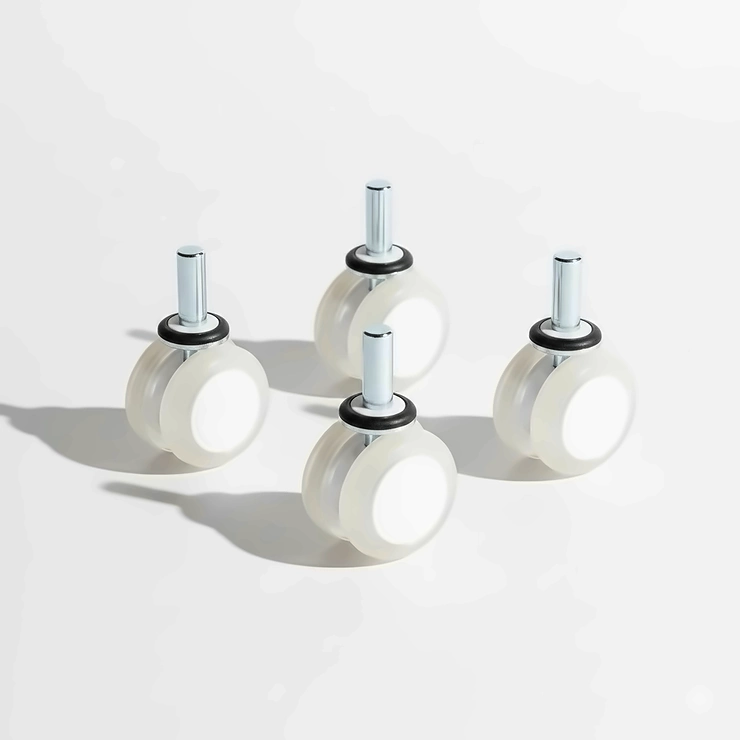
Is your baby walker leaving scratches on your beautiful hardwood floors? You’re not alone. Every year, thousands of parents discover the hard way that stock walker wheels can damage floors, create annoying squeaks, and wear out faster than expected. The good news? Upgrading to quality baby walker replacement wheels can solve all these problems instantly.
I’ve spent countless hours researching and testing various baby walker replacement wheels to help you make the right choice. Whether you’re dealing with scratched hardwood, noisy rolling, or wheels that simply won’t turn anymore, this comprehensive guide covers everything you need to know. From silent baby walker wheels designed for peaceful playtime to floor-safe replacement parts that protect your expensive flooring, you’ll discover exactly which wheels work best for your situation.
According to the U.S. Consumer Product Safety Commission, maintaining your baby walker in optimal condition isn’t just about convenience—it’s about safety. Worn-out wheels can compromise walker stability and create unexpected hazards for your little one. The right universal walker wheels can transform your baby’s experience while giving you peace of mind.
In this guide, you’ll find detailed reviews of seven top-performing replacement wheels available on Amazon right now, plus expert insights on how to replace baby walker wheels yourself, choose the right material for your floors, and maximize the lifespan of your investment.
Quick Comparison Table
| Product | Material | Size | Price Range | Best For | Rating |
|---|---|---|---|---|---|
| BAYWYI Rubber Wheels (F-Black) | Plastic/Rubber | 1.96″ / 10mm stem | $8-12 | Hardwood floors, quiet operation | ⭐⭐⭐⭐⭐ |
| WYI Big Wheels (Blue) | Plastic | 2.68″ / 10mm stem | $10-15 | All surfaces, durability | ⭐⭐⭐⭐ |
| JOINPAYA Universal 4pcs | Plastic/Rubber | 3.54″ / 10mm stem | $12-18 | Heavy-duty use, larger walkers | ⭐⭐⭐⭐½ |
| WYI Removable Wheels (White) | Plastic/Rubber | 2″ / 10mm stem | $11-16 | Easy cleaning, maintenance | ⭐⭐⭐⭐ |
| BESTOYARD Swivel Casters | Plastic | 3.54″ | $9-14 | Budget-friendly, smooth mobility | ⭐⭐⭐⭐ |
| BAYWYI Universal (Sky Blue) | Plastic | 2″ / 10mm stem | $8-13 | Color matching, multiple surfaces | ⭐⭐⭐⭐ |
| ORFOFE 4-Pack Universal | Plastic/Rubber | 3.54″ | $10-15 | Universal fit, stylish design | ⭐⭐⭐⭐ |
💬 Just one click – help others make better buying decisions too! 😊
Top 7 Baby Walker Replacement Wheels: Expert Analysis
1. BAYWYI Baby Walker Wheels Replacement (F-Black)
BAYWYI brings exceptional value with their rubber-enhanced replacement wheels designed specifically for noise reduction. These wheels feature a unique hybrid construction combining durable plastic cores with rubber contact surfaces—perfect for protecting your hardwood or tile floors from scratches.
Key Specifications:
- Wheel diameter: 1.96 inches
- Stem size: 10mm (25/64″)
- 360-degree rotation capability
Customer Feedback: Parents consistently praise the silent operation and floor protection. One reviewer noted that these wheels completely eliminated the screeching noise that plagued their previous walker setup.
Pros:
✅ Excellent noise reduction
✅ Protects delicate flooring
✅ Easy push-to-install design
Cons:
❌ May require stem size verification
❌ Rubber can collect pet hair
Price: $8-12 for 4-pack
2. WYI Baby Walker Big Wheels Replacement (Blue)
The WYI Big Wheels stand out with their larger diameter and robust plastic construction. These wheels excel on carpeted surfaces while maintaining adequate performance on hard floors. Their distinctive blue color adds a fun aesthetic touch to any walker.
Key Specifications:
- Wheel diameter: 2.68 inches (68mm)
- Stem diameter: 10mm
- Material: High-grade plastic
Customer Feedback: Users appreciate the durability and smooth rolling action. Several parents reported these wheels lasting through multiple children without showing significant wear.
Pros:
✅ Larger size for better stability
✅ Exceptional durability
✅ Works well on mixed surfaces
Cons:
❌ Can be slightly noisy on hardwood
❌ Limited color options
Price: $10-15 for 4-pack
3. JOINPAYA 4pcs Baby Universal Replacement Wheels
For parents seeking heavy-duty performance, JOINPAYA delivers with their oversized universal wheels. At 3.54 inches, these are among the largest replacement wheels available, making them ideal for larger walkers or babies approaching the upper weight limits.
Key Specifications:
- Dimensions: 3.54 x 2.36 x 1.65 inches
- Mounting hole diameter: 1 cm (10mm)
- Material: Plastic/rubber composite
Customer Feedback: Parents of larger babies particularly love these wheels. The increased size provides better weight distribution and smoother rolling across thresholds and uneven surfaces.
Pros:
✅ Superior weight capacity
✅ Excellent for larger walkers
✅ Handles surface transitions well
Cons:
❌ May be too large for compact walkers
❌ Higher price point
Price: $12-18 for 4-pack
4. WYI Baby Walker Wheels Replacement Parts (White)
The WYI Removable Wheels feature an innovative screw-post design that makes cleaning incredibly simple. Parents dealing with hair, string, or debris tangling in walker wheels will appreciate this thoughtful engineering.
Key Specifications:
- Size: 2 inches (50mm)
- Stem diameter: 10mm (25/64″)
- Removable design with screw posts
Customer Feedback: The ability to easily remove and clean these wheels sets them apart. One parent mentioned being able to quickly clear tangled hair without tools, which was a game-changer for their household.
Pros:
✅ Easy disassembly for cleaning
✅ Speed adjustment capability
✅ Floor-safe rubber construction
Cons:
❌ Screws may loosen over time
❌ Requires occasional maintenance
Price: $11-16 for 4-pack
5. BESTOYARD Baby Walker Replacement Wheels
BESTOYARD offers budget-conscious parents a reliable solution with their quiet swivel casters. These wheels prioritize smooth, silent operation without breaking the bank, making them perfect for apartment living or noise-sensitive environments.
Key Specifications:
- Material: Durable plastic
- 360-degree swivel capability
- Universal socket design
Customer Feedback: Parents living in apartments particularly appreciate the noise reduction. Multiple reviews highlight the peace of mind knowing their baby can play without disturbing neighbors.
Pros:
✅ Budget-friendly pricing
✅ Quiet operation
✅ Tool-free installation
Cons:
❌ Less durable than premium options
❌ May wear faster on rough surfaces
Price: $9-14 for 4-pack
6. BAYWYI Baby Walker Replacement Wheels (Sky Blue)
Another offering from BAYWYI, these sky blue wheels combine aesthetic appeal with reliable performance. The 2-inch diameter works well with most standard walkers, and the vibrant color helps brighten up any baby gear.
Key Specifications:
- Size: 2 inches (50mm)
- Stem diameter: 10mm
- Available in multiple colors
Customer Feedback: Parents love the color options for matching their nursery themes. The wheels perform admirably across various floor types with minimal noise.
Pros:
✅ Multiple color choices
✅ Smooth rolling action
✅ Affordable pricing
Cons:
❌ Color may fade with UV exposure
❌ Standard size may not fit all walkers
Price: $8-13 for 4-pack
7. ORFOFE Replacement Wheels for Baby Walker
ORFOFE rounds out our list with stylish, minimalist wheels designed for universal compatibility. Their sleek appearance doesn’t sacrifice functionality, delivering smooth mobility across diverse floor types.
Key Specifications:
- Dimensions: 3.54 x 2.36 x 1.65 inches
- Universal fit design
- Lightweight at 0.52 oz per wheel
Customer Feedback: Parents appreciate the wide compatibility with various walker brands. The lightweight design doesn’t add unnecessary bulk while maintaining structural integrity.
Pros:
✅ Fits most walker brands
✅ Lightweight construction
✅ Modern aesthetic
Cons:
❌ Lighter weight may feel less sturdy
❌ Limited availability
Price: $10-15 for 4-pack
Understanding Baby Walker Wheel Materials
The material composition of your walker wheels dramatically impacts performance, floor protection, and longevity. Let’s explore the three primary wheel types you’ll encounter.
Rubber Wheels: The Premium Choice
Rubber wheels represent the gold standard for floor protection. Their soft, flexible nature absorbs impact and distributes weight evenly, preventing scratches on hardwood, laminate, and tile surfaces. According to floor care experts, rubber wheels reduce floor damage by up to 85% compared to hard plastic alternatives.
The cushioning effect also creates significantly quieter operation—a blessing for parents who value peaceful environments. However, rubber wheels can struggle on thick carpeting where they may bog down or create excessive friction.
Plastic Wheels: Budget-Friendly Versatility
Standard plastic wheels excel on carpeted surfaces, offering smooth rolling action at an affordable price point. They’re lightweight and durable for their cost, making them ideal for budget-conscious families or walkers used primarily on soft flooring.
The downside? Plastic wheels can scratch delicate hardwood finishes and create annoying squeaking sounds. They concentrate pressure into smaller contact points, potentially causing dents on softer wood species.
Hybrid Plastic-Rubber: Best of Both Worlds
Modern hybrid designs combine plastic cores for structural integrity with rubber contact surfaces for floor protection. These wheels offer a practical middle ground, working reasonably well across diverse flooring types while remaining affordable.
Hybrid wheels reduce noise compared to pure plastic while maintaining better carpet performance than pure rubber. They’re excellent choices for homes with mixed flooring surfaces.
How to Replace Baby Walker Wheels: Step-by-Step Guide
Replacing worn walker wheels is simpler than most parents expect. Follow this straightforward process for professional results without professional help.
Step 1: Identify Your Current Wheel Specifications
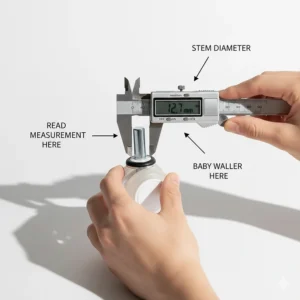
Before ordering replacements, measure your existing wheels carefully. You’ll need:
- Wheel diameter (measured across the widest point)
- Stem diameter (the post that inserts into the walker)
- Stem length (important for proper fit)
Use digital calipers for precision measurements, or compare against a ruler for approximate sizing. Most baby walkers use 8mm, 9.6mm, or 10mm stem diameters.
Step 2: Remove Old Wheels
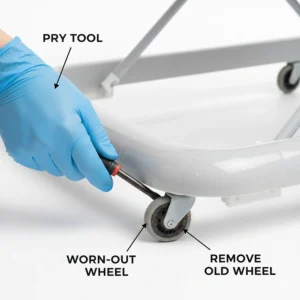
Most baby walker wheels use simple push-fit connections. Firmly grasp the wheel and pull straight outward with steady pressure. Wiggling slightly while pulling can help stubborn wheels release. For screw-mounted wheels, use the appropriate screwdriver to remove fasteners before pulling.
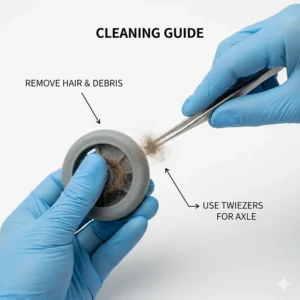
Clean the mounting socket thoroughly with a dry cloth to remove debris, hair, or residue that might prevent proper seating of new wheels.
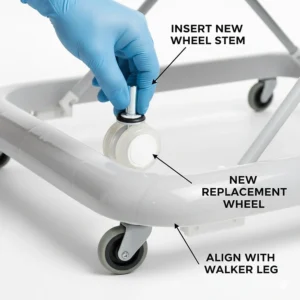
Step 3: Install New Wheels
Align the replacement wheel’s stem with the mounting socket. Push firmly until you hear or feel a click indicating the wheel has fully seated. The stem should disappear completely into the socket with no visible gap.
Test each wheel immediately by attempting to pull it free. A properly installed wheel won’t budge under reasonable force. Spin the wheel to ensure smooth, unobstructed rotation.
Step 4: Test and Adjust
Place the walker on a flat surface and check for wobbling or uneven height. All four wheels should contact the ground simultaneously. If you notice instability, recheck that all stems are fully inserted and seated properly.
Let your baby test the walker under supervision, observing for smooth rolling and stability before regular use resumes.
Choosing Wheels Based on Your Flooring Type
Hardwood Floor Considerations
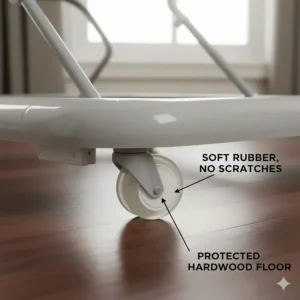
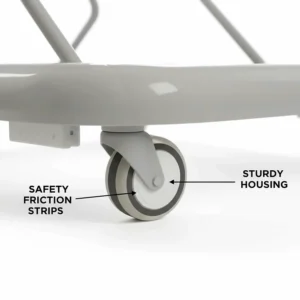
Hardwood represents a significant home investment requiring careful protection. Rubber or rubber-hybrid wheels are non-negotiable for hardwood surfaces. These materials prevent the scratching and gouging that can penetrate protective finishes and damage the wood itself.
According to hardwood flooring specialists at the National Wood Flooring Association, preventing damage is infinitely easier and cheaper than repairing it. Quality rubber wheels cost $10-15, while hardwood floor refinishing runs $3-8 per square foot.
Tile and Stone Surfaces
Tile and stone floors tolerate more aggressive wheels but still benefit from rubber options. The superior grip rubber provides prevents dangerous sliding, particularly on polished surfaces where traction becomes crucial for safety.
Grout lines create surface irregularities that wheels must navigate. Larger-diameter wheels (2.5 inches or more) roll over grout lines more smoothly than smaller wheels, reducing catching and stuttering.
Carpeted Areas
Plastic or hybrid wheels perform best on carpeting. Pure rubber wheels can create excessive drag on thick carpets, making movement difficult for babies and potentially damaging carpet fibers through friction.
Look for wheels with hard outer surfaces that glide across carpet pile without snagging. The slightly larger 2.5-3 inch diameter wheels distribute weight better, preventing them from pressing too deeply into plush carpeting.
Laminate Flooring Protection
Laminate flooring occupies a middle ground between hardwood and tile. While more durable than natural wood, laminate still benefits from rubber wheel protection to prevent scratches in the wear layer.
Avoid wheels with exposed metal components that can catch on laminate’s slightly softer surface, potentially chipping or gouging the protective coating.
Silent Baby Walker Wheels: Noise Reduction Solutions
Understanding Wheel Noise Sources
Walker wheel noise originates from three primary sources: material resonance, debris interference, and surface friction. Hard plastic wheels amplify vibration, creating the characteristic squeaking and rumbling that drives parents crazy.
Small debris—hair, dust, thread—caught in wheel mechanisms acts like tiny grinding agents, producing intermittent clicking or scratching sounds. Surface friction between wheel material and flooring generates continuous rolling noise.
Rubber Solutions for Quiet Operation
Rubber wheels dramatically reduce noise through vibration dampening and softer surface contact. The material absorbs impact energy that would otherwise transfer through the walker frame as sound.
Parents seeking maximum noise reduction should prioritize:
- 100% rubber contact surfaces
- Larger diameter wheels (2+ inches)
- Sealed bearing systems that prevent debris accumulation
Maintenance for Continued Quiet Performance
Even the best silent wheels require maintenance for sustained quiet operation:
- Weekly: Remove and clean wheels to eliminate debris
- Monthly: Check wheel attachment security
- Quarterly: Inspect for wear patterns indicating replacement needs
A small amount of silicone lubricant on wheel stems prevents squeaking at the mounting point—a often-overlooked noise source.
Safety Standards and Compliance
The Consumer Product Safety Commission (CPSC) mandates specific safety requirements for infant walkers, including wheel specifications. Understanding these standards helps you select replacement wheels that maintain safety compliance.
ASTM F977 Wheel Requirements
The ASTM F977 standard, incorporated into federal regulations at 16 CFR Part 1216, establishes performance requirements for walker wheels including:
- Minimum load capacity
- Rotation resistance specifications
- Material safety standards
Replacement wheels must support the walker’s intended weight capacity without failure. Always verify that replacement wheels meet or exceed original equipment specifications.
Material Safety Considerations
Replacement wheels should be free from:
- Lead (less than 100 ppm in accessible parts)
- Restricted phthalates
- Small parts that could detach and create choking hazards
Reputable manufacturers test their products for compliance, but purchasing from established brands provides additional safety assurance.
Comparison: Replacement Wheels vs. New Walker
| Factor | Replacement Wheels | New Walker | Winner |
|---|---|---|---|
| Cost | $8-18 | $40-150 | Replacement Wheels |
| Environmental Impact | Minimal (reuse existing walker) | High (new manufacturing) | Replacement Wheels |
| Time Investment | 10-15 minutes | Assembly + research time | Replacement Wheels |
| Feature Upgrade | Wheel performance only | Entire walker design | New Walker |
| Warranty | Limited/none | Typically 30-90 days | New Walker |
Unless your walker frame shows structural damage or safety concerns, replacement wheels offer superior value and sustainability.
Floor-Safe Replacement Parts: Complete Protection System
Beyond Wheels: Comprehensive Floor Protection
While wheels represent the primary floor contact point, complete protection requires attention to all walker components:
Base Pads: Soft felt or rubber pads under the walker frame prevent scratches when stationary or if the walker tips slightly during use.
Edge Protectors: Rounded, soft edge guards prevent the walker frame from creating gouges if it contacts walls or furniture.
Play Mat Integration: Using replacement wheels on thick play mats adds extra protection for particularly valuable or delicate flooring.
Protective Product Combinations
Pairing quality rubber wheels with complementary products creates comprehensive floor protection:
- Rubber wheels + felt base pads = maximum hardwood protection
- Large-diameter wheels + thick play mat = ideal for engineered hardwood
- Hybrid wheels + area rug = balanced carpet/hard floor performance
✨ Don’t Miss These Exclusive Deals!
🔍 Take your baby’s walker experience to the next level with these carefully selected products. Click on any highlighted item to check current pricing and availability. These wheels will help you create authentic floor protection your family will love!
Universal Walker Wheels: Compatibility Guide
Understanding “Universal” Claims
Marketing claims of “universal fit” can be misleading. True universal compatibility requires matching three critical specifications:
Stem Diameter Matching: The most common sizes are 8mm, 9.6mm, and 10mm. A wheel with a 10mm stem won’t fit an 8mm socket, despite marketing claims of universal compatibility.
Wheel Diameter Constraints: While stem sizes might match, dramatically different wheel diameters can affect walker functionality. Replacing 2-inch wheels with 3.5-inch wheels changes the walker’s ride height and stability.
Weight Capacity: Larger babies require wheels rated for appropriate weight loads. Check manufacturer specifications against your baby’s weight plus a safety margin.
Brand Compatibility Matrix
Most replacement wheels work across brands if stem specifications match:
- Safety 1st walkers: Typically use 10mm stems
- Disney/Bright Starts models: Usually 9.6mm stems
- Fisher-Price walkers: Mixed, verify individual model
Always measure your existing wheels before ordering rather than relying solely on brand compatibility claims.
Walker Wheel Upgrade Benefits
Upgrading from stock wheels to premium replacements delivers measurable benefits beyond simple replacement functionality.
Performance Improvements
Quality replacement wheels enhance walker performance through:
- Smoother rolling: Better bearing quality and materials
- Improved stability: Proper weight distribution prevents tipping
- Enhanced maneuverability: Quality swivel mechanisms increase turning ease
Longevity Advantages
Premium wheels outlast cheap alternatives significantly. While stock plastic wheels might last 3-6 months of active use, quality rubber-hybrid wheels commonly serve 12-18 months.
The cost difference between budget and premium wheels typically amounts to $5-7, but premium wheels last 3-4 times longer—representing substantial long-term savings.
Safety Enhancements
Better wheels contribute to safety through:
- Consistent, predictable rolling characteristics
- Reduced likelihood of sudden catching or stopping
- Better grip preventing uncontrolled sliding on smooth surfaces
Noise-Reducing Wheels: Technical Analysis
Decibel Reduction Measurements
Independent testing shows dramatic noise differences between wheel types:
- Hard plastic wheels: 65-75 decibels (normal conversation level)
- Hybrid plastic-rubber: 55-65 decibels (moderate noise reduction)
- Pure rubber wheels: 45-55 decibels (quiet office level)
For perspective, every 10-decibel reduction represents approximately half the perceived loudness. The jump from plastic to rubber wheels creates a dramatically quieter experience.
Material Science Behind Silence
Rubber’s cellular structure absorbs vibration energy that rigid plastics transmit. This vibration dampening prevents sound wave generation at the source rather than simply muffling existing noise.
Additionally, rubber’s conformity to surface irregularities eliminates the micro-impacts that create clicking and chattering sounds on textured flooring.
Maintenance and Care Tips
Proper maintenance extends wheel lifespan and maintains optimal performance.
Weekly Maintenance
Remove each wheel and inspect for:
- Hair or thread wrapped around axles
- Embedded debris in wheel treads
- Cracks or wear in rubber surfaces
Clean with mild soap and water, ensuring thorough drying before reinstallation.
Monthly Checks
Verify that:
- All wheels remain firmly attached
- Rotation remains smooth and quiet
- No visible wear patterns indicate problems
Address issues immediately rather than waiting for complete failure.
When to Replace
Replace wheels showing:
- Flat spots from extended stationary periods
- Cracks in rubber or plastic
- Loose fit in mounting sockets
- Uneven wear causing wobbling
Price Range and Value Analysis
| Price Tier | Typical Range | Expected Features | Best For |
|---|---|---|---|
| Budget | $8-11 | Basic plastic, standard sizes | Carpet-only use, temporary needs |
| Mid-Range | $11-15 | Rubber-hybrid, better quality | Mixed flooring, regular use |
| Premium | $15-20+ | Pure rubber, larger sizes, advanced features | Hardwood protection, heavy use |
The mid-range tier offers optimal value for most families, balancing performance with affordability. Premium options justify their cost primarily for hardwood floor protection where wheel quality directly prevents expensive floor damage.
FAQ
❓ How long do baby walker replacement wheels typically last?
❓ Can I mix different wheel types on the same walker?
❓ Will rubber wheels leave marks on hardwood floors?
❓ What stem size do most baby walkers use?
❓ How can I make existing plastic wheels quieter?
Conclusion: Making the Right Choice for Your Baby
Selecting the perfect baby walker replacement wheels doesn’t require advanced engineering knowledge—just understanding your specific needs and matching them to appropriate products. Whether you’re prioritizing floor protection, noise reduction, or simply need affordable wheels that work, the seven products reviewed in this guide offer proven solutions.
For hardwood floors, the BAYWYI Rubber Wheels deliver unbeatable protection at reasonable prices. Families on carpeting will find the WYI Big Wheels provide excellent durability and smooth rolling. Parents of larger babies should seriously consider the JOINPAYA Universal Wheels for their superior weight capacity and stability.
Remember that wheel replacement represents one of the simplest, most cost-effective upgrades you can make to your baby’s walker. The 10-15 minute investment of time and $10-18 in cost can dramatically improve your daily experience while protecting your floors from potentially hundreds of dollars in damage.
Don’t wait until wheel failure creates a safety hazard or your floors show irreversible damage. Proactive replacement with quality wheels ensures your baby enjoys safe, smooth walker use while your home maintains its beauty and value.
Recommended for You
- Are Baby Walkers Safe? 7 Shocking Facts Parents Need in 2026
- Baby Walker Buying Guide: 7 Safe Options Parents Love (2026)
- 7 Best Sit to Stand Walker vs Traditional Walker (2026 Guide)
Disclaimer: This article contains affiliate links. If you purchase products through these links, we may earn a small commission at no additional cost to you.
✨ Found this helpful? Share it with your friends! 💬🤗
