
In This Article
Let me be straight with you from the get-go: are baby walkers safe? Despite what colorful product boxes might suggest, the answer is overwhelmingly no. I’ve spent countless hours researching this topic, and the findings from pediatric experts, injury statistics, and real parent experiences paint a concerning picture that every parent needs to understand before making a purchase decision.
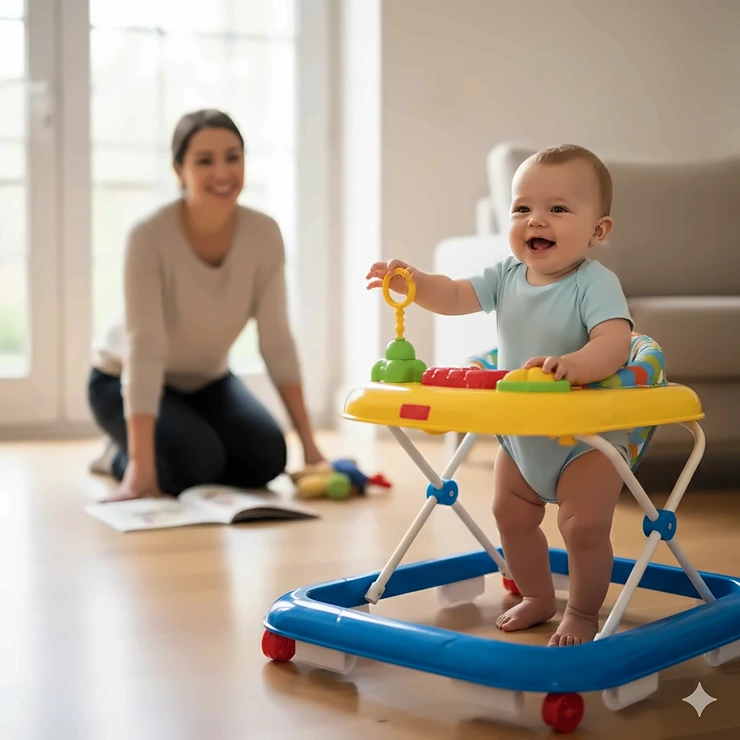
Baby walkers are wheeled devices that suspend infants in a fabric seat, allowing them to zip around before they’ve mastered walking on their own. Sounds helpful, right? Here’s what caught me off guard: since 2004, the American Academy of Pediatrics has called for an outright ban on manufacturing and selling these products in the United States. They’re already banned completely in Canada, and health experts across Europe, Australia, and New Zealand are pushing for similar restrictions.
Between 2021 and 2023, approximately 2,467 children under age five required emergency room treatment annually for walker-related injuries according to Children’s Hospital of Philadelphia data. That’s roughly 21 hospitalized children every single day. Most injuries involve head and neck trauma from falling down stairs, even when parents are actively watching their children. A baby in a walker can move over three feet per second—faster than most adults can react.
What makes this even more troubling? Research consistently shows baby walkers delay motor development rather than accelerating it. They don’t teach babies how to walk properly and may actually postpone independent walking by disrupting natural developmental patterns. The supposed benefits parents hope for simply don’t exist, while the injury risks are very real and well-documented.
Quick Comparison Table: Traditional Baby Walkers vs. Safer Alternatives
| Feature | Traditional Baby Walkers | Stationary Activity Centers | Push Walking Toys |
|---|---|---|---|
| Mobility | Wheeled, moves freely | Fixed position | Parent-supervised movement |
| Safety Risk | High (stairs, speed, reach) | Low to moderate | Moderate (requires supervision) |
| AAP Recommendation | ❌ Not recommended | ✅ Approved alternative | ✅ Approved with supervision |
| Developmental Benefit | Delays walking | Neutral to positive | Encourages natural walking |
| Injury Rate | ~2,467 annually (under 5) | Significantly lower | Minimal with supervision |
| Price Range | $40-$150 | $60-$200 | $25-$80 |
💬 Just one click – help others make better buying decisions too! 😊
Top 7 Baby Walkers & Alternatives: Expert Analysis
While traditional wheeled walkers pose serious risks, I’ve researched both current market offerings and safer alternatives. If you’re considering mobility solutions for your little one, here’s what you need to know about products currently available:
1. Boyro Baby 5-in-1 Baby Walker – Budget Multi-Function Option
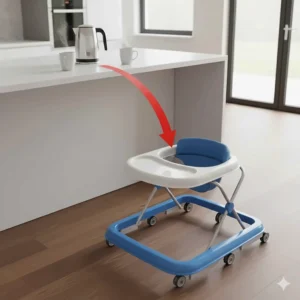
Boyro Baby 5-in-1 combines walker, bouncer, rocker, push, and eating modes in one foldable unit designed for babies 6-18 months. The product features three adjustable height positions, breathable seat cover, and six anti-slip pads marketed as safety features.
Price: $45-$55
Parents report the folding mechanism makes storage convenient, and the music box includes adjustable volume. However, this remains a traditional wheeled walker with the same fundamental safety concerns that prompted the AAP’s ban recommendation. The anti-slip pads cannot prevent the most common injuries—stair falls and excessive speed.
✅ Pros: Affordable, multiple modes, easy storage
❌ Cons: Traditional walker risks remain, limited true safety features, may delay development
2. Music and Lights Baby Walker with Wheels – 6-in-1 Activity Center
This walker features six modes including bounce, toddler, push, music game, and tray options. It’s ASTM and CPSIA certified with four anti-slip pads, double-tier wheels, and adjustable speed wheels. The ergonomic backrest and music light interactive center aim to engage babies ages 6-18 months.
Price: $60-$80
Customer feedback highlights the entertainment value and sturdy construction. Yet certification doesn’t eliminate fundamental walker hazards. The product still allows independent mobility that can outpace parental reaction time. Many safety-conscious pediatricians remain skeptical of any wheeled walker regardless of certifications.
✅ Pros: Multiple certifications, ergonomic design, engaging features
❌ Cons: Wheeled walker concerns persist, certification doesn’t equal safety guarantee
3. Baby JOY 7-in-1 Baby Walker and Bouncer Combo – Premium Multi-Function
Baby JOY offers seven modes including walk, bouncer, rocker, push walker, and activity center functions with adjustable height, speed controls, music, lights, and anti-rollover features for babies 7-18 months.
Price: $85-$110
This product represents the higher end of traditional walkers with more safety features built in. Parents appreciate the versatility and quality construction. However, even premium models can’t overcome the fundamental design flaws that concern pediatric experts. The mobility feature remains the critical issue regardless of price point or added safety elements.
✅ Pros: Versatile modes, quality construction, multiple safety features
❌ Cons: High price, still poses walker risks, anti-rollover may not prevent stairs
4. Skip Hop Baby Activity Center – Pediatrician-Approved Stationary Option
Skip Hop Baby Activity Center features three-stage grow-with-me functionality starting at four months. This stationary center allows rotation, bouncing, and interactive play without wheels, addressing AAP concerns directly.
Price: $120-$142
This represents what pediatricians actually recommend: stationary activity that keeps babies entertained and developing motor skills without mobility risks. Parents consistently rate Skip Hop highly for quality and developmental appropriateness. The three-stage design adapts as babies grow, extending usability. This is the type of product medical professionals endorse over traditional walkers.
✅ Pros: AAP-approved concept, grows with baby, eliminates mobility dangers
❌ Cons: Higher price point, requires more floor space
5. Baby Einstein Neptune’s Ocean Discovery Jumper – Stationary Alternative
Baby Einstein Neptune’s Ocean Discovery is an activity center jumper designed for babies 6+ months with a 25-pound weight limit. The 360-degree rotating seat keeps babies stationary while they bounce and explore ocean-themed toys.
Price: $85-$105
This stationary jumper addresses the core safety concerns that make traditional walkers dangerous. Babies can exercise their legs, develop coordination, and stay entertained without the fall and speed hazards. The ocean theme and interactive toys provide sensory stimulation. Parents report babies love the bouncing feature, making this a win for both safety and entertainment.
✅ Pros: Eliminates walker risks, encourages leg development, engaging theme
❌ Cons: Limited to weight restrictions, requires assembly, less portable
6. Bright Starts Disney Baby Minnie Mouse Forever Besties Activity Center – Character-Themed Safety
Bright Starts Disney Minnie Mouse activity center jumper includes 10 toys, lights, sounds, and a 360-degree rotating seat for babies 6-12 months. The stationary design keeps babies safe while they play.
Price: $75-$95
Character licensing adds appeal for Disney-loving families. More importantly, the stationary design addresses pediatric safety concerns head-on. The variety of toys and sensory experiences supports development without mobility risks. Parents appreciate the quality construction and how engaged their babies become with the interactive features.
✅ Pros: Character appeal, stationary safety, multiple engagement options
❌ Cons: May outgrow Disney theme, takes up floor space, licensing increases cost
7. VTech Sit-to-Stand Learning Walker – Push Walking Alternative
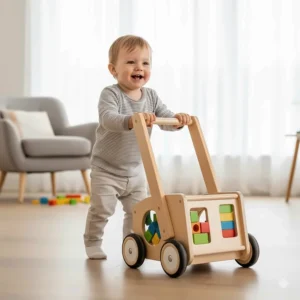
VTech Sit-to-Stand transforms from a seated activity panel to a push walker, supporting babies as they learn to walk naturally. Appropriate for babies 9 months and up, it features interactive buttons, lights, and sounds.
Price: $35-$55
This represents another pediatrician-approved alternative that supports natural walking development. Unlike seated walkers that delay development, push walkers with proper supervision encourage appropriate motor skill progression. The activity panel works for seated babies, then transforms to support early walkers. Parents love the versatility and affordable price point.
✅ Pros: Supports natural development, versatile design, budget-friendly, educational
❌ Cons: Requires supervision with wheels, may tip if not weighted properly
Understanding Baby Walker Safety Concerns: What Makes Them Dangerous?
The question “are baby walkers safe” has been studied extensively by pediatric researchers, and their findings consistently point to serious hazards that outweigh any perceived benefits. Let me break down exactly what makes these products so problematic.
Stair Falls: The Leading Cause of Walker Injuries
Falls down stairs account for approximately 74% of walker-related injuries. Even modern walkers designed to be wider than standard doorways or equipped with braking mechanisms can’t fully prevent this hazard. Babies in walkers can build up momentum, squeeze through openings, or encounter uneven surfaces that trigger stair access. The results are often traumatic brain injuries, skull fractures, and serious head trauma.
Research published in Pediatrics journal analyzing 230,676 infant walker injuries from 1990-2014 revealed that despite implementing the 2010 federal safety standard requiring newer designs, injuries continued occurring. Why? Because the fundamental problem isn’t just design—it’s the mobility itself.
Speed and Reach: A Dangerous Combination
A child in a walker can move more than three feet per second. That’s faster than most parents can react, even when actively supervising. This speed combines with increased height, allowing babies to reach countertops, stove tops, hot liquids, and household chemicals they couldn’t otherwise access.
Parents report frightening near-misses: grabbing pot handles, reaching electrical outlets, rolling toward swimming pools, and accessing bathroom hazards. The Walker doesn’t just increase mobility—it multiplies danger exponentially.
Developmental Delays: The Hidden Consequence
Contrary to their marketing promise, walkers actually hinder walking development. Studies demonstrate that babies who use walkers show lower locomotive development test scores compared to those who don’t. Walkers may contribute to idiopathic toe walking patterns, abnormal gait development, and poor posture formation.
Walking requires pulling up, balancing, and taking unsupported steps—skills walkers actively prevent babies from practicing. When suspended in a walker, babies miss crucial floor time needed for proper motor skill development. They’re not learning to walk; they’re learning to rely on external support.
AAP Baby Walker Recommendations: Why Pediatricians Say No
The American Academy of Pediatrics position on walkers is crystal clear and unwavering: they recommend a complete ban on manufacturing and selling baby walkers with wheels. This isn’t a casual suggestion—it’s based on decades of injury data, developmental research, and clinical experience from the AAP’s official guidance.
The Official AAP Stance
According to the AAP’s published guidance, baby walkers are never safe to use, even with an adult close by. They emphasize that many parents believe walkers help children learn to walk, but research proves otherwise. Walkers can actually delay when a child starts walking independently.
The AAP notes that most walker injuries happen while adults are watching. The problem isn’t parental negligence—it’s that walkers make it impossible to react quickly enough to prevent accidents. By the time a parent notices danger, the baby has already fallen or reached something hazardous.
What Pediatricians Recommend Instead
Rather than walkers, the AAP suggests parents focus on floor play and natural development milestones. When containment is necessary, they recommend:
Stationary activity centers that look similar to walkers but have no wheels, allowing babies to rotate, tip, and bounce safely in one location.
Play yards or playpens that create safe zones for babies learning to sit, crawl, and eventually stand while maintaining proper boundaries.
High chairs where older babies can sit upright and play with toys on the tray, developing hand-eye coordination and core strength.
Walker Safety Standards and Regulations: Understanding ASTM F977
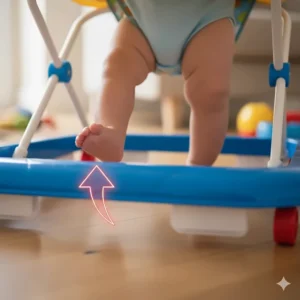
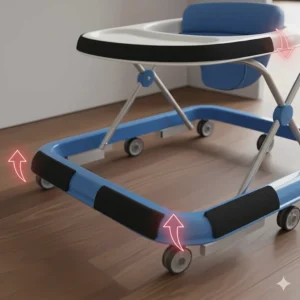
In 1997, manufacturers began implementing voluntary safety improvements through ASTM F977, requiring walkers to either exceed 36 inches in width (wider than standard doors) or include braking mechanisms that activate when wheels lose contact with the floor.
Federal Mandatory Standards Since 2010
The Consumer Product Safety Improvement Act of 2008 led to mandatory federal standards codified at 16 CFR Part 1216, incorporating ASTM F977 requirements. The current standard is ASTM F977-22e1, approved June 2022.
These standards include rigorous testing for tipping resistance, prevention of falls down steps, and occupant retention requirements. Manufacturers must obtain CPC certification demonstrating compliance.
Why Standards Don’t Equal Safety
Here’s the uncomfortable truth: meeting safety standards doesn’t make walkers safe. Standards reduce certain risks but can’t eliminate the fundamental hazards created by giving pre-walking babies independent mobility. Between 2004 and 2008, approximately 3,000 children under 15 months still required emergency treatment despite improved standards.
Certified walkers still allow babies to move rapidly, access dangerous areas, and outpace parental supervision. Certification tells you a product meets minimum requirements—not that pediatricians recommend using it.
Injury Prevention Baby Gear: Building a Safer Environment
Creating a safe environment for your developing baby involves choosing appropriate gear and implementing proper safety measures. Here’s what actually works:
Choose Stationary Over Mobile
Replace traditional walkers with stationary activity centers. Products like exersaucers, jumperoos, and activity tables provide entertainment and development opportunities without mobility risks. These alternatives allow leg exercise, sensory exploration, and motor skill practice while keeping babies secure.
Prioritize Floor Time
The most beneficial “equipment” for baby development? Your floor. Tummy time, crawling practice, and pulling up on furniture provide natural, developmentally appropriate motor skill building. No expensive gear required, no injury risks created.
Implement Proper Home Safety
If you must have wheeled products in your home, ensure:
- Stair gates installed at all staircases (top and bottom)
- Cabinet locks on cleaning supplies and chemicals
- Outlet covers throughout your home
- Pool barriers if applicable
- Hot water heater temperature set below 120°F
- Furniture secured to walls to prevent tip-overs
Remember: safety gear supplements supervision—it never replaces it.
Safe Baby Walker Alternatives: What Pediatricians Actually Recommend
Looking for ways to support your baby’s development without walker risks? Here are evidence-based alternatives that pediatric experts endorse:
Stationary Activity Centers and Exersaucers
These fixed-position centers allow babies to bounce, rotate, and play with attached toys while staying safely in one spot. Look for models with:
- Multiple height adjustments
- Washable seat covers
- Engaging, age-appropriate toys
- Stable base that won’t tip
Limit session length to 20-30 minutes to ensure babies get adequate floor time for proper development.
Push Walking Toys
Once babies show readiness to walk (pulling up independently, cruising furniture), supervised push toy use can support natural development. Choose options with:
- Sturdy, weighted base preventing tip-overs
- Adjustable resistance for different skill levels
- Bar for babies to grip comfortably
- No small parts that pose choking hazards
Always supervise push toy use, especially on hard surfaces where speed can increase.
Floor Play and Natural Development
The best alternative costs nothing: dedicated floor time. Lay your baby on a safe, clean play mat and let them:
- Practice tummy time for core strength
- Roll, scoot, and eventually crawl
- Pull up on stable furniture
- Cruise while holding onto surfaces
- Take independent steps when ready
This natural progression builds proper motor skills, balance, and coordination that walkers actively interfere with.
Pediatrician-Approved Walkers: Do They Even Exist?
This might surprise you, but there’s no such thing as a truly “pediatrician-approved walker” in the traditional wheeled sense. Leading pediatric organizations uniformly oppose wheeled walkers regardless of safety features, certifications, or modern designs.
Why No Walker Gets the Medical Green Light
The fundamental design creates unavoidable risks. Even the safest wheeled walker allows independent mobility before developmental readiness. This combination of speed, access, and supervision difficulty creates conditions pediatricians cannot endorse.
Organizations including the AAP, Children’s Hospital of Philadelphia, and Canadian Paediatric Society all maintain consistent positions: don’t use wheeled walkers, period.
What “Approved” Actually Means
When products claim pediatrician approval, examine closely what they’re actually endorsing. Stationary activity centers? Yes. Push toys with proper supervision? Sometimes. Wheeled infant walkers? Never.
Marketing language can be misleading. “Meets safety standards” means legal compliance—not medical recommendation. “Pediatrician designed” might mean consultation on specific features—not wholesale endorsement of walker use. Always verify claims through trusted medical sources.
Making the Right Choice for Your Baby’s Safety
Deciding about baby gear involves balancing convenience, cost, safety, and development. When it comes to walkers, the equation is actually quite simple: the temporary convenience isn’t worth the permanent risks.
Questions to Ask Before Purchasing
Before buying any baby mobility product, consider:
- Does this product keep my baby stationary or mobile?
- What do major pediatric organizations say about this category?
- Am I choosing this for my convenience or my baby’s development?
- What safer alternatives accomplish similar goals?
- Can I afford to prioritize safety over price?
Trust the Medical Consensus
Pediatric professionals dedicate careers to child safety and development. Their unanimous position on wheeled walkers isn’t alarmist—it’s evidence-based. When the AAP, CHOP, and international health organizations agree, parents should listen.
Your baby’s safety and proper development are worth more than the convenience a walker might provide. Choose alternatives that support natural milestones without creating preventable injury risks.
FAQ
❓ How dangerous are baby walkers compared to other baby products?
❓ What age is appropriate to start using stationary activity centers?
❓ Can I use an older baby walker that was passed down from family?
❓ Do push walking toys help babies learn to walk faster?
❓ What should I look for when choosing a stationary activity center?
Conclusion: Choosing Safety Over Convenience
After researching injury statistics, reading pediatric guidance, and examining current products, the answer to “are baby walkers safe” remains definitively no. The overwhelming medical consensus, injury data, and developmental research all point in the same direction: traditional wheeled walkers pose unacceptable risks that outweigh any perceived benefits.
The good news? Safer alternatives exist that provide entertainment, containment, and developmental support without the dangers. Stationary activity centers, supervised floor play, and age-appropriate push toys offer everything parents actually need without risking head injuries, developmental delays, and emergency room visits.
Your baby’s safety doesn’t require expensive equipment—just informed decisions. Choose products pediatricians endorse, prioritize natural development over convenience, and remember that the best “walker” is simply your baby’s own two feet when they’re developmentally ready to use them.
The short period of baby containment needs passes quickly. Don’t let a preventable injury during those months create lasting consequences. Trust the experts, choose stationary alternatives, and give your baby the safest start possible.
Recommended for You
- Baby Walker Buying Guide: 7 Safe Options Parents Love (2026)
- 7 Best Sit to Stand Walker vs Traditional Walker (2026 Guide)
- Walker vs Jumper vs Exersaucer: 7 Key Differences (2026 Guide)
Disclaimer: This article contains affiliate links. If you purchase products through these links, we may earn a small commission at no additional cost to you.
✨ Found this helpful? Share it with your friends! 💬🤗
