
In This Article
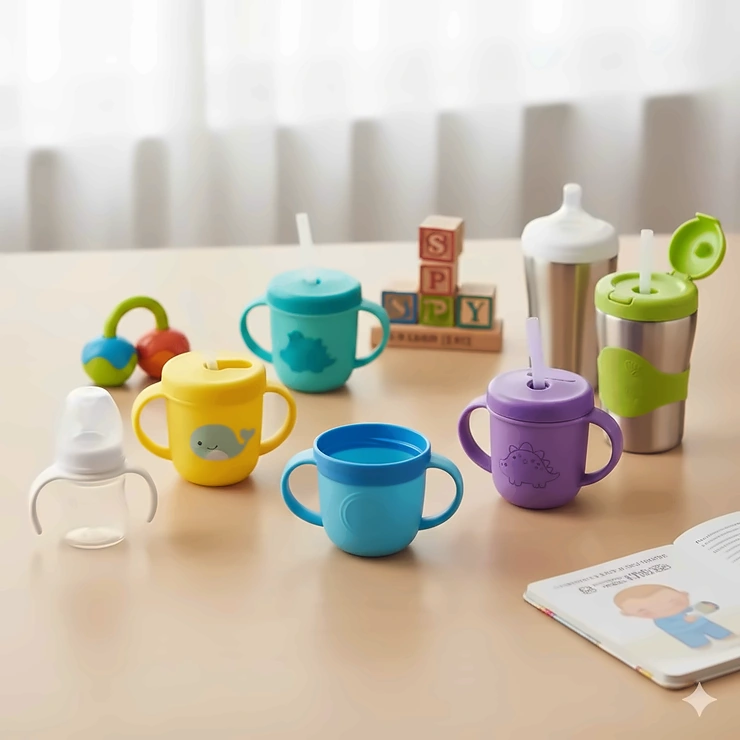
Choosing the right sippy cup can feel overwhelming when you’re staring at endless options on store shelves. You want something that won’t leak in your diaper bag, supports healthy oral development, and actually gets your toddler excited about ditching the bottle. The reality? Not all cups work for every age, and picking the wrong one can lead to frustration, messy spills, and even dental issues down the road.
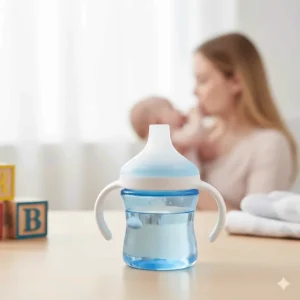
The Best Sippy Cups by Age matter more than you might think. Transitioning from bottles at the right time helps prevent overweight issues and delayed speech development, while choosing age-appropriate designs supports natural muscle growth in your child’s mouth. Whether you’re starting the bottle-to-cup journey with your 6-month-old or helping your spirited 2-year-old master independent drinking, this guide breaks down exactly which cups work best at each developmental stage—backed by real testing, parent feedback, and expert recommendations.
Quick Comparison Table
Here’s a snapshot of our top picks for different ages and needs:
| Cup Name | Best For | Age Range | Capacity | Price Range | Key Feature |
|---|---|---|---|---|---|
| Munchkin Miracle 360 Trainer | First-time users | 6-12 months | 7 oz | $8-12 | 360° spoutless design |
| NUK Learner Cup | Bottle transition | 6-8 months | 5-10 oz | $6-10 | Soft silicone spout |
| Dr. Brown’s Milestones Insulated | Active toddlers | 12+ months | 10 oz | $9-14 | Insulated, straw design |
| Munchkin Miracle 360 Stainless | Temperature control | 12+ months | 10 oz | $15-17 | Vacuum-sealed steel |
| OXO Tot Transitions Straw | Straw learners | 9-18 months | 9 oz | $10-13 | Almond-shaped straw |
| Tommee Tippee Sportee | Budget pick | 12+ months | 9-10 oz | $12-16 (3-pack) | Bite-resistant spout |
| Honey Bear Straw Cup | Speech therapy | 4+ months | 8 oz | $9-12 | Weighted straw |
💬 Just one click – help others make better buying decisions too! 😊
Top 7 Best Sippy Cups by Age: Expert Analysis
1. Munchkin Miracle 360 Trainer Cup – Best Overall for 6-12 Months
If there’s one cup that changed the sippy cup game, it’s the Munchkin Miracle 360. This innovative design eliminates the traditional spout entirely, allowing babies to drink from any point along the 360-degree rim—just like a real cup.
Key Specifications:
- Capacity: 7 oz (trainer) or 10 oz (sippy)
- Age: 6+ months
- Material: BPA-free plastic
The Miracle 360 received the most mentions from parents in community surveys, with users praising how it mimics drinking from a regular cup. The secret lies in its auto-sealing valve that closes when your child stops drinking, virtually eliminating spills. One parent reported the cup remained leak-free even after being held upside down for minutes and tossed across rooms.
Real Parent Feedback: Daycare providers love these cups for their durability and minimal mess. One customer shared her 4-year-old still uses the same cup, noting it doesn’t look too babyish for older toddlers.
✅ Pros:
- Supports proper oral muscle development
- Extremely spill-resistant
- Easy to clean with minimal parts
- Dishwasher safe (top rack)
❌ Cons:
- Takes time for young babies to understand the concept
- May require some practice initially
Price: $8-12 for 2-pack | Where to Buy: Amazon, Target, Walmart
2. NUK Learner Cup – Best for Bottle Transition (6+ Months)
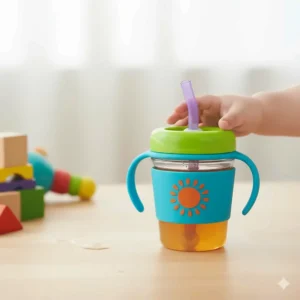
The NUK Learner Cup bridges the gap between bottle nipples and traditional sippy spouts with its soft, gentle silicone design. Perfect for sippy cups for 1 year olds just starting their independence journey.
Key Specifications:
- Capacity: 5 oz or 10 oz
- Age: 6+ months (5 oz) or 8+ months (10 oz)
- Material: Crystal-clear Tritan, BPA-free
This cup features removable handles that make gripping easy for tiny hands, plus an air vent that reduces gas and swallowed air. The soft spout feels familiar to babies transitioning from bottles, easing anxiety around the change.
Real Parent Feedback: Parents appreciate that handles can be removed as children grow, extending the cup’s usability. One mom noted her daycare specifically requested this brand because it doesn’t leak and is simple to clean.
✅ Pros:
- Gentle on developing gums and teeth
- Spill-proof valve technology
- Removable handles grow with baby
- Clear material lets you see liquid levels
❌ Cons:
- Valve requires firm sucking
- Some parents report occasional leaks if not assembled tightly
Price: $6-10 for 2-pack | Where to Buy: Amazon, Target, NUK official site
3. Dr. Brown’s Milestones Insulated Sippy Cup – Best for Active Toddlers (12+ Months)
When your toddler is constantly on the move, the Dr. Brown’s Milestones Insulated Cup keeps drinks fresh while teaching valuable straw-sipping skills. This is ideal for sippy cups for 2 year old children who need something durable.
Key Specifications:
- Capacity: 10 oz (300 ml)
- Age: 12+ months
- Material: Double-walled insulated plastic, BPA-free
The soft silicone straw encourages proper oral development, while the sliding lid keeps everything clean when not in use. Lightweight handles lock into place for easy gripping but can be removed as your child develops more advanced motor skills.
Real Parent Feedback: The insulated design keeps drinks fresh, and the durable material withstands drops, throws, and bumps. Perfect for car rides and outings.
✅ Pros:
- Insulation keeps drinks cool for hours
- Spill-proof with sliding lid
- Handles are removable for growing toddlers
- Dishwasher safe (top rack)
❌ Cons:
- Straw requires regular cleaning with brush
- Slightly bulkier than non-insulated options
Price: $9-14 for 2-pack | Where to Buy: Amazon, Walmart, Target
4. Munchkin Miracle 360 Stainless Steel – Best for Temperature Control (12+ Months)
For parents seeking an eco-friendly, plastic-free option, the Munchkin Miracle 360 Stainless Steel delivers the same spoutless magic in premium materials. Great for sippy cups for toddlers 1-3 who are ready for grown-up cups.
Key Specifications:
- Capacity: 10 oz
- Age: 12+ months
- Material: Vacuum-sealed stainless steel
This insulated cup keeps drinks cool for up to 15 hours, making it perfect for long outings, daycare, or hot summer days. The 360-degree drinking edge remains dentist-recommended for supporting healthy oral development.
Real Parent Feedback: One parent who initially avoided metal bottles found this one different—lightweight enough that it won’t damage furniture or hurt siblings if dropped.
✅ Pros:
- 100% plastic-free construction
- Keeps liquids cold for 15+ hours
- Durable and long-lasting
- Eco-friendly choice
❌ Cons:
- Higher price point
- Heavier than plastic versions
- Not dishwasher safe (hand wash only)
Price: $15-17 | Where to Buy: Amazon, Target, Munchkin official site
5. OXO Tot Transitions Straw Cup – Best Straw Design (9+ Months)
The OXO Tot Transitions Straw Cup features an innovative almond-shaped, spill-proof straw that conforms perfectly to small mouths, making the transition from bottle or breast to sippy seamless.
Key Specifications:
- Capacity: 9 oz
- Age: 9+ months
- Material: BPA-free plastic
The straw valve opens immediately when lips press down for easy drinking, and the hinged cap creates a leakproof seal. All parts are removable for thorough cleaning.
Real Parent Feedback: Parents love that the unique straw design doesn’t require hard sucking, making it easier for babies to master. The bright color options add fun to mealtime.
✅ Pros:
- Unique almond-shaped straw fits mouths perfectly
- Easy-open valve for effortless drinking
- Removable parts for deep cleaning
- Dishwasher safe
❌ Cons:
- Straw can be tricky to reassemble at first
- May need straw brush for thorough cleaning
Price: $10-13 | Where to Buy: Amazon, Target, OXO official site
6. Tommee Tippee Insulated Sportee – Best Budget Pick (12+ Months)
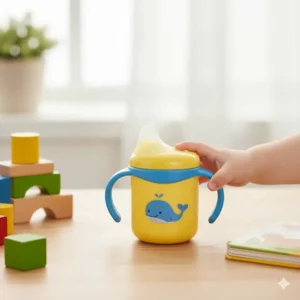
If you need affordability without sacrificing quality, the Tommee Tippee Sportee delivers excellent value, especially when purchased in multi-packs. These are among the top sippy cups for 2-3 year olds on a budget.
Key Specifications:
- Capacity: 9-10 oz
- Age: 12+ months
- Material: BPA-free plastic with insulation
This cup features a bite-resistant spout and a two-part valve system that testers found highly effective at preventing leaks, even when shaken vigorously.
Real Parent Feedback: One parent noted their toddler could shake the cup endlessly without any spills. The soft-coated hard spout provides durability while remaining gentle on mouths.
✅ Pros:
- Excellent value (3-pack often available)
- Lightweight and portable
- Two-part valve prevents leaks
- Bite-resistant spout
❌ Cons:
- Plastic may leach chemicals over time
- No protective cap for spout
- Spout could cause injury if child falls
Price: $12-16 for 3-pack | Where to Buy: Amazon, Walmart
7. Honey Bear Straw Cup – Best for Speech Development (4+ Months)
The Honey Bear Straw Cup isn’t just adorable—it’s a favorite among speech therapists and occupational therapists for helping babies develop proper oral motor skills.
Key Specifications:
- Capacity: 8 oz
- Age: 4+ months (with supervision)
- Material: Food-grade silicone, BPA-free
This cup features a weighted straw that allows drinking from any angle, encouraging tongue elevation and strengthening oral muscles crucial for speech and feeding development.
Real Parent Feedback: One mom created the Lollacup with a weighted straw after her daughter struggled with traditional sippy transitions. It’s now a go-to recommendation for feeding therapists.
✅ Pros:
- Supports speech and oral development
- Weighted straw works at any angle
- Soft, squeezable design
- Therapist-recommended
❌ Cons:
- Not fully spill-proof (by design for learning)
- Smaller capacity than standard cups
- Requires more active supervision
Price: $9-12 for 2-pack | Where to Buy: Amazon, specialty therapy stores
✨ Don’t Miss These Exclusive Deals!
🔍 Take your toddler’s feeding journey to the next level with these carefully selected products. Click on any highlighted item above to check current pricing and availability. These tools will help you create authentic independence your family will love!
Understanding Developmental Stages: When to Introduce Sippy Cups
The American Academy of Pediatrics recommends offering cups when babies start eating solid foods, usually around 6 months. But timing is just one piece of the puzzle—understanding your child’s developmental readiness matters even more.
4-6 Months: Practice Makes Perfect
At this stage, babies are just beginning to explore solid foods. Introduce an open cup or soft-spouted trainer during supervised mealtimes. You’ll hold the cup while they learn to coordinate their tongue and lips. Don’t worry about spills—they’re part of the learning process! Consider cups with small capacities (2-5 oz) that won’t overwhelm tiny hands.
6-12 Months: Building Independence
This is prime time for sippy cups for 1 year olds. Babies develop the eye-hand coordination needed to lift cups to their mouths. Start with formula or breast milk in their cup, as this feels more familiar than starting with water. Cups with handles provide extra gripping support. The Munchkin Miracle 360 Trainer or NUK Learner Cup work beautifully here.
12-18 Months: Mastering Skills
Toddlers in this range should be transitioning away from bottles entirely. The American Academy of Pediatrics recommends weaning from bottles by 12 months to prevent obesity and dental decay. Focus on straw cups or 360-degree designs that promote mature swallowing patterns. Remove handles as motor skills improve.
18-24 Months: Graduating to Open Cups
According to medical experts, children should stop using bottles between 12-24 months, and the American Academy of Pediatric Dentistry recommends eliminating no-spill sippy cups by 12 months. Practice regularly with regular open cups during meals. Expect spills but celebrate progress. Use sippy cups primarily for travel or situations where spills would be problematic.
2-3 Years: Big Kid Drinking
By age 2, most children should primarily use open cups or straw cups. Sippy cups for 2-3 year olds should be phased out except for bedtime water or car trips. If your child has a developmental delay or disability, they may need to use sippy cups past 24 months—consult your pediatrician about specific needs.
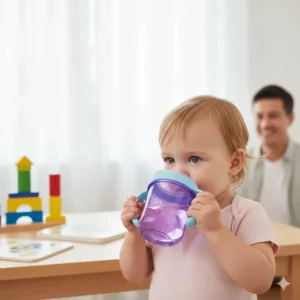
How Sippy Cup Design Affects Oral Health and Development
Not all cups are created equal when it comes to your child’s dental health and speech development. Understanding these differences helps you make smarter choices.
The Spout Problem
Traditional hard-spout sippy cups were once considered the gold standard, but dentists now raise concerns. The American Dental Association notes that “no-spill” cups with valves essentially function as bottles with different designs, requiring sucking rather than sipping. This sucking motion:
- Keeps the tongue in an immature position
- Can lead to tongue thrust patterns
- May delay speech development
- Increases risk of tooth decay from liquid pooling around teeth
Why Straws Win for Development
Pediatric dentists and speech therapists consistently recommend straw cups because they promote mature tongue movement—the tongue elevates to the roof of the mouth behind front teeth, the same position needed for mature swallowing and clear speech. Straw drinking also:
✅ Strengthens lip and tongue muscles necessary for speech
✅ Reduces liquid contact with front teeth
✅ Encourages proper jaw development
✅ Prepares children for open cup drinking
The 360-Degree Advantage
Spoutless cups like the Munchkin Miracle 360 offer a middle ground. While they require sucking, the rim-drinking motion more closely mimics regular cup use. They support normal muscle development without the injury risks of protruding spouts.
Open Cups: The Gold Standard
The American Academy of Pediatrics recommends introducing open cups as early as 6 months. Yes, it’s messy during the 6-12 month learning phase, but it’s the fastest route to independent drinking and proper oral development. Use small cups (50-100ml) with weighted bases to manage the mess.
Materials Matter: Plastic vs. Stainless Steel vs. Silicone
The material debate goes beyond just durability—it impacts safety, environmental footprint, and functionality.
BPA-Free Plastic
Pros: Lightweight, affordable, dishwasher-safe, wide variety Cons: Plastic cups can potentially leach chemicals into contents, less eco-friendly, may retain odors Best for: Budget-conscious families, multiple backups, younger babies
Stainless Steel
Pros: 100% plastic-free, features insulated vacuum-sealed body that keeps liquids cooler, extremely durable, eco-friendly Cons: Heavier, more expensive, often not dishwasher-safe, can dent Best for: Temperature-sensitive drinks, older toddlers, environmentally-conscious parents
Silicone
Pros: Soft and safe, dishwasher-safe, grippy texture, BPA-free Cons: Can stain, may develop odors, limited designs, pricier Best for: First cups, babies with sensory sensitivities, drop-prone toddlers
Common Sippy Cup Challenges (And How to Fix Them)
“My Toddler Refuses the Cup!”
Solution: Offer the cup during meals when your child is engaged and happy, not when they’re upset about losing their bottle. Let them see you drinking from a regular cup. Try different styles—some kids prefer straws while others love 360 designs. Make it fun with colorful options or character designs. Be patient and trust that your child will gradually start drinking like a big kid; if resistance becomes a power struggle, consult your pediatrician.
“Everything Leaks!”
Solution: Check that all parts are assembled correctly—silicone valves must be seated properly. Avoid overfilling; leave airspace at the top. For straw cups, ensure the straw is fully inserted and the lid clicks into place. Test cups before putting them in bags. Remember that truly spill-proof often means harder to drink from.
“The Cup Gets Moldy and Disgusting”
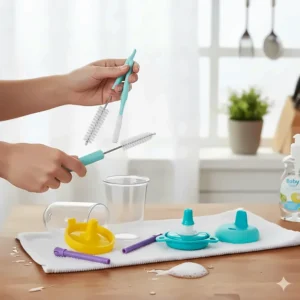
Solution: Take apart ALL pieces after every use. Use a straw brush (invest in a set!) for thorough cleaning. Some cups have easy-to-miss silicone rings around lid edges that collect gunk. Run pieces through the dishwasher regularly. Consider cups with fewer parts or transparent designs that make cleanliness visible.
“My Child Walks Around with It All Day”
Solution: The American Dental Association advises against allowing children to carry cups throughout the day or taking cups to bed, as sugars pool around teeth. Set cup-time boundaries: drinks happen at meals and designated snack times. Offer water between meals if needed. This prevents cavities and ensures kids eat proper meals instead of filling up on liquids.
What to Put in Sippy Cups (and What to Avoid)
✅ Best Options:
Water: Water with fluoride is the best beverage for your child’s teeth. Offer throughout the day.
Milk: Excellent at mealtimes. Whole milk for 12-24 months, then transition to low-fat options per your pediatrician’s guidance.
Limited Juice: Recent American Academy of Pediatrics guidelines state juice has no nutritional value for children under 1 year old. For older children, limit to 4-6 oz daily at mealtimes, diluted with water.
❌ Never Put in Sippy Cups:
- Soda or sweet tea (unnecessary sugar)
- Juice at bedtime (cavities galore!)
- Hot liquids in plastic cups
- Carbonated beverages (can damage valves and cause leaks)
- Formula or milk for walking-around use (dental decay risk)
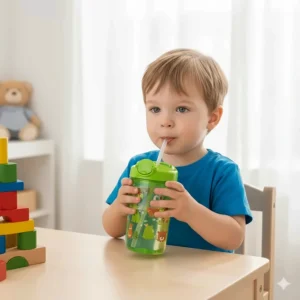
Cleaning and Maintenance: Keeping Cups Safe
Proper cleaning isn’t just about aesthetics—it’s critical for your child’s health.
Daily Cleaning Routine:
- Disassemble completely after each use
- Rinse all parts with hot water immediately
- Wash with warm soapy water or place on top dishwasher rack
- Use straw brushes for thorough straw cleaning
- Air dry completely on a drying rack
Weekly Deep Clean:
- Soak parts in vinegar-water solution (1:1 ratio) for 10-15 minutes
- Scrub valves and crevices with dedicated brush
- Check for mold in hard-to-reach spots
- Replace worn valves or straws promptly
When to Replace:
- Visible cracks, chips, or damage
- Persistent odors that won’t wash out
- Valves that no longer seal properly
- Discoloration or cloudy plastic
- After 6-12 months of regular use (general guideline)
Travel Tips: Sippy Cups On-the-Go
Traveling with toddlers means being prepared for spills, leaks, and unexpected messes.
For Car Trips:
- Use insulated cups to keep drinks cold
- Attach cup holders to car seats
- Pack backup cups and wipes
- Choose leak-proof designs over easy-drinking cups
For Air Travel:
- Bring empty cups through security, fill after
- Pressure changes can cause leaks—open lids during takeoff/landing
- Pack cups in plastic bags within diaper bag
- Consider disposable cups for flights
For Restaurants:
- Bring familiar cup from home
- Clip cup to high chair to prevent throwing
- Choose restaurants with kid-friendly attitudes
- Clean borrowed cups before use
Budget-Friendly Strategies
Quality cups don’t have to break the bank. Here’s how to save:
💰 Smart Shopping Tips:
- Buy multi-packs (often cheaper per cup)
- Watch for Amazon Subscribe & Save discounts
- Check Target’s Cartwheel app for deals
- Buy one premium cup for home, budget backups for daycare
- Consider convertible systems that grow with your child
- Skip character branding (often costs 30% more)
Best Value Picks:
- Tommee Tippee Sportee (3-pack around $12-16)
- NUK Learner 2-packs ($6-10)
- First Years Take & Toss (disposable, super cheap for travel)
FAQ
❓ What age should my baby start using a sippy cup?
❓ Are sippy cups bad for teeth and speech development?
❓ How do I transition my 1 year old from bottle to sippy cup?
❓ What's the difference between sippy cups for 1 year olds versus 2 year olds?
❓ How many sippy cups should I buy for my toddler?
Conclusion
Choosing the Best Sippy Cups by Age doesn’t have to feel like solving a complex puzzle. The key is matching cup design to your child’s developmental stage, prioritizing oral health-friendly features like straws and 360-degree rims, and being willing to experiment until you find what clicks.
Remember that sippy cups are transitional tools, not permanent fixtures. By age 2, your child should primarily use open cups or straw cups, with sippy cups reserved for situations where spills would be truly problematic. Focus on cups that promote natural drinking motions, make cleaning easy, and fit your lifestyle.
Whether you choose the universally loved Munchkin Miracle 360, the budget-friendly Tommee Tippee Sportee, or the therapist-recommended Honey Bear Straw Cup, you’re giving your child tools to develop independence, coordination, and healthy oral habits that last a lifetime. Start where your child is developmentally, celebrate small wins, and trust the process. Before you know it, they’ll be confidently drinking from regular cups (and you’ll miss these sippy cup days just a little).
Recommended for You
- 7 Best Sippy Cups with Handles for Toddlers 2025
- 7 Best Sippy Cups with Straw for Toddlers 2025 (Top Picks)
- 7 Best Toddler Sippy Cups 2025 – Leak-Proof & Parent-Approved
Disclaimer: This article contains affiliate links. If you purchase products through these links, we may earn a small commission at no additional cost to you.
✨ Found this helpful? Share it with your friends! 💬🤗
