
In This Article
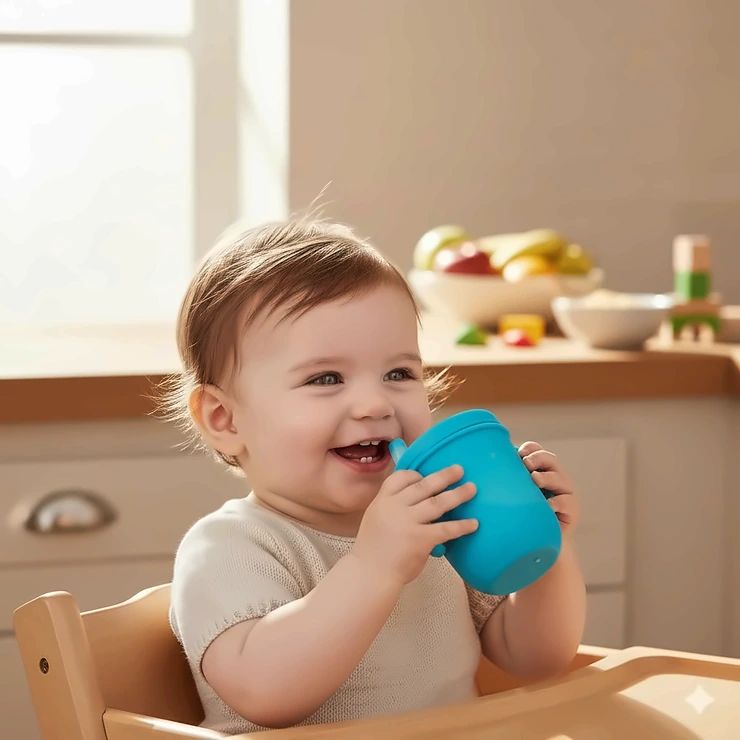
So you’re ready to transition infant from bottle to sippy cup? Welcome to one of parenting’s most talked-about milestones—and honestly, it doesn’t have to be the drama-filled event everyone warns you about. I’ve been through this transition twice now, and let me tell you, having the right cup makes all the difference between a smooth sailing week and a month-long battle of wills with a stubborn toddler.

✨Was this helpful? Spread the word! 🚀
The American Academy of Pediatrics recommends starting this transition around 6-12 months, but here’s the thing: every baby is different. Some little ones are ready to ditch the bottle at 9 months, while others need a bit more time. When you transition infant from bottle to sippy cup, you’re not just changing drinking vessels—you’re supporting oral development, preventing tooth decay, and encouraging independence. According to research from the American Dental Association, prolonged bottle use can lead to dental issues, making this transition crucial for your baby’s health.
Throughout this guide, I’ll walk you through everything you need to know about choosing the best transitional sippy cup, including real product recommendations, expert tips, and answers to those burning questions you’ve been Googling at 2 AM. Whether you’re looking for a transition sippy cup from bottle that mimics the familiar feel or a completely new design that’ll wow your little one, we’ve got you covered.
📊 Quick Comparison Table: Top Transition Sippy Cups at a Glance
| Product | Capacity | Age Range | Key Feature | Price Range |
|---|---|---|---|---|
| NUK Learner Cup | 5oz-10oz | 6m+ | Soft spout with air vent | $8-$15 |
| Munchkin Miracle 360 | 7oz | 6m+ | Spoutless 360° design | $8-$12 |
| Dr. Brown’s Soft Spout | 6oz | 6m+ | One-piece valve system | $7-$10 |
| Philips Avent Trainer | 5oz | 6m+ | Natural Response nipple | $10-$13 |
| Tommee Tippee First Sips | 5oz | 4m+ | Includes bottle nipple | $6-$9 |
| Munchkin Gentle Transition | 4oz-10oz | 4m+ | Extra-soft spout | $7-$11 |
| Nuby No-Spill Cup | 10oz | 6m+ | Soft silicone spout | $6-$10 |
💬 Just one click – help others make better buying decisions too! 😊
✨ Ready to Find Your Perfect Cup?
🛒 These carefully selected transitional sippy cups represent the best options available in 2025. Each product link takes you directly to current pricing and customer reviews, so you can make an informed decision for your little one! 🎯
🏆 Top 7 Transitional Sippy Cups From Bottle: Expert Analysis
1. NUK Learner Cup – The Gentle Introduction Champion
If there’s one best transitional sippy cup from bottle that pediatricians consistently recommend, it’s the NUK Learner Cup. This cup isn’t trying to reinvent the wheel—it’s just doing everything right. The soft silicone spout feels similar to a bottle nipple, which makes the transition less jarring for babies who are particularly attached to their bottles.
Key Specifications:
- Available in 5oz and 10oz capacities
- BPA-free, dishwasher-safe construction
- Removable ergonomic handles
- Built-in air vent to reduce gas
The air vent system is something I particularly appreciate because it prevents that annoying vacuum effect that can frustrate babies. One parent reviewer on Amazon noted that her 7-month-old took to this cup immediately after struggling with three other brands. The spout is gentle enough for emerging teeth but durable enough to withstand enthusiastic chewing.
Customer Feedback: Parents love the easy-to-clean design with minimal parts. Some mention that the handles can be tricky to snap on correctly, but once you get the hang of it, it’s smooth sailing. The cup holds up well through multiple drops—and trust me, there will be drops.
Pros:
✅ Extremely gentle on sensitive gums
✅ Air vent reduces swallowed air and discomfort
✅ Removable handles grow with baby
Cons:
❌ Handles require proper alignment to avoid leaks
❌ Spout may show wear after heavy chewing
Price: $8-$15 for 2-pack | Rating: 4.6/5 stars
2. Munchkin Miracle 360 Trainer Cup – The Future of Sippy Cups
Now here’s where things get interesting. The Munchkin Miracle 360 completely reimagines what a transition sippy cup from bottle can be. There’s no spout at all—instead, babies drink from anywhere around the rim, just like a regular cup. This spoutless design is dentist-recommended because it supports natural oral muscle development.
Key Specifications:
- 7oz capacity with 360° drinking edge
- Automatically seals when not in use
- Easy-grip handles included
- Top-rack dishwasher safe
I’ll be honest: this cup has a bit of a learning curve. My daughter figured it out in about 10 minutes, while my son needed a full week of demonstrations. But here’s the payoff—once they get it, the transition to regular cups is seamless. No relearning required! The valve system is ingenious; it allows liquid to flow with gentle suction but seals completely when baby stops drinking.
Customer Feedback: This is Amazon’s #1 selling sippy cup for good reason. Parents rave about its leak-proof capabilities (mostly—if dropped directly on the rim, expect some spillage). Some reviewers mention the silicone valve can be tricky to clean thoroughly, so I recommend taking it apart for every wash.
Pros:
✅ Supports healthy oral development
✅ Nearly leak-proof design
✅ Easy transition to open cups later
Cons:
❌ Initial learning curve for babies
❌ Valve requires thorough cleaning
Price: $8-$12 for single cup | Rating: 4.5/5 stars
3. Dr. Brown’s Milestones Soft Spout Sippy Cup – The Familiar Friend
If your baby already uses Dr. Brown’s bottles, the Dr. Brown’s Milestones Soft Spout Sippy Cup is your golden ticket. This nuk transitional sippy cup alternative features a one-piece silicone valve that makes assembly a breeze—no more hunting for tiny parts at the bottom of the dishwasher.
Key Specifications:
- 6oz capacity perfect for beginners
- One-piece valve for easy cleaning
- Contoured shape for easy grip
- Flip-back lid stays out of way
The soft spout design strikes that sweet spot between familiar and new. It’s similar enough to a bottle nipple that babies accept it readily, but different enough to encourage new drinking skills. The updated lid design that folds all the way back is pure genius—no more bonking baby’s forehead during sips!
Customer Feedback: Parents appreciate how quickly their babies adapt to this cup, with many reporting successful transitions within days. The bright, playful designs (stars and rainbows) keep little ones interested. A few users note that the valve occasionally needs adjustment for optimal flow.
Pros:
✅ Simple one-piece valve system
✅ Familiar brand for Dr. Brown’s bottle users
✅ Lid design prevents interference
Cons:
❌ Smaller 6oz capacity
❌ Valve may need occasional adjustment
Price: $7-$10 for single cup | Rating: 4.4/5 stars
4. Philips Avent My Grippy Spout Cup – The Versatile Performer
The Philips Avent My Grippy Spout Cup (and its Natural Trainer variation) brings something special to the table: compatibility with Avent bottle systems. If you’ve been using Avent bottles, you can actually mix and match parts, putting the sippy top on bottle bottoms. This is huge for transition-resistant babies!
Key Specifications:
- 5oz trainer size, also available in 10oz
- Soft silicone spout with leak-proof valve
- Textured, anti-slip handles
- Compatible with Avent Natural bottles
The textured handles are brilliantly designed for little hands that are just developing their grip strength. Unlike smooth plastic handles that can slip, these have a rubberized, non-slip surface. One mom I know swears this cup is the only reason her daughter successfully weaned off bottles at 11 months.
Customer Feedback: Reviews consistently praise the quality construction and leak-proof design. Several parents mention using this as their go-to for milk rather than water because the tight seal prevents spills. Some note that the spout requires slightly more suction than other cups, which can actually help strengthen oral muscles.
Pros:
✅ Excellent grip design for small hands
✅ Compatible with Avent bottle system
✅ Truly leak-proof when assembled correctly
Cons:
❌ Requires more suction effort
❌ Slightly higher price point
Price: $10-$13 for single cup | Rating: 4.5/5 stars
5. Tommee Tippee First Sips Soft Transition Cup – The Smooth Operator
What sets the Tommee Tippee First Sips Soft Transition Cup apart is its dual-nipple system. It comes with both a medium-flow bottle nipple AND a soft offset spout, allowing you to transition in stages. Start with the familiar nipple, then switch to the spout when baby’s ready. Brilliant, right?
Key Specifications:
- 5oz capacity ideal for beginners
- Includes bottle nipple and sippy spout
- Removable, interchangeable handles
- Super-soft silicone gentle on gums
This transitional sippy cup is designed for babies as young as 4 months, making it one of the earliest introduction options. The offset spout design encourages babies to tip the cup and develop that crucial sipping motion rather than just sucking. It’s like training wheels for cup drinking!
Customer Feedback: Parents love the flexibility of having two drinking options in one cup. The soft spout gets high marks for being gentle during teething. A few reviewers mention that without a valve, there can be some dribbling, but this also teaches babies to control their drinking pace naturally.
Pros:
✅ Two drinking options in one cup
✅ Extra-soft spout for teething babies
✅ Encourages proper tipping motion
Cons:
❌ No anti-leak valve
❌ Lightweight design tips easily
Price: $6-$9 for single cup | Rating: 4.3/5 stars
6. Munchkin Gentle Transition Sippy Cup – The Patient Teacher
For babies who need extra gentleness, the Munchkin Gentle Transition Sippy Cup lives up to its name. This cup features an ultra-soft spout that’s even more pliable than standard sippy spouts, making it perfect for babies with sensitive gums or those who are nervous about new textures.
Key Specifications:
- Available in 4oz and 10oz sizes
- Extremely soft, bite-resistant spout
- Click-lock lid for travel security
- Multiple color options
The graduated sizing is smart—start with the 4oz when introducing the concept, then move up to the 10oz as they drink more independently. The spout design allows liquid to flow easily without requiring excessive suction, which prevents frustration for babies who are used to the effortless flow from bottles.
Customer Feedback: This transition sippy cup nuk alternative consistently receives praise for its gentle approach. Parents of preemies or babies with oral sensitivities particularly appreciate this design. Some mention the spout can develop tears with aggressive chewing, but replacement spouts are available.
Pros:
✅ Ultra-soft spout for sensitive babies
✅ Multiple sizes grow with child
✅ Easy flow reduces frustration
Cons:
❌ Spout may wear faster with heavy chewing
❌ More parts to clean than simpler designs
Price: $7-$11 for 2-pack | Rating: 4.4/5 stars
7. Nuby No-Spill Cup – The Budget-Friendly Workhorse
Don’t let the affordable price fool you—the Nuby No-Spill Cup (also called the Clik-It) is a solid performer that’s earned a spot on Amazon’s bestseller list. The soft silicone spout and easy-grip handles make this a practical choice for parents who want quality without breaking the bank.
Key Specifications:
- 10oz capacity for longer outings
- Soft silicone spout with valve
- Easy-to-assemble two-piece design
- Various fun patterns and colors
This cup offers excellent value, especially when buying multi-packs. The larger capacity means fewer refills throughout the day—a real blessing when you’re out and about. The valve system works well when properly assembled, though you do need to ensure the seal is snug to prevent leaks.
Customer Feedback: Parents consistently mention this as their “go-to budget option” that performs like cups twice its price. The easy cleaning process gets lots of love in reviews. A few users note that very determined babies can squeeze the valve to make drops come out, but this is common with most soft-spout designs.
Pros:
✅ Excellent value for money
✅ Large capacity for extended use
✅ Simple, easy-to-clean design
Cons:
❌ Requires careful assembly for leak-proof seal
❌ Babies can squeeze valve to force leaks
Price: $6-$10 for 2-pack | Rating: 4.3/5 stars
🛍️ Transform Feeding Time Today!
✨ Don’t wait for the perfect moment—these transitional sippy cups from bottle are designed to make the switch easier starting today! Click on any bolded product name above to check current Amazon prices, read additional reviews, and find special bundle deals. Your smoother transition is just one click away! 💙🍼
🎯 Understanding the Transition: Why Timing and Method Matter
When you set out to transition infant from bottle to sippy cup, you’re actually supporting multiple developmental milestones simultaneously. Let me break down what’s really happening beyond just changing drinking vessels.
The Developmental Benefits You Can’t Ignore
First, there’s the oral motor development aspect. According to pediatric feeding specialists at the American Speech-Language-Hearing Association, using a sippy cup strengthens different muscle groups than bottle feeding. Those tiny jaw, tongue, and lip muscles get a workout that prepares babies for more complex eating and speaking tasks later.
Then there’s the independence factor. Holding a cup requires more coordination and strength than holding a bottle. Babies need to use both hands, maintain balance, and control the tipping motion—all of which contribute to fine motor skill development. I remember the proud look on my daughter’s face the first time she successfully drank from her cup without help. That confidence boost is real and valuable.
Health Considerations That Matter
Here’s something many parents don’t realize initially: prolonged bottle use, especially at bedtime, significantly increases the risk of tooth decay. The Centers for Disease Control and Prevention notes that when babies fall asleep with bottles, liquid pools in their mouths, bathing teeth in sugar (even natural milk sugars) for extended periods. Transitioning to a sippy cup, especially one without a valve, encourages healthier drinking patterns.
Additionally, bottles can contribute to ear infections when babies drink while lying flat. Sippy cups naturally encourage a more upright drinking position, which can reduce this risk. My pediatrician explained that the Eustachian tubes—which connect the middle ear to the throat—work better when children drink sitting up.
📅 When to Transition Infant From Bottle to Sippy Cup: Reading the Signs
You’ve probably heard different recommendations from everyone—your pediatrician says one thing, your mother-in-law another, and that parenting blog yet another. So when should you actually make this transition?
Age-Based Guidelines
Most experts, including the American Academy of Pediatrics, suggest introducing a sippy cup around 6 months, even if just for practice. However, the major transition typically happens between 12-18 months. Here’s why these ages matter:
6-9 months: This is the perfect time to introduce the concept casually. Babies are exploring new textures and tastes through solid foods, making them more receptive to new drinking methods. They’re not yet emotionally attached to bottles, so there’s less resistance. I started both my kids with a transition sippy cup nuk style at 7 months during lunch, keeping bottles for other feedings.
12-15 months: This is go-time for the full transition. By their first birthday, most babies have the motor skills and cognitive development to use sippy cups effectively. Plus, they’re beginning to assert independence, which you can use to your advantage (“Want to use a big kid cup like mommy?”).
18 months and beyond: If you haven’t transitioned by now, don’t panic—but do prioritize it. The longer babies use bottles, especially at bedtime, the more attached they become. It’s not impossible to transition a 2-year-old, but it typically requires more patience and strategy.
Behavioral Readiness Signs
Beyond age, watch for these developmental cues that signal readiness:
✅ Sits up independently without support – Essential for safe drinking
✅ Shows interest in what you’re drinking – Natural curiosity is your ally
✅ Can hold objects steadily – Indicates sufficient hand-eye coordination
✅ Begins refusing bottles occasionally – They’re telling you something!
✅ Demonstrates pincer grasp – Picking up small objects shows fine motor readiness
My son showed all these signs at 10 months, while my daughter took until 13 months. Both timelines were perfectly normal.
🎨 Types of Transitional Sippy Cups: Finding Your Perfect Match
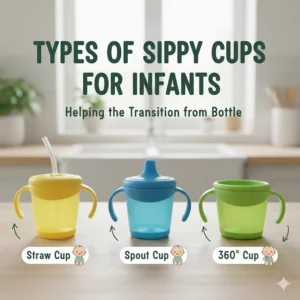
Not all sippy cups are created equal, and understanding the different types helps you choose the best transitional sippy cup from bottle for your specific baby.
Soft Spout vs. Hard Spout Cups
Soft Spout Cups (like the transition sippy cup nuk style) feature silicone spouts that mimic bottle nipples. These are ideal first cups because they feel familiar to babies. The gentle texture doesn’t hurt teething gums, and most babies accept them readily. However, they can develop tears with heavy chewing and may need replacement every few months.
Hard Spout Cups use firm plastic spouts that are virtually indestructible. They’re better for older toddlers (12+ months) who’ve mastered the basic drinking technique. The downside? They can be uncomfortable for teething babies and may encourage biting rather than sipping.
Spoutless 360 Cups
This newer design (hello, Munchkin Miracle 360!) eliminates the spout entirely. Babies drink from any point around the rim, similar to a regular cup. Dentists love these because they don’t interfere with natural oral development. The learning curve is steeper, but the payoff is huge—babies who use 360 cups typically transition to open cups faster and easier.
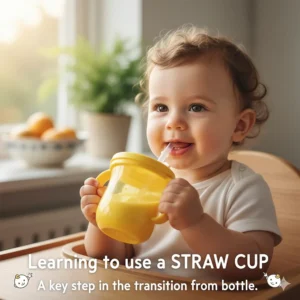
Straw Cups
Straw cups teach a different drinking skill but work wonderfully for some babies. The weighted straw design allows drinking from any angle, which babies find intuitive. Speech therapists often recommend starting with straw cups because they promote tongue retraction, an important skill for speech development. However, cleaning straws requires extra tools and diligence.
Trainer Cups with Handles
Most transitional sippy cups include handles—and for good reason. Those little handles provide stability and control that babies need when learning. Look for handles that are textured or rubberized for better grip. The removable handle feature is brilliant because you can take them off once baby develops better coordination, extending the cup’s useful life.
🏃♀️ Step-by-Step Transition Strategy: Your Action Plan
Alright, enough theory—let’s talk practical strategy for how to actually transition infant from bottle to sippy cup without the drama.
Phase 1: Introduction (Weeks 1-2)
Start by introducing the transitional sippy cup during one midday feeding when your baby is alert but not desperately hungry. Desperation leads to frustration, and frustrated babies don’t want to learn new skills—they want their familiar bottle NOW.
Pro tip: Put breast milk or formula in the cup initially, not water. Why? Because that familiar taste motivates babies to figure out the new delivery system. Water might not be interesting enough to warrant the effort.
Let them explore the cup as a toy first. Seriously. My pediatrician gave me this advice, and it was game-changing. Let baby hold it, shake it, chew on it during playtime. Familiarity reduces resistance later.
Phase 2: Gradual Replacement (Weeks 3-4)
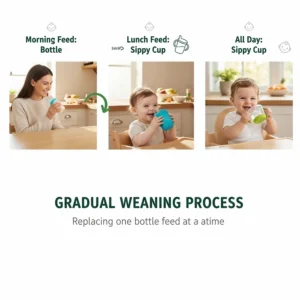
Begin replacing one bottle feeding per day with the sippy cup. I recommend starting with lunch because morning and bedtime feedings tend to be the most emotionally significant. Your baby is more flexible with that midday meal.
Continue bottle feedings for other meals—this isn’t all-or-nothing. The gradual approach respects your baby’s need for security while introducing new skills. After a week of successful lunch transitions, add another meal, perhaps afternoon snack time.
Phase 3: Bedtime Transition (Weeks 5-6)
This is often the trickiest part because bottles are frequently part of the bedtime routine. Here’s what worked for us: move the milk/formula feeding earlier in the routine. Instead of bottle-then-bed, try bath-sippy cup-story-bed. Breaking that immediate association between drinking and sleeping helps.
Some babies do fine with a transition sippy cup nuk style at bedtime; others need the cup eliminated from the bedroom entirely to break the sleep association. Follow your baby’s lead here. If they’re taking the cup well during the day but struggling at night, you might need to just cut bedtime drinking cold turkey.
Phase 4: Morning Bottle Farewell (Week 7+)
The morning bottle is often the last holdout. Babies wake up thirsty and hungry, wanting immediate satisfaction. They’re not in the mood for new challenges at 6 AM! Wait until your baby is completely comfortable with the sippy cup at all other meals before tackling this final bottle.
When you do make the switch, have the sippy cup ready before baby fully wakes. Sometimes offering it immediately upon waking, before they ask for the bottle, smooths the transition. Pair it with special morning activities—maybe breakfast together at the table or a favorite morning show.
🛡️ Common Challenges and Solutions: Troubleshooting Guide
Even with the best transitional sippy cup from bottle, you’ll likely hit some bumps. Here’s how to navigate them.
“My Baby Refuses to Even Touch the Sippy Cup”
This is incredibly common and not a reflection on your parenting! Try these strategies:
Make it fun: Get multiple cups in different colors and designs. Let your baby choose which one they want to use. Choice gives them a sense of control.
Model the behavior: Drink from the sippy cup yourself (yes, really). Babies are hardwired to imitate, and seeing you happily sip from “their” cup creates interest.
Peer pressure works: If you have older children or can arrange playdates with cup-using toddlers, seeing other kids use sippy cups can spark motivation. My daughter finally committed to her cup after seeing her cousin using one.
Don’t force it: The more you push, the more they resist. Take breaks if frustration (yours or theirs) is building. Come back to it in a few days with fresh energy.
“There Are Leaks Everywhere!”
Leaking sippy cups are the bane of every parent’s existence. Before you blame the cup, check these factors:
Assembly: Most leaks come from improper assembly. Those little valves and gaskets need to be seated correctly. Review the manufacturer’s instructions—I know, I know, who reads instructions? But do it this time.
Overfilling: Fill cups only to the recommended level. Overfilling creates pressure that can force liquid past seals.
Temperature: Some cups leak when filled with cold liquids. Room temperature works better for many designs.
Wear and tear: Silicone parts don’t last forever. Check for tears, cracks, or stretching. Replace worn pieces promptly.
“Baby Keeps Throwing or Dropping the Cup”
If I had a dollar for every time one of my kids launched their cup across the room… Throwing is actually a normal developmental phase as babies explore cause and effect. However, you can minimize it:
Attach it: Use a sippy cup strap that clips to high chairs, strollers, or car seats. Can’t throw what’s tethered!
Stay neutral: Big reactions (even frustrated ones) make throwing more interesting. Calmly retrieve the cup, remind them “cups stay on the table,” and move on.
Practice at table: Only offer the cup during meals at the table initially. When cup drinking is associated with sitting and eating, throwing happens less.
💡 Pro Tips From Real Parents: What Actually Works
After surveying dozens of parents and pediatricians, here are the insider tips that make the biggest difference:
Mix It Up With Temperature and Texture
Some babies strongly prefer cold milk, others want it warm. Experiment with temperature to see what motivates your baby. Similarly, if they’re rejecting formula or milk in the cup, try starting with diluted juice (1 part juice to 3 parts water) just to get them interested in the mechanism. Once they master the cup, gradually shift back to milk.
Strategic Timing Is Everything
Don’t attempt this transition during other major changes—moving, starting daycare, new siblings, or illness. Babies need stability in other areas to handle this change well. Pick a relatively calm period in your family’s schedule.
Consider the “Cold Turkey” Method Selectively
While gradual transitions work for most babies, some particularly stubborn ones do better with a clean break. If you’ve been gradually introducing the cup for weeks with zero progress, you might try removing all bottles from the house for a weekend. Hunger and thirst are powerful motivators. This method isn’t for everyone, and it requires parental fortitude, but it can work when nothing else does.
Invest in Multiples
Having 4-6 transitional sippy cups might seem excessive, but hear me out. You’ll always have a clean one available, reducing stress. Different cups work better for different beverages—one for milk, another for water. Plus, backups prevent meltdowns when the favorite cup is in the dishwasher.
The Straw Introduction Hack
Many occupational therapists recommend introducing straw drinking alongside sippy cups. The sucking motion for straws is different and can help babies who struggle with spouts. Plus, straw cups often have fewer parts to clean. Place your finger over the top of a regular straw in a cup of water, trapping liquid inside, then let baby sip from the bottom. This teaches the concept quickly!

🧼 Cleaning and Maintenance: Keeping It Hygienic
Let’s talk about something nobody warns you about: sippy cup mold. Those little crevices in valves and spouts are perfect breeding grounds for bacteria and mold if not cleaned properly.
Daily Cleaning Protocol
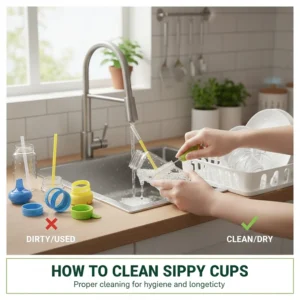
After each use, disassemble the ENTIRE cup. Yes, including that tiny valve piece you didn’t realize came apart. Rinse all pieces with hot water immediately to prevent milk residue from drying.
Wash all components with hot, soapy water and a bottle brush. Pay special attention to threads, valve edges, and anywhere two pieces meet. A regular sponge won’t reach these spots—invest in a good bottle brush set with different sizes and shapes.
Weekly Deep Cleaning
Once a week, take your cleaning up a notch:
Option 1: Dishwasher sterilization – Run cups through the dishwasher on the sanitize cycle. Place small parts in a mesh bag so they don’t get lost or damaged.
Option 2: Vinegar soak – Soak disassembled cups in a mixture of equal parts white vinegar and water for 20 minutes. This naturally disinfects and removes odors.
Option 3: Sterilizer – If you still have your bottle sterilizer, use it! Most transitional sippy cups are sterilizer-safe.
Replacement Schedule
Even with excellent cleaning, some parts need periodic replacement:
- Silicone spouts: Every 2-3 months or when showing wear
- Valves: Every 3-4 months
- Entire cup: Every 6-8 months for frequent-use cups
Most manufacturers sell replacement parts separately, which is more economical than buying new cups. Keep an eye on Amazon for multi-packs of replacement spouts for your cup brand.
🍼 Best Practices for Different Scenarios
For Breastfed Babies
Breastfed babies sometimes resist sippy cups more vigorously because they’re used to mom—not bottles or cups. For these little ones, try:
Paced introduction: Start with expressed breast milk in the sippy cup during times when you’re present but not breastfeeding (like after solid meals).
Dad or partner takes over: Sometimes babies refuse cups from mom because they know breast milk is available. Having another caregiver offer the cup increases acceptance.
Slower transitions: Give yourself extra time—maybe 8-12 weeks instead of 4-6. There’s no race here.
For Formula-Fed Babies
Formula-fed babies often transition more easily since they’re already accustomed to artificial nipples. Leverage this by:
Maintaining familiar taste: Keep the formula the same initially. Don’t switch formulas and cups simultaneously.
Using bottle-compatible cups: The Philips Avent Natural Trainer Cup that works with Avent bottles can be brilliant here. You’re keeping parts of the system familiar while changing others.
For Daycare Transitions
If your baby attends daycare, coordinate your home transition with their schedule. Many daycares have specific timelines for moving kids off bottles (typically by 12-15 months). Ask your provider:
- What cups do they use and recommend?
- What’s their timeline?
- Can you send the same cup brand for consistency?
Having the same transition sippy cup at home and daycare accelerates learning because baby isn’t switching between different systems.
📊 Benefits Comparison: Sippy Cups vs. Bottles
| Aspect | Bottles | Transitional Sippy Cups |
|---|---|---|
| Oral Development | Limited jaw movement | Promotes stronger jaw muscles |
| Dental Health | Risk of tooth decay from pooling | Better for dental health |
| Independence | Often requires adult help | Encourages self-feeding skills |
| Speech Development | Can delay speech skills | Supports speech development |
| Spill Factor | Minimal when properly used | Varies by design; generally more |
| Social Acceptance | Babyish after 12 months | More age-appropriate |
| Cleaning Difficulty | Moderate | Moderate to high (more parts) |
| Cost Over Time | Ongoing formula/bottle costs | One-time cup investment |
🌟 Beyond the Basics: Advanced Tips for Success
Creating Positive Associations
Make sippy cup time special. I used to play a specific song during cup practice—babies love routine and ritual. Some parents use special placemats or designated “cup time” spots at the table. These positive associations make babies look forward to using their cups.
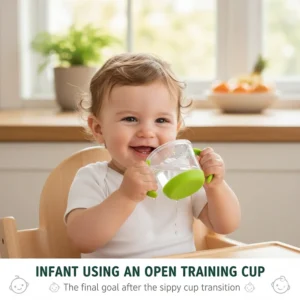
The Role of Open Cup Practice
While you’re working on the transition to sippy cups, don’t skip open cup practice! Starting around 6 months, offer a small, open cup with an ounce of water during meals. You’ll hold it, helping baby tilt and sip. This skill development runs parallel to sippy cup learning and actually makes the sippy cup transition easier because baby understands multiple ways to drink.
Managing the Bedtime Bottle Attachment
This deserves its own section because bedtime bottles are the hardest to eliminate. If your baby needs that bottle to fall asleep, you’re dealing with a sleep association, not just a feeding issue. Consider:
Gradual dilution method: Over 1-2 weeks, gradually dilute the bedtime bottle with water until it’s mostly water. Many babies lose interest in a mostly-water bottle, making it easier to eliminate.
Earlier bedtime feed: Move the milk feeding earlier in the routine—maybe right after dinner instead of right before bed. This breaks the bottle-sleep association while maintaining nutrition.
Replacement comfort: Some babies need a new comfort object. A lovey, special blanket, or even a pacifier can fill the void left by the bottle.
🎯 Price Range Analysis: Getting the Best Value
Let’s talk money because buying multiple cups to find “the one” adds up quickly.
Budget-Friendly Options ($6-$10)
The Nuby No-Spill and Tommee Tippee First Sips fall into this category. Don’t assume cheaper means lower quality—these cups perform admirably. They’re perfect for:
- Buying multiple cups for different rooms/venues
- Trying different styles without major investment
- Backup cups you won’t cry over if they get lost
Mid-Range Quality ($10-$15)
The NUK Learner Cup and Munchkin Miracle 360 represent excellent mid-range value. You’re getting superior design and durability for a modest price increase. These are worth the investment if you:
- Want cups that’ll last through multiple children
- Prioritize specific features like dental health or leak-resistance
- Don’t mind spending a bit more for peace of mind
Premium Options ($15+)
Some transitional sippy cups cost more due to special materials (stainless steel), advanced features (insulation), or brand reputation. The Philips Avent system sometimes falls into this category. Premium makes sense when:
- You want stainless steel for safety concerns about plastic
- You need insulation for maintaining milk temperature
- You’re already invested in a bottle ecosystem (Avent, Dr. Brown’s)
My recommendation? Start with one mid-range cup to test acceptance, then buy a budget-friendly multi-pack once you know what works. There’s no sense investing $50 in premium cups if your baby hates the design!
❓ Frequently Asked Questions
❓ When should I start to transition infant from bottle to sippy cup if my baby is breastfed?
❓ What's the difference between a transition sippy cup from bottle and a regular toddler cup?
❓ Can I skip sippy cups entirely and go straight to regular cups?
❓ How do I choose between a nuk transitional sippy cup and a spoutless design?
❓ What should I do if my 18-month-old still refuses the transitional sippy cup?
🎬 Conclusion: Your Transition Roadmap to Success
Making the transition infant from bottle to sippy cup doesn’t have to be the stressful milestone many parents fear. With the right transitional sippy cup from bottle—whether that’s the gentle NUK Learner Cup, the innovative Munchkin Miracle 360, or any of the other excellent options we’ve covered—you’re setting your baby up for success.
Remember these key takeaways as you embark on this journey:
Start early but move at your baby’s pace. Introduction at 6 months gives you flexibility, but every child develops differently. There’s no prize for rushing, and no shame in taking extra time.
Choose the best transitional sippy cup from bottle based on YOUR baby’s needs, not just what worked for your neighbor’s kid. Some babies need that familiar soft spout; others surprise you by embracing spoutless designs immediately.
Consistency matters more than perfection. You’ll have setbacks. There will be days when your baby refuses the cup and you cave and give them a bottle. That’s okay! Tomorrow is a new day. The overall trajectory matters more than individual days.
Celebrate small wins. The first successful sip from a sippy cup is worth celebrating—take a photo, call grandma, do a little dance. Your excitement and positivity reinforce baby’s willingness to try again.
Most importantly, trust yourself. You know your baby better than any article, expert, or well-meaning relative. If something isn’t working, try a different approach. The transition sippy cup nuk style that worked for baby #1 might not work for baby #2, and that’s completely normal.
The bottles won’t last forever (even though some days it feels that way). Before you know it, you’ll be packing that last bottle away for donation or saving it for baby #2, marveling at how small it looks and how far your little one has come.
🎁 Ready to Get Started?
✨ Take the stress out of this transition by choosing from our top-rated transitional sippy cups reviewed above. Click on any product to check current Amazon pricing, read verified customer reviews, and take advantage of bundle deals. Your baby’s cup journey starts with one click! 🌟
📚 Recommended for You
- Best Starter Sippy Cup: 7 Top Picks for Beginners in 2025
- When to Start Sippy Cup: 7 Best Expert Tips for 2025
- 7 Best Infant Sippy Cup Picks 2025: Expert Reviews
Disclaimer: This article contains affiliate links. If you purchase products through these links, we may earn a small commission at no additional cost to you.
✨ Found this helpful? Share it with your friends! 💬🤗
