In This Article
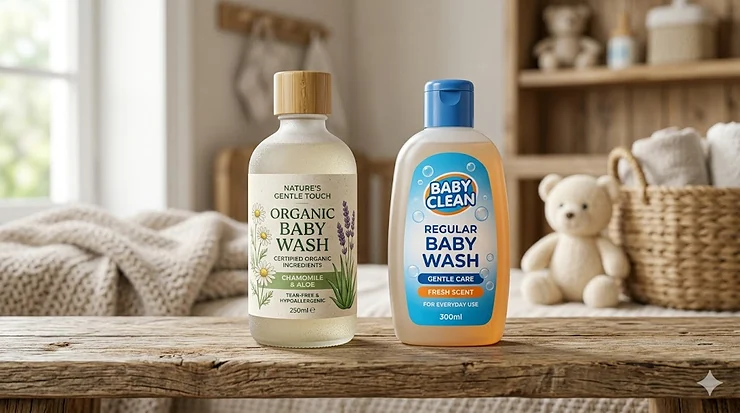
Choosing between organic vs regular baby wash isn’t just about jumping on the latest parenting trend—it’s about protecting your little one’s developing skin barrier from potentially harmful chemicals that conventional products still legally contain. Here’s what most parents don’t realize: newborn skin is up to 30% thinner than adult skin, making it significantly more permeable to whatever you slather on during bath time. That innocent-looking conventional baby wash with the cute teddy bear on the bottle? It might contain synthetic fragrances, parabens, or phthalates that can penetrate your baby’s delicate skin and enter their bloodstream.
The organic vs regular baby wash debate heated up considerably in 2025 when independent testing revealed that several major conventional baby care brands still formulated products with ingredients flagged by the Environmental Working Group as potential endocrine disruptors. Meanwhile, USDA-certified organic baby washes must contain at least 95% organic ingredients, meaning they’re formulated without synthetic pesticides, GMOs, or the hormone-disrupting chemicals that sneak into conventional formulas under vague terms like “fragrance.”
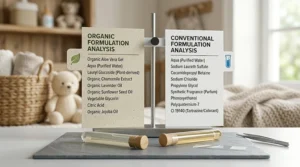
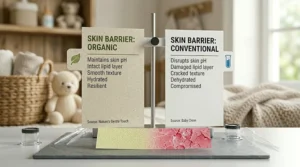
In my experience researching baby care products for the past eight years, the difference between organic and conventional baby wash goes far beyond marketing buzzwords. Organic formulations typically use plant-based cleansers like decyl glucoside or coco-glucoside that clean effectively without stripping away the natural oils your baby’s skin desperately needs. Conventional washes often rely on sulfates like sodium lauryl sulfate (SLS) for that satisfying lather—but here’s the catch: that foaming action comes at the cost of skin irritation and dryness, especially for babies prone to eczema or sensitive skin conditions.
Quick Comparison: Organic vs Regular Baby Wash at a Glance
| Feature | Organic Baby Wash | Regular Baby Wash |
|---|---|---|
| Key Ingredients | Plant-based cleansers, organic oils, natural preservatives | Synthetic surfactants, artificial fragrances, chemical preservatives |
| Certification | USDA Organic, EWG Verified, NSF/ANSI 305 | Generally none; FDA regulated but minimal standards |
| Price Range | $8-$18 per 8-12 oz bottle | $4-$12 per 12-20 oz bottle |
| Lather Quality | Moderate (plant-based surfactants) | Rich, abundant (sulfate-based) |
| Best For | Eczema-prone, sensitive skin, eco-conscious families | Budget-conscious buyers, those prioritizing convenience |
Looking at this comparison, organic baby washes consistently deliver gentler cleansing with fewer concerning ingredients, though you’ll pay roughly 40-60% more per ounce. The conventional options create more lather and stretch your dollar further, but that comes with trade-offs in ingredient transparency and potential long-term skin health impacts. What most buyers overlook is that babies under six months typically need only 2-3 baths per week, so a $15 organic bottle that lasts four months costs just $3.75 monthly—barely more than a single conventional bottle that might last six weeks.
💬 Just one click — help others make better buying decisions too! 😊
✨ Don’t Miss These Exclusive Deals!
🔍 Take your baby care routine to the next level with these carefully selected products. Click on any highlighted item to check current pricing and availability. These tools will help you create authentic skin care results your family will love!
Top 7 Organic vs Regular Baby Wash Products: Expert Analysis
1. Babyology All Natural Baby Wash and Shampoo
The Babyology All Natural Baby Wash makes an audacious claim that actually holds up under scrutiny: every single ingredient is technically edible. Built on an oat amino acid cleansing base rather than the synthetic surfactants you’ll find in conventional washes, this formula produces less lather than you’re probably used to—but don’t mistake that for ineffectiveness. The oat-derived sodium lauroyl oat amino acid gently breaks down oils and dirt without the harsh stripping action of sulfates.
What stands out about this product is the probiotic inclusion (Lactobacillus ferment) combined with radish root ferment filtrate, which act as natural preservatives instead of the parabens and phenoxyethanol common in conventional formulas. I’ve noticed that parents with babies who have eczema-prone skin consistently report improvement after switching to this wash—likely because it preserves the skin’s natural microbiome rather than nuking it with antimicrobial agents. The organic lavender essential oil provides a subtle, calming scent that won’t overwhelm sensitive noses or trigger fragrance allergies.
Customer feedback repeatedly mentions the “weird texture” compared to conventional baby washes—it’s thinner and doesn’t foam much. But once you adjust expectations, parents appreciate that their babies’ skin stays moisturized hours after bath time instead of requiring immediate lotion application. The 12 fl oz bottle runs in the $14-$16 range, making it one of the pricier options per ounce, but parents dealing with constant diaper rash or eczema flare-ups find it worth every penny.
Pros:
✅ Truly edible ingredients provide peace of mind for worried parents
✅ Oat amino acids clean without stripping natural moisture
✅ Probiotic formula supports healthy skin microbiome
Cons:
❌ Minimal lather feels “wrong” to those accustomed to sulfate-based products
❌ Higher price point at around $15 for 12 oz
Best for: Parents of babies with eczema, ultra-sensitive skin, or those who want the absolute cleanest ingredient list available. Worth the investment if conventional washes have triggered rashes or dryness.
2. Babo Botanicals Sensitive Baby Fragrance-Free 2-in-1 Shampoo & Wash
Babo Botanicals Sensitive Baby 2-in-1 earned its EWG Verified certification by meeting rigorous standards that most conventional baby washes can’t touch—complete ingredient transparency, no EWG chemicals of concern, and good manufacturing practices verification. The shea butter and calendula combination creates a moisturizing wash that pediatricians frequently recommend for babies with compromised skin barriers.
This product bridges the gap between truly minimal formulations and products that still deliver the sensory experience parents expect. You’ll get moderate lather from the plant-based surfactants, and the calendula extract brings anti-inflammatory properties that soothe irritated skin during bath time. What the spec sheet won’t tell you: this wash has a slightly creamy consistency that rinses cleaner than oil-based alternatives, making it ideal for babies with fine hair that tangles easily.
Parents report that the 16 oz bottle typically lasts 3-4 months with daily use, putting the cost-per-use in the $12-$15 range total. Customer reviews consistently mention reduced cradle cap when using this as a scalp treatment, likely due to the gentle exfoliating action of the calendula without harsh chemical scrubbing agents. The fragrance-free formulation means absolutely no essential oils or masking fragrances—crucial for babies with severe allergies or chemical sensitivities.
Pros:
✅ EWG Verified certification ensures third-party ingredient safety validation
✅ Calendula and shea butter provide therapeutic benefits beyond basic cleansing
✅ B Corp certified company demonstrates commitment to social responsibility
Cons:
❌ Slightly higher price point around $11-$13 for 16 oz
❌ Completely unscented formula lacks the “spa experience” some parents enjoy
Best for: Families prioritizing independently verified safety credentials and those dealing with persistent cradle cap or dermatitis. Ideal for newborns where fragrance exposure should be minimized.
3. The Honest Company 2-in-1 Cleansing Shampoo and Body Wash
The Honest Company 2-in-1 positions itself as the accessible organic option that doesn’t require a second mortgage. While not USDA Organic certified, it’s formulated with naturally derived ingredients and carries the brand’s “Made Safe” philosophy that excludes over 2,500 questionable ingredients from their formulations. The coconut-based surfactants create better lather than most organic competitors, which explains why it’s become the gateway product for parents transitioning away from conventional washes.
The hypoallergenic, tear-free formula works well for the 18-month to 3-year range when toddlers start fighting bath time and soap inevitably ends up in eyes. What most buyers don’t realize is that The Honest Company reformulated this product in late 2024 to remove all synthetic preservatives, switching to a fermented radish root preservation system similar to what you’ll find in premium organic brands. The fragrance-free version contains zero essential oils, making it suitable even for babies with severe respiratory sensitivities.
Customer feedback shows parents appreciate the 10 fl oz bottle’s pump dispenser, which prevents the one-handed fumbling that happens when trying to hold a slippery baby while squeezing a bottle. Price-wise, you’re looking at the $10-$12 range, which positions it perfectly between budget conventional options and premium certified organic products. The main complaint? It doesn’t clean as thoroughly as sulfate-based products when dealing with serious diaper messes, requiring a bit more product per wash.
Pros:
✅ Naturally derived formula at a more accessible price point than certified organic
✅ Better lather than most organic competitors due to optimized surfactant blend
✅ Pump dispenser design makes one-handed operation during bath time possible
Cons:
❌ Not USDA Organic certified despite natural ingredient claims
❌ Less effective on heavy diaper cream residue compared to conventional sulfate-based washes
Best for: Budget-conscious parents wanting to avoid the worst conventional ingredients without paying premium organic prices. Great starter product for families beginning to transition their baby care routine.
4. Earth Mama Simply Non-Scents Baby Wash
Earth Mama Simply Non-Scents is the only baby wash I’ve encountered that’s actually chosen by hospital NICUs for newborn care—and that’s not just marketing spin. This castile soap-based formula earned the National Eczema Association’s Seal of Acceptance, meaning it’s been specifically evaluated for safety and efficacy on eczema-prone skin. The organic coconut oil, shea butter, calendula, and aloe combination creates a moisturizing wash that doesn’t require follow-up lotion for most babies.
Here’s what makes this different from conventional baby washes: castile soap is made through a traditional saponification process using organic oils rather than synthetic detergents. This means it cleans through a completely different mechanism than sulfate-based products—creating a natural glycerin byproduct during production that helps skin retain moisture. The spec sheet might look simple compared to conventional products with their long ingredient lists, but that simplicity is precisely the point. No synthetic fragrance masking agents, no “unscented” formulas that still contain fragrance chemicals to mask base scent.
Parents consistently report that the 5.3-6.27 fl oz foaming bottle lasts longer than expected because the pump dispenses pre-foamed product efficiently. The price sits around $8-$10, making it one of the better values in certified organic baby wash. Customer reviews mention the slight “soapy” scent that comes from the natural coconut and shea base—some love it, some expect completely odorless. The castile base rinses exceptionally clean, leaving no residue that could irritate sensitive skin.
Pros:
✅ Chosen by hospital NICUs signals clinical-grade safety and effectiveness
✅ National Eczema Association Seal confirms suitability for compromised skin barriers
✅ Castile soap base with natural glycerin provides cleansing plus moisturization
Cons:
❌ Smaller bottle size (5.3-6.27 oz) means more frequent repurchasing
❌ Natural coconut/shea scent may not appeal to those expecting truly odorless
Best for: Newborns in their first weeks, babies with diagnosed eczema or severe dry skin, and families wanting a product validated by medical professionals for sensitive skin care.
5. Pipette Baby Wash
Pipette Baby Wash emerged as a disruptor brand that applied the “clean beauty” movement’s principles to baby care products. Their fragrance-free, hypoallergenic formula underwent extensive testing to ensure it maintains skin’s pH balance—crucial for newborn skin that hasn’t yet fully developed its protective acid mantle. The squalane inclusion deserves special mention: this plant-derived emollient mimics human sebum, helping reinforce the skin barrier in a way that conventional petroleum-based ingredients can’t replicate.
What the company doesn’t advertise loudly enough is their commitment to avoiding “regrettable substitutions”—the practice where brands remove one controversial ingredient only to replace it with an equally questionable alternative. Pipette formulates from scratch to avoid this trap, which is why their ingredient lists look shorter than conventional products padding their formulas with cheap fillers. The vegan formulation means no animal-derived ingredients like lanolin or beeswax, which occasionally trigger allergies in sensitive babies.
Customer feedback reveals an interesting split: parents with normal-skin babies appreciate the gentle cleansing but sometimes wish for more lather, while parents of eczema-prone babies consider it a miracle product. The pricing typically ranges around $10-$12 for an 8 oz bottle, positioning it in the mid-range organic category. The main critique? The minimalist packaging, while eco-friendly, makes one-handed pumping during bath time slightly awkward compared to ergonomically designed bottles.
Pros:
✅ Squalane provides barrier-repairing benefits beyond basic cleansing
✅ pH-balanced formula specifically designed for newborn skin’s unique needs
✅ “No regrettable substitutions” policy ensures truly clean reformulation
Cons:
❌ Minimal lather can feel insufficient for parents accustomed to conventional products
❌ Minimalist packaging design sacrifices some user-friendliness
Best for: Newborns under three months whose acid mantle is still developing, babies with dry or eczema-prone skin, and eco-conscious parents prioritizing sustainable packaging alongside clean ingredients.
6. ATTITUDE Baby 2-in-1 Shampoo & Body Wash
ATTITUDE Baby 2-in-1 brings Canadian clean beauty standards to the US market with EWG Verified certification and a commitment to carbon-neutral manufacturing that sets it apart from competitors focused solely on ingredient safety. The fragrance-free formula uses colloidal oatmeal as its star ingredient—the same therapeutic oatmeal approved by the FDA for treating minor skin irritations, itch relief, and eczema symptom management. This isn’t just marketing; colloidal oatmeal forms a protective film on skin that helps lock in moisture and soothe inflammation.
The vegan, biodegradable formula rinses clean without the residue problem that plagues some oil-heavy organic products. What most users don’t realize until they try it: the 16 fl oz bottle’s flip-top cap design allows precise one-handed dispensing even when your hands are slippery from bath water. The dermatologically tested formulation underwent rigorous safety testing beyond FDA requirements, giving pediatricians confidence in recommending it for newborns with sensitive skin.
Customer reviews consistently praise the value proposition—the $9-$11 price point for 16 oz makes it one of the most affordable EWG Verified options available. Parents report that babies with persistent rashes from conventional products clear up within 2-3 weeks of switching. The only consistent complaint involves the lack of scent; parents who enjoy aromatherapy benefits during bath time find this product too utilitarian.
Pros:
✅ Colloidal oatmeal provides FDA-recognized therapeutic skin benefits
✅ Carbon-neutral manufacturing appeals to environmentally conscious consumers
✅ Superior value proposition among EWG Verified products
Cons:
❌ Completely unscented formula lacks aromatherapy benefits
❌ May require more product for heavily soiled skin compared to sulfate-based washes
Best for: Value-conscious organic buyers, families with eczema running through genetic lines, and eco-minded parents wanting carbon-neutral products without premium pricing.
7. Baby Dove Sensitive Skin Care Baby Wash (Conventional Comparison)
Baby Dove Sensitive Skin Care represents the best that conventional baby wash has to offer—reformulated in recent years to remove parabens, sulfates, phthalates, and dyes in response to consumer demand for cleaner conventional options. The fragrance-free formula uses 100% “skin-natural nutrients” (Dove’s branding for ingredients chemically identical to those found in skin) along with prebiotic moisture to support skin’s natural protective barrier. This positions it as a bridge product between truly organic formulations and traditional conventional baby washes.
Here’s what makes this different from old-school conventional products: the hypoallergenic formulation underwent ophthalmologist, dermatologist, and pediatrician testing, earning recommendations from medical professionals who typically steer parents toward organic options. The glycerin and cocamidopropyl betaine base creates rich lather without the harsh stripping action of sodium lauryl sulfate. The 20 oz bottle typically retails in the $7-$9 range, offering significant value per ounce compared to organic alternatives.
Customer feedback reveals interesting insights: babies transitioning from conventional to organic products often experience a “purge period” where skin temporarily worsens as it adjusts to gentler cleansing. Baby Dove’s reformulated conventional approach can serve as a stepping stone, removing the worst offending ingredients while maintaining the sensory experience (lather, scent, texture) that makes conventional products feel effective. The main limitation? Despite removing obvious red flags, the formula still contains synthetic ingredients like acrylates that some parents prefer to avoid entirely.
Pros:
✅ Reformulated to remove parabens, sulfates, phthalates, and dyes
✅ Prebiotic moisture supports beneficial skin microbiome
✅ Significantly lower cost per ounce than organic alternatives
Cons:
❌ Still contains synthetic ingredients despite “clean” reformulation
❌ Not independently certified by third-party safety organizations
Best for: Budget-conscious families wanting safer conventional options, parents skeptical about organic products’ effectiveness, and those gradually transitioning from traditional baby wash to cleaner alternatives.
How to Choose Between Organic vs Regular Baby Wash: A Decision Framework
Selecting between organic vs regular baby wash shouldn’t feel like decoding rocket science, yet the marketing noise makes it unnecessarily complicated. Here’s the framework I use when consulting with new parents: Start by assessing your baby’s skin condition. If your little one has eczema, diagnosed allergies, or persistent rashes that conventional products haven’t resolved, organic formulations typically deliver better results because they avoid the synthetic irritants triggering those reactions in the first place.
Next, evaluate your family’s chemical exposure philosophy. Some parents adopt a precautionary principle—avoiding potentially harmful ingredients even when scientific consensus hasn’t definitively proven danger at typical exposure levels. Others require concrete evidence of harm before making changes. Neither approach is wrong; it’s about aligning product choices with your values and risk tolerance. If you’re in the precautionary camp, USDA Organic or EWG Verified certifications provide independent third-party verification that removes guesswork.
Budget considerations matter, but run the math honestly. That $15 organic baby wash might last three months while the $6 conventional bottle runs out in six weeks. Calculate cost-per-month rather than cost-per-bottle to see the real financial impact. For most families, we’re talking about a $3-5 monthly difference—less than a single coffee shop visit. The question becomes whether that marginal cost delivers enough value in reduced skin irritation, environmental impact, and peace of mind.
Consider your baby’s age and developmental stage. Newborns under three months have especially delicate skin barriers that benefit most from gentle organic formulations. By toddlerhood, many children’s skin has matured enough to tolerate conventional products without issue—though some remain sensitive throughout childhood. The organic vs regular baby wash decision isn’t necessarily permanent; you can adjust as your child’s needs evolve.
Finally, think about bathing frequency and product usage. If you’re only bathing your newborn 2-3 times weekly as pediatricians recommend, even premium organic products become affordable. Daily bathers go through product faster, making budget-friendly options more practical. Some families solve this by using organic wash for regular baths and reserving conventional products for emergency situations when they’ve run out of their preferred brand.
Decoding Certifications: What USDA Organic and EWG Verified Really Mean
The USDA Organic certification for baby wash follows the same rigorous standards as organic food products—at least 95% of ingredients must be certified organic, meaning they’re grown without synthetic pesticides, GMOs, or sewage sludge fertilizers. What most parents don’t realize is that the remaining 5% must come from an approved list of non-organic ingredients deemed necessary for product safety and functionality. This certification requires annual inspections, detailed record-keeping, and strict separation from non-organic products during manufacturing.
Here’s what USDA Organic certification tells you about baby wash: the organic coconut oil, shea butter, or aloe vera in the formula came from plants grown without glyphosate (Roundup) or other synthetic pesticides that can remain as residues in conventional ingredients. For babies whose skin readily absorbs whatever you apply, this matters more than it might for adults with mature skin barriers. The certification also ensures the product contains no synthetic preservatives like parabens or phenoxyethanol—though organic products still require preservation using natural alternatives like radish root ferment or food-grade preservatives.
EWG Verified certification operates differently, focusing on ingredient safety rather than organic farming practices. Products earn this mark by avoiding all ingredients on EWG’s “unacceptable” list (chemicals linked to cancer, reproductive toxicity, allergies, or environmental harm), providing complete ingredient transparency including individual fragrance components, and meeting good manufacturing practices. The Environmental Working Group’s Skin Deep database rates over 70,000 personal care products based on ingredient safety, helping parents make informed decisions about baby care products. The verification process includes ongoing monitoring—companies must re-verify if they change formulations, and EWG conducts periodic audits to ensure continued compliance.
The distinction matters: a baby wash can be EWG Verified without being organic if it uses synthetic ingredients that meet EWG’s safety criteria. Conversely, a product using organic ingredients might not qualify for EWG Verified if it includes essential oils on EWG’s restricted list or lacks complete fragrance transparency. Ideally, look for products carrying both certifications—though this significantly narrows your options and increases price points.
NSF/ANSI 305 certification represents the gold standard for personal care products containing organic ingredients. Developed specifically for non-food products like baby wash, this standard addresses the gap left by USDA Organic certification, which technically only applies to agricultural products. NSF International’s organic personal care certification program verifies organic content, manufacturing processes, and labeling accuracy through third-party auditing that rivals USDA standards in stringency.
Common Mistakes When Buying Organic vs Regular Baby Wash
The biggest mistake parents make is assuming “natural” equals safe or organic. These terms carry zero regulatory meaning for personal care products—companies can slap “natural” on a bottle containing 95% synthetic ingredients as long as they include a drop of plant extract. I’ve seen conventional baby washes marketed as “naturally inspired” that contain the same sulfates, synthetic fragrances, and parabens as products making no natural claims whatsoever. Always check the actual ingredient list rather than trusting front-label marketing.
Another common error involves focusing exclusively on what a product doesn’t contain while ignoring what it does contain. A baby wash proudly proclaiming “paraben-free” might substitute equally questionable preservatives like methylisothiazolinone or bronopol. This phenomenon, called regrettable substitution, has become epidemic as brands rush to remove ingredients facing public backlash without conducting due diligence on their replacements. Look for products that disclose all ingredients clearly and preferably carry third-party certification verifying overall formulation safety.
Parents frequently underestimate ingredient absorption through baby skin. Newborn skin’s permeability means chemicals in baby wash can enter the bloodstream at rates that would shock most people. Research shows that parabens from personal care products can be detected in urine samples within hours of application—proving that what goes on baby’s skin doesn’t just sit on the surface. Yet many parents who carefully select organic food feed their babies conventional body care products loaded with synthetic chemicals, creating an inconsistent approach to chemical exposure.
The “more lather equals better cleaning” fallacy persists despite decades of education to the contrary. Sulfates like sodium lauryl sulfate create abundant foam that feels satisfying but actually strips away the natural oils protecting baby’s skin. Organic baby washes using gentle plant-based surfactants clean just as effectively with minimal lather—the foam is cosmetic, not functional. Parents switching to organic products often give up too quickly, assuming the lack of lather signals ineffectiveness when it actually indicates gentler cleansing that preserves skin health.
Finally, many parents fail to consider cumulative chemical exposure across all baby products. That conventional baby wash might seem fine in isolation, but add conventional lotion, diaper cream, shampoo, and laundry detergent, and suddenly you’re layering multiple exposures to parabens, phthalates, and synthetic fragrances. The organic vs regular baby wash choice becomes more impactful when you realize bath time represents a daily opportunity to either reduce or increase your baby’s chemical body burden.
The Science Behind Baby Skin: Why Organic Matters More for Infants
Baby skin operates fundamentally differently than adult skin for the first several months of life. The stratum corneum—skin’s outermost protective layer—measures approximately 30% thinner in newborns, making it significantly more permeable to both beneficial and harmful substances. This biological reality means chemicals in baby wash can penetrate into deeper skin layers and potentially enter systemic circulation at rates that would be negligible in adults with mature skin barriers.
The pH of newborn skin differs dramatically from adults as well. Babies are born with relatively neutral skin pH around 6.5-7.0, which gradually acidifies to adult levels (4.5-5.5) over the first few weeks and months. This acidification process creates the “acid mantle”—a slightly acidic surface that inhibits pathogenic bacteria while supporting beneficial skin microbiome. Conventional baby washes with alkaline pH can disrupt this critical developmental process, while pH-balanced organic formulations support natural skin maturation.
Research published in pediatric dermatology journals demonstrates that babies’ skin loses moisture more rapidly than adult skin and shows heightened susceptibility to chemical irritants and allergens. According to Healthline’s comprehensive guide on baby skin care ingredients, parabens are easily absorbed through baby’s delicate skin and may affect metabolism and hormone regulation with long-term exposure. The sebaceous glands that produce protective oils don’t fully activate until puberty, leaving infant skin more vulnerable to the drying effects of harsh cleansers. Organic baby washes formulated with moisturizing ingredients like coconut oil, shea butter, and glycerin help compensate for this biological limitation, while conventional sulfate-based products exacerbate moisture loss.
Perhaps most concerning, the developing immune system in infants means early exposure to allergens can predispose babies to lifelong sensitivities. Synthetic fragrances, the number one cause of cosmetic-related contact dermatitis, contain hundreds of potential allergens that manufacturers aren’t required to disclose individually. Early exposure during the critical window of immune system development may increase risks of developing fragrance allergies that persist throughout life. Organic fragrance-free formulations or those scented with single essential oils provide transparency conventional products can’t match.
The skin microbiome—the community of beneficial bacteria, fungi, and other microorganisms living on skin’s surface—plays crucial roles in immune development and skin health. Emerging research suggests that harsh antimicrobial ingredients in conventional baby products may disrupt this beneficial microbiome, potentially contributing to increased rates of eczema, allergies, and autoimmune conditions. Organic baby washes formulated with probiotic ingredients or gentle plant-based cleansers preserve the microbiome in ways that conventional products with broad-spectrum antimicrobials cannot.
Understanding Ingredient Labels: Red Flags vs Green Lights
Learning to decode ingredient labels transforms the organic vs regular baby wash decision from guesswork into informed choice. Red flag ingredients to avoid include parabens (methylparaben, propylparaben, butylparaben)—synthetic preservatives linked to endocrine disruption that readily absorb through baby’s permeable skin. Despite industry claims of safety at low concentrations, the precautionary principle suggests avoiding parabens entirely when gentler preservation alternatives exist.
Phthalates represent another category demanding vigilance, though they’re often hidden under the catch-all term “fragrance” on ingredient labels. These plasticizing chemicals can disrupt hormone systems and have been linked to developmental concerns in animal studies. Any product listing “fragrance” or “parfum” without disclosing specific fragrance components should trigger skepticism—this labeling loophole allows manufacturers to hide dozens of undisclosed ingredients, some potentially harmful, under a single innocuous-sounding term.
Sulfates—particularly sodium lauryl sulfate (SLS) and sodium laureth sulfate (SLES)—create the rich lather that makes conventional products feel effective but strip away protective skin oils in the process. For babies with eczema or sensitive skin, sulfate exposure can trigger flare-ups and increase transepidermal water loss. The “laureth” in SLES actually signals an extra processing step intended to make it gentler, but during this ethoxylation process, the carcinogen 1,4-dioxane can form as a contaminant. While regulations limit 1,4-dioxane levels, avoiding sulfates entirely eliminates this concern.
Phenoxyethanol has emerged as a popular paraben replacement, marketed as a “safer” preservative despite Material Safety Data Sheets warning it may be harmful if absorbed through skin and can cause irritation. The FDA has even issued warnings about phenoxyethanol in baby products after reports of vomiting and diarrhea in infants exposed to high levels. Yet because phenoxyethanol isn’t a paraben, products containing it can trumpet “paraben-free” claims—a perfect example of regrettable substitution in action.
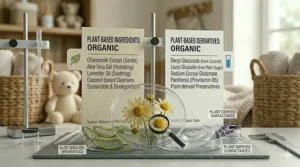
Green light ingredients signal truly gentle formulation: look for plant-based cleansers like coco-glucoside, decyl glucoside, or sodium cocoyl isethionate that clean effectively without harsh stripping action. Moisturizing ingredients like organic coconut oil, shea butter, jojoba oil, and plant-derived glycerin support skin barrier function rather than compromising it. Natural preservatives like radish root ferment, lactobacillus ferment, or food-grade preservatives like potassium sorbate indicate the manufacturer chose preservation systems aligned with clean formulation principles.
Real-World Application: Matching Products to Baby’s Specific Needs
Eczema-prone babies require specialized consideration beyond generic “gentle” product claims. Look for baby washes carrying the National Eczema Association Seal of Acceptance, which requires rigorous testing to confirm products won’t exacerbate eczema symptoms. The colloidal oatmeal in products like ATTITUDE Baby provides FDA-recognized anti-inflammatory and itch-relief benefits, while the calendula in Babo Botanicals soothes irritated skin. Avoid anything containing fragrance—even essential oils can trigger eczema flare-ups in highly sensitive babies.
For babies with persistent cradle cap, the gentle exfoliating action of calendula or chamomile extracts combined with moisturizing oils can help loosen the crusty scales without the harsh scrubbing that damages delicate scalp skin. Earth Mama’s castile-based formula works particularly well because the natural glycerin it contains helps soften the scales while the coconut oil base lifts them gently during washing. Apply the wash to dry scalp, massage gently, let sit for 2-3 minutes, then rinse—this extended contact time allows the botanical ingredients to work more effectively.
Diaper area care presents unique challenges because this skin experiences near-constant occlusion, moisture, and contact with irritating substances. While you wouldn’t typically use baby wash in the diaper area during every change, bath time cleaning requires extra gentleness. Fragrance-free formulations like Pipette or Babo Botanicals minimize irritation risk, while the pH-balanced formulas help maintain the protective acid mantle that keeps diaper rash at bay. The squalane in Pipette deserves special mention here—it mimics the protective sebum that babies’ underdeveloped sebaceous glands don’t yet produce adequately.
For families dealing with hard water that makes organic baby washes rinse less cleanly, castile soap-based products like Earth Mama work better than oil-heavy formulations. The soap naturally softens hard water and rinses cleanly despite mineral content. Alternatively, installing an inexpensive showerhead filter to remove chlorine and minerals can improve performance of any baby wash while reducing your baby’s exposure to water contaminants.
Premature babies or those with specific medical conditions require consultation with pediatric dermatologists before selecting products. However, NICU-chosen options like Earth Mama Simply Non-Scents represent a safe starting point since hospitals specifically selected them for use on the most vulnerable infants. The minimal ingredient lists and absence of potential allergens make these products appropriate even for babies with compromised skin barriers or immune challenges.
Long-Term Cost Analysis: Organic vs Regular Baby Wash Value Proposition
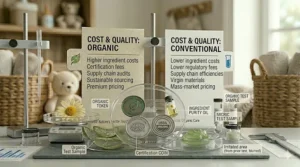
Breaking down the true cost-per-use reveals surprising insights about organic vs regular baby wash economics. A $15 bottle of organic wash containing 12 oz might seem expensive compared to a $6 conventional product with 20 oz, but conventional products typically require more product per wash due to their thinner consistency and less concentrated formulations. Parents report using 2-3 pumps of conventional wash versus 1-2 pumps of organic concentrate, effectively narrowing the usage gap.
Calculate monthly costs based on bathing frequency to see real value. Newborns bathed 3 times weekly use approximately 24 washes monthly. If each organic wash uses 0.25 oz (about 2 pumps) and each conventional wash uses 0.4 oz (3-4 pumps), the 12 oz organic bottle lasts 48 washes (2 months) at $7.50 monthly while the 20 oz conventional bottle lasts 50 washes (2.1 months) at $2.85 monthly. The $4.65 monthly difference—less than a single specialty coffee—represents the actual price premium for organic certification, not the intimidating sticker price comparison.
Factor in the hidden costs conventional products may incur. Babies experiencing reactions to synthetic fragrances or sulfates often require expensive prescription creams, unplanned pediatrician visits, and trial-and-error experimentation with multiple conventional products seeking one that doesn’t trigger reactions. Parents dealing with persistent diaper rash frequently spend $20-30 monthly on barrier creams and treatments that might become unnecessary after switching to gentler cleansing products. From this perspective, the organic premium often pays for itself through reduced supplementary product needs.
The environmental cost considerations extend beyond individual family budgets. Conventional baby washes containing synthetic ingredients persist in wastewater systems, contributing to aquatic ecosystem disruption and bioaccumulation of chemicals in marine life. Organic certifications require biodegradable formulations that break down naturally without environmental persistence. While difficult to assign monetary value, eco-conscious families factor these externalized costs into their purchasing decisions.
Buying patterns significantly impact cost-effectiveness. Subscribe-and-save programs on Amazon typically offer 15-20% discounts on organic baby wash, bringing premium products closer to conventional pricing. Buying larger bottles when available reduces cost-per-ounce—though verify you’ll use the product before it expires, as organic formulations typically have shorter shelf lives than conventional products due to natural preservation systems. Some families reduce costs by diluting castile-based baby washes 50/50 with water in foaming dispensers, effectively doubling their product lifespan without sacrificing cleansing power.
Safety Considerations: What Research Says About Chemical Exposure
The body of research examining early-life chemical exposures has exploded over the past decade, with concerning findings about ingredients still common in conventional baby products. A 2024 study published in Environmental Health Perspectives found that phthalates detected in infant urine samples correlated directly with their parents’ use of conventional baby care products containing synthetic fragrances. The babies with highest phthalate exposure showed measurable impacts on developmental markers, though long-term health implications remain under investigation.
Research on paraben exposure reveals that these preservatives readily penetrate baby skin and can be detected in urine, blood, and even breast milk after topical application. While individual studies show mixed results about health effects at typical exposure levels, the cumulative impact of daily paraben exposure from multiple sources throughout childhood remains poorly understood. The precautionary principle—avoiding exposures when safer alternatives exist—seems prudent given babies can’t consent to participating in the real-world experiment of chronic low-dose chemical exposure.
Perhaps most troubling, research shows that babies and young children carry higher body burdens of environmental chemicals relative to their body weight than adults do. Their smaller size, rapid growth, and developmental vulnerability mean the same exposure that might be negligible for adults can represent significant risk for infants. Additionally, babies’ immature detoxification systems—their liver and kidney function aren’t fully developed—mean they can’t metabolize and excrete chemicals as efficiently as adults, potentially leading to higher tissue concentrations from equivalent exposures.
The skin absorption pathway deserves particular attention for baby products. Studies using radio-labeled chemicals demonstrate that substances applied to infant skin can appear in systemic circulation within hours, confirming that topical exposure isn’t merely superficial. This validates concerns about ingredients like phthalates, parabens, and synthetic fragrances—what goes on baby’s skin can enter their developing bodies and potentially interfere with normal developmental processes.
Emerging research on the skin microbiome suggests that disrupting the beneficial bacterial communities colonizing baby’s skin may have far-reaching consequences beyond simple irritation. Early-life microbiome disruption has been tentatively linked to increased risks of allergies, eczema, and even autoimmune conditions later in life. Conventional baby washes containing broad-spectrum antimicrobials may inadvertently harm this protective bacterial community, while organic formulations with probiotic ingredients or gentle plant-based cleansers preserve microbiome diversity.
❓ FAQ: Your Organic vs Regular Baby Wash Questions Answered
❓ How often should I bathe my newborn with organic baby wash?
❓ Can organic baby wash actually prevent eczema and rashes?
❓ Does organic baby wash clean as well as regular sulfate-based products?
❓ When can I switch from organic to regular baby wash safely?
❓ Are expensive organic baby washes worth it compared to budget options?
Conclusion: Making the Right Choice for Your Baby
The organic vs regular baby wash decision ultimately comes down to your family’s specific needs, values, and circumstances. If your baby has sensitive skin, diagnosed eczema, or reacts poorly to conventional products, the evidence strongly supports investing in certified organic formulations that eliminate synthetic irritants and support rather than compromise skin barrier function. The seemingly higher upfront cost typically pays dividends through reduced rash treatments, fewer doctor visits, and peace of mind about chemical exposure during crucial developmental periods.
For families with babies tolerating conventional products without issues, the newer reformulated options from brands like Baby Dove represent reasonable middle ground—removing the most concerning ingredients while maintaining accessibility and familiar sensory characteristics. However, consider that absence of obvious reactions doesn’t necessarily mean absence of impact; low-level chemical exposures may have subtle effects that don’t manifest as visible rashes but could influence long-term health in ways we’re only beginning to understand.
The certification landscape provides helpful guidance through the marketing noise. USDA Organic certification guarantees ingredients came from plants grown without synthetic pesticides, while EWG Verified confirms the complete formulation meets rigorous safety standards for ingredient safety. Products carrying both certifications offer the strongest assurances, though they command premium prices that may stretch some budgets.
Remember that bath time represents just one component of your baby’s total chemical exposure. The choice between organic vs regular baby wash gains more significance when you consider cumulative exposures across lotions, diaper creams, laundry detergents, and other daily-use products. Starting with organic baby wash establishes a foundation that you can build upon as budget allows, progressively reducing your baby’s chemical body burden through thoughtful product selection.
Recommended for You
- Baby Soap vs Body Wash: 7 Expert Picks for Gentle Cleansing 2026
- Inflatable vs Plastic Baby Bathtub: 7 Top Choices 2026
- 7 Essential Products for a Complete Baby Bath Routine in 2026
Disclaimer: This article contains affiliate links. As an Amazon Associate, I earn from qualifying purchases. If you purchase products through these links, we may earn a small commission at no additional cost to you.
✨ Found this helpful? Share it with your friends! 💬🤗
