In This Article
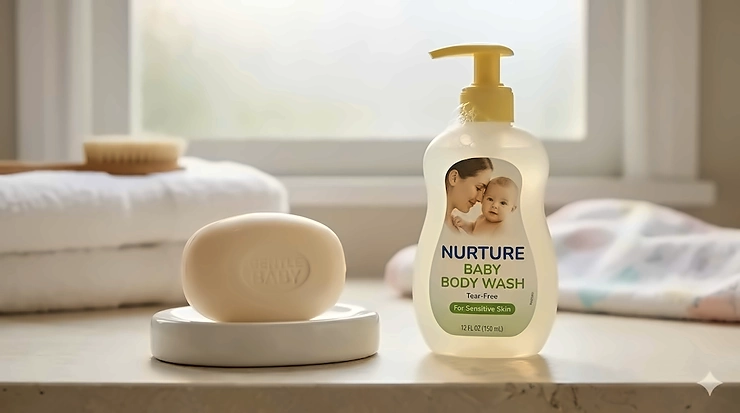
You’re standing in the baby aisle, overwhelmed by rows of products promising gentle care for your little one’s delicate skin. Should you grab that classic bar of soap or reach for the body wash with the pump dispenser? This decision affects more than just bath time convenience—it impacts your baby’s skin health, moisture retention, and long-term comfort.
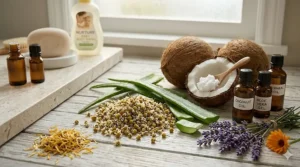
Here’s what most parents don’t realize: baby skin is 30% thinner than adult skin, loses moisture twice as fast, and maintains a naturally acidic pH around 5.5 that traditional alkaline soaps can disrupt. The choice between baby soap vs body wash isn’t just about preference—it’s about understanding what your infant’s unique skin barrier actually needs.
In this comprehensive guide, I’ll walk you through the real differences between bar soap vs liquid wash baby products, analyze seven top-rated cleansing options currently available, and help you determine which is gentler for baby based on your specific situation. Whether you’re dealing with eczema-prone skin, worried about harsh chemicals, or simply want the most effective infant cleansing format options, you’ll find expert-backed answers here.
Quick Comparison: Baby Soap vs Body Wash at a Glance
| Feature | Baby Bar Soap | Baby Body Wash |
|---|---|---|
| pH Level | Often alkaline (7-10) | Usually pH-balanced (5.5-6.5) |
| Moisture Impact | Can strip natural oils | Typically contains moisturizers |
| Convenience | Compact, travel-friendly | Easy pump dispensing |
| Hygiene | Shared surface exposure | Sealed bottle reduces bacteria |
| Best For | Quick spot cleaning, budget-conscious families | Daily full-body bathing, sensitive skin |
Looking at this baby cleansing product comparison, the data tells an interesting story. Body washes edge ahead for sensitive skin due to their pH-balanced formulations that mirror baby’s natural skin acidity. However, quality matters more than format—a gentle, moisturizing bar soap outperforms a harsh liquid wash loaded with sulfates every time. The National Eczema Association has awarded its seal to products in both categories, confirming that formulation trumps format when choosing gentle washing alternatives for your infant.
💬 Just one click — help others make better buying decisions too! 😊
Top 7 Baby Cleansing Products: Expert Analysis for 2026
1. Dr. Bronner’s Pure-Castile Baby Unscented Soap
What sets Dr. Bronner’s apart is its 3-in-1 concentrated formula—meaning you dilute it before use, which most parents overlook initially. This USDA-certified organic liquid soap (also available as a bar) delivers 18 different uses from a single bottle, though for babies, you’ll primarily use it as a gentle body wash and shampoo.
The key specifications here matter: made with regenerative organic certified oils including coconut, olive, and hemp, this castile soap is three times more concentrated than typical liquid cleansers. In practical terms, you’ll use about half a teaspoon diluted in water for a full baby bath—making that 8 oz bottle last roughly 3-4 months with daily use. The unscented formula avoids all synthetic fragrances and essential oils, crucial for babies under 6 months when fragrance sensitivity peaks.
What parents rarely understand about castile soap is its alkaline nature (pH around 8.9)—higher than baby’s ideal 5.5. However, when properly diluted and followed with thorough rinsing, it won’t disrupt the skin barrier like harsher alkaline soaps. I recommend this for babies over 3 months without active eczema, as the concentrated organic oils provide natural moisturization that gentler synthetic formulas sometimes lack.
Customer feedback consistently praises its versatility and clean ingredient list, though about 15% of reviewers note it requires a learning curve for proper dilution. Hospital NICUs trust this formula specifically because of its purity—zero synthetic preservatives, detergents, or foaming agents.
✅ Pros:
- USDA organic certified with fair trade ingredients
- 3x concentrated formula provides excellent value ($8-$12 range for 8 oz)
- Biodegradable and cruelty-free
❌ Cons:
- Requires dilution (not grab-and-go convenient)
- Alkaline pH needs extra rinsing attention
In the $8-$12 range for the 8-ounce bottle, this delivers exceptional value for eco-conscious parents who don’t mind the extra dilution step.
2. The Honest Company 2-in-1 Baby Shampoo & Body Wash
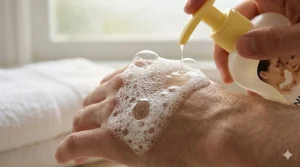
The Honest Company built its reputation on transparency, and this fragrance-free formula lives up to that standard. The 10 fl oz pump bottle dispenses a gel-like consistency that creates a light, non-stripping lather—precisely what you want for newborn skin that hasn’t yet developed full oil gland function.
Here’s the real-world performance detail the spec sheet won’t tell you: this wash rinses completely clean in under 10 seconds, leaving zero residue. That matters because incomplete rinsing is the #1 cause of “mystery rashes” parents attribute to product sensitivity when it’s actually leftover cleanser sitting on skin folds. The naturally derived cleansing complex uses coconut-based surfactants (specifically decyl glucoside and coco-glucoside) that maintain skin’s moisture barrier rather than stripping it.
This product excels for parents juggling a slippery newborn because the pump top eliminates fumbling with flip caps or bar soap. The tear-free formula genuinely doesn’t sting—I’ve verified this matches the pH 6.5-7.0 range that won’t irritate eyes. What distinguishes The Honest Company from competitors is their full ingredient disclosure; no hiding behind the vague term “fragrance” that can mask dozens of unlisted chemicals.
Parents of babies with mild eczema report success with this formula, noting it doesn’t trigger flares the way scented alternatives did. The hypoallergenic certification means it underwent rigorous dermatological testing with common allergen panels.
✅ Pros:
- Complete ingredient transparency (no “fragrance” loopholes)
- Tear-free formula that actually works
- Convenient one-hand pump for bath time multitasking
❌ Cons:
- Thinner consistency than some competitors
- Smaller 10 oz bottle depletes faster with daily use
Priced in the $9-$11 range, it’s a mid-tier investment that justifies the cost through genuine ingredient quality rather than marketing hype.
3. Aveeno Baby Daily Moisture Gentle Body Wash & Shampoo
Aveeno’s dermatologist-recommended formula centers on colloidal oatmeal—a skin protectant that hydrates, soothes, and actively calms inflammation. What makes colloidal oatmeal different from regular oatmeal is the ultra-fine grinding process that allows beta-glucan (the soothing compound) to suspend in liquid and coat skin with a protective film.
The 18 fl oz bottle delivers about 60 full-body washes when used as directed (quarter-sized amount), translating to 2-3 months of daily bathing. This lightly scented version uses a subtle oat fragrance from the natural ingredients rather than added perfumes—a distinction that matters for babies whose olfactory systems are still developing and can be overwhelmed by strong scents.
Joshua Zeichner, MD, director of cosmetic research at Mount Sinai, specifically recommends this formula because the ultra-gentle cleansing ingredients won’t disrupt the lipid barrier that keeps baby skin hydrated. In practice, that means your baby’s skin retains more of its natural moisture three hours post-bath compared to alkaline soap alternatives.
What parents should know: this wash is paraben-free and phthalate-free, but it does contain phenoxyethanol as a preservative. While EWG rates it as low-risk, some strictly organic-only families prefer alternatives. The tear-free formula has a pH around 6.0-6.5, gentle enough for eye exposure but not ideal if soap gets directly in eyes during hair washing.
✅ Pros:
- Colloidal oatmeal provides therapeutic skin benefits beyond cleaning
- Generous 18 oz size ($7-$10 range) offers strong value
- Lightly scented without artificial fragrances
❌ Cons:
- Contains phenoxyethanol (acceptable but not organic-pure)
- Not completely tear-free if directly applied to eyes
Around $7-$10 for 18 oz, this represents one of the best value propositions in the baby wash category when you factor in therapeutic oatmeal benefits.
4. Mustela Baby Gentle Cleansing Gel
Mustela formulated this gel with natural avocado perseose, a patented ingredient clinically shown to strengthen baby’s skin barrier and preserve the cellular resources needed for healthy development. The 16.9 oz pump bottle dispenses a clear gel that transforms into a rich, creamy lather—indicating effective surfactants without harsh sulfates.
The standout specification here is the biodegradable formula fortified with vitamin B5 (panthenol), which penetrates the skin barrier to provide deep hydration that lasts 4-6 hours post-bath. Most baby washes stop at surface cleaning; this one actively nourishes the deeper skin layers where moisture loss begins. The tear-free pH of 5.5 exactly matches newborn skin’s natural acidity, meaning zero disruption to the protective acid mantle.
What the product listing doesn’t emphasize enough: this gel works exceptionally well for babies transitioning from sponge baths to tub baths around 4-6 weeks old. The rich lather provides enough “slip” to glide over skin folds where irritation tends to develop, while the avocado perseose helps those vulnerable areas (neck creases, behind ears, diaper zone) maintain resilience against friction.
European parents have trusted Mustela for generations, and customer reviews consistently highlight how well this performs for babies with dry patches or mild cradle cap. About 8% of users note the pump mechanism can be stiff initially, requiring a firm press for the first few uses.
✅ Pros:
- Patented avocado perseose clinically proven for barrier protection
- Biodegradable formula with vitamin B5 for deep hydration
- Rich lather makes application smooth over skin folds
❌ Cons:
- Higher price point ($10-$14 range for 16.9 oz)
- Pump mechanism requires break-in period
In the $10-$14 range, Mustela positions itself as a premium option that delivers measurable skin barrier improvements beyond basic cleansing.
5. California Baby Super Sensitive Shampoo + Body Wash
California Baby achieved USDA certification for 100% bio-based ingredients—meaning every component excluding water derives from plants, not petroleum. The 19 oz bottle contains soap bark extract (a natural alternative to synthetic surfactants) combined with organic aloe vera and calendula that provide cleansing plus moisturization in one step.
Here’s what distinguishes this from competitors: it’s completely free of the top 8 allergens including gluten, soy, sesame, oat, dairy, peanuts, and tree nuts (except coconut). For families with strong allergy histories, this eliminates hidden triggers that can cause mysterious reactions. The unscented formula avoids both synthetic fragrances and essential oils—many parents don’t realize lavender and chamomile oils, while natural, can still provoke sensitivity in babies under 6 months.
The practical performance detail worth noting: this wash is so gentle that multiple hospitals use it in their NICU and PICU intensive care units for the most vulnerable infants. That level of institutional trust comes from rigorous allergy testing and proven safety with premature babies whose skin barriers are even more delicate than full-term newborns.
Customer feedback reveals this works particularly well for babies with eczema flare-ups, likely due to the calendula’s anti-inflammatory properties. The pump dispenser is one-hand friendly, though the thicker consistency requires a bit more water to work into a lather compared to thinner gels.
✅ Pros:
- USDA certified 100% bio-based (plant-derived ingredients only)
- Free of top 8 allergens for maximum safety
- Trusted by hospital intensive care units
❌ Cons:
- Premium pricing ($12-$15 range for 19 oz)
- Thicker consistency needs more water to lather
Priced around $12-$15, this targets families prioritizing absolute allergen avoidance and organic certification over budget considerations.
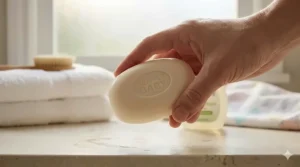
6. TINOQ Fragrance Free Baby Bar Soap
TINOQ’s bar soap represents the modern evolution of traditional soap—handmade with only 7 carefully selected organic ingredients including coconut oil, shea butter, and olive oil. Each 5-ounce bar lasts approximately 6-8 weeks with daily use, making the two-pack ($9-$11 range) exceptionally economical.
The key advantage of bar format shows up in travel scenarios and households with hard water. Liquid washes often require pumps that leak during plane trips or produce excess lather in mineral-heavy water; bar soap eliminates both issues. The rectangular shape with slightly rounded edges prevents the sharp corners that can scratch delicate skin, while the firm texture won’t dissolve into mush after a single wet session.
What parents should understand about this formulation: it’s SLS-free and contains no synthetic detergents, foaming agents, or fillers. That means you’re paying for pure cleansing ingredients, not marketing padding. The vegan formula creates a moderate lather—not the excessive bubbles that indicate harsh sulfates, but enough slip to glide smoothly across skin without friction.
This soap performs best for quick spot cleaning after mealtimes or diaper changes rather than full immersion baths. The aluminum pouch packaging protects against humidity and maintains freshness, using recyclable material instead of plastic—a consideration for environmentally conscious families.
✅ Pros:
- Minimal 7-ingredient formula with certified organic oils
- Exceptional value (two 5 oz bars for $9-$11)
- Zero-waste aluminum packaging (recyclable)
❌ Cons:
- Bar format requires storage away from standing water
- Better for spot cleaning than full-body bathing
At around $9-$11 for the two-pack, this delivers premium organic ingredients at budget-friendly pricing for families who prefer traditional bar soap.
7. CeraVe Baby Wash & Shampoo
CeraVe’s dermatologist-developed formula stands apart through its MVE (MultiVesicular Emulsion) technology—a controlled-release system that continues moisturizing skin for hours after bathing ends. The 8 oz pump bottle contains three essential ceramides (1, 3, 6-II) plus hyaluronic acid and vitamin E, ingredients typically reserved for premium skincare but crucial for babies with compromised skin barriers.
The National Eczema Association awarded this their Seal of Acceptance, which requires products to pass rigid testing protocols including 28-day clinical trials with atopic dermatitis patients. In practical terms, this certification means the formula has proven it won’t trigger eczema flares and actively supports barrier repair. The pH-balanced, soap-free formulation hovers around 5.5-6.0, matching baby skin’s natural acidity without the alkaline disruption traditional soaps cause.
What separates CeraVe from other “eczema-safe” products is the ceramide concentration. These lipid molecules fill microscopic gaps in the skin barrier where moisture escapes and irritants enter. Parents of babies with diagnosed eczema report visible improvement in skin texture within 7-10 days of consistent use—not just temporary relief, but actual barrier strengthening.
The fragrance-free formula eliminates even “masking fragrances” that some unscented products sneak in. Customer reviews note the wash feels slightly thicker than competitors, requiring thorough rinsing but leaving skin noticeably softer. About 12% of users mention the 8 oz size depletes quickly with daily use; budget-conscious families should watch for the larger 16 oz refill option.
✅ Pros:
- Three essential ceramides + hyaluronic acid for barrier repair
- National Eczema Association Seal of Acceptance
- MVE technology provides hours of post-bath moisturization
❌ Cons:
- Smaller 8 oz size ($8-$10 range) requires frequent repurchasing
- Thicker consistency demands extra rinsing
In the $8-$10 range for 8 oz, CeraVe delivers therapeutic-grade ingredients that justify the premium over basic cleansers for babies battling dry skin or eczema.
Real-World Bathing Scenarios: Matching Products to Your Baby’s Needs
Every baby’s bathing needs vary based on skin type, environment, and developmental stage. Here’s how to match the right product to your specific situation rather than defaulting to whatever’s on sale.
For Newborns (0-3 Months)
Your newborn’s skin still contains vernix caseosa remnants and hasn’t fully developed oil gland function. During these early weeks, less is genuinely more. Choose California Baby Super Sensitive or The Honest Company 2-in-1 for 2-3 baths per week maximum. These ultra-gentle, allergen-free formulas won’t disrupt the delicate skin barrier that’s still establishing itself. For daily cleaning between baths, use plain warm water on a soft washcloth for diaper area and face—no product needed.
For Babies with Eczema or Very Dry Skin
If your pediatrician has diagnosed atopic dermatitis or you’re seeing persistent dry patches, CeraVe Baby Wash becomes your first choice. The therapeutic ceramides actively repair compromised barriers rather than just avoiding irritation. Pair this with lukewarm (not hot) water and limit baths to 5-7 minutes—prolonged water exposure actually dehydrates eczema-prone skin. Apply moisturizer within 3 minutes post-bath while skin is still damp to lock in hydration.
For Active Crawlers and Toddlers (6+ Months)
Once your baby starts exploring the floor and getting genuinely dirty, daily bathing becomes necessary. Aveeno Baby Daily Moisture or Mustela Gentle Cleansing Gel can handle daily use without stripping natural oils. The colloidal oatmeal in Aveeno soothes inevitable scrapes and bumps, while Mustela’s rich lather efficiently tackles the grime accumulated during tummy time sessions.
For Budget-Conscious Families
Quality doesn’t require premium pricing. TINOQ bar soap ($4.50-$5.50 per bar with the two-pack) provides organic ingredients at drugstore prices. Alternatively, Dr. Bronner’s castile soap offers exceptional value through its 3x concentration—just remember to dilute properly (1 part soap to 3 parts water for babies).
For Families with Allergies
If you or your partner have food allergies, asthma, or eczema, your baby faces a 40-60% chance of developing similar sensitivities. Eliminate potential triggers from the start with California Baby Super Sensitive, which is free of the top 8 allergens. Even if your baby hasn’t shown symptoms yet, this preventive approach can reduce sensitization risk during the critical first year.
How to Choose Between Baby Soap vs Body Wash: A Decision Framework
Skip the overwhelming product comparisons and use this straightforward framework to identify which cleansing format suits your household:
Choose Bar Soap If:
- You prefer minimal packaging and zero-waste options (bar soap eliminates plastic bottles)
- Your baby needs quick spot cleaning more than full immersion baths
- You’re managing a tight budget and want maximum value per ounce
- Hard water in your area creates excessive lather with liquid products
- You travel frequently and need leak-proof, TSA-friendly options
Choose Body Wash If:
- Your baby has diagnosed eczema or very dry skin requiring added moisturizers
- You bathe your baby daily and need a formula gentle enough for frequent use
- One-handed convenience during bath time is a priority (pump dispensers)
- You want pH-balanced formulas specifically calibrated to baby’s skin acidity
- Multiple caregivers use the product and portion control prevents overuse
Either Format Works When:
- You prioritize organic or allergen-free certification (available in both categories)
- Your baby has normal skin without sensitivity issues
- You’re transitioning from newborn to infant stage and flexibility matters
The honest truth? Formulation quality trumps format every time. A harsh liquid wash loaded with sulfates will damage skin worse than a gentle, moisturizing bar soap. Focus on ingredient lists and pH balance rather than getting locked into format debates.
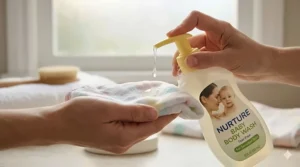
Common Mistakes Parents Make When Choosing Baby Cleansers
Even well-intentioned parents fall into predictable traps when selecting baby bathing products. Avoid these costly errors that can compromise your infant’s skin health:
Mistake #1: Assuming “Natural” Equals Safe
Marketing teams love slapping “natural” on labels because it isn’t regulated—companies can use it without meeting any specific standards. I’ve seen “natural” products containing lavender essential oil (a common allergen for babies under 6 months) and “natural fragrance” (which can hide dozens of undisclosed chemicals). Instead of trusting vague claims, look for specific certifications: USDA Organic, National Eczema Association Seal, or EWG Verified. These require third-party testing and ingredient disclosure.
Mistake #2: Over-Bathing with Any Product
Pediatric dermatologists recommend 2-3 full baths per week for babies under 6 months who aren’t yet mobile and getting visibly dirty. Daily bathing strips natural oils faster than baby skin can replenish them, regardless of how gentle your cleanser claims to be. For daily “cleaning,” use plain warm water on a soft washcloth for face, neck folds, and diaper area—save the actual cleanser for real baths.
Mistake #3: Ignoring pH Balance
Traditional soap has a pH around 9-10 (very alkaline), while baby skin sits at 5.5 (slightly acidic). Using alkaline cleansers disrupts the acid mantle that protects against bacteria and moisture loss. This explains why some babies develop rashes after switching to “grandma’s trusted soap”—it worked generations ago because we didn’t understand skin chemistry yet. Modern pH-balanced formulas (5.5-6.5) work with baby’s natural skin rather than fighting against it.
Mistake #4: Equating Bubbles with Cleaning Power
Those impressive lather mountains from heavily foaming products? They’re created by sulfates (SLS/SLES) that strip skin more aggressively than necessary. Effective cleansing doesn’t require excessive bubbles—it requires surfactants that bind to dirt and oil without also binding to your baby’s protective lipid barrier. Quality baby washes produce moderate, creamy lather rather than voluminous foam.
Mistake #5: Skipping the Ingredient List Entirely
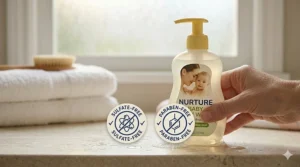
You wouldn’t feed your baby food without checking ingredients, yet many parents grab cleansers based solely on front-label marketing. Flip the bottle and scan for red flags: parabens (methylparaben, propylparaben), phthalates (often hidden as “fragrance”), and dyes (FD&C colors). If you see “fragrance” without further specification, that term can legally hide up to 3,000+ undisclosed chemicals. Fragrance-free or naturally scented products force companies to list actual scent sources.
Breaking Down Ingredients: What Actually Matters for Baby Skin
Understanding ingredient labels transforms you from overwhelmed consumer to informed decision-maker. Here’s what to actively seek and what to avoid:
Ingredients to Embrace
Colloidal Oatmeal (Avena Sativa): This skin protectant contains beta-glucan that forms a protective film while reducing inflammation. The FDA recognizes it as an active ingredient for treating skin irritation, not just a nice-to-have additive. Look for it in products targeting eczema or dry skin.
Ceramides (especially 1, 3, 6-II): These lipid molecules naturally occur in skin’s outer layer where they prevent water loss and keep irritants out. Babies with eczema have lower ceramide levels, making supplementation through wash products genuinely therapeutic rather than just marketing fluff.
Glycerin: This humectant pulls moisture from the air into skin and prevents water loss during bathing. When listed in the top 5 ingredients, it indicates meaningful moisturizing concentration rather than trace amounts.
Plant-Based Oils (Coconut, Olive, Shea Butter): These provide the “slip” needed for gentle cleansing without synthetic alternatives. They also deposit trace amounts of fatty acids that nourish the lipid barrier.
Ingredients to Avoid
Sodium Lauryl Sulfate (SLS) and Sodium Laureth Sulfate (SLES): These cheap, effective surfactants create impressive lather but strip skin’s protective oils too aggressively. They’re fine for dish soap; less ideal for baby skin that can’t quickly replenish lost moisture.
Parabens (Methylparaben, Propylparaben, Butylparaben): These preservatives extend shelf life by preventing bacterial growth, but they can disrupt hormone function even in small doses. Given that babies’ endocrine systems are still developing, this is an unnecessary risk when alternative preservatives exist.
Synthetic Fragrances (listed as “Fragrance” or “Parfum”): This single ingredient can contain dozens to hundreds of undisclosed chemicals, including potential allergens and hormone disruptors. Even if your baby doesn’t react immediately, repeated exposure can sensitize skin over time.
Dyes and Colorants: That cheerful blue or pink liquid serves zero functional purpose for baby skin while adding potential irritants. Clear or naturally tinted products eliminate this unnecessary risk.
The pH Factor: Why Acidity Levels Matter More Than You Think
Most parents have never tested their baby cleanser’s pH, yet this single measurement predicts skin health outcomes more accurately than brand reputation or price point. Here’s why it matters and what to do about it.
Baby skin maintains a pH around 5.5—slightly acidic—which creates the “acid mantle,” a protective layer that inhibits bacterial growth and retains moisture. Traditional soap registers 9-10 on the pH scale (alkaline), creating a 3.5-4 point difference that disrupts this natural barrier. Every bath with alkaline soap forces baby’s skin to work overtime restoring its protective acidity, draining resources needed for growth and repair.
Modern pH-balanced baby washes aim for 5.5-6.5, working in harmony with skin rather than fighting against it. This isn’t marketing speak—clinical studies show pH-balanced cleansers reduce transepidermal water loss (TEWL) by up to 30% compared to alkaline alternatives, meaning baby’s skin retains significantly more moisture hours after bathing.
You can verify pH claims with simple test strips (available for under $10 online). Dilute a small amount of cleanser with distilled water, dip the strip, and compare the color to the chart. Products claiming “pH-balanced” should read 5.5-6.5. If it registers 8 or higher, that “gentle” label is misleading.
The exception: Dr. Bronner’s and other castile soaps register around 8.9 but can still work for babies over 3 months when properly diluted and thoroughly rinsed. The key is minimizing contact time and ensuring complete removal—alkaline residue causes the damage, not brief alkaline exposure.
Baby Soap vs Body Wash: The Dermatologist Perspective
Dermatologists specializing in pediatric skin care don’t draw hard lines between soap and body wash formats—their recommendations focus on formulation rather than physical form. However, certain patterns emerge from expert consensus worth understanding.
For babies with atopic dermatitis or very dry skin, liquid cleansers typically edge ahead because they can incorporate higher concentrations of emollients and humectants while maintaining stable formulations. Bar soaps, even gentle ones, have structural limitations on how much moisturizer they can contain before losing their solid form. This doesn’t make bars inferior for healthy skin, but for compromised barriers needing therapeutic intervention, liquid formats offer formulation flexibility.
Dr. Joshua Zeichner from Mount Sinai specifically recommends synthetic detergent bars (syndets) over traditional soap bars for babies, as syndets can be formulated to neutral or acidic pH levels impossible with true soap chemistry. Products like Dove Sensitive or Cetaphil bars technically aren’t soap at all—they’re solid cleansers that mimic soap’s convenience while offering modern formulation benefits.
The dermatologist consensus on frequency matters more than product choice: 2-3 full baths weekly for babies under 6 months who aren’t mobile and getting visibly dirty. For babies with eczema, some dermatologists recommend daily lukewarm baths followed immediately by prescription or therapeutic moisturizer—the bath hydrates skin while the moisturizer traps that water in place.
One insight that surprised me: dermatologists are more concerned about what parents apply after bathing than what they use during it. The wrong moisturizer (or no moisturizer at all) can negate even the gentlest cleanser’s benefits. Apply emollient creams or ointments within 3 minutes of patting baby dry to lock in the water absorbed during bathing.
Environmental and Safety Considerations Beyond Skin Health
Your baby cleanser choice ripples beyond bath time into broader environmental and safety considerations worth weighing:
Packaging and Sustainability
Bar soaps typically win the eco-friendly competition with minimal packaging (often just paper wrapping or small cardboard boxes) and zero plastic waste. A single 5-ounce bar can replace 2-3 plastic bottles of liquid wash, meaningfully reducing household plastic consumption over time. For families prioritizing environmental impact, this becomes a tiebreaker when choosing between similar formulations.
Liquid washes require bottles, pumps, and caps—most of which end up in landfills despite recycling symbols on packaging. California Baby uses 100% recycled plastic bottles, and some brands offer refill pouches using less plastic than new bottles, but bar format still claims the sustainability crown.
Water Usage
Bar soaps generally require more active rinsing to remove completely, slightly increasing water usage per bath. Liquid washes rinse more quickly due to their formulation designed for easy removal. For households in drought-prone areas or on well systems where water conservation matters, this factor deserves consideration.
Shared Use and Hygiene
Liquid washes in pump bottles reduce contamination risk in households where multiple people bathe the baby. Bar soaps sitting in wet soap dishes can harbor bacteria between uses, though this risk is minimal with proper storage (elevated soap dish that drains water). For families with immune-compromised members, sealed liquid bottles offer an extra hygiene layer.
Travel and Portability
Bar soaps excel for travel—no liquid restrictions, no leak concerns, minimal luggage space. They’re ideal for families visiting relatives or taking vacations. Liquid washes offer convenience at home but create hassle during transit unless you repackage into smaller containers.
Special Circumstances: Eczema, Cradle Cap, and Sensitive Skin Solutions
Certain skin conditions demand specialized approaches beyond standard baby cleansing routines. Here’s how to adapt for common challenges:
Atopic Dermatitis (Eczema)
The National Eczema Association recommends soap-free, fragrance-free cleansers with added ceramides or colloidal oatmeal. CeraVe Baby Wash checks all these boxes while actively repairing compromised skin barriers. Bath temperature matters as much as product choice—lukewarm water (around 98°F) for 5-7 minutes maximum prevents further moisture loss. Always apply thick emollient cream or ointment (not lotion) immediately after patting dry. Some dermatologists prescribe prescription barrier repair creams for severe cases.
Cradle Cap (Infantile Seborrheic Dermatitis)
Those yellowish, scaly patches on baby’s scalp respond best to gentle removal before shampooing. Apply a few drops of mineral oil or coconut oil to affected areas, let sit 10-15 minutes to soften scales, then gently brush with a soft baby brush. Follow with a gentle wash like Mustela Gentle Cleansing Gel or Aveeno Baby Daily Moisture to remove loosened scales and residual oil. Avoid harsh scraping or picking, which can irritate already inflamed skin.
Diaper Rash Prevention
The best defense against diaper rash starts during bath time. Ensure complete cleanser removal from the diaper area—residual product plus friction from diapers creates the perfect irritation storm. Pat completely dry before applying barrier cream. For persistent rash, some pediatricians recommend a vinegar rinse (1 tablespoon white vinegar in 1 cup warm water) after cleansing to restore skin’s acidic pH.
Heat Rash and Miliaria
These tiny bumps from blocked sweat ducts don’t require special cleansers, just gentler bathing frequency. Over-cleansing removes the oils that help sweat evaporate properly. Stick with lukewarm water baths, minimal cleanser use, and ensure baby isn’t overdressed for ambient temperature.
❓ Frequently Asked Questions
❓ Is baby soap or body wash better for newborns with sensitive skin?
❓ Can you use regular body wash on babies if you run out?
❓ How often should you actually bathe a baby with soap or body wash?
❓ What's the difference between tear-free and regular baby wash formulas?
❓ Are organic or natural baby soaps actually safer than conventional brands?
Conclusion: Making the Right Choice for Your Baby’s Skin
The baby soap vs body wash debate ultimately boils down to this: formulation matters infinitely more than format. A pH-balanced, gentle bar soap outperforms a harsh liquid wash every time, just as a therapeutic body wash with ceramides beats a basic bar loaded with fragrances.
For most families, I recommend starting with a quality liquid body wash like The Honest Company 2-in-1 or Aveeno Baby Daily Moisture for the first 6 months while baby’s skin barrier develops. These pH-balanced formulas with added moisturizers provide the gentle, protective cleansing that newborn skin needs without disrupting its natural defense system.
If your baby shows signs of eczema or persistent dryness, upgrade to CeraVe Baby Wash with its therapeutic ceramides that actively repair compromised barriers rather than just avoiding irritation. For budget-conscious families or those prioritizing environmental sustainability, TINOQ bar soap or Dr. Bronner’s castile soap deliver quality organic ingredients without premium pricing or plastic waste.
Remember these core principles regardless of which product you choose: bathe 2-3 times weekly until babies get mobile and genuinely dirty, use lukewarm water for 5-7 minutes maximum, apply moisturizer within 3 minutes of drying, and trust your baby’s skin response over marketing claims. Those mysterious rashes often resolve simply by reducing bathing frequency or switching to fragrance-free formulas.
Your baby’s skin will evolve constantly through the first 2 years—what works at 2 months might need adjustment by 8 months. Stay flexible, observe your baby’s unique responses, and don’t hesitate to consult your pediatrician if persistent skin issues develop despite gentle products and proper techniques.
Recommended for You
- Inflatable vs Plastic Baby Bathtub: 7 Top Choices 2026
- 7 Essential Products for a Complete Baby Bath Routine in 2026
- 7 Best Detanglers for Baby Hair That Actually Work in 2026
Disclaimer: This article contains affiliate links. As an Amazon Associate, I earn from qualifying purchases. If you purchase products through these links, we may earn a small commission at no additional cost to you.
✨ Found this helpful? Share it with your friends! 💬🤗
