
In This Article
Somewhere between the fortieth “otra vez!” and the fifteenth rendition of “Old MacDonald,” most bilingual parents hit the same wall: you want your toddler soaking up two languages, but you can’t be a one-person immersion program 24/7. That’s exactly the gap a good language learning toy for bilingual toddlers is built to fill — not replacing your voice, but backing it up when you’re cooking dinner, driving, or just need five quiet minutes.
This guide skips the marketing fluff and gets into what actually matters: real products, real specs, and honest analysis of who each toy is actually for. We researched seven genuine, currently available toys spanning budget flashcards to full pretend-play kitchens, compared their strengths against each other, and dug into what child-development research actually says about raising a bilingual kid. If you’re chasing a bilingual talking toy for toddlers that earns its shelf space instead of gathering dust by week three, you’re in the right place. As the federal early-childhood research summarized by HeadStart.gov puts it plainly, exposure and consistency matter more than any single gadget — but the right toy makes that consistency a lot easier to pull off.
What Is a Language Learning Toy for Bilingual Toddlers?
A language learning toy for bilingual toddlers is any interactive product — electronic, print, or tactile — specifically designed to expose a child to vocabulary, phrases, or songs in two languages simultaneously, most commonly English and Spanish in the U.S. market. Unlike general educational toys, these products are built around switchable language modes, dual-language audio, or bilingual print pairing, giving toddlers repeated, low-pressure exposure to a second language during ordinary play.
The category spans a wide range of formats. Electronic books and tablets play recorded audio in both languages at the press of a button. Talking posters and wall charts pair visuals with bilingual sound bites. Flashcards rely on print pairing without batteries at all. Pretend-play sets — kitchens, activity tables, plush toys — fold bilingual audio into imaginative play so the language exposure feels incidental rather than like a lesson. None of these toys “teach” a language the way a classroom does, and no honest reviewer should claim otherwise. What they do is create low-stakes repetition, which is precisely the ingredient early-language research keeps circling back to.
Quick Comparison Table
| Toy | Type | Price Range | Best For |
|---|---|---|---|
| LeapFrog Learn & Groove Shakin’ Colors Maracas | Sensory/plush | Under $20 | Youngest babies, first bilingual exposure |
| Mudpuppy Spanish English ABC Ring Flashcards | Print flashcards | Under $15 | No-battery, travel-friendly practice |
| LeapFrog Learning Friends 100 Words Bilingual Book | Electronic book | $20-$30 range | Vocabulary-building bestseller |
| Gufino Bilingual Alphabet Wall Chart | Interactive poster | $30-$40 range | Dedicated bilingual-brand depth |
| Fisher-Price Laugh & Learn Smart Stages Tablet | Electronic tablet | $20-$30 range | Adaptive learning across ages |
| VTech Magic Star Learning Table | Activity table | $40-$50 range | Standing play, motor skills + language |
| Chicco Bilingual Talking Kitchen | Pretend-play set | $50-$60 range | Full immersion through imaginative play |
Looking at the spread above, there’s a clear budget-to-premium gradient, but price doesn’t map neatly onto quality here — the Mudpuppy Spanish English ABC Ring Flashcards cost a fraction of the Chicco Bilingual Talking Kitchen yet serve a genuinely different developmental purpose rather than a “worse” version of it. Families juggling more than one child’s age range will likely want at least two entries from this list rather than a single all-purpose pick, since a 9-month-old and a chatty 3-year-old need very different kinds of bilingual stimulation.
Found a favorite already? Bookmark this page — you’ll want to compare it against the full breakdown below before you check out.
Top 7 Language Learning Toys for Bilingual Toddlers: Expert Analysis
1. LeapFrog Learn & Groove Shakin’ Colors Maracas — best budget starter for babies just beginning to babble
The standout here is simplicity: two soft, shakeable maracas that respond to movement with music, colors, and bilingual phrases, aimed at the 6-36 month range where attention spans are measured in seconds, not minutes.
Each maraca triggers short audio bursts naming colors and simple concepts in both English and Spanish, layered over music meant to encourage shaking, gripping, and cross-body movement. In practice, that combination of motor play and language exposure matters more than it sounds — infants encode new sounds better when a physical action anchors the moment, which is why simple shaker toys tend to outperform flashier gadgets at this age. Based on the spec comparison with pricier tablets on this list, the maracas trade depth of vocabulary for sheer repeatability; a 10-month-old will happily shake these fifty times in a row, extracting more total language exposure than a bored toddler tapping through a tablet’s menu once.
Reviewers consistently mention that babies gravitate toward the bright colors and rattle-like texture well before they show any interest in the bilingual audio itself — the language exposure is a bonus riding on top of a toy babies would want anyway. A recurring theme in aggregated feedback is that the volume can startle newborns but becomes a non-issue by six months.
Pros:
- ✅ Extremely low price point for genuine bilingual audio
- ✅ Durable soft-grip design survives repeated drops and chewing
- ✅ Encourages motor skills alongside language exposure
Cons:
- ❌ Vocabulary set is narrow — mostly colors and simple words
- ❌ Outgrown quickly once toddlers want full phrases
At around $17-$20, this is the cheapest genuine entry point into bilingual toy ownership, and the value verdict is straightforward: buy it as a first bilingual toy, not a long-term solution.
2. Mudpuppy Spanish English ABC Ring Flashcards — most durable no-battery option
What stands out immediately is the format: 26 double-sided, laminated cards on a reclosable ring, teaching the alphabet in Spanish and English with zero batteries, screens, or charging required.
Each card pairs a letter with a Spanish word and its English translation, illustrated with the kind of charming, high-contrast art that toddlers actually look at rather than ignore. Because there’s no audio component, the “teaching” happens through you — you read each word aloud in both languages, which sidesteps a common complaint about electronic toys: robotic pronunciation. On paper this means slightly more effort from the caregiver, but what most buyers overlook about this format is that adult-led reading produces markedly better vocabulary retention in toddlers than passive audio exposure, according to early-literacy research on shared reading.
Aggregated reviewer sentiment across Mudpuppy’s flashcard line skews heavily positive, with parents and preschool teachers repeatedly praising the card durability — kids chew, bend, and drop these constantly, and the lamination holds up over years rather than months. A smaller but real complaint theme: without narration, non-Spanish-speaking parents feel less confident using the cards consistently.
Pros:
- ✅ No batteries, screens, or charging ever required
- ✅ Thick, laminated cards survive toddler handling for years
- ✅ Reclosable ring makes it genuinely travel-friendly
Cons:
- ❌ Requires an adult to actively read cards aloud
- ❌ Limited to alphabet vocabulary, no phrases or sentences
Priced under $15, this is the best value pick for parents who want screen-free bilingual practice they can toss in a diaper bag without a second thought.
3. LeapFrog Learning Friends 100 Words Bilingual Electronic Book — most reviewed bestseller for toddlers
The headline feature is scale: 100 words across nine spreads, each page triggering English or Spanish audio depending on the language mode selected, aimed squarely at toddlers 1-4 years old.
Every page combines a large picture, a printed word, and a corresponding sound button; pressing the picture, letter, or word itself all trigger slightly different audio responses, which in practice means one page can be revisited five different ways before it gets boring. That layered interactivity is what separates this book from cheaper single-response toys — the sheer number of ways to trigger sound keeps toddlers engaged well past the typical two-minute attention window. Here’s what to weigh: because the book defaults to one language until manually switched, parents raising kids in true dual-language households often end up toggling the switch daily, which some find mildly tedious.
Aggregated review sentiment is remarkably consistent and strongly positive, with parents repeatedly describing grandchildren and toddlers as young as nine months responding to the book, and multiple reviewers explicitly noting they’ve now gifted the same book to more than one child in their family because it held up so well. A recurring critique: the plastic pages, while sturdy, aren’t quite book-like enough for parents hoping to build “real reading” habits alongside the bilingual audio.
Pros:
- ✅ Huge vocabulary set relative to price point
- ✅ Multiple ways to trigger audio keep engagement high
- ✅ Strong track record across a large body of real reviews
Cons:
- ❌ Language mode requires manual switching each session
- ❌ Plastic page format doesn’t mimic real book reading
In the $20-$30 range, this is the safest bet on the list if you want one toy that’s been genuinely stress-tested by thousands of households before you buy it.
4. Gufino Bilingual Alphabet Wall Chart — best purpose-built bilingual specialist toy
The distinguishing factor is brand focus: Gufino builds nothing but bilingual products, and this interactive touch-button wall chart reflects that specialization with letters, numbers, and vocabulary delivered through dedicated Spanish-English audio design rather than a bilingual mode bolted onto an English-first toy.
The poster mounts on a wall or lays flat for floor play, with touch buttons triggering songs, quizzes, and spoken vocabulary in both languages, plus adjustable volume for nap-adjacent play. Because Gufino was founded specifically by families raising bilingual children rather than a general toy company adding a language feature, the vocabulary sequencing tends to follow how kids actually acquire a second language — starting with high-frequency words rather than an alphabetical march that happens to include some obscure terms. What most buyers overlook about specialist brands like this is that the audio quality and pronunciation tend to be recorded by native speakers with children’s content in mind, a detail generalist toy companies sometimes shortcut.
Aggregated Amazon feedback on Gufino’s wall chart products shows a strong volume of ratings, with recurring praise for the independent-play factor — toddlers can operate the touch buttons without adult help, which working parents specifically call out as a differentiator versus flashcards that require constant narration.
Pros:
- ✅ Built by a brand specializing exclusively in bilingual toys
- ✅ Touch buttons allow genuinely independent toddler play
- ✅ Mounts on wall or floor for flexible use
Cons:
- ❌ Higher price than general-purpose competitors
- ❌ Smaller company means less third-party review volume than LeapFrog
At $30-$40, the value case rests on trusting a specialist over a generalist — reasonable if bilingual development is your primary goal rather than a nice-to-have feature.
5. Fisher-Price Laugh & Learn Smart Stages Tablet — smartest adaptive difficulty levels
What sets this tablet apart is its Smart Stages technology: the same toy delivers different content as your toddler grows, cycling through three learning levels via a switch rather than requiring you to buy a new tablet every six months.
The pretend-tablet format includes a flip-out stand, realistic keyboard buttons, and bilingual content covering letters, phonics, numbers, and simple songs, all switchable between English and Spanish modes. Based on the spec comparison with single-stage toys elsewhere on this list, the adaptive-level design is the real differentiator — a toy that grows with a 12-month-old through their 3-year-old years extends the useful lifespan considerably longer than fixed-content competitors, which changes the long-term value math even at a comparable sticker price. What the spec sheet won’t tell you, but reviewers note, is that toddlers often ignore the “levels” distinction entirely and just mash every button — the adaptive design benefits parents’ peace of mind about age-appropriateness more than it visibly changes toddler behavior day to day.
Reviewer sentiment repeatedly highlights the tablet’s durability under toddler abuse — being dropped, chewed, and sat on — as well as praise for the volume control, a detail parents traveling or living in apartments specifically call out.
Pros:
- ✅ Adaptive Smart Stages content grows with the child
- ✅ Realistic tablet format appeals to screen-curious toddlers
- ✅ Sturdy build tolerates serious toddler handling
Cons:
- ❌ Bilingual content is shallower than book-format competitors
- ❌ Pretend-screen format may increase screen-mimicry behavior
In the $20-$30 range, this earns its spot for parents who specifically want a tablet-shaped toy without the actual screen — just budget for the fact that vocabulary depth isn’t its strongest suit.
6. VTech Magic Star Learning Table — best multi-activity table for standing toddlers
The defining feature is format: six distinct activities built into a standing-height table, spanning motor-skill stations, pretend play, and bilingual audio, aimed at infants transitioning from floor play to standing exploration.
Each activity station triggers English or Spanish phrases tied to what the toddler is physically doing — spinning gears, pressing shape sorters, or pretend-cooking on the built-in stovetop — which ties language exposure directly to hands-on action rather than passive listening. Reviewers consistently note this action-language pairing is what keeps toddlers returning to the table over weeks rather than days, since the audio isn’t a standalone feature but a layer on top of play they’d want anyway. On paper this means the table functions less like a “language toy” and more like a general activity center with bilingual audio woven throughout, which is exactly the kind of incidental exposure that language-acquisition research favors over dedicated drills.
A common theme in aggregated feedback is praise for the sturdy, tip-resistant base supporting a standing toddler’s full weight, alongside occasional complaints that the table’s footprint is large for smaller apartments or nurseries.
Pros:
- ✅ Six activities span motor skills, pretend play, and language
- ✅ Sturdy base safely supports standing toddlers
- ✅ Ties Spanish and English phrases to physical actions
Cons:
- ❌ Large footprint may not suit small living spaces
- ❌ Vocabulary is broad but not deep on any single topic
Priced $40-$50, this is best framed as a general activity center that happens to deliver strong bilingual value, not a dedicated language tool first.
7. Chicco Bilingual Talking Kitchen — best full immersion pretend-play experience
The standout feature is scope: a full pretend kitchen — complete with sounds, lights, and a stovetop that “cooks” — offering the deepest immersive bilingual play experience on this list, aimed at toddlers who already show interest in imitative, imaginative play.
Pressing buttons and knobs on the stovetop and sink triggers English and Spanish phrases tied to cooking actions, food names, and simple conversational exchanges rather than isolated vocabulary words. What most buyers overlook about pretend-play formats like this is that imaginative role-play is where toddlers naturally produce language themselves, narrating their own actions — a kitchen playset creates far more opportunities for a toddler to talk back in two languages than any passive audio toy can. Here’s what to weigh: the kitchen’s larger size and higher price mean it’s a bigger household commitment than any other product on this list, so it makes the most sense as a centerpiece purchase rather than an impulse add-on.
Aggregated reviewer sentiment repeatedly frames this as a “grows into it” toy — younger toddlers enjoy the sounds and lights, while 2- to 4-year-olds start genuinely cooking pretend meals and narrating in both languages, extending the toy’s useful life across a wide age band.
Pros:
- ✅ Deepest immersive, conversational bilingual play format
- ✅ Encourages toddlers to produce language, not just hear it
- ✅ Long useful lifespan across a wide toddler age range
Cons:
- ❌ Highest price point and largest footprint on this list
- ❌ Overkill for parents who just want quick vocabulary drills
At $50-$60, this is the premium pick — justified if you want one big bilingual centerpiece rather than several smaller toys, but not the first purchase for a family just testing the waters.
Full Spec & Value Comparison
| Toy | Age Range | Language Mode | Best For |
|---|---|---|---|
| LeapFrog Learn & Groove Shakin’ Colors Maracas | 6-36 months | Auto-triggered on movement | First exposure, sensory play |
| Mudpuppy Spanish English ABC Ring Flashcards | 1+ years | Print only, adult-narrated | Screen-free, travel practice |
| LeapFrog Learning Friends 100 Words Book | 1-4 years | Manual switch | Broad vocabulary building |
| Gufino Bilingual Alphabet Wall Chart | 1-4 years | Touch-button, dual audio | Independent play, specialist design |
| Fisher-Price Smart Stages Tablet | 1-3 years (adaptive) | Manual switch | Growing-with-child content |
| VTech Magic Star Learning Table | 9-36 months | Action-triggered dual audio | Motor skills + language together |
| Chicco Bilingual Talking Kitchen | 18 months-4 years | Action-triggered dual audio | Full immersive pretend play |
Read across the age ranges and a clear buying pattern emerges: households with a single toddler under 18 months should lean toward the LeapFrog Learn & Groove Shakin’ Colors Maracas or Mudpuppy Spanish English ABC Ring Flashcards, while anyone shopping for a 2-to-4-year-old gets more mileage from the Chicco Bilingual Talking Kitchen or VTech Magic Star Learning Table, where language is embedded in active play rather than passive listening. The Fisher-Price Laugh & Learn Smart Stages Tablet is the rare entry that genuinely straddles both ends thanks to its adaptive content levels, which is worth the modest price premium if you’re not planning to buy a second toy in a year.
👉 Still deciding between two? Scroll down to the Buyer’s Decision Framework for a quick gut-check.
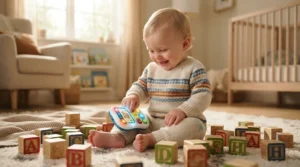
What to Expect: Everyday Life With a Bilingual Talking Toy for Toddlers
Buying a bilingual talking toy for toddlers rarely produces the movie-montage moment parents picture — a toddler suddenly fluent, switching languages mid-sentence like a pint-sized diplomat. The real, everyday experience is quieter and slower, and understanding that upfront prevents the most common source of buyer disappointment.
In week one, expect novelty-driven engagement: toddlers mash every button repeatedly, more interested in cause-and-effect (“I press, it talks”) than in the actual words being spoken. By week three or four, something more interesting starts happening — toddlers begin anticipating specific sounds, reaching for the same button because they remember what it says, which is the first real sign that repetition is doing its job. Reviewers across nearly every product on this list mention some version of “my toddler now says the Spanish word before the English one,” which lines up with what dual-language researchers call receptive-before-productive acquisition — kids understand words in both languages well before they reliably produce them unprompted.
What doesn’t happen, honestly, is rapid fluency from toy exposure alone. Toys are a supplement to conversation, not a replacement for it, and parents expecting a five-minute-a-day toy session to build conversational bilingualism will be disappointed regardless of which product they buy.
Practical Usage Guide: Getting the Most From a Bilingual Toy in the First 30 Days
Getting real value out of any bilingual toy has less to do with the toy itself and more to do with how it’s introduced into daily routines during that critical early adjustment window.
Start by setting the toy to whichever language your toddler hears less at home, not the one you assume is “the point” — if English dominates your household conversation, default electronic toys to Spanish mode first so the toy adds exposure rather than duplicating what’s already happening. Keep sessions short and voluntary in the first week; forcing a toddler to sit through a full 100-word book cycle backfires, while letting them wander off after 90 seconds and return later builds a much stronger long-term association between the toy and enjoyment rather than obligation. For toys with adjustable volume, start lower than feels necessary — toddlers’ hearing is more sensitive than adults assume, and a startled reaction in week one can sour interest for weeks afterward.
A common first-30-days mistake is switching language modes too frequently in a single sitting, hoping to “cover both languages equally.” Toddlers actually benefit more from a full week in one language mode before switching, since that gives enough repeated exposure for words to start sticking rather than blurring together. Finally, resist the urge to correct pronunciation constantly during toy play — let the toy do the talking, and save active correction for conversations, where it lands better anyway.
Real-World Scenarios: Which Toy Fits Your Family?
Different households need genuinely different bilingual toys, and matching the right product to your specific situation matters more than chasing whichever option has the flashiest marketing.
Consider a working parent with a 10-month-old who hears mostly English at daycare and wants more Spanish exposure at home during the evening wind-down: the LeapFrog Learn & Groove Shakin’ Colors Maracas fits perfectly here, since the low attention-span requirement matches a tired baby’s evening energy, and the auto-triggered audio needs zero setup after a long workday. Now picture a stay-at-home parent raising a 3-year-old in a true dual-language household, actively trying to build vocabulary depth rather than simple exposure: the Chicco Bilingual Talking Kitchen or Gufino Bilingual Alphabet Wall Chart serve that goal far better, since both encourage the child to produce language rather than just absorb it passively.
A third, increasingly common scenario: grandparents who speak Spanish fluently but see grandchildren mainly on weekends, wanting a bridge toy that reinforces heritage-language connection during short visits. Here, the Mudpuppy Spanish English ABC Ring Flashcards genuinely shine — they travel well between houses, require no charging or setup, and let a grandparent actively narrate in their native language rather than relying on a device’s automated audio, which builds a personal connection screens simply can’t replicate.
Bilingual Talking Toys vs Traditional Language Learning Alternatives
Bilingual toys don’t exist in a vacuum — they compete for attention with bilingual books, apps, and structured classes, and understanding the tradeoffs helps set realistic expectations for what a toy can and can’t accomplish.
| Approach | Screen Time | Parent Effort Required | Best Age |
|---|---|---|---|
| Bilingual Talking Toys (this list) | None to minimal | Low to moderate | 6 months-4 years |
| Bilingual books (no audio) | None | High | 1-6 years |
| Language-learning apps | High | Low | 3+ years |
| Dual-language preschool/classes | None | High (logistics) | 2.5+ years |
The comparison makes the toy category’s core appeal obvious: it sits in a genuine sweet spot, delivering more consistent bilingual exposure than a busy parent can manage with books alone, without the screen-time tradeoffs that come with apps. That said, toys can’t replicate the structured, socially-embedded language practice a genuine dual-language classroom provides, and parents chasing serious bilingual fluency down the road should treat toys as a bridge into those higher-effort options rather than a permanent substitute for them.
How to Choose a Spanish English Learning Toy for Kids
Picking the right Spanish English learning toy for kids comes down to matching a handful of practical criteria to your child’s age and your household’s actual language habits, rather than defaulting to whichever product has the most five-star reviews.
- Match the toy’s age range to your toddler’s actual developmental stage, not just chronological age — a verbally advanced 14-month-old may be ready for vocabulary-dense books earlier than a typically-developing 20-month-old.
- Check whether the toy defaults to a fixed language or requires manual switching, since households actively balancing two languages daily will want easy, one-touch switching rather than digging through settings menus.
- Prioritize durability specs over feature count — a toy with fewer words that survives two years of toddler handling outperforms a feature-packed toy that breaks in month three.
- Consider whether the toy encourages passive listening or active production, since older toddlers benefit more from formats (pretend play, wall charts with touch buttons) that prompt them to talk back.
- Factor in noise tolerance for your household, especially in apartments or households with a napping younger sibling — volume control is a genuinely underrated spec.
- Weigh price against expected lifespan, not just sticker price — a $50 toy used daily for two years beats a $20 toy abandoned after a month on a true cost-per-use basis.
- Read aggregated review themes, not star averages alone — a 4.5-star toy with recurring durability complaints may be a worse bet than a 4.3-star toy with consistently positive long-term feedback.
Common Mistakes When Buying a Second Language Toy for Early Learners
Even well-researched parents fall into a handful of predictable traps when shopping for a second language toy for early learners, and most of them are avoidable with a little foresight.
The single most common mistake is buying based on age-range labeling alone without checking whether the toy’s actual content matches a toddler’s interests — a 3-year-old who’s outgrown “learning colors” content will ignore a toy technically rated for their age if the vocabulary feels babyish. A close second is assuming more expensive automatically means more educational value; as this list shows, a $15 flashcard set can outperform a $50 electronic toy for certain developmental goals, particularly active language production. Parents also frequently underestimate battery consumption on electronic toys used daily, leading to frustrating mid-play shutdowns that sour a toddler’s association with the toy entirely.
Another overlooked pitfall: buying a toy exclusively in the “minority” language without any English content, assuming this maximizes second-language exposure. In practice, toddlers benefit from bilingual toys that model both languages side by side, since seeing direct translation pairs reinforces vocabulary faster than isolated exposure to only one language. Finally, many parents buy a single bilingual toy expecting it to cover an entire developmental stage, when rotating two or three toys with different formats — audio, print, pretend-play — produces measurably better sustained engagement than any single product alone.
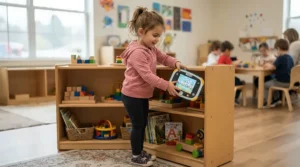
The Science of Bilingual Child Development
Understanding what actually happens inside a bilingual toddler’s developing brain helps explain why certain toy formats work better than others, and why patience matters more than any specific product choice.
Bilingual Child Development: What the Research Actually Shows
Contrary to outdated fears that two languages “confuse” young children, current developmental research consistently finds no harmful effect from simultaneous bilingual exposure. Researchers at the University of Texas at Austin have been directly studying how bilingual children’s brains process competing language systems, examining whether managing two languages strengthens broader cognitive skills like memory and attention. Early findings across this field suggest bilingual children often develop stronger cognitive-flexibility skills than monolingual peers, even as their vocabulary in each individual language may temporarily lag slightly behind — a tradeoff nearly every credible study frames as temporary and ultimately net-positive.
Dual-Language Immersion at Home: Can a Toy Really Deliver It?
Dual-language immersion, in its true educational sense, refers to structured, sustained exposure where a child spends substantial daily time actively communicating in both languages across varied contexts — not just hearing recorded phrases. No toy on this list, however well-designed, replicates that depth of immersion on its own. What bilingual toys realistically contribute is consistent, repeated micro-exposure that reinforces vocabulary a toddler also hears from parents, caregivers, or a dual-language preschool. Toys work best as a supporting layer within a broader immersion strategy — regular conversation, media, and social exposure in both languages — rather than as a standalone immersion solution.
Second Language Acquisition: What Toddlers’ Brains Can (and Can’t) Do
Toddlers possess a genuinely remarkable capacity for second language acquisition, particularly in distinguishing and producing sounds that don’t exist in their dominant language — a flexibility that measurably narrows as children age. A frequently cited academic overview of bilingual development research, published through the National Institutes of Health’s PubMed database, describes how systematic differences between bilingual and monolingual children’s development appear consistently across memory, attention, and executive-function measures. What this means practically for toy shopping: earlier, gentler exposure through toys and daily interaction genuinely does capitalize on a real developmental window, even though no toy alone can substitute for the sustained human interaction that drives most language acquisition.
Long-Term Cost & Value: Is a Bilingual Toy Worth It?
Running the numbers on cost-per-use reveals a more nuanced value picture than sticker price alone suggests, and it’s worth walking through before assuming the cheapest option is automatically the smartest one.
| Toy | Price Range | Typical Useful Lifespan | Rough Cost-Per-Month |
|---|---|---|---|
| LeapFrog Learn & Groove Shakin’ Colors Maracas | Under $20 | 6-12 months | Around $2-$3 |
| Mudpuppy Spanish English ABC Ring Flashcards | Under $15 | 2-3+ years | Under $1 |
| Fisher-Price Smart Stages Tablet | $20-$30 range | 18-24 months | Around $1-$1.50 |
| Chicco Bilingual Talking Kitchen | $50-$60 range | 2-3+ years | Around $1.50-$2 |
The analysis here favors patience over impulse: the Mudpuppy Spanish English ABC Ring Flashcards deliver the lowest true cost-per-month thanks to sheer durability and a wide usable age range, while the Chicco Bilingual Talking Kitchen‘s higher upfront price gets diluted across years of pretend play rather than months. The weakest long-term value, ironically, tends to come from mid-priced electronic toys with narrow age windows — spending $25-$30 on something outgrown in under a year rarely beats a cheaper, longer-lasting alternative.
Problem → Solution: Fixing Common Bilingual-Toy Frustrations
Most complaints about bilingual toys trace back to a handful of fixable issues rather than fundamental product flaws, and a few small adjustments usually solve them.
Problem: My toddler ignores the bilingual audio and just presses buttons randomly. Solution: this is developmentally normal in the first few weeks — reduce the number of active buttons if the toy allows it, or briefly cover unused buttons with your hand to narrow the toddler’s focus onto one sound at a time.
Problem: The toy only seems to reinforce English, even in “bilingual” mode. Solution: check whether the toy defaults back to English after each power cycle — many electronic toys reset the language setting when turned off, requiring you to manually reselect the second language every session.
Problem: My toddler seems to prefer one language’s audio and avoids the other. Solution: this often reflects which language they hear more elsewhere in daily life — deliberately using the toy’s under-exposed language during high-engagement moments (right after a nap, during a favorite activity) helps rebalance the association.
Problem: The toy’s pronunciation sounds robotic or accented in a way that worries me. Solution: pair electronic toy sessions with your own narration in your natural accent — toddlers cross-reference multiple audio sources naturally, and your voice will anchor pronunciation more than any single toy.
Buyer’s Decision Framework
If you only remember one section from this guide, make it this simple decision framework for narrowing seven options down to one.
If your toddler is under 12 months, choose a sensory toy like the LeapFrog Learn & Groove Shakin’ Colors Maracas because attention spans at this age favor short, auto-triggered audio over anything requiring sustained focus. If you want zero screens and maximum durability, choose the Mudpuppy Spanish English ABC Ring Flashcards because print-based, adult-narrated formats build stronger retention than passive audio at any age. If your household is actively raising a bilingual child and wants a specialist-built product, choose the Gufino Bilingual Alphabet Wall Chart because purpose-built bilingual brands tend to sequence vocabulary more thoughtfully. If your toddler is 2 or older and shows strong imaginative-play interest, choose the Chicco Bilingual Talking Kitchen because pretend play uniquely encourages toddlers to produce language rather than just absorb it.
Features That Actually Matter (And Those That Don’t)
Marketing copy on bilingual toys loves to lead with flashy feature counts, but not every listed spec meaningfully affects a toddler’s actual language exposure.
Features that genuinely matter: one-touch language switching (reduces friction enough that parents actually use it consistently), adjustable volume (directly affects household tolerance and toddler comfort), and durable, chewable-safe materials (determines whether the toy survives long enough to matter at all). Features that sound impressive but rarely move the needle: total word counts above roughly 150 (toddlers engage repeatedly with a smaller set far more than they ever explore a massive one), flashy light shows unrelated to the language content (they capture attention but compete with, rather than reinforce, the audio), and “app-connected” bilingual toys that require a parent’s phone (added complexity that measurably reduces how often busy parents actually use the feature).
The honest takeaway: prioritize toys with fewer, better-executed features over ones bragging about feature counts on the box. A toy with clean audio, comfortable volume control, and honest durability will out-perform a spec-stuffed competitor in actual daily use almost every time.
Frequently Asked Questions
❓ What age should a bilingual toddler start using a language learning toy?
❓ Do bilingual toys actually make toddlers fluent in a second language?
❓ Is it better to buy an electronic bilingual toy or bilingual flashcards?
❓ How do I know if a language learning toy for bilingual toddlers is worth the price?
❓ Can bilingual toys help kids who aren't currently in a bilingual household?
Conclusion
There’s no single “best” language learning toy for bilingual toddlers — there’s only the best match for your specific toddler’s age, your household’s language balance, and how much hands-on involvement you want from a toy versus needing it to run independently. The LeapFrog Learn & Groove Shakin’ Colors Maracas and Mudpuppy Spanish English ABC Ring Flashcards make the most sense as budget-friendly entry points, the Gufino Bilingual Alphabet Wall Chart and Fisher-Price Laugh & Learn Smart Stages Tablet serve as capable mid-range workhorses, and the VTech Magic Star Learning Table or Chicco Bilingual Talking Kitchen reward families ready to invest in a bigger, longer-lasting centerpiece.
What matters more than any individual purchase, as child-development researchers at UConn’s early-childhood program consistently emphasize, is consistent daily exposure paired with genuine conversation — the toy is the supporting cast, not the star. Pick the product that fits your family’s actual routine, use it consistently for a few months before judging results, and don’t be afraid to rotate in a second toy from this list once the novelty of the first one fades.
Recommended for You
- Smart Building Blocks vs Traditional Blocks: 7 Honest Picks (2026)
- 7 Best Coding Toy for Kids Ages 4-6 Picks in 2026
- Parental Control Tablet vs Regular Tablet for Toddlers: 7 Picks 2026
Disclaimer: This article contains affiliate links. As an Amazon Associate, I earn from qualifying purchases. If you purchase products through these links, we may earn a small commission at no additional cost to you.
✨ Found this helpful? Share it with your friends! 💬🤗
