
In This Article
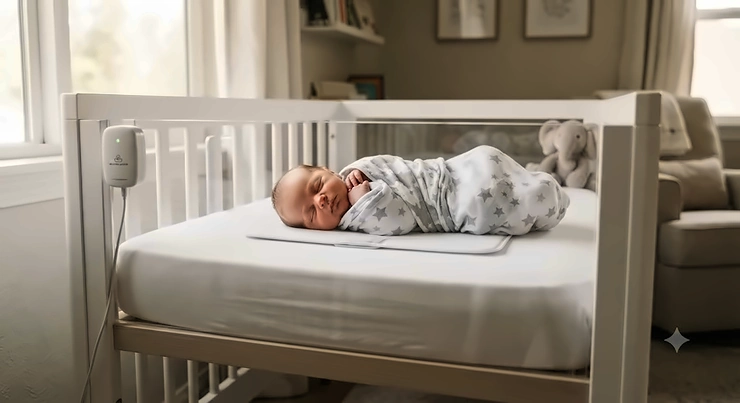
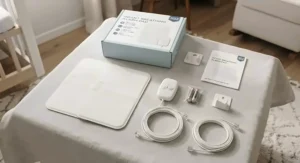
Three a.m., and you’re standing over the crib again, one hand hovering near your baby’s chest, waiting for it to rise. If that scene sounds familiar, you’re not alone, and you’re not overreacting — new parents have been doing this exact hallway shuffle since cribs were invented. An infant breathing alarm pad is a device placed under a baby’s crib mattress that senses movement associated with breathing and sounds an alert if that movement stops or slows for a set period, usually 15 to 20 seconds. It doesn’t touch the baby; it works quietly underneath, watching for the tiny mechanical signature of a breathing chest. That’s the appeal, and also the limit of what it can promise. This guide breaks down seven real, currently available products so you can figure out which infant breathing alarm pad actually fits your nursery, your budget, and your particular flavor of new-parent anxiety.
Before diving into specific models, it helps to know what these devices are — and just as importantly, what they are not. According to the American Academy of Pediatrics’ safe sleep guidance, home monitors are considered wellness devices, not medical interventions, and they haven’t been shown to lower SIDS risk on their own. That’s not a knock against the technology — it’s context. A monitor can catch a real event and buy you critical seconds, but it works best as a backup to safe sleep basics, not a replacement for them. With that framing settled, let’s get into the actual hardware: dual sensor pads, wearable clips, pulse oximetry socks, and camera systems that all promise the same thing — knowing sooner.
Quick Comparison Table
| Product | Sensing Method | Price Range | Best For |
|---|---|---|---|
| Babysense 7 | Dual under-mattress pads | $70-90 range | Budget-conscious, WiFi-free homes |
| Owlet Dream Sock | FDA-cleared pulse oximetry | $280-320 range | Parents wanting medical-grade data |
| Snuza Hero SE | Clip-on abdominal sensor | $60-80 range | Travel and grandparents’ houses |
| Nanit Pro | Camera-based breathing tracking | $250-300 range | Parents who also want video |
A quick scan of this table tells a story about tradeoffs more than winners. The Babysense 7 and Snuza Hero SE sit at the affordable end because they do one job — detect movement — without a camera, app subscription, or WiFi dependency, which also means fewer points of failure in a power outage. The Owlet Dream Sock and Nanit Pro cost roughly three to four times as much, but you’re paying for a completely different tier of data: actual oxygen saturation numbers in one case, and full video plus sleep analytics in the other. Neither approach is objectively “better” — it depends on whether you want a simple alarm system or a dashboard you can obsess over during nap time.
💬 Already have a favorite in mind? Scroll down for the full breakdown — help other tired parents by sharing whichever pick works for you!😊
Top 7 Infant Breathing Alarm Pads & Monitors: Expert Analysis
1. Babysense 7 — dual-pad coverage with zero WiFi risk
The standout here is coverage: two separate sensor pads span the width of a standard crib mattress, so as your baby starts rolling and scooting around month four or five, you’re not stuck with a monitor that only “sees” the center of the bed. Specs-wise, the system alerts if it detects no movement for 20 seconds or if micro-movements drop below roughly 10 per minute, and it runs entirely on AA batteries with no WiFi or Bluetooth handshake required — which matters if your nursery is in a dead zone or you simply don’t want another device pinging your router at 2 a.m. Based on the spec comparison, this is the pick for parents who want a “set it and forget it” pad rather than an app to check. Reviewers consistently note that the two-pad design cuts down on false alarms compared to single-pad competitors, though a few mention the unit requires a firm surface — a plywood board under a slatted crib base — to register movement accurately.
Pros:
- ✅ Two pads give full-mattress coverage as baby grows
- ✅ No WiFi or subscription required to function
- ✅ Simple one-button setup with AA battery power
Cons:
- ❌ No adjustable sensitivity dial for oversensitive rooms
- ❌ Requires a firm, non-memory-foam mattress base
At around $70-90, the Babysense 7 delivers strong value for parents who want reliable movement detection without paying for smart features they won’t use.

2. Angelcare AC527 — pad monitoring plus live video in one unit
What sets the Angelcare AC527 apart is that it folds a movement sensor pad, a 5-inch color video screen, and room temperature tracking into a single parent unit, so you’re not juggling two separate gadgets on the nightstand. The under-mattress pad uses four adjustable sensitivity levels and Bluetooth Low Energy to communicate with the base, sounding an alarm after 20 seconds of undetected movement. What most buyers overlook about this model is that the sensitivity dial actually matters a lot in practice — set it too high in a house with a furnace that rattles the floor, and you’ll get phantom alerts; dial it in correctly, and the false-alarm rate drops noticeably. Aggregated customer feedback frequently praises the video clarity, with several reviewers specifically noting they can watch their baby’s chest rise and fall on-screen, which adds a layer of reassurance the alarm alone doesn’t provide.
Pros:
- ✅ Combines movement sensing with 5-inch video display
- ✅ Four sensitivity levels adjust to your mattress type
- ✅ Non-contact pad means nothing touches the baby
Cons:
- ❌ Higher price point than pad-only competitors
- ❌ Some users report occasional Bluetooth interference
Priced in the $100-150 range, the Angelcare AC527 suits parents who specifically want the pad-plus-camera combination instead of buying two separate devices.
3. Snuza Hero SE — vibration wake-up before the alarm even sounds
The clever engineering choice in the Snuza Hero SE is the staged alert: rather than jumping straight to a loud alarm, it clips onto the diaper and gently vibrates after 15 seconds of no detected abdominal movement, attempting to rouse the baby naturally before escalating to an audible alarm five seconds later. That two-step sequence, using direct-touch sensor technology against the abdomen, is designed to reduce unnecessary 2 a.m. panic for movement blips that resolve on their own. Here’s what to weigh: because it clips to the diaper rather than sitting under the mattress, it travels well for trips to grandma’s house, but it also means re-clipping it securely at every single diaper change — miss that step and you’ve got a monitor doing nothing. Reviewers repeatedly single out the portability and the vibration feature as reasons they’d recommend it over stationary pad systems, particularly for co-sleeping or frequent travel.
Pros:
- ✅ Vibration alert attempts wake-up before audible alarm
- ✅ Fully portable — no pad, cords, or WiFi needed
- ✅ Made from medical-grade, skin-safe materials
Cons:
- ❌ Must be reclipped correctly at every diaper change
- ❌ No app or historical data logging available
At around $60-80, the Snuza Hero SE is a smart pick for parents who prioritize portability and a gentler first-response alert.
4. MonBaby Smart Button — most affordable smart wearable on this list
The MonBaby Smart Button snaps onto any onesie or pajama snap point and streams breathing-related movement and body-position data to a smartphone roughly six times per second using a 14-bit accelerometer — reasonably sophisticated sensing packed into something the size of a large coin. It also tracks sleep position, flagging when baby rolls onto the stomach, which lines up with the back-sleeping guidance pediatric groups recommend. What most buyers overlook is that Bluetooth range is genuinely short; MonBaby’s own guidance recommends keeping your phone in the same room, so this isn’t the monitor for parents planning to putter around downstairs during nap time. Aggregated reviews describe it as an accessible entry point into smart monitoring, though several users flag the coin-cell battery — lasting roughly two months — as an ongoing cost that adds up over a year of nightly use.
Pros:
- ✅ Most budget-friendly smart wearable option here
- ✅ Universal snap design fits nearly any outfit
- ✅ Tracks both breathing movement and rollover position
Cons:
- ❌ Bluetooth range is short — same-room use only
- ❌ Coin-cell batteries add ongoing replacement cost
Around $90-100, the MonBaby Smart Button works best as a budget-friendly first step into app-connected monitoring.
5. Sense-U Pro — clip-on tracker with real sleep-stage data
The Sense-U Pro clips onto the diaper or waistband and layers three alert types into one device: breathing movement, rollover, and overheating, triggering a gentle on-device vibration first and an audible plus app alert if the condition persists. Based on the spec comparison, the standout is the rechargeable battery rated for roughly seven days per charge, which beats coin-cell wearables on long-term cost even though the upfront price is similar. What the spec sheet won’t tell you, but reviewers note, is that the app’s sleep-cycle reporting — deep versus light sleep, wake times — turns a safety device into something parents actually check during the day out of curiosity, not just anxiety. Aggregated review sentiment is largely positive on ease of setup and low false-alarm rates, though a handful of users mention the app occasionally lags behind the physical device’s vibration alert by a few seconds.
Pros:
- ✅ Tracks breathing, rollover, and temperature in one device
- ✅ Rechargeable battery lasts about 7 days per charge
- ✅ Sleep-stage reporting adds useful daytime insight
Cons:
- ❌ App notifications can lag slightly behind the device
- ❌ Full sleep analytics require the companion app
In the $70-100 range, the Sense-U Pro is a strong middle-ground choice for parents who want more data without jumping to premium pricing.

6. Owlet Dream Sock — the only FDA-cleared pulse oximetry sock
This is the category outlier, and deliberately so. The Owlet Dream Sock wraps around the foot and uses pulse oximetry — the same core technology as a hospital finger clip — to track live oxygen saturation and pulse rate rather than inferring status from movement alone. It received FDA De Novo clearance in late 2023 as an over-the-counter device for healthy infants aged one to 18 months, following clinical testing that demonstrated accuracy within about 3% of gold-standard arterial blood gas measurements across skin tones. What most buyers overlook is that this clearance covers healthy infants specifically, not high-risk medical monitoring, which is a distinct, prescription-only category. Reviewers consistently describe the base station’s color-coded alerts as reassuring at a glance, though some note that vigorous kicking can occasionally trigger false low-oxygen readings until the sock resettles.
Pros:
- ✅ FDA-cleared pulse oximetry — actual oxygen readings
- ✅ No monthly subscription required for core features
- ✅ App shows historical trends, not just live alerts
Cons:
- ❌ Highest price point among wearables in this guide
- ❌ Occasional false alerts during vigorous movement
At around $280-320, the Owlet Dream Sock justifies its premium price for parents who specifically want clinical-grade vital-sign data rather than movement inference.
7. Nanit Pro — sensor-free breathing tracking through a camera
Rather than putting anything on the baby, the Nanit Pro reads breathing motion visually: a patterned swaddle, sleep sack, or pajama in the Breathing Wear line gives the overhead 1080p camera a fabric grid to track as the chest rises and falls, no sensor pad or wearable clip involved. Core features — live video, sound and motion alerts, two-way audio, and the breathing motion tracking itself — work without a paid plan, while the optional Nanit Insights subscription unlocks sleep-stage analytics and extended video history for roughly $100-170 annually. On paper this means you’re getting a full nursery camera and a breathing monitor in one wall-mounted unit, which simplifies the nightstand considerably. Aggregated parent feedback highlights the video quality and the “nothing touching baby” appeal, while some reviewers note that breathing tracking specifically requires buying into the Breathing Wear clothing line as your baby outgrows the included starter band.
Pros:
- ✅ No sensors or wearables touch the baby at all
- ✅ Full HD video included with no forced subscription
- ✅ Breathing tracking scales with baby via Breathing Wear
Cons:
- ❌ Continued breathing tracking requires buying clothing
- ❌ Highest total cost if you add the Insights plan
Priced around $250-300 for the camera, the Nanit Pro appeals most to parents who want video monitoring and breathing tracking merged into a single contactless system.
Practical Usage Guide: Getting Your Monitor Set Up Right
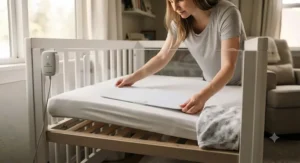
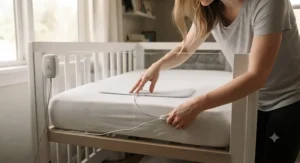
Most false alarms trace back to installation, not defective hardware. For any pad-based system like the Babysense 7 or Angelcare AC527, place the sensor directly under the mattress on a firm, flat surface — if your crib has a spring base or slats, slide a rigid board (roughly 12×12 inches, a quarter-inch thick) between the base and the pad first, since a soft or bouncy surface muffles the tiny movements the sensor needs to detect. Test the alarm before the first night by patting the mattress corner twice and confirming the unit responds within about eight seconds. For clip-on wearables like the Snuza Hero SE or MonBaby Smart Button, reattach the clip at every diaper change — this is the single most common reason parents report “it stopped working,” when really it just came loose. In the first 30 days, expect some false alarms as you dial in sensitivity; most systems with adjustable levels should start at a middle setting and move up only if you’re getting alerts during obviously normal sleep. Replace batteries proactively rather than waiting for a low-battery chirp at 3 a.m., and keep the crib free of extra bedding, which both AAP guidance and monitor manufacturers agree can interfere with sensor accuracy and sleep safety alike.
Ready to stop guessing and start sleeping? Compare current prices on today’s top picks before you check out.
Real-World Scenarios: Which Monitor Fits Your Situation
Consider a first-time parent in a small apartment with thin walls and a baby who startles at every phone notification — a pad-based, WiFi-free system like the Babysense 7 removes app pings entirely while still watching the mattress. Now picture a family that travels often to visit grandparents in another state; the Snuza Hero SE or MonBaby Smart Button pack into a diaper bag with zero setup beyond clipping on, unlike a mounted camera system that needs to be reinstalled each trip. Finally, think about parents of a preemie coming home after a NICU stay, where a pediatrician has specifically discussed at-home monitoring — this is the scenario where the Owlet Dream Sock‘s FDA-cleared pulse oximetry data genuinely earns its higher price, since it’s tracking a physiological measurement a doctor can actually interpret, rather than movement alone. None of these scenarios involve a monitor preventing SIDS outright; each one is about matching the tool to the household’s actual daily friction points.
Buyer’s Decision Framework
If budget is your top constraint, choose a single-purpose pad or clip-on wearable, because you’re paying only for the sensing hardware and not a camera, subscription, or app ecosystem. If you specifically want a number — oxygen saturation, pulse rate — rather than an alert, choose the Owlet Dream Sock, since it’s the only device here with FDA clearance for that kind of readout in healthy infants. If you already want a video baby monitor and would rather not buy two separate devices, choose a camera-based option like the Nanit Pro, which folds breathing tracking into the camera you were going to purchase anyway. And if your baby travels frequently between homes, prioritize portability — the Snuza Hero SE and MonBaby Smart Button both pack flat with no mattress installation required.
How to Choose an Infant Breathing Alarm Pad
Picking the right infant breathing alarm pad comes down to a handful of concrete decision points rather than marketing claims:
- Sensing method — decide whether you want a movement and breathing sensor placed under the mattress, a clip-on wearable, or a camera-based system, since each has different setup requirements and failure modes.
- Alert type — some units vibrate first before sounding an alarm, which can prevent unnecessary full-volume wake-ups for brief, harmless pauses.
- Battery and power — coin-cell wearables are cheap upfront but add ongoing cost, while rechargeable units cost more initially but less over a year of nightly use.
- App dependency — decide whether you want historical data and remote checking, or prefer a standalone alarm with no smartphone required.
- Mattress compatibility — pad-based systems generally need a firm surface, and most manufacturers advise against memory foam.
- Regulatory status — check whether a product carries FDA clearance for medical-grade claims, or is sold strictly as a consumer wellness device.
- Total cost over time — factor in batteries, replacement wearable sizes, and any optional subscription before comparing sticker prices alone.
Common Mistakes When Buying an Infant Breathing Alarm Pad
The most frequent misstep is assuming a higher price automatically means better breathing pattern analysis — in reality, a $70 dual-pad system and a $300 pulse oximetry sock are answering two different questions, not competing on the same scale. Another common error is buying a pad-based monitor for a crib with a soft or slatted base and skipping the rigid board insert, which leads to a frustrating string of false negatives or hyper-sensitive alarms. Parents also sometimes buy a device explicitly marketed as “SIDS prevention,” which, per AAP and FDA guidance, no consumer monitor is scientifically proven to deliver — vet any bold claim against that reality before paying a premium for it. Finally, underestimating ongoing costs is common with coin-cell wearables; a device that looks cheaper at checkout can cost more over 18 months once you tally battery replacements.
Infant Breathing Alarm Pad vs Wearable Breathing Monitors
Under-mattress pads like the Babysense 7 and Angelcare AC527 share one core advantage: nothing touches the baby, so there’s no clip to reattach, no fabric to outgrow, and no skin contact to worry about with sensitive newborns. Their tradeoff is placement rigidity — the pad has to sit correctly under a firm mattress, and it can’t follow baby into a stroller or car seat. Wearable options like the Snuza Hero SE, MonBaby Smart Button, and Sense-U Pro flip that equation: they travel anywhere the baby goes and tend to respond faster to abdominal movement specifically, but they require consistent reattachment and, in some cases, sizing changes as baby grows. For a stationary crib in a single nursery, a pad often wins on convenience; for families who travel, nap on the go, or want monitoring at grandma’s house without hauling hardware, a wearable typically makes more practical sense.
What to Expect: Real-World Performance
On paper, every device in this guide claims high accuracy, but real-world use tells a more textured story. Movement-based pads and clips are excellent at flagging the absence of motion but can occasionally misread a very still, deep-sleeping baby as a false alarm — this is a known quirk of vital signs monitoring based on movement rather than a hospital-grade signal, and it’s why sensitivity calibration in the first week matters so much. Pulse oximetry, as used in the Owlet Dream Sock, gives a more direct physiological reading but is more sensitive to poor sock fit or vigorous kicking, which can create motion artifact. Camera-based breathing pattern analysis, as in the Nanit Pro, depends on consistent lighting and an unobstructed view of the torso, so a baby buried under loose bedding (which safe-sleep guidance discourages anyway) can reduce tracking accuracy. In short: no single sensing method is flawless, and understanding each one’s specific blind spot helps set realistic expectations before the first night.
Safety, Regulations & Compliance: What AAP and FDA Say
This is worth stating plainly, because it shapes how to use any of these products responsibly. The American Academy of Pediatrics’ 2022 policy statement explicitly recommends against using home cardiorespiratory monitors as a SIDS-prevention strategy, based on decades of epidemiological research that found no measurable reduction in incidence tied to monitor use. The AAP also notes that most consumer wearable heart-rate and pulse-oximetry devices are classified by the FDA as wellness products rather than medical devices — the Owlet Dream Sock is a notable exception, having earned actual FDA De Novo clearance for its specific oxygen and pulse-rate readings in healthy infants. Practically, this means safe sleep fundamentals — back sleeping, a firm mattress, no loose bedding or bumpers, room-sharing without bed-sharing — remain the primary, evidence-backed way to reduce risk, and a monitor should be treated as a helpful backup rather than a substitute. The Consumer Product Safety Commission also maintains recall and safety information worth checking before buying any secondhand nursery device.
Long-Term Cost & Maintenance
Sticker price only tells part of the financial story. Coin-cell wearables like the MonBaby Smart Button typically need a new battery every one to two months, which adds up to roughly $30-50 a year in replacements alone. Rechargeable clip-ons such as the Sense-U Pro avoid that recurring cost but eventually need a full unit replacement once the internal battery degrades, usually somewhere past the two-year mark of nightly charging. Camera systems like the Nanit Pro carry the widest cost range: the hardware itself is a one-time purchase, but unlocking full breathing pattern analysis and sleep-stage data long-term may mean an annual subscription plus periodically buying larger Breathing Wear sizes as baby grows. Pad-based systems running on standard AA batteries, like the Babysense 7, tend to be the cheapest to maintain over a full year of use, since AA batteries are inexpensive and widely available compared to specialty coin cells or subscription fees.
Frequently Asked Questions
❓ What is the best infant breathing alarm pad for a newborn?
❓ How much does an infant breathing alarm pad cost?
❓ Do breathing alarm pads work with memory foam mattresses?
❓ Are baby breathing monitors covered by FSA or HSA funds?
❓ What's the difference between a breathing alarm pad and a wearable monitor?
Conclusion
There’s no single “correct” infant breathing alarm pad — there’s the one that matches how your household actually operates. If you want the simplest, most affordable setup with full crib coverage, the Babysense 7 or Angelcare AC527 cover that ground well. If travel and portability matter more than a mounted system, the Snuza Hero SE and MonBaby Smart Button go wherever the baby goes. Parents wanting genuine clinical-grade data should look at the Owlet Dream Sock, the only FDA-cleared option in this lineup, while those who already want a nursery camera can fold breathing tracking into the Nanit Pro instead of buying two devices. Whichever you choose, remember what the research actually supports: safe sleep practices — back sleeping, a firm mattress, an uncluttered crib — remain the foundation, and any monitor here is a supporting tool, not a replacement for them. Talk to your pediatrician if your baby has specific medical needs that might call for prescription-grade monitoring instead of a consumer device.
✨ Don’t Miss These Exclusive Deals!
🔍 Take your nursery safety setup to the next level with these carefully compared picks. Click on any highlighted product above to check current pricing and availability, and rest a little easier tonight knowing you made an informed choice for your family!
Recommended for You
- Breathing Monitor Mattress Pad: 7 Picks That Actually Deliver (2026)
- Climate Control Crib Mattress: 7 Cooler Picks for 2026 (No More Sweaty Nights)
- 7 Best Breathable Foam Crib Mattress Picks for Safer Sleep (2026)
Disclaimer: This article contains affiliate links. As an Amazon Associate, I earn from qualifying purchases. If you purchase products through these links, we may earn a small commission at no additional cost to you.
✨ Found this helpful? Share it with your friends! 💬🤗
