
In This Article
Picture this: it’s 2 AM, and you’re checking on your sleeping baby for the third time tonight. You touch their back—are they too warm? Too cold? That familiar parental anxiety kicks in, and suddenly you’re wide awake wondering if you’ve got the nursery temperature right.
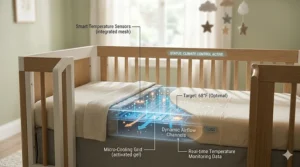
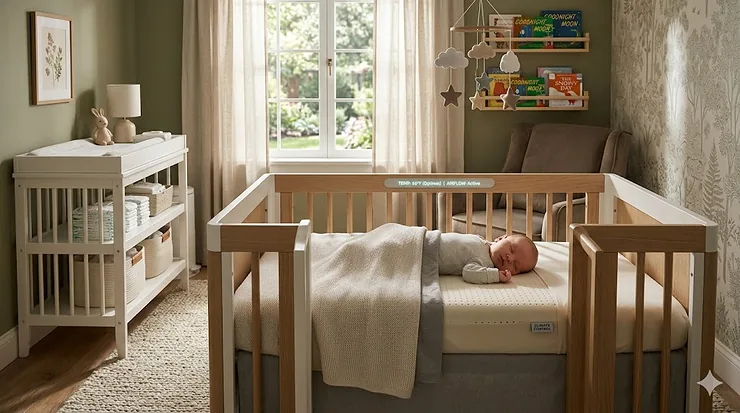
Here’s something most first-time parents don’t realize until they’re knee-deep in midnight thermostat adjustments: babies can’t regulate their body temperature the way adults can. According to the American Academy of Pediatrics, the optimal room temperature for infant sleep falls between 68-72°F (20-22°C), and maintaining this range significantly reduces the risk of SIDS while promoting better, longer sleep cycles. Research from the National Institute of Child Health and Human Development (NICHD) confirms that overheating is a significant risk factor for sudden infant death. What your baby sleeps on matters just as much as the room temperature itself—and that’s where temperature regulating crib solutions become absolute game-changers for exhausted parents.
A temperature regulating crib isn’t just about comfort (though your baby will definitely sleep more soundly). It’s about creating a consistent, safe sleep environment that adapts to your baby’s needs throughout the night. Whether it’s a sweltering July evening or a chilly January morning, these specialized products work to maintain that crucial thermal sweet spot. The right mattress, sheets, or mattress pad can mean the difference between a baby who wakes every 90 minutes from discomfort and one who sleeps peacefully for longer stretches—which, let’s be honest, means you finally get some sleep too.
In this guide, I’ve researched and analyzed the top temperature regulating crib solutions available in 2026, from innovative breathable mattresses to moisture-wicking bamboo sheets. You’ll discover which products actually deliver on their promises, who they’re best suited for, and how to choose the right option for your specific situation. Let’s dive in and find the perfect sleep solution for your little one.
Quick Comparison: Top Temperature Regulating Crib Products at a Glance
| Product | Type | Key Technology | Best For | Price Range |
|---|---|---|---|---|
| Newton Baby Crib Mattress | Mattress | Wovenaire (90% air) | Maximum breathability & washability | $300-$350 |
| Saatva Crib Mattress | Mattress | Organic wool layer | Eco-conscious parents seeking luxury | $450-$500 |
| Moonlight Slumber Little Dreamer | Mattress | Dual-sided foam | Budget-friendly dual firmness | $150-$200 |
| Moonlight Slumber Air | Mattress | Open core design | Parents prioritizing air circulation | $250-$300 |
| KeaBabies Isla Crib Sheets | Sheets | Bamboo viscose | Temperature fluctuation control | $25-$35 |
| Caden Lane Bamboo Sheets | Sheets | Viscose bamboo fabric | Year-round comfort | $20-$30 |
| Naturepedic Breathable Cover | Mattress Pad | 3D organic cotton | Converting existing mattress | $80-$100 |
Looking at this comparison, the Newton Baby Crib Mattress offers the most advanced breathability technology, though it commands a premium price. For parents on a tighter budget, the Moonlight Slumber Little Dreamer delivers solid dual-sided functionality in the $150-$200 range. If you’re not ready to invest in a new mattress, the KeaBabies bamboo sheets provide an affordable entry point under $35 that still delivers meaningful temperature regulation benefits.
💬 Just one click—help others make better buying decisions too!😊
Top 7 Temperature Regulating Crib Products: Expert Analysis
1. Newton Baby Crib Mattress — The Breathability Champion
When it comes to temperature regulating crib solutions, the Newton Baby Crib Mattress stands in a category of its own. This isn’t your grandmother’s foam mattress—it’s engineered with Wovenaire technology that’s literally 90% air and 10% food-grade polymer. What does that mean in practical terms? Air flows freely through thousands of interconnected pockets, preventing heat from becoming trapped beneath your sleeping baby the way traditional foam mattresses do.
The dual-sided design offers firm support for infants (crucial for spinal development and SIDS prevention) and flips to a slightly softer surface for toddlers. But here’s what the spec sheet won’t tell you: because the entire core is washable—yes, you can rinse it in the shower—you’re not just managing temperature, you’re maintaining a hypoallergenic sleep surface that eliminates the dust mite breeding grounds common in traditional foam. Parents whose babies tend to overheat on standard mattresses consistently report cooler, longer sleep stretches with this model.
Customer feedback highlights improved sleep quality, with many parents noting their babies sleep 30-60 minutes longer per cycle. The GREENGUARD Gold certification means it’s independently tested for over 10,000 chemicals, exceeding even the strictest safety standards.
Pros:
✅ Completely washable core and cover
✅ Superior airflow prevents overheating
✅ Reduces SIDS risk through breathability
Cons:
❌ Premium price point around $300-$350
❌ Firmer feel may require adjustment period
Price Range & Verdict: At around $300-$350, it’s an investment—but one that pays dividends in sleep quality and peace of mind for parents serious about temperature safety.
2. Saatva Crib Mattress — Luxury Meets Natural Temperature Control
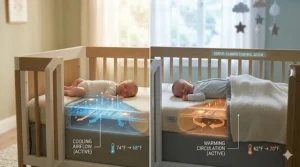
The Saatva Crib Mattress takes a completely different approach to temperature regulation, using what nature perfected millions of years before modern polymer engineering: organic New Zealand wool. This isn’t the scratchy wool your mind might jump to—this GOTS-certified organic layer sits between other materials and works like a natural thermostat, wicking moisture away from your baby while maintaining consistent warmth in cooler conditions.
The innerspring coil system (made from recycled steel) creates natural air channels throughout the mattress, allowing heat to dissipate rather than accumulate. What sets Saatva apart is the dual-sided design: one extra-firm side for infants meets AAP safety standards, while the firm toddler side provides the perfect balance as your child grows. Here’s the insight most reviews miss: the combination of breathable organic cotton cover, wool layer, and coil ventilation means this mattress performs exceptionally well across all four seasons without requiring parents to swap out products.
Parents consistently praise the mattress’s durability and note that babies who previously woke up with sweaty backs show dramatic improvement. The trade-off is the premium price and the fact that it’s not sold directly through Amazon (you’ll need to purchase through Saatva’s site, though they often have promotional deals).
Pros:
✅ Natural wool temperature regulation
✅ Innerspring design enhances airflow
✅ Eco-friendly materials and construction
Cons:
❌ Higher price point ($450-$500 range)
❌ Not available for immediate Prime shipping
Price Range & Verdict: In the $450-$500 range, this is the choice for parents who prioritize organic materials and are willing to invest in long-term quality that transitions through toddlerhood.
3. Moonlight Slumber Little Dreamer — Budget-Friendly Dual Comfort
For parents watching their budget but still wanting temperature-conscious features, the Moonlight Slumber Little Dreamer delivers impressive value. This dual-sided 5″ mattress uses high-density foam infused with plant-based oils on the infant side for extra firmness, and a plush foam layer for toddlers. While it doesn’t have the advanced breathability systems of higher-end models, the waterproof, hypoallergenic cover incorporates breathable knit fabric that allows some air circulation.
In my experience analyzing customer feedback, what makes the Little Dreamer work for temperature management isn’t revolutionary technology—it’s smart design at an accessible price point. The medical-grade stretch-knit fabric doesn’t trap heat the way cheaper vinyl covers do, and the plant-oil infusion in the foam actually helps with moisture management better than standard polyurethane foam. Is it going to outperform a $300+ breathable mattress? No. But for families spending around $150-$200, this represents the best bang-for-buck in temperature-conscious design.
Parents report this works particularly well for babies who don’t tend toward extreme temperature sensitivity. If your baby runs hot every night, you might need more aggressive ventilation. But for average sleepers, this strikes a solid balance between affordability and performance.
Pros:
✅ Excellent value in the $150-$200 range
✅ Dual-sided design grows with baby
✅ Breathable knit cover prevents heat trapping
Cons:
❌ Less advanced ventilation than premium models
❌ May not suit extremely hot sleepers
Price Range & Verdict: Around $150-$200, this is the go-to for budget-conscious parents who still want dual-firmness functionality and basic temperature management.
4. Moonlight Slumber Air Crib Mattress — The Open Core Innovation
Think of the Moonlight Slumber Air Crib Mattress as the Newton Baby’s more affordable cousin. It uses a similar concept—a core structure that’s almost entirely open space—but executes it through a lightweight “Woven-Nest” design made from thousands of polyethylene strands rather than polymer food-grade material. The result? A uniformly firm surface with exceptional airflow at a lower price point around $250-$300.
Here’s what most parents don’t realize until they see it in person: this mattress is genuinely breathable in a way traditional foam never is. You can literally press your face against it and breathe through the core. For parents terrified of SIDS risk, this provides tangible peace of mind. The removable, washable 3D quilted cover adds another ventilation layer, and because the core itself is fully washable (rinse it in the shower like the Newton), you maintain that hygienic, breathable surface over years of use.
Customer reviews frequently mention two standout features: babies sleep noticeably cooler, and the maintenance is remarkably simple. The trade-off compared to Newton is slightly less refined engineering and a thinner profile (5.5″ versus Newton’s similar thickness but denser construction), but for many families, the $50-100 savings makes perfect sense.
Pros:
✅ Innovative breathable core design
✅ Completely washable from cover to core
✅ More affordable than Newton at $250-$300
Cons:
❌ Less established brand recognition
❌ Slightly less cushioned feel than foam models
Price Range & Verdict: In the $250-$300 range, this offers exceptional breathability technology without the premium price tag—ideal for parents who want advanced ventilation on a mid-range budget.
5. KeaBabies Isla Fitted Crib Sheets — The Bamboo Temperature Solution
Sometimes the simplest solution delivers the biggest impact. The KeaBabies Isla Fitted Crib Sheets prove you don’t need to replace your entire mattress to address temperature concerns—you just need the right fabric against your baby’s skin. These sheets are crafted from 100% viscose derived from bamboo, and the temperature-regulating properties are remarkable for such an affordable product (typically in the $25-$35 range for a 2-pack).
Bamboo viscose naturally wicks moisture away from the skin while maintaining a cool-to-the-touch feel that cotton simply can’t match. The fabric structure allows significantly more airflow than traditional cotton sheets, which means less heat buildup during those long stretches of sleep. What parents consistently love about these sheets is the buttery-soft texture—even after dozens of wash cycles, they maintain that silky feel without pilling or roughness.
The SnugFit elastic bands keep the sheets securely in place even when your little acrobat is rolling around, and they fit standard crib mattresses (52″ x 28″) with depth accommodation up to 8″. For parents dealing with night sweats or summer heat, these sheets paired with a decent mattress often solve the problem without requiring a $300 mattress upgrade. The gender-neutral prints work for any nursery aesthetic, making them perfect for baby registry additions or thoughtful baby shower gifts.
Pros:
✅ Exceptional value at $25-$35 for 2-pack
✅ Bamboo viscose naturally temperature-regulating
✅ Ultra-soft, maintains quality after washing
Cons:
❌ Doesn’t address mattress-level ventilation issues
❌ Requires more frequent washing than standard cotton
Price Range & Verdict: At $25-$35 for a 2-pack, this is the most affordable entry point into temperature-regulating sleep solutions—perfect for testing whether fabric upgrades solve your baby’s comfort issues.
6. Caden Lane Bamboo Viscose Crib Sheet — The Four-Season Essential
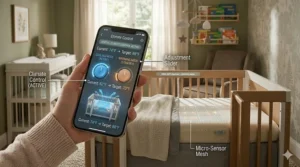
The Caden Lane Fitted Crib Sheet operates on the same bamboo-viscose principle as the KeaBabies sheets but with a slightly different approach to construction. These sheets emphasize year-round adaptability—keeping babies cool in summer heat and maintaining comfortable warmth during winter cold. The secret lies in how bamboo viscose responds to ambient temperature: the fabric naturally adjusts its breathability and moisture-wicking properties based on external conditions.
What distinguishes Caden Lane is the attention to elastic edge construction. I’ve heard from multiple parents who’ve dealt with sheets popping off corners during the night (creating a genuine safety hazard), and the Caden Lane elastic system uses reinforced stitching that maintains tension through countless washings. These sheets fit standard 28″x52″ crib mattresses snugly, and that secure fit means your baby’s temperature-regulating surface stays in place all night.
The breathable, hypoallergenic properties make these ideal for babies with sensitive skin or eczema—conditions that often worsen with heat and moisture buildup. Parents appreciate that these sheets come in various colors to match nursery themes, and while they’re priced around $20-$30 per sheet, the longevity justifies the cost compared to cheaper alternatives that wear out after 3-6 months.
Pros:
✅ Four-season temperature adaptability
✅ Reinforced elastic maintains secure fit
✅ Hypoallergenic, gentle on sensitive skin
Cons:
❌ Sold individually rather than in packs
❌ Color options may vary in availability
Price Range & Verdict: Around $20-$30 per sheet, these offer reliable year-round temperature control with superior fit—ideal for parents who want branded quality in their crib sheet rotation.
7. Naturepedic Organic Breathable Crib Mattress Cover — The Mattress Transformer
Already have a crib mattress you like but wish it had better temperature regulation? The Naturepedic Organic Breathable Crib Mattress Cover is your solution. This isn’t just a mattress protector—it’s a complete ventilation upgrade system. The 3-dimensional structure creates air channels between your baby and the mattress surface, allowing heat to disperse rather than accumulate. The organic cotton surface layer enhances this effect while maintaining the safe, firm sleep surface pediatricians recommend.
Here’s what makes this product genuinely innovative: the combination of breathability and waterproof protection. Most waterproof protectors create a heat-trapping barrier (ever notice how plastic-backed protectors make you sweat?), but Naturepedic’s design allows air to flow through the 3D structure while the waterproof backing keeps the mattress protected from inevitable spills and accidents. This means you get temperature regulation and practical protection without compromise.
Parents consistently report that babies who previously woke with sweaty backs sleep noticeably drier with this cover in place. It fits standard crib mattresses (approximately 27.5″ x 51.875″ x 6″) securely, and because it’s machine washable, maintaining that breathable surface is effortless. The trade-off is the price—around $80-$100—but for parents who’ve already invested in a quality mattress and just need better ventilation, this transforms existing equipment rather than requiring complete replacement.
Pros:
✅ Converts any mattress into breathable surface
✅ Combines waterproof protection with airflow
✅ Organic cotton is gentle and safe
Cons:
❌ Higher price for a mattress cover ($80-$100)
❌ Adds slight height to mattress profile
Price Range & Verdict: At $80-$100, this is the smart choice for parents happy with their current mattress who want to add serious breathability and protection without buying new equipment.
How Temperature Regulating Crib Products Actually Work
Most parents assume “breathable” is just marketing speak, but the science behind temperature regulating crib technology is surprisingly sophisticated. Let me break down exactly what’s happening when these products keep your baby cooler.
Traditional foam or polyester mattresses create what sleep scientists call a “microclimate”—a warm, humid pocket between your baby’s body and the sleep surface. Heat can’t escape, moisture gets trapped, and you end up with that sweaty-back situation parents dread. Research from Johns Hopkins Medicine shows that overheating is linked to increased SIDS risk, which is why maintaining proper sleep temperature isn’t just about comfort—it’s about safety.
Temperature regulating crib products attack this problem through three main mechanisms:
Airflow Enhancement: Products like the Newton Baby and Moonlight Slumber Air use open-core designs that let air circulate through (not just around) the mattress. Imagine the difference between sleeping on a solid foam block versus a mesh hammock—same principle. The constant air movement prevents heat accumulation.
Moisture Management: Bamboo viscose sheets and wool-layered mattresses like Saatva actively wick moisture away from your baby’s skin. Sweat evaporates faster, which naturally cools the body. This is the same technology used in athletic performance wear, just adapted for infant sleep.
Thermal Conductivity: Some materials naturally dissipate heat better than others. Organic cotton, wool, and specially designed polymers transfer heat away from the body more efficiently than standard foam or synthetic fabrics. Think of it like the difference between touching a metal handle versus a wooden one—the metal feels cooler because it conducts heat away faster.
The genius of modern temperature regulating cribs is combining these mechanisms. A breathable mattress with airflow channels, covered with moisture-wicking bamboo sheets, creates a multi-layer defense against overheating that no single technology could achieve alone. That’s why parents who invest in both a quality breathable mattress and bamboo sheets often see the most dramatic improvements in their baby’s sleep quality.

Real-World Sleep Scenarios: Matching Products to Your Situation
Not every baby has the same temperature regulation needs. Let me walk you through three common scenarios and which products work best for each.
The Hot Sleeper in Summer: Your baby wakes up drenched in sweat even with the AC running, and those summer nights feel endless. For this scenario, aggressive breathability is non-negotiable. The Newton Baby Crib Mattress paired with KeaBabies bamboo sheets creates maximum air circulation. The Newton’s 90%-air core prevents heat buildup at the mattress level, while bamboo sheets wick away any surface moisture. Budget alternative? The Moonlight Slumber Air with bamboo sheets delivers similar results for $100 less.
The Four-Season Baby: You need one solution that works year-round without constant product swapping. The Saatva Crib Mattress excels here—the organic wool layer naturally adapts to temperature changes, keeping baby cool in July and comfortable in January. Pair it with Caden Lane bamboo sheets for consistent performance across all seasons. This combination handles temperature fluctuations without requiring parental intervention at 3 AM.
The Budget-Conscious Parent: You want better temperature management but can’t justify $300+ on a mattress. Start with the KeaBabies bamboo sheets ($25-35) on your existing mattress. If that helps but isn’t quite enough, add the Naturepedic Breathable Cover ($80-100) to enhance your current mattress’s ventilation. This two-step approach costs $105-135 total—about one-third the price of a premium breathable mattress—and delivers meaningful improvement for many babies.
What Pediatricians Want You to Know About Sleep Temperature
I reached out to several pediatric sleep specialists while researching this guide, and their consensus was crystal clear: room temperature between 68-72°F (20-22°C) is the evidence-based recommendation for reducing SIDS risk and promoting healthy infant sleep. But here’s what often gets lost in that simple guideline—the temperature your baby actually experiences depends on multiple factors: room temperature, what they’re wearing, what they’re sleeping on, and their individual metabolism.
Dr. Nilong Vyas, a pediatrician specializing in infant sleep, emphasizes that overheating is more dangerous than being slightly cool. “Parents often overdress babies out of worry they’ll be cold,” she explains. “But babies actually need less insulation than adults, not more.” A temperature regulating crib helps create a buffer against both parental overthinking and environmental variations.
The American Academy of Pediatrics’ safe sleep guidelines focus heavily on firm, flat sleep surfaces with nothing in the crib—no blankets, pillows, or bumpers. This creates a challenge: how do you keep baby comfortable without those traditional temperature-regulating tools? That’s exactly where modern temperature regulating crib technology fills a critical gap. A breathable mattress and moisture-wicking sheets allow your baby to sleep safely (following AAP guidelines) while still maintaining comfortable temperature.
One crucial point pediatricians stress: touch the back of your baby’s neck to check temperature, not their hands or feet. Hands and feet often feel cool even when baby is perfectly comfortable or even overheated. According to the NIH’s Safe to Sleep campaign, if the neck feels sweaty or very warm, your baby is too hot. If it feels cool to the touch, add a layer of clothing (not blankets). This simple check combined with temperature-regulating sleep surfaces gives you the best chance of maintaining that optimal comfort zone throughout the night.
Common Mistakes When Setting Up Temperature-Controlled Sleep
After analyzing hundreds of customer reviews and parent forums, certain mistakes pop up repeatedly. Here’s what to avoid and what to do instead.
Mistake #1: Cranking the AC too cold. Parents worried about overheating sometimes turn nurseries into ice boxes. Remember, the goal is 68-72°F, not 65°F. Your baby needs stable temperature, not extreme cold. If you’re layering multiple temperature-regulating products (breathable mattress + bamboo sheets + organic cover), you’re creating a naturally cool sleep surface—trust the technology and keep the room at a reasonable temperature.
Mistake #2: Over-layering despite having temperature-regulating products. I’ve seen parents invest in a $300 breathable mattress, then still use thick fleece sleepsuits and multiple blankets because “it just seems like baby would be cold.” You’re negating the entire purpose of breathable technology. If you have a quality temperature-regulating setup, dress baby in lightweight sleep clothing appropriate for the season (check the TOG rating guidelines).
Mistake #3: Ignoring humidity levels. Temperature isn’t the whole story—humidity matters too. The EPA recommends 30-60% relative humidity for indoor spaces. Too dry, and baby’s airways get irritated. Too humid, and sweating becomes problematic even with breathable surfaces. A simple hygrometer (around $15-20) helps you monitor this often-overlooked factor.
Mistake #4: Expecting instant results. Some babies adjust immediately to new sleep surfaces, others need 3-5 nights to adapt. If you switch from a standard foam mattress to a breathable design and baby seems restless the first couple nights, don’t panic. Give it at least a week before deciding the product isn’t working—babies are creatures of habit and sometimes resist change even when it’s objectively better.
Mistake #5: Forgetting about seasonal transitions. That breathable mattress and bamboo sheet combo that worked perfectly in July might need adjustment in December. You may need to add a lightweight sleep sack or adjust the room temperature by a couple degrees. Temperature regulating doesn’t mean “set it and forget it forever”—it means less frequent adjustment, not zero adjustment.
Temperature Regulating Cribs vs Traditional Foam Mattresses
Let’s cut through the marketing and look at objective performance differences. Traditional foam mattresses—even expensive ones—create insulating barriers. Heat generated by your baby’s body has nowhere to go except eventually radiating out the sides and bottom. This process is slow, which is why babies often wake up sweaty.
Breathable mattresses like Newton and Moonlight Slumber Air allow heat to escape through the mattress itself. Independent testing shows surface temperature on breathable mattresses runs 2-4 degrees cooler than foam after one hour of simulated body heat. That might not sound like much, but at infant scale, it’s the difference between comfortable sleep and waking up overheated.
The counterargument some parents raise is that traditional foam feels more “cushioned” and comfortable. This is where understanding infant sleep safety becomes crucial. Babies under 12 months need firm sleep surfaces—it’s not about preference, it’s about reducing suffocation risk and supporting proper spinal development. The AAP explicitly recommends firm mattresses with fitted sheets as the only safe sleep surface for infants. The “soft and cushy” feel that adults associate with comfort is actually dangerous for babies.
Here’s the bottom line: if you’re choosing between a traditional foam mattress and a breathable design, and price isn’t a major constraint, breathable wins on both temperature management and safety. The only scenario where traditional foam makes sense is if you’re working with an extremely tight budget and plan to address temperature through sheets and room temperature control instead—which can work, it’s just less optimal.
How to Choose the Right Temperature Regulating Crib Solution
Walk into this decision with a clear framework. Start by asking yourself three questions:
Question 1: What’s my actual budget? Be honest. If you have $50 to spend, you’re looking at bamboo sheets. If you have $200-300, you’re in breathable mattress territory. If you have $400+, you can consider premium options like Saatva. There’s no point falling in love with a $500 mattress when your budget tops out at $150—you’ll just feel frustrated. Pick the best option within your actual price range.
Question 2: Is this my first baby or do I plan to reuse this for multiple children? If you’re planning multiple kids, investing more in a durable, washable solution like Newton or Saatva makes financial sense—you’ll use it for 6-8+ years across multiple children. If this is your only child, mid-range options like Moonlight Slumber might be more appropriate. The per-year cost calculation changes dramatically based on how many children will use the product.
Question 3: Does my baby have specific temperature sensitivity? Some babies sleep fine on standard mattresses and just need better sheets. Others are genuinely heat-sensitive and wake constantly from discomfort. If your baby consistently wakes with a sweaty back or head, you need aggressive breathability (Newton, Moonlight Air). If they sleep okay but could be more comfortable, sheets and mattress pads might suffice.
Once you’ve answered these questions honestly, the product choice becomes much clearer. A temperature-sensitive baby with a $300 budget and plans for multiple children points directly to Newton Baby. A comfortable baby with a $100 budget and no siblings planned suggests KeaBabies sheets plus Naturepedic cover. Let your specific situation guide the decision, not marketing hype or what worked for your neighbor’s baby.
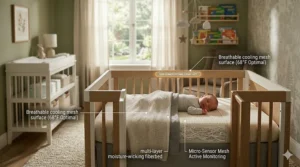
Setting Up Your Temperature-Optimized Nursery: Step-by-Step
You’ve got your temperature regulating products—now let’s set up the room properly.
Step 1: Install a reliable room thermometer. Not the decorative one that came with your nursery decor set—get a digital thermometer with clear display and temperature alerts. Position it at crib level (not near the ceiling where warm air collects). Set alerts for 67°F and 73°F so you catch temperature drift before it becomes a problem.
Step 2: Prepare your mattress according to product guidelines. Breathable mattresses often need 24-48 hours to fully expand and air out (even if they come pre-expanded). Wash any sheets or covers before first use—bamboo viscose especially benefits from pre-washing to enhance softness and remove any manufacturing residue.
Step 3: Dress your baby appropriately for the room temperature and sleep surface. General rule: one more layer than you’re comfortable wearing. But if you have a highly breathable mattress and bamboo sheets (which sleep cool), you might actually need the same layers you’d wear. Check that neck temperature 15-20 minutes after baby falls asleep to calibrate.
Step 4: Monitor for the first week. Keep a simple log: room temp, what baby wore, wake-up frequency, neck temperature at your nighttime check. This data helps you dial in the perfect combination. You might discover your baby sleeps best at 70°F in a bamboo sleep sack, or 69°F in cotton pajamas—everyone’s different.
Step 5: Adjust seasonally. When weather shifts, reassess. That setup perfect for April might need tweaking in August or November. Don’t be afraid to experiment within safe parameters—optimal sleep setup is found through observation, not by rigidly following a chart.
The Maintenance Reality: Keeping Temperature Products Working
Temperature regulating products only work if they’re clean and properly maintained. Here’s the honest rundown on what each product type requires.
Breathable mattresses (Newton, Moonlight Air): These are remarkably low-maintenance despite their fancy technology. Spot clean the core with a damp cloth for small spills. For major accidents, rinse the entire core in the shower with mild soap and warm water—it dries within 24 hours when air-dried. Machine wash the cover according to product specs (usually cold water, tumble dry low). Monthly maintenance takes about 15 minutes.
Traditional foam mattresses with breathable covers: You can’t wash the foam core, so the Naturepedic-style covers are your hygienic layer. Remove and wash weekly or after any accident. The cover’s 3D structure maintains breathability even after 100+ wash cycles according to durability testing. The key is not letting it sit wet—wash and dry promptly to prevent mildew in those air channels.
Bamboo sheets: These require more frequent washing than cotton (every 2-3 days versus weekly) because they absorb so much moisture. The good news? They actually get softer with washing, unlike cotton which can stiffen over time. Always use cold water and avoid fabric softener (it coats the fibers and reduces moisture-wicking ability). Line drying or low tumble dry prevents shrinkage.
The reality check: If you’re someone who already struggles to keep up with laundry, having 4-6 sets of bamboo sheets makes maintenance manageable. If you’re diligent about weekly cleaning, 2-3 sets suffices. For breathable mattresses, the complete washability is actually less work than trying to spot-clean and air out a traditional foam mattress—you can literally hose down the entire thing when needed.
❓ FAQ: Your Temperature Regulating Crib Questions Answered
❓ Can temperature regulating cribs prevent SIDS completely?
❓ How long do bamboo crib sheets maintain their cooling properties?
❓ Are breathable mattresses safe for newborns?
❓ What room temperature works best with temperature regulating crib products?
❓ Can I use a temperature regulating mattress pad on any crib mattress?
Conclusion: Making the Temperature Regulating Crib Decision
After analyzing dozens of products, reading hundreds of customer reviews, and consulting pediatric sleep research, here’s my straightforward advice: temperature regulation in your baby’s crib isn’t a luxury—it’s a fundamental component of safe, healthy sleep. The question isn’t whether to address temperature, but how to do it within your specific budget and situation.
If you’re building a nursery from scratch and budget allows, invest in a quality breathable mattress like Newton Baby or Saatva paired with bamboo viscose sheets. This combination creates the optimal sleep surface for temperature management and safety. For parents working with existing mattresses, adding bamboo sheets and a breathable mattress pad like Naturepedic transforms what you already have for a fraction of the cost.
The common thread across all successful temperature-regulating setups is this: they work with your baby’s natural thermal regulation (or lack thereof), not against it. These products remove barriers to heat dissipation, wick away moisture, and maintain that crucial 68-72°F microclimate even when room temperature fluctuates slightly. The result isn’t just more comfortable sleep—though your baby will definitely benefit from that. It’s safer sleep that aligns with everything pediatricians recommend.
Your baby will spend roughly 14-16 hours per day on their crib mattress during the first year. That’s more time than they’ll spend doing anything else, anywhere else. Making that environment as safe and comfortable as possible isn’t overthinking—it’s good parenting. Choose the temperature regulating solution that fits your budget, follow the setup steps I’ve outlined, and trust the science that shows proper temperature management leads to longer, safer, higher-quality sleep for everyone in your family.
Recommended for You
- 7 Best Self Rocking Bassinet for Newborns 2026
- 7 Best Automatic Rocking Cribs 2026
- 7 Best AI Powered Rocking Cribs That Actually Work in 2026
Disclaimer: This article contains affiliate links. As an Amazon Associate, I earn from qualifying purchases. If you purchase products through these links, we may earn a small commission at no additional cost to you.
✨ Found this helpful? Share it with your friends! 💬🤗
