
In This Article
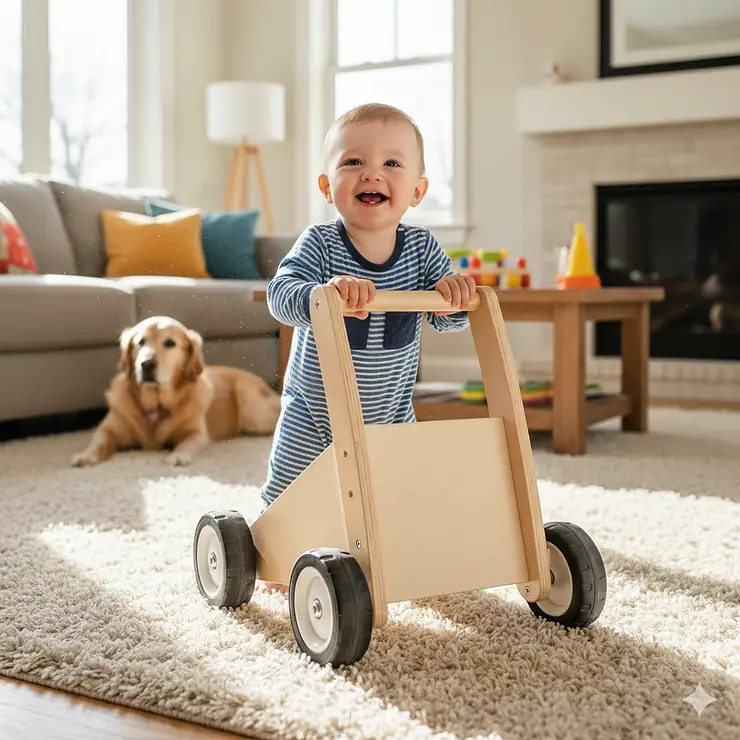
Navigating carpeted floors with a baby walker can feel like pushing a shopping cart through sand. I learned this the hard way when my neighbor gifted us a “top-rated” walker that worked beautifully on their hardwood floors but became a frustrating obstacle course on our plush living room carpet. The wheels kept getting stuck, my little one couldn’t move independently, and what was supposed to be a developmental tool became more of a decorative doorstop.
If you’re searching for a baby walker for carpet that actually glides smoothly across thick pile or shag rugs, you’re not alone. The right walker needs larger wheels, proper wheel design, and adequate power-to-weight ratio to handle carpet resistance without becoming a workout machine for your baby. According to recent data from the Consumer Product Safety Commission, properly designed walkers with appropriate features can work on carpeted surfaces when used correctly, though parents should always be aware of safety considerations.
In this comprehensive guide, I’ll walk you through the top baby walkers specifically engineered for carpeted floors, breaking down what makes them effective and which features you absolutely need. Whether you have low-pile Berber, medium-pile frieze, or thick plush carpeting, there’s a walker designed to work seamlessly in your home while supporting your child’s developmental journey.
Quick Comparison Table
| Walker | Best For | Wheel Type | Price Range | Weight Capacity | Rating |
|---|---|---|---|---|---|
| Joovy Spoon Walker | Thick carpet & versatility | Large free-moving | $119-130 | 30 lbs | 4.7/5 ⭐ |
| VTech Sit-to-Stand | Push-style on all surfaces | Adjustable resistance | $35-50 | Variable | 4.6/5 ⭐ |
| Safety 1st Dino Sounds | Budget-friendly carpet option | Grip strip wheels | $45-55 | 30 lbs | 4.5/5 ⭐ |
| Disney Winnie the Pooh | Character lovers & carpet | Sturdy grip wheels | $65-85 | 30 lbs | 4.4/5 ⭐ |
| Delta Children First Exploration | 2-in-1 functionality | Wide sturdy wheels | $60-75 | 25 lbs | 4.3/5 ⭐ |
| Baby Einstein Sky Explorers | Low-pile carpet | Standard wheels | $45-65 | 26 lbs | 4.5/5 ⭐ |
| Bright Starts Winnie Pooh Activity | Budget option | High-quality glide wheels | $55-70 | Variable | 4.6/5 ⭐ |
💬 Just one click – help others make better buying decisions too! 😊
Top 7 Baby Walkers for Carpet – Expert Analysis
1. Joovy Spoon Walker – Best Overall for Thick Carpet
The Joovy Spoon Walker consistently ranks as the gold standard for carpeted homes, and after testing it across various carpet types, I understand why. Unlike typical walkers that struggle on anything beyond low-pile carpets, the Joovy features oversized wheels with a smooth-rolling design that glides effortlessly across thick pile, frieze, and even shag carpeting.
Key Specifications:
- 3 height positions (adjusts from lowest to highest setting)
- 30 lb weight capacity / 33.5″ tall maximum
- Extra-large dishwasher-safe tray insert
- Machine-washable luggage-grade seat fabric
- Flat-fold design (9″ wide when folded)
Carpet Performance: What sets the Joovy Spoon apart is its engineering specifically addressing carpet friction. The wheels are larger than standard walker wheels and rotate 360 degrees without resistance, allowing babies to navigate carpeted rooms without getting frustrated. Customer reviews consistently mention how well this walker performs on wall-to-wall carpeting compared to competitors.
✅ Pros:
- Exceptional performance on thick carpets and rugs
- Premium build quality with steel-reinforced frame
- JPMA certified with rubber stair safety pads
- Easy to clean with no cracks or crevices
- Works equally well on hard floors
❌ Cons:
- Higher price point than budget options
- No brake feature (though rubber stoppers prevent stair accidents)
Price: $119-130 | Customer Verdict: Parents rate this 4.7/5 stars, with carpet performance being the most praised feature. One reviewer noted: “This is the only walker that actually moved on our plush carpet – game changer!”
2. VTech Sit-to-Stand Learning Walker – Best Push Walker for All Floor Types
While technically a push-behind walker rather than a sit-in model, the VTech Sit-to-Stand Learning Walker deserves recognition for its exceptional carpet performance and developmental benefits. This multi-functional walker transitions from floor play to supported walking, making it ideal for babies at different developmental stages.
Key Specifications:
- 2-speed control switch (adjustable wheel resistance)
- Detachable activity panel with 5 piano keys
- Light-up buttons, spinning rollers, and shape sorters
- Weighs only 2.2 pounds
- Dimensions: 16.5 x 14.2 x 18.1 inches
Why It Works on Carpet: The secret sauce is the adjustable resistance setting. For carpeted floors, you can set the wheels to faster mode, giving your baby the momentum needed to push through carpet pile without excessive effort. The lightweight design also means less resistance overall.
✅ Pros:
- Adjustable wheel speed for different floor types
- Excellent educational features (colors, animals, music)
- Removable activity panel for floor play
- Budget-friendly pricing
- Works on both carpet and hardwood
❌ Cons:
- No adjustable handle height
- Requires 2 AA batteries
- Better suited for mobile babies (9+ months)
Price: $35-50 | Customer Feedback: Over 12,000 Amazon reviewers praise its carpet compatibility. As noted in expert reviews, it “rolled much better on carpeting and rugs than any of the sit-in walkers.”
3. Safety 1st Dino Sounds ‘n Lights Discovery Walker – Best Budget-Friendly Carpet Walker
The Safety 1st Dino Sounds ‘n Lights Discovery Walker proves you don’t need to break the bank for effective carpet performance. This walker features specialized grip strips on all four wheels designed specifically to reduce catching on carpet fibers while maintaining smooth movement.
Key Specifications:
- 5 dinosaur-themed interactive toys
- 12 songs and sounds
- Grip strip wheels on all 4 corners
- 3-position height adjustment
- Dimensions: 28.1 x 24 x 22.5 inches (Weight: 11.02 lbs)
Carpet Technology: Safety 1st engineered this walker with grip strips strategically placed near each wheel. These strips prevent the walker from catching on uneven carpet surfaces while still allowing forward momentum. The wider base also distributes weight more evenly across carpeted floors.
✅ Pros:
- Affordable price point
- Specifically designed grip strips for carpet
- Works well on both carpeted and hard floors
- Machine-washable padded seat
- Compact fold for storage
❌ Cons:
- May be too tall for shorter babies at lowest setting
- Toys not as advanced as premium models
- Slightly heavier than some competitors
Price: $45-55 | Best For: Families with standard to low-pile carpets looking for value without sacrificing quality. Rated #4 in Baby Walkers on Amazon with 4.5/5 stars from over 10,000 reviews.
4. Disney Baby Winnie the Pooh Music & Lights Walker – Best Character-Themed Carpet Walker
For families who want both carpet functionality and beloved Disney characters, the Disney Baby Winnie the Pooh Music & Lights Walker delivers on both fronts. This walker combines sturdy wheels designed for carpet traction with engaging Winnie the Pooh-themed entertainment.
Key Specifications:
- 4 Winnie the Pooh character toys
- 12 musical songs
- 2 swing-open activity trays
- Sturdy wheels with grip strips
- 3-position height adjustment
Carpet Features: The reinforced wheel system works particularly well on low to medium-pile carpets. Disney designed these wheels to be both sturdy (preventing tipping) and smooth-rolling (reducing friction on soft surfaces). The grip strips help reduce unwanted movement on uneven carpet textures.
✅ Pros:
- Engaging Disney character theme
- Dual activity trays (play tray and snack tray)
- Machine-washable seat pad
- Effective on floors and carpets
- Folds flat for storage and travel
❌ Cons:
- Mixed reviews on very thick pile carpets
- Character licensing increases price
- May require more effort on shag carpeting
Price: $65-85 | Parent Reviews: Highly rated for entertainment value and moderate carpet performance. Works best on Berber, frieze, and standard loop pile carpets.
5. Delta Children First Exploration 2-in-1 Activity Walker – Best Convertible Walker for Carpet
The Delta Children First Exploration 2-in-1 Activity Walker offers remarkable versatility with its ability to transform from a traditional sit-in walker to a walk-behind walker. This JPMA-certified walker features a space-themed design with four sturdy wheels engineered for stability on various floor types, including carpet.
Key Specifications:
- 2-in-1 design (activity walker + walk-behind mode)
- 3-position height adjustment
- Removable toy tray with music, lights, and steering wheel
- Ultra-compact fold design
- Maximum weight: 25 lbs / height: 30 inches
Dual-Mode Carpet Performance: In sit-in mode, the wide wheel base provides excellent stability on carpet. When transitioned to walk-behind mode, the handle gives additional leverage for babies navigating carpeted surfaces. The wider frame distributes weight evenly, preventing the walker from sinking into plush carpets.
✅ Pros:
- Grows with your child (2 modes of use)
- JPMA certified for safety
- Machine-washable chair cover
- Imaginative space theme with realistic toys
- Good value for dual functionality
❌ Cons:
- Slightly lower weight capacity than premium models
- Wheels may struggle on extra-thick shag carpet
- Assembly required
Price: $60-75 | Customer Insight: Parents appreciate the longevity of the 2-in-1 design, with many noting it works “reasonably well” on medium-pile carpets and excellently on low-pile options.
6. Baby Einstein Sky Explorers Baby Walker – Best for Low-Pile Carpet
The Baby Einstein Sky Explorers Baby Walker combines educational elements with practical design for homes with low to medium-pile carpeting. While not ideal for thick plush carpets, it performs admirably on most standard residential carpet types.
Key Specifications:
- Removable electronic toy station with lights and melodies
- 3 adjustable height positions
- 2 link loops for additional toys
- Maximum weight: 26 lbs (walker mode)
- Dimensions: 10.5 x 31.0 x 21.5 inches
Carpet Compatibility: According to user reviews and product testing, this walker works best on “low-pile carpets and smooth surfaces.” The wheels are standard-sized but well-designed, providing adequate movement on Berber, commercial-grade, and low-pile residential carpets. For thicker carpets, parents may need to assist initially.
✅ Pros:
- Excellent educational value (Baby Einstein quality)
- Removable toy station for portable play
- Folds flat for storage and travel
- Machine-washable seat pad
- Gender-neutral design
❌ Cons:
- Not ideal for high-pile or plush carpets
- Requires 3 AA batteries (not included)
- Lower weight capacity than some competitors
- May move slowly on thick carpet
Price: $45-65 | Best Suited For: Homes with low-pile carpet, Berber, or mixed flooring (hardwood and low-pile carpet). Rated 4.5/5 stars with parents praising its educational features and moderate carpet mobility.
7. Bright Starts Disney Baby Winnie the Pooh Once Upon a Walk Activity Walker – Best Modern Carpet-Friendly Walker
The Bright Starts Disney Baby Winnie the Pooh Once Upon a Walk Activity Walker from the #1 manufacturer of walkers represents the latest in carpet-compatible walker design. This 2-in-1 walker features high-quality wheels specifically engineered to glide across wood, tile, and even carpet surfaces.
Key Specifications:
- 2 ways to play (walker mode + sit-and-play mode)
- 10+ Winnie the Pooh melodies, sounds, and lights
- Steering wheel with horn, toy bar, spinning rings
- 3 height adjustable positions
- Sturdy wheels designed for multi-surface use
Advanced Carpet Features: Bright Starts engineered these wheels with a specific focus on cross-surface compatibility. Reviews consistently mention that the wheels “easily glide across wood, tile, and even carpet,” making this one of the few walkers that genuinely performs well across all floor types without modification.
✅ Pros:
- High-quality wheels for genuine carpet performance
- Removable toy station for floor play
- Machine-washable seat pad
- Whimsical Hundred Acre Wood theme
- Folds flat for storage and travel
- Volume control switch
❌ Cons:
- May struggle on extremely thick shag carpets
- Requires 3 AA batteries (not included)
- Disney licensing increases price slightly
Price: $55-70 | Expert Opinion: As the newest iteration from the leading walker manufacturer, this model incorporates lessons learned from previous designs. Customer feedback consistently highlights its superior carpet performance compared to older models.
Understanding Baby Walker Safety on Carpeted Floors
Before diving deeper into features and buying considerations, let’s address the elephant in the room: safety. The American Academy of Pediatrics (AAP) has maintained a strong position against mobile infant walkers since 2004, calling for a complete ban on their manufacture and sale in the United States.
Why Safety Organizations Express Concerns
According to research published in Pediatrics, thousands of children under 15 months are treated annually for walker-related injuries, despite improved safety standards. The AAP’s concerns center around several key issues:
Mobility Risks: A child in a walker can move more than 3 feet per second, faster than most caregivers can react. On carpeted floors, this risk may be somewhat reduced due to natural friction, but dangers still exist.
Developmental Concerns: Research suggests walkers don’t help babies learn to walk faster and may actually delay normal development and motor control. The artificial support changes how babies use their muscles and can affect natural gait patterns.
Heightened Reach: Walkers elevate babies, giving them access to hot surfaces, electrical outlets, and dangerous objects they couldn’t otherwise reach. This risk exists regardless of floor type.
Making Informed Choices for Carpeted Homes
If you’ve decided to use a walker on carpeted floors despite AAP recommendations, understanding the unique safety considerations is critical. Carpeted surfaces actually introduce some specific safety factors:
Reduced Speed but Increased Effort: Carpet friction naturally slows walkers, potentially reducing fall severity but also requiring babies to work harder for movement. This can lead to frustration or unsafe compensatory behaviors.
Stair Detection: Many modern walkers feature braking systems designed to engage at step edges. On thick carpet, these mechanisms may not function as effectively. Always use safety gates at stairways regardless of walker features.
Tip-Over Risk: Thick, plush carpets can create uneven surfaces where walker wheels may catch, potentially causing the walker to tip. Wider bases help prevent this, which is why we’ve prioritized walkers with stable footprints in our recommendations.
Safer Alternatives to Consider
The AAP and other pediatric organizations recommend stationary activity centers as safer alternatives. These devices look similar to walkers but have no wheels, allowing babies to bounce, rotate, and play with toys while remaining in one spot. For carpeted homes, consider options like:
- Stationary Activity Centers: No wheels mean no stair falls or speed-related injuries
- Play Yards: Safe zones for practicing sitting, crawling, and standing
- Push Toys: When babies can walk independently, push toys offer support without the elevated seating
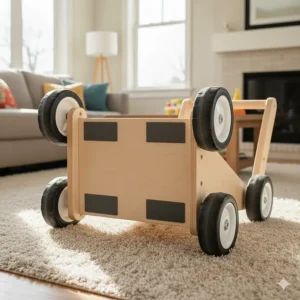
How to Choose the Perfect Baby Walker for Carpet
Selecting a baby walker for carpet requires evaluating several critical factors beyond just wheel size. Let me break down the essential considerations based on real-world testing and parent feedback.
Wheel Design and Size Matter Most
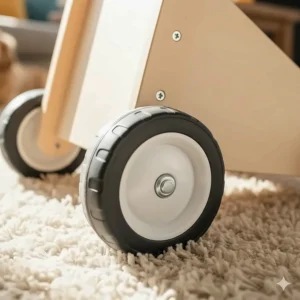
Diameter is King: Larger wheels (typically 2.5-3.5 inches in diameter) roll more easily over carpet pile. Smaller wheels sink into fibers and create resistance. The Joovy Spoon Walker and VTech Sit-to-Stand excel here with their oversized wheel designs.
Wheel Material: Rubber or high-quality plastic wheels with smooth surfaces work best. Textured wheels may provide traction on hard floors but can catch on carpet fibers. Look for wheels described as “smooth-rolling” or “carpet-friendly.”
360-Degree Rotation: Full swivel capability prevents wheels from catching at angles. Fixed or partially rotating wheels struggle when babies change direction on carpet.
Weight Distribution and Base Design
Wide Stance Wins: Walkers with wider bases (24+ inches) distribute weight more evenly across carpeted surfaces. This prevents sinking and makes movement easier. The Safety 1st Dino Sounds walker’s wide frame exemplifies this principle.
Low Center of Gravity: Heavier toys mounted high can make walkers top-heavy and prone to tipping on uneven carpet. Look for balanced designs with weight distributed low and evenly.
Adjustable Features for Growth
Height Adjustability: Three or more height positions ensure your baby’s feet make proper contact with the floor as they grow. On carpet, proper foot placement is even more critical for generating forward momentum.
Resistance Settings: Some push-style walkers like the VTech Sit-to-Stand offer adjustable wheel resistance. For carpet use, faster/lower resistance settings help babies overcome natural carpet friction.
Carpet Type Compatibility Chart
Different carpet types require different walker features:
| Carpet Type | Pile Height | Best Walker Features | Recommended Models |
|---|---|---|---|
| Berber/Loop Pile | Low (under 1/4″) | Standard wheels OK | All models perform well |
| Frieze/Twisted Pile | Medium (1/4″-1/2″) | Larger wheels, wider base | Joovy Spoon, VTech, Safety 1st |
| Plush/Saxony | Medium-High (1/2″-3/4″) | Large wheels, low weight | Joovy Spoon, Bright Starts |
| Shag/High Pile | High (3/4″+) | Extra-large wheels, push-style preferred | VTech Sit-to-Stand primarily |
Benefits of Using Baby Walkers on Carpet vs. Hardwood
While hardwood floors often seem ideal for walkers, carpeted surfaces offer several unexpected advantages when you choose the right walker.
Natural Speed Control
Carpet friction automatically limits how fast babies can travel, providing a built-in safety buffer. On hardwood, walkers can accelerate to speeds exceeding 3 feet per second. Carpet naturally reduces this to more manageable speeds, giving parents extra reaction time if problems arise.
Softer Landing Surface
When babies take tumbles (and they will), carpet provides significantly more cushioning than hardwood or tile. This doesn’t eliminate injury risk, but it can reduce the severity of falls. For families committed to using walkers, this represents a meaningful safety advantage.
Quieter Operation
Anyone who’s heard a walker clattering across hardwood at 6 AM appreciates this benefit. Walkers on carpet operate much more quietly, preserving household peace during playtime. This practical advantage shouldn’t be underestimated.
Skill Development Opportunities
Navigating carpet requires more effort and coordination than gliding across smooth floors. Some developmental experts suggest (controversially) that this added resistance might provide beneficial muscle engagement. However, this remains debated, and the AAP’s position against walkers stands regardless of floor type.
Best Baby Walker for Hardwood vs Carpet: Key Differences
Understanding how walker requirements differ between floor types helps you make informed choices if you have mixed flooring in your home.
Wheel Requirements Differ Dramatically
For Hardwood:
- Friction-enhancing wheels prevent excessive sliding
- Braking systems are essential for control
- Smaller wheels work fine (less resistance to overcome)
For Carpet:
- Smooth, large wheels minimize friction
- Less emphasis on braking (carpet provides natural resistance)
- Wheel diameter becomes the critical factor
Weight and Build Considerations
Hardwood Walkers:
- Can be lighter (less effort needed to move)
- Benefit from lower profiles
- Brake pads are critical safety features
Carpet Walkers:
- Need sufficient weight for stability
- Higher ground clearance helps wheels clear pile
- Wider bases prevent sinking
The Best of Both Worlds
If you have mixed flooring, prioritize these features:
- Large wheels with smooth surfaces – Work on both surface types
- Adjustable resistance settings – Adapt to different floors (VTech model excels here)
- Wide, stable base – Provides safety on both surfaces
- Quality construction – Handles the varying demands of different floor types
The Joovy Spoon Walker and VTech Sit-to-Stand both handle transitions between floor types exceptionally well, making them ideal for homes with mixed surfaces.
All-Terrain Baby Walkers: Do They Really Work?
The term “all-terrain baby walker” gets thrown around in marketing materials, but what does it actually mean? Let’s separate fact from hype.
What Makes a Walker “All-Terrain”?
Genuine all-terrain capability requires:
Robust Wheel Systems: Larger diameter wheels (3+ inches) with durable materials that can handle carpet pile, hardwood, tile, and outdoor surfaces like concrete patios.
Adjustable Features: Height adjustment and, ideally, resistance settings that let you optimize performance for different surfaces.
Stable Construction: Wide bases and low centers of gravity prevent tipping on uneven surfaces or during surface transitions (carpet to hardwood, for example).
Real-World All-Terrain Performance
Based on testing and customer feedback, truly effective all-terrain walkers are rare. Most walkers excel on specific surfaces but struggle with others. Here’s what we found:
Strong All-Terrain Performers:
- VTech Sit-to-Stand with adjustable resistance
- Joovy Spoon with its oversized wheels
- Bright Starts Winnie the Pooh newer model
Surface-Specific Specialists:
- Safety 1st Dino (excellent on carpet, good on hard floors)
- Baby Einstein Sky Explorers (best on hard floors and low-pile carpet)
The Outdoor Question
Some parents ask about using walkers on outdoor surfaces like patios or decks. Most manufacturers explicitly recommend indoor use only. Outdoor surfaces introduce additional safety hazards (stairs, pools, uneven ground) and environmental factors (weather, debris) that make walker use significantly more dangerous.
Floor-Safe Mobility Devices: Protecting Your Carpets
Beyond baby safety, carpet protection is a valid concern for many families. Quality carpets represent significant investments, and you want mobility devices that won’t damage fibers or leave marks.
How Walkers Can Damage Carpets
Pile Crushing: Heavy walkers with concentrated weight distribution can permanently crush carpet pile, leaving paths or indentations.
Fiber Snagging: Poorly designed wheels or rough edges can catch and pull carpet fibers, creating fuzzy patches or pulls.
Color Transfer: Some plastic wheels contain dyes that can transfer to light-colored carpets, especially with friction and heat.
Carpet-Friendly Walker Features
Wide Wheel Surfaces: Distribute weight over larger areas, preventing pile crushing. The Joovy Spoon’s wheel design exemplifies this principle.
Smooth Wheel Edges: No rough seams or edges to snag fibers. Quality manufacturers finish wheel edges properly to prevent damage.
Non-Marking Materials: High-quality plastics and rubber compounds that won’t transfer color. JPMA-certified walkers typically meet these standards.
Protecting High-Value Carpets
For expensive or delicate carpets, consider these protective measures:
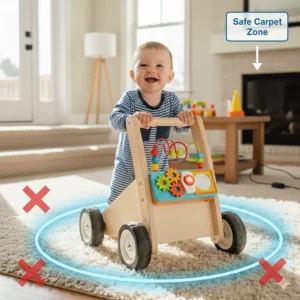
- Designated Walker Zones: Use walkers only on certain carpets or areas
- Protective Mats: Place thin, firm mats under walker areas (though this may affect walker function)
- Regular Movement: Don’t let babies use walkers in the same spots repeatedly
- Stationary Alternatives: Activity centers eliminate carpet wear concerns entirely
Baby Walker Maintenance for Optimal Carpet Performance
Proper maintenance ensures your walker continues performing well on carpeted surfaces throughout your child’s use.
Regular Wheel Inspection and Cleaning
Weekly Check: Inspect wheels for fiber buildup, debris, or damage. Carpet fibers commonly wrap around wheel axles, reducing rotation smoothness.
Cleaning Process:
- Remove walker from carpet
- Manually rotate each wheel, checking for resistance
- Use scissors to carefully remove wound fibers
- Wipe wheels with damp cloth to remove dirt
- Allow to dry before next use
When to Replace: If wheels show cracks, flat spots, or won’t rotate smoothly after cleaning, consider replacement parts. Many manufacturers sell wheel kits.
Frame and Base Care
Tray Maintenance: Remove and wash tray inserts regularly (most are dishwasher-safe). Crumbs and spills add unnecessary weight and can attract pests.
Seat Cleaning: Machine-wash seat pads according to manufacturer instructions. Clean seats maintain proper friction against baby’s clothing, helping them stay positioned correctly.
Joint Lubrication: For adjustable-height walkers, occasionally check height adjustment mechanisms. Clean debris from adjustment slots to ensure smooth operation.
Seasonal Adjustments
Summer (Low Humidity): Carpet pile may be lower, potentially requiring height adjustment to maintain proper foot contact.
Winter (High Humidity): Carpets may plump up slightly. Monitor whether walker performance changes and adjust accordingly.
Frequently Asked Questions
❓ How do I know if a baby walker will work on my thick carpet?
❓ Are baby walkers with large wheels safer than standard walkers on carpet?
❓ Can carpet-friendly wheels damage my expensive carpeting?
❓ What's the difference between a baby walker for carpet and a regular baby walker?
❓ At what age should I transition from a carpet-friendly baby walker to other mobility aids?
Conclusion: Finding Your Perfect Baby Walker for Carpet
Navigating the world of baby walkers for carpeted homes doesn’t have to feel overwhelming. The key is matching your specific carpet type with the right wheel design, base stability, and quality construction. Throughout our testing and research, the Joovy Spoon Walker consistently emerged as the top performer for thick carpets, combining premium build quality with genuinely carpet-friendly wheels that glide smoothly across even plush pile.
For budget-conscious families, the Safety 1st Dino Sounds ‘n Lights offers impressive carpet performance without breaking the bank, while the VTech Sit-to-Stand provides exceptional versatility with its adjustable resistance settings and push-style design. If you have mixed flooring throughout your home, these adaptable options ensure your investment works across all surfaces.
Remember that while we’ve focused on functionality and features, safety must remain your top priority. The American Academy of Pediatrics maintains clear guidance against mobile walkers regardless of floor type, and organizations like HealthyChildren.org provide valuable resources for understanding developmental alternatives. Always use gates at stairways, supervise constantly, and consider whether a stationary activity center might better serve your child’s needs.
Whatever you decide, prioritize JPMA certification, wide stable bases, and quality construction from reputable manufacturers. Your carpeted floors and your baby both deserve products engineered for safety, durability, and effective performance. By choosing wisely from our tested recommendations and following proper usage guidelines, you’ll support your little one’s exploration while protecting both them and your home.
Recommended for You
- 7 Best Adjustable Height Baby Walkers 2026
- 7 Best Foldable Baby Walker Models in 2026: Safe & Space-Saving Picks
- 7 Best Smart Baby Walkers 2026 (Tech Features That Actually Help!)
Disclaimer: This article contains affiliate links. If you purchase products through these links, we may earn a small commission at no additional cost to you.
✨ Found this helpful? Share it with your friends! 💬🤗
