

In This Article
✨Was this helpful? Spread the word! 🚀
You know that sinking feeling when your baby clamps their mouth shut the second they see a bottle? I’ve been there, and trust me, you’re not alone in this struggle. A sippy cup for baby who refuses bottle might just be your saving grace.
Here’s the thing – babies can be stubborn little creatures. When they decide they don’t want a bottle, no amount of coaxing, different bottle brands, or temperature adjustments will change their minds. But why do some babies refuse bottles in the first place? Research from the American Academy of Pediatrics suggests it could be nipple confusion, a preference for breastfeeding, or simply their way of asserting independence.
A sippy cup for baby who refuses bottle offers something different – a fresh approach that doesn’t remind them of the dreaded bottle. According to pediatric feeding specialists, introducing a cup with baby refusing bottle situations can actually be easier than you think. The texture, shape, and drinking mechanism feel entirely different, which can bypass your baby’s bottle aversion completely.
What is a sippy cup for baby who refuses bottle? A sippy cup for baby who refuses bottle is a transitional drinking vessel designed with soft spouts, weighted straws, or spoutless edges that allow babies as young as 6 months to drink independently without the bottle association they may resist.
Around 6 to 9 months is typically when you’ll want to start exploring cups as alternatives. Some babies transition earlier, while others need more time. The key is finding the right sippy cup baby bottle refusal solution that matches your little one’s developmental stage and preferences. If you’re wondering about the best sippy cup for baby in general, the answer depends heavily on your baby’s unique needs and bottle refusal patterns.
Quick Comparison Table 📊
| Sippy Cup | Age Range | Type | Price Range | Key Feature |
|---|---|---|---|---|
| Munchkin Miracle 360 | 6+ months | Spoutless | $8-$12 | 360-degree drinking edge |
| NUK Learner Cup | 6+ months | Soft spout | $7-$11 | Gentle on gums, removable handles |
| Dr. Brown’s First Straw | 6+ months | Weighted straw | $9-$13 | Drink from any angle |
| Munchkin Any Angle | 6+ months | Weighted straw | $8-$11 | Click Lock technology |
| OXO Tot Transitions | 6+ months | Straw | $10-$14 | Almond-shaped straw |
| Tommee Tippee Weighted | 6+ months | Weighted straw | $11-$15 | Antimicrobial technology |
| Dr. Brown’s Cheers 360 | 6+ months | Spoutless | $9-$13 | Transparent design |
💬 Just one click – help others make better buying decisions too!😊
✨ Ready to Find Your Perfect Match?
These carefully selected sippy cups have helped thousands of parents overcome bottle refusal. Click on any highlighted cup below to check current prices and read real parent reviews on Amazon! 🛒
Top 7 Sippy Cup for Baby Who Refuses Bottle – Expert Analysis 🏆
1. Munchkin Miracle 360 Trainer Cup – Best Overall
The Munchkin Miracle 360 Trainer Cup has become a household name for good reason. This innovative cup for baby who won’t take bottle features a revolutionary 360-degree drinking edge that mimics an open cup while remaining spill-resistant.
Key Specifications:
- Capacity: 7 oz
- Material: BPA-free plastic
- Age: 6+ months
With over 37,000 five-star Amazon reviews, parents rave about how this cup helped their bottle-refusing babies finally drink independently. The Munchkin Miracle 360 works by creating a seal when baby’s lips press against the edge – genius, right?
Price: $8-$12 for a 2-pack
Customer Feedback: One parent shared, “My breastfed baby refused every bottle we tried. This cup was a game-changer within 48 hours!” The cup’s spoutless design means there’s nothing that reminds baby of a bottle.
Pros:
✅ No spout means less bottle association
✅ Easy to clean with only 3 parts
✅ Dishwasher safe
Cons:
❌ Some babies need time to understand the mechanism
❌ Can leak if dropped from height
2. NUK Learner Cup – Best for Sensitive Gums
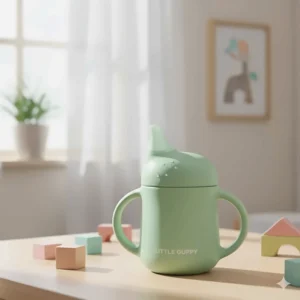
The NUK Learner Cup features an ultra-soft spout that’s incredibly gentle on teething gums, making it perfect for babies who are extra sensitive during the bottle to cup transition.
Key Specifications:
- Capacity: 5 oz or 10 oz options
- Soft spout with air vent
- Removable easy-grip handles
Price: $7-$11 for a 2-pack
This cup baby refuses bottle solution includes an air vent that reduces swallowed air, which can help with gas and fussiness. The NUK Learner Cup handles are textured for easy gripping and can be removed as your baby’s skills improve.
Customer Feedback: Parents consistently praise the gentle spout, noting that babies who refused harder bottle nipples readily accepted this softer alternative. The handles give babies control, which seems to matter when they’re asserting their independence.
Pros:
✅ Gentlest spout on the market
✅ Reduces swallowed air
✅ Removable handles grow with baby
Cons:
❌ Spout can show wear over time
❌ Some reports of leaking if not assembled perfectly
3. Dr. Brown’s Milestones Baby’s First Straw Cup – Best Weighted Straw
The Dr. Brown’s Milestones Baby’s First Straw Cup uses a soft, weighted straw that moves with liquid, allowing baby to drink from any angle – perfect for a baby refusing bottle who’s still learning cup mechanics.
Key Specifications:
- Capacity: 9 oz
- 100% silicone weighted straw
- Spill-proof lid
Price: $9-$13 for a 2-pack
The weighted straw is brilliant because it follows the liquid regardless of how baby tilts the cup. This Dr. Brown’s design helps babies transition from tipping bottles upside-down to more upright sipping positions naturally.
Customer Feedback: One mom reported, “My son went from zero bottle acceptance to drinking 6 oz from this cup on day one. The straw movement was intuitive for him.” Speech therapists often recommend straw cups because they build oral motor skills.
Pros:
✅ Straw follows liquid at any angle
✅ Builds speech development muscles
✅ Easy-grip handles
Cons:
❌ Multiple parts to clean
❌ Straw requires brush cleaning
4. Munchkin Any Angle Click Lock Weighted Straw Trainer Cup – Best Leak-Proof
The Munchkin Any Angle Click Lock Weighted Straw Trainer Cup features patented Click Lock technology that actually clicks when properly sealed – no more guessing if it’s truly leak-proof.
Key Specifications:
- Capacity: 7 oz
- Weighted flexible straw
- Click Lock lid technology
Price: $8-$11
This sippy for baby who won’t bottle comes with perfectly sized handles for little hands and a flip-top lid that keeps the straw clean on-the-go. The Munchkin Any Angle weighted straw moves to ensure baby gets every last drop, regardless of how they hold the cup.
Customer Feedback: Daycare providers love this cup because the Click Lock feature provides peace of mind in diaper bags. Parents appreciate the audible click confirmation that tells them it’s sealed tight.
Pros:
✅ Audible click confirms seal
✅ Truly leak-proof when locked
✅ Straw reaches all liquid
Cons:
❌ Small weight can detach and get lost
❌ Flip-top can be hard for babies to open
5. OXO Tot Transitions Straw Cup – Best for Development
The OXO Tot Transitions Straw Cup features an almond-shaped straw that’s specifically designed to be gentle while promoting proper oral development recommended by pediatric dentists.
Key Specifications:
- Capacity: 6 oz
- Almond-shaped silicone straw
- Removable handles
Price: $10-$14
The OXO Tot Transitions cup has won multiple parenting awards for its thoughtful design. The handles are removable, allowing you to customize the cup as your baby’s motor skills develop.
Customer Feedback: According to feeding therapists, the almond shape helps babies learn proper tongue placement. One parent noted, “After trying four different cups, this was the one that finally worked. The straw shape made all the difference.”
Pros:
✅ Promotes healthy oral development
✅ Award-winning design
✅ Customizable with removable handles
Cons:
❌ More expensive than competitors
❌ Several parts make cleaning tedious
6. Tommee Tippee Starter Weighted Straw Cup – Best Antimicrobial
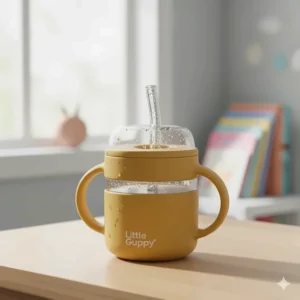
The Tommee Tippee Starter Weighted Straw Cup incorporates BACSHIELD antimicrobial technology in the straw, reducing microbes by up to 99.9% – a huge plus for health-conscious parents.
Key Specifications:
- Capacity: 10 oz
- BACSHIELD antimicrobial straw
- INTELLIVALVE leak-proof technology
Price: $11-$15 for a 2-pack
This cup baby bottle transition features a weighted silicone straw and easy-grip handles. The Tommee Tippee INTELLIVALVE technology means it’s completely leak-proof even when turned upside down and shaken.
Customer Feedback: Parents dealing with recurrent thrush or concerned about hygiene appreciate the antimicrobial feature. “Knowing the straw actively fights bacteria gives me peace of mind,” one mom shared.
Pros:
✅ Antimicrobial straw technology
✅ Guaranteed 100% leak-proof
✅ Larger 10 oz capacity
Cons:
❌ Slightly bulkier design
❌ Higher price point
7. Dr. Brown’s Cheers 360 Spoutless Training Cup – Best Transparency
The Dr. Brown’s Cheers 360 Spoutless Training Cup features a transparent design that lets you see exactly how much liquid remains and how baby is drinking – perfect for monitoring intake with baby refusing bottle scenarios.
Key Specifications:
- Capacity: 7 oz or 10 oz options
- Transparent base and lid
- 360-degree drinking edge
Price: $9-$13 for a 2-pack
Similar to the Munchkin 360 but with clearer materials, the Dr. Brown’s Cheers 360 lets you visually confirm baby is getting liquid. The spoutless design promotes natural oral development.
Customer Feedback: Pediatricians appreciate being able to see intake amounts. One parent noted, “The clear design helped me figure out my baby’s drinking technique and adjust our approach.”
Pros:
✅ See-through design for monitoring
✅ No spout for healthier development
✅ Easy to clean
Cons:
❌ Some babies struggle with the learning curve
❌ Can leak when dropped
Understanding Why Babies Refuse Bottles 🤔
Let me paint you a picture: You’ve tried ten different bottle brands, warmed the milk to precisely 98.6°F, had someone else offer the bottle, and even left the room. Nothing works. Your baby still refuses that bottle like it’s offering them brussels sprouts.
The Psychology Behind Bottle Refusal
Babies aren’t being difficult just to mess with your schedule (though it certainly feels that way at 3 AM). There are legitimate reasons why a baby who refuses bottle will sometimes accept a cup instead.
Nipple confusion is real, but it’s not what most people think. According to research from Johns Hopkins Medicine, babies become accustomed to specific flow rates and sucking patterns. A bottle nipple feels and functions differently than breastfeeding, causing some babies to reject it entirely.
Temperature sensitivity plays a bigger role than we realize. Breast milk straight from mom is always the perfect temperature. Bottles? Not so much. Even slight variations can cause rejection in picky babies.
Association matters more than you’d think. If baby associates bottles with stress (from previous failed attempts) or associates them with someone leaving (like mom going back to work), they might refuse on principle.
When Transitioning to Sippy Cups Makes Sense
Here’s the beautiful thing about cups – they’re neutral territory. There’s no bottle baggage, no nipple confusion, just a fresh start. The American Academy of Pediatrics actually recommends introducing cups around 6 months and transitioning fully by 12-18 months.
For a baby who refuses bottle situations, starting with a cup earlier can be a game-changer. You’re not asking them to accept the very thing they’ve been rejecting – you’re offering something completely different.
How to Choose the Perfect Sippy Cup for Baby Who Refuses Bottle 🎯
Spout vs. Straw vs. Spoutless – What Works Best?
Soft spout cups like the NUK Learner feel most similar to bottles but different enough to avoid negative associations. They’re gentle on gums and easiest for young babies to figure out. Think of them as training wheels for cup drinking.
Straw cups like the Dr. Brown’s First Straw build crucial oral motor skills. Speech therapists often recommend them because sucking through a straw strengthens the muscles used for speaking. The weighted straw feature is brilliant for babies who haven’t mastered cup angles yet. Understanding the difference between sippy cup vs straw cup for baby is crucial – spout cups are easier to start with, while straw cups offer better developmental benefits long-term.
Spoutless cups like the Munchkin Miracle 360 promote the most natural drinking development. They mimic open cup drinking while remaining relatively mess-free. However, they require more coordination, so they might not work immediately for every baby.
Key Features That Matter for Bottle-Refusing Babies
✅ Handles vs. No Handles: Removable handles give you flexibility. Start with handles for control, remove them as skills develop.
✅ Flow Rate: Look for cups with variable flow or easy flow. Babies refusing bottles might be overwhelmed by fast flows or frustrated by slow ones.
✅ Material Matters: Silicone is softer and more forgiving than hard plastic. For babies with texture sensitivities, this can make or break acceptance.
✅ Size Considerations: Start small (5-7 oz) so the cup isn’t too heavy or unwieldy for little hands.
Age-Appropriate Selection Guide
6-9 Months: Go for soft spout or weighted straw cups with handles. The NUK Learner or Dr. Brown’s First Straw work beautifully here. When choosing a sippy cup for 6 month old babies, prioritize gentle materials and easy-grip handles that support their developing motor skills.
9-12 Months: Transition to straw cups or introduce spoutless options. The Munchkin Any Angle or OXO Tot Transitions are perfect.
12+ Months: Focus on cups that promote independence and open cup skills. The Munchkin Miracle 360 or Dr. Brown’s Cheers 360 excel here.
Benefits vs Traditional Bottles Comparison 📈
| Feature | Sippy Cups | Traditional Bottles |
|---|---|---|
| Oral Development | Promotes natural mouth positioning | Can affect tooth alignment long-term |
| Independence | Encourages self-feeding | Baby remains dependent longer |
| Transition to Regular Cups | Easier progression | Additional step required |
| Cleaning | Generally fewer parts | Complex valve systems |
| Leak Protection | Modern tech is excellent | Reliable but limits development |
| Speech Development | Straw cups build speaking muscles | No speech benefits |
Step-by-Step Transition Strategy 📝
Week 1 – Introduction Without Pressure
Start by offering the sippy cup for baby who refuses bottle during playtime – no milk, no pressure, just water or even empty. Let baby explore it like a toy. Babies learn through play, and this removes any feeding anxiety.
I remember trying this with my daughter. She spent three days just chewing on the Munchkin 360 edge before she actually figured out how to drink from it. That exploration time was crucial.
Week 2 – Strategic Timing
Offer the cup when baby is happy and slightly thirsty, but not starving. A hangry baby won’t have patience for new things. Mid-morning after a good nap is often ideal timing.
Try the cup at one specific feeding time consistently. Many parents find success with the lunch feeding – it’s low-pressure since it’s not bedtime or the first feed of the day.
Week 3 – Gradual Milk Introduction
Start putting small amounts of expressed milk or formula in the cup. Begin with just an ounce. Success at drinking even a tiny amount is still success. Celebrate it!
Week 4 – Building Consistency
Once baby accepts the cup reliably at one feeding, slowly introduce it at additional times. Don’t rush this phase – some babies need weeks to fully transition while others take just days.
Common Challenges and Solutions 💡
“My Baby Just Chews the Spout”
This is completely normal exploration behavior! The NUK Learner’s soft spout is designed to handle this. You can also try applying a drop of expressed milk to the spout to encourage sucking instead of chewing.
“The Cup Leaks Everywhere”
Double-check assembly – most “leaks” are actually user error (guilty as charged). The Munchkin Click Lock is great because it clicks when properly sealed. For truly leak-proof options, stick with the Tommee Tippee INTELLIVALVE technology.
“Baby Refuses All Cups Too”
Don’t give up! Try different cup types on different days. What doesn’t work Tuesday might work Friday. Temperature matters too – some babies prefer room temperature while others want it warm. Experiment with different people offering the cup; sometimes babies accept new things better from others.
Price Range & Value Analysis 💰
| Price Category | Cups | Best For | Value Rating |
|---|---|---|---|
| Budget ($7-$9) | NUK Learner, Munchkin Any Angle | Testing preferences | ⭐⭐⭐⭐ |
| Mid-Range ($10-$13) | Munchkin 360, Dr. Brown’s Straw | Daily use | ⭐⭐⭐⭐⭐ |
| Premium ($14-$15) | OXO Tot, Tommee Tippee | Long-term investment | ⭐⭐⭐⭐ |
Getting the Most Value
Buy 2-3 different types initially to see what your baby prefers. It’s cheaper than buying six of the same cup they might reject. Once you find a winner, stock up with backups – you’ll want spares for daycare, grandparents’ houses, and the inevitable “where did that cup go?” moments.
The mid-range cups typically offer the best value-to-quality ratio. They’re affordable enough to buy multiples but well-made enough to last through multiple kids.
Cleaning and Maintenance Tips 🧼
Daily Cleaning Routine
Rinse immediately after each use – milk residue hardens fast and becomes a nightmare to clean. I learned this the hard way when I discovered a crusty sippy cup under the car seat three days later (pro tip: that smell doesn’t come out easily).
Dishwasher Safety: Most modern sippy cups are top-rack dishwasher safe, but hand washing extends their life. Use bottle brushes for main cups and tiny straw brushes (included with Dr. Brown’s and Munchkin straw cups) for those narrow passages.
Weekly Deep Clean
Soak removable parts in warm soapy water weekly. Pay special attention to valve systems – these are mold magnets. According to research from Michigan State University, bacteria can accumulate rapidly in sippy cup crevices.
Inspect straws and valves monthly. Replace them if you see any wear, discoloration, or damage. Most manufacturers sell replacement parts separately.
Safety Considerations ⚠️
BPA and Material Safety
All cups on our list are BPA-free, but what about other chemicals? Look for products that are phthalate-free and made from food-grade materials. The OXO Tot and Munchkin brands are particularly transparent about their materials testing.
Choking Hazards
Never let baby use sippy cups unsupervised, especially in the car seat. The AAP warns against this because of aspiration risks if baby falls asleep mid-sip. Small parts like valve pieces can also pose choking hazards if not properly assembled.
Dental Health Concerns
Extended sippy cup use (beyond 2-3 years) can affect teeth positioning. The American Dental Association recommends transitioning to open cups by age 2. Spoutless cups like the Munchkin 360 are better for dental development than traditional spout cups.
Expert Tips from Pediatricians and Feeding Specialists 👨⚕️
What Pediatricians Recommend
Dr. Carrie Brown from Arkansas Children’s Hospital emphasizes patience: “Every baby is different. Some transition in days, others need months. Both timelines are normal.” She recommends offering cups during happy, alert times rather than when baby is tired or hungry.
Feeding Specialist Insights
Pediatric feeding specialists often suggest combining solid food meals with sippy cup introduction. According to experts at Feeding Littles, babies are more receptive to trying new drinking methods when they’re already engaged in eating.
Speech Therapist Perspective
Speech-language pathologists prefer straw cups over spout cups because straws promote better oral motor development. The weighted straw cups like Dr. Brown’s and Munchkin Any Angle are especially valuable because they encourage babies to suck rather than bite.
Travel and On-the-Go Solutions ✈️
Best Cups for Diaper Bags
The Munchkin Click Lock and Tommee Tippee are travel champions because they’re genuinely leak-proof. I’ve tossed them in diaper bags, dropped them, and even sat on them (oops) without leaks.
Daycare-Approved Options
Daycare providers consistently recommend the NUK Learner and Munchkin 360 because they’re easy to clean, have few parts, and are affordable to replace if lost. Many daycares require leak-proof cups – verify which sealing mechanism your facility prefers.
Building Your Sippy Cup Collection 📚
How Many Cups Do You Really Need?
Minimum: 4 cups (2 for daily use, 2 for backup/rotation)
Recommended: 6-8 cups (allows for daycare, car, diaper bag, home)
Realistic: 12+ cups because they disappear into dimensional vortexes
Strategic Cup Rotation
Have different cups for different purposes:
- Home: Spoutless cups for skill development
- Travel: Leak-proof straw cups for convenience
- Daycare: Simple, easy-to-clean spout cups
- Bedtime: Skip cups entirely (reduces overnight waking for drinks)
Monitoring Progress and When to Seek Help 📊
Developmental Milestones
By 9 months, most babies can hold a cup with handles. By 12 months, they should drink several ounces from a cup. By 18 months, expect independent cup use without handles.
Red Flags to Watch For
Contact your pediatrician if:
- Baby refuses ALL liquids (not just bottles) for 12+ hours
- Shows signs of dehydration (fewer wet diapers, lethargy)
- Loses weight or stops gaining appropriately
- Develops aversion to ALL feeding methods
Sometimes bottle or cup refusal indicates underlying issues like reflux, tongue ties, or oral motor difficulties. Feeding therapists can help identify and address these concerns.
Combining with Other Feeding Transitions 🍎
Introducing Solids Simultaneously
Many babies accept sippy cups more readily when introduced alongside solid foods. The new textures and flavors of solids make a new cup seem less daunting in comparison.
Reducing Night Feeds
As baby drinks more from cups during the day, you can gradually reduce night bottle feeds. This is often a welcome relief for exhausted parents! The transition works best when baby can drink 16-24 oz during waking hours.
Long-Term Success Strategies 🎯
Gradual Weaning Timeline
Don’t rush the process. A typical timeline might look like:
- Weeks 1-2: Introduce cup during play
- Weeks 3-4: Offer at one meal daily
- Months 2-3: Replace 2-3 bottle feeds with cups
- Months 4-6: Complete transition to cups only
Celebrating Small Wins
Every ounce baby drinks from a cup is progress worth celebrating. Take photos, share victories with your partner, and remember that even difficult transitions eventually succeed.
FAQ ❓
❓ Can I use a sippy cup for baby who refuses bottle from birth?
❓ How long does it take for baby to accept a cup after refusing bottles?
❓ Should I try multiple cups at once or stick with one?
❓ What if my baby only drinks from the cup when someone else offers it?
❓ Are expensive sippy cups really worth it for bottle refusal issues?
Conclusion: Your Journey to Cup Success 🌟
Dealing with a baby who refuses bottle can feel overwhelming, isolating, and frankly exhausting. But here’s what I want you to know – you’re doing an amazing job navigating this challenge. Finding the right sippy cup for baby who refuses bottle is part art, part science, and part pure luck.
The seven cups we’ve explored represent the best options currently available for bottle-refusing babies. Whether you choose the innovative spoutless design of the Munchkin Miracle 360, the gentle comfort of the NUK Learner Cup, or the developmental benefits of the Dr. Brown’s First Straw Cup, you’re taking positive steps toward feeding independence.
Remember these key takeaways:
- Start introducing cups around 6 months for best results
- Try multiple cup types to find your baby’s preference
- Be patient – transitions take time
- Celebrate every small victory along the way
- Don’t hesitate to seek professional help if concerns arise
Your baby will eventually drink from something other than the breast or bottle. It might not happen on your preferred timeline, but it will happen. In the meantime, arm yourself with the right tools, maintain realistic expectations, and know that countless parents have successfully navigated this same journey.
🎁 One More Thing…
Want ongoing support through your feeding journey? Join thousands of parents in our community who share tips, celebrate victories, and support each other through feeding challenges. Because sometimes just knowing you’re not alone makes all the difference.
✨ Take Action Today! 🚀
Ready to solve your bottle refusal challenges? Click on any of the highlighted sippy cups above to check current Amazon pricing and read hundreds of verified parent reviews. Don’t let another feeding time become a battle – find your perfect cup match today! 💙
Recommended for You 📚
- Sippy Cup vs Straw Cup for Baby: 7 Best Expert Picks 2025
- 7 Best Sippy Cup for Baby Options in 2025 | Expert Reviews & Tips
- Leak Proof Toddler Water Bottle: 7 Best Picks 2025
Disclaimer: This article contains affiliate links. If you purchase products through these links, we may earn a small commission at no additional cost to you.
✨ Found this helpful? Share it with your friends! 💬🤗
