
In This Article
✨ Was this helpful? Spread the word! 🚀
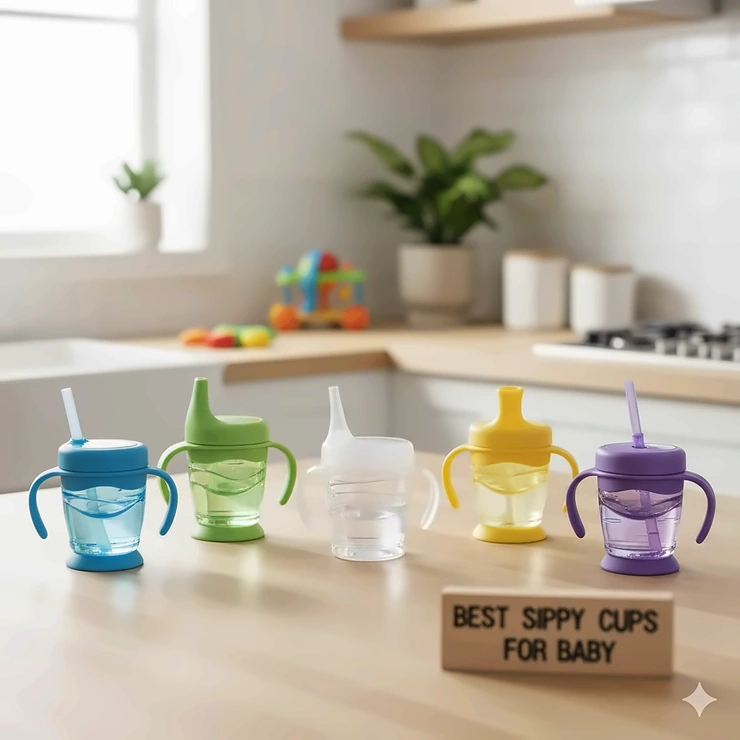
Transitioning your baby from breast or bottle to a sippy cup is a significant milestone in their development. The right sippy cup can make this transition smoother for both you and your little one. With countless options available on the market today, finding the best sippy cup for baby can feel overwhelming. From spout types and materials to handle designs and leak-proof features, there’s a lot to consider when choosing the perfect sippy cup for babies.
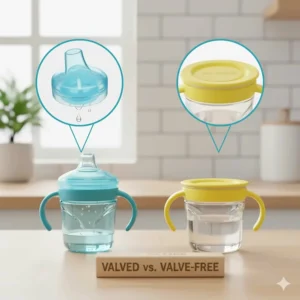
In this comprehensive guide, we’ll explore everything you need to know about sippy cups for baby, including when to introduce them, what to look for, and our top recommendations for 2025. Whether you’re looking for baby sippy cups with handles for a 6-month-old just starting their solids journey or seeking the perfect sippy cups for babies who are a bit older, we’ve got you covered. Let’s dive in and find the ideal sippy cup that will help your little one transition from bottle to cup with ease!
Quick Comparison: Top Sippy Cups for Baby at a Glance
Before we delve deeper into the world of sippy cups, here’s a quick comparison of our top picks to help you make an informed decision:
| Sippy Cup | Age Range | Material | Spout Type | Handle Design | Leak-Proof Rating | Price Range |
|---|---|---|---|---|---|---|
| Munchkin Miracle 360 | 6+ months | BPA-free plastic/Stainless steel | 360° rim | Removable | Excellent | $8-$17 |
| NUK Learner Cup | 6+ months | BPA-free plastic | Soft silicone | Removable | Very good | $9-$12 |
| Tommee Tippee Sippee Cup | 6+ months | BPA-free plastic | Soft silicone | Removable | Excellent | $10-$15 |
| OXO Tot Transitions | 6+ months | BPA-free plastic | Soft silicone | Removable | Good | $8-$14 |
| Pura Kiki Stainless Steel | 6+ months | Stainless steel | Soft silicone | None (sleeve) | Good | $19-$35 |
| Munchkin Any Angle | 6+ months | BPA-free plastic | Weighted straw | Removable | Very good | $8-$12 |
| Honey Bear Straw Cup | 4+ months | BPA-free plastic | Flexible straw | None | Good | $9-$12 |
💬 Just one click – help others make better buying decisions too! 😊
Top 7 Best Sippy Cup for Baby Options: Expert Analysis
1. Munchkin Miracle 360 Trainer Cup
The Munchkin Miracle 360 Trainer Cup stands out as our top overall pick for the best sippy cup for baby. This innovative design completely eliminates spills while supporting proper oral development. Unlike traditional sippy cups with spouts, the Miracle 360 allows your baby to drink from any edge of the cup’s rim, similar to drinking from a regular cup.
Key Features:
- 360° drinking edge that automatically seals when not in use
- Available in 7 oz (with handles) and 10 oz sizes
- BPA-free construction
- Minimal parts for easy cleaning
- Available in plastic or stainless steel versions
- Helps develop proper drinking technique
Parents particularly love how this cup truly lives up to its leak-proof claims. One parent tester said the cup “hasn’t leaked even when held upside down for minutes.” The cup’s design also receives praise from dental professionals as it helps support proper oral development without a spout that could interfere with teeth alignment.
Price Range: $8-$17 depending on material and size
✅ Truly leak-proof design
✅ Supports proper oral development
✅ Easy to clean with minimal parts
✅ Available with or without handles
❌ Some babies may need time to figure out how to drink from it
❌ May not be suitable for very young babies just transitioning from bottles
2. NUK Learner Cup
For babies just starting their transition from bottle to cup, the NUK Learner Cup offers an excellent introduction to sippy cups. With its soft spout and easy-grip handles, this cup is specifically designed for little ones who are new to the sippy cup experience.
Key Features:
- Soft, spill-proof spout that’s gentle on gums
- Available in 5 oz and 10 oz sizes
- Air vent helps reduce swallowed air
- Removable handles that are easy for little hands to grip
- BPA-free construction
- Dishwasher safe
The NUK Learner Cup is one of the youngest age-graded cups on the market, appropriate for babies as young as 4-6 months. Parents appreciate the cup’s thoughtful design with features like the air vent that helps reduce the amount of air swallowed during drinking.
Price Range: $9-$12 for a pack of one or two cups
✅ Soft spout is gentle on gums
✅ Air vent reduces swallowed air
✅ Easy-grip handles are perfect for little hands
✅ Good transitional cup from bottle to sippy
❌ 5 oz size may be too small for older babies
❌ Some parents report difficulty with cleaning around the vent
3. Tommee Tippee Sippee Cup
The Tommee Tippee Sippee Cup earns high marks for being one of the most leak-proof options available. This cup features a unique valve system that effectively prevents spills while still allowing for easy drinking.
Key Features:
- Highly effective anti-leak valve
- Soft spout that’s gentle on gums
- Easy-grip handles
- BPA-free construction
- Available in various colors and designs
- Dishwasher safe
Parents consistently praise the Tommee Tippee Sippee Cup for its exceptional leak-proof performance. The cup’s valve system creates a reliable seal that prevents unwanted spills, even when the cup is tipped over or dropped.
Price Range: $10-$15 for a pack of one or two cups
✅ Excellent leak-proof performance
✅ Soft spout is comfortable for babies
✅ Easy to hold with sturdy handles
✅ Durable construction
❌ Valve system requires thorough cleaning
❌ Some parents find assembly after cleaning to be tricky
4. OXO Tot Transitions Soft Spout Sippy Cup
The OXO Tot Transitions Soft Spout Sippy Cup is designed with convenience and cleanliness in mind. This well-designed cup features a hinged cap that protects the spout when not in use, making it ideal for on-the-go families.
Key Features:
- Silicone spout that conforms to baby’s mouth
- Hinged cap that protects the spout
- Removable handles
- BPA-free construction
- Available in 6 oz size
- Dishwasher safe
The OXO Tot cup stands out for its thoughtful design elements like the protective cap and the comfortable silicone spout. Parents appreciate how the cap keeps the spout clean in diaper bags and while out and about.
Price Range: $8-$14
✅ Protective cap keeps spout clean
✅ Silicone spout is comfortable for baby
✅ Easy to disassemble for thorough cleaning
✅ Sturdy construction
❌ Smaller 6 oz capacity may require frequent refills
❌ Some parents report leaking if not properly assembled
5. Pura Kiki Vacuum Insulated Toddler Sippy Bottle
For parents concerned about plastic exposure, the Pura Kiki Vacuum Insulated Toddler Sippy Bottle offers a premium, plastic-free alternative. This stainless steel sippy cup features a silicone spout and sleeve, making it one of the most eco-friendly and non-toxic options available.
Key Features:
- 100% plastic-free construction
- 18/8 stainless steel body with silicone sleeve
- Vacuum insulation keeps liquids cool
- Interchangeable tops (can convert to straw cup or sport bottle)
- Available in 9 oz and 11 oz sizes
- Dishwasher safe
The Pura Kiki stands out not only for its non-toxic materials but also for its versatility. As your child grows, you can simply swap out the sippy spout for a straw or sport top, extending the life of your investment.
Price Range: $19-$35
✅ Plastic-free, non-toxic construction
✅ Insulation keeps liquids cool
✅ Grows with your child through interchangeable tops
✅ Durable stainless steel construction
❌ More expensive than plastic alternatives
❌ Silicone sleeve needs periodic removal for thorough cleaning
❌ Not completely leak-proof
6. Munchkin Any Angle Click Lock Weighted Straw Cup
For parents looking for a straw cup option, the Munchkin Any Angle Click Lock Weighted Straw Cup offers a clever solution. The weighted straw allows your baby to drink from any angle, even when the cup is tipped.
Key Features:
- Weighted straw that follows liquid when tilted
- Click Lock lid for spill prevention
- Easy-grip handles
- BPA-free construction
- Available in 7 oz and 10 oz sizes
- Includes straw cleaning brush
This cup is particularly useful for babies who may struggle with traditional sippy cups or who prefer drinking through a straw. The weighted mechanism ensures that liquid remains accessible regardless of how your child holds the cup.
Price Range: $8-$12
✅ Weighted straw works at any angle
✅ Click Lock system prevents leaks
✅ Includes straw cleaning brush
✅ Easy for babies to use
❌ Straw requires thorough cleaning
❌ More parts than traditional sippy cups
7. Honey Bear Straw Cup
The Honey Bear Straw Cup is a delightful option that combines functionality with a fun design. This cup is particularly popular for speech therapy and feeding training due to its easy-to-use straw system.
Key Features:
- Fun bear design that appeals to children
- Long, flexible straw
- 8 oz capacity
- BPA-free construction
- Includes cleaning tools
- Good for speech and feeding development
Parents and speech therapists alike recommend the Honey Bear Cup for its effectiveness in helping children develop proper drinking techniques. The squeeze bottle design can help children who are learning to draw liquid through a straw.
Price Range: $9-$12
✅ Fun, appealing design for children
✅ Good for speech and feeding therapy
✅ Includes cleaning tools
✅ Easy to use straw system
❌ Not entirely leak-proof
❌ May not be as durable as other options
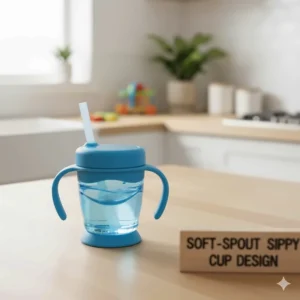
How to Choose the Best Sippy Cup for Baby
When to Introduce a Sippy Cup
The American Academy of Pediatrics recommends introducing sippy cups around 6 months of age, coinciding with the introduction of solid foods. This timing aligns with your baby’s developing motor skills and their ability to sit up independently. Starting with small amounts of water during meals can help them get accustomed to using a cup.
Some babies may show readiness signs earlier, while others might need more time. Look for cues such as:
- Interest in your cups and drinking glasses
- Ability to sit up unassisted
- Beginning to eat solid foods
- Improved hand-eye coordination
Types of Sippy Cups for Different Ages
For 4-6 Months:
- Trainer cups with soft spouts
- Cups with handles
- Smaller capacity (4-6 oz)
- Focus on cups with minimal flow rate
For 6-12 Months:
- Soft spout sippy cups
- Straw cups
- Cups with handles
- Medium capacity (7-10 oz)
For 12+ Months:
- 360° cups
- Straw cups
- Hard spout cups (limited use)
- With or without handles
- Larger capacity (10+ oz)
Key Features to Look For
When shopping for the best sippy cup for baby, consider these important factors:
- Spout Type:
- Soft spouts are gentler on gums and more similar to bottle nipples
- Hard spouts are more durable but may impact oral development
- 360° rims help develop proper drinking technique
- Straws promote proper oral motor development
- Leak-Proof Design:
- Valve systems that prevent spills
- Secure lids that don’t pop off easily
- Protection for straw tips and spouts when not in use
- Ease of Cleaning:
- Minimal parts
- Dishwasher-safe components
- No hard-to-reach crevices
- Included cleaning tools for straws
- Materials:
- BPA-free plastic
- Stainless steel
- Silicone components
- Glass (with protective sleeves for older babies)
- Handle Design:
- Ergonomic handles for easy gripping
- Removable handles for growth and versatility
- Non-slip texture or coating
Health Considerations for Sippy Cups
Dental Health and Sippy Cup Use
Dentists and pediatricians have raised concerns about the potential impact of prolonged sippy cup use on dental development. Traditional hard-spout sippy cups may interfere with proper tongue positioning and swallowing patterns if used extensively.
To minimize dental concerns:
- Limit sippy cup use to meal and snack times
- Avoid allowing your child to walk around with a sippy cup all day
- Transition to straw cups or 360° cups when possible
- Use sippy cups primarily for water, not juice or milk
- Clean your baby’s gums and teeth after drinking from sippy cups
Materials and Safety
When choosing a sippy cup, consider the materials used in its construction:
- Plastic cups should be BPA-free and phthalate-free
- Stainless steel cups offer durability and are free from chemicals that can leach into liquids
- Silicone components are generally safer than hard plastic spouts
- Glass cups provide a non-toxic option but require protective sleeves to prevent breakage
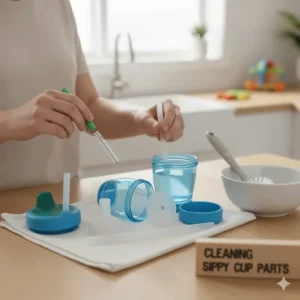
Maintenance and Cleaning Tips
Proper Cleaning Techniques
To keep your baby’s sippy cup clean and safe:
- Disassemble all parts completely after each use
- Rinse with warm water immediately after use
- Use a bottle brush or sippy cup brush to clean hard-to-reach areas
- Pay special attention to valves, spouts, and straws where mold can grow
- Allow all parts to dry completely before reassembly
- Periodically deep clean with a mixture of vinegar and water
When to Replace Sippy Cups
Even the best sippy cups need replacement eventually:
- Replace cups with visible wear, cracks, or damage
- Change out straws and spouts every 2-3 months
- Consider upgrading cup styles as your baby develops new skills
- Watch for mold or discoloration that doesn’t come clean
Transitioning from Bottle to Sippy Cup
Step-by-Step Approach
Transitioning from bottle to sippy cup is often most successful when done gradually:
- Start early – Introduce a sippy cup around 6 months, even if just for practice
- Choose the right cup – Begin with a trainer cup that has a soft spout similar to a bottle nipple
- Time it right – Offer the sippy cup during one feeding per day, ideally when your baby isn’t too hungry or tired
- Demonstrate – Show your baby how to use the cup by tilting it slightly
- Be patient – Expect spills and rejection at first; keep trying without pressure
- Gradually replace bottles – Once comfortable with one feeding from a sippy cup, slowly replace other bottle feedings
Common Challenges and Solutions
Many parents face hurdles when introducing sippy cups:
- Refusal to drink: Try different cup types or let your baby see you drinking from a similar cup
- Difficulty with technique: Guide the cup to help tilt it properly or try a weighted straw cup
- Chewing on spout: Consider a harder spout or a silicone straw option
- Excessive spilling: Try a cup with a slower flow or a more leak-proof design
- Preference for bottles: Gradually phase out bottles while making sippy cup time positive and engaging
Specialty Sippy Cups for Specific Needs
For Babies with Sensory Issues
Babies with sensory sensitivities may benefit from:
- Cups with soft, textured grips
- Predictable flow rates
- Simple designs without overwhelming features
- Consistent materials and temperatures
For Travel and On-the-Go
When choosing a cup for outings and travel, look for:
- Secure, leak-proof lids
- Protective caps for spouts
- Durable construction that withstands drops
- Insulation to maintain temperature
- Compact design that fits in diaper bag pockets
DIY Sippy Cup Hacks and Tips
Label and Organize
Keep track of your sippy cup collection with these tips:
- Use silicone bands in different colors to identify each child’s cup
- Label cups with waterproof labels or permanent markers
- Store assembled cups in a dedicated drawer or container
- Keep spare parts organized in labeled containers
Leak-Proof Testing
Before trusting a new sippy cup design, test it at home:
- Fill with water and assemble according to instructions
- Turn upside down over the sink and observe for leaks
- Shake gently to simulate how your child might handle it
- Leave it on its side for a few minutes to check for slow leaks
FAQs About Sippy Cups for Babies
❓ When should I introduce a sippy cup to my baby?
❓ Are sippy cups bad for my baby's teeth?
❓ How many sippy cups do I need?
❓ How often should I replace my baby's sippy cup?
❓ What's the difference between a straw cup and a sippy cup?
Conclusion: Finding Your Perfect Sippy Cup
Choosing the best sippy cup for baby depends on your child’s age, development, and preferences. The ideal cup should be easy to clean, durable, leak-resistant, and support proper oral development. Whether you opt for a classic soft spout design like the NUK Learner Cup, an innovative 360° option like the Munchkin Miracle Cup, or an eco-friendly stainless steel option like the Pura Kiki, the key is to find what works best for your baby’s unique needs.
Remember that the transition from bottle to cup is a process that takes time and patience. Don’t be discouraged if your first choice doesn’t work out—many babies need to try several styles before finding their favorite. With consistency and positive reinforcement, your little one will master the skills needed for independent drinking.
By considering the factors outlined in this guide and selecting a high-quality sippy cup that meets your specific requirements, you’ll be supporting your baby’s development while making mealtime a little less messy and a lot more enjoyable for everyone.
Recommended for You:
- Leak Proof Toddler Water Bottle: 7 Best Picks 2025
- Spill Proof Cups for Toddlers: 7 Best Picks 2025
- Best Toddler Sippy Cup for Milk: 7 Top Picks for 2025
Disclaimer: This article contains affiliate links. If you purchase products through these links, we may earn a small commission at no additional cost to you.
✨ Found this helpful? Share it with your friends! 💬🤗
