
In This Article
Interactive learning toys for a 2 year old are playthings that respond to a toddler’s own actions, whether a press, a pound, a drop or a slide. In responding, they teach something: a color, a word, a count, or the big idea that one action causes another. The best ones are simple enough for small hands to run alone.
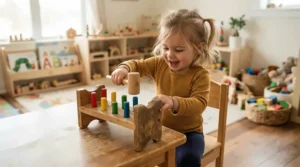
Two is a strange, wonderful age. Your child is part scientist, part tiny dictator, and part wrecking ball. The CDC’s milestone guidance for age two describes children who start sorting shapes and colors, copy adults, push for independence, and play mainly beside other children rather than with them. Toys that fit that profile get played with. Toys that ignore it end up in the closet, lonely and blinking.
Here is how this guide works. I picked seven real, widely sold products across budget, mid-range and premium tiers. Then I read the published specs and the patterns in owner reviews. I haven’t tested these products myself, so everything below is analysis of specs and aggregated review themes, not personal anecdotes. Where independent reviews are thin, I say so.
You’ll also find a hands-on learning toy for 2 year old kids in nearly every price bracket. The real trick is matching the toy to the child in front of you, not to the box art.
Quick Comparison: Our Top Picks at a Glance
| Product | Listed Age | Power | Core Skill | Best For |
|---|---|---|---|---|
| LeapFrog Learning Friends 100 Words Book | 18 months+ | 2 AA | Vocabulary | Chatty or late-talking toddlers who love pointing |
| Melissa & Doug Shape Sorting Cube | 2+ years | None | Shape matching | Screen-free problem solving on a budget |
| Hape Pound & Tap Bench | 12 months+ | None | Cause and effect, rhythm | Little pounders who need an outlet |
| VTech Drill & Learn Toolbox Pro | 2-5 years | 2 AA | Colors, numbers, role play | Kids who want to “help” like a grown-up |
| LeapFrog Scoop & Learn Ice Cream Cart | Typically 2+ | Batteries | Counting, sequencing | Pretend play and following steps |
| VTech Touch & Learn Activity Desk Deluxe | 2+ years | Batteries | Letters, numbers, writing | A long-lived learning station |
| HarVow LED Busy Board | Check listing | Batteries | Switches, lights, fine motor | Light-and-switch tinkerers |
Looking at the table, the cheapest picks lean on one clean idea, such as dropping a shape or touching a picture. The pricier VTech Touch & Learn Activity Desk Deluxe and LeapFrog Scoop & Learn Ice Cream Cart bundle several skills and grow with the child. If your budget is tight, start with the Melissa & Doug Shape Sorting Cube, because it asks for no batteries and no setup.
💬 Just one click — help others make better buying decisions too!😊
Top 7 Interactive Learning Toys for a 2 Year Old: Expert Analysis
1. LeapFrog Learning Friends 100 Words Book — best budget first-words book
Think of this as a picture book that talks back. Touch a picture and one of three animal friends (Turtle, Tiger or Monkey) says the word, adds a sound effect, or shares a fun fact.
More than 100 words are grouped into 12 learning categories. That grouping matters because categories teach how words relate to each other, not just what each one is. Three play modes, including a Spanish option, stretch its shelf life, and it runs on 2 AA batteries. Listings put it at 18 months and up.
On paper, this suits the vocabulary surge that tends to arrive around age two. A toddler can point, listen and repeat while a parent makes dinner. It is a seated, quiet-ish toy, so it fits calm kids better than constant climbers.
Reviewers consistently describe an easy-to-use book that toddlers return to. The recurring complaints are thin cardstock pages and occasional inconsistent responsiveness.
Pros:
- ✅ Grouped word categories build vocabulary relationships
- ✅ Spanish mode extends long-term value
- ✅ Simple touch controls toddlers master quickly
Cons:
- ❌ Pages can feel thin and wear with rough use
- ❌ Batteries needed for regular use
Price range: under $30, so it is strong value as a language starter. Check current price.
2. Melissa & Doug Shape Sorting Cube — best no-battery problem solver
Sometimes the old trick is still the best. Twelve chunky wooden shapes drop through matching holes in a 5.5-inch hardwood cube, and each lands with a satisfying “clunk.”
The cube weighs about 1.4 pounds. That heft keeps it from skittering across the floor when a frustrated toddler jams the wrong shape into the wrong hole. A hinged lid lets the child reset the game without a grown-up. Listings recommend it for ages two to four.
What the spec sheet won’t tell you is why this works so well. The toy is self-correcting: wrong shapes simply don’t fit. That makes it a clean introduction to trial and error, and it fits the CDC milestone of beginning to sort shapes and colors. It also works without batteries, so it never runs out of “power” mid-tantrum.
Reviewers on large retail listings rate it highly overall. The most common complaints involve finish quality and lid fit varying between units, so inspect it on arrival.
Pros:
- ✅ Zero batteries, zero setup
- ✅ Self-correcting design teaches problem solving
- ✅ Hinged lid enables independent reset
Cons:
- ❌ Quality can vary between individual units
- ❌ Fewer “wow” effects than electronic rivals
Price range: roughly $10-$20, an excellent value pick.
3. Hape Pound & Tap Bench — best for burning off pounding energy
Toddlers love to bang things. This toy gives that urge a job. Pound the colored balls with the mallet and they drop onto a xylophone and tinkle down the keys. Slide the xylophone out and it becomes a solo instrument.
It is solid wood with water-based paint, listed for 12 months and up, and one retailer lists it as meeting ASTM F963 and EN 71 safety standards. In practice, the ball-drop gives an instant, audible reward for a deliberate action. That is the heart of interactive cause-and-effect toys.
I’d rate it a strong fit for energetic two-year-olds who need physical, noisy feedback rather than quiet tapping. Owners describe it as sturdy enough to withstand heavy use, with one noting it is “surprisingly not loud.” Some parents of older toddlers say interest fades closer to age three, so treat it as a great second-year toy rather than a forever toy.
Pros:
- ✅ Immediate sound feedback for every swing
- ✅ Slide-out xylophone doubles the play options
- ✅ Solid wood construction handles rough play
Cons:
- ❌ Loose balls and mallet can go missing
- ❌ May lose appeal as kids approach three
Price range: roughly $30-$40, good value for a wooden, battery-free toy.
4. VTech Drill & Learn Toolbox Pro — best for little “helpers”
Two-year-olds want to do what adults do. This toolbox hands them a hammer, wrench, plastic nails and screws, and a drill that actually spins. It comes with ten accessories and a tool belt.
Three tool buttons on the toolbox play sounds and songs, and double-sided project cards teach colors, numbers and how to fix things. Three play modes (Free Play, Challenge and Music Fun) let the toy get harder as your child gets better. It needs 2 AA batteries and is listed for ages two to five. Everything stores inside the box afterward.
Here is the analytical take. The built-in storage turns cleanup into part of the game, which quietly supports toddler independence. The drill is also manual, so the electronic part is limited to the toolbox tray.
Reviewers like the big, chunky pieces and sturdy build. One cautions that the drill needs supervision for kids who tend to wave things near their faces. Adjust accordingly.
Pros:
- ✅ Role play plus colors and numbers in one box
- ✅ Everything stores inside for easy cleanup
- ✅ Three play modes grow with the child
Cons:
- ❌ Drill needs supervision with impulsive toddlers
- ❌ Squeezing the drill can be hard for smaller hands
Price range: roughly $20-$30, a strong mid-range value.
5. LeapFrog Scoop & Learn Ice Cream Cart — best for pretend play and following steps
This is the toy that turns a living room into a tiny shop. A magnetic “magic scooper” picks up ice cream, toppings and syrup, and the cart announces the colors and flavors. Six animal order cards turn scooping into a sequencing game, from easy to harder.
Pressing the syrup pump or coin button counts to ten. Pushing the cart builds gross motor skills, and storage drawers hold the accessories. It is a bigger toy, roughly 24 inches tall, and runs on batteries (check the listing for the exact type). Most listings put it at age two and up.
On paper, this is the most “pretend” product here. Following an order card builds memory and sequencing, and the role play fits the CDC milestone of simple make-believe. It also invites an adult or sibling to be the customer.
Reviewers are enthusiastic about the counting and the easy-to-use magnetic scooper. The recurring gripes are volume with no adjustment setting and fewer cones than flavors. One listing also carries a caution about strong magnets, so supervise.
Pros:
- ✅ Order cards teach sequencing and memory
- ✅ Push-along cart adds movement to learning
- ✅ Magnetic scooper is easy for small hands
Cons:
- ❌ No volume control, and it can get loud
- ❌ Contains strong magnets that need supervision
Price range: roughly $50-$70, a premium-leaning play investment.

6. VTech Touch & Learn Activity Desk Deluxe — best long-term learning station
A desk, an easel and a chalkboard in one, this is the toy most likely to still be in use when your child is four or five. Swap in a double-sided activity card and the desk speaks, sings and quizzes.
The Deluxe version’s listing describes 100+ vocabulary words, 20+ activities and 20+ songs. An LED screen shows how to write letters and numbers stroke by stroke. Versions differ in page counts and compatibility, and the base desk does not work with Deluxe expansion packs. Check the exact model before buying packs. It is aimed at ages two and up.
Where the spec sheet shines is longevity. A two-year-old will mostly press and listen, but a three-year-old can follow the writing prompts. That makes cost-per-use attractive.
Reviewers say cards swap easily, even for very young siblings. The complaints are touch sensitivity, a cracked front panel in one household, and stool legs that seat less firmly than the desk itself.
Pros:
- ✅ Grows from pressing to pre-writing
- ✅ Easy card swapping supports independent play
- ✅ Easel and chalkboard modes extend uses
Cons:
- ❌ Compatibility between desk versions can confuse
- ❌ Larger footprint needs a dedicated corner
Price range: roughly $50-$80 depending on version, a good value over several years.
7. HarVow LED Busy Board — best for light-and-switch tinkerers
Toddlers love switches, and this board is basically a wall of them. The listing describes 24 LED lights and 13 switches in a Montessori-style layout aimed at fine motor skills and cause-and-effect.
One review roundup called it the most complete single option for teaching cause-and-effect, color differentiation and fine motor control together. That tracks with the CDC milestone of trying to use switches, knobs and buttons on a toy. Flipping a switch and seeing a light respond is cause-and-effect distilled to its purest form.
I’d flag one honest caveat. The independent review base for this model is thinner than for established brands, so treat it as a promising choice rather than a proven one. Because it is battery-powered, confirm the battery compartment is screw-secured, since pry-open covers are a known toy-safety issue.
Pros:
- ✅ Lights respond instantly to every switch
- ✅ Builds fine motor control and color recognition
- ✅ Compact board suits travel and quiet corners
Cons:
- ❌ Thinner independent review history than big brands
- ❌ Battery compartment security should be verified
Price range: commonly in the $20-$35 range for this style, so check current price.
Side-by-Side: Top 7 Specs, Price Ranges and Value
| Product | Price Range | What It Really Delivers | Best For |
|---|---|---|---|
| LeapFrog Learning Friends 100 Words Book | Under $30 | Word categories, three modes | Early talkers |
| Melissa & Doug Shape Sorting Cube | $10-$20 | Matching and problem solving | Tight budgets |
| Hape Pound & Tap Bench | $30-$40 | Pounding plus musical feedback | High-energy toddlers |
| VTech Drill & Learn Toolbox Pro | $20-$30 | Role play, counting, colors | Aspiring helpers |
| LeapFrog Scoop & Learn Ice Cream Cart | $50-$70 | Sequencing, counting, pretend play | Imaginative kids |
| VTech Touch & Learn Activity Desk Deluxe | $50-$80 | Letters, numbers, writing | Long-term value |
| HarVow LED Busy Board | $20-$35 | Switches and lights | Fine-motor tinkering |
Here is how I’d read the data. The Melissa & Doug Shape Sorting Cube is the best value per dollar, but the VTech Touch & Learn Activity Desk Deluxe can win on cost-per-use if it stays in rotation through age four. If your child loves role play, the LeapFrog Scoop & Learn Ice Cream Cart justifies its premium, while the VTech Drill & Learn Toolbox Pro delivers a similar pretend-play punch for roughly half the money.
How to Choose Interactive Learning Toys for a 2 Year Old
- Start with the skill, not the sticker. Decide whether you’re targeting language, fine motor, problem solving or pretend play. A toy that targets one skill well beats one that targets five badly.
- Check that the child can start it alone. Two-year-olds have short attention spans, and a toy that needs an adult to launch it often won’t survive the afternoon.
- Look for built-in feedback. A sound, a light or a rolling ball confirms the action worked. That is the heart of interactive cause-and-effect toys.
- Prefer low-frustration failure. The Melissa & Doug Shape Sorting Cube fails gently, because wrong shapes just don’t fit. Avoid toys where a mistake ends the fun.
- Match the age range honestly. If a listing says 18 months and up, a two-year-old will use it differently than an 18-month-old. Think about what the toy offers at 30 months.
- Verify safety before the wow factor. Small parts, strong magnets and loose battery covers matter more than any song list.
The American Academy of Pediatrics’ Power of Play guidance points parents toward blocks, shape sorters, puzzles and everyday household objects, a useful reminder that interactive does not have to mean electronic.
Interactive Cause-and-Effect Toys: Why They Work at Age Two
A two-year-old is running a thousand tiny experiments a day. Push this, drop that, flip the switch. Interactive cause-and-effect toys give those experiments clean, repeatable results, and repetition is how toddlers build understanding.
Consider the Hape Pound & Tap Bench. A swing of the mallet sends a ball tumbling down a xylophone. The cause is physical, and the effect is audible within a second. The HarVow LED Busy Board does the same thing with light, and the Melissa & Doug Shape Sorting Cube does it with a “clunk.”
CDC milestone materials note that children around this age try using switches, knobs or buttons on toys. That is cause-and-effect curiosity in action, and it is why these toys feel so magnetic.
Reviewers consistently note that toddlers repeat the same action dozens of times, which can drive adults slightly mad. Don’t redirect too soon. The repeats are the lesson, and a child who flips the same switch thirty times is testing a hypothesis, not being annoying.
A useful rule of thumb is to choose toys where the effect arrives within about a second and is clearly tied to the action. Delayed or random responses blur the connection, which is why some talking toys frustrate toddlers instead of teaching them.
Hands-On Learning Toy for 2 Year Old: What “Hands-On” Really Means
A hands-on learning toy for 2 year old children isn’t just anything with buttons. It is a toy that requires the child’s hands to make something happen: grasping, turning, dropping, pressing, fitting.
That distinction matters because passive toys, the ones that entertain while the child watches, deliver far less. Pediatric guidance generally favors toys that let children explore and manipulate. Coverage of an AAP report on toy selection noted that simpler, non-electronic toys encourage more parent-child talk and use of the hands in ways that support spatial and mathematical thinking.
Practically, rank toys by how much of the work the child does. The Melissa & Doug Shape Sorting Cube is high: the child grasps, aligns and drops. The VTech Drill & Learn Toolbox Pro is also high, with its screws and gears. The LeapFrog Learning Friends 100 Words Book is moderate, since the child touches but mostly listens.
None of that makes talking toys bad. It means you should pair them with at least one object-manipulation toy so the day includes both listening and doing.
A good test is the “put it down and walk away” check. If the toy only works while an adult hovers, it isn’t really hands-on for the child.
Interactive Play Toy for Toddlers: Electronic vs Wooden
The perennial debate: electronic or wooden? Here is how the two camps compare for an interactive play toy for toddlers.
| Feature | Electronic (e.g., VTech Drill & Learn Toolbox Pro) | Wooden (e.g., Melissa & Doug Shape Sorting Cube) |
|---|---|---|
| Feedback | Lights, songs, spoken words | Natural sounds, physical resistance |
| Battery upkeep | Yes | None |
| Noise control | Often limited | Child-controlled |
| Longevity | Depends on features | Often high |
| Best For | Kids who respond to praise and sound | Kids who prefer quiet, tactile exploration |
Reading across, electronic toys excel at spoken vocabulary and instant, enthusiastic feedback. Wooden toys excel at open-ended, child-driven play. The Hape Pound & Tap Bench straddles both, using wood but producing musical feedback.
My practical take is to mix. One or two electronic toys for language and role play, plus a few wooden toys for open-ended manipulation, gives a balanced shelf without overstimulation.
✨ Don’t Miss These Exclusive Deals!
🔍 Take your toddler’s playtime to the next level with these carefully selected products. Click on any highlighted item to check current pricing and availability. These toys will help you create joyful, confidence-building learning moments your whole family will love!
Parallel Play: How to Choose Toys That Work Beside Other Kids
If your two-year-old sits next to a friend and ignores them completely, relax. That is parallel play, and it is normal. In developmental psychology’s stages of play, parallel play follows solitary and onlooker play and comes before associative play. Children play near each other, often with similar toys, but without directly interacting.
Sources describe parallel play beginning to emerge around 18 to 24 months and peaking between two and three. The CDC milestone materials say it simply: two-year-olds play mainly beside other children, but are starting to include them.
What does that mean for toys? Parallel play thrives on duplicates and on toys that don’t demand a partner. Two Melissa & Doug Shape Sorting Cubes side by side invite quiet imitation without a tug-of-war. A Hape Pound & Tap Bench is naturally solo, so it works for a child who wants to play near friends without negotiating.
Avoid role-play sets that need a “customer,” like the LeapFrog Scoop & Learn Ice Cream Cart, until your child is ready to include others, though they work fine with a parent as the customer. For shared sessions, one tip from parenting sources is to play alongside your child with similar or identical toys, which models the behavior without forcing interaction.
Toddler Independence: Toys That Let Your Two-Year-Old Lead
“Me do it!” may be the defining phrase of the second year. The CDC lists increasing independence, and defiance, among the milestones at this age. Toddler independence needs a safe place to practice, and toys are the perfect training ground.
A quality toy for independence has three traits. It starts without help, it gives feedback without a grown-up, and it resets without a grown-up. The VTech Drill & Learn Toolbox Pro checks all three, because everything stores inside the toolbox afterward. The VTech Touch & Learn Activity Desk Deluxe is easy to run on its own since cards swap easily. The LeapFrog Scoop & Learn Ice Cream Cart has drawers that teach “put it back.”
One review roundup suggests prioritizing toys a two-year-old can start independently for at least ten minutes, and saving parent-intensive toys for weekend bonding. That’s a smart filter for weekday sanity.
Here’s a practical tip. Place independent toys on low, open shelves where the child can reach them. A toy locked in a closet teaches dependence, while a toy on a shelf teaches choice. Limit the shelf to five or six toys so selecting one feels manageable rather than overwhelming.
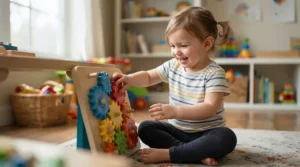
First 30 Days: Setup, Rotation and Maintenance Guide
Most toy value is won or lost in the first month. Here is a simple plan that Amazon listings don’t give you.
Week one: demonstrate once, then step back. Show your child the core action, such as sliding a card, pounding a ball or dropping a shape. Then let them take over. If you keep narrating, they’ll wait for you.
Week two: introduce the second layer. On the VTech Drill & Learn Toolbox Pro, try the project cards. On the LeapFrog Learning Friends 100 Words Book, switch to the fun facts or Spanish mode. This is where many toys quietly double their value.
Week three: rotate. Pack away half the toys and swap them in. The same Hape Pound & Tap Bench feels new after a ten-day break.
Week four: audit. Which toys got played with without prompting? Keep those at eye level.
Maintenance matters too. Test batteries monthly, and replace the demo batteries that come with some toys, which are often intended only for demonstration. Wipe wooden toys with a damp cloth rather than soaking them. Inspect all toys for loose parts or cracked panels every few weeks, especially after heavy use.
Common first-month mistakes include introducing everything at once, leaving batteries to leak in unused toys, and rescuing a child at the first sign of frustration.
Real-World Scenarios: Matching Toys to Three Families
Scenario one: the apartment on a budget. A family in a small apartment spends under $40 total. Noise matters, and storage is tight. The Melissa & Doug Shape Sorting Cube plus the LeapFrog Learning Friends 100 Words Book covers problem solving and language for well under that, and both stow on a shelf.
Scenario two: the high-energy kid who never sits. This child pounds, climbs and throws. The Hape Pound & Tap Bench gives pounding a purpose, and the LeapFrog Scoop & Learn Ice Cream Cart channels movement into pretend play. Both reward physical, active toddlers.
Scenario three: the sibling gap. A two-year-old shares a playroom with a four-year-old. The VTech Touch & Learn Activity Desk Deluxe shines here, since its writing and number activities scale up for the older child. Review roundups of similar toys note that mixed-age siblings often enjoy them simultaneously.
In each case, the right pick depends on budget, environment and frequency of use. An apartment dweller with thin walls should think about noise. A family with a long playroom has room for a cart. A parent who needs twenty minutes of independent play should favor toys that start and reset alone.
2 Year Old Educational Toy Recommendation: A Simple Decision Framework
Here is a short 2 year old educational toy recommendation framework built from the analysis above.
- If your child is talking a lot (or you want to encourage it), choose the LeapFrog Learning Friends 100 Words Book, because word categories reinforce vocabulary.
- If your child loves to bang and pound, choose the Hape Pound & Tap Bench, because it converts energy into musical feedback.
- If your child imitates adults constantly, choose the VTech Drill & Learn Toolbox Pro, because role play and storage support independence.
- If your child loves pretend play and rules, choose the LeapFrog Scoop & Learn Ice Cream Cart, because order cards teach sequencing.
- If you want one toy for several years, choose the VTech Touch & Learn Activity Desk Deluxe, because it scales into pre-writing.
- If your budget is minimal, choose the Melissa & Doug Shape Sorting Cube.
- If your child is a switch-flipper, try the HarVow LED Busy Board, with the battery-compartment check noted earlier.
When in doubt, buy one low-cost, battery-free toy and one electronic toy, watch which one your child chooses for a week, then expand in that direction. Your child’s behavior is better data than any listing.
Common Mistakes When Buying Interactive Learning Toys
Buying for the child you want, not the child you have. A toy aimed at ages three to five can frustrate a two-year-old. Stay close to the listed minimum age.
Chasing features over play value. A toy with 100 songs isn’t better than one with a single satisfying action. Toddlers repeat simple actions endlessly.
Ignoring volume. Some interactive toys, including reviews of the LeapFrog Scoop & Learn Ice Cream Cart, note loud sound without adjustable volume. If you’re noise-sensitive, check for a volume control before buying.
Overbuying. A cluttered playroom reduces focus. Fewer toys, rotated, almost always outperform piles.
Skipping the safety check. Strong magnets, small parts and loose battery doors are the three big ones, covered next.
Forgetting compatibility. Accessory ecosystems like the VTech Touch & Learn Activity Desk Deluxe have expansion packs that only fit certain versions. Verify before you buy.
Treating reviews as gospel. Look for patterns across many reviews, not single dramatic ones. A single “broke in a day” review matters less than twenty saying “survived a year.”
Safety Guide: Small Parts, Batteries and Magnets
Safety first, always. A toy is considered a small-parts hazard if it fits entirely inside a toilet paper roll tube, and such toys are inappropriate for children under three. Check every accessory, including the nails and screws on tool sets and the pieces of play food.
Button batteries are a serious hazard. Pediatric guidance warns that a swallowed button battery can cause chemical burns in as little as two hours. Federal toy rules require secure closures in toys, but many remotes and gadgets do not have them. Look for battery compartments secured with a screw rather than a snap-on cover, and store spare batteries out of reach.
Magnets are the other concern. Swallowing two or more small magnets can be life-threatening. Products with intentional magnets, such as the scooper on some ice cream carts, carry warnings. Supervise, and keep any loose magnet out of reach.
Other tips include checking for ASTM or CPSC compliance labeling, avoiding strings longer than about 7 inches, and not giving hand-me-down toys that predate current standards without inspecting them.
Finally, check for recalls. The CPSC recall database is free and searchable, and a two-minute check before buying can save real heartache.
Long-Term Cost and Value
Cost-per-use is the smartest way to price toys. A $15 toy used daily for a year costs pennies per play. A $60 toy abandoned in a month is expensive.
Run the numbers on the picks above. The Melissa & Doug Shape Sorting Cube has no ongoing cost and tends to outlast its toddler years, since younger siblings inherit it. The Hape Pound & Tap Bench is similar: wood doesn’t wear out the way electronics do.
Battery-powered toys carry recurring costs. The VTech Drill & Learn Toolbox Pro needs 2 AA batteries, and the LeapFrog Learning Friends 100 Words Book needs the same. A rechargeable set pays for itself within a few months, so consider that investment.
The VTech Touch & Learn Activity Desk Deluxe carries the highest upfront price but potentially the longest lifespan, particularly if you budget for expansion packs. The LeapFrog Scoop & Learn Ice Cream Cart is similar: pricier, but a favorite for imaginative kids.
Resale also helps. Branded toys from established makers tend to hold value on secondhand markets, which softens the effective price. Rotating toys in and out extends their novelty, effectively multiplying their value without extra spending.

FAQ
❓ What is the best interactive learning toy for a 2 year old on a budget?
❓ How do I know if a toy is too advanced for my two-year-old?
❓ Do talking toys help toddlers learn to speak?
❓ How many interactive toys does a 2 year old actually need?
❓ Is it normal for a 2 year old to ignore other kids while playing?
Conclusion
Choosing among interactive learning toys for a 2 year old doesn’t have to be overwhelming. Pick one skill you want to support, choose a toy your child can start and reset alone, and verify the safety basics. That one-two-three covers most of what matters.
For a strong starter shelf, I’d pair a battery-free wooden classic, like the Melissa & Doug Shape Sorting Cube or the Hape Pound & Tap Bench, with one electronic toy that matches your child’s current obsession. The LeapFrog Learning Friends 100 Words Book suits talkers, the VTech Drill & Learn Toolbox Pro suits helpers, and the LeapFrog Scoop & Learn Ice Cream Cart suits pretenders. If you want a toy that grows with your child, the VTech Touch & Learn Activity Desk Deluxe is the long-game pick, and the HarVow LED Busy Board is worth a look for switch-lovers once you’ve verified its battery compartment.
Whatever you choose, rotate, supervise, and let your child repeat the same action fifty times. That repetition is the learning.
✨ Ready to build your toddler’s perfect play shelf?
🔍 Compare the seven picks above, check current pricing and availability on each, and choose the one that fits your child’s personality. A few smart purchases now can fuel months of curious, confident play!
Recommended for You
- Tech Toys For 2-3 Year Old Preschoolers: 7 Best Picks (2026)
- Budget Tech Gifts For Baby’s First Birthday: 7 Smart Picks 2026
- Talking Toys For 1-2 Year Olds: 7 Smart Picks Parents Love (2026)
Disclaimer: This article contains affiliate links. As an Amazon Associate, I earn from qualifying purchases. If you purchase products through these links, we may earn a small commission at no additional cost to you.
✨ Found this helpful? Share it with your friends! 💬🤗
