
In This Article
Have you ever watched your 3-month-old kick off every blanket you carefully tucked around them? You’re not alone, and there’s actually a safer solution that’ll give you peace of mind while keeping your little one cozy all night long.
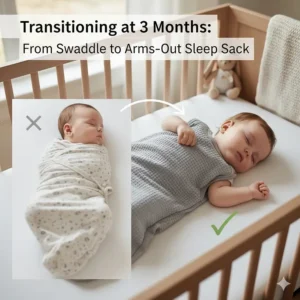
Sleep sacks for 3 month old babies have become the gold standard for infant sleep safety, replacing loose blankets that pose suffocation risks. Think of them as wearable blankets that zip up like sleeping bags—your baby stays warm, can’t kick them off, and you can actually sleep without worrying. As your little one transitions from the newborn swaddle phase, finding the right sleep sack becomes crucial for both safety and comfort. At three months, babies are developing stronger neck muscles, starting to roll (or showing signs they might soon), and sleeping for longer stretches. The right sleep sack accommodates all these changes while following American Academy of Pediatrics safe sleep guidelines.
Whether you’re dealing with a hot sleeper who overheats in anything too warm, a chilly nursery that needs extra insulation, or simply want to establish healthy sleep habits, this guide cuts through the marketing noise to help you choose wisely.
Quick Comparison Table: Top Sleep Sacks at a Glance
| Product | TOG Rating | Material | Price Range | Best For |
|---|---|---|---|---|
| HALO 100% Cotton SleepSack | 1.5 | 100% Cotton | $30-$35 | Budget-conscious parents |
| Kyte Baby Sleep Bag | 1.0 | Bamboo Rayon | $55-$60 | Premium softness & eczema-prone skin |
| Love to Dream Swaddle UP | 1.0 | Cotton/Elastane | $24-$30 | Babies who prefer arms up |
| Gunamuna Sleep Bag | 1.0 | Bamboo Rayon | $55-$60 | Easy diaper changes |
| Yoofoss 3-Pack Sleep Sack | 0.5 | Organic Cotton | $30-$35 | Summer/value seekers |
| HALO Micro-Fleece SleepSack | 3.0 | Polyester Fleece | $30-$40 | Cold climates/winter |
| Kyte Baby 2.5 TOG Sleep Bag | 2.5 | Bamboo Rayon | $60-$65 | Year-round versatility |
💬 Just one click – help others make better buying decisions too! 😊
Top 7 Sleep Sacks for 3 Month Old: Expert Analysis
1. HALO 100% Cotton SleepSack Swaddle
If you’re looking for a reliable, hospital-trusted option without breaking the bank, the HALO 100% Cotton SleepSack Swaddle deserves your attention. This isn’t just another sleep sack—it’s the brand hospitals across America use to teach safe sleep practices to new parents.
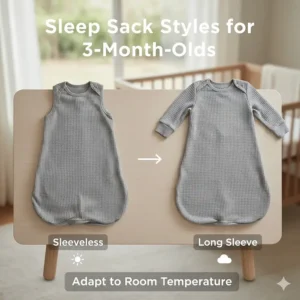
The 3-way adjustable design lets you swaddle with arms in, one arm out, or both arms free, making it perfect for that tricky 3-month transition period when babies start showing signs of rolling. The double-knit 100% cotton construction provides just enough stretch for comfort while maintaining that snug, secure feeling babies crave. At 1.5 TOG, it’s ideal for room temperatures between 68-72°F.
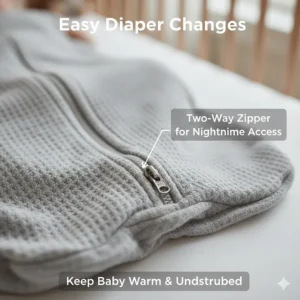
Parents rave about the inverted zipper that opens from the bottom—midnight diaper changes become a breeze without fully unwrapping your drowsy baby. The sleeveless design prevents overheating, a critical safety feature for young infants.
Price: $30-$35
Key Specs: TOG 1.5, 100% cotton, fits 6-12 lbs (0-3 months)
Quick Pros:
✅ Trusted by hospitals nationwide
✅ Three-way adjustability grows with baby
✅ Bottom-up zipper for easy changes
Minor Cons:
❌ May need to size up sooner than premium brands
❌ Less variety in patterns compared to boutique options
Customer feedback consistently highlights how the HALO makes babies feel secure without restricting natural movement. One parent noted their baby slept 2 hours longer the first night using it.
2. Kyte Baby Original Bamboo Sleep Bag
When parents talk about “luxury sleep sacks,” the Kyte Baby Sleep Bag typically tops the list. Made from 97% bamboo rayon, this sleep sack feels like butter against delicate skin—so soft that you’ll wish they made adult versions.
The genius lies in the fabric’s natural properties: temperature-regulating, moisture-wicking, and hypoallergenic. For babies with eczema or sensitive skin, this can be transformative. The J-shaped double zipper includes a protective zipper garage to prevent any accidental skin snags, and the quilted design adds just enough warmth without bulk.
At 1.0 TOG, it’s perfect for nurseries kept between 69-73°F, making it usable year-round in most climate-controlled homes. The sizing runs generous—parents report getting 3-4 months of use per size, excellent value despite the higher price point.
Price: $55-$60
Key Specs: TOG 1.0, bamboo rayon, fits 6-12 lbs (Small/0-6 months)
Quick Pros:
✅ Exceptionally soft bamboo material
✅ Excellent for eczema-prone babies
✅ Temperature-regulating for year-round use
Minor Cons:
❌ Premium pricing
❌ Requires air drying (no dryer)
Customer reviews consistently mention improved sleep quality, with many parents saying their babies transition more easily to sleep when wearing it. The fabric maintains its softness wash after wash, making it a favorite to pass down to younger siblings.
3. Love to Dream Swaddle UP
Not all babies want their arms pinned down, and the Love to Dream Swaddle UP embraces this reality with its innovative arms-up design. This isn’t your traditional sleep sack—it’s engineered for babies who self-soothe by accessing their hands and face.
The patented wing-like arm positions allow natural movement while maintaining the snug torso fit that calms the startle reflex. Made from 93% cotton and 7% elastane, the fabric provides 360-degree stretch for comfort without feeling restrictive. Studies cited by the manufacturer show 83% of parents reported increased sleep duration when using this product.
Hip-healthy design (recognized by the International Hip Dysplasia Institute) ensures proper leg positioning, and the two-way zipper enables quick nighttime changes. At 1.0 TOG, it suits moderate room temperatures perfectly.
Price: $24-$30
Key Specs: TOG 1.0, cotton/elastane blend, fits 8-13 lbs (Small)
Quick Pros:
✅ Unique arms-up design for self-soothers
✅ Excellent value for money
✅ Hip-healthy certification
Minor Cons:
❌ Must discontinue when baby starts rolling
❌ Sizing can run snug for chunky babies
Parents love that babies who previously fought traditional swaddles settle peacefully in this design. The transition from arms-up swaddling to arms-free sleep becomes smoother.
4. Gunamuna Bamboo Rayon Sleep Bag
The Gunamuna Sleep Bag revolutionized diaper changes with its patented 4-way WONDERZiP® system—a zipper that opens completely around the sack, keeping baby covered and cozy even during 3 AM changes. No more cold bellies or fully awakened babies.
Crafted from silky-soft bamboo rayon with hypoallergenic microfiber fill, this 1.0 TOG sleep bag creates that perfect cocoon feeling without overheating. The wider, longer fit accommodates babies who prefer the natural frog-leg position, and the OEKO-TEX® Standard 100 certification guarantees it’s free from harmful chemicals.
Parents consistently praise the thoughtful design details: calming colors chosen specifically to promote sleep (not stimulate), reinforced stitching, and that game-changing zipper system that actually works as promised.
Price: $55-$60
Key Specs: TOG 1.0, bamboo rayon, fits 8-16 lbs (3-9 months)
Quick Pros:
✅ Revolutionary 4-way zipper system
✅ Wider fit for comfort
✅ Chemical-free certification
Minor Cons:
❌ Some reports of internal stitching coming loose
❌ Runs large (can be a pro or con)
Customer feedback highlights the diaper-change convenience as the standout feature. One parent noted they switched from Kyte Baby specifically for this zipper innovation and haven’t looked back.
5. Yoofoss 3-Pack Organic Cotton Sleep Sack
Budget-conscious parents, meet your new favorite: the Yoofoss 3-Pack Sleep Sack. Getting three organic cotton sleep sacks for roughly the price of one premium option makes this an unbeatable value proposition, especially during those inevitable middle-of-the-night leaks and spit-up incidents.
Each sleep sack features 100% organic cotton construction, 2-way zippers for convenient access, and a lightweight 0.5 TOG rating perfect for summer months or warmer nurseries (74-78°F). The neutral colors—typically variations of gray, beige, and sage—work for any gender and coordinate with any nursery aesthetic.
While not as luxuriously soft as bamboo options, the cotton fabric softens beautifully after a few washes and maintains its quality through repeated laundering. Parents report using these as their “everyday” sleep sacks while reserving premium brands for special occasions or travel.
Price: $30-$35 for 3-pack
Key Specs: TOG 0.5, organic cotton, fits 6-12 months (Small/0-6 months)
Quick Pros:
✅ Incredible value (3 for the price of 1)
✅ Organic cotton for sensitive skin
✅ Perfect for hot sleepers/summer
Minor Cons:
❌ Less cushiony than premium options
❌ Limited TOG options for cold climates
Customers love having backups readily available and appreciate the organic certification. Many use these as their primary sleep sacks and find the quality perfectly adequate for the price point.
6. HALO Micro-Fleece SleepSack Swaddle
When winter temperatures drop or your nursery runs cold, the HALO Micro-Fleece SleepSack becomes essential. At 3.0 TOG, this is the warmest sleep sack commonly available, designed for room temperatures as low as 60-65°F.
The 100% polyester micro-fleece creates a super-soft, plush interior that wicks away moisture while providing substantial warmth. Despite the heavy TOG rating, the fabric breathes reasonably well, though you’ll want to monitor your baby for signs of overheating during use.
The same trusted HALO features apply: inverted bottom zipper, sleeveless design, and the ability to transition from arms-in to arms-out swaddling. This makes it perfect for cold-climate nurseries or winter months when even heating systems struggle to maintain ideal temperatures.
Price: $30-$40
Key Specs: TOG 3.0, micro-fleece polyester, fits 3-6 months (Small)
Quick Pros:
✅ Maximum warmth for cold environments
✅ Moisture-wicking fleece
✅ Same trusted HALO design
Minor Cons:
❌ Only suitable for cold conditions
❌ Risk of overheating in temperate rooms
Parents in colder climates swear by this for peace of mind during winter nights. One reviewer mentioned it’s essential for their drafty old house, keeping baby perfectly cozy without loose blankets.
7. Kyte Baby 2.5 TOG Sleep Bag
For parents who want one sleep sack that handles cool mornings, warm afternoons, and everything between, the Kyte Baby 2.5 TOG delivers year-round versatility. This premium option sits between light summer sacks and heavy winter warmers, making it the Swiss Army knife of baby sleepwear.
All the beloved Kyte features shine here: buttery-soft bamboo rayon, temperature regulation that prevents both overheating and chilling, and that signature J-shaped double zipper with protective garage. The 2.5 TOG rating works beautifully in nurseries kept between 61-68°F, which describes many homes during shoulder seasons.
The quilted microfiber fill mimics the cozy feeling of down without allergenic concerns, and the generous sizing means babies typically use each size for 4-6 months. Parents particularly appreciate how it eliminates the need to swap sleep sacks seasonally—just adjust the layers underneath.
Price: $60-$65
Key Specs: TOG 2.5, bamboo rayon with microfiber fill, fits 6-12 lbs (Small/0-6 months)
Quick Pros:
✅ Year-round versatility
✅ Premium bamboo comfort
✅ Longer usable period per size
Minor Cons:
❌ Highest price point
❌ May be too warm for summer in hot climates
Customer reviews highlight the “set it and forget it” convenience—no need to switch between seasonal sleep sacks. Many parents call it their best baby purchase, worth every penny for the quality and longevity.
✨ Don’t Miss These Exclusive Deals!
🔍 Take your baby’s sleep to the next level with these carefully selected products. Click on any highlighted item to check current pricing and availability. These sleep sacks will help you create authentic safe sleep habits your family will love!
Understanding TOG Ratings: Your Guide to Comfortable Sleep
Think of TOG (Thermal Overall Grade) as your sleep sack’s warmth thermometer. It’s not rocket science, but getting it right makes the difference between a sweaty, cranky baby and peaceful, restful sleep.
The TOG Scale Decoded
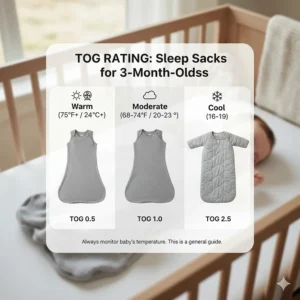
0.5 TOG (The Summer Lightweight)
Perfect for those sweltering summer nights or if you keep your nursery between 74-78°F. This is basically a single layer of breathable fabric—enough to maintain safe sleep practices without adding heat. Great for Florida summers or well-heated homes.
1.0 TOG (The Goldilocks Zone)
Most popular for good reason: it works for nurseries between 69-73°F, which covers most climate-controlled homes year-round. Think of it as a light blanket equivalent—cozy but breathable. This is your safe bet if you’re unsure.
1.5 TOG (Slightly Warmer)
Ideal for cooler rooms around 68-72°F, this provides an extra layer of warmth without going full winter mode. Perfect for spring and fall transitions or homes that run slightly cool.
2.5 TOG (Winter Comfort)
Designed for colder environments between 61-68°F. This is your November through March option in many regions, providing significant warmth for chilly nurseries without loose blankets.
3.0 TOG (The Cold Climate Champion)
Maximum warmth for frigid conditions (60-65°F). Essential for drafty older homes, extreme winter climates, or if you prefer keeping your thermostat low. Use cautiously and monitor for overheating.
How to Choose the Right TOG
Start by checking your nursery temperature with a reliable thermometer—not just the thermostat reading, as rooms can vary significantly. Consider your baby’s natural temperature: Do they tend to run hot or cold? Check their neck and chest (not hands or feet) to gauge comfort.
Remember that TOG ratings assume one layer of clothing underneath. In summer, a light onesie works. In winter, add long-sleeved pajamas. Adjust clothing layers rather than constantly switching sleep sacks.
Signs your baby is too warm: sweaty neck, flushed cheeks, rapid breathing, or damp hair. Signs of being too cold: cool chest or belly (again, not just hands or feet), fussiness, or difficulty settling. When in doubt, dress for the cooler side—overheating poses greater risks than being slightly cool.
The Layering Strategy
Hot Weather (0.5 TOG):
- Just a diaper or light cotton bodysuit
- No socks needed
- Keep the room well-ventilated
Moderate Weather (1.0-1.5 TOG):
- Short or long-sleeved bodysuit depending on temperature
- Light cotton pajamas if needed
- Socks optional based on room temperature
Cold Weather (2.5-3.0 TOG):
- Long-sleeved cotton pajamas
- Bodysuit underneath for extra warmth
- Socks if the room is particularly cold
Pro tip: Many parents keep multiple TOG ratings on hand and switch seasonally rather than constantly adjusting underneath layers. It’s less confusing and ensures consistency.
Safe Sleep Guidelines: What Every Parent Needs to Know
The American Academy of Pediatrics updated their safe sleep recommendations in 2022 after reviewing 159 scientific studies. These guidelines aren’t just suggestions—they’re evidence-based practices that dramatically reduce the risk of SIDS and sleep-related deaths.
The Non-Negotiables
Back Sleeping for Every Sleep
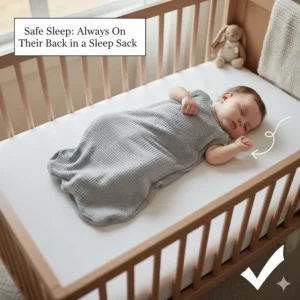
Your 3-month-old should sleep on their back for every nap and nighttime sleep until they’re one year old. Side sleeping isn’t safe either—babies can easily roll from side to stomach. Yes, even if your baby has reflux (the anatomy of their airway actually protects them better on their backs).
Firm, Flat Sleep Surface
The mattress should be firm enough that it doesn’t indent when your baby lies on it. Inclined surfaces (even those marketed for reflux) are not safe—anything over 10 degrees increases risks. Memory foam and soft mattresses create pockets that can lead to suffocation.
Room Sharing Without Bed Sharing
Keep your baby’s crib or bassinet in your room for at least the first 6 months, ideally the full first year. This reduces SIDS risk by up to 50%. However, bed-sharing significantly increases risks—babies should always sleep on their own surface.
Bare is Better
No loose blankets, pillows, stuffed animals, crib bumpers, or positioning devices. This is where sleep sacks for 3 month old babies become essential—they provide warmth without the suffocation risk of loose bedding. Your baby’s sleep space should contain only a fitted sheet and your baby in a sleep sack.
Special Considerations for Sleep Sacks
No Weighted Sleep Products
The updated 2022 guidelines specifically prohibit weighted swaddles, weighted sleep sacks, or weighted blankets. These can restrict breathing and overburden young infants. Standard, unweighted sleep sacks are perfectly safe and recommended.
Swaddling Transition
Once your baby shows any signs of rolling (even just starting to try), immediately stop swaddling with arms in. This typically happens around 3-4 months but can occur earlier. Transition to a sleep sack with arms free—many brands offer transitional options.
Proper Fit Matters
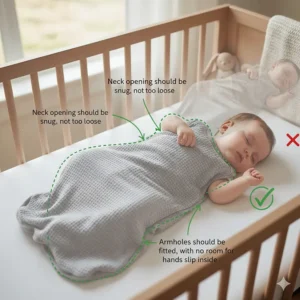
A sleep sack should fit snugly around the neck and armholes without being tight. The body should have room for leg movement in the natural frog position. If it’s too big, fabric could cover the face; too small, and it restricts movement.
Temperature Monitoring
Overheating increases SIDS risk. Your baby’s chest and belly should feel warm but not hot or sweaty. Remove hats for sleep (they prevent heat dissipation). If unsure, err on the side of lighter layers—babies tolerate being slightly cool much better than overheating.
What Research Shows
Studies demonstrate that sleep sacks significantly reduce the risk of loose bedding covering a baby’s face. They also help maintain back sleeping by making it harder for babies to roll, though this benefit decreases as babies gain mobility.
The protective factors stack: back sleeping + firm surface + room sharing + sleep sack + no loose items = dramatically reduced risk. Each element contributes to safety, and combining them provides the most comprehensive protection.
Remember, these guidelines apply even for daytime naps, not just nighttime sleep. Consistency across all sleep periods helps establish safe habits and reduces confusion among caregivers.
Choosing the Right Size: Getting the Perfect Fit
Size matters more than you might think. A too-small sleep sack restricts movement and may cut off before your baby outgrows it. A too-large one poses safety risks—excess fabric can bunch up around the face or create tripping hazards once baby becomes mobile.
Decoding Size Charts
Most brands size by weight rather than age, which makes sense given how differently babies grow. However, length matters just as much as weight—a tall, lean baby might need a different size than a chunky, short baby of the same weight.
HALO Sizing:
- Newborn: 6-12 lbs, 19-23 inches
- Small: 13-18 lbs, 23-26 inches
- Medium: 16-24 lbs, 26-30 inches
Kyte Baby Sizing:
- Small: 6-12 lbs, up to 23 inches
- Medium: 12-18 lbs, 23-27 inches
- Large: 18-24 lbs, 27-31 inches
Love to Dream Sizing:
- Newborn: 5-8.5 lbs
- Small: 8-13 lbs
- Medium: 13-19 lbs
Notice the overlap? This is intentional—brands want you to have flexibility. When between sizes, consider your baby’s length more than weight for best fit.
The Fit Test
Neck Opening: Should fit snugly without being tight. You should be able to fit two fingers between the fabric and baby’s neck comfortably. If it’s loose enough to slide down over baby’s shoulder, it’s too big.
Armholes: Snug enough that baby can’t wiggle arms through but not restrictive. Arms should move freely without the armhole sliding off the shoulder or binding under the arm.
Length: The bottom should reach your baby’s feet with a few inches to spare for kicking room. If it barely covers their feet, size up soon. If it’s so long they can’t stretch out comfortably, it’s too big.
Hip Room: This is crucial—there should be plenty of room for legs to bend up in the natural frog position. Hip dysplasia can result from products that force legs straight, so generous hip room is a safety feature, not a flaw.
When to Size Up
Your baby is ready for the next size when any of these occur:
- The sleep sack reaches just past their feet (less than 2 inches clearance)
- Armholes feel snug and restrict arm movement
- You can’t comfortably snap or zip it without pulling
- Baby seems uncomfortable or fights getting into it
- The neck opening slides off their shoulder
Don’t wait until it’s obviously too small—babies grow fast, and having the next size ready prevents middle-of-the-night sizing crises.
Brand-Specific Quirks
Kyte Baby runs long and narrow. Great for tall babies, but chunky babies may outgrow the width before the length.
Gunamuna runs generous in both length and width. Budget for longer use per size, which justifies the higher price.
HALO runs true to size but may feel snugger than premium brands. Some parents size up for longer use.
Love to Dream fits snug by design (that’s how the swaddle effect works). Follow weight guidelines carefully.
Yoofoss runs slightly small and may require sizing up sooner, but the 3-pack value offsets this.
Material Matters: Comparing Fabric Options
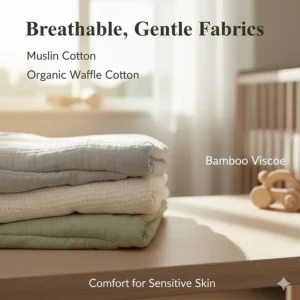
The fabric touching your baby’s skin for 12+ hours daily deserves careful consideration. Beyond feel, material choice impacts temperature regulation, durability, and suitability for sensitive skin.
Cotton: The Classic Choice
Benefits:
Natural, breathable, and affordable. Cotton’s been clothing babies for centuries for good reason—it’s soft, washes well, and rarely causes reactions. Organic cotton eliminates pesticide concerns for sensitive skin.
Drawbacks:
Not as temperature-regulating as newer materials. Can become less soft over time, especially if tumble-dried frequently. May shrink slightly with washing.
Best For: Budget-conscious families, babies without particular sensitivities, and those who prioritize natural fibers.
Brands Using It: HALO 100% Cotton, Yoofoss Organic Cotton, Love to Dream cotton blends
Bamboo Rayon: The Premium Option
Benefits:
Exceptionally soft (silkier than cotton), naturally temperature-regulating, and moisture-wicking. Hypoallergenic properties make it excellent for eczema-prone skin. More durable than cotton—maintains softness wash after wash.
Drawbacks:
Higher price point. Requires air drying (no dryer). The rayon production process, while creating beautiful fabric, is less eco-friendly than its “bamboo” marketing implies.
Best For: Babies with eczema or sensitive skin, hot sleepers, families willing to invest in premium quality.
Brands Using It: Kyte Baby, Gunamuna
Fleece/Micro-Fleece: The Winter Warrior
Benefits:
Maximum warmth for cold climates. Moisture-wicking despite plushness. Dries quickly and resists pilling. Soft and cozy feeling.
Drawbacks:
Polyester-based (synthetic). Risk of overheating in anything but cold rooms. Not as breathable as natural fibers. Can feel “plasticky” to some.
Best For: Cold climates, winter months, families with low heating bills.
Brands Using It: HALO Micro-Fleece
Cotton/Elastane Blends: The Stretchy Solution
Benefits:
Combines cotton’s breathability with elastane’s stretch for better fit. Moves with baby without binding. Maintains shape through washing.
Drawbacks:
Not as soft as pure cotton or bamboo. The stretch can wear out over time with very active babies.
Best For: Active babies, those who like snug fits, transitional swaddling products.
Brands Using It: Love to Dream Swaddle UP
Care and Longevity
Cotton: Machine wash cold, tumble dry low. Softens with use but may show wear patterns faster.
Bamboo: Machine wash cold with like fabrics, air dry only. Maintains quality for multiple children if cared for properly.
Fleece: Machine wash warm, tumble dry low. Very durable but may develop static.
Blends: Follow manufacturer instructions—usually machine wash cold, low heat or air dry.
Pro tip: Buy two sleep sacks of different materials to test before committing to multiple of one type. Your baby’s skin response and your laundering preferences will guide the decision.
Special Considerations: Solving Common Sleep Sack Challenges
Real parents face real problems, and sleep sacks aren’t always the instant solution marketing promises. Let’s troubleshoot the most common issues with practical solutions.
The Rolling Baby
Around 3-4 months, babies start showing signs of rolling—maybe rocking side to side, or successfully rolling tummy to back. Once this begins, swaddling with arms becomes unsafe.
Solution: Transition immediately to arms-free sleep sacks. Many babies protest this change initially because they loved the snug feeling. To ease the transition:
- Start with one arm out during the day for naps
- Gradually move to both arms out
- Consider transitional products like Love to Dream’s zip-off wing versions
- Maintain all other sleep routines so the sack itself becomes the comfort cue
Some babies roll to their stomach immediately after the transition. As long as they can roll both ways, the AAP says it’s okay to let them find their preferred position—just always start them on their back.
The Hot Sleeper
Does your baby wake up sweaty with damp hair, even in moderate temperatures? Hot sleepers need special consideration.
Solution: Choose the lowest appropriate TOG (0.5 for most), opt for single-layer fabrics without quilting, and dress minimally underneath—sometimes just a diaper works in summer. Bamboo rayon excels here because of its moisture-wicking properties.
Consider these adjustments:
- Use a breathable, cool-mist humidifier to maintain comfort without adding warmth
- Keep the nursery slightly cooler than you think necessary (68-70°F)
- Check baby’s temperature at their neck and chest, not extremities
- Open a window slightly if safe to do so
Some parents alternate between a light cotton sleep sack and simply pajamas on particularly warm nights, though maintaining consistency helps with sleep associations.
The Escape Artist
Some babies seem determined to wriggle out of every sleep sack. If your 3-month-old is pulling Houdini-level escapes, sizing is usually the culprit.
Solution: Check that armholes aren’t too large—baby’s arms should move freely but not be able to slip through. The neck opening should be snug without being restrictive. If the size is correct but escapes continue, try:
- Brands with snugger designs like Love to Dream
- Two-way zippers that lock at the top
- Gentle layers underneath to reduce skin-on-fabric slip
Very rare active babies may need supervision during the adjustment period. If escapes persist despite proper sizing, consult your pediatrician—some babies simply resist containment and may do better with arms-free options.
Sensitive Skin and Eczema
Babies with eczema, dermatitis, or generally sensitive skin need fabrics that won’t aggravate conditions.
Solution: Bamboo rayon leads for sensitive skin, followed by organic cotton. Avoid:
- Rough seams near the neck
- Synthetic materials like polyester (except fleece if necessary for warmth)
- Bright dyes—stick with natural, muted colors
- Fabric softeners and scented detergents
Kyte Baby and Gunamuna both receive consistent praise from parents of eczema babies. The hypoallergenic, moisture-wicking properties actually seem to improve skin condition in some cases.
Pre-wash new sleep sacks 2-3 times before first use to remove manufacturing residue. If rashes appear, discontinue use and consult your pediatrician—it could be the material, dye, or an unrelated issue.
The Cold Nursery
Living in an old house with drafts or keeping heat low for energy savings? Your baby still needs safe sleep.
Solution: Layer strategically—2.5-3.0 TOG sleep sacks plus appropriate pajamas underneath handle most situations. For extreme cold:
- Use a sleep sack over fleece pajamas
- Ensure the crib isn’t near windows or vents
- Consider a space heater with thermostat and auto-shutoff
- Check baby’s temperature regularly
Never add loose blankets, no matter how cold. If your baby’s chest feels cool to touch through the sleep sack, add a layer of clothing underneath or increase the TOG rating.
The Nap Resistance
Baby sleeps fine at night in the sleep sack but fights naps while wearing it? Sleep associations might be too specific.
Solution: Use the sleep sack for every sleep—naps and nighttime. Consistency builds the association. If nap resistance continues:
- Keep the room dark (not just dimmed) for naps
- Follow the same pre-sleep routine
- Consider that overtiredness, not the sack, might be the issue
Some babies need shorter wake windows than books suggest—watch for sleepy cues and catch the wave before they become overtired.
Making the Investment: Budget vs. Premium Options
Let’s talk money. Sleep sacks range from $10 budget packs to $65 luxury bamboo options. Is the premium price tag justified, or can you get by with budget options?
The Budget Breakdown
Economy Tier ($10-$20 each):
Brands like Amazon Basics, Simple Joys by Carter’s, and budget 3-packs.
Pros: Low initial investment, good for trying out sleep sacks, acceptable quality for the price.
Cons: Thinner fabrics, limited size longevity, may pill or wear faster, fewer TOG options.
Best For: Trying out sleep sacks initially, having lots of backups, families on tight budgets.
Mid-Range ($25-$35 each):
HALO, Love to Dream, Hudson Baby fall here.
Pros: Solid quality, hospital-trusted brands, good durability, reasonable price.
Cons: Not as luxurious as premium options, may need replacing more frequently.
Best For: Most families—excellent quality-to-price ratio.
Premium ($50-$65 each):
Kyte Baby, Gunamuna, Woolino sit at this tier.
Pros: Exceptional quality, longest usability per size, superior materials, best for sensitive skin.
Cons: Higher upfront cost, special care requirements.
Best For: Babies with skin issues, families prioritizing quality, those wanting longer-lasting products.
The Cost-Per-Wear Analysis
A $60 Kyte Baby sleep sack used nightly for 6 months (180 nights) costs $0.33 per use. A $15 budget sack lasting 3 months (90 nights) costs $0.17 per use—but you need two to cover the same period ($0.34 per use).
Factor in hand-me-down value. Premium sleep sacks maintain quality for multiple children, while budget options typically serve one child. If you plan on 2-3 kids, that $60 investment becomes $0.11 per child per use.
The Smart Shopping Strategy
- Start with one mid-range option to test (HALO is reliable)
- If your baby has skin issues, invest in one premium bamboo sack
- Get a budget 3-pack for backups and laundry day
- Add specific TOG ratings as seasons change
This strategy typically costs $90-120 total and covers all situations without overspending.
When Premium is Worth It
Sensitive skin: Non-negotiable—bamboo rayon justifies the cost.
Hot sleepers: Temperature regulation of premium fabrics pays dividends in better sleep.
Multiple children planned: Durability makes premium more economical long-term.
Persistent sleep issues: Sometimes the superior comfort actually improves sleep quality enough to justify the cost.
When Budget Works Fine
Trying sleep sacks initially: No need to invest heavily before knowing if they’ll work.
One child only: Can’t pass down, so economy makes sense.
Moderate climate with no skin issues: Standard cotton does the job perfectly well.
Having lots of backups: Budget 3-packs are unbeatable for this purpose.
Establishing Healthy Sleep Routines with Sleep Sacks
A sleep sack isn’t magic—but used correctly within a consistent routine, it becomes a powerful sleep cue that tells your baby’s brain “it’s time to rest.”
Building the Sleep Association
Babies thrive on predictability. When the same sequence of events precedes every sleep, their bodies begin releasing sleep hormones at just the right time.
The Perfect Pre-Sleep Sequence:
- Bath time (not every day, but when included, always at the same time)
- Pajamas/clothes underneath the sleep sack
- Feeding (finish 20-30 minutes before sleep to avoid feed-to-sleep association)
- Story or quiet song (same book or song creates familiarity)
- Sleep sack on (this should be the final step before bed)
- Into crib awake (drowsy but aware)
The sleep sack becomes the final cue—when baby feels it zip up, their brain knows what comes next. This association strengthens over weeks, making sleep transitions smoother.
Daytime Naps vs. Nighttime Sleep
Use the same sleep sack for both, always. This reinforces the sleep association regardless of time of day. Keep the routine consistent but shorter for naps:
Nap Routine (5-10 minutes):
- Brief quiet activity or song
- Sleep sack on
- Into crib awake
Night Routine (20-30 minutes):
- Full bath, story, longer wind-down
- Sleep sack on
- Into crib awake
The extended nighttime routine helps differentiate night sleep from naps, while the sleep sack signals both are sleep times.
Consistency Across Caregivers
Everyone who puts baby to sleep should follow the same routine. Grandparents, partners, babysitters—write out your sequence and ensure they understand the sleep sack is non-negotiable. Inconsistency confuses babies and undoes weeks of habit-building.
The Awake But Drowsy Technique
This is crucial: put baby in the crib awake, not asleep. The sleep sack helps create comfort and security, but babies need to learn to fall asleep independently.
Signs of drowsiness include:
- Heavy eyelids but not closed
- Decreased activity
- Quieter demeanor
- Looking away from stimulation
Place them down at this point, not after they’re fully asleep. It may take time to master this—expect some protest initially—but it’s the foundation of independent sleep.
Troubleshooting Routine Resistance
Baby fights the sleep sack: Check sizing, temperature, and whether something’s pinching or uncomfortable. If everything fits correctly, maintain consistency—they’ll adjust.
Baby won’t settle after routine: Evaluate wake windows. At 3 months, most babies need sleep every 1.5-2 hours. You may be missing the sleep window.
Routine takes too long: Shorten it. Efficiency matters more than elaborate production. A 10-minute consistent routine beats an elaborate 45-minute one.
Frequently Asked Questions
❓ Can my baby wear a sleep sack over pajamas?
❓ How do I know if my baby is too hot in a sleep sack?
❓ When should I stop using sleep sacks for 3 month old babies?
❓ Are sleep sacks safe for babies who roll over?
❓ What's the difference between swaddles and sleep sacks for 3 month old babies?
Conclusion: Sweet Dreams Start with Smart Choices
Choosing sleep sacks for 3 month old babies isn’t about finding one “perfect” product—it’s about matching your baby’s specific needs with the right combination of features, materials, and fit. The seven options we’ve explored represent the full spectrum: budget-friendly reliability, premium luxury, innovative designs, and specialized solutions.
Remember the fundamentals: prioritize safety by following AAP guidelines, choose the appropriate TOG for your nursery temperature, ensure proper fit as your baby grows, and maintain consistency in your sleep routine. Whether you invest in a premium bamboo option like Kyte Baby, trust the hospital-tested reliability of HALO, or appreciate the innovative design of Love to Dream, you’re making a positive choice for your baby’s sleep safety.
Your 3-month-old is rapidly developing, and their sleep needs will evolve quickly. The sleep sack you choose now should accommodate their growth, work with your lifestyle, and most importantly, keep them safe through every sleep. Start with one quality option, see how your baby responds, and build from there. Most parents find that having 2-3 sleep sacks in rotation—different TOGs or styles—handles all situations comfortably.
Trust your instincts, watch your baby’s cues, and don’t stress over finding “perfect.” Any of these vetted options will serve you well. The real magic happens when you combine a good sleep sack with consistent routines, appropriate timing, and responsive caregiving. Sweet dreams are built on these foundations, one peaceful night at a time.
Recommended for You
- 7 Best Newborn Sleep Sacks for Safe Sleep & Peaceful Nights 2025
- 7 Best Stainless Steel Sippy Cups for Toddlers 2025 Guide
- 7 Best Sippy Cups by Age (2025): Top Picks for 1-3 Year Olds
Disclaimer: This article contains affiliate links. If you purchase products through these links, we may earn a small commission at no additional cost to you.
✨ Found this helpful? Share it with your friends! 💬🤗
