
In This Article
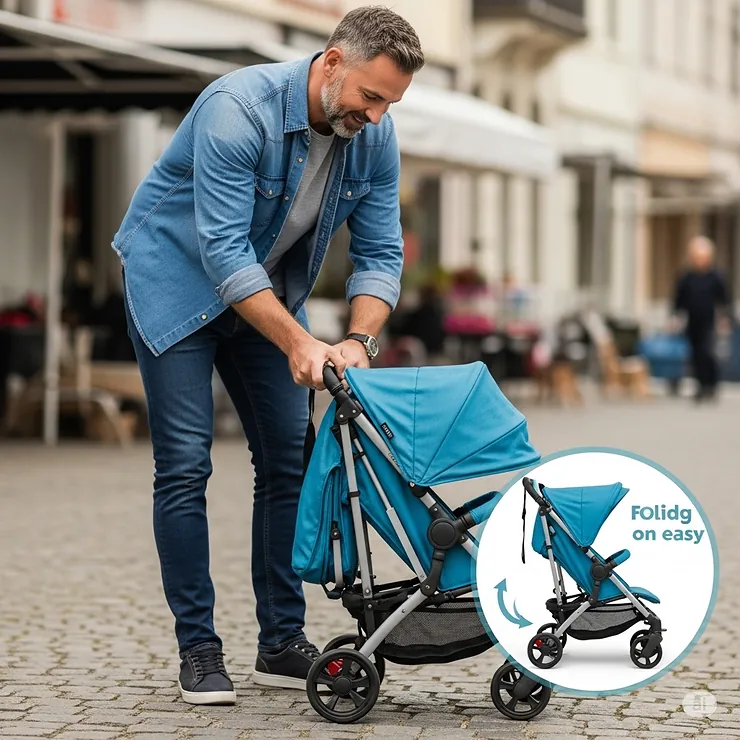
The best compact strollers are lightweight, quick-folding strollers, usually under about 17 pounds, that collapse small enough for a car trunk, a hall closet or, in the best cases, an airplane overhead bin. They trade some basket space and big-wheel comfort for portability, a bargain with a long history, from the first aluminum-framed umbrella stroller to today’s one-hand wonders.
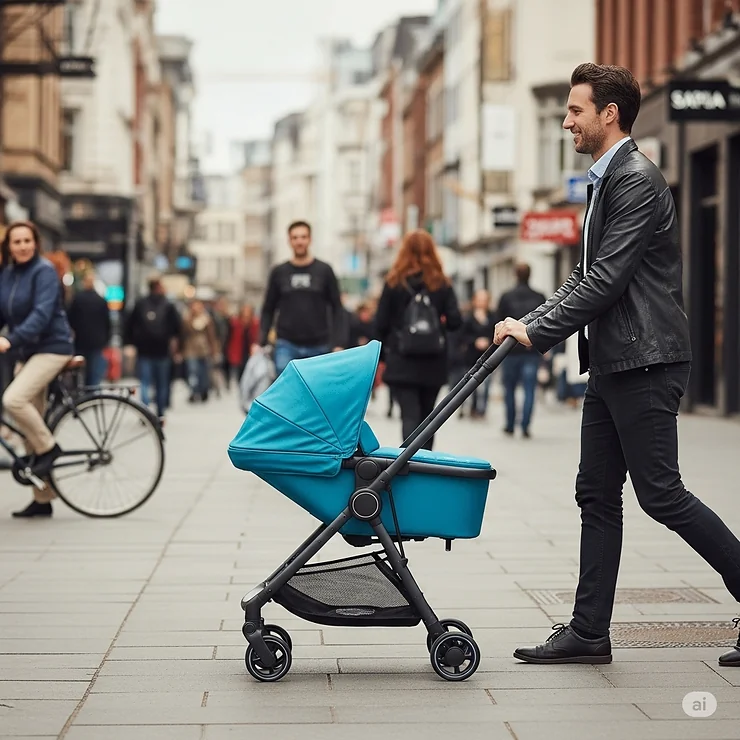
Let’s be honest about full-size strollers: they’re glorious until the moment you have to lift one. Picture a toddler on one hip, a diaper bag on the opposite shoulder, and a trunk already stuffed with groceries. Suddenly 25 pounds of premium frame feels like an uninvited houseguest.
That’s why compact designs are everywhere in 2026. Parents want something that fits a sedan trunk, survives a subway staircase and still hauls a snack arsenal. The catch? “Compact” is a marketing word, not a measurement. Some models fold to the size of a lunchbox. Others fold into a long, skinny baguette that technically counts.
This guide ranks seven of the best compact strollers for 2026, built from published lab measurements, parent-tester reports and maker specs. For every pick, you’ll see what the numbers mean on a real sidewalk, where it stumbles and who should skip it. Prices appear as ranges at the time of research and may vary, so check current price before you buy.
Best Compact Strollers at a Glance: Quick Comparison
| Stroller | Weight | Folded size | Price range | Best For |
|---|---|---|---|---|
| UPPAbaby Minu V3 | ~16.7 lb | 21.6″ × 17.6″ × 9.2″ | $500-$550 | One stroller from birth to toddler |
| Bugaboo Butterfly 2 | ~16 lb | 9.6″ × 17.6″ × 21.8″ | $500-$600 | Toddlers and one-second folds |
| Joolz Aer² | ~14.3 lb (seat) | 20.9″ × 17.3″ × 9.2″ | $550-$600 (stroller only) | Newborn-to-toddler travel |
| Stokke YOYO3 | ~13.7 lb (seat) | 20.5″ × 17.3″ × 7.1″ | Around $500 (mid-$700s with Newborn Pack) | Flyers who need the smallest fold |
| Zoe Traveler | ~13.2 lb | 18.6″ × 12″ × 23″ | Around $250 | Budget-friendly everyday use |
| Mompush Nexis Carbon | ~11.5 lb | 19″ × 18.1″ × 7.9″ | Around $200 | Lightest budget carriage-mode pick |
| gb Pockit+ All City | ~13.1 lb | 21.3″ × 13″ × 8″ | $300-$350 | Tiny closets and carry-on-only trips |
Looking at the table, the weight spread is only about five pounds, but folded shape varies enormously. The gb Pockit+ All City and Stokke YOYO3 win on footprint, while the Mompush Nexis Carbon wins on carrying weight per dollar. Budget buyers should note that the Zoe Traveler folds longer than the premium models, which matters if your trunk is shallow.
💬 Just one click — help others make better buying decisions too!😊
How We Narrowed Down the Best Compact Strollers
A quick note on method, because honesty beats hype. This guide does not claim hands-on testing. It synthesizes independent lab measurements from BabyGearLab, parent-tester write-ups from The Bump and NBC Select, and manufacturer specifications, then adds analysis of what the trade-offs mean in daily life. The seven picks span budget, mid-range and premium, and each earned its place for a different reason: smallest fold, lightest frame, best newborn setup, best value.
Customer star ratings on retail sites weren’t verified for this article, so none are quoted. Where “reviews” are mentioned below, they’re published editorial and tester reviews, labeled as such. Specs can vary by color, bundle or retailer, so confirm details on the product page.
Top 7 Best Compact Strollers: Expert Analysis
Each entry below follows the same flow: what stands out, what the specs mean in practice, who it suits, and what reviewers say.
1. UPPAbaby Minu V3 — the premium do-it-all pick
The headline is range. The UPPAbaby Minu V3 is one of the few compact strollers that credibly works from birth through the toddler years, which helps explain its Editors’ Choice award from BabyGearLab. At about 16.7 pounds as measured in that lab, it’s the heaviest stroller here, yet the extra heft buys a stiff frame, polyurethane wheels that rated best in the lineup, and a basket rated for 20 pounds. Folded, it lands near 21.6″ × 17.6″ × 9.2″, so it slides into most trunks without negotiation. A peekaboo window and a tiny AirTag pocket in the basket feel big at a crowded zoo.
Based on the spec comparison, this suits families who want one stroller instead of two: bassinet-style use from birth, or a compatible infant car seat (adapters sold separately), then a comfortable seat later. The trade-off is the fold, which testers found takes more effort than the best one-hand designs, plus a push that struggles on grass. Published reviews consistently praise build quality and rider comfort while flagging weight and price. NBC Select’s tester compared the experience to a luxury sedan but noted that lifting it with a baby in one arm takes effort.
Pros:
- ✅ Large 20 lb basket for a compact stroller
- ✅ Works from birth with bassinet or car seat
- ✅ Premium materials and smooth polyurethane wheels
Cons:
- ❌ Heaviest of this group at roughly 16-17 lb
- ❌ Fold takes extra effort; struggles on grass
Expect the $500-$550 range at the time of research (check current price). It’s a splurge, but it’s the compact stroller most likely to be your only stroller.
2. Bugaboo Butterfly 2 — one-second fold for toddlers
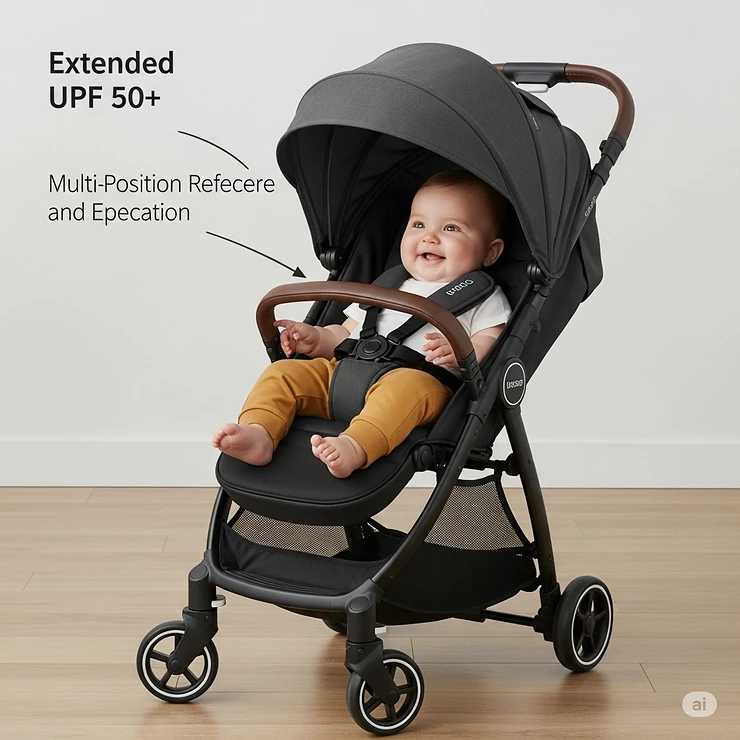
The headline is the fold. Press two handlebar buttons together and the Bugaboo Butterfly 2 collapses in about a second, then stands up on its own like a well-trained dog. At roughly 16 pounds, it folds to about 9.6″ × 17.6″ × 21.8″. One Bump tester fit it into both an SUV and a sedan trunk without rearranging anything. The seat offers about 26.8 inches of sitting space under the canopy, and the 17.6-pound basket stays reachable from front and back even when reclined. In practice, a toddler who hates lying back stays upright and happy while the basket swallows a diaper bag plus shopping.
Here’s what many buyers overlook: in the US, this model is suited from six months, because the seat doesn’t recline as flat as versions sold elsewhere. If a newborn is on the way, look at the Joolz Aer² or Stokke YOYO3 instead. For toddlers, though, it’s arguably the most refined option here, and the one-hand fold makes parking-lot errands painless. Reviewers on The Bump and NBC Select praise the fold, smooth push and generous canopy, while noting a stiff recline mechanism, an elastic carry strap rather than an adjustable one, and the price.
Pros:
- ✅ One-second, one-handed, self-standing fold
- ✅ Roomy upright seat for toddlers
- ✅ Easy-access 17.6 lb basket
Cons:
- ❌ Not for babies under six months in the US
- ❌ Recline is hard to adjust with a child seated
Expect roughly the $500-$600 range at the time of research. It’s pricey, but daily toddler use justifies the premium.
3. Joolz Aer² — newborn carrycot that folds with the frame
The standout is a carrycot that folds along with the stroller, something most travel-stroller bassinets can’t manage. The Joolz Aer² weighs about 14.3 pounds in seat mode and 18.7 with the carrycot, and folds to roughly 20.9″ × 17.3″ × 9.2″ either way, standing upright afterward. The basket is rated for 17.6 pounds, and the fixed handlebar sits near 42 inches, so very tall parents should check fit first. Day to day, that means a lie-flat newborn setup that converts to a toddler seat with no second stroller to buy.
An honest analysis notes a split. The Bump’s parent testers found the push smooth, while BabyGearLab’s lab scored flat-surface handling lower than off-road and curb performance. The seat-mode fold meets IATA’s cabin guideline per The Bump, but it runs slightly long with the carrycot attached, so pack the carrycot in your luggage if you’re flying. BabyGearLab’s table doesn’t flag it as carry-on compatible, so confirm with your airline. Reviewers praise the intuitive fold and quality, while flagging the cost, tighter basket access with the carrycot, and a carrycot not approved for overnight sleep in the US.
Pros:
- ✅ Intuitive one-hand, self-standing fold
- ✅ Roomy seat with excellent canopy coverage
- ✅ Optional carrycot that folds with the frame
Cons:
- ❌ Expensive, especially bundled with the carrycot
- ❌ Fixed handlebar; basket tighter with carrycot
Roughly $550-$600 for the stroller alone, climbing into the mid-$800s with the carrycot at the time of research. Worth it mainly if you’ll use the newborn mode.
4. Stokke YOYO3 — smallest fold with a newborn cocoon
The standout is the folded footprint: about 20.5″ × 17.3″ × 7.1″, which The Bump measured as the smallest on its list even with the cocoon attached. The Stokke YOYO3 weighs about 13.7 pounds in seat mode and 17.2 with the cocoon, with a 22-pound basket that’s huge for the category and a UPF 50+ canopy with an extension. What that means: it’s the stroller most likely to slide into an overhead bin and still leave room in the trunk for the rest of your trip.
This is the most divisive pick here. BabyGearLab’s lab ranked it last in ease of use (two-handed fold, a hidden latch, roughly 25 minutes of assembly) and scored it 56 overall, while The Bump’s parent testers loved the cocoon, basket and compactness. Both can be true. If you fold it daily, the learning curve may annoy you. If you fly often, the footprint wins. Reviewers also note a snug toddler seat and front wheels that can’t lock, which shows on rough pavement.
Pros:
- ✅ Smallest folded footprint, even with the cocoon
- ✅ Large 22 lb basket for its size
- ✅ Breathable canopy with a UPF 50+ extension
Cons:
- ❌ Two-handed fold with a real learning curve
- ❌ Seat may feel snug for bigger toddlers
Around $500 for the six-months-plus version and the mid-$700s with the Newborn Pack at the time of research. Pay it only if fold size is your top priority.
5. Zoe Traveler — best value for everyday and travel
The standout is value: the Zoe Traveler earned BabyGearLab’s Best Value award by delivering most of what parents need at a fraction of premium prices. It weighs about 13.2 pounds and folds to 18.6″ wide × 12″ high × 23″ long, around 5,134 cubic inches, so it fits trunks and closets but not overhead bins. The basket is rated for only 10 pounds, though access is easy. Reviewers like the oversized sunshade, auto-lock and effortless unfold, and the stroller is suited from three months.
This is what “good enough” looks like, and that’s a compliment. It’s a strong fit for occasional travelers, grandparents and second-stroller households. The smaller seat and basket mean it won’t replace a full-size stroller for daily marathons. NBC Select’s tester praised the durable feel, one-hand fold and magnetic harness, and suggested adding a seat liner for long days. Common gripes in published reviews are the small seat, limited storage and the longer fold.
Pros:
- ✅ Giant sunshade canopy for hot days
- ✅ Effortless unfold with auto-lock
- ✅ Strong features for the price
Cons:
- ❌ Seat runs small for larger toddlers
- ❌ 10 lb basket and a longer folded shape
Around $250 at the time of research. It’s the best bang for your buck here, so check current price and return windows.
6. Mompush Nexis Carbon — lightest budget pick with carriage mode
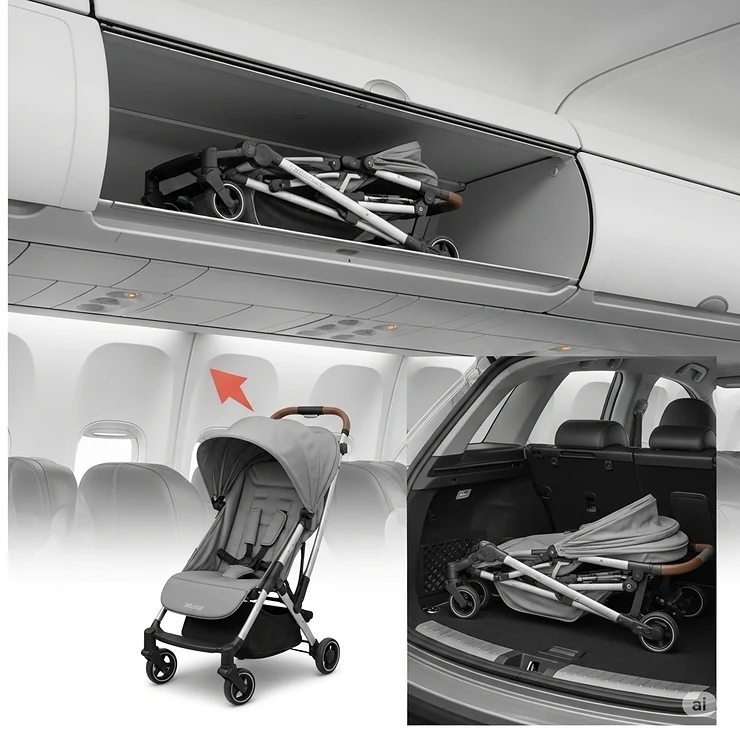
The standout is a carbon-fiber frame at roughly $200, which is rare. The Mompush Nexis Carbon weighs about 11.5 pounds, folds to roughly 19″ × 18.1″ × 7.9″, stands upright, and meets IATA’s cabin dimensions per The Bump. The 13.2-pound basket is generous for the price, and a carriage mode reclines the seat to about 170 degrees with a foot barrier for newborns. Translation: you can lift it over your head, and it covers birth through toddlerhood without a separate bassinet.
Here’s the caution. Among the sources reviewed for this guide, only The Bump’s testers covered it, and the brand is newer, so long-term durability is unproven. Check the warranty and return window. The fold isn’t officially one-handed, the seat must fold before the handlebar closes, and it isn’t car-seat compatible. The Bump’s tester used it as an everyday stroller afterward and praised the basket, though her taller toddler’s legs dangled. Treat that as an early signal, not a verdict.
Pros:
- ✅ Only about 11.5 lb with a carbon-fiber frame
- ✅ Big 13.2 lb basket for the category
- ✅ Carriage mode from birth at a budget price
Cons:
- ❌ Fold isn’t officially one-handed
- ❌ Basket loads from the front only
Around $200 at the time of research. It’s excellent value if the brand’s track record fits your risk tolerance.
7. gb Pockit+ All City — the smallest fold in the lineup
The standout is size. BabyGearLab measured the gb Pockit+ All City at just 2,215 cubic inches folded, roughly 21.3″ × 13″ × 8″, and it earned that lab’s Top Pick award for most compact. At about 13.1 pounds, it was also the only stroller in BabyGearLab’s lineup flagged as carry-on compatible, and it ships with a travel bag. The catch: 5.1-inch wheels and a frame with many joints, which means flex and rattle on rough ground.
Think of it as a city-and-airport specialist. It suits flyers who refuse to check bags, apartment dwellers with closet-sized storage, and grandparents who need something that vanishes. It’s less suited to daily walks over cracked sidewalks. Reviewers praise the fold, soft fabrics and an easy harness (BabyGearLab’s favorite), while criticizing frame flex, odd handles and the lack of a peekaboo window. It’s suited from six months, with Cybex car seat compatibility listed.
Pros:
- ✅ Unbelievably small folded size
- ✅ Easy harness and soft fabrics
- ✅ Carry-on compatible with a travel bag
Cons:
- ❌ Flexy frame struggles off pavement
- ❌ Small wheels and unusual push handles
Expect the $300-$350 range at the time of research. It’s worth it only if folded size beats ride quality for you.
| Stroller | Basket | Starts from | Independent recognition | Best For |
|---|---|---|---|---|
| UPPAbaby Minu V3 | 20 lb | Birth | BabyGearLab Editors’ Choice (81/100) | Long-term single stroller |
| Bugaboo Butterfly 2 | 17.6 lb | 6 months (US) | The Bump pick for toddlers | Toddler errands |
| Joolz Aer² | 17.6 lb | Birth (carrycot or carriage mode) | The Bump overall winner; BabyGearLab 78/100 | Newborn travel |
| Stokke YOYO3 | 22 lb | 6 months (birth with Newborn Pack) | The Bump newborn pick; BabyGearLab 56/100 | Frequent flyers |
| Zoe Traveler | 10 lb | 3 months | BabyGearLab Best Value (71/100) | Budget buyers |
| Mompush Nexis Carbon | 13.2 lb | Birth (carriage mode) | The Bump budget pick | Lightest carry |
| gb Pockit+ All City | 11 lb | 6 months | BabyGearLab Top Pick (73/100) | Tiny storage |
The recognition column shows why no single winner exists. The UPPAbaby Minu V3 scores highest overall in lab testing, but the Stokke YOYO3 wins parent-tester praise despite a low lab score, which tells you fold effort and fold size are different virtues. If you only travel a few times a year, weight the Zoe Traveler and Mompush Nexis Carbon more heavily, since their value gaps are larger than their performance gaps.
✨ Don’t Miss These Exclusive Deals!
🔍 Take your next family outing to the next level with these carefully selected compact strollers. Click on any highlighted item to check current pricing and availability. These picks will help you create stress-free, easy outings your family will love!
Practical Usage Guide: Setting Up and Maintaining Your Compact Stroller
A compact stroller rewards the parent who practices. Most folding quirks are learned in a driveway, not at a boarding gate. Here’s a simple routine for the first month and beyond.
First 30 days:
- Fold and unfold ten times at home before your first trip.
- Check that front wheels are aligned before folding. Testers reported snags on the Bugaboo Butterfly 2 and Stokke YOYO3 when they weren’t.
- Extend the canopy fully before folding models like the Mountain Buggy Nano Urban.
- On the Mompush Nexis Carbon, fold the seat before closing the handlebar.
Weekly: Wipe the frame, shake crumbs out of the basket, and test both brakes. Monthly: Clear hair and grit from wheel axles, check harness buckles, and inspect frame joints for looseness. Spot-clean fabric per the manual.
The common first-month mistakes are overloading the basket past its rating (10 to 22 pounds depending on model), hanging heavy bags on the handlebar, and skipping the harness for “just a quick trip.” The last one matters most, as the safety section below explains.
Real-World Scenarios: Matching the Best Compact Strollers to Your Life
Specs are abstract. Lives are not. Here are three profiles, with reasoning.
The third-floor walk-up commuter. You have an 18-month-old, two flights of stairs and a bus transfer, with a budget near $500. Daily lifting favors the Bugaboo Butterfly 2 (one-hand, self-standing fold) or, if money’s tighter, the Mompush Nexis Carbon, which weighs about 11.5 pounds. The upright seat suits a toddler who wants to watch the world.
The frequent-flyer newborn family. You’ll fly six times this year with a three-month-old, and a budget above $700 isn’t scary. The Stokke YOYO3 with the Newborn Pack folds smallest, while the Joolz Aer² folds more easily and converts to a toddler seat. Pack the carrycot in luggage if you’re aiming for the overhead bin.
The grandparent with a sedan. Weekly visits, one grandchild, a small trunk and a budget under $300. The Zoe Traveler fits the trunk, auto-locks when folded, and has shade for sunny afternoons. If the closet is truly tiny, the gb Pockit+ All City shrinks further.
Problem → Solution Guide: Fixing Common Compact Stroller Headaches
Problem: the frame rattles and flexes. Ultra-small folds use many joints and small wheels, which BabyGearLab flagged on the gb Pockit+ All City. Solution: if your routes are rough, consider the Mountain Buggy Nano Urban, which ships with an optional 10-inch rear wheel set, or lock front wheels where available.
Problem: not enough storage. Compact baskets rate from 10 to 22 pounds. Solution: pick a higher-capacity model like the UPPAbaby Minu V3 or Stokke YOYO3, and avoid hanging bags from the handlebar, which can tip lightweight frames.
Problem: the fold sticks. Usually it’s misaligned wheels or a half-open canopy, per tester reports. Solution: straighten the wheels, extend the canopy, then try again.
Problem: your toddler outgrows the seat. Testers described snug seats on the Zoe Traveler and Stokke YOYO3. Solution: check seat height, and favor roomier seats like the Bugaboo Butterfly 2.
Problem: summer heat. Solution: choose large canopies with extensions, and consider a clip-on fan, which NBC Select lists among its accessory picks.
How to Choose the Best Compact Strollers: 7 Steps
Choosing among the best compact strollers gets easier when you work in this order:
- Measure your storage first. A trunk or closet limit decides folded size, which matters more than the headline weight.
- Set a weight ceiling. BabyGearLab’s testing of 12 travel strollers found an average near 14 pounds and an average folded volume around 4,000 cubic inches, which makes useful benchmarks.
- Match the age window. Newborns need a lie-flat carrycot, carriage mode or a click-in car seat. BabyGearLab advises against strollers for under six months unless they accept an infant car seat.
- Test the fold. One-handed, self-standing and auto-locking are the features you’ll thank yourself for.
- Check basket rating and access. A 10-pound basket and a 20-pound basket live different lives.
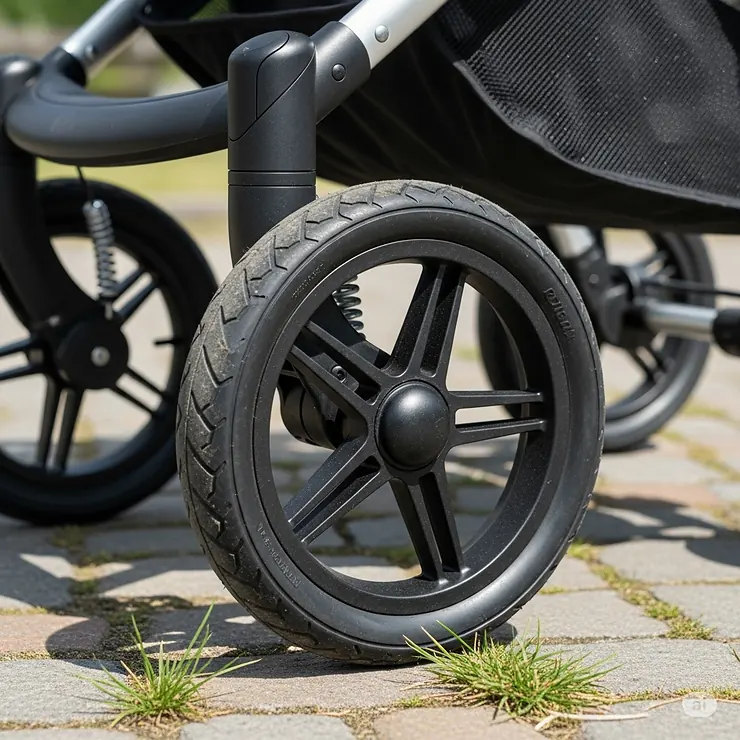
- Inspect wheels and frame. Bigger, denser wheels and a stiffer frame ride better on real sidewalks.
- Weigh price against frequency. A stroller used twice a year deserves a different budget than one used daily.
Common Mistakes When Buying Compact Strollers
Buying on weight alone. BabyGearLab’s data shows why this fails: the Kolcraft Cloud Plus weighs about 10.1 pounds but folds to roughly 6,327 cubic inches, while the gb Pockit+ All City weighs about 13.1 pounds and folds to just 2,215. The lighter stroller takes nearly three times the space.
Assuming “from birth” means newborn-ready. Some strollers need extra bundles, and some aren’t suited below six months. Verify the bundle, the age range and your pediatrician’s view.
Ignoring handlebar height. Most compact handlebars are fixed. Lab-measured heights ran from about 38 to 43 inches, so tall parents should confirm before buying.
Skipping the trial fold. Reviewers describe the Stokke YOYO3 fold as convoluted until learned. A trial fold in a store, or an easy return window, saves regret.
Overlooking brake design. BabyGearLab prefers single-pedal brakes and flagged double-action brakes on budget models like the Kolcraft Cloud Plus, because forgetting a pedal is easy.
Chasing no-name bargains. An unfamiliar brand at a low price may skip required safety compliance. Check recalls before you click buy.
Compact Strollers vs. Full-Size Strollers: What You Gain and Give Up
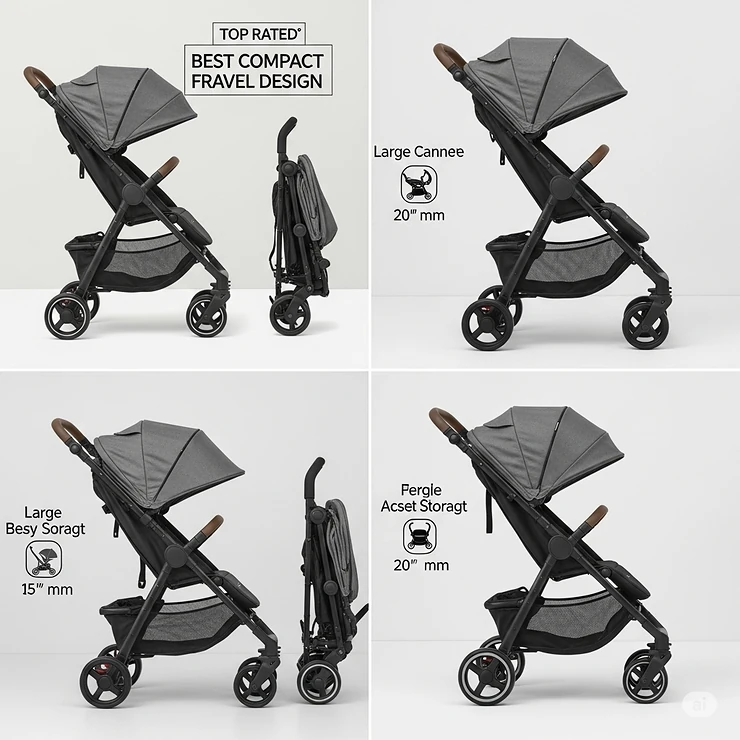
Compact strollers usually weigh 9 to 18 pounds, while full-size models run roughly 20 to 30 pounds. That gap is the whole story. You gain lifting ease, trunk space and quicker folds. You give up wheel size, suspension, seat room and basket capacity, since compact baskets typically hold 10 to 17 pounds versus 20 to 30 on full-size models.
| Feature | Compact stroller | Full-size stroller | Best For |
|---|---|---|---|
| Weight | ~9-18 lb | ~20-30 lb | Compact: frequent lifting |
| Folded size | Closet, trunk, sometimes overhead bin | Large trunk footprint | Compact: tight storage |
| Basket | ~10-22 lb | ~20-30 lb | Full-size: big shopping trips |
| Rough terrain | Fair on pavement; weaker on grass and gravel | Better suspension and bigger wheels | Full-size: park trails |
| Newborn setup | Varies; often add-ons | Often built in | Full-size: newborn-first |
Reading the table honestly, compact models win wherever you lift, store or travel, and full-size wins wherever you roll long distances over rough ground. A middle path exists: NBC Select’s testers liked the Guava Roam, a bigger-wheeled, compact-folding running stroller in the $650-$750 range. If you can only afford one stroller, decide which of those two worlds you live in most.
Features That Actually Matter (And Those That Don’t)
Matter most:
- Fold mechanics. One-hand folding, self-standing and auto-locking save you daily.
- Folded volume. The true size metric, not the weight alone.
- Basket access. A big basket you can’t reach is a decoration.
- Canopy coverage. UPF-rated, extendable canopies beat tiny shade strips.
- Harness and brakes. Easy buckles and single-pedal brakes reduce mistakes.
- Overhead-bin fit. The Bump’s testers used IATA’s cabin bag guideline of roughly 22″ × 18″ × 10″ as their yardstick, though individual airlines vary.
Matter less:
- A one-pound weight difference. Between 13 and 14 pounds, you won’t notice. Between 11 and 17, you will.
- Cup holders. BabyGearLab found several too small to be useful, and they’re easy to add later.
- Fancy trims. Leatherette is lovely, but it doesn’t fix a rattly frame.
- Peekaboo windows. Nice, but secondary to ride quality and the fold.
Long-Term Cost & Maintenance
Think in cost per outing. A stroller in the $250 range used about 250 times costs roughly a dollar per outing, and so does a $500 model used 500 times. So frequency, not sticker price, drives value. Premium models also tend to include features that extend usefulness, such as newborn modes and sturdier frames, but only pay off if you use them.
| Price tier | Examples | What you get | Best For |
|---|---|---|---|
| Under $100 | Ingenuity 3D Mini, Kolcraft Cloud Plus | Basic umbrella fold, small baskets | Backup stroller |
| $200-$350 | Mompush Nexis Carbon, Zoe Traveler, gb Pockit+ All City, Cybex Libelle 2 | Strong features for the money | Most families |
| $500-$600 | UPPAbaby Minu V3, Bugaboo Butterfly 2, Joolz Aer², Stokke YOYO3 | Premium frames, newborn options | Daily, long-term use |
| $550-$650 | Doona | Car seat plus stroller combo | First-year travel |
The $200-$350 tier is where the value lives, but the premium tier earns its price if you’ll push daily for years. The Doona is the outlier: a smart first-year travel tool, but it’s done once your baby outgrows the infant car seat, so judge it as a short-term purchase.
Maintenance costs are small but real. Soft plastic wheels with no tread, found on budget models such as the Kolcraft Cloud Plus, dent faster than polyurethane. Accessories like organizers and hooks usually run under $30 each. Before buying, check resale listings for your model, since some hold value better than others.
Safety, Regulations, and Airline Rules for Compact Strollers
Compact doesn’t mean casual. The CPSC warns that serious injury or death can occur if children aren’t properly restrained in strollers, especially infants under 12 months, who can slip between the tray or handrest and the seat. The guidance is simple: always use the harness, remember that sleeping infants can shift, and never leave a child unattended, especially in a reclined seat.
Federal stroller standards exist, and the CPSC has cited roughly 1,300 incident reports between January 2008 and mid-2013 when it approved its mandatory standard. It has also warned about off-brand strollers that violated federal rules. Buy from recognizable sellers, register your product, and check recalls.
On airplanes, policies vary by carrier. Most US airlines let you check or gate-check a stroller free, and gate-checked strollers are typically X-rayed at security. Gate-checking tends to be gentler than counter-checking, and compact models are easier for crews to handle. A 2018 federal provision also limits size and weight restrictions on gate-checked strollers to cases where safety or security requires them. Children under two flying in their own seat should use an FAA-approved car seat. Always confirm your airline’s current rules before you go.
FAQ: Best Compact Strollers
❓ What is the lightest option among compact strollers?
❓ Can you take a compact stroller on a plane as a carry-on?
❓ Are compact strollers safe for newborns?
❓ How much should you spend on a compact stroller?
❓ Do compact strollers work with infant car seats?
Conclusion: Which of the Best Compact Strollers Should You Buy?
There’s no single winner among the best compact strollers, only a best fit for your life. If you want one stroller from birth onward and can afford it, the UPPAbaby Minu V3 is the safest long-term bet. For toddlers and one-second folds, the Bugaboo Butterfly 2 is hard to beat. For newborn travel, choose between the Joolz Aer² (easier fold, toddler-friendly) and the Stokke YOYO3 (smallest footprint, steeper learning curve).
Budget shoppers get real options too. The Zoe Traveler offers dependable everyday value, the Mompush Nexis Carbon is the lightweight wildcard, and the gb Pockit+ All City wins when closet space is the enemy. Whatever you choose, practice the fold before your first trip, use the harness every time, and verify age ranges and airline rules.
Here’s the shortcut: measure your storage, decide your newborn needs, set your budget range, then pick from the matching pick above. Prices and bundles change, so check current price and return windows before you buy.
✨ Don’t Miss These Exclusive Deals!
🔍 Take your next family outing to the next level with these carefully selected compact strollers. Click on any highlighted item to check current pricing and availability. These picks will help you create stress-free, easy outings your family will love!
Recommended for You
- Single to Double Stroller: 7 Best Picks for 2026
- Best Travel Stroller for Toddler: 7 Must-Have Picks for 2026
- Best Lightweight Stroller: 7 Ultimate Picks for 2026
Disclaimer: This article contains affiliate links. As an Amazon Associate, I earn from qualifying purchases. If you purchase products through these links, we may earn a small commission at no additional cost to you.
✨ Found this helpful? Share it with your friends! 💬🤗
