
In This Article
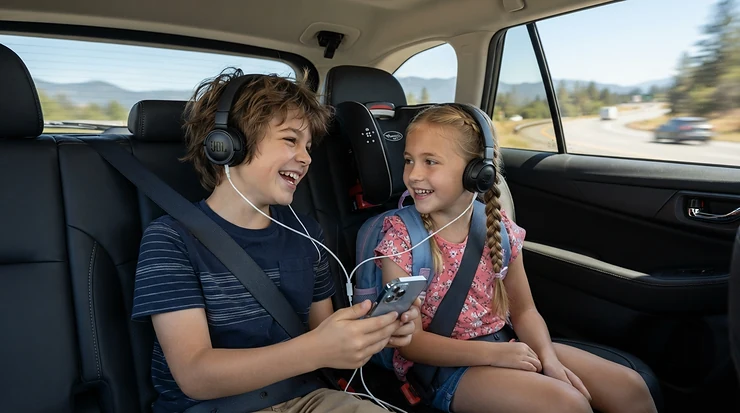
Somewhere around hour three of a nine-hour drive to Grandma’s house, every parent has the same thought: there has to be a better way than another round of “are we there yet?” Audio books for kids road trips solve a problem screens can’t — they occupy little ears and big imaginations without turning the backseat into a glowing blue rectangle. In plain terms, audio books for kids road trips are pre-loaded or card-based audio players and story collections designed to entertain children in the car using sound alone, no tablet or phone required.
This isn’t a “top 10 audiobooks” listicle padded with vague advice. It’s a research-backed breakdown of seven real devices you can actually buy in 2026, what they cost (in ranges, since exact prices shift daily), and — more importantly — which one actually fits your family’s driving habits, your toddler’s attention span, and your budget. We dug through spec sheets, aggregated real customer sentiment, and cross-checked pediatric media guidance from the American Academy of Pediatrics so you’re not just trusting marketing copy.
Whether you’re outfitting a toddler for a two-hour trip to the beach or prepping a school-age kid for a cross-country haul, the right kids audiobook player for car rides can be the difference between a peaceful drive and a screaming match at mile marker 47. Let’s get into it.
Quick Comparison Table
| Player | Price Range | Best For | Screen-Free? |
|---|---|---|---|
| Yoto Player (3rd Gen) | around $85–$100 | All-around home + car use | Yes (pixel display, no video) |
| Yoto Mini | around $55–$70 | Small hands, backseat portability | Yes |
| Tonies Toniebox 2 | around $90–$140 | Toddlers who love tactile figures | Yes |
| Voxblock | around $55–$65 | Families who hate apps and subscriptions | Yes |
| Lunii My Fabulous Storyteller | around $90–$115 | Kids who like building their own stories | Yes |
This snapshot only scratches the surface, but it already tells a story: nothing here costs more than a nice dinner out, and every single option skips the screen entirely. The Yoto Player earns its reputation as the generalist of the group, while the Lunii My Fabulous Storyteller stands apart by letting kids co-author the plot instead of just pressing play. Budget-conscious parents should note that Voxblock‘s no-subscription model can actually save money over years of use, even though its sticker price sits mid-pack.
Top 7 Audio Books for Kids Road Trips: Expert Analysis
Picking the right device isn’t just about specs on a box — it’s about matching the player to how your family actually drives, how old your kids are, and how much fiddling you’re willing to tolerate from the driver’s seat. Below are seven real, currently available screen-free audio players, ranging from pocket-sized minis to full-featured hubs, each broken down honestly.
1. Yoto Player (3rd Generation) — best all-around screen-free hub for road trips
The third-generation Yoto Player looks like a shrunken retro radio, and that’s sort of the point — it’s designed to feel nostalgic and unintimidating to a four-year-old. Its acoustically engineered stereo speakers genuinely outperform the tinny mono sound you’d expect from a kids’ gadget, which matters more than it sounds in a noisy car cabin where road hum competes with dialogue.
Specs-wise, it runs about 24 hours on a charge and uses physical Yoto cards slotted into the top, each holding anywhere from a single picture book to more than 24 hours of audio. What that means in practice: a family road trip doesn’t require lugging a binder of cards — two or three can cover an entire week away. The pixel display isn’t a screen in the video sense; it shows a simple still icon tied to whatever’s playing, more of a visual bookmark than entertainment.
Based on the spec comparison with cheaper alternatives, the stereo sound and 24-hour battery justify the higher price tag if this device is going to double as a bedtime player at home, not just a car toy. Reviewers consistently note that the “OK-to-wake” light and built-in white noise features get used just as often as the story cards themselves, which stretches the value well past the drive itself.
Aggregated review sentiment across retailer sites is strongly positive, with parents repeatedly citing the lack of ads, cameras, or microphones as a relief compared to tablet apps. A recurring complaint is that Yoto cards and accessories are sold separately and can add up.
Pros:
- ✅ Stereo sound holds up well over road noise
- ✅ 24-hour battery covers multi-day trips easily
- ✅ No camera, mic, or internet connection required
Cons:
- ❌ Cards and accessories sold separately add cost
- ❌ Bulkier than the Mini for backseat door pockets
Priced in the $85–$100 range at the time of research, the Yoto Player earns its keep as a long-term household device, not just a car gadget — check current price before buying since retailer promotions shift often.
2. Yoto Mini — most pocket-friendly for backseat car doors
If the regular Yoto Player is the family SUV of screen-free audio, the Yoto Mini is the compact hatchback: smaller, lighter, and built specifically with “on the go” printed into its marketing copy. At roughly palm-sized, it slides into a car door pocket, diaper bag, or a toddler’s own two hands without feeling unwieldy.
The mono speaker is a genuine trade-off here — it’s a smaller driver in a smaller housing, so audio quality dips slightly compared to its bigger sibling, though most reviewers say it’s still perfectly clear for spoken-word content like stories and podcasts. Battery life runs shorter too, typically in the 14 to 20 hour range depending on the model year, which still comfortably covers a full day’s drive.
What most buyers overlook about the Yoto Mini is that it uses the same card library as the full-size player, so families who already own Yoto cards for one device can share them across both without buying duplicate content. That’s a meaningful cost-saver for multi-kid households doing a joint road trip.
Reviewers highlight independence as the standout theme: kids as young as three can pop in a card and press play without adult help, and the lack of rewind/fast-forward buttons (a common critique) actually seems to reduce backseat fiddling rather than cause frustration, according to repeated parent feedback.
Pros:
- ✅ Small enough for a toddler’s hands and car door pockets
- ✅ Shares the same card library as the full-size Yoto Player
- ✅ Simple two-button operation reduces backseat frustration
Cons:
- ❌ No rewind or fast-forward controls
- ❌ Mono speaker is noticeably quieter than the full player
At around $55–$70, the Yoto Mini is a smart secondary player for siblings or a lower-cost entry point for testing the Yoto ecosystem before committing to the pricier model.
3. Tonies Toniebox 2 — sturdiest pick with huggable characters
The Tonies Toniebox 2 takes a completely different approach to the same problem: instead of cards, it uses RFID-chipped figurines (“Tonies”) that trigger playback the moment they’re placed on top of the soft, cube-shaped box. Lift the figure, and the story pauses. It’s tactile in a way none of the card-based systems can match, and that matters more than it sounds for toddlers who like to hold a physical “friend” during a story.
The updated 2026-era model brings a dynamic light ring, basic interactive games via a separate Tonieplay controller, and improved bedtime features including lullabies and a soothing night light. Battery life sits lower than Yoto’s lineup, typically in the 7-hour range per charge, which is worth noting for back-to-back road trip days without an outlet handy.
Here’s what the spec sheet won’t tell you, but user reports suggest: the soft, shock-resistant shell genuinely survives being dropped, thrown, and generally abused by toddlers in a way that harder plastic devices don’t. That durability is a real selling point for families whose kids treat every gadget as a projectile.
Aggregated sentiment describes the Toniebox as “sturdy” and “great for bedtime,” with a common gripe being that skipping backward and forward within a chapter can be fiddly for young kids compared to Yoto’s card-slot simplicity, and that individual character figures — sold separately — add up quickly for a large story library.
Pros:
- ✅ Tactile figurine play doubles as a toy
- ✅ Extremely durable, drop-resistant soft shell
- ✅ Interactive light ring adds bedtime routine cues
Cons:
- ❌ Shorter battery life than Yoto models
- ❌ Individual Tonie figures add up in cost over time
Starter sets run around $90–$140 depending on bundle contents, positioning the Tonies Toniebox 2 as a mid-to-premium pick best suited to families who want a toy-and-audiobook hybrid rather than a pure listening device.
4. Voxblock — simplest no-app, no-card design
Voxblock takes a refreshingly stubborn stance against the subscription-and-app model that dominates this category: there’s no phone pairing, no cloud account, and no recurring card purchases. Stories are built into physical, swappable “blocks” that snap into the player, and the whole system is designed to work identically whether you’re near Wi-Fi or three hours from the nearest cell tower.
This matters more than it might seem on paper. A device that depends on an app to redownload lost content is useless the moment you’re in a dead zone on a rural highway; Voxblock sidesteps that entirely by keeping every story physically self-contained. Battery life and build details vary by starter pack, but the pitch is consistent: “ready to play and go — anywhere, and everywhere,” which is a fair description based on how the hardware is built.
Based on the spec comparison with app-dependent competitors, this is the pick for parents who have been burned before by a Wi-Fi-dependent gadget going dark mid-trip. It also sidesteps the recurring-cost trap: because there’s no card membership or app subscription, the total cost of ownership can actually work out lower over several years, even though individual blocks aren’t free.
Real user reports, including from parenting forums, describe the device as good for a wide age range (roughly 2 to 11–12), with starter packs bundling both hardware and a small number of included stories, including newer additions like a Roald Dahl-themed pack.
Pros:
- ✅ Works with zero internet connection, ever
- ✅ No recurring app or card subscription needed
- ✅ Wide age range from toddler to pre-teen
Cons:
- ❌ Smaller third-party story catalog than Yoto or Tonies
- ❌ Blocks are a proprietary format, not swappable with rivals
At a starter price around $55–$65, Voxblock is the pragmatic budget-to-mid-range choice for parents prioritizing reliability over content breadth.
5. Lunii My Fabulous Storyteller — best for kid-built imaginative tales
The Lunii My Fabulous Storyteller flips the audiobook script entirely. Instead of pressing play on a pre-recorded story, a child spins a dial to choose a hero, a setting, a companion, and an object — and the device assembles an original tale from those building blocks in real time. It’s less “audiobook player” and more “interactive radio drama generator,” and that distinction is worth understanding before you buy.
Specs show roughly 8 hours of battery life, a headphone jack plus built-in speaker, and internal storage holding well over 150 hours of content, expandable through a companion app used only for transferring stories — the device itself runs offline once loaded, with Wi-Fi disabled during actual story playback for peace of mind.
What most buyers overlook about the Lunii is that its appeal skews toward slightly older preschoolers (roughly ages 4 to 8) who enjoy the anticipation of “what story will I get this time?” rather than toddlers who want the comfort of a familiar, repeatable favorite. On paper this means it’s a poorer fit for a fussy 2-year-old who wants the same three stories on loop, and a better fit for a curious 6-year-old road-trip veteran.
Reviewers, including parents who’ve used it across “several years” and multiple siblings, consistently describe it as ideal for car trips and quiet time, with the recurring theme being how well it holds a child’s attention specifically because the story outcome changes every time.
Pros:
- ✅ Every story is uniquely generated, not repeated
- ✅ Roughly 150+ hours of onboard story storage
- ✅ Multi-child listening supported via optional shared headphones
Cons:
- ❌ Best suited to ages 4–8, less ideal for toddlers
- ❌ Import pricing and availability can vary by US retailer
Typically priced in the $90–$115 range depending on edition, the Lunii My Fabulous Storyteller is the premium pick for families who want a portable story player for kids that grows with their imagination rather than their patience for repeats.

6. SuperBuddy Kids Screen-Free Audio Speaker — biggest built-in story library on a budget
SuperBuddy takes the opposite approach from Lunii: instead of generating stories, it ships preloaded with an enormous built-in library — commonly cited around 900-plus rhymes, lullabies, fairy tales, and folk stories — with no ongoing card purchases required to access most of it. It connects via Bluetooth for optional streaming and supports voice recording, letting grandparents or traveling parents record personal messages the child can replay on command.
The “open ecosystem” pitch is the standout feature here: content can be added directly without recurring costs, which matters a lot for budget-focused families comparing multi-year value rather than sticker price alone. Here’s what the marketing won’t emphasize, but is worth weighing: because so much content ships preloaded rather than curated title-by-title, quality and narration style vary more than with premium curated libraries like Yoto or Tonies.
Reviewers frame it as a strong value pick specifically for families who want volume over curation — more stories per dollar, even if the production polish is a notch below pricier competitors. It’s a genuinely useful budget alternative for parents who haven’t yet decided whether their child will stick with audio-only entertainment long-term and don’t want to commit premium money to find out.
Pros:
- ✅ Enormous preloaded story and rhyme library
- ✅ Bluetooth plus voice-recording for personal messages
- ✅ No recurring card purchases required for core content
Cons:
- ❌ Narration quality is less consistent than curated competitors
- ❌ Smaller brand footprint means less third-party review history
Generally priced in the $50–$70 range, SuperBuddy is a sensible lesser-known alternative for parents who want maximum content per dollar without the premium branding of Yoto or Tonies.
7. Playaway preloaded audiobook player — best single-title backup for library lovers
The Playaway predates most of this category by nearly two decades, and it still fills a niche nothing else on this list does: a single audiobook title, fully preloaded onto a small, AAA-battery-powered player, ready to go with just a pair of headphones. No app, no card slot, no charging cable to forget at home.
Specs are refreshingly simple: a 3.5mm headphone jack works with any car adapter or FM transmitter, a AAA battery delivers roughly 20 to 30 hours of playback, and playback speed can be adjusted for kids who want the narrator to slow down or speed up. It’s genuinely the closest thing to a disposable, grab-and-go audiobook on this list.
Based on the spec comparison with rechargeable, multi-story devices, the Playaway‘s real advantage is redundancy: it’s cheap enough to toss in a glovebox as an always-ready backup when the primary device’s battery dies mid-trip, and many public libraries lend them for free, which is worth knowing before buying new. The trade-off is obvious — one device equals one book, so it doesn’t scale the way a card- or block-based system does for a week-long trip.
Long-running user commentary, including from library patrons over nearly two decades, consistently frames the Playaway format as reliable and simple, with the most common complaint being per-title cost when purchased new rather than borrowed.
Pros:
- ✅ Zero setup — just add headphones and press play
- ✅ Widely available for free through public libraries
- ✅ AAA battery means no dead rechargeable in a pinch
Cons:
- ❌ One player equals exactly one book, no swapping
- ❌ Not ideal as a sole road-trip solution for long drives
New units generally run in the $25–$50 range per title, making the Playaway less a primary purchase and more a smart, cheap backup — or a free library rental worth checking before buying anything else on this list.
What Is an Audio Book Player for Kids Road Trips, Exactly?
An audio book player for kids road trips is a screen-free device — either card-based, figurine-based, or fully preloaded — that plays stories, music, or educational content for children without a tablet, phone, or television screen. These devices typically run on rechargeable batteries or AAA cells, connect via headphone jack or built-in speaker, and are designed for children roughly ages 2 to 12 depending on the model.
The category exists because parents wanted a middle ground: real entertainment for long drives that doesn’t come with the downsides of screen time. Common Sense Media and pediatric researchers have both noted that audio-only content tends to encourage more active imagination than passive video, since kids have to mentally construct the visuals themselves rather than have them handed over.

How to Choose a Kids Audiobook Player for Car Rides: 7 Steps
Picking between seven legitimate options can feel overwhelming, so here’s a practical framework based on what actually differs between them:
- Match battery life to trip length. A weekend trip needs less runway than a cross-country haul — the Yoto Player‘s 24-hour battery beats the Toniebox 2‘s roughly 7-hour life for multi-day use.
- Consider your child’s age and attention style. Toddlers who want the same three favorites on repeat do better with card- or figurine-based systems; curious 5- to 8-year-olds may prefer the Lunii‘s ever-changing generated stories.
- Decide how you feel about apps and subscriptions. If you want zero cloud dependency, Voxblock is the clear standout; if you’re fine with an app for content management, Yoto and Tonies both work well.
- Budget for content, not just hardware. Cards, figures, and blocks are ongoing costs — factor a realistic annual spend, not just the device price range.
- Check durability if your child is a “thrower.” The Toniebox 2‘s shock-resistant shell is purpose-built for rough handling in a way harder plastic devices aren’t.
- Think about multi-kid households. Shared card libraries (Yoto Player and Yoto Mini) stretch your investment further than single-ecosystem devices.
- Have a backup plan for dead batteries. A cheap Playaway or library rental in the glovebox has saved more than one road trip when the primary device’s charge ran out.
Screen-Free Audio Players vs Tablets and Screens for Road Trips
| Factor | Screen-Free Audio Players | Tablets / Screens |
|---|---|---|
| Eye strain / motion sickness risk | Low | Higher, especially in moving vehicles |
| Independent operation for toddlers | Generally yes | Requires more supervision |
| Content curation | Curated libraries, fewer ads | Algorithm-driven, ad exposure varies |
| Best For | Screen-free entertainment on drives of any length | Passive video watching, less imaginative engagement |
The comparison above underscores something pediatric researchers have flagged repeatedly: reading motion in a moving vehicle while looking at a bright screen is a recognized contributor to car sickness in kids, a problem audio-only formats simply avoid by design. Beyond the physical comfort factor, audio content tends to keep kids more verbally engaged — many parents report their children narrating along or asking questions mid-story, something passive video rarely prompts. That said, screens aren’t inherently harmful in moderation; the honest takeaway is that audio-only devices are a better default for long stretches of driving specifically, not a permanent replacement for all media.
✨ Don’t Miss These Exclusive Deals!
🔍 Take your family road trips to the next level with these carefully selected, screen-free audio players. Click on any highlighted item to check current pricing and availability. These picks help create calm, screen-free entertainment your kids will actually ask for by name!
Common Mistakes When Buying a Screen-Free Audio Player for Toddlers Travel
Even well-researched parents trip up on a few recurring mistakes when shopping this category:
- Buying the flashiest device instead of the age-appropriate one. A premium device with generated stories, like the Lunii, can actively frustrate a 2-year-old who wants repetition, not novelty.
- Ignoring the ongoing cost of content. The device price range is only half the equation — cards, figures, and blocks add up over a year of regular use.
- Overlooking battery life relative to actual trip length. A 7-hour battery is fine for a day trip but a poor match for a 12-hour interstate drive without a car charger handy.
- Assuming all “screen-free” devices are internet-independent. Some models still lean on an app for content transfers, which matters if you’re driving through dead zones.
- Skipping durability research for a device that will be dropped. Toddlers drop things — a lot — and not every unit in this category is built to survive it.
What to Expect: Real-World Performance on Long Car Rides
Specs on a box rarely translate directly to backseat reality, so here’s the honest, spec-to-experience translation: a 24-hour battery (Yoto Player) doesn’t mean 24 hours of continuous playback attention from a toddler — it means the device can survive several partial-listening sessions across a multi-day trip without a charger. A “shock-resistant shell” (Toniebox 2) doesn’t mean indestructible, but aggregated reviews suggest it meaningfully reduces the odds of a cracked device after the inevitable backseat drop.
Sound quality differences that look minor on paper — mono versus stereo, for instance — become more noticeable in an actual car cabin, where road noise, HVAC fans, and highway wind add real background interference. Devices with stereo, acoustically engineered speakers (the full-size Yoto Player) hold up better in this environment than smaller, mono-speaker units, though the gap narrows considerably once headphones enter the picture. For rear-facing car seats especially, a simple over-ear headphone accessory tends to solve most volume and clarity complaints regardless of which device is doing the playing.
Long-Term Cost & Maintenance of Audio-Only Kids Devices
The upfront price range for any of these seven audio-only kids devices tells only part of the financial story. Card-, figure-, and block-based systems all carry an implicit subscription-like cost: individual Yoto cards, Tonie figures, and Voxblock blocks typically run somewhere in the mid-teens to low-$20s each, and a well-stocked library of ten to fifteen titles can easily double the total investment over a year or two.
By contrast, devices like SuperBuddy, which ship with a large preloaded library, and Playaway, which is often available free through public libraries, sidestep that ongoing cost almost entirely — the trade-off being less flexibility to add new, on-trend titles later. For families planning several years of use across multiple kids, calculating cost-per-listening-hour rather than sticker price alone gives a much clearer picture: a $90 device with a thin card library can end up costing more over three years than a $130 device with a deep built-in catalog.
Maintenance-wise, most of these devices need little beyond occasional firmware updates via companion app and standard USB-C charging — with the Playaway as the outlier, since it needs nothing more than a fresh AAA battery every 20 to 30 hours.
Practical Usage Guide: Setting Up Your Portable Story Player for Road Trips
Getting any of these devices road-trip-ready takes about fifteen minutes of prep the night before, and skipping it is the single biggest cause of first-week frustration:
Charge everything to 100% the night before departure, not the morning of — a rushed 20-minute top-up rarely gets a device past a few hours of real playback. Load three to five times more content than you think you’ll need; kids replay favorites far more than parents expect, and having variety on hand avoids the “I’m bored of this one” complaint an hour into a long drive. Test the headphone jack or Bluetooth pairing with the actual headphones your child will use before the trip, not during it — mismatched cable lengths or forgotten Bluetooth pairing steps are a common first-30-days mistake. Finally, designate a specific storage spot (a door pocket or seatback organizer) so the device and its cards or figures don’t end up lost under a car seat by hour two.
Real-World Scenarios: Matching Families to the Right Screen-Free Audio Player
The toddler on a weekend getaway. A 2-year-old heading out for a two-hour drive to the grandparents’ house doesn’t need premium battery life or a huge library — a Yoto Mini or Tonies Toniebox 2, loaded with two or three beloved repeat favorites, covers this trip comfortably and fits easily in a small hand or diaper bag.
The school-age sibling pair on a cross-country drive. For a 12-hour interstate haul with two kids ages 5 and 8, battery life and shared content matter most. A full-size Yoto Player paired with a Yoto Mini lets both kids listen independently from a shared card library, avoiding the “I want a different story” conflict that plagues single-device households.
The budget-conscious family testing the waters. A parent unsure whether their kid will even take to audio-only entertainment shouldn’t drop $100+ upfront. Starting with a SuperBuddy or a library-borrowed Playaway for a single trip is a low-risk way to gauge interest before committing to a premium ecosystem.
Problem → Solution: Fixing Common Road-Trip Audio Headaches
Problem: The device died halfway through the drive. Solution: keep a car charger cable in the glovebox permanently, and pack a cheap Playaway as a zero-battery-anxiety backup.
Problem: Kids fight over which story plays next. Solution: a shared-library setup like Yoto Player plus Yoto Mini lets each kid control their own device from the same card collection.
Problem: The toddler keeps dropping the device. Solution: the Tonies Toniebox 2‘s soft, shock-resistant shell is purpose-built for exactly this scenario.
Problem: You’re driving through dead zones and worry about app-dependent content. Solution: Voxblock‘s fully offline, no-app design sidesteps the issue entirely.
Problem: The same three stories are getting old fast. Solution: the Lunii My Fabulous Storyteller‘s generated stories change every single time, solving repetition fatigue for kids old enough to enjoy the novelty.
Safety, Screen-Free Entertainment, and Car Travel With Toddlers
Screen-free audio devices solve entertainment, but they don’t replace the fundamentals of safe car travel with toddlers. The National Highway Traffic Safety Administration notes that correctly installed car seats reduce fatal injury risk substantially for infants and toddlers, and that nearly half of all car seats are installed incorrectly — a detail worth double-checking before any long drive, regardless of what’s entertaining the kids in the back.
Practically speaking, keep audio devices and their cords positioned so they don’t become a safety hazard near a child’s neck or face during sudden stops, and avoid clipping any device directly onto a car seat harness. Volume matters too — most of these devices include a built-in maximum volume cap for hearing safety, but pairing with third-party headphones can bypass that safeguard, so check headphone volume limits separately if your child uses their own pair.
Frequently Asked Questions
❓ What age is best for a screen-free audio player in the car?
❓ Do screen-free audio players work without Wi-Fi during a road trip?
❓ How long does the battery last on a typical kids audiobook player for car rides?
❓ Are portable story players for kids safe for long-term daily use?
❓ Can multiple kids share one audio-only kids device on a road trip?
Conclusion
There’s no single “best” audio book for kids road trips pick — there’s only the best fit for your specific kid, your specific drive, and your specific tolerance for ongoing content costs. Families wanting an all-around hub that also earns its keep at home should look hard at the Yoto Player; those prioritizing durability over a toddler’s rough handling should lean toward the Tonies Toniebox 2; and budget-focused parents testing the screen-free waters for the first time have a genuinely solid low-risk option in SuperBuddy or a library-borrowed Playaway.
What ties all seven picks together is the same core promise: real, engaging entertainment that doesn’t require handing a toddler a glowing screen for six hours straight. Whichever device ends up in your car’s cupholder, the underlying win is the same — quieter drives, more imaginative kids, and one less battle at mile marker 47.
Recommended for You
- Interactive Storybook Tablet For Toddlers: 7 Best Picks (2026)
- 7 Best Language Learning Toys For Bilingual Toddlers In 2026
- Smart Building Blocks vs Traditional Blocks: 7 Honest Picks (2026)
Disclaimer: This article contains affiliate links. As an Amazon Associate, I earn from qualifying purchases. If you purchase products through these links, we may earn a small commission at no additional cost to you.
💬 Just one click — help others make better buying decisions too!😊
