
In This Article
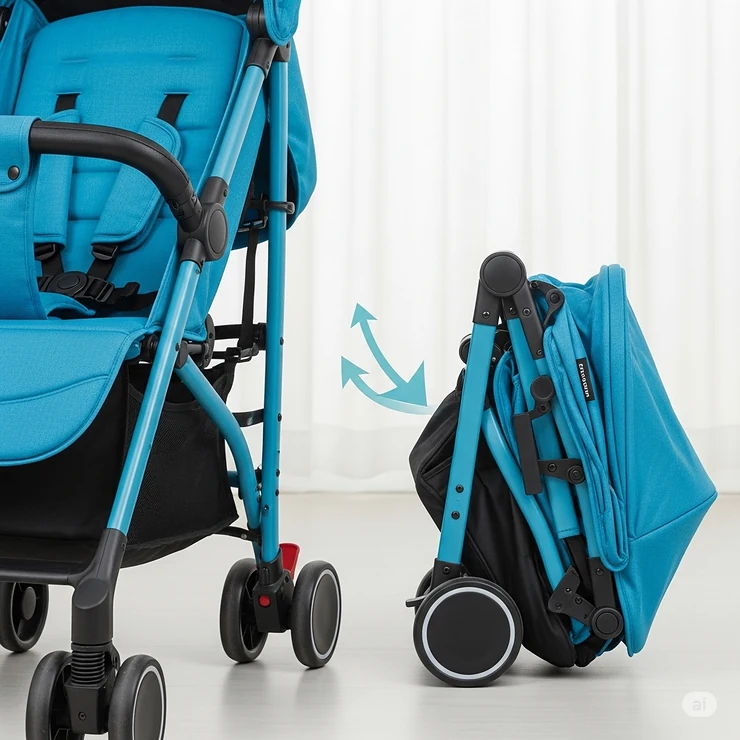
What is the best lightweight stroller? It’s a stroller that weighs roughly 10 to 20 pounds, folds in seconds, and still delivers a safe harness, a usable recline, and a frame sturdy enough to survive curbs, cobblestones, and airport gate-checks. Light is the headline. Everything else is the fine print.
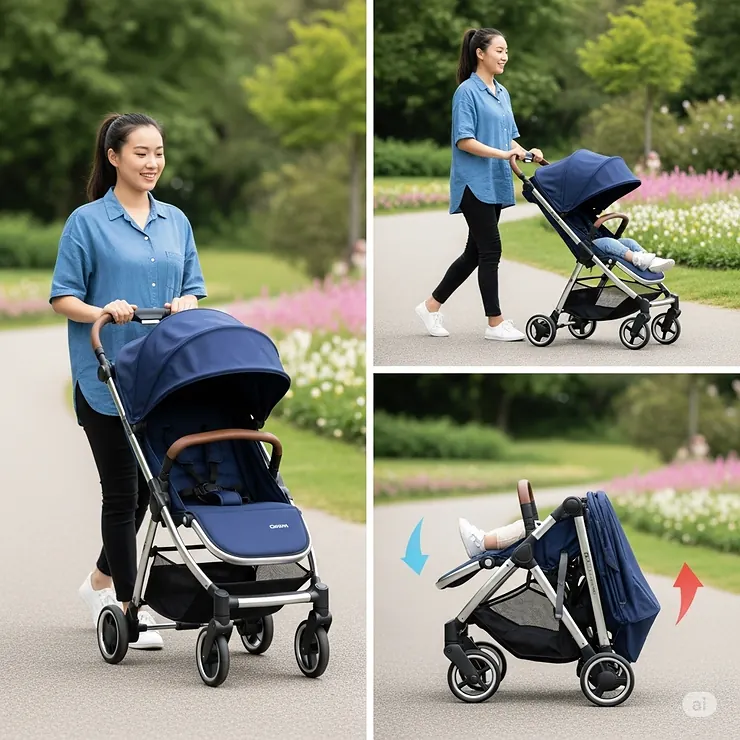
Here’s the twist most shoppers discover too late: “lightweight” is a marketing word, not a regulated category. One brand’s featherweight is another’s 25-pound brick with a clever tagline. The best lightweight stroller for your family isn’t the one with the smallest number on the label. It’s the one that balances weight, fold size, ride quality, and the way you actually live: third-floor walk-up, tiny trunk, frequent flights, or a long loop around the neighborhood park.
A stroller, by the way, is one branch of the much older family of baby transport, a lineage that runs from hooded carriages to modern carbon-fiber frames. Today’s lightweight models are the lean, fast-folding descendants of that story.
Here’s how this guide works. Everything below is built from manufacturer specs, published editorial testing, and U.S. safety rules, not from invented hands-on stories. I haven’t pushed these strollers down your street, so you’ll get honest analysis and clearly labeled review themes instead of fake anecdotes. Prices appear as ranges only, so check current price before you buy. Ready? Let’s find the best lightweight stroller for you.
Quick Comparison: The Best Lightweight Stroller Options Side by Side
| Stroller | Approx. Weight | Price Tier | Best For |
|---|---|---|---|
| UPPAbaby Minu V3 | ~16.7 lb | Premium ($450-$550 range) | Everyday use from birth |
| Stokke YOYO³ | ~14-17 lb* | Premium ($450-$600 range) | Frequent flyers and city dwellers |
| Nuna TRIV lx | ~20 lb* | Premium (check current price) | One-stroller families wanting a sturdier ride |
| Baby Jogger City Tour 2 | ~14 lb | Mid-range ($300-$400 range) | Air travel with a bag included |
| Cybex Libelle 2 | ~13.7 lb | Mid-range ($300-$400 range) | Families with Cybex car seats |
| gb Pockit Air All-Terrain | ~10.4 lb | Mid-range ($300-$400 range) | Tiniest fold, lowest weight |
| Kolcraft Cloud Plus | ~13 lb | Budget (under $150 range) | Spare or second stroller |
*Weights vary by source and configuration. Price tiers are approximate ranges, not quotes.
Read the table like a trade-off map, not a scoreboard. The gb Pockit Air All-Terrain wins the weight contest at around 10 pounds, but the UPPAbaby Minu V3 and Nuna TRIV lx trade a few extra pounds for from-birth versatility and a sturdier feel. Budget-minded parents will notice that the Kolcraft Cloud Plus matches the mid-range models on weight for a fraction of the cost, though it plays a simpler game. Also note that weights shift depending on whether the canopy and seat insert are counted. Nuna, for example, leaves them out of its stated number, so treat every figure as a starting point.
💬 Just one click — help others make better buying decisions too!😊
Top 7 Best Lightweight Stroller Picks for 2026: Expert Analysis
1. UPPAbaby Minu V3 — best all-rounder for daily city life
The Minu V3‘s party trick is a one-handed fold designed to fit airline overhead compartments, which is handy when your other arm is busy holding a baby.
At about 16.7 pounds in one published travel test, it isn’t the featherweight of this list. But that extra heft buys a from-birth rating and a 50-pound limit, so you’re not shopping again when your newborn becomes a sprinting toddler. On paper, that’s the difference between a stroller you pull out for trips and one you’ll genuinely use every day.
Based on the spec comparison, this is the pick for parents who want one stroller to handle the commute, the grocery run, and the airport. Editorial roundups consistently place it near the top of the lightweight class. I couldn’t verify a clean aggregate of buyer ratings for this write-up, so skim the latest verified-purchase reviews yourself before checking out.
Pros:
- ✅ One-handed fold works with a baby on your hip
- ✅ From-birth rating with a 50-pound ceiling
- ✅ Compact enough for overhead-bin travel
Cons:
- ❌ Heavier than the ultra-light travel models
- ❌ Premium price for a “lightweight” stroller
Expect the $450-$550 range; check current price. Verdict: pricey up front, but strong value if you’ll use it from newborn days through toddlerhood.

2. Stokke YOYO³ — smallest-fold city icon
Formerly sold as the Babyzen YOYO, the YOYO³ is the benchmark many compact strollers get measured against, and it folds small enough to ride in an airplane overhead bin.
Weight is where the internet argues. One retailer lists the stroller as sold at about 17 pounds, while another test puts it near 14. The gap likely comes down to what’s counted and how it’s configured. Either way, you’re firmly in lightweight territory, and the number matters less than the behavior: a quick, tidy fold that tucks under a seat or over a shoulder.
Here’s what to weigh. Regional test listings place the seat’s starting age around six months, so newborn use means budgeting for an add-on such as a bassinet. Reviewer opinion is also split. One 10-stroller roundup ranked it below several rivals, while retailer comparisons praise its design. Disagreement among testers is information in itself, so read the latest reviews for the exact generation and accessories you’d buy.
Pros:
- ✅ Tiny, overhead-bin-friendly fold
- ✅ Long-established design, widely used as a benchmark
- ✅ Great fit for small apartments and frequent trips
Cons:
- ❌ Newborn use needs extra accessories
- ❌ Premium price before add-ons
Expect the $450-$600 range; check current price. Verdict: worth it if fold size is your top priority and you’re past the newborn stage.
3. Nuna TRIV lx — carbon-fiber strength in a mid-size frame
Carbon fiber is the plot twist here. The TRIV lx pairs a carbon-fiber-reinforced aluminum frame with a birth-to-50-pound rating and car seat hardware included in the box.
It sits in the roughly 20-pound class, which one retailer notes is still 5 to 10 pounds lighter than the average everyday stroller. That’s the key framing: the TRIV lx is lightweight by everyday-stroller standards, not by travel-stroller standards. Remember, too, that Nuna doesn’t count the canopy, seat insert, or bumper bar in its stated weight, so your real-world carry weight will be higher.
My read: this is for parents who want one stroller for everything and will fly occasionally rather than monthly. If you’re hauling it up stairs daily, those extra pounds will remind you of themselves. A 2026 mid-size roundup names it a top pick for its included travel-system hardware, but I couldn’t confirm a verified aggregate of buyer ratings, so check recent reviews.
Pros:
- ✅ Carbon-fiber-reinforced aluminum frame
- ✅ Car seat adapter hardware included
- ✅ Birth-to-50-pound rating
Cons:
- ❌ Heaviest pick on this list
- ❌ Bulkier than true travel strollers
Premium tier; check current price. Verdict: strong value if it’s your only stroller, overkill if it’s your travel stroller.
4. Baby Jogger City Tour 2 — best for air travel with a bag included
The City Tour 2 weighs about 14 pounds and, per one consumer-testing organization, ships with a carry bag, a small detail that matters more than it sounds.
Here’s why. Most airlines expect a cabin-bound travel stroller to be bagged and to meet carry-on size and weight limits. Some brands include the bag, while others charge extra. That makes the City Tour 2 a lower-friction choice for frequent flyers. It’s rated from newborn up to roughly 45 pounds (20.5 kg) in that same listing, which is a few pounds below some rivals but plenty for the stroller years.
Analytically, this is the sensible pick for families who fly a few times a year and want a stroller that doesn’t demand an accessory shopping spree. Reviewers generally describe the category it leads (compact travel strollers) as a trade of features for portability. I couldn’t verify buyer-review aggregates for this model, so check the latest ones.
Pros:
- ✅ Carry bag included, per testing listing
- ✅ Around 14 pounds with newborn-ready rating
- ✅ Straightforward compact fold for travel
Cons:
- ❌ Lower weight limit than 50-pound rivals
- ❌ Fewer comfort extras than mid-size models
Expect the $300-$400 range; check current price. Verdict: good value for frequent travelers, especially counting the bag.
5. Cybex Libelle 2 — lightest in Cybex’s lineup, car seat adapters included
The Libelle 2 is Cybex’s lightest ultra-compact stroller, at roughly 13.7 pounds, and it folds into a neat, compact shape unlike most travel strollers.
Two practical details shape the verdict. First, it requires two hands to fold. That’s a real trade-off when you’re holding a kid. Second, it comes with car seat adapters but works only with Cybex car seats. If you already own one, that’s a convenience. If you don’t, it’s a limitation, though Cybex now offers lie-flat infant car seats, which makes newborn use workable without a bassinet.
In my read, the Libelle 2 suits Cybex-loyal families who want a lighter second stroller without paying premium-tier prices. One retailer comparison calls it one of the more affordable travel stroller options. Review sentiment I could source is editorial rather than aggregated buyer data, so confirm with current verified-purchase feedback.
Pros:
- ✅ Around 13.7 pounds with a tidy compact fold
- ✅ Car seat adapters included
- ✅ Pairs with Cybex lie-flat infant car seats
Cons:
- ❌ Two-handed fold
- ❌ Adapters fit only Cybex car seats
Typically in the $300s; check current price. Verdict: a smart pick if you already live in Cybex’s ecosystem.
6. gb Pockit Air All-Terrain — the lowest weight and smallest fold
At around 10.4 pounds with a 48-pound limit, the Pockit Air All-Terrain is the lightest stroller here, and a 2026 roundup crowned it best compact fold.
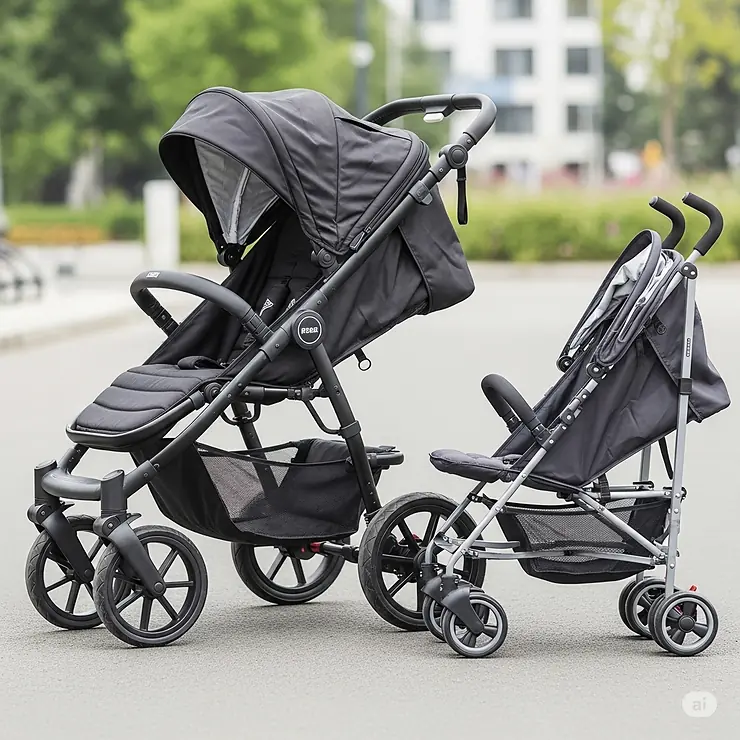
The all-terrain wheels are the interesting part. Shaving weight usually costs stability, and a Forbes Vetted tester reported that many lighter strollers tipped easily on turns. Bigger, tougher wheels help offset that, but they can’t repeal physics. Hanging a heavy diaper bag from a 10-pound frame is an invitation to tip.
My analysis: this is the stroller for minimalists, people who carry their stroller more than they roll it, and travelers who’ll gladly trade comfort extras for a pocket-sized package. Editorial coverage is positive on the fold, but I couldn’t verify aggregate buyer ratings, so read current reviews for wheel and durability comments.
Pros:
- ✅ Around 10-pound weight, the lightest here
- ✅ Ultra-compact fold for tiny storage
- ✅ 48-pound child limit
Cons:
- ❌ Very light frames tip more easily with loaded handlebars
- ❌ Fewer comfort features than mid-size strollers
Typically in the $300-$400 range; check current price. Verdict: excellent for travel-first families, less ideal as the only daily stroller.
7. Kolcraft Cloud Plus — best budget spare
The Cloud Plus is a 13-pound umbrella stroller with a 50-pound limit, and a 2026 roundup named it the best lightweight spare stroller.
Umbrella strollers do one thing brilliantly: they’re light and cheap. They don’t shorten much when folded, though, so you won’t save much trunk space. That makes the Cloud Plus ideal as a car-trunk stroller, a grandparent’s-house stroller, or a “we’ll risk this on the beach” stroller rather than a premium daily driver.
Here’s the value logic: you get the same pound count as pricier travel models and a 50-pound ceiling for well under half the cost. What you give up is refinement, meaning fewer features and a simpler ride. Review sentiment for the budget umbrella class generally centers on that trade-off. I couldn’t verify buyer-rating aggregates for this model, so check current reviews.
Pros:
- ✅ Around 13 pounds, easy to carry
- ✅ 50-pound child limit
- ✅ Budget-friendly for a spare
Cons:
- ❌ Umbrella fold saves little trunk space
- ❌ Basic features compared with premium models
Expect the under-$150 range; check current price. Verdict: outstanding value as a second stroller.
Top 7 Specs at a Glance
| Stroller | Weight | Child Limit | Fold Style | Best For |
|---|---|---|---|---|
| UPPAbaby Minu V3 | ~16.7 lb | 50 lb | One-hand compact | Daily use from birth |
| Stokke YOYO³ | ~14-17 lb | Check maker spec | Tiny, overhead-friendly | Frequent flyers |
| Nuna TRIV lx | ~20 lb | 50 lb | Mid-size | One-stroller families |
| Baby Jogger City Tour 2 | ~14 lb | ~45 lb | Compact, bag included | Air travel |
| Cybex Libelle 2 | ~13.7 lb | Check maker spec | Two-hand compact | Cybex car seat owners |
| gb Pockit Air All-Terrain | ~10.4 lb | 48 lb | Ultra-compact | Minimalists |
| Kolcraft Cloud Plus | ~13 lb | 50 lb | Umbrella | Budget spare |
Limits marked “check maker spec” weren’t confirmable in my sources, and ratings columns are omitted because I couldn’t verify buyer-rating aggregates. The spread between the lightest and heaviest pick is about ten pounds, yet fold styles differ more than weights do. The gb Pockit Air All-Terrain is the answer if carry weight is the whole game, the Baby Jogger City Tour 2 is the smart pick if the airline wants a bag, and the UPPAbaby Minu V3 is where I’d start for everyday life.
Your First 30 Days: Setup, Folding Practice, and a Simple Maintenance Schedule
A new stroller is like a new car: the first few weeks decide whether you’ll love it or resent it.
Day 1: unbox and inspect. Check the harness buckles, confirm the parking brake engages, and make sure every wheel clicks firmly into place. Read the manual’s weight and age guidance before you load a child.
Week 1: practice the fold. Fold and unfold it ten times in your living room, not in an airport security line. Time it. A one-handed fold only feels one-handed after you’ve built the muscle memory, and a two-hander like the Cybex Libelle 2 deserves extra reps.
Week 2: stress-test your routine. Carry it up your stairs, load it into your trunk, and roll it over your worst curb. Adjust the handlebar and recline now, while you can still return it.
Week 4: start the maintenance rhythm.
- Weekly: wipe the frame and fabric, and clear grit from the wheels
- Monthly: check bolts, wheel attachment, and brake function
- Quarterly: add a drop of silicone-based lubricant to pivot points (never to brakes)
Common first-month mistakes include hanging heavy bags on the handlebar, forcing a stuck fold instead of checking the latch, and leaving the stroller in a hot car for days. Gentle habits now extend its life later.
Real-World Scenarios: Three Families, Three Picks
Specs come alive when you attach them to a life. Here are three realistic profiles and the logic behind each match.
Scenario 1: The third-floor walk-up. If you’re a parent hauling a baby and a stroller up three flights daily, carry weight beats everything. Budget is moderate and use is daily. The gb Pockit Air All-Terrain at around 10 pounds or the Cybex Libelle 2 at about 13.7 pounds fits best, because every pound is a stair-by-stair tax.
Scenario 2: The frequent flyer. If you fly six or more times a year, fold size and airline-friendliness lead. The Baby Jogger City Tour 2 (bag included) and Stokke YOYO³ (overhead-friendly) are the natural fits, assuming a mid-to-premium budget and heavy use on travel days.
Scenario 3: The suburban one-stroller household. If you drive everywhere, hit parks and sidewalks, and want a single stroller for years, the UPPAbaby Minu V3 or Nuna TRIV lx gives you from-birth versatility and a 50-pound ceiling. This is a higher budget, daily-use profile.
Bonus scenario: the grandparent’s house. A Kolcraft Cloud Plus in a trunk or closet is a cheap solution to “we forgot the stroller again.” Match the stroller to the situation, not the internet’s loudest opinion.
Problem → Solution Guide: Four Common Lightweight Stroller Headaches
Problem 1: “It tips when I hang my bag.” Light frames have a lower threshold. Keep heavy items in the basket, hang only a light bag, and consider a heavier-framed model like the Nuna TRIV lx if you carry a lot. Forbes Vetted’s tester flagged tipping in several lighter strollers, so this isn’t a user-error myth.
Problem 2: “Will the airline let me gate-check it?” Yes. A 2018 provision in the FAA reauthorization law, highlighted by Senator Gillibrand, requires airlines to allow gate-checking strollers of all sizes. Delta charges nothing for strollers, and Southwest’s policy allows a free stroller per ticketed customer, with only limited liability for damage. A padded bag is cheap insurance.
Problem 3: “Every sidewalk crack rattles us.” Small wheels transmit everything. Look for larger or all-terrain wheels like those on the gb Pockit Air All-Terrain, and keep wheels clean so bearings roll freely.
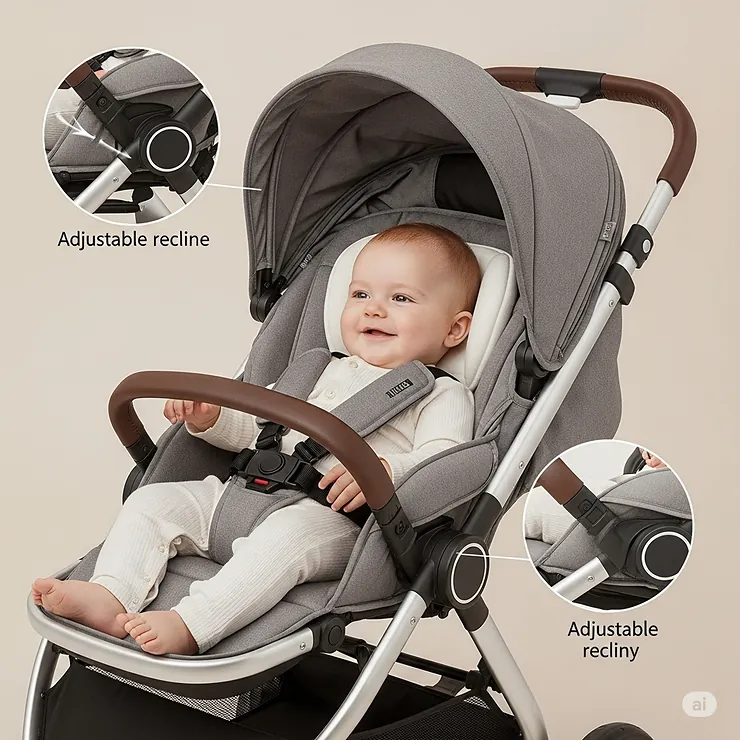
Problem 4: “The seat doesn’t recline enough.” Many lightweight strollers don’t recline flat, a limitation noted even among premium models. For newborns, use a compatible car seat (the Cybex Libelle 2 works with Cybex’s lie-flat options) or choose a from-birth model like the UPPAbaby Minu V3.
✨ Ready to Lighten the Load?
🔍 Pick the stroller that fits your stairs, your trunk, and your travel style. Click any highlighted product name to check current pricing and availability, and give your shoulders a well-earned break! 🚀
How to Choose the Best Lightweight Stroller
Choosing the best lightweight stroller comes down to seven decisions. Make them in order and the shortlist writes itself.
- Set a weight ceiling. If you’ll carry it daily, aim under roughly 15 pounds. If you’ll mostly roll it, 20 pounds is livable.
- Pick a fold style. Umbrella folds are long and narrow, while compact folds are short and boxy. Match the fold to your trunk or closet, not to a photo.
- Match your child’s age. Some seats suit newborns, while others start around six months. Infants need a lie-flat option or a compatible car seat.
- Check the weight limit. A 45-50 pound limit stretches the stroller’s useful life.
- Confirm safety compliance. U.S. strollers must meet the federal standard (more below), so look for the manufacturer’s compliance information and a working parking brake and harness.
- Plan for the car seat. The Nuna TRIV lx includes adapter hardware and the Cybex Libelle 2 includes adapters for Cybex seats, while others sell them separately.
- Test stability with load. Hang a bag, take a turn, and see how it behaves.
This checklist works because it prioritizes constraints over features. Get the constraints right and the feature debate shrinks to a tiebreaker.
Features That Actually Matter (And Those That Don’t)
Marketing loves a long feature list. Your back and your sanity care about a short one.
Features that matter:
- Fold ergonomics. A fold you can do half-asleep with one hand is worth more than any accessory.
- Wheel quality. Wheels decide how the stroller handles sidewalks, curbs, and gravel. It’s the difference between gliding and wrestling.
- Harness and brake reliability. Non-negotiable safety basics.
- Recline and canopy coverage. Naps happen on the go, and a stroller that can’t handle sun or sleep is a carry-only stroller.
- Honest weight. Check whether canopy and seat insert are counted.
Features that matter less than advertised:
- Ultra-premium fabrics. Nice, but a spill is a spill.
- Extra storage you won’t fill. A huge basket adds bulk, and bulk is the enemy of lightweight.
- Color collections. Fun, but they don’t change how the frame rides.
- Maximum weight ratings above what your child will reach. Rating headroom is useful only if your child will use it.
The filter I’d apply: if a feature doesn’t help you carry, fold, steer, or protect your child, it’s a bonus, not a reason to pay more.
Lightweight Stroller vs Umbrella vs Full-Size Stroller: Which Wins?
| Type | Typical Weight | Strength | Trade-Off | Best For |
|---|---|---|---|---|
| Umbrella (e.g., Kolcraft Cloud Plus) | ~10-15 lb | Cheap, light | Long fold, few features | Spare stroller |
| Compact travel (e.g., gb Pockit Air All-Terrain) | ~10-17 lb | Tiny fold, portable | Fewer comfort features | Travel, small spaces |
| Mid-size lightweight (e.g., Nuna TRIV lx) | ~18-22 lb | More features, sturdier ride | Heavier, bulkier | One-stroller families |
| Full-size everyday | ~25-30 lb | Comfort, storage | Heavy, hard to store | Long walks, car trunks |
The best lightweight stroller isn’t a single type. It’s a position on a spectrum. Umbrella models win on price, compact travel models win on portability, and mid-size lightweight models win on versatility, the last offering most features at about 5 to 10 pounds less than the average everyday stroller. Full-size strollers still win on comfort and storage, but they lose the moment stairs or planes enter the picture. If your life has stairs or flights, the lightweight categories make the most sense.
What to Expect: Real-World Performance
Specs describe a stroller at rest. Performance describes it at 4 p.m. with a tired kid and a full bag.
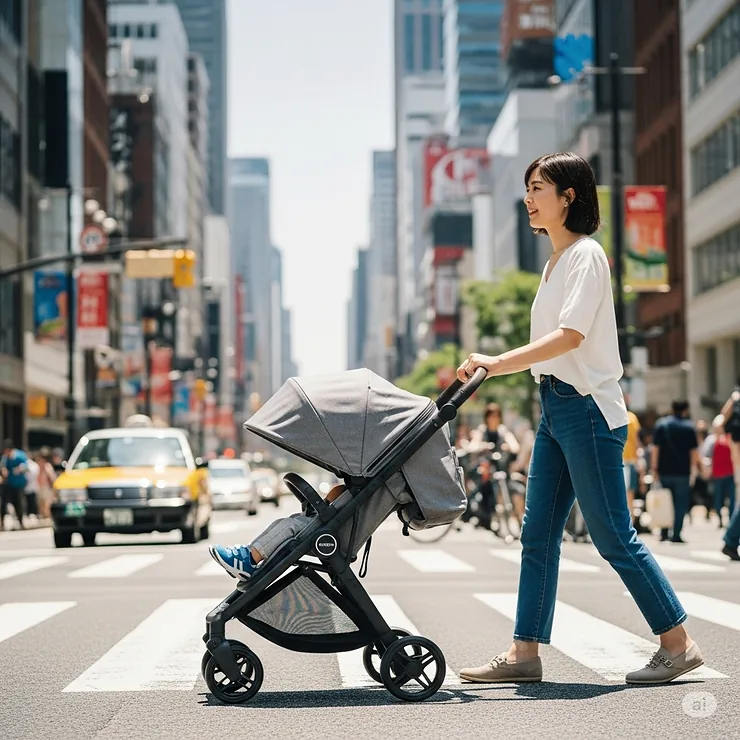
Here’s the honest pattern in the research. Lighter strollers carry easily but can be less stable under load. A Forbes Vetted tester reported that many lighter models tipped easily around turns, and that a stroller sold as lightweight still weighed almost 25 pounds. In practice, that means a very light frame is best treated like a nimble sports car, not a pickup truck. Load the basket, not the handlebar.
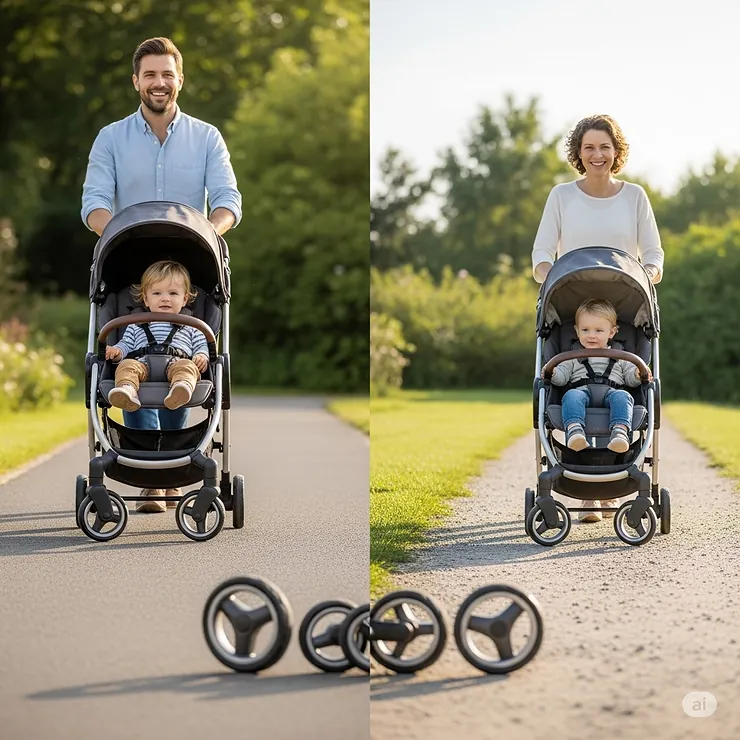
Ride quality tracks wheel size and suspension. Compact travel strollers with small wheels will transmit sidewalk seams, while all-terrain wheels like those on the gb Pockit Air All-Terrain smooth them out. Mid-size models like the Nuna TRIV lx feel more planted because mass helps stability, which is the flip side of their extra weight.
Fold speed matters more in real life than on a spec sheet. A fold that takes five seconds becomes a ten-second tug-of-war when your other arm holds a child. That’s why one-handed designs like the UPPAbaby Minu V3 keep topping recommendation lists. Choose for the worst moment, not the best one.
Safety, Regulations, and Airline Rules for Lightweight Strollers
Lightweight doesn’t mean lightly regulated. In the U.S., strollers are classified as durable infant products and must meet a mandatory federal standard. The Consumer Product Safety Commission’s stroller guidance explains that 16 CFR Part 1227 incorporates ASTM F833, covering performance requirements, parking brakes, labeling, and car-seat-and-stroller combinations. ASTM defines a stroller as a wheeled vehicle for children usually from infancy to 36 months.
The most recent version I could confirm is ASTM F833-21, which became the mandatory version for strollers manufactured on or after February 15, 2022. Always check the CPSC page for updates. Manufacturers must also certify compliance with a Children’s Product Certificate.
What can you do as a buyer? Read the labels and warnings, and confirm the parking brake and harness work before the first ride. Register the product so you receive recall notices, and don’t assume a cheap, unbranded import meets the same standard.
On airlines, gate-checking strollers is generally free: Delta, for instance, doesn’t charge for strollers or child restraint seats, and Southwest allows one stroller per ticketed customer, with only limited liability for damage. Policies change, so verify before you fly.
Long-Term Cost & Maintenance
Sticker price is a snapshot. Cost per use is the movie.
Consider a stroller in the $500 range used daily for three years, roughly 1,000 days. That works out to about 50 cents per day. A budget model in the $120 range used for two years comes to about 16 cents per day, but only if it holds up. This is illustrative math, not a prediction, yet it shows why premium models can be reasonable when you’ll use them heavily and why a budget spare makes sense when use is occasional.
Total cost of ownership also includes accessories: bassinets or newborn packs for models like the Stokke YOYO³, car seat adapters for models that don’t include them, and travel bags if one isn’t included (the Baby Jogger City Tour 2 reportedly includes one). Add replacement wheels or fabric if you’ll push it hard.
Resale matters too. Well-known premium models like the UPPAbaby Minu V3 tend to be easy to resell, which softens the true cost. Meanwhile, simple upkeep (wiping, clearing wheels, and occasional lubrication) costs almost nothing and extends life substantially.
Common Mistakes When Buying a Lightweight Stroller
Most regrets come from the same handful of errors.
- Buying on weight alone. The lightest model can be the least stable. Balance carry weight with real-world handling.
- Ignoring the fine print on weight. Some brands exclude the canopy or seat insert, so your real number is higher.
- Forgetting the age fit. A seat that starts around six months doesn’t help with a newborn.
- Skipping car seat compatibility. Adapters can be included, sold separately, or limited to one brand, as with the Cybex Libelle 2.
- Choosing an umbrella stroller for trunk space. Umbrella frames stay long when folded, so the savings are weight, not space.
- Never practicing the fold. The airport is the wrong place to learn.
- Trusting one reviewer. Testers disagree sharply. One roundup ranked the Stokke YOYO³ below several rivals, while others praise it. Compare several sources.
Every one of these mistakes is avoidable with ten minutes of homework, and that homework pays off for years.
FAQ About the Best Lightweight Stroller
❓ How much should the best lightweight stroller weigh?
❓ Is a lightweight stroller safe for a newborn?
❓ Can I take a lightweight stroller on a plane?
❓ Does a lightweight stroller work with my car seat?
❓ How long will a lightweight stroller last?
Conclusion: Finding the Best Lightweight Stroller for Your Life
Here’s the short version. If you want one stroller that does nearly everything, the UPPAbaby Minu V3 is the most balanced pick. If fold size rules your world, the Stokke YOYO³ and gb Pockit Air All-Terrain lead the pack. If you fly often, the Baby Jogger City Tour 2 and its included bag make life easier. If you want a sturdier ride and can handle about 20 pounds, the Nuna TRIV lx earns its place, while the Cybex Libelle 2 fits Cybex households and the Kolcraft Cloud Plus is the budget spare that punches above its price.
The real lesson is that the best lightweight stroller is the one that fits your stairs, your trunk, your flights, and your budget, not the one with the flashiest number. Practice the fold, respect the weight limits, keep heavy bags in the basket, and verify safety information on the CPSC page. Prices change and models update, so check current price and the latest verified reviews before you buy.
✨ Ready to Find Your Perfect Ride?
🔍 Compare the picks above, click any highlighted product name to check current pricing and availability, and choose the stroller that makes every outing lighter, smoother, and a whole lot more fun! 🚀
Recommended for You
Disclaimer: This article contains affiliate links. As an Amazon Associate, I earn from qualifying purchases. If you purchase products through these links, we may earn a small commission at no additional cost to you.
✨ Found this helpful? Share it with your friends! 💬🤗
