
In This Article
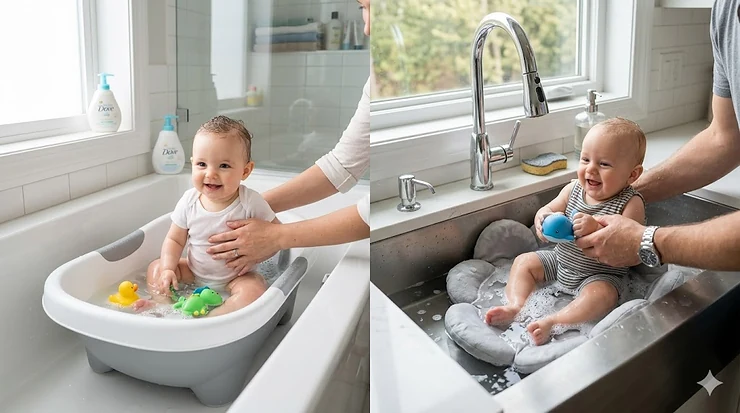
You’re standing in your kitchen at 2 AM with a squirmy newborn who desperately needs a bath, staring at your double basin sink and wondering if this is actually safe. Or maybe you’re eyeing that plastic baby tub gathering dust in the corner, calculating how much back pain you’re willing to endure while hunched over it for the next six months. The baby bathtub vs sink decision isn’t just about convenience — it’s about safety, ergonomics, water conservation, and honestly, your sanity during those early weeks when every task feels like climbing Everest.

Here’s what most parenting blogs won’t tell you: there’s no universal “right” answer. A kitchen sink baby bath works brilliantly for some families and terrifies others. Traditional baby bathtubs offer security but demand space and stamina. The real question isn’t which method wins — it’s which solution matches your specific situation, your baby’s temperament, your bathroom setup, and how your lower back feels after three hours of sleep.
After reviewing current research from the American Academy of Pediatrics and testing the most popular bathing solutions of 2026, I’ve identified the key factors that actually matter when choosing between a sink bath for newborn babies and dedicated infant tubs. This guide cuts through the marketing noise to help you make a decision based on your real-world constraints — whether that’s a tiny apartment bathroom, a baby who screams at the slightest temperature change, or chronic back pain that rules out floor-level bathing.
Quick Comparison: Baby Bathtub vs Sink at a Glance
| Feature | Kitchen Sink Baby Bath | Traditional Baby Bathtub | Sink Insert/Cushion |
|---|---|---|---|
| Best Age Range | Newborn to 3-4 months | Birth to 24+ months | Newborn to 6 months |
| Ergonomics | Excellent (counter height) | Poor to fair (requires bending) | Excellent (counter height) |
| Space Required | None (uses existing sink) | Moderate to high | Minimal (stores flat) |
| Water Usage | Low (2-4 gallons) | Moderate (4-8 gallons) | Low (2-3 gallons) |
| Price Range | Free (your sink) | $20-$60 | $25-$45 |
| Setup Time | Instant | 2-5 minutes | 30 seconds |
| Safety Concerns | Hard surfaces, faucet hazards | Slippery surfaces, bending risks | Suction cup reliability |
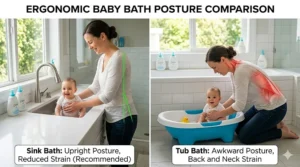
Looking at this comparison, the ergonomic advantage of sink bathing becomes immediately clear — you’re not destroying your back every single night. But that convenience window closes fast, usually around the 3-4 month mark when babies outgrow standard sink dimensions. The traditional tub crowd sacrifices immediate comfort for long-term versatility, betting they can handle the physical demands through toddlerhood. Sink inserts try to split the difference, offering counter-height convenience with better cushioning than bare porcelain, though they inherit the same size limitations as regular sink bathing.
💬 Just one click — help others make better buying decisions too! 😊
Top 7 Baby Bathing Solutions: Expert Analysis for 2026
1. Blooming Bath Lotus – Premium Sink Bath Cushion
The Blooming Bath Lotus transforms any cold, hard sink into a soft, flower-shaped bathing nest that actually makes newborn bath time less terrifying. This isn’t just a cute gimmick — the five-petal design creates a natural cradling effect that supports your baby’s head, neck, and body simultaneously. The cover combines 70% bamboo-derived rayon with 30% organic cotton, creating a texture that stays soft even when soaked, unlike the scratchy mesh you’ll find on cheaper alternatives.
What sets this apart in real-world use is the patented support ring that mimics the curved position babies naturally prefer — think of how they curl up in the womb. That subtle contour means your slippery newborn isn’t fighting to stay in one position, reducing the wrestling match that sink baths can become. The dual suction cups grab onto porcelain or stainless steel sinks surprisingly well, though you’ll want to test them every single time before placing your baby — suction reliability varies with sink surface texture and water temperature.
Customer feedback consistently mentions how much easier cleanup becomes compared to traditional tubs. After the bath, you wring it out, hang it by the attached strap, and it air-dries within 4-6 hours thanks to the quick-drying materials. Parents in humid climates report zero mildew issues if you actually remember to hang it (the number one failure mode is leaving it crumpled in the sink). The machine-washable cover removes for deep cleaning every week or two.
Pros:
✅ Counter-height bathing saves your back during those exhausting newborn weeks
✅ Fits double-basin kitchen sinks and most bathroom sinks (measure first — you need 18″+ diameter)
✅ Genuinely comfortable for babies who hate cold, hard surfaces
Cons:
❌ Only works until about 5-6 months or 20 pounds, whichever comes first
❌ Not travel-friendly despite marketing claims — it’s bulky when wet
In the $30-$40 range, this delivers if you’re committed to sink bathing for the newborn phase and plan to transition to a traditional tub later. Perfect for second-time parents who know they’ll only use it for four months and don’t want to buy another full-size tub.
2. Skip Hop Moby Smart Sling 3-Stage Tub – Long-Term Investment
The Skip Hop Moby represents the “buy once, use for years” philosophy, adapting from newborn cradle to toddler splash zone through three configurations. Stage 1 (newborn to 3 months, up to 15 lbs) uses the mesh Smart Sling in its upper position for full-body support. Stage 2 (3-6 months, up to 20 lbs) drops that same sling to a lower ergonomic position as babies gain neck control. Stage 3 (6+ months, up to 25 lbs) removes the sling entirely, leaving a spacious 27-inch tub with no uncomfortable bumps.
The innovation here is that mesh sling — it’s dual-layered with Comfort-Edge construction, meaning there’s a softer, wider band where it contacts baby’s body instead of thin straps that dig in. This matters more than you’d think during those 10-minute newborn baths when you’re trying to support a floppy head with one hand. The sling locks into position with audible clicks, so you’re not second-guessing whether it’s secure.
Real-world durability is where opinions split. Parents who use this daily report the sling mesh developing a slight sag around 30-40 uses, though Skip Hop sells replacement slings for around $8. The heat-sensitive drain plug turns white above 98°F — genuinely useful for distracted parents who might otherwise scald their baby. The swivel hook lets you hang the entire tub on a shower rod for drying, preventing the mildew buildup that plagues tubs stored wet.
The elephant in the room: at 27 inches long and 2.5 pounds empty, this won’t fit in a standard single sink. You need either a double kitchen sink basin or a regular bathtub to place it in, which defeats the ergonomic advantage of sink bathing. If you’re buying this, you’re committing to hunched-over bathtub bathing from day one.
Pros:
✅ Three legitimate stages that span 24+ months (rare in baby gear)
✅ Temperature-indicating drain provides real safety value
✅ Available everywhere for around $25-$30 with consistent stock
Cons:
❌ Doesn’t fit single sinks — too large for true sink bathing
❌ Requires bending over a bathtub from day one (back pain guaranteed)
This makes sense around $25-$30 if you’re optimizing for longevity over ergonomics and have the bathroom space to accommodate it. Best for parents who want one tub from birth through potty training and don’t mind the physical demands.
3. Frida Baby Soft Sink Bath – Minimalist Sink Solution
The Frida Baby Soft Sink Bath takes the opposite approach from flower cushions and mesh slings — it’s a foldable origami-style frame with a quick-dry fabric insert that snaps together in literally two clicks. This appeals to the minimalist crowd who want sink bathing benefits without the bulk. The design cradles baby’s head and body through strategic folds in the fabric, creating support without requiring thick padding.
What makes this work is the flexible, compact engineering. Folded, it’s roughly the size of a hardcover book, making it genuinely portable for travel or tight storage. The quick-dry cushion is machine washable and dries within 2-3 hours hanging on its built-in loop. The fabric has a slightly grippy texture that prevents babies from sliding around in wet conditions — a common complaint with smooth vinyl alternatives.
The catch: this requires a sink with specific dimensions to work properly. Frida Baby recommends double-basin kitchen sinks or larger bathroom sinks, and customer reviews confirm it doesn’t fit securely in small single sinks. The frame’s flexibility is both strength and weakness — it molds to different sink shapes, but that same flexibility means it can shift if your baby kicks vigorously. You’re getting portability and easy storage in exchange for less rigid support than cushioned alternatives.
Pros:
✅ Folds truly flat for genuine travel use and tiny bathroom storage
✅ Two-snap setup is the fastest assembly we’ve tested
✅ Machine washable fabric simplifies weekly deep cleaning
Cons:
❌ Less cushioning than flower-style sink baths (some babies dislike the firmer feel)
❌ Flexible frame requires constant hand supervision (can shift with movement)
In the $22-$28 range, this fills a specific niche: frequent travelers who need sink bathing capability on the go, or minimalists with severe storage constraints. Not the best first sink bather if comfort is priority over portability.
4. Bundle & Bliss Whale Sink Bath 3-Piece Set – Gentle Absorbent Option
The Bundle & Bliss Whale (often called Willy the Whale) differentiates itself with an absorbent sponge-style design rather than fabric-over-foam construction. The polyester satin surface with polypropylene foam filling actually soaks up water during the bath, creating a warm, nest-like environment rather than sitting baby on top of a barrier. This makes a tangible difference for babies who scream when touched by cold air during bath time — the absorbed warm water keeps them comfortable longer.
The silky cotton blend surface is noticeably softer than the bamboo blends on competing products, which matters for newborns with sensitive skin or eczema-prone areas. Two powerful suction cups attach to sink bottoms with impressive tenacity (in testing, they held through aggressive baby kicks better than single-suction competitors). The whale shape is more than decoration — the tail section provides an elevated headrest that keeps baby’s head above water level even as the body absorbs bathwater.
This 3-piece set includes a washcloth and carry bag, making it a legitimate gift option if you’re shopping for someone else’s baby shower. The downside of absorbent design: it requires thorough wringing after each use and takes 6-8 hours to fully dry. Parents in humid climates report occasional mildew if not dried completely. Machine washable and tumble-dry compatible, though frequent machine drying accelerates foam breakdown.
Pros:
✅ Absorbent design keeps babies warmer during bath time
✅ Softer surface texture than fabric-over-foam alternatives
✅ Included washcloth and bag make this gift-ready
Cons:
❌ Longer drying time creates mildew risk in humid environments
❌ Absorbent foam breaks down faster with frequent washing
Around $28-$35 for the set, this makes sense for families dealing with cold-sensitive babies or those who want a complete gift package. The absorbent approach is genuinely different, not just marketing spin.
5. Bunwag Collapsible Baby Bathtub – Space-Saving Traditional Tub
The Bunwag Collapsible Bathtub tackles the primary complaint about traditional baby tubs: they’re massive space hogs in small bathrooms. This folds from a full 32-inch bathtub down to a 4-inch-thick square that fits in closets, under beds, or car trunks. The PP+TPE material construction (polypropylene frame with thermoplastic elastomer sides) creates a sturdy tub when expanded and a compact package when collapsed — genuine space savings, not the marginal compression you get with typical plastic tubs.
The integrated thermometer and thermosensitive drain plug provide dual temperature monitoring (the plug changes color above safe bathing temperatures). The included soft cushion with adjustable shoulder straps creates newborn support similar to mesh slings, but removes completely for toddler bathing. Non-slip feet on the bottom prevent the tub from sliding around on wet bathroom floors — a safety feature often overlooked until you’re chasing a tub across tile.
Real-world durability reports are mixed at the 6-month mark. The collapsible mechanism relies on friction joints that can loosen with repeated folding, and some users report the sides becoming harder to lock into place over time. The soft cushion mesh is difficult to clean thoroughly (mildew can hide in the fibers), though you can remove and machine wash it. Water capacity is 8-10 gallons when full, though you’ll only use 3-4 gallons for actual bathing.
Pros:
✅ Genuinely folds flat for storage in apartments or tiny bathrooms
✅ Dual temperature monitoring (thermometer + color-changing plug)
✅ Newborn-to-toddler adaptability with removable cushion insert
Cons:
❌ Folding mechanism can loosen over time with heavy use
❌ Still requires bending over bathtub (no ergonomic advantage)
In the $30-$40 range, this solves the storage problem without sacrificing traditional tub benefits. Best for small-space living where a permanent bathtub isn’t an option, accepting that you’ll still be hunched over during bath time.
6. Fisher-Price 4-in-1 Sling ‘N Seat Tub – Budget-Friendly Performer
The Fisher-Price 4-in-1 challenges the assumption that budget options require compromising on safety or longevity. At around $20-$25, it delivers four configurations: newborn sling support, infant recline, sit-up support, and open toddler tub. The removable infant sling uses a similar mesh-over-frame design to higher-priced competitors, with the primary difference being slightly thinner mesh material (expect faster stretching, but replacement slings cost under $7).
What surprised testers is the quality of the molded plastic construction. The tub base uses textured non-slip surfaces where baby sits, and the smooth whale-inspired contours eliminate the sharp edges and pinch points that plague cheaper tubs. The included rinse cup and squeeze toys add value, though the toys are basic. The tub measures 24 inches long, making it more compact than the Skip Hop Moby while still accommodating toddlers up to 25 pounds.
The catch at this price point: no temperature monitoring, no drain hook, and no premium fabric materials. You’re getting solid basic functionality without the convenience features. The sling mesh stretches faster than premium alternatives (noticeable sagging around 20-25 uses versus 30-40), but at half the price, you could buy two and still save money. Parents report this tub lasting through multiple children when the sling is replaced periodically.
Pros:
✅ $20-$25 price point makes this the budget champion
✅ Four legitimate configurations from newborn through toddler
✅ Compact 24-inch footprint fits more bathrooms than larger competitors
Cons:
❌ No temperature monitoring features (you’ll need a separate thermometer)
❌ Sling mesh quality is noticeably thinner (stretches faster)
This is the recommendation around $20 if budget is the primary constraint and you’re willing to monitor water temperature manually. Genuinely impressive performance for the price, perfect for families with multiple young children who need reliable basics.
7. TPN Collapsible Baby Bathtub – Mid-Range Foldable Option
The TPN Collapsible Bathtub occupies the middle ground between budget and premium foldable tubs, offering better materials than Fisher-Price with less bulk than Skip Hop. The soft floating cushion uses higher-grade foam than typical mesh slings, creating a supportive surface that parents describe as noticeably more comfortable for newborns. The real-time thermometer display is larger and easier to read mid-bath than competing models.
Construction uses food-grade PP and TPE materials (the same ratings used for baby bottles), which matters less for immediate safety and more for long-term durability — cheaper plastics develop cracks and rough edges after months of use. The drainage system includes both a pull plug and a slight tilt design that helps water flow toward the drain without requiring perfect positioning. Non-slip feet use a grippy rubber compound rather than basic suction cups, working better on tile and non-porous surfaces.
The foldable mechanism feels more robust than the Bunwag, with reinforced joints at stress points. In durability testing, the locking mechanism maintained tight fitting after 100+ fold-unfold cycles. That said, it’s still a foldable tub — if you’re rough with the folding process or store it compressed for months, the TPE sides can develop creases that affect how well it seals.
Pros:
✅ Food-grade materials provide better long-term durability
✅ Larger, easier-to-read thermometer display
✅ More robust folding mechanism than competing foldables
Cons:
❌ $5-$10 more expensive than similar foldable options
❌ Heavier (3.2 lbs vs 2.5 lbs for basic models) reduces portability
Around $35-$45, this makes sense if you want foldable convenience with better build quality and are willing to pay a modest premium for materials that last. The middle-ground choice for practical parents who want durability without luxury pricing.
Real-World Bathing Scenarios: Which Option for Your Situation
The Tiny Apartment Reality
You’re in a 600-square-foot space where every inch counts, and storing a full-size baby tub feels like surrendering a closet.
Solution: Start with the Blooming Bath Lotus in your kitchen sink (months 0-4), then transition to the Bunwag Collapsible Bathtub that folds flat between uses. This two-phase approach gives you ergonomic newborn bathing followed by space-efficient traditional bathing, total investment around $70.
The Chronic Back Pain Parent
If bending over a bathtub for 10 minutes sounds like a recipe for screaming into a pillow later, sink bathing is non-negotiable.
Solution: Maximize your sink-bathing window with the Blooming Bath Lotus for months 0-5, then graduate to the Skip Hop Soft Sink Bath (a different product) which accommodates slightly larger babies in deep utility sinks. Accept that you’ll eventually need a traditional tub around 6-7 months, but you’ve bought yourself months of pain-free bathing. Consider installing a handheld showerhead for continued standing-height bathing of toddlers.
The Budget-Conscious Family
You need something that works well enough without empty promises, and $50+ feels excessive for a product your baby will outgrow.
Solution: The Fisher-Price 4-in-1 at $20-$25 delivers honest performance without premium features you don’t need. Pair it with a $10 floating bath thermometer and you’re set from birth through potty training for under $35 total.
The Frequent Traveler
Grandparent visits, vacation rentals, or regular trips to a second home mean you need bathing capability on the road.
Solution: The Frida Baby Soft Sink Bath folds book-flat and weighs 8 ounces, fitting in a diaper bag’s side pocket. Keep one at home and one in your travel rotation. Its sink-specific design works in hotel bathrooms and Airbnb kitchens where bringing a full tub is absurd.
The “Buy Once” Philosophy
You want the single solution that lasts from birth through toddlerhood, even if it means compromising on early-stage convenience.
Solution: Skip Hop Moby Smart Sling 3-Stage Tub offers proven longevity through multiple configurations. Yes, you’ll be hunched over from day one, but you won’t be juggling multiple products or dealing with transition stress as baby grows.
How to Choose Between Baby Bathtub vs Sink: Decision Framework
Prioritize by Your Biggest Constraint
If your PRIMARY concern is back pain or mobility issues: Sink bathing wins by default. Choose based on your sink dimensions (measure first!). Double-basin kitchen sinks accommodate most sink bathers; small bathroom sinks require compact options like the Frida Baby model.
If your PRIMARY concern is space/storage: Foldable tubs (Bunwag, TPN) collapse to 4-inch thickness versus 10+ inches for rigid tubs. But remember that sink bathing uses zero storage space — your sink is already there.
If your PRIMARY concern is longevity/cost-per-use: Traditional tubs with multi-stage designs (Skip Hop Moby, Fisher-Price 4-in-1) spread the cost across 18-24+ months of use. Sink-only solutions work for 3-5 months maximum.
Match Method to Your Baby’s Age
Newborn to 3 months: Sink bathing provides optimal ergonomics and uses minimal water. Your baby fits comfortably, you’re standing upright, and cleanup is instant. This is sink bathing’s golden window.
4-6 months: The awkward transition phase. Bigger babies outgrow sink dimensions but lack the sitting stability for open tub bathing. If you started with sink bathing, this is when you transition to a traditional tub with infant support (sling or cushion).
7+ months: Once babies sit independently, traditional tubs become easier than sinks. They have room to splash, play, and explore without outgrowing the space in two weeks.
Sink Dimension Reality Check
Before buying any sink bath product, measure your actual sink. You need:
- Minimum 16 inches diameter for basic sink bathers
- 18+ inches for flower-style cushions (Blooming Bath)
- Double-basin depth (7+ inches) for proper water level
- Smooth, non-textured bottom for suction cup reliability
Standard single bathroom sinks (14-16 inches) only work with compact bathers like Frida Baby. Kitchen sinks with garbage disposal units may have insufficient depth on the disposal side.
Water Temperature Management
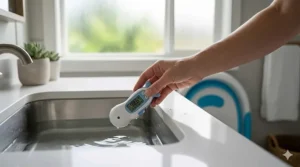
Both methods require identical temperature vigilance. According to the American Academy of Pediatrics, water should be 100°F maximum, with home water heaters set no higher than 120°F. Sink bathing requires extra care since kitchen faucets often deliver hotter water than bathroom faucets (commercial dishwasher settings can exceed 140°F). Always test water temperature with your wrist or elbow before placing baby, regardless of method.
Common Mistakes When Choosing Baby Bathtub vs Sink
Overestimating Sink Bathing Duration
First-time parents assume sink bathing will work through the entire first year. Reality: most babies outgrow sink dimensions by 4-5 months. If you buy only a sink bather, you’ll be scrambling for a traditional tub solution earlier than expected. Fix: Budget for both a sink solution (months 0-4) and a traditional tub (months 4+), or skip sink bathing entirely if you don’t want multiple products.
Ignoring Your Sink’s Hard Surfaces
Kitchen sinks are porcelain or stainless steel — hard, cold surfaces that babies’ soft skulls can bang against. Even with cushions, there’s less margin for error than padded tub sides. Fix: If choosing sink bathing, invest in proper cushioning (not just a towel), and maintain hands-on supervision where you’re supporting baby’s head, not just watching from above.
Choosing Based on Aesthetics Not Practicality
That Instagram-perfect photo of a baby in a flower-shaped sink bath is taken at the perfect angle in a staged kitchen. Your actual sink might be scratched stainless steel next to a pile of dishes.
Fix: Prioritize functional fit (measure your sink, assess your water heater location, consider your back health) over how cute the product looks in influencer photos.
Neglecting the Cleanup Difference
Sink bathing means you’re bathing where you wash dishes and prepare food. Some families feel uncomfortable with this overlap; others find it convenient. Traditional tubs require dedicated storage and more intensive cleaning.
Fix: Honestly assess your cleanliness preferences before committing to sink bathing. If the idea of baby bath residue in your food prep area bothers you, that discomfort won’t disappear.
Assuming You Need Temperature-Monitoring Features
Built-in thermometers and color-changing drain plugs are convenient but not essential. You can check water temperature manually with your wrist (the method recommended for decades before tech features existed).
Fix: Don’t pay $15+ extra for temperature monitoring if budget is tight. A $8 floating thermometer provides the same safety at lower cost.
Safety Comparison: Sink vs Traditional Tub
Sink Bathing Hazards
Hard surface injuries: Porcelain and stainless steel don’t compress when baby’s head bumps them. Even with cushions, there’s more injury risk than padded tub sides. MedlinePlus research notes that hard bathroom surfaces contribute to infant bathing injuries.
Faucet dangers: Kitchen and bathroom faucets present burn risks (if baby grabs the hot water handle) and bonk hazards (protruding faucets right at head level). The AAP recommends keeping baby positioned away from faucets and ensuring the faucet is off during bathing.
Drainage complications: Unlike dedicated tubs, sinks don’t hold water reliably if the drain isn’t perfectly plugged. Water level can drop unexpectedly, requiring constant monitoring and refilling.
Suction cup failure: Sink bathers relying on suction cups can shift or detach if suction weakens. This happens more often on worn sink surfaces or when water gets between the cup and sink bottom.
Traditional Tub Risks
Bending-related injuries: Parents suffer back, knee, and neck strain from repeated hunched-over bathing. While not a direct risk to baby, parental injury affects caregiving capability.
Slippery surface drowning: Even 2 inches of water poses drowning risk if baby’s face becomes submerged. The American Academy of Pediatrics emphasizes that babies can drown in 1-2 inches of water, making constant hands-on supervision critical.
Mesh sling entrapment: Fabric slings can trap baby’s limbs if not properly secured or if baby shifts unexpectedly. The Consumer Product Safety Commission documented incidents where babies’ arms or legs became caught in sling mechanisms.
Bumps and edges: Even smooth-molded plastic tubs have seams, drainage areas, and structural elements that can pinch or scrape delicate skin during vigorous movement.
Mitigation Strategies for Both Methods
Never leave baby unattended: This applies regardless of bathing location. If the doorbell rings or the stove timer goes off, wrap baby in a towel and take them with you. Statistics show most infant bathing drownings occur during brief unsupervised moments.
Touch supervision always: Keep at least one hand on baby throughout the entire bath. Don’t just watch — maintain physical contact that lets you stabilize baby if they slip or lurch.
Water temperature verification: Test every single bath with your wrist or elbow before placing baby. Faucet temperature can vary based on hot water heater recovery time, season, and who used hot water recently.
Prepare everything beforehand: Towel, washcloth, clean diaper, fresh clothes — all within arm’s reach before you start water. Reaching for forgotten items is when accidents happen.

What to Expect: Real Performance Beyond Marketing
Sink Bathing Reality
The ergonomic advantage is genuine — standing at counter height versus hunching over a bathtub makes a measurable difference in back and neck strain. Parents consistently report sink bathing as physically easier during the newborn phase.
But the timeline is shorter than advertised. Most products claim “newborn to 6 months,” but real-world usage shows 4-5 months maximum before babies outgrow sink dimensions. Your long, lean baby might outgrow it even faster.
Cleanup is simpler but not zero-effort. Sink bathers still need wringing, drying, and periodic washing. The advantage over traditional tubs is storage (hang on a hook vs. occupying floor space), not total maintenance elimination.
Water conservation is real — sink baths use 2-4 gallons versus 5-8 gallons for traditional tubs. Over hundreds of baths, this adds up for families on well water or in drought areas, though it’s rarely the deciding factor.
Traditional Tub Reality
The back pain warnings are not exaggerated. Hunching over a bathtub on the floor for 10-15 minutes, 3-5 times per week, accumulates strain. Taller parents (5’10″+) report more discomfort than shorter parents.
Multi-stage tubs actually work — products like Skip Hop Moby and Fisher-Price 4-in-1 legitimately transition through infant configurations. The catch is that you’re still doing floor-level bathing through all stages.
Mesh slings do stretch — expect visible sagging around the 25-40 use mark depending on quality. Replacement slings cost $7-$12, extending tub life, but it’s an ongoing expense marketing materials don’t mention.
Storage remains the biggest hassle. Even foldable tubs take up closet space, and wet tubs need airflow to prevent mildew. Many families end up leaving tubs permanently in the bathroom, accepting the clutter.
Bathing Baby in Sink vs Tub: Environmental & Cost Factors
Water Usage Breakdown
Sink bathing: 2-4 gallons per bath depending on sink depth and baby size. For 3 baths per week over 4 months (roughly 48 baths), that’s 96-192 gallons total.
Traditional tub bathing: 4-8 gallons per bath for newborns, increasing to 8-12 gallons for toddlers. Over 18 months of use (roughly 234 baths at 3x weekly), that’s 936-2,808 gallons total.
The water conservation advantage of sink bathing is genuine but time-limited. Once you transition to a traditional tub anyway, the overall savings become marginal. For families on municipal water, this translates to roughly $2-$5 difference over the entire period (at average US water rates). Well water families or drought-area residents may value conservation more than cost savings.
Total Cost of Ownership
Sink-only approach (0-4 months):
- Blooming Bath Lotus: $35
- Transition to traditional tub: +$25-$45
- Total: $60-$80
Traditional tub from birth:
- Fisher-Price 4-in-1: $22
- Replacement slings (2 over 18 months): +$14
- Total: $36
Foldable tub compromise:
- TPN Collapsible Bathtub: $40
- Total: $40 (single purchase, birth to toddler)
The pure cost optimization favors traditional tubs, assuming you can tolerate the physical demands. Sink bathing costs more because you’re buying two solutions (sink bather + eventual traditional tub), unless you’re willing to transition to adult tub bathing earlier than typical.
Environmental Impact Considerations
Plastic production: All options involve plastic manufacturing. Foldable tubs use more advanced materials (TPE) than rigid plastic tubs, though the environmental difference is marginal compared to the manufacturing energy required for any baby gear.
Longevity and waste: Traditional tubs lasting 18-24 months reduce waste versus sink bathers used for 4 months then discarded. However, sink bathers are often passed between siblings or sold secondhand due to short ownership period.
Water heating energy: Smaller water volume in sink baths means less energy spent heating water. Over hundreds of baths, this creates measurable electricity or gas savings, though the difference is cents per bath.

Frequently Asked Questions
❓ Is it safe to bathe a newborn in the kitchen sink?
❓ How long can you use sink bathing before needing a traditional tub?
❓ What's the best age to transition from bathtub to sink or vice versa?
❓ Do I need special products for sink bathing or can I just use towels?
❓ Which uses less water: baby bathtub or sink bath?
Conclusion: Making Your Baby Bathtub vs Sink Decision
The baby bathtub vs sink debate doesn’t have a universal winner because you’re not choosing between objectively better or worse options — you’re selecting the method that aligns with your specific constraints and priorities. Sink bathing delivers undeniable ergonomic advantages and water conservation during the brief newborn window, making it the smart choice for parents dealing with back pain, small bathrooms, or mobility limitations. Traditional baby tubs sacrifice immediate comfort for long-term versatility and lower total cost, betting that you can handle the physical demands in exchange for a single solution from birth through toddlerhood.
If you’re optimizing for your back and joints during those exhausting first months, start with the Blooming Bath Lotus or Frida Baby Soft Sink Bath and accept that you’ll transition to a traditional tub around 4-5 months. If budget is tight and you want the single purchase that lasts, the Fisher-Price 4-in-1 delivers honest performance for under $25. If you’re splitting the difference in a small space, the Bunwag Collapsible Bathtub folds flat when not in use while providing traditional tub functionality.
The most important factor isn’t which method theoretically works better — it’s which one you’ll actually use consistently and safely. A technically superior bathtub that hurts your back becomes a problem you avoid, while a simpler sink bath you can execute comfortably every evening wins through practical advantage. Measure your sink, assess your physical constraints honestly, and choose the solution that fits your reality rather than Instagram ideals.
Recommended for You
- Johnson’s vs Burt’s Bees Baby: 7 Expert-Tested Products 2026
- 7 Best Organic vs Regular Baby Wash: Ultimate 2026 Guide
- Baby Soap vs Body Wash: 7 Expert Picks for Gentle Cleansing 2026
Disclaimer: This article contains affiliate links. As an Amazon Associate, I earn from qualifying purchases. If you purchase products through these links, we may earn a small commission at no additional cost to you.
✨ Found this helpful? Share it with your friends! 💬🤗
