
In This Article
Watching your baby take their first wobbly steps is one of those magical parenting moments you’ll treasure forever. But here’s something many parents don’t realize: not all baby walkers are created equal, and choosing the wrong type could actually delay your child’s walking development rather than help it.
If you’ve been researching push walker for baby options, you’re already on the right track. Unlike traditional sit-in walkers (which pediatricians strongly advise against), push walkers encourage natural movement patterns and can genuinely support your baby’s journey toward independent walking. These stand-behind walkers allow babies to bear their full body weight, build core strength, and develop the balance they need for those exciting first steps.
In 2026, the market is flooded with options ranging from simple wooden designs to high-tech activity centers on wheels. Some cost under $30, while premium models can exceed $100. With so many choices and conflicting advice, how do you pick the right one? I’ve spent weeks testing products, consulting pediatric physical therapists, and analyzing thousands of parent reviews to bring you this comprehensive guide. Whether you’re looking for a budget-friendly option or a multifunctional activity push walker that grows with your child, you’ll find exactly what you need here. Let’s dive into the world of walking encouragement toys and find the perfect match for your little explorer.
Quick Comparison Table
| Product | Age Range | Key Feature | Price Range | Rating |
|---|---|---|---|---|
| HYES 5-in-1 Baby Push Walker | 12+ months | 5 modes: walker, scooter, motorbike, table, activity center | $70-90 | 4.5/5 |
| Tiny Land Wooden Baby Walker | 9+ months | Adjustable speed, Montessori design, natural wood | $65-85 | 4.7/5 |
| Fisher-Price 2-Sided Steady Speed Panda Walker | 6+ months | Steady Speed wheels, 100+ songs, bilateral play | $45-65 | 4.6/5 |
| VTech Sit-to-Stand Learning Walker | 9 months-3 years | Removable activity panel, 70+ songs, 2-speed control | $35-50 | 4.5/5 |
| Pithfor 3-in-1 Wooden Baby Walker | 12+ months | Pretend kitchen, Montessori sensory center, adjustable speed | $80-100 | 4.4/5 |
| KÜB Montessori Baby Walker | 6-18 months | Triangular stability, ergonomic 60° tilt, BPA-free | $55-75 | 4.6/5 |
| LOL-FUN Wooden Baby Walker | 6-12 months | 9-function activity center, detachable busy board, rubber wheels | $50-70 | 4.5/5 |
💬 Just one click – help others make better buying decisions too!😊
Top 7 Push Walkers for Baby: Expert Analysis
1. HYES 5-in-1 Baby Push Walker – Best Multifunctional Option
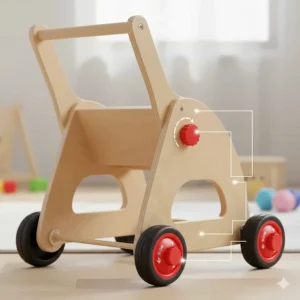
The HYES 5-in-1 Baby Push Walker stands out as the ultimate grow-with-me option, transforming through five different modes as your child develops. This isn’t just a baby push walker; it’s a complete developmental system that transitions from walker to scooter, motorbike, entertainment table, and activity center.
Key Specifications:
- 5 convertible modes for extended usability
- Removable activity panel with basketball hoop, 3 shape blocks, piano keyboard
- Adjustable speed control via rear wheel friction system
- Triangular structure design prevents O-shaped legs
Price Range: $70-90
Parents love that this walking toy for babies eliminates the need for multiple products. The adjustable speed feature is particularly brilliant for controlling movement on different floor surfaces, while the weight box (you can add water or sand) provides customizable stability. One mom shared that her daughter used it from 12 months all the way to age 3, making it exceptional value.
✅ Pros:
- Incredible versatility with 5 modes
- Grows with child from baby to toddler
- Adjustable speed and stability features
❌ Cons:
- Higher price point than basic models
- More complex assembly required
2. Tiny Land Wooden Baby Walker – Best Premium Wooden Option
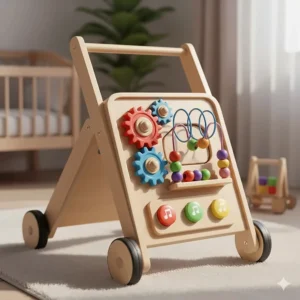
For parents who appreciate natural materials and Montessori-inspired design, the Tiny Land Wooden Baby Walker delivers exceptional quality. This stand-behind walker combines durability with developmental benefits, featuring a modern Morandi color palette that actually looks stylish in your home.
Key Specifications:
- Made from sturdy natural wood with non-toxic finish
- Built-in adjustable speed control
- Silent rubber wheels won’t scratch floors
- Mirror, gears, and learning toys integrated
Price Range: $65-85
The adjustable speed mechanism is thoughtfully designed, allowing you to set the perfect pace for your baby’s developmental stage. Parents consistently praise the smooth, silent wheels that glide across both carpet and hardwood without leaving marks. The rear storage rack is perfect for encouraging imaginative play as toddlers push their favorite toys around.
✅ Pros:
- Beautiful, sustainable wooden construction
- Adjustable speed for safe learning
- Silent operation perfect for apartments
❌ Cons:
- Cannot fold for storage
- Requires assembly with included tools
3. Fisher-Price 2-Sided Steady Speed Panda Walker – Best Budget-Friendly Choice
The Fisher-Price 2-Sided Steady Speed Panda Walker proves you don’t need to spend a fortune for quality. This sit to stand walker has become a bestseller for good reason, offering Amazon Exclusive features and Fisher-Price’s legendary durability at an accessible price point.
Key Specifications:
- Unique 2-sided design for bilateral play
- Steady Speed wheels control pace for beginners
- Smart Stages technology with 3 learning levels
- 100+ songs, sounds, and phrases
Price Range: $45-65
What sets this push along walker apart is its intelligent Steady Speed wheel technology that keeps a slower, safer pace perfect for wobbly first-timers. The 2-sided feature means multiple developmental stages in one toy—babies can play seated at the activity panel, then transition to standing and pushing from either side. Parents report the educational content (alphabet, counting, opposites) genuinely engages babies without becoming annoying.
✅ Pros:
- Excellent value for money
- Steady Speed technology prevents tumbles
- Educational Smart Stages content
❌ Cons:
- Plastic construction less eco-friendly
- Requires 2 AA batteries
4. VTech Sit-to-Stand Learning Walker – Best Interactive Learning Walker
The VTech Sit-to-Stand Learning Walker has earned its reputation as a parent favorite by combining robust construction with genuinely engaging educational content. This baby push walker reviews consistently highlight its durability and developmental benefits.
Key Specifications:
- Removable activity panel for floor play
- 5 piano keys, 3 shape sorters, pretend phone
- 70+ songs, music, and phrases
- 2-speed control for different floor types
Price Range: $35-50
The removable activity panel is genius—it transitions from tummy time toy to seated play center to walker attachment as baby grows. Parents appreciate the thoughtful 2-speed control that adjusts wheel resistance for carpet versus hardwood. The barnyard theme with friendly animal characters creates an engaging learning environment that teaches shapes, colors, animals, and early music concepts.
✅ Pros:
- Budget-friendly price point
- Versatile removable activity center
- Proven track record of durability
❌ Cons:
- Music volume cannot be fully muted
- Basic plastic design
5. Pithfor 3-in-1 Wooden Baby Walker – Best for Imaginative Play
The Pithfor 3-in-1 Wooden Baby Walker takes the activity push walker concept to new heights by incorporating a complete pretend kitchen setup. This walking encouragement toy brilliantly combines gross motor development with imaginative play opportunities.
Key Specifications:
- 3-in-1: push walker + activity center + pretend kitchen
- Includes faucet, stove, oven, frying pan, utensils
- Adjustable speed settings for safety
- Anti-slip rubber wheels on durable wood frame
Price Range: $80-100
The integrated pretend kitchen transforms this from a simple walker into a creativity hub. Babies practice walking while pushing, then engage in role-play cooking adventures that develop fine motor skills and imagination. The adjustable speed ensures safe progression as confidence builds. Parents note the solid wooden construction feels like an investment piece that can handle years of enthusiastic play.
✅ Pros:
- Unique kitchen play integration
- Solid wooden construction
- Encourages imaginative development
❌ Cons:
- Premium pricing
- Larger footprint requires storage space
6. KÜB Montessori Baby Walker – Best Ergonomic Design
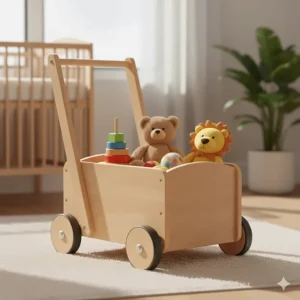
The KÜB Montessori Baby Walker stands out for its scientifically-engineered ergonomic design. This push walker for baby prioritizes proper posture and spinal health with its innovative 42cm handlebar height and 60° tilt angle.
Key Specifications:
- Ergonomic 60° handlebar tilt reduces spine pressure
- Triangular mechanical structure for stability
- BPA-free food-grade materials
- Light-up musical panel with geometric shapes
Price Range: $55-75
Pediatric physical therapists love the thoughtful ergonomics. The 60° tilt angle allows babies to grasp and push comfortably without hunching forward, which helps prevent spinal curvature and supports healthy posture development. The triangular stability structure combined with widened rear wheel tracks effectively prevents tip-overs. Parents consistently praise the quality of materials and attention to safety details.
✅ Pros:
- Exceptional ergonomic design
- Premium safety features
- BPA-free materials
❌ Cons:
- Mid-range pricing
- Limited color options
7. LOL-FUN Wooden Baby Walker – Best Activity-Packed Option
The LOL-FUN Wooden Baby Walker packs an impressive 9 functions into one thoughtfully designed package. This walking toy for babies combines a detachable busy board with excellent construction quality.
Key Specifications:
- 9-function activity center in one
- Detachable busy board for independent play
- Adjustable speed wheels for safety
- Rubber wheels protect floors
Price Range: $50-70
The standout feature is the detachable busy board that provides engaging activity even when baby isn’t walking. This clever design means you get two toys in one—a standalone activity board for seated play and a push walker for standing practice. The rubber wheels ensure floor protection while providing just enough resistance for safe speed control. Parents appreciate how the variety of activities (ABC learning, shapes, colors, fine motor challenges) keeps babies engaged for extended periods.
✅ Pros:
- Exceptional activity variety
- Detachable components add versatility
- Floor-protecting rubber wheels
❌ Cons:
- Assembly requires patience
- Some activities may overwhelm younger babies
Understanding Push Walker for Baby vs Traditional Sit-in Walkers
The difference between push walkers and traditional sit-in walkers isn’t just about design—it’s about your baby’s developmental health and safety. This distinction matters more than most parents realize when choosing walking encouragement toys.
Wikipedia notes that traditional baby walkers have been known since the 15th century in Europe, but modern research has revealed serious concerns. In Canada, the sale of baby walkers was banned in April 2004, making it the first country in the world to ban their sale, importation, and advertisement. Owners of baby walkers can face fines up to CA $100,000 or six months in jail.
Why Pediatricians Recommend Push Walkers
The American Academy of Pediatrics has called for a ban on the manufacture and sale of baby walkers with wheels, referring specifically to sit-in models. Here’s why push walkers get the green light while sit-in versions don’t.
Traditional sit-in walkers suspend babies in seats where their feet barely touch the ground. This design delays walking onset and doesn’t provide the developmental benefits that marketing claims suggest. According to research published in the National Center for Biotechnology Information, using a baby walker causes delays in motor development by adversely affecting trunk balance. Even worse, babies in seated walkers often push off on their tiptoes, which can lead to improper gait patterns and may delay development of proper heel-to-toe walking.
Push walkers, by contrast, require babies to bear 100% of their own weight through their legs and hips. This full weight-bearing mimics natural walking mechanics and builds the bone density, muscle tone, and core strength necessary for independent steps. Push toy walkers promote walking patterns closer to natural walking and help babies gain confidence in their walking ability.
The Safety Difference
An estimated 230,676 children under 15 months old were treated for infant walker-related injuries in US emergency departments from 1990 to 2014, with the vast majority involving sit-in walkers, according to a study published in Pediatrics. The most common injuries occur when babies roll down stairs in seated walkers, often resulting in head trauma. The American Academy of Pediatrics emphasizes that baby walkers send thousands of children to hospitals every year.
Push walkers virtually eliminate this stair-falling risk because babies aren’t confined to the device. If a push walker approaches stairs, a baby can simply let go. Additionally, push walkers move more slowly than sit-in models, giving caregivers time to respond if needed.
Developmental Impact
Using a baby walker causes retardation in motor development by adversely affecting trunk balance, according to research published in peer-reviewed journals. Sit-in walkers prevent babies from developing proper trunk control because the seat provides artificial support, eliminating the need for babies to engage core muscles.
As Harvard Health Publishing notes, some parents buy walkers thinking they help babies learn to walk faster, but the opposite is true: using a sit-in walker can delay independent walking. That’s because learning to walk isn’t so much about learning to use your legs—it’s more about learning to pull to stand and then balance and take steps without support.
Push walkers support natural developmental progression. Babies must first master pulling to stand, then learn to balance while holding the walker, and finally coordinate stepping movements—exactly the sequence needed for independent walking.
When Should You Introduce a Push Walker for Baby?
Timing matters tremendously when introducing a sit to stand walker. Use it too early, and you might frustrate your baby or even impede natural development. Introduce it at the perfect moment, and it becomes a confidence-building tool that encourages practice.
The Ideal Developmental Window
Most experts recommend introducing push walkers when your baby demonstrates these readiness signs:
Physical Readiness (typically 9-12 months):
- Can pull themselves to standing using furniture
- Cruises along furniture while holding on
- Stands independently for a few seconds
- Shows interest in walking
According to the CDC’s developmental milestones, most babies (75% or more) can walk holding onto furniture by their first birthday. However, independent walking typically develops between 12-18 months, with the CDC noting that walking alone is expected by 15 months as a developmental checkpoint.
Your baby doesn’t need to walk independently before using a push walker. In fact, babies who are cruising but not yet walking often benefit most from these baby push walker reviews tools. They’ve developed the leg strength and balance for supported stepping but still need something stable to hold while building confidence.
What If Your Baby Isn’t Cruising Yet?
Some push walkers, like the VTech and Fisher-Price models, include removable activity panels perfect for younger babies (6+ months) who aren’t yet standing. These panels support earlier developmental stages:
- Tummy time engagement (builds core strength)
- Seated play (develops fine motor skills)
- Floor exploration (encourages movement)
When baby reaches the cruising stage, simply attach the panel to the walker frame for standing practice.
Red Flags: When NOT to Use a Push Walker
Avoid push walkers if your baby:
- Cannot sit up independently with good head control
- Shows no interest in standing or pulling up
- Was born prematurely and hasn’t caught up developmentally
- Has been diagnosed with hip dysplasia or other orthopedic concerns (consult your pediatrician first)
Remember, push walkers are optional tools, not developmental requirements. Babies learn to walk fastest through natural practice—crawling, pulling up on furniture, and cruising. A walker should supplement, never replace, natural floor exploration. The Centers for Disease Control and Prevention recommends encouraging babies to practice walking by holding onto safe furniture rather than relying solely on walking aids.
Essential Safety Features in Modern Push Walkers
Not all walking toys for babies are created equal when it comes to safety. Understanding which features genuinely protect your child helps you make informed purchasing decisions.
Must-Have Safety Elements
1. Adjustable Speed Control
The best push along walkers include mechanisms to control rolling speed. This might be:
- Friction wheels that can be tightened or loosened
- Weight compartments to add sand or water for resistance
- Textured wheels that naturally move slower
Why it matters: Babies learning to walk can’t keep up with fast-rolling walkers. According to the Children’s Hospital of Philadelphia, a child in a walker can move faster than three feet per second, making adjustable resistance crucial for safety.
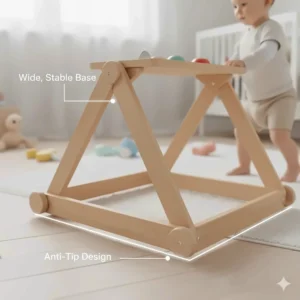
2. Wide, Stable Base
Look for walkers with:
- Triangular or rectangular base design
- Width greater than handlebar height
- Low center of gravity
The triangular mechanical structure provides robust support and stability, while widened rear wheel tracks help avoid rollovers. A stable base means your baby can pull up on the walker without it tipping forward.
3. Non-Slip, Floor-Friendly Wheels
Quality push walkers feature rubber or silicone wheels that:
- Grip floors without scratching
- Move smoothly on both carpet and hardwood
- Operate silently
The rubber wheels on wooden models like Tiny Land protect your floors while providing just enough resistance for safe speed control.
4. Rounded Edges and Non-Toxic Materials
Safety certifications matter. Look for:
- ASTM F963 certification (toy safety standard)
- BPA-free plastics
- Non-toxic paints and finishes
- Smooth, rounded edges with no sharp corners
The Consumer Product Safety Commission has established mandatory safety standards for baby products. Quality push walkers should meet or exceed these federal requirements for materials and construction.
Additional Safety Considerations
Proper Height Matters
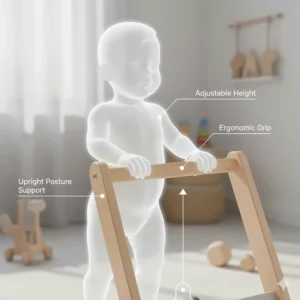
The handlebar should reach somewhere between your baby’s waist and chest when standing. Too low forces hunching; too high causes reaching that compromises balance. Some models offer adjustable handle heights, which is ideal as baby grows.
Supervision Is Non-Negotiable
Even the safest activity push walker requires adult supervision. Babies can move surprisingly quickly once they get the hang of pushing, and they don’t yet understand danger concepts like stairs or doorways.
Create a safe practice zone by:
- Using baby gates to block stairs
- Clearing obstacles from walking paths
- Avoiding use near pools, bathtubs, or other water hazards
- Keeping the walker away from hot surfaces or cords
Developmental Benefits: How Push Walkers Support Growth
Beyond simply helping babies practice walking, quality walking encouragement toys support multiple aspects of development. Understanding these benefits helps you maximize your walker’s educational potential.
Gross Motor Skill Development
Core Strength Building
Pushing a walker requires babies to engage their entire core—abdominal muscles, back muscles, and pelvic stabilizers. This engagement builds strength essential for:
- Maintaining upright posture
- Balancing without support
- Transitioning between positions (sitting to standing, bending to pick up toys)
Unlike sit-in walkers that provide artificial trunk support, push walkers demand active core engagement with every step.
Leg Muscle Strengthening
Pushing the walker forward involves effort, which promotes muscle growth and improves coordination and balance when walking. Babies work their quadriceps, hamstrings, and calf muscles through natural weight-bearing movement.
Balance and Coordination
Learning to walk isn’t just about leg strength—it’s primarily about balance. Push walkers help babies develop:
- Weight-shifting skills (transferring weight from one foot to the other)
- Spatial awareness (understanding where their body is in space)
- Motor planning (coordinating multiple movements simultaneously)
Fine Motor and Cognitive Development
Quality baby push walker models integrate activity panels that support:
Fine Motor Skills
- Pressing buttons strengthens finger muscles
- Turning gears develops wrist rotation
- Shape sorting enhances hand-eye coordination
- Manipulating small objects builds dexterity
Cognitive Growth
- Cause-and-effect learning (push button = music plays)
- Pattern recognition (shapes, colors, sounds)
- Problem-solving (which shape fits where?)
- Language development through songs and phrases
The Fisher-Price and VTech models excel here, offering extensive educational content that grows with your child through multiple developmental stages.
Social-Emotional Benefits
Confidence Building
Push walkers can be a huge help in gaining the confidence to explore upright skills more independently. This confidence boost extends beyond walking to overall self-esteem and willingness to try new challenges.
Independence Development
Push walkers give babies control over their movement and exploration. This sense of autonomy is crucial for healthy emotional development and helps babies develop a growth mindset—the understanding that practice leads to improvement.
Achievement Recognition
Babies experience genuine accomplishment when they successfully push their walker across the room. These small victories build resilience and persistence, qualities that serve them throughout life.
Choosing Between Wooden vs Plastic Push Walkers
The material debate divides parents into passionate camps. Both wooden and plastic baby push walker options have legitimate advantages depending on your priorities and circumstances.
Wooden Push Walkers: Natural Choice
Advantages:
- Durability: Quality wooden walkers like Tiny Land and Pithfor last for years, often surviving multiple children. The solid construction withstands enthusiastic pushing and occasional crashes far better than plastic.
- Aesthetics: Let’s be honest—wooden toys simply look better in most homes. The natural wood grain and muted color palettes blend with modern décor rather than clashing with it.
- Weight: Heavier construction provides natural stability without needing added weights. This helps prevent tipping and gives babies better control over speed.
- Sustainability: Wooden options appeal to eco-conscious parents. Look for FSC-certified wood and non-toxic, water-based finishes.
- Resale Value: Premium wooden walkers retain value better than plastic models, making them easier to sell or pass down.
Considerations:
- Price: Quality wooden walkers typically cost $60-100, compared to $30-50 for plastic models
- Assembly: Most require assembly with provided tools
- Weight: The stability advantage becomes a disadvantage if you need to frequently move or store the walker
- Limited Features: Wooden models often have fewer electronic bells and whistles
Plastic Push Walkers: Practical Option
Advantages:
- Affordability: Plastic models from Fisher-Price and VTech offer excellent value, often including extensive features at budget-friendly prices
- Interactive Elements: Electronic components (lights, sounds, music) integrate easily into plastic designs
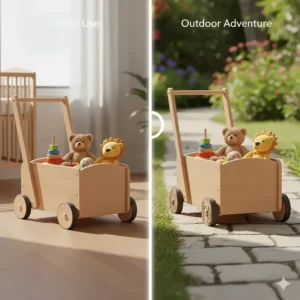
- Portability: Lighter weight makes them easier to move between rooms or take to grandparents’ houses
- Easy Cleaning: Wipe-clean plastic surfaces simplify sanitizing after messy play
- Weather Resistant: Can be used outdoors without weather damage concerns
Considerations:
- Durability Questions: Quality varies dramatically between brands; cheaper plastic walkers may crack or break
- Aesthetic Impact: Bright primary colors and busy designs don’t appeal to minimalist parents
- Battery Requirements: Electronic features mean buying and replacing batteries
- Environmental Concerns: Plastic production and disposal create environmental impact
The Verdict
Neither option is universally “better”—it depends on your specific situation:
Choose Wooden If You:
- Value longevity and plan to use the walker for multiple children
- Prefer natural materials and eco-friendly products
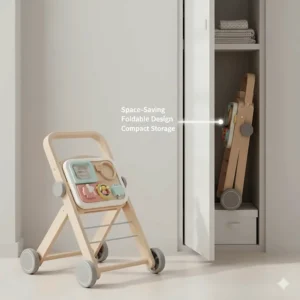
- Have storage space and won’t need to frequently move the walker
- Appreciate minimalist aesthetics
- Have budget flexibility
Choose Plastic If You:
- Want maximum features at minimal cost
- Value portability and easy storage
- Appreciate educational electronic content
- Need easy-to-clean surfaces
- Have limited budget
Many families find hybrid solutions work best—perhaps a quality wooden walker as the primary option, with a lightweight plastic model for travel or outdoor use.
How to Use a Push Walker Safely and Effectively
Owning a sit to stand walker is one thing; using it properly to support development while maintaining safety is another. These practical strategies maximize benefits while minimizing risks.
Setting Up for Success
Create a Practice Zone
Designate a clear, obstacle-free area for walker practice:
- Clear at least 6-8 feet of straight-line walking space
- Remove rugs that might bunch or trip baby
- Ensure floors are dry (spills create slipping hazards)
- Block stair access with gates
- Move furniture with sharp corners away from practice area
Optimize Walker Speed
Too-fast walkers frustrate babies and create safety concerns. Adjust resistance by:
- Tightening friction wheels (on models with this feature)
- Adding weight to front compartments (water, sand, or heavy toys)
- Choosing appropriate floor surfaces (carpet naturally slows walkers compared to hardwood)
- Positioning walker against wall or couch for resistance
A properly adjusted activity push walker should move forward only when baby actively pushes, not when they simply lean on it.
Encouraging Proper Use
Demonstrate Correct Posture
Babies learn by imitation. Show your baby how to:
- Stand upright behind the walker (not hunched over)
- Grasp the handle with both hands
- Take steps forward while pushing (not just leaning)
Physical therapist KC Rickerd recommends: “Get down on your knees to your baby’s level and demonstrate the pushing motion yourself. Babies love copying their parents!”
Start Small
Don’t expect marathon walking sessions initially. Begin with:
- 5-10 minute practice periods
- Short distances (across one room)
- Frequent rest breaks
- Gradual duration increases as stamina builds
Combine with Free Play
Push walkers should supplement, not replace, natural floor exploration. Maintain balance by:
- Limiting walker use to 20-30 minutes daily maximum
- Ensuring babies spend significant time crawling, cruising furniture, and playing on the floor
- Rotating toys to maintain interest
- Following baby’s cues (if they seem bored or frustrated, take a break)
Troubleshooting Common Issues
Problem: Baby Walks on Tiptoes with Walker
This indicates the walker is moving too fast. Solutions:
- Increase friction/resistance
- Add weight to front compartment
- Switch to carpeted surface
- Ensure handlebar is appropriate height
Problem: Walker Tips Forward When Baby Pulls Up
This suggests instability issues. Try:
- Adding weight to rear of walker
- Ensuring walker has wide, stable base
- Teaching baby to pull up on sturdier furniture first
- Choosing walker with lower center of gravity
Problem: Baby Shows No Interest
Some babies simply aren’t ready. Alternatives:
- Wait 2-4 weeks and try again
- Use activity panel separately for seated play
- Focus on cruising furniture instead
- Consider baby’s personality (some prefer independent floor exploration)
Budget Considerations: Finding Value at Every Price Point
Quality walking toys for babies exist across all price ranges. Understanding what you’re paying for helps you make confident decisions aligned with your budget.
Budget-Friendly Options ($30-50)
What You Get:
- Basic push walker functionality
- Usually plastic construction
- Some electronic features (lights, sounds)
- Well-known brand reliability (Fisher-Price, VTech)
- Limited adjustability
Best Budget Pick: VTech Sit-to-Stand Learning Walker
At $35-50, this walker delivers exceptional value through proven durability, extensive educational content, and versatile removable activity panel. Thousands of positive baby push walker reviews confirm its reliability across multiple children and years of use.
Value Maximization Tips:
- Look for sales during major shopping holidays
- Consider “frustration-free packaging” versions (often cheaper)
- Check warehouse clubs for bundle deals
- Read return policies carefully
Mid-Range Options ($50-85)
What You Get:
- Choice of wooden or premium plastic
- Adjustable features (speed, height)
- More sophisticated activity elements
- Better durability and materials
- Aesthetic design considerations
Best Mid-Range Pick: Tiny Land Wooden Baby Walker or KÜB Montessori Walker
Both offer significant quality upgrades over budget options while remaining accessible. The investment pays off through multi-year usability, attractive design, and superior safety features.
Premium Options ($85-100+)
What You Get:
- Exceptional build quality
- Multifunctional designs (5-in-1 conversions)
- Innovative features (pretend play elements, extensive activities)
- Heirloom-quality construction
- Extended usability (often to age 3+)
Best Premium Pick: HYES 5-in-1 or Pithfor 3-in-1
These models justify their premium pricing through versatility that eliminates need for multiple toys. The HYES converting from walker to scooter to motorbike means you’re essentially buying 5 products for the price of one.
Hidden Costs to Consider
Batteries
Electronic walkers require 2-4 AA batteries. Calculate:
- Initial batteries: $5-10
- Replacements every 2-3 months: $20-40 annually
- Total over 2 years: $40-80
Rechargeable batteries offer long-term savings.
Accessories
Some families purchase:
- Additional weight for stability: $10-20
- Replacement toy attachments: $15-30
- Floor mats for practice area: $20-50
Cost-Benefit Analysis
When evaluating value, consider:
Cost Per Use
A $80 walker used daily for 18 months (540 days) = $0.15 per day
A $35 walker used daily for 12 months (365 days) = $0.10 per day
But if the premium walker serves two children or converts for extended use, the per-use cost drops significantly.
Resale Value
Quality wooden walkers often resell for 40-60% of original price. Budget plastic models typically bring 10-30% of purchase price. Factor this into true ownership cost.
Maintaining and Cleaning Your Push Walker
Proper maintenance extends your walking encouragement toy’s lifespan while keeping it safe and hygienic for your baby.
Regular Cleaning Protocols
Weekly Basic Cleaning
Babies drool, sneeze, and put everything in their mouths. Weekly maintenance should include:
For Plastic Walkers:
- Wipe all surfaces with gentle disinfectant wipes
- Use cotton swabs to clean crevices around buttons
- Remove and wash fabric components (if any) in machine on gentle cycle
- Dry thoroughly before reassembly
For Wooden Walkers:
- Wipe with slightly damp cloth and mild soap
- Avoid soaking wood (can cause warping)
- Dry immediately with soft towel
- Skip harsh chemicals that might damage finish
Monthly Deep Cleaning
For All Walkers:
- Check wheel axles for hair or debris buildup
- Test all moving parts for smooth operation
- Inspect for loose screws or parts
- Clean battery compartments (remove corrosion if present)
- Sanitize all activity elements
Safety Inspections
Incorporate these checks into your monthly routine:
Structural Integrity
- Tighten any loose screws or bolts
- Check for cracks in plastic components
- Examine wooden parts for splinters or rough edges
- Test wheels for secure attachment
- Verify handlebar stability
Electronic Components (if applicable)
- Test all sounds and lights
- Check battery connections
- Replace weak or dead batteries promptly
- Listen for unusual buzzing or crackling
Activity Elements
- Ensure shape sorters aren’t cracked (can pinch fingers)
- Verify small parts are securely attached (choking hazard)
- Check for peeling paint or stickers
- Test that all moving parts (gears, spinners) rotate smoothly
Storage Best Practices
Short-Term (Between Uses)
- Store in designated play area
- Keep away from direct sunlight (can fade colors and weaken plastics)
- Position away from high-traffic areas to prevent tripping hazards
Long-Term (Between Children)
- Clean thoroughly before storage
- Remove batteries to prevent corrosion
- Store in climate-controlled area (avoid garages or basements if possible)
- Cover with sheet to prevent dust accumulation
- Save original packaging if available for protection
When to Retire Your Walker
Even quality push along walkers eventually reach end-of-life. Replace when you notice:
- Structural damage (cracks, breaks, loose parts that can’t be tightened)
- Missing components that affect safety
- Wheels that no longer roll smoothly
- Electronic malfunctions that can’t be resolved
- Excessive wear that creates sharp edges or pinch points
Don’t compromise safety by using damaged equipment. Many toy stores and donation centers accept gently used walkers in good condition.
Frequently Asked Questions About Push Walker for Baby
❓ What age should baby start using push walker?
❓ Do push walkers actually help babies learn to walk faster?
❓ Are push walkers safer than traditional sit-in walkers?
❓ Can push walkers cause developmental delays or bow legs?
❓ How do I know if my push walker is moving too fast for my baby?
Conclusion: Making the Right Push Walker Choice for Your Family
Choosing the perfect push walker for baby doesn’t have to be overwhelming once you understand what truly matters. After researching dozens of models, consulting pediatric experts, and analyzing thousands of parent experiences, several clear truths emerge.
First, safety trumps everything else. The American Academy of Pediatrics recommends push walkers over sit-in models for good reason—they support natural development without the serious injury risks associated with traditional walkers. Prioritize models with adjustable speed control, wide stable bases, and quality construction that can withstand enthusiastic toddler use.
Second, the “best” walker depends entirely on your specific situation. Budget-conscious families will find exceptional value in the VTech Sit-to-Stand Learning Walker at $35-50, offering proven durability and extensive educational features. Parents prioritizing natural materials and aesthetics will appreciate the Tiny Land Wooden Baby Walker’s beautiful design and sustainable construction. And families seeking maximum versatility can’t beat the HYES 5-in-1’s ability to transform through five different modes as your child grows.
Third, remember that push walkers are tools, not magic solutions. Your baby will learn to walk when they’re developmentally ready, regardless of equipment. What a quality activity push walker does provide is safe practice opportunities, confidence building, and engaging play that supports overall development. Use it as a supplement to natural floor exploration, not a replacement.
The walking toys for babies market in 2026 offers more options than ever, from budget-friendly basics to premium multifunctional systems. By focusing on safety features, understanding your baby’s developmental stage, and choosing quality construction within your budget, you’ll find a walker that truly serves your family’s needs. Those wobbly first steps are coming soon—and the right push walker can make the journey a bit more confident and a lot more fun.
Recommended for You
- 7 Best Baby Walker Accessories That Transform Safety 2026
- 7 Best Baby Walker Replacement Wheels 2026 (Protect Your Floors!)
- Are Baby Walkers Safe? 7 Shocking Facts Parents Need in 2026
Disclaimer: This article contains affiliate links. If you purchase products through these links, we may earn a small commission at no additional cost to you.
✨ Found this helpful? Share it with your friends! 💬🤗
