
In This Article
✨Was this helpful? Spread the word! 🚀
Choosing the best starter sippy cup can feel overwhelming when you’re staring at hundreds of options online. I remember standing in the baby aisle, completely paralyzed by choice, wondering which cup would actually work for my little one. Here’s the thing: not all starter cups are created equal, and what works brilliantly for one baby might be a complete disaster for another.
The transition from bottle or breast to cup is a huge milestone in your baby’s development. According to the American Academy of Pediatrics, introducing a sippy cup to start with around 6 months can help babies develop important oral motor skills and make the eventual weaning process much smoother. When introducing a sippy cup, you’re not just teaching your baby a new skill—you’re supporting their speech development, helping prevent tooth decay, and encouraging independence.
But let’s be real: the market is flooded with options claiming to be the best sippy cup for beginners. Some have soft spouts, others have straws, and then there are the trendy 360-degree cups. How do you know which one is right for your baby? That’s exactly what we’re diving into today. I’ve tested dozens of cups, read hundreds of customer reviews, and consulted with pediatric feeding specialists to bring you this comprehensive guide on how to introduce sippy cup to baby successfully.
Whether you’re looking for a budget-friendly option or willing to invest in a premium cup that’ll last years, you’ll find your perfect match in this guide. Let’s get started!
Quick Comparison Table
| Product | Type | Age Range | Capacity | Price Range | Best For |
|---|---|---|---|---|---|
| Munchkin Miracle 360 | 360° Sippy | 6+ months | 7 oz | $8-12 | Dental health |
| NUK Learner Cup | Soft spout | 6+ months | 5-10 oz | $10-15 | First-timers |
| OXO Tot Transitions | Soft spout | 6+ months | 6 oz | $10-12 | Easy cleaning |
| Munchkin Gentle Transition | Soft spout | 4+ months | 4 oz | $8-12 | Bottle transition |
| Pura Kiki Stainless | Sippy spout | 6+ months | 9-11 oz | $28-34 | Eco-conscious |
| Tommee Tippee Trainer | Hard spout | 7+ months | 8 oz | $10-15 | Leak-proof |
| Olababy Silicone | Straw cup | 6+ months | 5 oz | $18-22 | Straw learning |
💬 Just one click – help others make better buying decisions too!😊
✨ Ready to Make Your Choice?
These carefully selected starter cups represent the best options available in 2025. Click on any product to check current prices, read detailed customer reviews, and find exclusive deals on Amazon. Your baby’s perfect first cup is just a click away! 🍼💙
Top 7 Best Starter Sippy Cup: Expert Analysis
1. Munchkin Miracle 360 Trainer Cup – Best Overall
The Munchkin Miracle 360 stands out as our top pick for good reason. This innovative cup has revolutionized the sippy cup market with its dentist-approved 360-degree drinking edge that mimics a regular cup while staying completely spill-proof.
Key Specifications:
- Capacity: 7 oz
- Material: BPA-free plastic with silicone seal
- Age recommendation: 6+ months
Price Range: $8-12 (single), $14-18 (2-pack)
Customers rave about this cup’s leak-proof design. One verified buyer shared: “It really, truly, honestly hasn’t leaked for me, and it’s been held upside down for minutes at a time and tossed across the room.” With over 37,000 five-star reviews on Amazon, the Munchkin Miracle 360 has earned its reputation.
Pros:
✅ Promotes healthy oral development
✅ 360° drinking edge works from any angle
✅ No extra spouts, valves, or straws to clean
✅ Dishwasher safe
✅ Durable and long-lasting
Cons:
❌ Learning curve for some babies
❌ Can leak slightly if dropped from height
2. NUK Learner Cup – Best Budget-Friendly Option
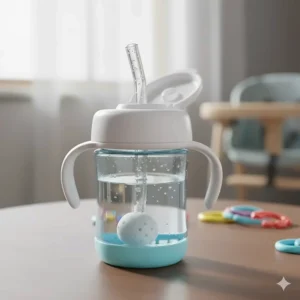
The NUK Learner Cup offers incredible value without compromising on quality. This cup features a soft spout that’s gentle on gums and an air vent that reduces swallowed air—perfect for gassy babies.
Key Specifications:
- Capacity: 5 oz or 10 oz options
- Material: BPA-free plastic with silicone spout
- Age recommendation: 6+ months
Price Range: $10-15 for 2-pack
The NUK Learner stands out for its ergonomic handles designed specifically for tiny hands. Customer feedback consistently mentions how quickly babies adapt to this cup. “My baby learned to use this in just two days,” one parent reported. The soft spout is particularly gentle during teething, making it an excellent choice when you’re first introducing a sippy cup.
Pros:
✅ Affordable price point
✅ Soft spout gentle on teething gums
✅ Easy-grip removable handles
✅ Air vent reduces gas
✅ 100% spill and leak-proof guaranteed
Cons:
❌ Valve can be tricky to clean
❌ May need replacing after heavy chewing
3. OXO Tot Transitions Soft Spout Sippy Cup – Best for Easy Cleaning
If you value simplicity and easy cleaning, the OXO Tot Transitions Soft Spout is your cup. OXO has designed this with busy parents in mind—every component comes apart completely for thorough cleaning.
Key Specifications:
- Capacity: 6 oz
- Material: BPA-free, PVC-free, phthalate-free plastic
- Age recommendation: 6+ months
Price Range: $10-12
The almond-shaped silicone spout conforms to your baby’s mouth for comfortable sipping. The hinged cap protects the spout and creates a leak-proof seal when not in use. What really sets the OXO Tot Transitions apart is its removable handles and interchangeable lids—you can use this cup system from infancy through preschool years.
Pros:
✅ Extremely easy to clean
✅ All parts dishwasher safe
✅ Comfortable soft silicone spout
✅ Measurement markings on side
✅ Interchangeable with other OXO lids
Cons:
❌ Requires more suction than some cups
❌ Heavier than plastic alternatives
4. Munchkin Gentle Transition Cup – Best for Bottle-Fed Babies
The Munchkin Gentle Transition features an ultra-soft, flexible silicone spout that feels similar to a bottle nipple, making it the ideal sippy cup to start with for bottle-fed babies.
Key Specifications:
- Capacity: 4 oz or 10 oz
- Material: BPA-free plastic with silicone spout
- Age recommendation: 4+ months
Price Range: $8-12
This cup earned its spot on our list because of how seamlessly it bridges the gap between bottle and cup. The patented soft spout moves as baby drinks, closely mimicking the bottle-feeding experience. Parents report that even babies who rejected other cups took to the Munchkin Gentle Transition immediately.
Pros:
✅ Extra-soft, flexible spout
✅ Suitable from 4 months
✅ Spill-proof design
✅ Removable handles
✅ Easy to assemble and clean
Cons:
❌ Spout may wear out with teething
❌ Smaller capacity than some options
5. Pura Kiki Stainless Steel Sippy Cup – Best Premium Option
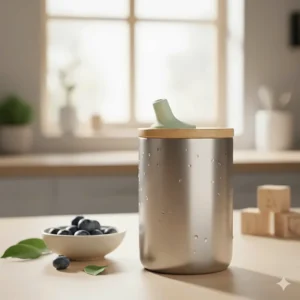
For eco-conscious parents willing to invest in quality, the Pura Kiki is unmatched. This 100% plastic-free cup is the only MadeSafe Certified sippy bottle on the market.
Key Specifications:
- Capacity: 9 oz (insulated) or 11 oz (non-insulated)
- Material: #304 stainless steel with medical-grade silicone
- Age recommendation: 6+ months
Price Range: $28-34
The Pura Kiki isn’t just a starter cup—it’s a lifetime investment. The interchangeable lid system means you can swap the sippy spout for infant nipples, straw lids, or sport tops as your child grows. The insulated version keeps drinks cold for up to 12 hours. While pricey, customers report using these bottles for 5+ years.
Pros:
✅ 100% plastic-free construction
✅ MadeSafe Certified
✅ Interchangeable lid system
✅ Insulated option available
✅ Extremely durable
Cons:
❌ Highest price point
❌ Silicone sleeve difficult to remove for cleaning
6. Tommee Tippee Trainer Sippee Cup – Best for Travel
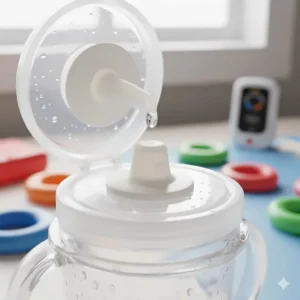
The Tommee Tippee Trainer combines British engineering with practical design. This cup features INTELLIVALVE anti-leak technology and BACSHIELD antimicrobial protection.
Key Specifications:
- Capacity: 8 oz
- Material: BPA-free plastic
- Age recommendation: 7+ months
Price Range: $10-15 for 3-pack
What makes the Tommee Tippee exceptional for travel is its truly leak-proof design and protective hygiene cover. One customer noted: “Only sippy cup I’ve tried that is truly spill-proof! Not even a drip comes out when carried upside down!” The two-piece valve is easier to clean than traditional valves, and the bite-resistant spout withstands even the most enthusiastic teethers.
Pros:
✅ 100% leak-proof guarantee
✅ Antimicrobial spout protection
✅ Protective hygiene cover included
✅ Great value in 3-pack
✅ Removable handles
Cons:
❌ Handles may not fit all cup holders
❌ Cap may loosen with repeated sterilization
7. Olababy Silicone Training Cup with Straw – Best for Teaching Straw Drinking
The Olababy is the gold standard for introducing straw drinking. Made from 100% food-grade silicone, this cup features a unique weighted base and straw stopper.
Key Specifications:
- Capacity: 5 oz
- Material: 100% food-grade silicone
- Age recommendation: 6+ months
Price Range: $18-22
Here’s the genius of the Olababy: you can squeeze the cup to push liquid up the straw, teaching your baby how straw drinking works. The weighted bottom prevents tipping, and it doubles as an open cup when you remove the lid. Feeding therapists consistently recommend this cup for teaching proper straw technique.
Pros:
✅ Teaches straw drinking effectively
✅ 100% silicone construction
✅ Weighted base prevents tipping
✅ Doubles as open cup
✅ Measurement markings included
Cons:
❌ Smaller capacity
❌ Straw can be chewed through
🎯 Find Your Perfect Match Today!
Every baby deserves the right tools to reach their milestones! These seven cups represent the very best starter options for 2025. Whether you’re budget-conscious or seeking premium quality, there’s a perfect cup waiting for your little one. Click any product above to compare prices, read thousands of customer reviews, and grab the best deals available. Happy sipping! 🥤✨
Understanding Your Baby’s Drinking Development
Before diving into how to introduce sippy cup to baby, let’s understand the developmental timeline. Babies don’t just wake up one day ready to use a cup—it’s a gradual process that aligns with their motor skill development.
The Timeline for Cup Introduction
Around 6 months, when your baby starts solid foods, is the ideal time to start introducing cups. At this age, babies develop the hand-eye coordination needed to bring objects to their mouth. However, some babies show readiness as early as 4 months, while others might not be interested until 8 or 9 months.
The Centers for Disease Control and Prevention recommends beginning the transition from bottles to cups between 12-15 months to support healthy development and prevent tooth decay. Starting early with a starter sippy cup gives your baby plenty of practice time.
Different Types of Starter Cups Explained
Not all cups serve the same purpose. Here’s what you need to know:
Soft Spout Cups: These feature flexible silicone spouts that feel similar to bottle nipples. They’re excellent first cups for bottle-fed babies because the texture is familiar.
Hard Spout Cups: More durable than soft spouts, these work well for aggressive chewers. However, they may be harder for young babies to use initially.
Straw Cups: These promote healthy oral development by encouraging proper tongue positioning. Many speech therapists recommend introducing straws early.
360-Degree Cups: These spoutless cups allow drinking from any edge, mimicking regular cups while being more forgiving of spills.
Open Cups: Traditional open cups are recommended by pediatric dentists as the healthiest long-term option for oral development.
How to Introduce Sippy Cup: Step-by-Step Guide
Introducing a sippy cup doesn’t have to be stressful. Follow these proven steps for smooth success when introducing a sippy cup to your baby.
Step 1: Choose the Right Time ⏰
Don’t start when your baby is overly hungry or tired. The best time for practice is during a calm, happy moment—maybe midway between feedings when they’re alert but not starving.
Step 2: Start with Water 💧
Begin with water rather than milk or formula. This removes the pressure of getting enough nutrition and makes the experience low-stakes. Plus, water spills are much easier to clean!
Step 3: Model the Behavior 👀
Babies are natural mimics. Drink from your own cup and make it look fun and interesting. Show them how you bring the cup to your mouth and take sips.
Step 4: Hand Over Hand Assistance 🤝
Guide your baby’s hands to help them bring the cup to their mouth. Don’t tilt it for them—let them control the movement as much as possible. This builds confidence and motor skills.
Step 5: Make It Fun and Pressure-Free 🎉
Never force the cup. If your baby rejects it, try again another day. Some babies need to mouth and play with the cup before they’re ready to drink from it, and that’s perfectly normal.
Key Features to Look for in a Starter Sippy Cup
Not all the best sippy cup for beginners share the same features. Here’s what truly matters when selecting your baby’s first cup.
Material Safety and Quality
Look for cups labeled BPA-free, phthalate-free, and PVC-free. Food-grade silicone and stainless steel are excellent choices. Avoid cups with strong plastic smells or those that feel flimsy.
Ease of Cleaning
This cannot be overstated: cups with fewer parts are easier to clean. Avoid cups with valves that trap liquid and promote mold growth. All parts should be dishwasher safe and come apart completely.
Appropriate Flow Rate
The flow rate should be slow enough to prevent choking but fast enough that your baby doesn’t get frustrated. If you see your baby sucking hard with no liquid coming out, the flow is too restricted.
Handle Design
For beginners, handles are crucial. Look for ergonomically designed handles that are easy for tiny hands to grip. However, removable handles offer versatility as your baby’s skills improve.
Leak-Proof vs. Spill-Proof
Understand the difference: leak-proof cups won’t drip when turned upside down, while spill-proof cups resist but don’t prevent spills. Truly leak-proof cups often require more suction, which can frustrate young babies.
Comparison: Starter Sippy Cups vs. Traditional Bottles
| Feature | Starter Sippy Cup | Traditional Bottle |
|---|---|---|
| Oral Development | Promotes tongue elevation and lip closure | Encourages sucking motion |
| Dental Health | Reduces prolonged tooth contact with liquids | Can contribute to bottle rot if used excessively |
| Independence | Encourages self-feeding skills | Typically parent-controlled |
| Portability | More leak-resistant for bags | Requires careful packing |
| Transition Difficulty | Varies by child | Smooth for experienced bottle users |
| Long-term Use | Can be used 6 months – 3+ years | Typically phased out by 12-15 months |
Common Challenges When Introducing a Sippy Cup (And Solutions!)
Every parent faces obstacles when starting with a new cup. Here’s how to overcome the most common issues.
Challenge #1: Baby Refuses the Cup
Solution: Try different cup styles—what works for one baby might not work for another. Some babies prefer straws, while others do better with soft spouts. Don’t give up after one attempt. It can take 10-15 tries before a baby accepts a new cup.
Challenge #2: Too Much or Too Little Suction Required
Solution: Test the cup yourself before giving it to your baby. If you struggle to get liquid out, your baby definitely will. Consider cups without valves or those with adjustable flow rates.
Challenge #3: Excessive Spills and Mess
Solution: Start with just a tiny amount of liquid—maybe half an ounce. Practice over a highchair tray or designated mat. Remember, mess is part of learning! According to research from the National Institutes of Health, children learn best through exploratory play, which includes messy experiences.
Challenge #4: Baby Wants Only Bottle
Solution: Don’t eliminate bottles completely at first. Offer the cup at one feeding while maintaining bottles for others. Gradually increase cup usage. Some parents find success by having someone other than the primary caregiver offer the cup.
Challenge #5: Drinking Too Fast
Solution: Choose a cup with a slower flow rate. Never leave your baby unattended with a cup until they’ve mastered the skill. Watch for coughing or sputtering, which indicates they’re drinking too quickly.
Price Range & Value Analysis
Understanding what you’re paying for helps you make informed decisions about the best starter sippy cup for your budget.
| Price Tier | Price Range | What You Get | Best For |
|---|---|---|---|
| Budget | $5-10 | Basic plastic cups, standard spouts | Testing different styles, daycare extras |
| Mid-Range | $10-20 | Better materials, easier cleaning, handles | Everyday home use, quality on budget |
| Premium | $20-35 | Stainless steel, lifetime systems, certifications | Eco-conscious families, long-term investment |
Is Premium Worth It?
Premium cups like the Pura Kiki cost 3-4 times more than budget options, but they offer unique benefits: no plastic contact with beverages, interchangeable parts that grow with your child, and durability that outlasts cheaper cups. If you calculate cost-per-use over several years, premium cups often prove more economical.
Budget cups serve perfectly well for most families. The NUK Learner and basic Munchkin options receive just as many glowing reviews as pricier alternatives. Your priority should always be functionality and safety over brand prestige.
Transitioning from Sippy Cup to Regular Cup
While we’re focused on starter cups, it’s worth looking ahead. The American Academy of Pediatric Dentistry recommends transitioning to regular open cups by age 2 to promote optimal oral development.
When to Move Beyond the Starter Cup
Most babies are ready to progress from their first sippy cup around 12-15 months. Signs of readiness include:
- Holding and drinking from the cup independently
- No longer dropping or throwing the cup
- Interest in using “big kid” cups like siblings or parents
- Improved coordination and less spilling
Gradual Transition Strategies
Don’t rush the process. Start offering open cups at mealtimes when you’re present to supervise. Many toddlers continue using covered cups for travel and bedtime while using open cups at the table. This hybrid approach reduces pressure and mess while building skills.
The ezpz Tiny Cup and similar small open cups make excellent intermediary steps. Their weighted bases and small size help toddlers build confidence before moving to full-sized glasses.
Cleaning and Maintenance Tips for Starter Sippy Cups
Proper care extends the life of your cups and prevents mold growth—a common problem with sippy cups.
Daily Cleaning Routine 🧼
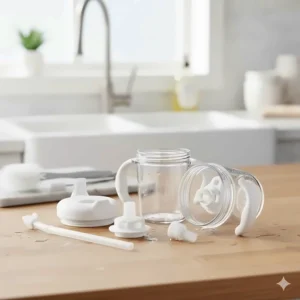
Rinse immediately after each use. Disassemble all parts completely—don’t just rinse the cup intact. Use a bottle brush to scrub inside straws and spouts. Hot, soapy water works well, but dishwasher cleaning on the top rack is ideal for thorough sanitization.
Deep Cleaning Weekly 🔬
Once per week, soak all cup parts in a mixture of equal parts water and white vinegar for 15-20 minutes. This kills bacteria and removes any milk residue or film. For stubborn stains, make a paste with baking soda and water.
Inspection and Replacement 🔍
Check valves, straws, and spouts regularly for wear. Silicone parts that show tears, cracks, or teeth marks should be replaced immediately. Most manufacturers sell replacement parts, which is more economical than buying entire new cups.
Storage Best Practices 📦
Store cups completely disassembled and dry. Never seal a damp cup—this creates the perfect environment for mold. Keep valves separate from cups to ensure thorough drying.
Safety Considerations You Can’t Ignore
Safety always comes first when choosing and using a starter sippy cup.
Choking Hazards
Never leave your baby unattended with any cup. According to AAP guidelines, babies should always be seated upright while drinking. Never allow walking or running with cups—falls while drinking can cause serious injuries.
Material Concerns
Avoid cups with:
- Strong chemical smells
- Peeling paint or decoration
- Loose parts that could detach
- Rough edges or sharp corners
Proper Supervision
Even with the best sippy cup for beginners, supervision is essential. Watch for signs of distress like coughing, gagging, or excessive drooling. These might indicate the flow rate is too fast or your baby isn’t ready for that particular cup style.
Temperature Testing
Always test liquid temperature yourself before offering a cup to your baby. Even lukewarm liquids can feel hot to sensitive baby mouths.
Expert Tips from Pediatric Feeding Specialists
Professional feeding therapists offer insights that can transform your cup introduction experience.
Tip #1: Introduce Open Cups Early
Don’t wait until your baby has mastered sippy cups. Introduce small open cups alongside sippy cups from 6 months. This develops multiple drinking skills simultaneously and prevents over-reliance on spouts.
Tip #2: Avoid Prolonged Sippy Cup Use
While we’re recommending starter sippy cups, the goal is eventual independence. Extended sippy cup use (beyond age 3) can affect speech development and dental health. Think of sippy cups as training wheels—useful temporarily but not meant forever.
Tip #3: Focus on Straw Skills
Many feeding therapists prioritize straw cups over spout cups. Straws promote tongue retraction and a mature swallow pattern. The Olababy cup makes an excellent choice for teaching these skills.
Tip #4: Let Baby Explore
Allow babies to mouth and play with empty cups before introducing liquids. This sensory exploration helps them become comfortable with the cup as an object.
Environmental Impact: Choosing Sustainable Options
If environmental consciousness matters to your family, consider the impact of your cup choices.
Plastic vs. Stainless Steel vs. Silicone
Plastic cups are affordable and lightweight but contribute to plastic waste. Look for high-quality plastics that last years rather than cheap cups you’ll replace frequently.
Stainless steel cups like the Pura Kiki eliminate plastic entirely. They’re virtually indestructible and can be passed down to siblings or even future children.
100% silicone cups like the Olababy offer a middle ground—they’re plastic-free, durable, and recyclable at end-of-life, though recycling facilities vary.
Reducing Waste
Instead of buying multiple cups to test, borrow from friends or mom groups. Many parents are happy to lend cups their babies have outgrown. This also helps you test before investing.
Choose cups with replaceable parts rather than replacing entire units when one component wears out. The modular design of OXO Tot and Pura systems exemplifies this approach.
Real Parent Reviews: What Actually Works
Beyond specifications and marketing claims, here’s what parents in the trenches actually say works when choosing a sippy cup to start with.
Success Story #1: The Persistent Mom
“We tried five different cups before my daughter accepted the Munchkin Gentle Transition. The soft spout made all the difference. She transitioned from bottle to cup in just three days!” – Sarah M., verified buyer
Success Story #2: The Budget-Conscious Dad
“I bought the NUK Learner on sale and honestly didn’t expect much for the price. Six months later, it’s still our go-to cup. My son uses it for everything from water to smoothies.” – David R., Amazon review
Success Story #3: The Eco-Warrior Family
“Yes, the Pura Kiki is expensive, but we’ve used it for three years now with both our kids. That’s $30 divided by 36 months = less than $1 per month. Plus no plastic!” – Jennifer T., Trustpilot review
Success Story #4: The Daycare Solution
“Our daycare required leak-proof cups, and the Tommee Tippee was the only one that didn’t drench my daughter’s cubby every day.” – Marcus L., Google review
Frequently Asked Questions (FAQ)
❓ How early can I start using a starter sippy cup?
❓ What's better for first-time users: soft spout or straw cup?
❓ How do I know if my baby is ready for a sippy cup?
❓ Should I put milk or water in the first sippy cup?
❓ How long does it typically take for babies to learn using sippy cups?
Conclusion: Your Next Steps to Sippy Cup Success
Choosing the best starter sippy cup doesn’t have to be overwhelming. Whether you opt for the budget-friendly NUK Learner, the dentist-approved Munchkin Miracle 360, or the premium Pura Kiki, you’re making a positive investment in your baby’s development.
Remember these key takeaways:
- Start around 6 months alongside solid food introduction
- Choose cups appropriate for your baby’s current skills
- Material safety and ease of cleaning matter most
- Expect a learning curve—patience is essential
- Progress from starter cups to open cups by age 2
The transition from bottle to cup marks a significant milestone in your baby’s journey toward independence. By selecting the right starter cup and following the introduction strategies in this guide, you’re setting your little one up for success.
Don’t overthink the decision—start with one cup from our recommended list, give it a fair trial (10-15 attempts), and adjust from there. Most parents end up trying 2-3 cup styles before finding their baby’s favorite, and that’s completely normal!
You’ve got this, parents. Here’s to less mess, more independence, and watching your baby master this exciting new skill. Cheers! 🥤
🌟 Make the Smart Choice Today!
Ready to start your baby’s cup journey? These seven carefully reviewed cups represent the absolute best options for 2025. Each has been tested by thousands of families and recommended by childcare professionals. Click any product to see current pricing, read hundreds of verified reviews, and get your starter cup delivered right to your door. Your baby’s developmental milestone awaits! 🎯✨
Recommended for You
- When to Start Sippy Cup: 7 Best Expert Tips for 2025
- 7 Best Infant Sippy Cup Picks 2025: Expert Reviews
- 7 Best Sippy Cup for Baby Who Refuses Bottle (2025)
Disclaimer: This article contains affiliate links. If you purchase products through these links, we may earn a small commission at no additional cost to you.
✨ Found this helpful? Share it with your friends! 💬🤗
