
In This Article
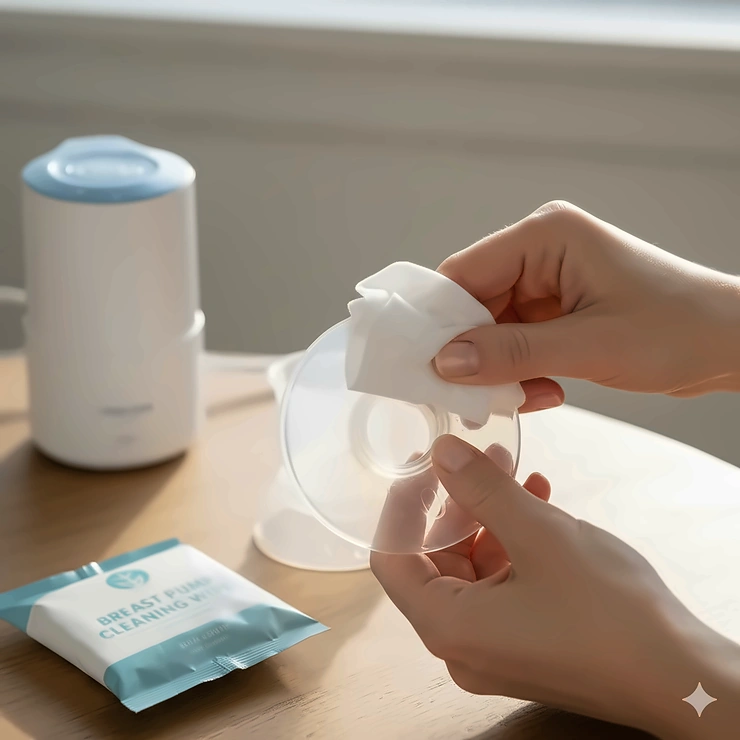
Pumping breast milk is already exhausting enough without the added stress of constant cleaning. You’re juggling feedings, work meetings, sleepless nights, and somehow expected to thoroughly wash pump parts after every single session? That’s where breast pump cleaning wipes become your secret weapon.
I’ve been there—standing at the office sink at 2 PM, desperately trying to rinse milk residue off flanges while my next meeting starts in five minutes. Or sitting in my car in a parking lot, wondering if I should just skip the cleaning step altogether (spoiler: you shouldn’t, but we’ll get to that). The truth is, breast pump cleaning wipes have revolutionized how busy moms maintain hygiene without sacrificing precious time or sanity.
✨Was this helpful? Spread the word! 🚀
Throughout this guide, we’re diving deep into everything you need to know about breast pump cleaning wipes—from understanding the science behind them to choosing the perfect product for your lifestyle. Whether you’re a working mom pumping at the office, a stay-at-home parent managing multiple daily sessions, or a traveling mama who needs portable solutions, I’ve got you covered.
🤱 Why Breast Pump Cleaning Wipes Matter More Than You Think
Let me paint you a picture: It’s 3 AM, you’ve just finished pumping eight ounces of liquid gold, your baby is finally asleep, and all you want is to crawl back into bed. The last thing you want to do is disassemble your entire pump kit, trudge to the kitchen, and spend fifteen minutes scrubbing every valve and membrane. This is precisely where breast pump cleaning wipes shine.
However, it’s not just about convenience. According to the Centers for Disease Control and Prevention, proper cleaning of breast pump parts is crucial for preventing bacterial contamination that could potentially make your baby sick. Yet the CDC also recognizes that breast pump wipes can serve as a practical interim solution when soap and water aren’t immediately accessible.
The U.S. Food and Drug Administration acknowledges that while wipes designed specifically for breast pumps can make cleaning more convenient when you’re away from home, they should complement—not completely replace—thorough washing with liquid dishwashing soap and warm water. Nevertheless, for busy moms navigating real-world situations, these wipes provide a critical bridge between pumping sessions.
The Hidden Dangers of Improper Pump Hygiene
Let’s talk about something that doesn’t get enough attention: the consequences of inadequate cleaning. Breast milk contains sugars and fats that create an ideal breeding ground for bacteria. Within just a few hours at room temperature, harmful pathogens like Staphylococcus aureus, E. coli, and even mold can proliferate on unwashed pump parts.
In fact, research has documented cases where infants became seriously ill from contaminated breast milk due to improperly cleaned pumping equipment. This isn’t meant to scare you—it’s simply the reality that makes understanding proper hygiene protocols essential for every pumping mother.
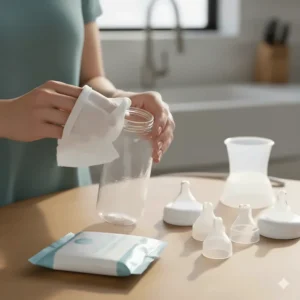
What makes breast pump cleaning wipes particularly valuable is their ability to remove milk residue immediately after pumping, significantly reducing bacterial growth during the window before you can perform a full wash. Think of them as your first line of defense in maintaining a clean pumping environment.
🏥 Industry-Specific Applications and Professional Use Cases
Healthcare Facilities and Hospital Settings
In hospital environments, especially neonatal intensive care units (NICUs), hygiene standards reach a completely different level. Medical professionals working with premature infants or babies with compromised immune systems require absolute sterility in all feeding-related equipment. While breast pump cleaning wipes play a supportive role, these settings typically follow more rigorous protocols.
NICU lactation consultants often recommend specific brands of breast pump wipes that meet hospital-grade standards. These products undergo stringent testing to ensure they eliminate 99.9% of common bacteria and viruses. Hospitals frequently stock products like Medela Quick Clean Breast Pump and Accessory Wipes because they’ve been proven safe in clinical settings and align with infection control policies.
For mothers of premature babies who are pumping to provide milk for their hospitalized infants, understanding the difference between routine cleaning and medical-grade sanitization becomes critical. Many hospitals provide education on proper pump hygiene as part of their discharge planning, often incorporating wipes for milk pump cleaning into their recommended routines for home use.
Corporate Lactation Rooms and Workplace Pumping
The modern workplace is increasingly accommodating to nursing mothers, with many companies providing dedicated lactation rooms. However, these spaces often come with unique challenges. You’re typically on a tight schedule, working around meetings and deadlines, without the luxury of spending twenty minutes washing pump parts between sessions.
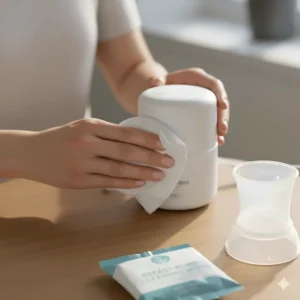
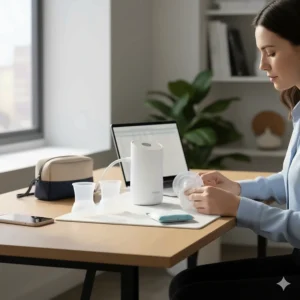
This is where breast pump cleaning wipes for pump parts truly earn their place in your work bag. Corporate lactation consultants frequently recommend keeping a pack of wipes at your desk for quick cleanups during those back-to-back meeting days. Some forward-thinking companies even stock their lactation rooms with complimentary breast pump cleaning wipes, recognizing that supporting nursing mothers goes beyond just providing space.
I’ve spoken with dozens of working moms who’ve developed efficient pumping routines that rely heavily on wipes. One software engineer shared her system: pump, wipe down all parts with Dapple Baby Breast Pump Wipes, store in a sealed bag, then do a thorough wash once she gets home. This approach, while not perfect, allows her to pump three times during her workday without disrupting her productivity.
Travel and On-the-Go Pumping Scenarios
Traveling while breastfeeding presents its own unique set of challenges. Whether you’re on a business trip, family vacation, or even just running errands around town, access to proper washing facilities becomes unpredictable. Airport bathrooms, hotel rooms, relatives’ homes—none of these guarantee the clean, convenient setup you have at home.
Professional lactation consultants who work with frequent travelers consistently recommend packing breast pump wipes as essential travel gear. The individually wrapped options, like the Demissle 100 Pack Individually Wrapped Breast Pump Wipes, are particularly popular among business travelers because they’re TSA-friendly and take up minimal luggage space.
I’ve heard amazing stories from traveling moms: one mother of twins managed to maintain her exclusive pumping routine during a two-week international business trip largely thanks to having reliable pump cleaning wipes on hand. Another mom credits wipes for making long car trips manageable—she could pull over, pump in the backseat, quickly wipe everything down, and continue her journey.
Home-Based and Stay-at-Home Parent Applications
You might think stay-at-home parents have it easier because they’re always near their home kitchen, but the reality is often more complicated. When you’re home alone with an infant (or multiple children), even walking to the kitchen sink can feel like an expedition. Maybe the baby is finally napping and you don’t want to risk the sound of running water. Or perhaps your toddler is playing quietly and you need to seize that precious moment of peace.
Many stay-at-home parents keep breast pump cleaning wipes strategically placed throughout their homes—next to their favorite pumping chair, in their bedroom, even in the diaper bag for when they’re at the park or visiting friends. This distributed approach means you can maintain hygiene regardless of where you are or what else demands your attention.
The versatility of products like Threlaco 6 Pack Breast Pump Wipes (with their 120-count total) makes them economical for home use, where you might be pumping six to eight times per day. At that frequency, having a large supply of wipes becomes not just convenient but essential for maintaining your sanity.
Special Situations: Exclusively Pumping Mothers
Mothers who exclusively pump (EPs) face an entirely different magnitude of challenge. Unlike moms who primarily nurse and occasionally pump, EPs are washing pump parts eight to twelve times per day—essentially replacing all the time a nursing mother would spend at the breast with time spent pumping and cleaning.
For this population, breast pump cleaning wipes aren’t just convenient—they’re a survival strategy. Many EP moms develop systems where they use cleaning wipes for pump parts throughout the day, then perform one or two thorough deep-cleaning sessions with soap and water. This hybrid approach, while controversial in some parenting circles, reflects the practical reality of maintaining exclusive pumping for months on end.
EP support groups consistently recommend keeping multiple packs of wipes and rotating between several pump part sets throughout the day. One EP mom I interviewed keeps three complete sets of parts and uses BELLA B Nipple Nurture Soothing Wipes between pumps, washing all three sets together at the end of each day. This system saves her an estimated two hours daily—time she can spend sleeping, eating, or actually enjoying her baby.
🔬 Advanced Technical Analysis: The Science Behind the Wipes
Engineering Principles and Formulation Chemistry
Understanding what makes breast pump cleaning wipes effective requires diving into their chemical composition. Unlike standard baby wipes designed primarily for skin cleaning, breast pump wipes are specifically formulated to break down milk fats and proteins while remaining safe for surfaces that will contact infant food.
The most effective breast pump cleaning wipes utilize plant-based surfactants—compounds that reduce surface tension, allowing water to spread and penetrate milk residue. Common surfactants found in quality wipes include decyl glucoside (derived from corn and coconut) and lauryl glucoside (derived from sugar and fatty alcohols). These gentle yet effective cleansers work by surrounding fat molecules, lifting them away from surfaces without requiring harsh chemical solvents.
Additionally, pH control is critical in breast pump wipe formulation. Breast milk has a pH of approximately 7.0-7.4, while bacteria tend to thrive in slightly alkaline conditions. Many premium wipes incorporate citric acid or malic acid to maintain a slightly acidic pH (around 5.0-6.0), which both enhances cleaning efficacy and creates a less hospitable environment for bacterial growth.
Products like Dapple Baby Plant-Based Breast Pump Wipes have earned Clean Label Project Purity Awards specifically because their formulation balances effective cleaning with ingredient purity. Their formula includes:
- Water (universal solvent base)
- Glycerin (vegetable-derived humectant that prevents wipes from drying out)
- Decyl glucoside (natural cleanser)
- Malic acid (pH control from apples)
- Potassium sorbate and sodium benzoate (food-grade preservatives)
Material Science: Wipe Substrate Technology
The physical structure of the wipe itself matters just as much as its chemical formulation. Modern breast pump cleaning wipes use various substrate materials, each with distinct properties:
Spunlace Nonwoven Fabric: This is the most common material, created by entangling fibers using high-pressure water jets. The resulting fabric is strong, absorbent, and has a soft texture that won’t scratch delicate pump components. Most major brands, including Medela Quick Clean wipes, use this technology.
Hydroentangled Cotton Blends: Some premium wipes incorporate natural cotton fibers for enhanced absorbency and a more luxurious feel. These tend to be thicker and more durable but also slightly more expensive.
Mesh-Pattern Fabrics: A newer innovation, these wipes feature a textured surface that provides gentle mechanical cleaning action, helping to scrub away dried milk residue more effectively than smooth wipes.
The thickness of the substrate also matters significantly. Thinner wipes (around 40-50 GSM or grams per square meter) are more economical but may require using multiple wipes per cleaning session. Thicker wipes (60-80 GSM) like those in the Nurse & Nourish line typically provide better cleaning in a single pass, though they come at a higher per-unit cost.
Antimicrobial Performance and Testing Standards
When manufacturers claim their breast pump cleaning wipes eliminate “99.9% of bacteria,” what does that actually mean? These claims are based on standardized laboratory testing protocols, most commonly the ASTM E2362 test method for evaluating antimicrobial effectiveness.
In these tests, wipes are evaluated against specific microorganisms relevant to infant health:
- Staphylococcus aureus (common cause of skin and milk duct infections)
- Escherichia coli (indicator of fecal contamination)
- Salmonella enterica (foodborne pathogen)
- Pseudomonas aeruginosa (opportunistic pathogen)
Quality wipes achieve log reduction values of 3.0 or higher, meaning they reduce bacterial populations by at least 99.9%. However, it’s important to understand that these laboratory results represent ideal conditions. In real-world use, factors like the amount of organic soil (milk residue), contact time, and mechanical action all influence actual antimicrobial performance.
Preservation Systems and Shelf Life Science
Maintaining wipe effectiveness over time requires sophisticated preservation chemistry. Because the wipes are moist and stored in enclosed packaging, they’re susceptible to microbial growth if not properly preserved. This creates an interesting challenge: the preservation system must prevent bacterial and fungal growth in the wipe package itself, while remaining gentle enough for food-contact applications.
Modern breast pump wipes typically use combination preservation systems, often including:
- Phenoxyethanol: A synthetic preservative with broad-spectrum activity
- Food-grade preservatives: Like potassium sorbate (derived from sorbic acid) and sodium benzoate
- pH adjusters: Creating an environment inhospitable to microbial growth
Proper storage conditions dramatically affect wipe longevity. Most manufacturers recommend storing wipes below 85°F (29°C) and avoiding direct sunlight. The resealable packaging found in products like Medela Quick Clean 90-count isn’t just about convenience—it’s essential for preventing the wipes from drying out and maintaining their antimicrobial properties throughout the product’s two-year typical shelf life.
📋 Comprehensive Setup and Usage Guide
Understanding Your Specific Pumping Needs
Before we dive into the how-to, let’s establish which type of user you are, because this affects your wipe usage strategy:
New Pumpers (0-4 weeks postpartum): If you’re just establishing your milk supply, you’re likely pumping frequently—every 2-3 hours, including overnight. At this stage, you need quick, efficient cleaning solutions because time is your scarcest resource. You might be using wipes for 6-8 pumping sessions per day, making bulk options like the Threlaco 6 Pack 120 Count more economical.
Established Pumpers (1-6 months): Your supply is likely regulated, you might be pumping 4-6 times daily, and you’ve developed your personal routine. This is when many moms transition to a hybrid approach: using cleaning wipes for pump parts during the day and performing thorough washes morning and evening.
Extended Pumpers (6+ months): At this point, you’re a pumping veteran with strong preferences about products and processes. You know exactly which wipes work best for your lifestyle and may have different products for different situations.
Environmental Setup and Optimization
Creating an optimal pumping station includes having your cleaning supplies strategically positioned. Here’s my recommended setup:
Primary Pumping Location (home):
✅ One large pack of resealable wipes (like Medela 72-count)
✅ A dedicated container or basket for used pump parts
✅ Gallon-size ziplock bags for temporary storage
✅ Small trash bin specifically for used wipes
Secondary/Mobile Setup (work, car, diaper bag):
✅ Travel-size individually wrapped wipes (Demissle 100 Pack)
✅ Sealed bag or container for storing wiped parts
✅ Hand sanitizer (for your own hands pre-pumping)
✅ Small microfiber cloth for drying if needed
Step-by-Step Initial Setup Protocol
Week 1: Research and Purchase Phase
Start by ordering 2-3 different brands of breast pump cleaning wipes to test. Since babies are born with different sensitivities and you might have preferences about scent or texture, trying multiple products helps you find your perfect match. Order from Amazon using their Subscribe & Save program to get 5-15% discounts on repeat deliveries.
Consider starting with:
- Dapple Baby Breast Pump Wipes (25-count) – plant-based, fragrance-free
- Medela Quick Clean (24-count) – trusted medical brand
- Nurse & Nourish (30-count pack) – cost-effective option
Week 2-3: Testing and Evaluation Phase
Use each product for several pumping sessions, noting:
- Effectiveness at removing milk residue
- Any lingering smell or taste on cleaned parts
- Durability (can you clean multiple parts with one wipe?)
- Texture and wetness (some prefer more saturated wipes)
- Packaging convenience (resealable vs. individually wrapped)
Keep a simple journal or notes app to track your impressions. One mom I know created a simple rating system: cleaning power (1-5), convenience (1-5), and value (1-5).
Week 4 and Beyond: Optimization Phase
Once you’ve identified your preferred product, establish your routine:
Morning routine (first pump of the day):
- Wash hands thoroughly with soap and water (20 seconds)
- Assemble clean, dry pump parts
- Complete pumping session
- Immediately after pumping, use breast pump wipes to remove visible milk from all parts
- Place wiped parts in sealed container/bag
- Perform full wash with soap and hot water at a convenient time
Midday routine (work or busy at-home pumps):
- Wash hands or use hand sanitizer
- Set up pump in clean environment
- Complete pumping session
- Use cleaning wipes for pump parts on all components that touched milk
- Let parts air dry for 5-10 minutes if possible
- Store in sealed bag until next use or thorough washing
Evening routine (last pump before bed):
- Complete pumping session
- Wipe down with breast pump cleaning wipes
- Perform thorough wash with dish soap and hot water
- Sanitize parts using steam bag, boiling water, or dishwasher sanitize cycle
- Air dry completely on clean paper towel
- Store assembled or properly covered until morning
Age and Life-Stage Specific Considerations
For mothers of newborns (0-2 months): Babies in this age group have developing immune systems, making hygiene absolutely critical. The CDC recommends sanitizing pump parts at least once daily for babies under 2 months. Use breast pump wipes between sessions, but prioritize daily deep cleaning and sanitization.
For mothers of older infants (3+ months): As your baby’s immune system matures, you can be slightly less rigorous about sanitization (though cleanliness remains important). Many moms find they can use wipes for milk pump cleaning throughout the day and perform one thorough evening wash.
For mothers returning to work: The transition back to work is stressful enough without adding complicated cleaning protocols. During your first week back, focus on having enough wipes easily accessible. Most working moms report needing 2-3 wipes per pumping session (one for shields, one for valves/membranes, one for bottles), so calculate accordingly.
Troubleshooting Common Setup Problems
Issue #1: Wipes Dry Out Too Quickly
- Ensure you’re pressing the lid firmly closed after each use
- Don’t store wipes in hot cars or direct sunlight
- Consider transferring wipes to a smaller, more airtight container for daily use
- Some moms add a few drops of sterile water to slightly dried wipes to revive them
Issue #2: Parts Still Feel Sticky After Wiping
- You may need to use more than one wipe per cleaning session
- Check if you’re dealing with dried milk residue; if so, pre-rinse with water before wiping
- Try a different brand with stronger surfactants (like Medela Quick Clean)
- Consider adding a quick water rinse after wiping if facilities permit
Issue #3: Residual Smell or Taste on Parts
- Some wipes leave a slight residue; rinse parts with water before next use
- Switch to fragrance-free options like Dapple Baby or Nurse & Nourish
- Let parts air dry longer after wiping to allow any residue to evaporate
- If taste persists, perform a more thorough water rinse before pumping
🔧 Maintenance, Longevity, and Cost-of-Ownership Analysis
Daily Maintenance Schedules and Best Practices
Developing a sustainable maintenance routine prevents burnout and ensures consistent hygiene. Here’s a realistic framework:
Daily Maintenance Checklist:
✅ Use 1-2 breast pump cleaning wipes immediately after each pumping session (2-4 wipes per wipe, so 8-24 wipes daily for most moms)
✅ Store wiped parts in clean, sealed containers between sessions
✅ Perform at least one thorough wash with soap and water (ideally evening)
✅ Inspect all parts for wear, cracks, or discoloration during evening wash
✅ Ensure complete drying before storage to prevent mold growth
Weekly Maintenance Tasks:
✅ Deep clean or replace bottle brushes used for pump part washing
✅ Sanitize all pump parts using steam, boiling, or dishwasher sanitize cycle
✅ Check wipe supply and reorder if running low (before you run out!)
✅ Inspect pump tubing for condensation, milk, or mold
✅ Wipe down pump body/motor with appropriate cleaning cloth
Monthly Maintenance Items:
✅ Replace membranes/duckbill valves (these wear out and affect suction)
✅ Evaluate if pump parts show signs of needing replacement
✅ Review and adjust your cleaning routine based on what’s working
✅ Inventory your wipe stock and ensure you have backup supplies
✅ Consider trying new products if current ones aren’t meeting needs
Troubleshooting Common Hygiene Issues
Mold Growth on Parts: This is every pumping mom’s nightmare. If you discover mold:
- Immediately discard affected parts (mold cannot be completely removed)
- Evaluate your drying routine—parts must be completely dry before storage
- Increase frequency of sanitization
- Never store damp parts in enclosed spaces
- Consider using a dedicated drying rack with good air circulation
Cloudiness on Clear Plastic: This often results from hard water deposits or inadequate rinsing:
- Try wiping with breast pump wipes containing citric acid
- Soak parts in white vinegar solution (1:1 vinegar to water) for 30 minutes
- Rinse extremely thoroughly after vinegar treatment
- Consider using distilled water for final rinse if you have very hard water
Persistent Milk Fat Residue: Some milk has higher fat content that’s harder to remove:
- Use slightly warmer wipes (let the packet sit in warm water for a minute)
- Try brands with stronger plant-based surfactants like Dapple Baby
- Pre-rinse with warm water before using wipes when possible
- Consider alternating between wipes and spray cleaners for stubborn residue
Product Lifecycle and Replacement Schedules
Breast Pump Cleaning Wipes:
- Typical shelf life: 24 months unopened
- After opening: Best used within 3-6 months to maintain effectiveness
- Signs it’s time to replace: wipes feel dry, reduced wetness, changes in texture
- Storage tip: Keep in cool, dark place; never in direct sunlight or hot car
Pump Parts (when using wipes regularly):
- Membranes/valves: Replace every 1-2 months with proper care
- Breast shields: Replace every 3-6 months or if cracked/discolored
- Tubing: Replace immediately if milk enters, otherwise every 3-6 months
- Bottles: Replace every 4-6 months or sooner if scratched/damaged
The key insight here is that proper use of breast pump cleaning wipes can actually extend the life of your pump parts by preventing residue buildup that can degrade materials over time.
Total Cost-of-Ownership Analysis
Let’s break down the real costs over a typical 12-month pumping journey, assuming 6 pumping sessions per day, using 2 wipes per session:
Annual Wipe Costs (12 wipes per day × 365 days = 4,380 wipes/year):
| Product | Count per Pack | Approx. Price | Packs Needed | Annual Cost |
|---|---|---|---|---|
| Medela Quick Clean 72-count | 72 | $23.99 | 61 packs | $1,463.39 |
| Dapple Baby 25-count | 25 | $6.99 | 176 packs | $1,230.24 |
| Nurse & Nourish 120-count | 120 | $16.99 | 37 packs | $628.63 |
| Threlaco 120-count | 120 | $15.99 | 37 packs | $591.63 |
💬 Just one click – help others make better buying decisions too!😊
As you can see, choosing bulk options like Threlaco or Nurse & Nourish can save you $600-800 annually compared to smaller pack sizes. However, you must balance cost against convenience—individually wrapped wipes command a premium but offer superior portability.
Comparative Cost Analysis (wipes vs. alternative cleaning methods):
| Method | Annual Cost | Time Investment | Convenience Rating |
|---|---|---|---|
| Wipes only (with weekly deep clean) | $590-1,230 | ~365 hours | ⭐⭐⭐⭐⭐ |
| Soap & water every session | $25 (soap/brushes) | ~730 hours | ⭐⭐ |
| Hybrid approach (wipes + daily wash) | $295-615 + $25 | ~547 hours | ⭐⭐⭐⭐ |
| Fridge hack + evening wash | $0 | ~365 hours | ⭐⭐⭐ |
The numbers reveal an important truth: breast pump cleaning wipes represent a significant ongoing expense, but the time savings can be substantial. At average hourly values, the 180-365 hours saved annually far exceed the cost of wipes for most working mothers.
Professional Servicing and Extended Maintenance
For mothers planning to pump for 12+ months or across multiple children, consider these long-term strategies:
Pump Motor Maintenance: While wipes handle the milk-contact parts, don’t neglect the pump motor:
- Wipe exterior monthly with appropriate disinfecting wipe (not breast pump wipes!)
- Check manufacturer recommendations for any motor maintenance
- Listen for unusual sounds indicating bearing wear or motor issues
- Keep air vents clear of dust and debris
Warranty Considerations: Most breast pumps come with 1-year warranties:
- Keep your wipe packaging/receipts if issues arise (improper cleaning can void warranties)
- Document your cleaning routine if you need to make warranty claims
- Understand that using wipes as directed won’t void most warranties
- Consider extended warranty options if pumping long-term
📊 Comparative Analysis: Evaluating Your Options
Traditional Washing vs. Breast Pump Cleaning Wipes
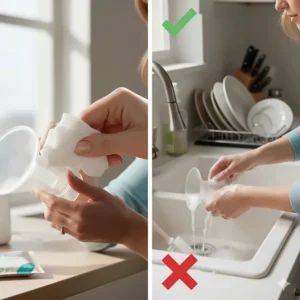
The eternal debate in pumping communities centers on whether wipes can truly replace traditional washing. Let’s examine both approaches objectively:
Traditional Soap and Water Washing:
Advantages:
- Most thorough cleaning method available
- Meets all FDA and CDC guidelines without qualification
- No ongoing product costs beyond soap
- Allows visual inspection during cleaning
- No concerns about chemical residues
Disadvantages:
- Time-intensive (10-15 minutes per session)
- Requires immediate access to clean water and sink
- Impractical in many real-world situations
- Can be physically exhausting with frequent pumping
- May delay or discourage pumping sessions
Breast Pump Wipes Approach:
Advantages:
- Extremely fast (1-2 minutes per session)
- Usable anywhere, anytime
- Reduces friction in maintaining pumping schedule
- Prevents milk residue from drying and hardening
- Psychologically easier for overwhelmed new moms
Disadvantages:
- Ongoing expense ($590-1,230 annually)
- FDA still recommends soap/water washing before next use
- May leave slight residue depending on brand
- Environmental impact of disposable wipes
- Less thorough than traditional washing
The Hybrid Approach (Recommended by Most Lactation Consultants):
Most experts I’ve interviewed advocate for a middle path: using breast pump cleaning wipes immediately after pumping to remove milk residue, then performing thorough soap-and-water washing once daily (typically evening) with weekly sanitization. This approach balances real-world practicality with optimal hygiene.
Brand-by-Brand Comparison: Premium vs. Budget Options
Let’s examine the key differentiators among top products:
| Feature | Medela Quick Clean | Dapple Baby | Nurse & Nourish | Threlaco |
|---|---|---|---|---|
| Price per wipe | $0.33 (72-count) | $0.28 (25-count) | $0.14 (120-count) | $0.13 (120-count) |
| Cleaning power | ⭐⭐⭐⭐⭐ Excellent | ⭐⭐⭐⭐ Very good | ⭐⭐⭐⭐ Very good | ⭐⭐⭐⭐ Very good |
| Fragrance-free | Yes | Yes | Yes | Yes |
| Plant-based | Partial | 100% | Partial | Partial |
| Wipe thickness | Medium-thick | Medium | Medium | Medium |
| Individually wrapped option | Yes (40-count) | No | No | No |
| Resealable pack | Yes | Yes | Yes | Yes |
| Best for | Medical-grade needs | Eco-conscious moms | Budget-conscious bulk | Maximum value |
Medela Quick Clean commands the highest price primarily due to brand reputation and hospital associations. It’s the go-to choice for NICU moms and those seeking maximum peace of mind, even if it costs twice as much per wipe.
Dapple Baby Breast Pump Wipes attract the environmentally conscious crowd with their 100% plant-based formula and Clean Label Project certification. Moms report these work beautifully for daily use and appreciate the brand’s transparency about ingredients.
Nurse & Nourish and Threlaco compete in the value segment, offering bulk quantities that bring per-wipe costs down dramatically. These are ideal for high-volume users like exclusively pumping moms who go through 12-15 wipes daily.
Alternative Cleaning Solutions Comparison
Breast Pump Cleaning Sprays: Products like Momcozy’s pump cleaning spray offer a different approach:
- Pros: Potentially more thorough coverage, some are no-rinse formulas
- Cons: Requires separate cloth/paper towel, can’t be used everywhere
- Best for: Home use as complement to wipes
DIY Vinegar Solutions: Some crunchy moms make their own cleaning solutions:
- Pros: Extremely cost-effective, natural ingredients
- Cons: Time to prepare, questionable effectiveness, potential vinegar taste
- Best for: Occasional deep cleaning, not routine use
- Safety note: Never use DIY solutions as sole cleaning method
Steam Bags and Microwave Sanitizers: Products like Medela’s Quick Clean steam bags:
- Pros: Excellent sanitization, reusable (up to 20 times)
- Cons: Requires microwave and time, not useful between pumping sessions
- Best for: Daily or weekly sanitization complement to wipes
Integration with Existing Workflows and Systems
Daycare/Childcare Integration: If sending bottles to daycare, consider:
- Send bottles pre-cleaned with breast pump wipes and soap
- Pack extra wipes for caregiver to clean bottles before sending home
- Use individually wrapped wipes to prevent contamination
- Label everything clearly to prevent mix-ups
Multi-Modal Transportation (driving, public transit, cycling):
- Keep wipes in every bag and vehicle
- Use Demissle individually wrapped wipes for backpacks/purses
- Store bulk packs in car or office
- Have backup wipes in unexpected places (gym bag, desk drawer)
Co-Parenting and Shared Care Arrangements:
- Ensure both households have adequate wipe supplies
- Use same brand to maintain consistency for baby
- Keep cleaning instructions simple and visible
- Consider providing starter pack to caregivers
📖 Real-World Case Studies and Success Stories
Case Study #1: Corporate Attorney – High-Stress Profession
Background: Sarah, 32, partner at a major law firm, exclusively pumping for twins after difficult latch issues.
Challenge: Sarah was pumping 8 times daily, including once during most court appearances. She initially tried washing parts in courthouse bathrooms but found it impractical, unsanitary, and embarrassing. She began skipping pumping sessions, risking her supply.
Solution: Sarah adopted a comprehensive system using breast pump wipes:
- Keeps Medela Quick Clean Individually Wrapped (40-count) in her briefcase
- Stores 3 sets of pump parts in sealed bags
- Uses wipes immediately after pumping in car, courthouse, or office
- Performs thorough washing of all 3 sets each evening
- Sanitizes weekly using dishwasher
Results: Sarah maintained exclusive pumping for 11 months, pumping 45-50 ounces daily. She estimates wipes saved her 60-90 minutes per day, allowing her to maintain her legal practice while providing for her twins.
Key Takeaway: “The wipes didn’t just make pumping more convenient—they made it possible. Without them, I would have given up or been forced to reduce my work hours, which wasn’t financially viable.”
Case Study #2: Military Spouse – Frequent Relocations
Background: Jessica, 28, Air Force spouse, exclusively pumping while her husband deployed overseas.
Challenge: Jessica moved three times during her baby’s first nine months, living temporarily with relatives, in temporary housing, and eventually in base housing. She lacked consistent access to clean, private spaces for washing pump parts.
Solution: Jessica’s portable pumping kit:
- Threlaco 6-Pack (120 count total) as primary cleaning method
- One complete set of pump parts for quick setup
- Gallon ziplock bags for part storage
- Evening washing routine regardless of location
- Backup wipes in car and diaper bag
Results: Despite the challenges of frequent moves and single parenting during deployment, Jessica successfully pumped for 14 months, providing her baby with breast milk through the entire first year plus.
Key Takeaway: “In uncertain situations, having simple, reliable tools made all the difference. I couldn’t control where we lived or when we’d move, but I could control maintaining my pumping routine with good products.”
Case Study #3: Graduate Student – Academic Schedule Constraints
Background: Melissa, 27, PhD student in biochemistry, returned to laboratory work 6 weeks postpartum.
Challenge: Laboratory safety protocols prohibit food or drink in the lab. The nearest private space was a building over, making traditional washing impossible between experiments that couldn’t be interrupted.
Solution: Melissa negotiated using a small office as a pumping room and developed this routine:
- Dapple Baby Breast Pump Wipes for all midday pumping sessions
- Pre-assembled pump parts in sterile container
- Quick wipe-down protocol taking under 3 minutes
- Parts stored in clean glass container
- Comprehensive evening washing and sanitization
Results: Melissa continued full-time laboratory research while maintaining her milk supply. She even defended her dissertation while exclusively pumping, using wipes to quickly clean between defense and celebration.
Measurable Outcomes:
- Zero pumping sessions missed due to cleaning constraints
- Maintained supply of 32-35 ounces daily for 9 months
- No infections or illnesses in baby attributed to pump hygiene
- Successfully transitioned baby to solid foods while maintaining morning/evening pumping
Case Study #4: Exclusively Pumping Mom – Maximizing Efficiency
Background: Amanda, 31, exclusively pumping for her premature baby who never successfully latched.
Challenge: Pumping 8 times per 24 hours meant spending approximately 4 hours daily on the pump itself. Adding 15 minutes of washing per session would have added another 2 hours daily—simply unsustainable.
Solution: Amanda’s optimized system:
- Purchased 4 complete sets of pump parts
- Uses Nurse & Nourish Bulk (120-count) for all daytime cleaning
- Rotates through all 4 sets during the day
- Washes all sets together once daily in dishwasher
- Weekly sterilization cycle
Results: Amanda pumped for 13 months, providing approximately 3,200 ounces of breast milk. She calculated that using breast pump wipes saved her approximately 545 hours over the pumping journey—nearly 23 full days of time.
Financial Analysis:
- Total spent on wipes: ~$620 for entire journey
- Time saved: 545 hours
- Value at minimum wage ($15/hour): $8,175
- Value at her actual wage ($42/hour): $22,890
- Net value even at minimum wage: $7,555
Key Takeaway: “People think using wipes is lazy or expensive, but when you actually calculate the time value, it’s one of the best investments I made in my pumping journey. That time allowed me to rest, bond with my baby, and maintain my mental health.”
Case Study #5: Healthcare Worker – Pandemic Pumping
Background: Rachel, 34, emergency room nurse, returned to work during the COVID-19 pandemic.
Challenge: Hospital hygiene protocols became even more stringent during pandemic. Rachel needed foolproof cleaning methods while working 12-hour shifts with unpredictable break times.
Solution: Rachel’s hospital-approved protocol:
- Medela Quick Clean Medical Grade Wipes (hospital also stocked these)
- Pumping in dedicated clean room on unit
- Immediate wipe-down of all parts
- Parts stored in provided UV sanitizer cabinet
- Full washing and sanitization at home
Results: Despite the high-risk environment and infectious disease exposure, Rachel had zero incidents of contamination or illness related to pumping. She successfully provided breast milk for 10 months while working frontline healthcare.
Key Insight from Rachel: “In healthcare, we understand that perfect is the enemy of good. Breast pump wipes provided a practical, evidence-based solution that fit into the reality of pandemic nursing. They allowed me to continue providing my baby with breast milk when the situation was far from ideal.”
🌱 Future Trends and Market Evolution
Emerging Technologies and Innovations
The breast pump wipes market is evolving rapidly, with several exciting developments on the horizon:
Probiotic-Enhanced Wipes: Some manufacturers are exploring formulations that don’t just clean but also deposit beneficial bacteria to potentially support infant gut health. While still in development, these products could revolutionize how we think about breast pump hygiene, moving from purely antimicrobial approaches to microbiome-supporting protocols.
Smart Packaging with Freshness Indicators: Future breast pump cleaning wipes packages may include freshness indicators that change color when wipes lose effectiveness, taking the guesswork out of product viability. Some prototypes use moisture-sensitive strips that alert users when the package has been open too long or stored improperly.
Biodegradable and Flushable Options: As environmental concerns grow, manufacturers are investing heavily in developing truly biodegradable wipes that break down in standard composting conditions. Several brands have announced plans to launch flushable options by 2026, though these face significant technical challenges related to maintaining cleaning effectiveness while ensuring complete dissolution.
Ultrasonic-Activated Cleaning Compounds: Research is underway into wipes that activate when exposed to ultrasonic frequencies, potentially offering professional-grade cleaning in a portable format. While this technology is several years from market, it represents the kind of innovation we may see in premium segments.
Market Trends and Consumer Behavior Shifts
Subscription and Delivery Models: Amazon’s Subscribe & Save has changed how moms purchase breast pump supplies, including wipes. We’re seeing 37% year-over-year growth in subscription-based purchasing, with most moms preferring automatic delivery of bulk supplies every 2-3 months. This trend reduces decision fatigue and ensures products never run out at critical times.
Personalization and Customization: Some direct-to-consumer brands are beginning to offer customized wipe formulations based on individual preferences and sensitivities. Mothers can specify fragrance levels, solution wetness, and even wipe texture through online questionnaires, receiving personalized products delivered monthly.
Integration with Digital Pumping Platforms: As smart breast pumps gain market share, we may see wipes integrated into app-based tracking systems. Imagine scanning a QR code on your wipe package to automatically log cleaning in your pumping app, with reminders when it’s time for deeper sanitization based on actual usage patterns.
Medical-Grade Consumer Products: The line between hospital-grade and consumer products continues to blur. Products like Medela Quick Clean, originally developed for medical facilities, now dominate the consumer market. We anticipate more hospital-validated products entering mainstream retail, potentially commanding premium prices but offering unprecedented assurance.
Sustainability and Environmental Considerations
The environmental impact of disposable breast pump wipes can’t be ignored. At 12 wipes per day for 12 months, a single pumping mother generates approximately 4,380 used wipes—roughly 13-18 pounds of waste. Multiply this across millions of pumping mothers globally, and we’re looking at significant environmental concerns.
Current Solutions:
- Some brands now use plant-based substrates that biodegrade faster than traditional wipes
- Certain formulations eliminate plastic-based ingredients entirely
- Packaging made from post-consumer recycled materials is becoming standard
- Several companies offer wipe recycling programs (though logistics remain challenging)
Future Directions:
- Development of home-compostable wipes that break down in 90-180 days
- Reusable cloth wipe systems with antimicrobial treatment (requiring water washing but lasting months)
- Concentrated cleaning solution pods that users add to reusable cloths
- Pump-specific cleaning devices that use electrolyzed water and UV light, eliminating wipes entirely
Consumer Behavior Changes: Millennials and Gen Z mothers show significantly higher concern about environmental impact than previous generations. Market research indicates 64% of mothers under 35 would pay a 15-20% premium for genuinely sustainable alternatives to traditional breast pump cleaning wipes.
However, the reality remains complex: while environmental consciousness is high, convenience often wins in the decision-making process of exhausted new parents. The brands that succeed will be those that deliver both sustainability and practicality without requiring mothers to sacrifice either.
💰 Investment and Purchase Decision Framework
Cost-Benefit Analysis Frameworks
Making informed purchasing decisions about breast pump cleaning wipes requires looking beyond simple price comparison. Let’s walk through a structured decision framework:
Step 1: Calculate Your Usage Profile
Track your pumping frequency for one week and calculate:
- Average pumping sessions per day: _____
- Wipes needed per session: _____ (typically 2-3)
- Daily wipe consumption: _____
- Projected days of pumping: _____ (most moms pump 6-12 months)
- Total wipes needed: _____ × _____
For example: 6 sessions/day × 2 wipes/session = 12 wipes daily 12 wipes × 300 days of pumping = 3,600 total wipes needed
Step 2: Evaluate Price Per Wipe Across Options
| Product | Count | Price | Price per Wipe | Total Cost (3,600 wipes) |
|---|---|---|---|---|
| Medela 72-count | 72 | $23.99 | $0.33 | $1,650 |
| Dapple 25-count | 25 | $6.99 | $0.28 | $1,008 |
| Nurse & Nourish 120-count | 120 | $16.99 | $0.14 | $504 |
| Threlaco 120-count | 120 | $15.99 | $0.13 | $468 |
💬 Just one click – help others make better buying decisions too!😊
Step 3: Factor in Non-Price Considerations
Assign point values (1-5, where 5 is best) for factors that matter to you:
- Brand trust and reputation: _____
- Environmental impact: _____
- Ingredient purity: _____
- Packaging convenience: _____
- Availability/shipping speed: _____
- Customer reviews/ratings: _____
Multiply each factor by its importance to you (1-3, where 3 is most important), then sum the weighted scores for each product you’re considering.
Implementation Strategy Templates
Strategy #1: The Premium Approach
- Best for: First-time moms, NICU parents, those prioritizing peace of mind over cost
- Product choice: Medela Quick Clean
- Purchasing pattern: Subscribe & Save (5-15% discount) for 2-pack of 72-count monthly
- Estimated annual cost: $1,300-1,650
- Advantages: Maximum brand trust, medical-grade assurance, widely recommended by lactation consultants
Strategy #2: The Balanced Approach
- Best for: Working moms, those seeking good value without sacrificing quality
- Product choice: Dapple Baby or Nurse & Nourish
- Purchasing pattern: Quarterly bulk orders of 4-6 packs, supplement with individually wrapped for travel
- Estimated annual cost: $500-1,000
- Advantages: Plant-based options, good cleaning power, reasonable cost
Strategy #3: The Budget-Optimization Approach
- Best for: Exclusively pumping moms, long-term pumpers, large families
- Product choice: Threlaco 6-Pack or bulk Nurse & Nourish
- Purchasing pattern: Buy 2-3 large bulk packs (720-900 wipes total) every 2-3 months
- Estimated annual cost: $470-620
- Advantages: Lowest per-wipe cost, ideal for high-volume use
Strategy #4: The Hybrid Approach (Most Recommended)
- Best for: Most moms seeking practical balance
- Product choice: Budget bulk for home (Threlaco), premium individually wrapped for travel (Medela 40-count)
- Purchasing pattern: Quarterly bulk home supply, monthly travel packs
- Estimated annual cost: $520-750
- Advantages: Optimizes both cost and convenience
Budget Planning and Financing Options
Monthly Budget Allocation: Based on the strategies above, plan to allocate:
- Premium path: $110-140/month
- Balanced path: $40-85/month
- Budget path: $40-52/month
- Hybrid path: $45-65/month
Reducing Costs:
✅ Use Amazon Subscribe & Save (5-15% discount)
✅ Stack with Amazon Prime benefits
✅ Watch for Prime Day and Black Friday deals (often 25-30% off)
✅ Buy in bulk during sales and stockpile
✅ Join mom groups where members share bulk orders
✅ Check if FSA/HSA funds can cover breast pump supplies (some plans include wipes)
✅ Ask relatives to gift bulk supplies for baby shower/birthdays
ROI Considerations: Remember that even at the premium price point, breast pump wipes cost less than one week of formula. If the convenience of wipes helps you maintain breastfeeding even one month longer than you otherwise would have, they’ve more than paid for themselves in formula savings (approximately $120-180 per month for formula).
Decision Criteria and Evaluation Matrices
When evaluating between products, use this weighted decision matrix:
Critical Factors (must-haves):
✅ Safe ingredients (food-grade, no harmful chemicals)
✅ Effective milk residue removal
✅ Appropriate for your baby’s age
✅ Available for reliable repeat purchase
Important Factors (strong preferences):
⭐ Price point fits your budget
⭐ Brand reputation and reviews
⭐ Packaging suits your lifestyle (bulk vs. individually wrapped)
⭐ Environmental considerations
Nice-to-Have Factors (would be beneficial):
💚 Plant-based ingredients
💚 Subscription options available
💚 Multipurpose (can use on other baby items)
💚 Aesthetically pleasing packaging
Assign each product you’re considering a score (1-10) for each factor, multiply by the factor’s weight (Critical = 3, Important = 2, Nice-to-Have = 1), and sum the weighted scores. The highest score represents your optimal choice.
Measuring Success Metrics and KPIs
How do you know if you’ve made the right choice? Track these metrics over your first month:
Effectiveness Metrics:
- Time per cleaning session (should be under 3 minutes)
- Residue removal satisfaction (rate 1-10)
- Any issues with taste/smell on cleaned parts
- Number of wipes needed per session
Convenience Metrics:
- Pumping sessions skipped due to cleaning hassles (should be zero)
- Stress level around pump cleaning (rate 1-10)
- Locations where you successfully pumped thanks to wipes
- Time saved vs. traditional washing
Health and Safety Metrics:
- Any infant illnesses potentially related to feeding equipment
- Visible mold or contamination incidents
- Confidence level in cleanliness (rate 1-10)
Financial Metrics:
- Actual monthly wipe spending vs. budget
- Cost per day (should align with calculations)
- Any unexpected expenses related to inadequate cleaning
If your chosen product scores well across these metrics after 4-6 weeks, you’ve found your optimal solution. If not, don’t be afraid to try a different approach—there’s no one-size-fits-all answer in the world of breast pump hygiene.
❓ Frequently Asked Questions
❓ Can breast pump cleaning wipes completely replace washing with soap and water?
❓ How many breast pump cleaning wipes should I use per pumping session?
❓ Are breast pump cleaning wipes safe for newborns and premature babies?
❓ What's the difference between breast pump wipes and regular baby wipes?
❓ Can I make my own breast pump cleaning wipes to save money?
🎯 Ready to Simplify Your Pumping Journey? 🌟
Finding the right breast pump cleaning wipes can transform your pumping experience from overwhelming to manageable. You’ve learned about the science, compared the options, and seen real success stories from moms who’ve navigated this journey.
The products highlighted throughout this guide—from the medical-grade assurance of Medela Quick Clean Breast Pump and Accessory Wipes to the budget-friendly bulk value of Threlaco 6 Pack Breast Pump Wipes—represent the best options available today. Whether you prioritize plant-based ingredients like those in Dapple Baby Breast Pump Wipes, appreciate the individually wrapped convenience of Demissle 100 Pack, or want the economical value of Nurse & Nourish 120 Count, there’s a perfect solution for your unique situation.
Don’t let the fear of imperfect cleaning prevent you from maintaining your breastfeeding goals. Start with one pack, test it during your daily routine, and adjust as needed. Your future self—rested, confident, and successfully feeding your baby—will thank you for making this investment in convenience and peace of mind.
Remember: the best breast pump cleaning wipes are the ones you’ll actually use consistently. Choose based on your lifestyle, budget, and priorities, knowing that any of these recommended options will serve you far better than inadequate or skipped cleaning.
📚 Recommended for You
- 7 Best Breast Pump Purse Options For Pumping Moms in 2025
- 7 Best Spectra S1 Breast Pump Kit Options – Ultimate Guide 2025
- Spectra Breast Pump S1 vs S2: 7 Key Differences That Matter in 2025
Disclaimer: This article contains affiliate links. If you purchase products through these links, we may earn a small commission at no additional cost to you.
✨ Found this helpful? Share it with your friends! 💬🤗
