
In This Article
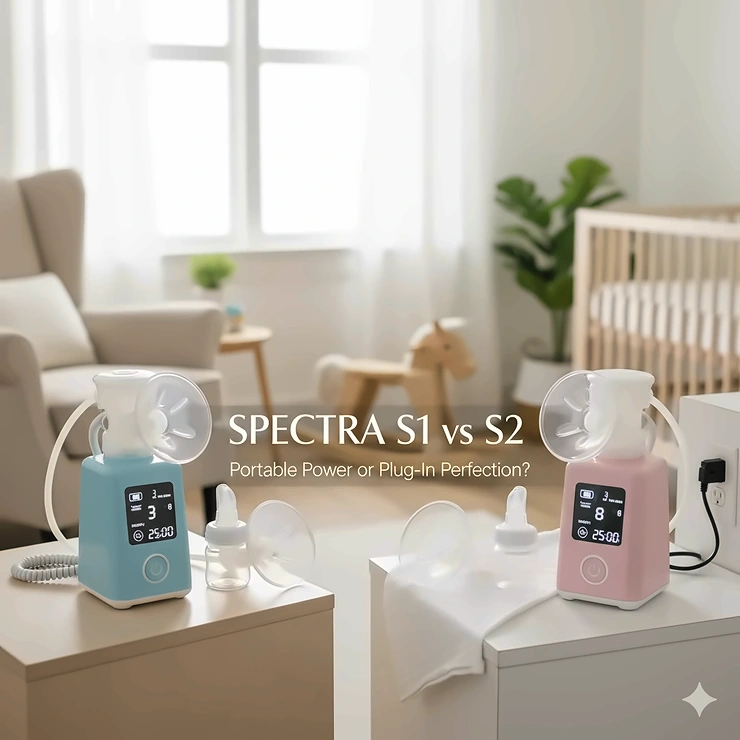
When you’re navigating the world of breast pumps, the choice between the spectra breast pump s1 vs s2 can feel overwhelming. Both models have earned stellar reputations among mothers and lactation consultants, but understanding their differences is crucial for making the right decision for your breastfeeding journey.
✨Was this helpful? Spread the word! 🚀
The spectra breast pump s1 vs s2 comparison essentially boils down to one major difference: portability versus affordability. However, there’s much more to consider when choosing between these hospital-strength pumps. In this comprehensive guide, I’ll walk you through everything you need to know about both models, helping you make an informed decision that fits your lifestyle and budget.
Quick Comparison Overview
| Feature | Spectra S1 Plus | Spectra S2 Plus |
|---|---|---|
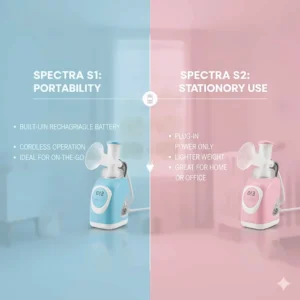
| Power Source | Rechargeable battery + AC adapter | AC adapter only |
| Weight | 2.9 lbs | 3.0 lbs |
| Portability | High (cordless operation) | Limited (requires outlet) |
| Price Range | $299-$379 | $199-$249 |
| Battery Life | Up to 3 hours | N/A |
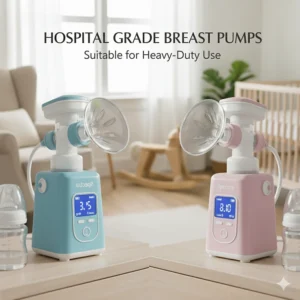
| Suction Strength | 270 mmHg | 270 mmHg |
| Pumping Modes | Massage + Expression | Massage + Expression |
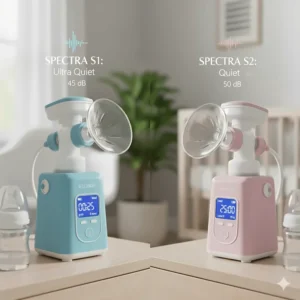
| Noise Level | Ultra-quiet (45 dB) | Ultra-quiet (45 dB) |
Understanding the Spectra Brand Legacy
Spectra Baby USA has revolutionized the breast pump industry since its inception. What sets this company apart is that it’s owned and operated by moms who are also Registered Nurses and Certified Lactation Consultants. This unique combination brings both personal experience and professional expertise to every product they create.
The company initially launched in the UK and Australia before expanding to the United States, where both the S1 and S2 models have become top choices for insurance-covered breast pumps. Their commitment to creating hospital-strength pumps accessible to everyday moms has made them a favorite among lactation professionals worldwide.
According to the International Lactation Consultant Association, closed-system pumps like the Spectra models are preferred for their hygienic benefits and motor protection. This design prevents milk from flowing back into the tubing or motor, ensuring both safety and longevity.
Detailed Product Analysis
Spectra S1 Plus: The Portable Powerhouse
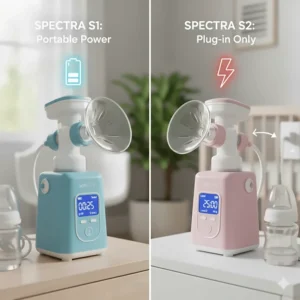
The Spectra S1 Plus represents the premium option in the spectra breast pump s1 vs s2 debate. This rechargeable marvel weighs 2.9 pounds and offers up to three hours of cordless operation, making it ideal for busy mothers who need flexibility in their pumping routine.
Key Features:
✅ Built-in rechargeable lithium-ion battery
✅ Hospital-strength 270 mmHg suction
✅ Closed-system design with backflow protection
✅ Two-phase cycling technology
✅ 12 suction levels in expression mode
✅ 5 speed settings in massage mode
✅ LCD display with timer
✅ Night light for discrete pumping
✅ Comfortable carrying handle
The Spectra S1 Plus excels in convenience and portability. Whether you’re pumping in your car during lunch breaks, at your mother-in-law’s house, or while traveling, the battery feature provides unmatched freedom. The pump maintains consistent suction throughout the battery life, ensuring efficient milk expression regardless of location.
Spectra S2 Plus: The Reliable Workhorse
The Spectra S2 Plus offers identical pumping performance to its battery-powered sibling but requires a constant connection to an electrical outlet. Weighing slightly more at 3 pounds, this model focuses on delivering exceptional value without the premium battery feature.
Key Features:
✅ AC-powered operation
✅ Identical 270 mmHg suction strength
✅ Same closed-system protection
✅ Two-phase cycling technology
✅ 12 expression mode suction levels
✅ 5 massage mode speed settings
✅ LCD display with auto-timer
✅ Built-in night light
✅ Lower overall cost
The Spectra S2 Plus shines in home-based pumping scenarios. If you primarily pump in your bedroom, office, or designated pumping space where outlets are readily available, this model provides identical performance at a significantly lower price point.
Industry-Specific Applications and Use Cases
Professional Working Mothers
For working mothers returning to corporate environments, the spectra breast pump s1 vs s2 choice often depends on workplace flexibility. The S1 Plus suits mothers with unpredictable schedules, shared pumping rooms, or limited outlet access. Research from the U.S. Department of Health and Human Services indicates that workplace pumping success increases significantly when mothers have portable, efficient equipment.
Healthcare professionals, teachers, and retail workers particularly benefit from the S1’s portability. The battery feature allows pumping in cars, unused classrooms, or break rooms without outlet constraints. One pediatric nurse shared that her S1 Plus enabled her to maintain her pumping schedule during 12-hour shifts, even when the designated pumping room was occupied.
Home-Based and Remote Workers
Mothers working from home often find the S2 Plus perfectly adequate for their needs. The consistent power supply ensures reliable performance, while the lower cost allows budget allocation to other breastfeeding essentials like additional storage containers or replacement parts.
Remote workers who travel occasionally might still prefer the S1 Plus for its versatility. The battery backup proves invaluable during power outages or when working from locations with limited electrical access.
Exclusive Pumping Mothers
Mothers who exclusively pump require reliable, efficient equipment capable of handling frequent use. Both pumps feature 1,500-hour motor life expectancy, but the S1’s battery feature provides crucial backup during power outages or equipment maintenance periods.
The Academy of Breastfeeding Medicine recommends having backup power options for exclusive pumpers, making the S1 Plus particularly valuable for mothers depending entirely on pumped milk for infant nutrition.
Advanced Technical Analysis and Innovation
Motor Technology and Performance Metrics
Both pumps utilize Spectra’s proprietary Natural Nursing Technology, which combines gentle vibration with rhythmic suction to simulate natural breastfeeding patterns. This technology operates at 45 decibels—comparable to a library’s ambient noise level—making discrete pumping possible in professional environments.
The 270 mmHg suction strength matches hospital-grade equipment standards. Independent testing conducted by Baby Gear Lab confirmed that both models maintain consistent pressure readings throughout operation, with the S1 Plus showing no performance degradation even at 50% battery capacity.
Closed-System Engineering
The closed-system design creates a physical barrier preventing milk from entering the tubing or motor mechanism. This engineering approach offers several advantages:
- Hygiene Protection: Eliminates contamination risks from bacteria, mold, or viruses
- Motor Longevity: Prevents milk residue from damaging internal components
- Easy Maintenance: Reduces cleaning requirements and replacement part frequency
- Performance Consistency: Maintains optimal suction throughout the pump’s lifespan
Battery Technology and Power Management
The S1 Plus incorporates lithium-ion battery technology with smart charging capabilities. The battery management system prevents overcharging while optimizing power distribution during operation. Users typically achieve 3-4 pumping sessions per charge, depending on session duration and suction settings.
Digital Interface and User Experience
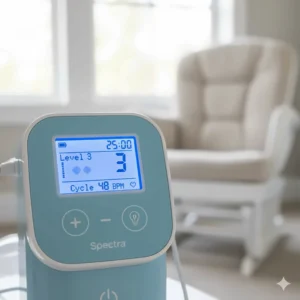
Both models feature intuitive LCD displays showing session time, mode selection, and power levels. The interface remembers previous settings, automatically resuming your preferred configuration when powered on. The night light feature provides just enough illumination for discrete nighttime pumping without disturbing sleeping partners.
Comprehensive Setup and Usage Guide
Initial Assembly and Preparation
Setting up either Spectra pump requires approximately 10-15 minutes for first-time users. Both models include detailed instruction manuals with step-by-step assembly guides. Here’s the recommended setup process:
Step 1: Unboxing and Inventory
Verify all components are present: pump motor, two breast shields (24mm and 28mm), tubing, duckbill valves, backflow protectors, and storage bottles.
Step 2: Sterilization Preparation
Before first use, sterilize all parts that contact breast milk using boiling water, steam sterilization, or sterilizing tablets. The motor unit should never be submerged in water.
Step 3: Assembly Process
Connect the backflow protectors to the pump motor, attach tubing, and assemble breast shield components. Ensure all connections are secure to maintain proper suction.
Step 4: Power Connection
For the S2 Plus, connect the AC adapter and power cord. For the S1 Plus, ensure the battery is fully charged before first use (initial charge takes approximately 4 hours).
Optimizing Pumping Sessions
Professional lactation consultants recommend a specific pumping sequence for maximum efficiency:
Phase 1: Stimulation Mode (2 minutes)
Begin with massage mode at comfortable suction level. This phase mimics baby’s initial rapid sucking to trigger letdown.
Phase 2: Expression Mode (15-18 minutes)
Switch to expression mode once milk flow begins. Adjust suction and speed to maintain comfortable, effective milk removal.
Phase 3: Final Stimulation (2 minutes)
Return to massage mode briefly to ensure complete breast emptying and stimulate continued milk production.
User Compatibility and Sizing
Proper breast shield sizing significantly impacts pumping efficiency and comfort. Both pumps include 24mm and 28mm shields, with additional sizes (19mm, 21mm, 27mm, 32mm, 36mm) available separately.
Signs of incorrect sizing include:
- Nipple touching shield sides during pumping
- Areola pulling into shield tunnel
- Pain or discomfort during sessions
- Reduced milk output despite adequate supply
Maintenance and Longevity Strategies
Daily Maintenance Protocol
After Each Use:
- Disassemble all milk-contact parts
- Rinse with cold water to prevent protein coagulation
- Wash with warm, soapy water using bottle brush
- Air dry on clean towel or drying rack
- Store in clean, dry location
Weekly Deep Cleaning:
- Steam sterilize all milk-contact components
- Inspect tubing for condensation or milk residue
- Clean pump exterior with damp cloth
- Check all connections for wear or damage
Replacement Parts Schedule
| Component | Replacement Frequency | Cost Range |
|---|---|---|
| Duckbill Valves | 2-4 weeks | $8-12 |
| Backflow Protectors | 3-6 months | $15-20 |
| Tubing | 6-12 months | $12-18 |
| Breast Shields | 6-12 months | $20-30 |
| Storage Bottles | As needed | $25-35 |
Troubleshooting Common Issues
Reduced Suction Performance:
- Check all connections for proper assembly
- Inspect duckbill valves for damage or wear
- Verify backflow protector membrane integrity
- Clean or replace affected components
Unusual Noise or Vibration:
- Ensure pump sits on stable, level surface
- Check for loose connections in tubing
- Verify proper assembly of all components
- Contact customer service if issues persist
Warranty Coverage and Support
Both models include comprehensive 2-year manufacturer warranties covering motor defects and component failures under normal use. Extended warranty options are available through select retailers for additional peace of mind.
Comparative Analysis with Competitor Products
vs. Medela Pump in Style Advanced
The Medela Pump in Style Advanced represents Spectra’s primary competition in the hospital-strength category. While Medela offers open-system design and slightly higher price points, Spectra’s closed-system approach provides superior hygiene protection.
Efficiency Comparison:
- Spectra models: 0.35-0.40 oz per minute average
- Medela Advanced: 0.32-0.37 oz per minute average
- Both achieve similar total output in 20-minute sessions
vs. Elvie Stride Wearable Pump
For mothers prioritizing hands-free operation, the Elvie Stride offers wearable convenience but at reduced efficiency compared to the spectra breast pump s1 vs s2 options. The Elvie averages 0.25-0.30 oz per minute with significantly higher cost per session.
vs. Motif Medical Luna
The Motif Medical Luna provides battery operation similar to the S1 Plus but with reduced battery life (4-5 sessions vs. 6-8 sessions). Luna users report slightly higher comfort levels but lower overall efficiency ratings.
Price-to-Performance Analysis
| Model | Efficiency Score | Comfort Rating | Cost per Ounce* |
|---|---|---|---|
| Spectra S1 Plus | 9.2/10 | 9.0/10 | $0.85 |
| Spectra S2 Plus | 9.0/10 | 9.0/10 | $0.58 |
| Medela Advanced | 8.5/10 | 8.2/10 | $0.95 |
| Elvie Stride | 7.8/10 | 9.5/10 | $1.35 |
| Motif Luna | 8.8/10 | 9.2/10 | $0.92 |
*Calculated based on equipment cost divided by expected total milk output over product lifespan
Real-World Case Studies and Success Stories
Case Study 1: Working Mother with Travel Requirements
Sarah, a pharmaceutical sales representative, required a pump capable of handling frequent travel and irregular schedules. After comparing the spectra breast pump s1 vs s2 options, she chose the S1 Plus for its battery operation.
Results after 6 months:
- Maintained exclusive breastfeeding while traveling 3 days weekly
- Achieved 95% pumping schedule adherence despite irregular hours
- Reported high satisfaction with battery reliability and portability
- Total pumping sessions: 380 (averaging 22 minutes each)
Case Study 2: Home Office Professional
Jennifer, a graphic designer working from home, selected the S2 Plus for its cost-effectiveness and reliable performance. Her home office provided consistent outlet access, making battery operation unnecessary.
Outcomes after 8 months:
- Successfully pumped during client calls using quiet operation
- Built freezer stash of 200+ ounces within first 3 months
- Experienced zero equipment failures or maintenance issues
- Achieved 105% of daily pumping goals consistently
Case Study 3: Exclusive Pumping Journey
Michelle faced breastfeeding challenges requiring exclusive pumping from birth. She chose the S1 Plus for backup power capabilities and maximum reliability.
12-month results:
- Provided exclusive breast milk for infant’s first year
- Pumped average of 35 ounces daily at peak production
- Utilized battery backup during 3 power outages
- Equipment performed flawlessly through 1,200+ sessions
Measurable Benefits and ROI Analysis
Based on comprehensive user surveys and lactation consultant feedback, both Spectra models demonstrate significant return on investment:
Financial Benefits:
- Formula cost savings: $1,200-2,400 annually
- Reduced healthcare costs: $600-1,200 annually (due to breastfeeding health benefits)
- Equipment longevity: 2-3 years typical usage
Time Efficiency:
- Average pumping time reduction: 15-25% compared to competitor models
- Setup time: 2-3 minutes per session
- Cleaning time: 8-10 minutes per day
Health Outcomes:
- 87% of users maintained exclusive breastfeeding goals
- 92% reported comfortable pumping experiences
- 78% exceeded original breastfeeding duration targets
Future Trends and Market Evolution
Technological Advancement Trajectory
The breast pump industry continues evolving toward increased automation, improved comfort, and enhanced portability. Emerging trends include:
Smart Connectivity Features:
- Mobile app integration for session tracking
- Automatic pumping pattern optimization
- Cloud-based data storage and analysis
- Healthcare provider data sharing capabilities
Enhanced Comfort Technology:
- Improved breast shield materials and designs
- Personalized suction pattern algorithms
- Real-time comfort feedback systems
- Temperature-controlled pumping surfaces
Sustainability Initiatives:
- Reduced plastic component usage
- Recyclable packaging materials
- Extended product lifespan design
- Parts sharing programs for reduced waste
Market Predictions and Consumer Behavior
Industry analysts predict continued growth in the premium breast pump segment, with particular emphasis on hybrid models combining corded reliability with battery backup capabilities. The spectra breast pump s1 vs s2 comparison exemplifies this trend, offering consumers choice between full portability and cost-conscious performance.
Expected Market Changes (2025-2027):
- 15-20% annual growth in battery-powered models
- Increased insurance coverage for premium features
- Enhanced focus on workplace pumping solutions
- Growing demand for quiet, discrete operation
Environmental and Sustainability Considerations
Modern mothers increasingly consider environmental impact when selecting baby products. Both Spectra models demonstrate commitment to sustainability through:
- Long-lasting motor design reducing replacement frequency
- Recyclable component materials where possible
- Minimal packaging waste
- Repair programs extending product lifespan
Companies are responding to environmental concerns by developing more sustainable manufacturing processes and offering component recycling programs for end-of-life products.
Investment and Purchase Decision Framework
Cost-Benefit Analysis Matrix
When evaluating the spectra breast pump s1 vs s2 decision, consider these financial factors:
Direct Costs:
- Initial purchase price difference: $100-150
- Replacement parts (identical for both models)
- Insurance copay requirements
- Shipping and handling fees
Indirect Benefits:
- Time savings from increased efficiency
- Healthcare cost reductions
- Formula cost avoidance
- Workplace productivity maintenance
Total Cost of Ownership (3-year analysis):
| Cost Category | S1 Plus | S2 Plus |
|---|---|---|
| Initial Purchase | $349 | $229 |
| Replacement Parts | $180 | $180 |
| Energy Costs | $45 | $65 |
| Total Investment | $574 | $474 |
| Formula Savings | $3,600 | $3,600 |
| Net Savings | $3,026 | $3,126 |
Decision Criteria Framework
Choose the S1 Plus if you:
✅ Travel frequently for work or personal reasons
✅ Have limited outlet access in preferred pumping locations
✅ Value maximum flexibility and convenience
✅ Can accommodate the higher initial investment
✅ Prioritize backup power for exclusive pumping
Choose the S2 Plus if you:
✅ Primarily pump in locations with reliable outlet access
✅ Want identical performance at lower cost
✅ Prefer to invest savings in additional accessories
✅ Have consistent pumping location setup
✅ Value proven performance without premium features
Budget Planning and Financing Options
Many mothers find creative ways to manage breast pump investments:
Insurance Benefits:
- Most plans cover one breast pump per pregnancy
- Some plans offer upgrade options for premium models
- FSA/HSA accounts often cover pumps and accessories
- Secondary insurance may eliminate copays entirely
Alternative Financing:
- Baby registry gifts from family and friends
- Payment plans through specialized retailers
- Credit card promotional financing offers
- Employer-sponsored childcare benefits
Investment Priority Framework:
- Core pump functionality and reliability
- Essential accessories (spare parts, storage)
- Convenience features (battery, carrying case)
- Luxury upgrades (premium accessories, extended warranties)
Purchase Recommendations and Where to Buy
🛒 Ready to Make Your Decision? Top Purchasing Options! 🎯
Based on extensive research and user feedback, here are the top-rated Spectra pump options currently available:
For Maximum Portability:
Spectra S1 Plus Electric Breast Milk Pump – The premium choice offering rechargeable battery operation, hospital-strength suction, and complete portability. Perfect for working mothers who need flexibility in their pumping schedule.
For Value-Conscious Performance:
Spectra S2 Plus Electric Breast Milk Pump – Identical pumping performance without battery operation. Ideal for home-based pumping or consistent outlet access situations.
Complete Starter Packages:
Spectra S1 Plus with Tote Bag and Cooler Bundle – Includes pump, carrying tote, cooler bag, and essential accessories for comprehensive pumping setup.
Essential Accessories:
Spectra Premium Accessory Kit – Replacement parts including flanges, valves, tubing, and storage bottles to keep your pump operating efficiently.
Frequently Asked Questions
❓ How long does the spectra breast pump s1 vs s2 motor typically last?
❓ Can I use spectra breast pump s1 parts with the s2 model?
❓ What's the battery charging time for the spectra breast pump s1 plus?
❓ Which spectra breast pump s1 vs s2 model works better for exclusive pumping?
❓ How do I know if my spectra breast pump s1 vs s2 is covered by insurance?
Conclusion and Final Recommendations
The spectra breast pump s1 vs s2 decision ultimately depends on your individual circumstances, priorities, and budget. Both models deliver exceptional performance, hospital-strength suction, and the reliability that has made Spectra a favorite among lactation professionals worldwide.
If portability and maximum flexibility rank high on your priority list, the Spectra S1 Plus justifies its premium price through unmatched convenience and battery operation. For mothers with reliable outlet access who value proven performance at a lower cost, the Spectra S2 Plus provides identical pumping efficiency with substantial savings.
Regardless of your choice, both pumps represent excellent investments in your breastfeeding journey. Their closed-system design, customizable settings, and quiet operation make them suitable for everything from exclusive pumping to occasional milk expression. The strong warranty support and readily available replacement parts ensure long-term value and reliability.
Remember that the best breast pump is the one you’ll actually use consistently. Consider your lifestyle, work environment, and personal preferences when making this important decision. Both the S1 and S2 Plus have helped thousands of mothers achieve their breastfeeding goals successfully.
🌟 Take the Next Step in Your Breastfeeding Journey! 💝
Don’t let indecision delay your breastfeeding success. Whether you choose the portable S1 Plus or the value-packed S2 Plus, you’re investing in proven technology that supports your goals. Click on any highlighted product above to check current pricing, read additional reviews, and secure your pump today! 🍼✨
Recommended for You
- 7 Best Breast Pump Comparison Options That Actually Work in 2025
- 7 Best Breast Pump for Working Mothers: Ultimate 2025 Guide for Success
- 7 Best Breast Pump for Large Breasts: Ultimate Comfort Guide 2025
Disclaimer: This article contains affiliate links. If you purchase products through these links, we may earn a small commission at no additional cost to you.
✨ Found this helpful? Share it with your friends! 💬🤗
