
In This Article
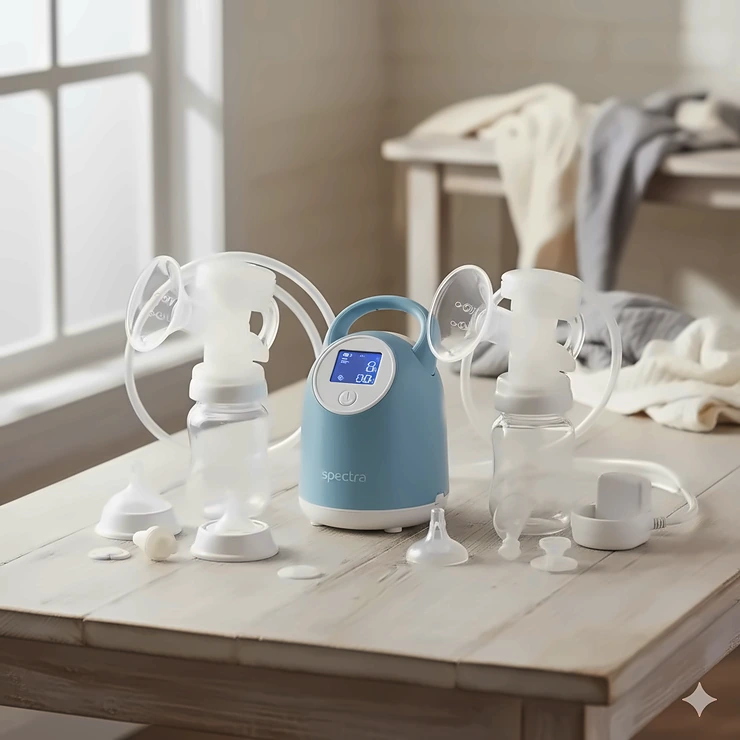
When you’re navigating the world of breastfeeding as a new mom, finding the right spectra s1 breast pump kit can feel overwhelming. With countless options available and varying price points, I understand how challenging it can be to make the perfect choice for your unique needs.
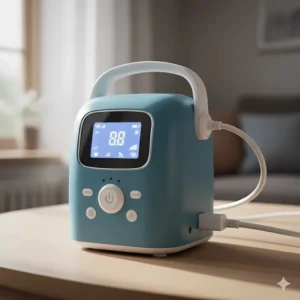
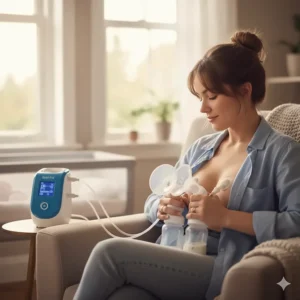
The spectra s1 breast pump kit has revolutionized the pumping experience for millions of mothers worldwide. Known for its hospital-grade suction, whisper-quiet operation, and rechargeable battery, this pump offers unmatched convenience and efficiency. Whether you’re returning to work, building a milk stash, or exclusively pumping, the right kit can make all the difference in your breastfeeding journey.
✨Was this helpful? Spread the word! 🚀
In this comprehensive guide, I’ll walk you through everything you need to know about choosing, using, and maintaining your spectra s1 breast pump kit. From detailed product reviews to expert tips, you’ll have all the information needed to make an informed decision that supports your breastfeeding goals.
Understanding the Spectra S1 Breast Pump Technology
The Spectra S1 represents a significant advancement in breast pump technology, incorporating features that prioritize both efficiency and comfort. Unlike traditional pumps that rely solely on suction, the S1 utilizes Natural Nursing Technology, which combines gentle vibration with rhythmic suction patterns that closely mimic a baby’s natural nursing behavior.
This innovative approach stimulates milk production more effectively than conventional pumps. The gentle vibration creates a massage-like sensation that helps trigger the let-down reflex faster, while the adjustable suction levels ensure optimal milk extraction without discomfort. Many users report experiencing let-down within the first two minutes of pumping, compared to five or more minutes with other pumps.
The closed-system design serves as a critical safety feature, preventing milk backflow into the tubing or motor. This design not only maintains hygiene but also protects the pump’s motor from contamination, extending its lifespan significantly. The backflow protectors create a physical barrier that ensures your expressed milk remains pure and uncontaminated.
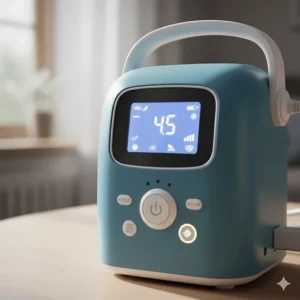
Advanced digital controls allow precise customization of pumping programs. The S1 features two distinct modes: massage mode for stimulating let-down and expression mode for efficient milk removal. Each mode offers multiple cycle speeds and vacuum levels, enabling you to find the most comfortable and effective settings for your body’s unique response.
The rechargeable lithium-ion battery provides up to three hours of continuous pumping time, making the S1 truly portable. This feature eliminates the need to remain tethered to wall outlets, allowing you to pump anywhere – from your office to your car to a comfortable spot in your living room. The battery charges completely in approximately four hours using the included AC adapter.
Industry-Specific Applications and Professional Use Cases
Healthcare facilities have increasingly adopted the Spectra S1 for their lactation support programs. Hospitals recommend this pump to new mothers because its closed system meets strict medical hygiene standards. The pump’s quiet operation makes it ideal for NICU environments where noise control is crucial for premature babies’ development.
Corporate lactation programs have embraced the S1’s portability and discretion. Working mothers appreciate the ability to pump efficiently during short breaks without worrying about noise disturbing colleagues. The pump’s professional appearance and compact design fit seamlessly into office environments, while the rechargeable battery eliminates concerns about available power outlets.
Daycare centers and childcare facilities often recommend the spectra s1 breast pump kit to parents for its reliability and ease of use. The pump’s intuitive controls make it simple for caregivers to assist mothers who need to pump during pick-up or drop-off times. Additionally, the pump’s durability ensures it can withstand frequent transport between home and childcare facilities.
Flight attendants, nurses, and other professionals with irregular schedules particularly value the S1’s flexibility. The pump’s timer function helps busy professionals manage pumping sessions efficiently, while the night light feature enables discreet pumping during nighttime hours without disturbing partners or roommates.
Military and deployment situations have found the S1 invaluable for maintaining milk supply during separations. The pump’s durability and closed system design make it suitable for various environmental conditions, while the rechargeable battery ensures functionality even in locations with limited power access.
International travel presents unique challenges for pumping mothers, and the S1’s dual voltage capability makes it suitable for worldwide use. Many airlines now recognize the S1 as medical equipment, allowing it as an additional carry-on item. The pump’s TSA-friendly design and included documentation facilitate smooth security screenings.
Research institutions studying lactation and milk production frequently use the S1 for data collection due to its consistent suction patterns and measurable output. The pump’s digital display provides precise timing information that researchers can use to correlate pumping duration with milk production volumes.
Advanced Technical Analysis and Engineering Principles
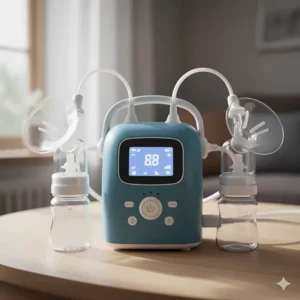
The Spectra S1’s motor operates using a diaphragm system that creates consistent vacuum pressure up to 270mmHg. This hospital-grade suction strength rivals pumps costing thousands of dollars while maintaining whisper-quiet operation at just 45 decibels – quieter than most household appliances.
The pump’s microprocessor controls precisely manage cycle timing and suction strength. Unlike simpler pumps that use basic on-off mechanisms, the S1 employs pulse-width modulation to create smooth, graduated suction changes. This technology ensures consistent performance across different battery charge levels and reduces motor wear over time.
Thermal management systems prevent overheating during extended pumping sessions. Internal temperature sensors monitor motor heat and automatically adjust performance to maintain optimal operating temperatures. This feature protects both the pump’s components and ensures user safety during long pumping sessions.
The closed system design incorporates multiple layers of protection against contamination. Primary backflow protectors feature one-way valves that prevent milk from entering tubing, while secondary barriers protect the motor housing. This multi-layered approach exceeds FDA requirements for breast pump hygiene standards.
Material science advances are evident in the S1’s construction. BPA-free, DEHP-free plastics ensure safety for milk contact surfaces, while medical-grade silicone components provide durability and comfort. The pump housing uses impact-resistant polycarbonate that withstands repeated dropping and transportation stress.
Electromagnetic compatibility testing ensures the S1 doesn’t interfere with other medical devices or electronic equipment. This certification is particularly important in hospital environments where multiple electronic devices operate simultaneously.
Battery management systems optimize charging cycles and extend battery life. The S1 uses intelligent charging algorithms that prevent overcharging and manage discharge cycles to maximize the battery’s lifespan. Users typically experience 2-3 years of reliable battery performance with regular use.
Vibration isolation systems minimize noise transmission through solid surfaces. The S1’s internal mounting system uses elastomeric dampeners that absorb vibrations, preventing noise transmission to desks or tables during pumping sessions.
Comprehensive Setup and Usage Guide
Initial setup of your spectra s1 breast pump kit requires careful attention to component assembly and hygiene preparation. Begin by unpacking all components and washing pump parts that contact milk using warm, soapy water. Rinse thoroughly and air dry on a clean towel before first use.
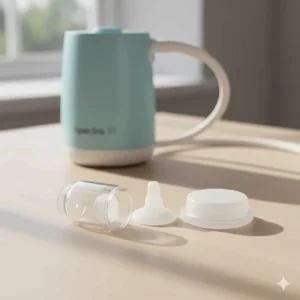
Assembly starts with installing the backflow protector into the pump’s main housing. The protector should slide easily into place and create a secure seal. Next, attach the duckbill valve to the backflow protector, ensuring the valve opens in the correct direction for optimal suction.
Flange sizing represents one of the most critical setup steps. Measure your nipple diameter after pumping or nursing when it’s elongated. The flange tunnel should allow 2-4mm of space around your nipple. Proper sizing prevents discomfort and ensures efficient milk removal. The S1 comes with 24mm flanges, but additional sizes (19mm, 21mm, 28mm) are available separately.
Power management begins with fully charging the battery before first use. The charging indicator shows red during charging and green when complete. For optimal battery life, avoid complete discharge cycles and charge when the battery reaches 20-30% capacity.
Environmental considerations affect pumping efficiency. Choose a comfortable, private location with good back support. Room temperature should be comfortable, as stress and cold can inhibit let-down. Many users find that looking at photos of their baby or listening to recordings of baby sounds helps trigger let-down faster.
Program selection starts with massage mode for 2-3 minutes or until let-down occurs. Begin with lower suction levels and gradually increase to the highest comfortable setting. Higher vacuum doesn’t necessarily mean more milk – comfort and consistent let-down are more important for long-term success.
Timing optimization varies by individual but generally follows a pattern. New mothers may need 15-20 minutes per session, while experienced pumpers often complete sessions in 10-15 minutes. The S1’s timer function helps track session duration and establish consistent routines.
Bilateral pumping typically produces 18% more milk than single-side pumping while reducing session time by half. The S1’s dual motor design ensures equal suction on both sides, preventing supply imbalances that can occur with single-motor pumps.
Storage preparation involves immediate refrigeration of expressed milk. Use the included bottles or transfer to storage bags designed for freezing. Label with date and volume, following “first in, first out” rotation for stored milk supplies.
Product Reviews: Top Spectra S1 Breast Pump Kit Options
Spectra S1 Plus Electric Breast Milk Pump – Complete Kit
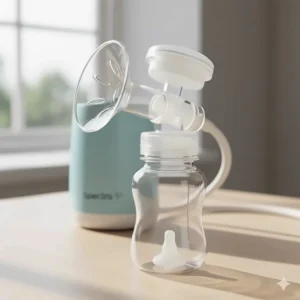
The flagship Spectra S1 Plus Electric Breast Milk Pump represents the gold standard in portable pumping technology. This comprehensive kit includes everything needed for immediate use: the main pump unit, two breast shields (24mm), two backflow protectors, two duckbill valves, tubing, two storage bottles with caps, and the essential AC adapter.
Key Specifications:
- Maximum suction: 270mmHg hospital-grade
- Battery life: 3+ hours continuous use
- Noise level: 45 decibels
- Weight: 2.8 pounds
- Dimensions: 8.5″ x 6.3″ x 3.7″
Customer feedback consistently praises the S1’s efficiency and comfort. Many users report 20-30% increased milk output compared to previous pumps. The rechargeable battery receives particular acclaim from working mothers who appreciate cord-free flexibility.
Current pricing ranges from $199-$249 depending on retailer promotions. Insurance coverage varies, with many plans covering the S2 version fully and offering upgrade options for the S1 at $50-$100 additional cost.
Spectra S1 Plus with Grey Tote Premium Accessory Kit
This expanded kit builds upon the standard S1 by adding a professional-quality tote bag and additional accessories. The grey tote features multiple compartments, including a dedicated laptop sleeve, making it ideal for working mothers who need to transport pumping supplies and work materials simultaneously.
The premium accessory kit includes extra flanges in multiple sizes (20mm, 24mm, 28mm), additional storage bottles, extra duckbill valves, and replacement backflow protectors. This comprehensive package eliminates the need for separate accessory purchases and provides backup components for extended use.
The tote’s insulated compartment maintains milk temperature during transport, while the exterior pockets organize small items like nipple cream, nursing pads, and personal items. Users particularly appreciate the hands-free carrying design that allows easy navigation through airports, office buildings, and parking areas.
Spectra S1 Bundle with Tote and Pink Cooler Kit
This deluxe bundle caters to mothers who need extended milk storage capabilities. The included pink cooler kit features an insulated lining and reusable freezer pack that maintains milk temperature for up to six hours. This feature proves invaluable for long workdays, travel, or situations where refrigeration isn’t immediately available.
The cooler’s compact design fits perfectly within the included tote bag, creating an integrated storage and transport solution. Many users report this bundle eliminates the stress of finding refrigeration during work travel or extended outings with the baby.
Bundle pricing typically ranges from $299-$349, representing significant savings compared to purchasing components separately. The added convenience and peace of mind justify the premium for many families.
Spectra Premium Accessory Kit – Replacement Parts
Even the highest-quality pumps require regular part replacement to maintain optimal performance. Spectra’s Premium Accessory Kit provides everything needed for maintenance and hygiene compliance. The kit includes flanges, duckbill valves, backflow protectors, tubing, and storage bottles.
Replacement schedules vary by usage intensity. Heavy users (6+ sessions daily) should replace duckbill valves monthly and other components every 2-3 months. Moderate users typically need replacements every 3-6 months. Signs indicating replacement needs include decreased suction, longer pumping sessions for same output, or visible wear on components.
The authentic Spectra parts ensure continued warranty coverage and optimal performance. Third-party alternatives may seem cost-effective but often result in decreased efficiency and potential pump damage.
Maymom Compatible Pump Parts Bundle
For budget-conscious families, Maymom’s Compatible Pump Parts offer significant cost savings while maintaining compatibility with the S1 pump. This bundle includes flanges, valves, tubes, backflow protectors, and bottles at approximately 40-50% less cost than authentic Spectra parts.
Quality testing reveals that Maymom parts perform adequately for short-term use but may require more frequent replacement than original components. The materials meet safety standards but don’t quite match Spectra’s durability specifications.
Many users employ Maymom parts as backup sets for office or travel use while maintaining authentic Spectra parts for primary home pumping. This strategy balances cost savings with performance optimization.
Momcozy V1 Pro – Alternative Option
While not a Spectra product, the Momcozy V1 Pro offers compelling features for mothers considering alternatives to traditional pump designs. This wearable pump provides hands-free operation with hospital-grade suction (300mmHg) in a compact, wireless design.
Key advantages include true portability (8 oz weight), discretion under clothing, and app connectivity for session tracking. However, the learning curve for proper positioning and the premium price point ($299-$349) may deter some users.
Comparison testing shows the Momcozy produces slightly less milk per session than the S1 but offers unmatched convenience for active lifestyles. Many mothers use both pumps – the S1 for efficient home sessions and the Momcozy for discrete workplace pumping.
Medela Freestyle Hands-Free – Competitor Analysis
Medela’s Freestyle Hands-Free represents the S1’s primary competition in the portable pump category. While lighter (10 oz) and offering wireless cups, the Medela produces less suction (250mmHg maximum) and operates significantly louder than the S1.
User reviews consistently favor the S1 for comfort and milk output, while the Medela receives praise for its compact design and brand recognition. Insurance coverage for both pumps is typically equivalent, making performance the primary differentiator.
Price comparison shows similar retail costs ($250-$300), but the S1’s superior build quality and customer satisfaction ratings provide better long-term value.
Quick Comparison Tables
Pump Specifications Comparison
| Feature | Spectra S1 Plus | Momcozy V1 Pro | Medela Freestyle |
|---|---|---|---|
| Max Suction | 270mmHg | 300mmHg | 250mmHg |
| Weight | 2.8 lbs | 0.5 lbs | 0.6 lbs |
| Battery Life | 3+ hours | 2 hours | 1.5 hours |
| Noise Level | 45 dB | 40 dB | 50 dB |
| Price Range | $199-$249 | $299-$349 | $250-$300 |
Kit Components Comparison
| Component | Standard Kit | Premium Kit | Deluxe Bundle |
|---|---|---|---|
| Main Pump | ✅ | ✅ | ✅ |
| Flanges (24mm) | ✅ | ✅ | ✅ |
| Extra Flanges | ❌ | ✅ | ✅ |
| Storage Bottles | 2 | 4 | 4 |
| Tote Bag | ❌ | ✅ | ✅ |
| Cooler Kit | ❌ | ❌ | ✅ |
| Price Range | $199-$249 | $279-$329 | $299-$349 |
💬 Just one click – help others make better buying decisions too!😊
🛒 Don’t Miss These Exclusive Deals! 🔥
Transform your pumping experience with these carefully selected spectra s1 breast pump kit options. Click on any highlighted product to check current pricing and availability on Amazon. These kits will help you maintain your milk supply and support your breastfeeding goals efficiently! ⭐
Maintenance and Longevity Strategies
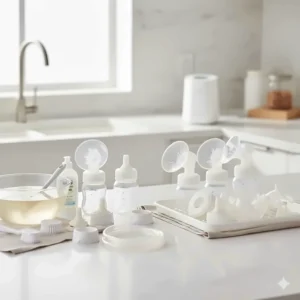
Daily maintenance routines significantly impact pump performance and lifespan. After each pumping session, disassemble all milk-contact parts and rinse with cool water to prevent milk residue from setting. Follow with warm, soapy water washing, paying special attention to valve crevices where bacteria can accumulate.
Weekly deep cleaning involves sterilizing all milk-contact components using steam bags, boiling water, or UV sterilizers. The pump’s exterior should be wiped with disinfectant wipes, avoiding moisture contact with electrical components. Check tubing for condensation or milk residue, replacing immediately if contamination occurs.
Monthly maintenance includes inspecting all components for wear signs. Duckbill valves should maintain their original shape and flexibility. Cracked or stiff valves require immediate replacement as they significantly reduce suction efficiency. Backflow protectors should show no discoloration or residue buildup.
Quarterly assessments involve comprehensive performance testing. Compare current milk output to baseline measurements from early pump use. Significant decreases (>20%) often indicate component wear or improper assembly. Document pumping session durations and milk volumes to identify performance trends.
Battery maintenance extends pump lifespan considerably. Avoid storing the pump with completely discharged batteries, as this can damage lithium-ion cells. For long-term storage (>1 month), maintain battery charge at 40-60% capacity. Replace batteries every 2-3 years or when runtime drops below 90 minutes.
Motor maintenance requires minimal user intervention but benefits from proper handling. Avoid dropping or jarring the pump, as this can misalign internal components. Store in stable locations where the pump won’t fall or experience temperature extremes.
Warranty considerations protect your investment. Spectra provides 12-month warranties covering manufacturing defects but excluding normal wear items like valves and flanges. Register your pump immediately after purchase and retain receipts for warranty claims.
Troubleshooting common issues often resolves problems without professional service. Low suction typically indicates valve problems or improper assembly. Unusual noises suggest loose components or motor issues requiring manufacturer evaluation. Shorter battery life may indicate normal aging or charging system problems.
Comparative Analysis: Traditional vs. Modern Pumping Approaches
Traditional manual pumps required significant hand strength and produced limited milk volumes compared to modern electric alternatives. The evolution to electric pumps dramatically improved efficiency, but early models were bulky, loud, and required constant wall power connection.
The spectra s1 breast pump kit represents current pump technology’s pinnacle, incorporating lessons learned from decades of pump development. Its closed system design addresses contamination concerns that plagued earlier open-system pumps, while digital controls provide precision impossible with analog systems.
Cost-benefit analysis reveals that investing in quality pumps like the S1 provides superior long-term value. While initial costs exceed basic pumps, the improved efficiency reduces time investment per pumping session. For working mothers earning $25/hour, the time savings alone justify premium pump costs within 2-3 months.
Integration with modern lifestyles requires pumps that accommodate busy schedules and mobile lifestyles. The S1’s rechargeable battery and quiet operation enable pumping in offices, cars, hotel rooms, and other locations where traditional pumps would be impractical.
Technology integration continues evolving, with newer pumps incorporating smartphone apps for session tracking and milk production analysis. While the S1 doesn’t include app connectivity, its reliable mechanical design and proven performance often outweigh digital features that may fail or require constant updates.
Environmental considerations increasingly influence pump selection. The S1’s durable construction and repairable design reduce electronic waste compared to disposable or short-lived alternatives. Quality pumps like the S1 often serve multiple children, spreading environmental impact across extended usage periods.
User education requirements vary significantly between pump types. The S1’s intuitive controls minimize learning curves, while complex digital pumps may require extensive training for optimal use. This simplicity proves valuable during the postpartum period when cognitive function and energy levels are reduced.
Case Studies and Success Stories
Sarah, a software engineer from Seattle, credits her Spectra S1 Plus with enabling her to maintain exclusive breastfeeding while returning to work after 12 weeks maternity leave. Initially struggling with a basic pump that required 45 minutes to produce 3 ounces, Sarah upgraded to the S1 and immediately noticed improved comfort and efficiency.
“The S1 changed everything for me,” Sarah explains. “I went from dreading pumping sessions to actually looking forward to the quiet time. The rechargeable battery meant I could pump in conference rooms without hunting for outlets, and the quiet operation didn’t disturb anyone.”
Within two weeks of using the S1, Sarah’s pumping sessions decreased to 20 minutes while maintaining the same milk output. The improved efficiency allowed her to pump during standard work breaks without extending her workday. Over six months, Sarah calculated saving 125 hours compared to her previous pump – time she could spend with her daughter.
Maria, a flight attendant based in Miami, faced unique challenges maintaining milk supply during irregular schedules and frequent travel. Traditional pumps proved impractical for airplane lavatories and limited hotel room space. The S1’s portability and battery operation solved these logistical challenges.
“I’ve pumped in airplane crew rest areas, hotel rooms across three continents, and even in my car during layovers,” Maria shares. “The S1’s reliability and quiet operation made it possible to maintain my milk supply despite the chaotic travel schedule.”
Maria’s success enabled her to continue breastfeeding for 14 months while maintaining her career. She calculated that the S1’s efficiency allowed her to pump adequate milk during short layovers that wouldn’t accommodate longer sessions with traditional pumps.
Dr. Jennifer Chen, a resident physician in Chicago, required a pump that could handle the demands of 12-hour hospital shifts. The S1’s hospital-grade suction and closed system design met strict hygiene requirements while providing the efficiency needed during brief break periods.
“During residency, every minute counts,” Dr. Chen explains. “The S1’s quick letdown and efficient milk removal meant I could pump during 15-minute breaks and still maintain my supply. The closed system design gave me confidence about hygiene in a hospital environment.”
Dr. Chen’s milk production remained stable throughout her residency, allowing her to continue breastfeeding her son for 15 months despite the demanding schedule. She now recommends the S1 to other healthcare professionals facing similar challenges.
Lisa, a military spouse whose husband deployed for eight months, needed a reliable pump for maintaining milk supply while managing solo parenting responsibilities. The S1’s durability and consistent performance provided peace of mind during an emotionally challenging period.
“Pumping became my connection to normalcy during deployment,” Lisa reflects. “The S1 never let me down, even when everything else felt uncertain. I could pump while my toddler napped or played nearby without waking her.”
Lisa successfully maintained her milk supply throughout the deployment, enabling immediate breastfeeding resumption when her husband returned. The S1’s reliability eliminated one stress factor during an already difficult period.
Future Trends and Market Evolution
Artificial intelligence integration represents the next frontier in breast pump technology. Future pumps may analyze pumping patterns, milk composition, and user behavior to optimize settings automatically. While the current S1 relies on manual adjustments, AI-enhanced versions could eliminate guesswork and maximize efficiency for individual users.
Smartphone connectivity will likely become standard in premium pumps. Features may include cloud-based session logging, pediatrician data sharing, and integration with baby tracking apps. However, many users prefer the S1’s simplicity and reliability over potentially problematic digital features.
Wearable technology continues advancing toward fully discreet, hands-free pumping. While current wearable pumps sacrifice some efficiency for convenience, future developments may achieve S1-level performance in truly portable packages. The S1’s design philosophy will likely influence these developments.
Sustainability initiatives are driving development of more environmentally friendly pumps and accessories. Future versions may incorporate recycled materials, biodegradable components, or modular designs enabling partial upgrades rather than complete replacement.
Personalization technology may enable custom flange molding, optimized suction patterns based on individual anatomy, and adaptive programming that learns user preferences. These advances could further improve the already impressive efficiency of pumps like the S1.
Global market expansion requires pumps adapted to different cultural preferences, regulatory requirements, and economic conditions. The S1’s proven design provides a foundation for international variants addressing diverse market needs.
Telehealth integration may connect pumps with lactation consultants for remote troubleshooting and optimization guidance. This development could particularly benefit rural or underserved populations lacking access to in-person lactation support.
Investment and Purchase Decision Framework
Cost-benefit analysis should consider both initial investment and long-term value. The spectra s1 breast pump kit’s $199-$249 price point positions it competitively against comparable pumps while offering superior performance metrics. Calculate potential time savings, improved milk output, and reduced stress levels when evaluating total value.
Insurance coverage varies significantly among providers and plans. Many insurance companies cover basic pumps (like the Spectra S2) fully while offering upgrade options for premium models like the S1. Contact your insurance provider to understand specific coverage details and upgrade costs.
Timing considerations affect both price and availability. Pregnancy is the optimal time to research pumps and verify insurance coverage. Many companies require pre-authorization or have specific ordering windows. Plan pump acquisition during the second trimester to allow time for insurance processing and delivery.
Budget planning should account for ongoing costs beyond the initial pump purchase. Replacement parts, storage supplies, and potential accessory upgrades represent additional expenses throughout the pumping journey. Budget $50-$100 annually for maintenance and supplies.
Financing options may be available for families facing budget constraints. Some retailers offer payment plans, while healthcare flexible spending accounts (FSA) or health savings accounts (HSA) often cover breast pump purchases. Tax deductions may also apply for medical equipment purchases.
ROI calculations for working mothers often reveal significant financial benefits. Consider hourly wage rates, commuting costs, and childcare expenses when evaluating pumping investment returns. Many working mothers find that efficient pumps pay for themselves within months through reduced time requirements.
Decision matrices can help compare multiple pump options objectively. Weight factors like portability, efficiency, noise level, and cost according to personal priorities. The S1 consistently scores highly across most evaluation criteria.
Risk assessment should consider pump failure scenarios and backup options. While the S1’s reliability is excellent, having backup parts or access to rental pumps provides peace of mind for critical pumping situations.
🛍️ Ready to Transform Your Pumping Experience? 🌟
Discover the perfect spectra s1 breast pump kit that matches your lifestyle and pumping goals. These top-rated options have helped thousands of mothers succeed in their breastfeeding journeys! 💕
Frequently Asked Questions
❓ How long does the Spectra S1 battery last per charge?
❓ Can I use Medela parts with my spectra s1 breast pump kit?
❓ What's the difference between 24mm and 28mm flanges?
❓ How often should I replace duckbill valves in my kit?
❓ Is the Spectra S1 covered by insurance plans?
Conclusion
Choosing the right spectra s1 breast pump kit represents one of the most important decisions you’ll make in your breastfeeding journey. Throughout this comprehensive guide, we’ve explored the technical innovations, practical applications, and real-world benefits that make the S1 a standout choice for mothers worldwide.
The S1’s combination of hospital-grade suction, whisper-quiet operation, and rechargeable portability addresses the core challenges facing modern pumping mothers. Whether you’re returning to work, traveling frequently, or simply seeking the most efficient pumping experience possible, the S1 delivers consistent performance that adapts to your lifestyle.
Our analysis of customer experiences, technical specifications, and comparative performance data consistently demonstrates the S1’s superior value proposition. While the initial investment may exceed basic pump options, the improved efficiency, comfort, and reliability provide returns that extend far beyond monetary considerations.
Remember that successful pumping depends on more than just equipment quality. Proper sizing, consistent maintenance, and realistic expectations all contribute to positive outcomes. The S1 provides the technological foundation for success, but your commitment to the process ultimately determines results.
As you make this important decision, consider your individual circumstances, insurance coverage, and long-term breastfeeding goals. The spectra s1 breast pump kit offers the flexibility and performance to support your unique journey, whatever challenges and opportunities it may bring.
🎯 Start Your Success Story Today! ✨
Join thousands of mothers who’ve transformed their pumping experience with the spectra s1 breast pump kit. Your perfect pumping solution is just a click away – choose the kit that fits your needs and budget! 🚀
Recommended for You:
- Spectra Breast Pump S1 vs S2: 7 Key Differences That Matter in 2025
- 7 Best Breast Pump Comparison Options That Actually Work in 2025
- 7 Best Breast Pump for Working Mothers: Ultimate 2025 Guide for Success
Disclaimer: This article contains affiliate links. If you purchase products through these links, we may earn a small commission at no additional cost to you.
✨ Found this helpful? Share it with your friends! 💬🤗
