
In This Article
✨Was this helpful? Spread the word! 🚀
So, you’re wondering when to start sippy cup training with your little one? You’re not alone! Every parent faces this milestone, and honestly, it can feel a bit overwhelming with all the conflicting advice out there. I’ve been there myself, standing in the baby aisle, completely bewildered by the sheer number of options.

Here’s the good news: introducing a sippy cup doesn’t have to be complicated. Most babies are ready to begin experimenting with a sippy cup between 6 and 9 months of age, according to the American Academy of Pediatrics. This timeframe aligns perfectly with when babies typically start eating solid foods and develop better head and neck control. At around six months, your baby is developing the motor skills needed to grasp objects, bring them to their mouth, and sit upright with minimal support—all essential abilities for successful sippy cup use.
The when to start sippy cup with baby question really depends on your child’s individual development, not just a number on the calendar. Some little ones might show interest as early as 4 months, while others might need a bit more time. What age to start sippy cup isn’t one-size-fits-all, but there are clear developmental signs that indicate readiness. You’ll want to look for cues like your baby reaching for your drinking glass, showing curiosity about cups, or demonstrating solid control when sitting in their highchair.
Transitioning from breast or bottle to a sippy cup serves several important purposes beyond just teaching independence. It helps prevent prolonged bottle use, which can lead to dental issues and iron-deficiency anemia. Plus, learning when can a baby start using a sippy cup and actually mastering it sets the foundation for drinking from regular cups later on. Think of sippy cups as training wheels for grown-up drinking—temporary, helpful, but not meant to last forever.
In this comprehensive guide, I’ll walk you through everything you need to know about when to use sippy cup options, from understanding the perfect timing to choosing the best products for your baby’s specific needs. We’ll explore the top 7 sippy cups available in 2025, backed by real parent reviews and expert recommendations. Whether you’re looking for a spill-proof option for daycare or a transition cup that closely mimics bottle-feeding, I’ve got you covered with detailed insights, practical tips, and honest product comparisons that’ll make this milestone easier for both of you.
Quick Comparison Table: Top 7 Sippy Cups at a Glance
| Product | Age Range | Capacity | Key Feature | Price Range | Rating |
|---|---|---|---|---|---|
| Munchkin Miracle 360 Trainer Cup | 6m+ | 7 oz | 360° spoutless design | $8-12 | 4.6/5 ⭐ |
| NUK Learner Cup | 6m+ | 5-10 oz | Soft silicone spout | $7-15 | 4.7/5 ⭐ |
| Dr. Brown’s Baby’s First Straw Cup | 6m+ | 9 oz | Weighted straw | $12-18 | 4.5/5 ⭐ |
| Munchkin Miracle 360 Stainless Steel | 12m+ | 10 oz | Insulated steel | $14-20 | 4.5/5 ⭐ |
| Dr. Brown’s Insulated Sippy Cup | 12m+ | 10 oz | Double-wall insulation | $15-22 | 4.6/5 ⭐ |
| Tommee Tippee Insulated Sipper | 12m+ | 9 oz | Hard spout design | $10-16 | 4.4/5 ⭐ |
| Pura Kiki Vacuum Insulated Cup | 18m+ | 9 oz | 100% plastic-free | $18-28 | 4.7/5 ⭐ |
💬 Just one click – help others make better buying decisions too!😊
✨ Ready to Find Your Perfect Match? 🎯
Looking for the ideal sippy cup for your little one? Click on any product name below to check current prices, read detailed customer reviews, and grab exclusive deals on Amazon. These carefully selected options have helped thousands of parents make the transition smooth and mess-free!
Top 7 Sippy Cups for 2025: Expert Analysis 🏆
1. Munchkin Miracle 360 Trainer Cup (7 oz)
The Munchkin Miracle 360 Trainer Cup has become a household name for good reason—it’s basically the iPhone of sippy cups. With over 37,000 five-star Amazon reviews, this spoutless wonder is Amazon’s #1 selling sippy cup.
Key Specifications:
- Capacity: 7 oz with handles
- Age: 6 months and up
- Material: BPA-free plastic
- Design: 360-degree drinking edge
Price Range: $8.99-$11.99 (2-pack)
The genius behind this cup lies in its spoutless design. Your baby can drink from any edge around the rim, just like a regular cup, which supports normal muscle development in their mouth. Pediatric dentists love this feature because it doesn’t encourage the prolonged sucking motion that traditional spouts promote. The valve automatically seals when your baby stops drinking, creating a leak-resistant (though not 100% leak-proof) seal.
Customer Feedback: Parents rave about how it “truly hasn’t leaked when held upside down for minutes” and appreciate that it grows with their child—some 4-year-olds still happily use it. However, some mention there’s a learning curve; young babies used to bottles might not immediately understand how to get liquid out.
Pros:
✅ Encourages proper oral development
✅ Easy to clean with minimal parts
✅ Dishwasher safe and durable
Cons:
❌ Some babies take time to figure it out
❌ Can leak slightly if dropped from height

2. NUK Learner Cup (5-10 oz Options)
The NUK Learner Cup is a pediatrician favorite for babies just starting their sippy cup journey. This cup earned a Parenting Award for its thoughtful design that bridges the gap between bottle and independent drinking.
Key Specifications:
- Capacity: 5 oz or 10 oz options
- Age: 6 months+ (5oz), 8 months+ (10oz)
- Material: BPA-free plastic with silicone spout
- Features: Air vent, removable handles
Price Range: $7.99-$14.99 (2-pack)
What makes the NUK Learner Cup special is its ultra-soft silicone spout that’s gentle on emerging teeth and tender gums. The spout design mimics the familiar feel of bottle nipples, making it less intimidating for babies transitioning from breastfeeding or bottle-feeding. The built-in air vent is a game-changer—it reduces the amount of air babies swallow, potentially decreasing gas and fussiness during feeding.
Customer Feedback: Daycare providers frequently recommend this cup because it’s “leak proof and super easy to clean with no weird tubes inside.” Parents appreciate the removable handles that can come off as motor skills improve. One satisfied customer shared, “My son just turned one and this cup made transitioning off bottles seamless.”
Pros:
✅ Soft spout perfect for teething babies
✅ Air vent reduces gas
✅ Multiple capacity options
Cons:
❌ Spout may collapse with aggressive sucking
❌ Handles can be tricky to reattach
3. Dr. Brown’s Baby’s First Straw Cup (9 oz)
If you want to skip traditional sippy spouts altogether, Dr. Brown’s Baby’s First Straw Cup offers an excellent alternative. Pediatric speech therapists often recommend straw cups because they promote different oral motor skills than spout cups.
Key Specifications:
- Capacity: 9 oz (270 mL)
- Age: 6 months and up
- Material: BPA-free plastic
- Special Feature: Weighted silicone straw
Price Range: $12.99-$17.99 (2-pack)
The weighted straw is this cup’s superpower. It moves with the liquid inside, allowing your baby to drink from any angle—perfect for those inevitable moments when your little one tips the cup upside down. The handles lock in place for easy gripping and are removable as skills develop. The sliding lid keeps the straw clean when not in use, making it genuinely travel-friendly.
Customer Feedback: One parent noted, “My son learned to use this within a day—the weighted straw makes it so intuitive.” However, some reviewers mention it requires proper assembly to prevent leaking, and the multiple parts can be slightly more challenging to clean than simpler designs.
Pros:
✅ Weighted straw allows any-angle drinking
✅ Promotes healthy oral development
✅ Grows with baby (removable handles)
Cons:
❌ More parts to clean
❌ May leak if not assembled correctly
4. Munchkin Miracle 360 Stainless Steel Sippy Cup (10 oz)
For parents concerned about plastic exposure, the Munchkin Miracle 360 Stainless Steel version takes the beloved spoutless design and upgrades it with premium materials. This is the eco-conscious parent’s dream cup.
Key Specifications:
- Capacity: 10 oz
- Age: 12 months and up
- Material: Vacuum-insulated stainless steel
- Feature: Double-wall construction
Price Range: $14.99-$19.99 (single cup)
The insulated stainless steel body keeps drinks cooler for longer—great for hot summer days at the park or extended outings. Like its plastic counterpart, it features the 360-degree drinking edge that helps toddlers develop proper sipping skills. The cup rates high in eco-health categories since it completely avoids plastic and potential chemical concerns.
Customer Feedback: Parents love the temperature retention: “Keeps water cold for hours even in the diaper bag.” The main complaints center around the slightly higher price point and weight—it’s heavier than plastic versions, which can be challenging for younger babies just developing grip strength.
Pros:
✅ 100% plastic-free construction
✅ Excellent temperature retention
✅ Dishwasher safe and long-lasting
Cons:
❌ Heavier than plastic alternatives
❌ Higher price point
5. Dr. Brown’s Milestones Insulated Sippy Cup (10 oz)
The Dr. Brown’s Milestones Insulated Sippy Cup combines the benefits of straw drinking with superior temperature control in a lightweight package that’s perfect for toddlers on the move.
Key Specifications:
- Capacity: 10 oz (300 mL)
- Age: 12 months and up
- Material: BPA-free double-walled plastic
- Feature: Soft silicone straw with sliding lid
Price Range: $15.99-$21.99 (2-pack)
This cup strikes an excellent balance between functionality and convenience. The double-walled construction keeps drinks fresh without the weight penalty of stainless steel. The soft silicone straw teaches proper sipping skills while the sliding lid keeps everything hygienic—no more gross straw tips collecting lint in your diaper bag!
Customer Feedback: Reviews highlight its durability: “Survives being thrown from the high chair multiple times daily.” Parents also appreciate the simple assembly and disassembly for cleaning. The lightweight design with lockable handles makes it ideal for little hands still developing coordination.
Pros:
✅ Lightweight insulated design
✅ Sliding lid keeps straw clean
✅ Easy to grip with lockable handles
Cons:
❌ Requires hand washing for best results
❌ Straw can be difficult to clean thoroughly
6. Tommee Tippee Insulated Sipper Tumbler (9 oz)
The Tommee Tippee Insulated Sipper Tumbler takes a different approach with its hard spout design covered in softer material, offering a middle ground between soft and hard spouts.
Key Specifications:
- Capacity: 9 oz
- Age: 12 months and up
- Material: BPA-free plastic with coated spout
- Feature: Two-part valve system
Price Range: $10.99-$15.99 (2-pack)
What sets this cup apart is its excellent leak-proof performance. One parent testing different cups noted, “My little one can shake this forever and nothing comes out.” The two-part valve system is remarkably effective at preventing spills, though it does require careful cleaning to prevent milk residue buildup.
Customer Feedback: Parents consistently praise the spill-proof design and durability. The lightweight feel makes it easy for toddlers to handle independently. However, the lack of a protective cover for the spout means you’ll want to keep it in a designated pocket in your diaper bag to maintain cleanliness.
Pros:
✅ Excellent leak-proof valve
✅ Lightweight and durable
✅ Easy for toddlers to use independently
Cons:
❌ No protective spout cover
❌ Hard spout may cause injury if baby falls while drinking
7. Pura Kiki Vacuum Insulated Toddler Cup (9 oz)
For parents going all-in on non-toxic, eco-friendly products, the Pura Kiki Vacuum Insulated Toddler Cup represents the premium end of sippy cup options with its 100% plastic-free construction.
Key Specifications:
- Capacity: 9 oz
- Age: 18 months and up (recommended)
- Material: Stainless steel with medical-grade silicone
- Feature: Complete plastic-free system
Price Range: $18.99-$27.99 (with sleeve)
This cup eliminates all plastic concerns with its stainless steel body, silicone sleeve, and silicone spout. The vacuum insulation keeps drinks cold for hours, making it ideal for long outings. The medical-grade silicone sleeve provides grip and protection against drops. It’s an investment piece that grows with your child—you can swap out the sippy spout for straw or sport tops as they age.
Customer Feedback: Parents who prioritize non-toxic products swear by this cup despite the higher price. “Worth every penny for peace of mind,” one reviewer notes. The main drawbacks include the tight-fitting silicone sleeve (difficult to remove for cleaning) and the premium price point.
Pros:
✅ 100% plastic-free construction
✅ Versatile with interchangeable tops
✅ Excellent insulation and durability
Cons:
❌ Premium pricing
❌ Silicone sleeve difficult to clean
🎁 Don’t Wait – Give Your Baby the Best Start! 💝
These top-rated sippy cups are helping thousands of parents make the bottle-to-cup transition smoother every day. Click any product above to check today’s prices and customer reviews. Many come with 2-pack options perfect for daycare and home use! 🍼✨
Understanding When Can a Baby Start Using a Sippy Cup: Developmental Readiness Signs 👶
Figuring out when can a baby start using a sippy cup isn’t just about hitting a specific age milestone—it’s about watching for key developmental cues that signal your little one is physically and cognitively ready for this new skill. While most experts suggest the 6-9 month window, your baby might be ready earlier or need a bit more time, and that’s completely normal!
Physical Development Indicators
The most obvious sign your baby might be ready for a sippy cup is their ability to sit upright independently or with minimal support. This usually develops around 6 months but can vary. Sitting stability is crucial because it allows your baby to control their head position for safe swallowing and reduces choking risk. Additionally, your baby should demonstrate good head and neck control—they should be able to turn their head easily and hold it steady without bobbing.
Hand-eye coordination is another critical factor. Watch for your baby successfully bringing objects to their mouth, grasping toys with intent, and showing interest in self-feeding. These motor skills translate directly to sippy cup success. If your baby can pick up finger foods and get them (mostly) into their mouth, they’re likely ready to handle a cup with handles.
Cognitive and Behavioral Readiness
Beyond physical abilities, certain behaviors suggest cognitive readiness. Does your baby watch intently when you drink from a glass? Do they reach for your cup or try to grab it? This observational learning and imitation indicates they understand cups are for drinking. Babies who show curiosity about mealtime routines and actively participate (even messily) are demonstrating the engagement needed for sippy cup success.
Another key indicator is whether your baby has started eating solid foods. The American Academy of Pediatrics recommends introducing sippy cups around the same time solids begin, typically at 6 months. This creates a natural connection between eating and drinking from something other than a bottle or breast. However, give your baby a few weeks to adjust to solid foods before adding the sippy cup variable—too many changes at once can be overwhelming.
Age-Specific Guidelines
4-6 Months: This is the earliest recommended window. At this stage, babies are developing the ability to grasp objects and bring them to their mouth. Some babies might show interest in cups at 4 months, but don’t feel pressured to introduce one if yours doesn’t. Let them explore an empty sippy cup during supervised play to build familiarity without pressure.
6-9 Months: This represents the ideal introduction period for most babies. By 6 months, most babies have the motor skills and curiosity needed for sippy cup exploration. They’re eating solids, sitting in highchairs, and becoming more independent. This is when pediatricians typically recommend beginning the transition process.
9-12 Months: If you haven’t introduced a sippy cup yet, now is definitely the time. By 12 months, you should be actively working toward weaning from bottles to prevent prolonged bottle use issues. The AAP recommends babies be completely off bottles by 18 months, so starting the transition by their first birthday gives you a comfortable timeline.
When to Wait a Bit Longer
Sometimes external factors suggest waiting to introduce a sippy cup, even if your baby seems physically ready. Major changes like teething episodes, illness, moving to a new home, or adjusting to daycare can all impact your baby’s willingness to try new things. If your baby is going through a clingy or fussy phase, give them a week or two to settle before introducing the cup.
Similarly, if your baby is already experiencing multiple new experiences—like trying new foods, learning to crawl, or dealing with separation anxiety—consider spacing out the sippy cup introduction. Babies, like all of us, have limited capacity for change. Introducing one new skill at a time increases the likelihood of success and reduces frustration for everyone involved.
The Science Behind When to Start Sippy Cup with Baby: Expert Recommendations 🔬
Understanding when to start sippy cup with baby goes beyond anecdotal advice—there’s solid research and expert consensus backing the recommended timelines. Let’s explore what pediatricians, speech therapists, and developmental specialists actually say about sippy cup introduction.
AAP Guidelines and Medical Consensus
The American Academy of Pediatrics provides clear guidance on this topic. They recommend introducing cups (whether sippy, straw, or open) around 6 months of age when babies begin solids. More importantly, they strongly advise completing the bottle-to-cup transition by 12-18 months, with 18 months being the absolute maximum for continued bottle use.
Why the urgency? Prolonged bottle feeding beyond 18 months is associated with several health concerns. It increases the risk of dental cavities, particularly when babies fall asleep with bottles containing milk or juice. The sugars pool around teeth, creating an ideal environment for decay. Additionally, excessive milk consumption from bottles can lead to iron-deficiency anemia, as milk can interfere with iron absorption when consumed in large quantities.
Dr. Jason Sherman, a pediatrician at Cleveland Clinic, notes that “around 12 months, kids start becoming emotionally attached to their bottles.” This attachment makes weaning progressively harder, which is why starting the sippy cup introduction early—around 6 months—gives you and your baby plenty of low-pressure practice time before the bottle needs to disappear completely.
Developmental Psychology Perspective
From a developmental standpoint, what age to start sippy cup training aligns with babies’ natural drive for independence emerging around 6-9 months. This is when babies begin asserting autonomy through self-feeding attempts, refusing help, and wanting to do things “by myself.” Sippy cups capitalize on this developmental window, allowing babies to satisfy their independence urges while developing new skills.
Introducing cups during this prime learning period also supports cognitive development. Using a sippy cup requires problem-solving (how to tilt it, where to drink from), motor planning (coordinating hands and mouth), and cause-and-effect understanding (sucking makes liquid come out). These aren’t just feeding skills—they’re foundational cognitive capabilities that transfer to other learning areas.
Oral Motor Development and Speech Implications
Speech therapists have strong opinions about when to use sippy cup options and, more importantly, when to move past them. While traditional sippy cups with hard spouts serve as useful transitional tools, they shouldn’t become long-term solutions. Prolonged use of spout cups can affect tongue positioning and oral motor patterns, potentially impacting speech development.
Jocelyn M. Wood, a speech therapist specializing in oral motor development, recommends introducing open cups as early as 6 months and transitioning away from traditional sippy cups by 24 months. Straw cups are preferred over spout cups because they promote better lip closure, tongue elevation, and swallowing patterns that support speech development. This doesn’t mean you can’t use sippy cups—it means viewing them as temporary training wheels rather than permanent solutions.
Nutritional Considerations
From a nutritional perspective, when can a baby start using a sippy cup connects to their overall feeding development. At 6 months, babies still receive most nutrition from breast milk or formula, with solids serving as practice. Introducing small amounts of water in a sippy cup at this stage teaches drinking skills without displacing necessary nutrition.
By 12 months, the nutritional landscape shifts. Babies should be getting most calories from solid foods, with whole milk (or alternatives) and water as primary beverages. This transition makes the sippy cup introduction even more relevant—it’s no longer just about learning a skill but about establishing healthy drinking patterns that support proper nutrition.
Cultural and Individual Variations
It’s worth noting that sippy cup use isn’t universal across cultures. Many parts of the world skip sippy cups entirely, transitioning babies directly from breast or bottle to open cups or straw cups. This cultural variation demonstrates that there’s no single “right” way, and families should feel empowered to choose approaches that fit their values and circumstances.
The research consensus suggests introducing cups around 6 months, but the specific cup type and pace of transition can vary based on family preferences, baby temperament, and individual circumstances. What matters most is completing the bottle transition by 18 months and ensuring cup use supports healthy development rather than hindering it.
Step-by-Step Guide: How to Start the Sippy Cup Transition Successfully 📋
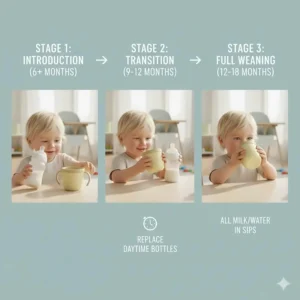
Now that you know when to introduce sippy cups, let’s talk about the “how.” Transitioning from bottle or breast to sippy cup doesn’t happen overnight, but with a systematic approach and realistic expectations, you can make it surprisingly smooth. Here’s your step-by-step roadmap.
Phase 1: Familiarization and Exploration (Weeks 1-2)
Start by introducing the sippy cup as a toy rather than a feeding tool. Hand your baby an empty (or near-empty) sippy cup during supervised playtime. Let them mouth it, bang it, drop it, and generally investigate it without any pressure to actually drink. This exploration phase is crucial—it removes the “newness” factor that can make some babies wary.
During meals, place the empty cup on their highchair tray alongside regular feeding items. Your baby will see it as part of the mealtime routine without feeling forced to use it. Some parents find success letting their baby watch older siblings or parents drink from cups, as babies are natural imitators. You might even demonstrate drinking from the sippy cup yourself (yes, you’ll look silly, but it works!).
Phase 2: Introduction of Liquid (Weeks 2-3)
Once your baby shows comfortable familiarity with the cup, add a small amount of liquid—start with something they already know and love. Breast milk or formula are ideal first choices because the familiar taste removes one variable. Start with just 1-2 ounces; this isn’t about nutrition yet, it’s about skill-building.
Choose a time when your baby is alert but not desperately hungry. Mid-morning or afternoon, between regular feedings, works well. A ravenous baby will feel frustrated by the learning curve, while an overtired baby won’t have the patience to try. Offer the sippy cup after they’ve had some food or part of their bottle—take the pressure off completely.
Demonstrate how the cup works. Tip it gently to your baby’s lips, or if it’s a straw cup, suck up some liquid to show them. Some babies “get it” immediately; others need several demonstrations over several days. Dr. Jacquelyn Crews, a pediatrician at Johns Hopkins, notes that patience is key: “All children are different and won’t be ready at the same time.”
Phase 3: Gradual Integration (Weeks 3-6)
Begin replacing one bottle feeding per day with a sippy cup. The midday feeding is often easiest to swap since it’s not associated with sleep routines. Continue offering the cup at this same time each day to establish a pattern. Consistency is your friend here—babies thrive on predictable routines.
Once your baby successfully drinks from the cup at one meal, gradually add sippy cup offerings at other times. You might replace another bottle feeding after a week or two, then another the following week. This gradual approach prevents overwhelming your baby while ensuring they don’t become dehydrated or undernourished if they initially refuse the cup.
During this phase, keep bottles completely out of sight during sippy cup times. If your baby sees their bottle, they’ll naturally prefer the familiar option. Make the sippy cup the only available choice at designated times (while still offering bottles at other feedings).
Phase 4: Expanding Use and Phasing Out Bottles (Weeks 6-12)
By now, your baby should be comfortable with the sippy cup at multiple meals. Begin offering it throughout the day, not just at feeding times. Water in a sippy cup can be available during play, outings, or just when your baby seems thirsty. This reinforces that cups are the normal way to drink.
Continue reducing bottle offerings until you’re down to just the bedtime bottle—this is typically the last bottle to go because it’s often part of the sleep routine. When you’re ready to eliminate it (ideally by 12-15 months), move the bottle feeding earlier in your bedtime routine so it’s not the last thing before sleep. You might offer milk in a sippy cup, then proceed with the rest of the routine (bath, books, lullabies).
Some babies protest losing their bedtime bottle. Consider gradually reducing the amount of milk in the bottle over several nights while offering more at dinner in a sippy cup. You can also try the “water in the bottle” approach—babies often lose interest in bedtime bottles when they only contain water.
Troubleshooting Common Challenges
Baby refuses the sippy cup: Try different cup styles—some babies prefer spouts, others prefer straws, and some take to 360-degree cups immediately. Temperature can also matter; some babies prefer cold milk in cups even if they liked it room temperature in bottles.
Sippy cup causes more mess: This is normal! Learning any new skill involves mistakes. Use a bib or smock during sippy cup practice, and remind yourself that the mess is temporary. Most babies achieve reasonable competency within 2-4 weeks of regular practice.
Baby throws or plays with the cup: Set clear boundaries. Offer the cup for drinking, and if your baby throws it, calmly remove it and say “Cups are for drinking, not throwing.” Wait a few minutes and offer it again. Consistency in these boundaries helps babies understand expectations.
Concerns about hydration or nutrition: Monitor wet diapers to ensure your baby is getting enough fluid. If you’re worried about milk intake during the transition, track how much they’re consuming throughout the day. You can always supplement with cheese, yogurt, or other dairy products if milk consumption temporarily drops.
Pro Tips from Veteran Parents
Involve your baby in choosing their cup if they’re old enough. Taking a toddler to the store and letting them pick their “big kid cup” can increase enthusiasm. Make drinking from the cup a positive experience with lots of praise and encouragement. Celebrate even tiny successes—if your baby just holds the cup correctly, that’s progress worth acknowledging!
Consider having multiple cups available—one for home, one for the diaper bag, one for grandma’s house. This ensures you’re never without one when you need it, and babies often benefit from having a familiar cup in different environments. However, stick with the same type/brand initially to maintain consistency.
Sippy Cup vs. Straw Cup vs. Open Cup: Making the Right Choice 🥤
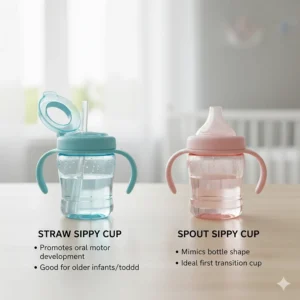
One of the most confusing aspects of when to use sippy cup options is deciding which type of cup to actually choose. The market offers traditional sippy cups with spouts, straw cups, 360-degree cups, and even open cups designed for babies. Each has distinct advantages and drawbacks, and the “best” choice depends on your priorities and your baby’s developmental stage.
Traditional Sippy Cups with Spouts
Traditional sippy cups feature a hard or soft spout that protrudes from the lid. These are the most familiar design and what most people picture when they hear “sippy cup.”
Best For: Babies transitioning from bottles (6-12 months) who need something familiar
Advantages:
✅ Spout mimics bottle nipples, easing transition
✅ Widely available in many designs
✅ Often very leak-proof
✅ Easy for babies to understand quickly
Disadvantages:
❌ Can affect oral development if used too long
❌ May impact speech patterns
❌ Spouts can be hard to clean thoroughly
❌ Some dentists advise against prolonged use
Soft-spouted versions, like the NUK Learner Cup, are gentler on emerging teeth and gums. Hard-spouted cups are more durable but carry slight injury risk if babies fall while drinking. If you choose a traditional sippy cup, plan to transition away from it by around 18-24 months to prevent potential developmental issues.
Straw Cups: The Developmental Favorite
Straw cups require babies to use different oral motor patterns than bottle-feeding, making them favorites among speech therapists and developmental specialists.
Best For: Babies 9 months and older, or as a first cup for babies showing strong motor skills
Advantages:
✅ Promotes healthy oral motor development
✅ Supports better tongue positioning for speech
✅ Encourages lip closure
✅ Allows drinking from any angle (weighted straws)
✅ More similar to adult drinking patterns
Disadvantages:
❌ Requires more skill initially
❌ Straws can be challenging to clean
❌ May leak if not assembled properly
❌ Some babies struggle with the sucking technique
Products like Dr. Brown’s Baby’s First Straw Cup make learning easier with weighted straws that follow the liquid. Many speech therapists suggest straw cups as a better first choice than traditional spouts, especially if you plan to skip sippy cups altogether.
360-Degree Spoutless Cups
These innovative cups, popularized by the Munchkin Miracle line, eliminate spouts entirely. Babies drink from any edge around the rim, and a valve automatically seals when they stop.
Best For: Babies 6 months+ who are ready for a cup-like experience without full open-cup mess
Advantages:
✅ Most closely mimics regular cup drinking
✅ Promotes natural oral development
✅ Dentist recommended
✅ Very few parts to clean
✅ Leak-resistant (though not 100% leak-proof)
✅ Grows with your child
Disadvantages:
❌ Learning curve for some babies
❌ Can leak when dropped from height
❌ May be frustrating for babies expecting bottle-like flow
❌ Requires sucking and tilting simultaneously
The Munchkin Miracle 360 Trainer Cup dominates this category with its proven track record. These cups represent an excellent middle ground—more developmentally appropriate than spouted cups but less messy than fully open cups.
Open Cups and Trainer Cups
Some experts advocate skipping transitional cups altogether and moving babies directly to small open cups (with lots of supervision and towels!).
Best For: Families prioritizing oral development, willing to handle initial mess
Advantages:
✅ Best for oral motor development
✅ No bad habits to unlearn later
✅ Simplest to clean (no valves or parts)
✅ Teaches adult drinking patterns immediately
✅ No concerns about prolonged use affecting development
Disadvantages:
❌ Messy, especially initially
❌ Requires constant supervision
❌ Not practical for on-the-go use
❌ Takes longer for babies to master
❌ Can lead to wasted breast milk/formula
Small open cups with wide bases (like those from ezpz or Munchkin) help minimize spills. Many families use open cups at home during meals while relying on sippy or straw cups for travel and daycare.
The Hybrid Approach: What Many Experts Recommend
Rather than choosing just one cup type, consider a progressive approach:
6-9 Months: Start with either a soft-spouted sippy cup (like NUK) or a straw cup with handles. Use these for learning while also practicing with small open cups during supervised meals.
9-15 Months: Transition to 360-degree cups or straw cups as primary drinking vessels. Continue open cup practice at meals.
15-24 Months: Phase out spouts completely. Use straw cups for on-the-go, open cups at meals and home.
24+ Months: Transition to regular cups and water bottles as needed for different situations.
This approach gives babies the support they need initially while progressively moving toward more developmentally appropriate options. It also means you can choose different cups for different scenarios—a spill-proof option for car rides, a straw cup for daycare, and an open cup for dinner at home.
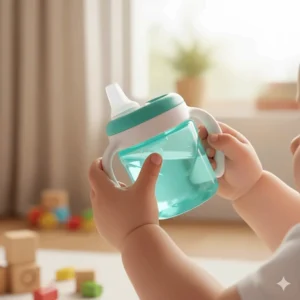
Benefits vs. Traditional Bottle Feeding: Why the Transition Matters 💡
| Aspect | Bottle Feeding (Extended) | Sippy Cup Use | Impact |
|---|---|---|---|
| Dental Health | Increased cavity risk | Reduced risk | Bottles pool liquid around teeth |
| Iron Absorption | May be compromised | Normal | Excessive milk reduces iron intake |
| Independence | Limited | Developing | Self-feeding builds confidence |
| Oral Development | Restricted patterns | Progressive | Prepares for speech and eating |
| Sleep Associations | Strong dependency | Reduced reliance | Easier bedtime transitions |
Understanding why we transition from bottles to sippy cups (and then to open cups) helps motivate you through the challenging moments. This isn’t just about parenting preferences—it’s about supporting your child’s health and development in multiple crucial areas.
Dental Health Protection
Perhaps the most significant reason pediatricians emphasize timely bottle weaning involves protecting your baby’s emerging teeth. Prolonged bottle use, particularly with milk or juice and especially at bedtime or naptime, creates ideal conditions for early childhood caries (cavities). The American Dental Association identifies prolonged bottle use as a major risk factor for “baby bottle tooth decay.”
Here’s what happens: when babies fall asleep with bottles, liquid pools in their mouth and around their teeth. The natural sugars in milk and formula create an acidic environment that erodes enamel. Babies who regularly sleep with bottles can develop severe decay requiring extensive dental treatment before age 3. Sippy cups used appropriately (not at sleep times, not carried around constantly) significantly reduce this risk.
The type of sippy cup matters too. Cups with spouts that position liquid near front teeth can still contribute to decay if used excessively. This is why dentists prefer 360-degree cups or straw cups—they deliver liquid to the back of the mouth, away from front teeth. The mouth naturally produces less saliva during sleep, reducing its protective cleaning effect, which is why no cup (sippy or otherwise) should go to bed with your child.
Nutritional Balance and Iron Status
Prolonged bottle use often correlates with excessive milk consumption, which can lead to iron-deficiency anemia in toddlers. How does this happen? When toddlers drink too much cow’s milk (more than 16-24 ounces daily), it can displace iron-rich foods from their diet and interfere with iron absorption in the intestines.
Bottles make it easy for toddlers to consume large quantities of milk throughout the day and night, often exceeding recommended amounts. Transitioning to sippy cups—which hold less liquid and aren’t typically given continuously—naturally limits milk intake to healthier levels. This encourages toddlers to eat more solid foods, including iron-rich options like meat, beans, and fortified cereals.
When can a baby start using a sippy cup and successfully limiting bottle use helps establish healthier nutritional patterns. Milk becomes a mealtime beverage rather than an all-day comfort item, opening space in your child’s diet for the variety of nutrients they need for optimal growth and development.
Promoting Independence and Self-Efficacy
From a developmental psychology perspective, learning to use a sippy cup represents one of babies’ first major autonomy achievements. Successfully managing their own drinking builds self-confidence and feelings of competence. These may seem like small accomplishments to adults, but they’re significant milestones in a child’s developing sense of self.
Mastering sippy cup use involves complex skill integration—hand-eye coordination, motor planning, spatial awareness, problem-solving, and cause-and-effect understanding. Each successful sip reinforces your baby’s belief that they can learn new skills through practice and effort. This growth mindset foundation serves them well far beyond just drinking.
Additionally, sippy cup independence frees parents from constant bottle prep and reduces feeding stress. A toddler who can get their own cup of water (from a designated low shelf or drawer) is taking responsibility for their own needs—a crucial step toward increasing independence in preschool years and beyond.
Supporting Speech and Language Development
Speech therapists consistently emphasize the connection between oral motor patterns and speech development. Prolonged use of bottles—and to a lesser extent, spouted sippy cups—can affect tongue positioning, lip strength, and swallowing patterns in ways that potentially impact speech sound production.
Bottles require a forward tongue position and immature swallowing pattern similar to infancy. As babies grow, their oral motor patterns should mature to support more complex movements needed for eating solid foods and producing speech sounds. Sticking with bottles beyond 18 months can delay this maturation.
Straw cups and open cups require different oral motor patterns—tongue retraction, strong lip closure, and mature swallowing—that better support speech development. The sucking, swallowing, and breathing coordination required for different cup types provides valuable practice for the precise oral motor control needed for clear speech.
Behavioral and Sleep Benefits
Bottles often become powerful emotional attachments, particularly when associated with sleep routines. Toddlers who depend on bottles for sleep can develop problematic patterns—waking frequently for bottle refills, refusing to sleep without bottles, or having difficulty with naptime at daycare where bottles aren’t available.
Transitioning to sippy cups (and importantly, separating drinking from sleep) helps prevent these dependencies. When milk or water in a sippy cup becomes part of the bedtime routine rather than the sleep association itself, toddlers develop healthier sleep habits. They learn to self-soothe without relying on sucking, making them more adaptable sleepers overall.
The behavioral shift from bottle to sippy cup also marks a psychological transition from “baby” to “big kid.” While we shouldn’t rush this, there’s value in progressive growth. Toddlers often feel proud using “big kid cups,” and this pride can motivate cooperation with other developmental transitions.
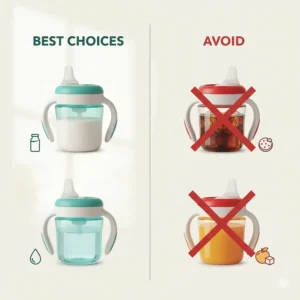
Common Mistakes to Avoid When Starting Sippy Cups ⚠️
Introducing Too Many Variables at Once
I’ve seen countless parents try to introduce solids, sippy cups, and new sleep schedules all in the same week, then wonder why their baby is extra fussy. Babies handle change better when new experiences come one at a time with space to adjust. If you’re introducing solids at 6 months, give it 2-3 weeks before adding the sippy cup element. Similarly, don’t introduce a sippy cup during major transitions like moving homes, starting daycare, or welcoming a new sibling.
Using Only One Cup Type
Some parents buy one specific sippy cup, then feel stuck when their baby rejects it. Remember, babies have preferences too! Having 2-3 different cup styles available lets you experiment to find what resonates with your child. One baby might love the Munchkin Miracle 360, while another takes immediately to the Dr. Brown’s straw cup. You won’t know until you try, and what works at 6 months might change by 9 months.
Putting Juice or Sugary Drinks in Sippy Cups
The American Academy of Pediatrics recommends limiting juice to 4 ounces per day maximum for toddlers and ideally zero for babies under 12 months. Sippy cups that babies carry around all day filled with juice create constant sugar exposure that damages teeth. Stick with water or milk in sippy cups, and if you do offer juice, do it during meals in limited quantities.
Letting Sippy Cups Replace Meals or Milk Feedings Too Early
At 6-9 months, breast milk or formula should still be your baby’s primary nutrition source. The sippy cup is for practice and small amounts of water—not for replacing feeding sessions yet. Some parents worry when their baby drinks less from the bottle after sippy cup introduction, but at this age, most nutrition should still come from breast or bottle feeding, with solids and sippy cups as supplements.
Not Cleaning Cups Thoroughly
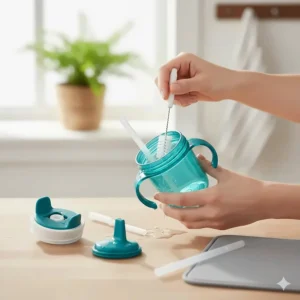
Sippy cups with valves, straws, and small parts can harbor bacteria and mold if not properly cleaned. Those little valve pieces in particular love to collect milk residue that becomes gross quickly. Disassemble every part daily for thorough washing. Many cups are dishwasher safe, but hand washing ensures you get into every crevice. Pay special attention to straws—invest in narrow cleaning brushes designed specifically for straw cups.
Forcing the Cup When Baby Isn’t Ready
If your baby consistently refuses the sippy cup despite your best efforts, they might simply not be ready. Pushing too hard can create negative associations that make future attempts even harder. If your baby is younger than 9 months and showing zero interest, take a break for a week or two before trying again. Developmental readiness varies, and some babies need more time than others.
Using Sippy Cups as Pacifiers
Sippy cups should be for drinking, not for constant carrying and sucking throughout the day. Babies who walk around with sippy cups all day experience constant sugar (even from milk) bathing their teeth, increasing cavity risk. They also tend to consume more liquid than needed, potentially filling up on milk at the expense of solid foods. Offer the cup at designated times—meals, snacks, and specific hydration breaks—then put it away.
Not Transitioning Away from Sippy Cups Eventually
Many parents successfully transition from bottle to sippy cup by 12 months, then keep using sippy cups for years. Remember, sippy cups are transitional tools, not permanent solutions. By 18-24 months, begin transitioning to open cups and regular water bottles. Extended sippy cup use (especially with spouts) can affect oral development and speech patterns similar to prolonged bottle use.
Price Range & Value Analysis: Budget to Premium Options 💰
| Price Range | Cup Examples | What You Get | Best For |
|---|---|---|---|
| Budget ($7-12) | NUK Learner Cup, Munchkin Miracle 360 | Basic functionality, plastic construction | Starting out, multiple cup needs |
| Mid-Range ($12-18) | Dr. Brown’s Straw Cup, Tommee Tippee Insulated | Enhanced features, better insulation | Daily use, daycare |
| Premium ($18-28) | Pura Kiki, Munchkin Stainless Steel | Eco-materials, superior durability | Long-term investment, non-toxic priority |
Understanding sippy cup pricing helps you make informed decisions that fit your budget while meeting your baby’s needs. The good news? You absolutely don’t need to spend a fortune to get quality cups that work beautifully.
Budget-Friendly Options That Deliver ($7-12)
The budget category includes surprisingly excellent options. The NUK Learner Cup typically retails for $7.99-$12.99 for a 2-pack, making it less than $6 per cup. For this price, you get BPA-free construction, a soft silicone spout, removable handles, and a design that thousands of parents and daycares trust. These cups are dishwasher safe, durable enough to survive daily use for 6+ months, and simple to clean.
Similarly, the plastic version of the Munchkin Miracle 360 falls in this range at $8.99-$11.99 for two cups. Considering this cup can serve your child from 6 months through preschool years (many 3-4 year olds still happily use them), the per-use cost is incredibly low. The dentist-recommended design means you’re not sacrificing developmental benefits for affordability.
Budget options are ideal if you’re buying multiple cups for different locations (home, grandparents, daycare), if you’re uncertain which style your baby will prefer, or if you simply need to be cost-conscious. There’s zero shame in budget options—some of the best-performing cups fall in this category. The main trade-offs versus premium options involve materials (plastic vs. steel) and temperature retention, not basic functionality.
Mid-Range Investment Cups ($12-18)
This sweet spot offers enhanced features without breaking the bank. Dr. Brown’s Baby’s First Straw Cup (2-pack for $12.99-$17.99) provides weighted straw technology, developmental benefits, and features that make it worth the slightly higher cost. The investment pays off in the cup’s versatility—removable handles mean it grows with your baby from 6 months well into toddlerhood.
Dr. Brown’s Insulated Sippy Cup ($15.99-$21.99 for 2) adds double-wall insulation that keeps drinks cold for hours—valuable for summer outings, long car trips, or just ensuring fresh-tasting water throughout the day. For parents who prioritize temperature retention, this feature alone justifies the extra $5-8 compared to budget options.
Mid-range cups often include thoughtful design improvements: sliding lids that protect straws, easier-to-clean valve systems, measurement markings, or more durable materials that survive aggressive dishwasher cycles and floor drops. If you plan to use the same cup daily for 12+ months, the additional cost often translates to better value through longevity and performance.
Premium Eco-Conscious Options ($18-28)
Premium sippy cups cater to parents prioritizing plastic-free materials and long-term durability. The Pura Kiki Vacuum Insulated Cup ($18.99-$27.99) represents the top tier—100% plastic-free construction with medical-grade silicone and stainless steel. This cup will last through multiple children if cared for properly.
The Munchkin Miracle 360 Stainless Steel version ($14.99-$19.99) offers a middle ground in the premium category. It costs more than plastic alternatives but provides superior temperature retention and eliminates plastic concerns. For families aiming to reduce plastic use, this investment aligns with values while maintaining the Miracle 360’s proven functionality.
Premium cups are worth considering if you’re committed to non-toxic materials, plan to use the cup for multiple children (making the per-child cost reasonable), or want a cup that transitions with your child through various developmental stages. Many premium cups offer interchangeable tops—buy the base once, then swap from sippy to straw to sports top as your child grows. This modularity can actually save money long-term compared to buying new cups at each stage.
Smart Shopping Strategies
Buy multi-packs: Most sippy cups offer better value in 2-packs. You need backups anyway (for cleaning cycles and inevitable losses), so multi-packs typically save $2-4 per cup.
Watch for sales: Amazon Prime Day, Target’s baby gear sales, and Buy Buy Baby promotions regularly discount sippy cups by 20-30%. Stock up then if you know which brands you like.
Consider longevity: A $25 cup that lasts 3 years and serves multiple purposes costs less per use than a $10 cup that breaks or gets replaced every 6 months.
Assess your lifestyle: If you’re home most days, budget cups work perfectly. If you’re constantly on-the-go and need reliable insulation and spill-proofing, mid-range or premium options might be worth the investment.
Factor in replacement parts: Some brands sell replacement straws, valves, and lids separately, extending cup life. Factor this availability into your value calculation.
Frequently Asked Questions About Sippy Cups ❓
❓ How many sippy cups do I actually need for my baby?
❓ Can I put hot liquids in my baby's sippy cup safely?
❓ When should I completely stop using sippy cups with my toddler?
❓ Is it normal for my baby to refuse all sippy cups initially?
❓ Can sippy cups cause speech delays or dental problems as they say?
Conclusion: Your Sippy Cup Success Journey Starts Now! 🎯
We’ve covered a lot of ground together—from understanding when to start sippy cup introduction around 6 months, to choosing between the top 7 products available in 2025, to mastering the transition process that works for your unique baby. The bottom line? There’s no single perfect answer to what age to start sippy cup training, but armed with this knowledge, you’re now equipped to make confident decisions for your family.
Remember, when can a baby start using a sippy cup depends more on developmental readiness than arbitrary age milestones. Watch for those key signs: sitting independently, showing interest in cups, beginning solid foods, and demonstrating hand-eye coordination. These cues matter more than whether your baby is exactly 6 or 7 or 8 months old. Trust your instincts and your baby’s individual timeline.
The transition from bottle to sippy cup to regular cup is a journey, not a race. Some babies master it in weeks; others need months of patient practice. Both paths are completely normal. What matters is starting early enough (around 6 months) to give yourselves low-pressure practice time before the 12-18 month window when bottles should be phased out completely.
Don’t overthink the cup choice initially—start with whatever seems most appealing and aligns with your priorities, whether that’s the budget-friendly NUK Learner Cup, the popular Munchkin Miracle 360, or the developmental favorite Dr. Brown’s Straw Cup. You can always adjust if your baby prefers a different style. Many families end up using several types for different situations, and that’s perfectly fine.
Recommended for You
- 7 Best Infant Sippy Cup Picks 2025: Expert Reviews
- 7 Best Sippy Cup for Baby Who Refuses Bottle (2025)
- Sippy Cup vs Straw Cup for Baby: 7 Best Expert Picks 2025
Disclaimer: This article contains affiliate links. If you purchase products through these links, we may earn a small commission at no additional cost to you.
✨ Found this helpful? Share it with your friends! 💬🤗
