
In This Article
Having twins is an incredible journey, but navigating the world of baby gear can feel overwhelming. When you’re dealing with two little ones, finding the right twin travel system becomes absolutely essential for your daily adventures. Whether you’re looking for the best twin travel system, a reliable twin stroller travel system, a sophisticated twin pram travel system, or a versatile twin pushchair travel system, this comprehensive guide will help you make the perfect choice for your growing family.
✨Was this helpful? Spread the word! 🚀
What is a Twin Travel System? 🚼👶
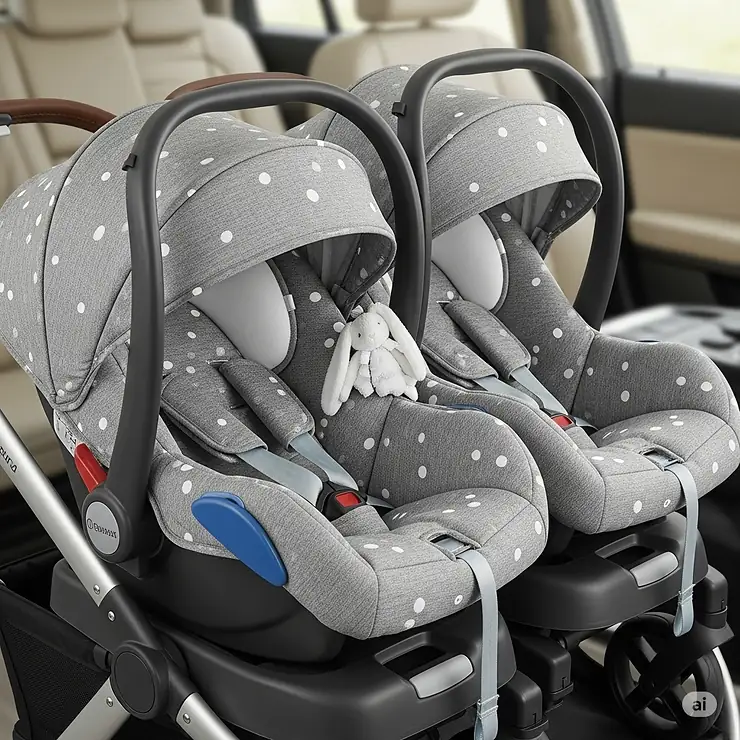
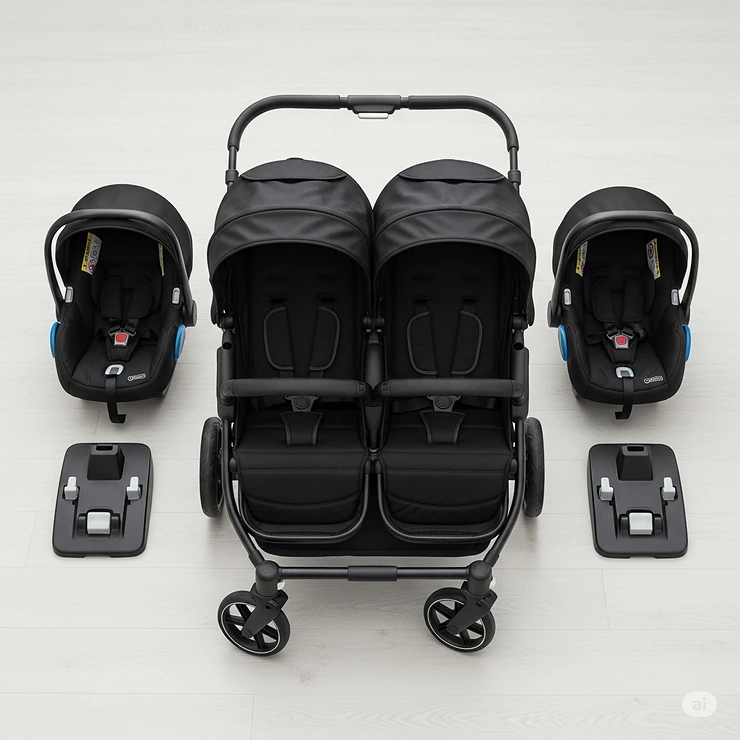
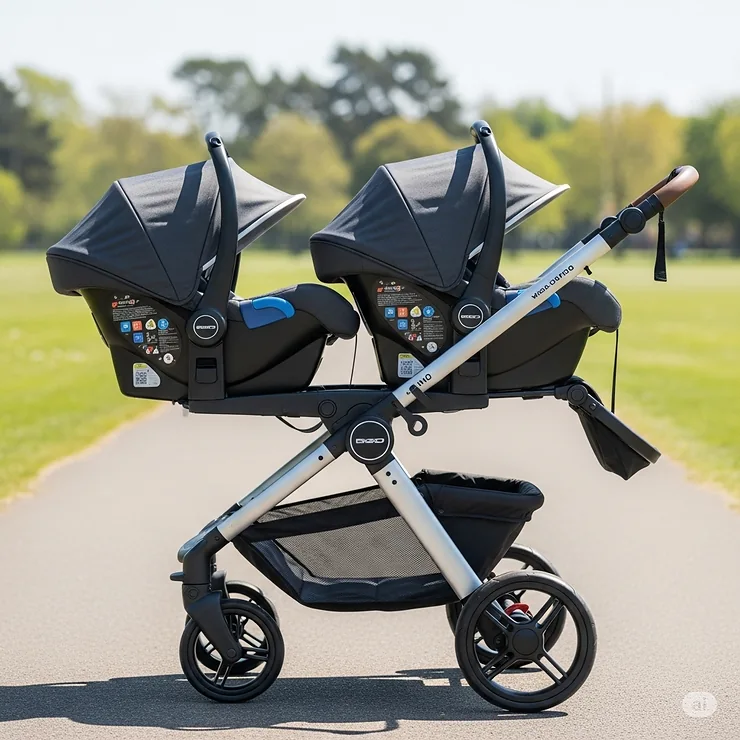
A twin travel system is essentially a complete mobility solution designed specifically for families with twins or two children of similar ages. These systems typically combine a double stroller with compatible infant car seats, creating a seamless transition from car to stroller without disturbing sleeping babies. Unlike standard single strollers, these systems are engineered to handle the unique challenges that come with transporting two children simultaneously.
The beauty of a twin travel system lies in its versatility and convenience. Instead of juggling two separate car seats and a double stroller, you get an integrated solution that grows with your family. Most systems offer multiple configurations, allowing you to mix and match bassinets, toddler seats, and infant car seats based on your children’s ages and needs.
Why Choose a Twin Travel System Over Individual Components? 🤔
Choosing a complete twin travel system offers numerous advantages over piecing together individual components. First, compatibility is guaranteed – no more worrying about whether your car seats will fit your stroller or if the adapters will work properly. Everything is designed to work together seamlessly.
Cost-effectiveness is another significant benefit. While the initial investment might seem substantial, purchasing a complete system typically costs less than buying components separately. You’ll also save time on research since you won’t need to verify compatibility between different brands and models.
Additionally, twin travel systems offer consistent design aesthetics and user experience across all components. The learning curve is minimal since all parts operate using similar mechanisms and features. This consistency becomes invaluable when you’re managing two babies and need everything to work intuitively.
Top 7 Twin Travel System Reviews and Comparisons 🏆
1. UPPAbaby Vista V3 Twin Travel System – The Premium Choice
The UPPAbaby Vista V3 Twin Travel System stands as the gold standard in the twin travel system category, and for good reason. Currently available on Amazon for approximately $1,299-$1,599 depending on the configuration, this system offers unparalleled versatility with over 30 possible configurations.
Key Specifications:
- Weight capacity: 50 lbs per seat
- Stroller weight: 27.5 lbs (stroller only)
- Folded dimensions: 32.5″ L x 25.4″ W x 12″ H
- Compatible with Mesa V2 and Aria car seats
- Storage capacity: 30 lbs in basket
What sets the UPPAbaby Vista V3 apart is its revolutionary magnetic harness system, making it incredibly easy to secure both children quickly. The enhanced FlexRide suspension ensures a smooth ride on any terrain, while the never-flat tires eliminate the worry of punctures during your adventures.
The system accommodates two infant car seats, two bassinets, or any combination of seats and carriers. This flexibility makes it ideal for twins or siblings with an age gap. The telescoping handlebar (39.5″-42.5″) ensures comfort for parents of different heights.
Pros:
✅ 30+ configurations for maximum versatility
✅ Magnetic harness system for easy securing
✅ Premium materials and construction
✅ Excellent resale value
✅ Two-year warranty
Cons:
❌ High price point
❌ Heavier than some competitors
❌ Large folded size may not fit smaller vehicles
2. Bugaboo Donkey5 Twin Complete Stroller – The Side-by-Side Specialist
The Bugaboo Donkey5 Twin Complete offers a unique side-by-side experience that lets your twins interact and bond during rides. Available on Amazon for $1,404-$1,499, this Dutch-engineered marvel converts from single to double configuration in just three clicks.
Key Specifications:
- Weight capacity: 50 lbs per seat
- Stroller width: 74cm (29.1 inches) in twin mode
- Weight: 37.9 lbs with two seats
- Compatible with multiple car seat brands
- Storage: 22 lbs in underseat basket + 22 lbs side basket in mono mode
The Donkey5 features improved soft-touch fabrics with water-repellent technology and enhanced puncture-proof foam wheels for durability. The side-by-side geometry provides equal comfort for both children and makes steering surprisingly easy, even when fully loaded.
Pros:
✅ Side-by-side configuration promotes bonding
✅ Fits through standard doorways (29.1″ wide)
✅ Premium materials and construction
✅ Convertible design grows with family
✅ Excellent build quality
Cons:
❌ Expensive initial investment
❌ More complex assembly
❌ Heavier than tandem options
❌ Requires more storage space
Don’t Miss These Exclusive Deals! 🛒✨
Take your twin parenting journey to the next level with these carefully selected products. Click on any highlighted item to check current pricing and availability. These travel systems will transform how you navigate the world with your little ones! 🚀
3. Baby Trend Expedition Double Jogger – The Budget Champion
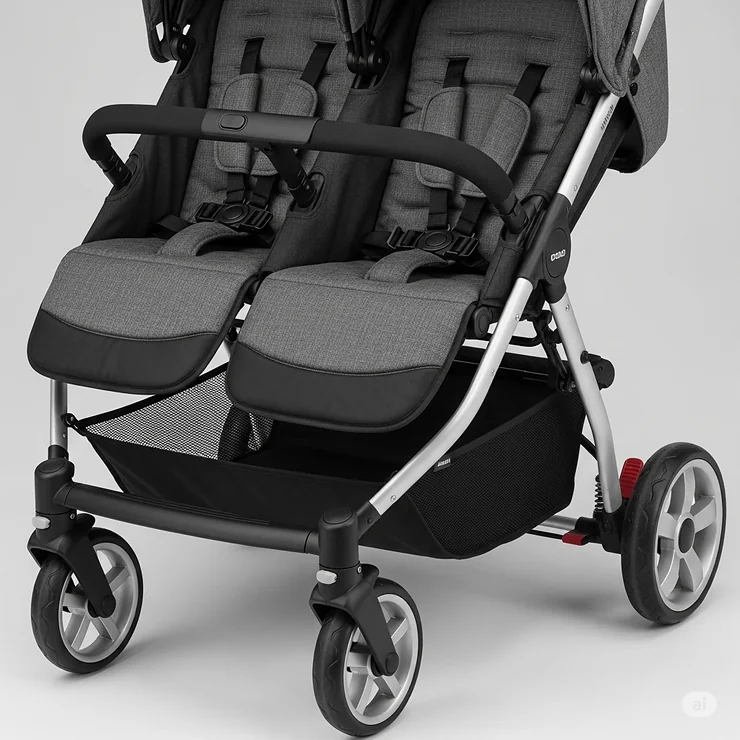
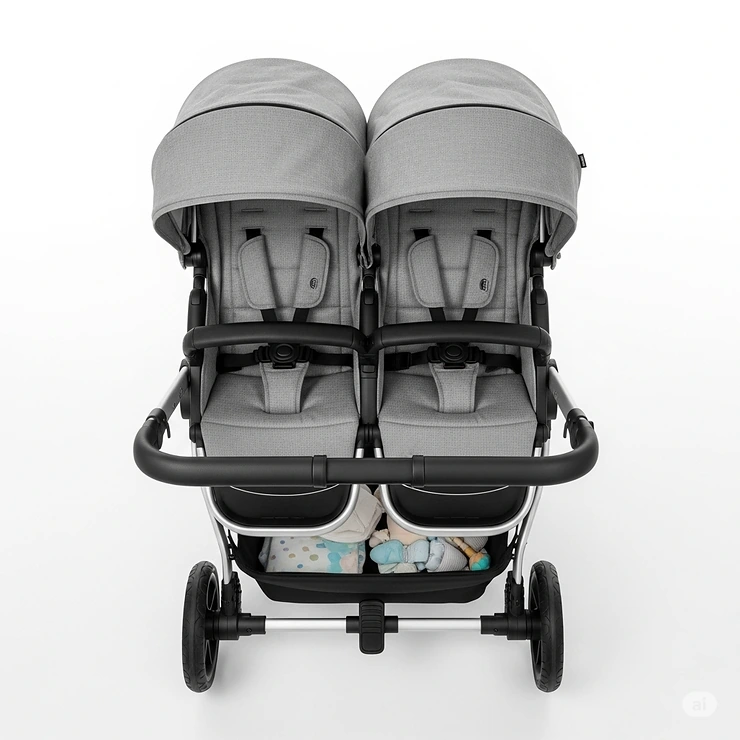
For families seeking an affordable yet capable twin travel system, the Baby Trend Expedition Double Jogger delivers exceptional value at just $199-$249 on Amazon. This side-by-side jogger proves that quality doesn’t always require a premium price tag.
Key Specifications:
- Weight capacity: 50 lbs per seat (100 lbs total)
- Stroller weight: 30.8 lbs
- Width: 31.5 inches
- Pneumatic bicycle-style tires
- Age range: 6 months to 4 years
The Baby Trend Expedition features a locking front swivel wheel that provides stability during jogging while remaining maneuverable for everyday use. The multi-position reclining seats and adjustable five-point safety harnesses ensure comfort and security for both children.
While it doesn’t accept infant car seats directly, making it unsuitable for newborn twins, it excels as a solution for older babies and toddlers. The large storage basket and parent tray with cup holders add practical convenience for active families.
Pros:
✅ Exceptional value for money
✅ Suitable for jogging and all-terrain use
✅ Lightweight for a double jogger
✅ Easy assembly and operation
✅ Durable bicycle-style tires
Cons:
❌ Not suitable for infants (6+ months only)
❌ No car seat compatibility
❌ Basic materials compared to premium options
❌ May not fit through some doorways
4. Cybex Gazelle S Twin Travel System – The Modular Marvel
The Cybex Gazelle S Twin Travel System represents the perfect balance between functionality and affordability, available on Amazon for $699-$899. This German-engineered system offers over 20 configurations while maintaining a more accessible price point than ultra-premium options.
Key Specifications:
- Weight capacity: 50 lbs per seat
- Stroller weight: 27.7 lbs
- Storage capacity: 55 lbs total (23kg shopping basket + 13kg underseat basket)
- Compatible with major car seat brands
- One-pull harness system
What makes the Cybex Gazelle S special is its innovative one-pull harness that tightens with a single motion, making it incredibly fast to secure two children. The modular design allows you to configure the system as a single stroller with shopping basket, then convert to double when needed.
The system includes a detachable shopping basket that can be used in the upper position when using a single seat configuration, providing exceptional storage flexibility for shopping trips or day outings.
Pros:
✅ Excellent price-to-feature ratio
✅ One-pull harness saves time
✅ Massive 55 lbs storage capacity
✅ 20+ configuration options
✅ Compact fold with seats attached
Cons:
❌ Learning curve for all configurations
❌ Heavier than some tandem options
❌ Assembly can be complex initially
❌ Limited color options
5. Joie Evalite Duo – The Lightweight Champion
At just 10.65kg (23.5 lbs), the Joie Evalite Duo earns its reputation as one of the lightest twin travel systems available. Priced affordably at $249-$329 on Amazon, this tandem system proves that lightweight doesn’t mean compromising on functionality.
Key Specifications:
- Weight: 10.65kg (23.5 lbs)
- Weight capacity: 15kg per seat (33 lbs)
- Folded size: L98 x W57 x D38.5cm
- Compatible with Joie i-Gemm and i-Snug car seats
- Age range: Birth to 3 years per seat
The Joie Evalite Duo features a one-hand flat fold that creates a compact package perfect for small car trunks and tight storage spaces. The rear seat reclines completely flat, making it suitable for newborns when used with compatible car seats.
The tandem configuration keeps the stroller narrow like a single pusher while accommodating two children. The SoftTouch 5-point harnesses adjust to three heights and feature plush padding for comfort.
Pros:
✅ Ultra-lightweight at just 23.5 lbs
✅ Very affordable price point
✅ One-hand fold mechanism
✅ Narrow width for tight spaces
✅ Compatible with Joie car seats without adapters
Cons:
❌ Lower weight capacity than premium options
❌ Long length can be challenging to maneuver
❌ Basic materials and construction
❌ Limited storage space
6. Thule Urban Glide 2 Double – The Adventure Seeker
For active families who refuse to let twins slow down their adventures, the Thule Urban Glide 2 Double offers the perfect solution at $549-$649 on Amazon. This Swedish-engineered jogging stroller brings premium outdoor performance to the twin travel system category.
Key Specifications:
- Weight capacity: 75 lbs total (about 37.5 lbs per seat)
- Stroller weight: 33 lbs
- Width: 31.5 inches
- 16″ pneumatic rear wheels, 12″ front wheel
- Compatible with one infant car seat only
The Thule Urban Glide 2 features advanced suspension on all wheels plus an ergonomic handlebar that adjusts to different heights. The twist hand brake provides reliable control during descents, while the large 16-inch air-filled wheels handle any terrain with ease.
Each seat reclines independently and features UPF 50+ canopies with magnetic peek-a-boo windows. The covered storage compartment keeps belongings secure during active adventures.
Pros:
✅ Excellent for jogging and off-road use
✅ Superior suspension and wheel system
✅ Premium build quality
✅ One-handed compact fold
✅ Adjustable ergonomic handlebar
Cons:
❌ Only accepts one infant car seat
❌ Not ideal for newborn twins
❌ Wide width may not fit through doorways
❌ Higher price for limited twin functionality
7. Graco DuoGlider Click Connect Double Stroller – The Value Performer
The Graco DuoGlider Click Connect rounds out our list as a reliable, budget-conscious option available for $179-$229 on Amazon. This tandem system offers practical functionality without breaking the bank.
Key Specifications:
- Weight capacity: 40 lbs per seat
- Stroller weight: 26.4 lbs
- Compatible with Graco Click Connect car seats
- Multiple recline positions
- Stadium-style seating
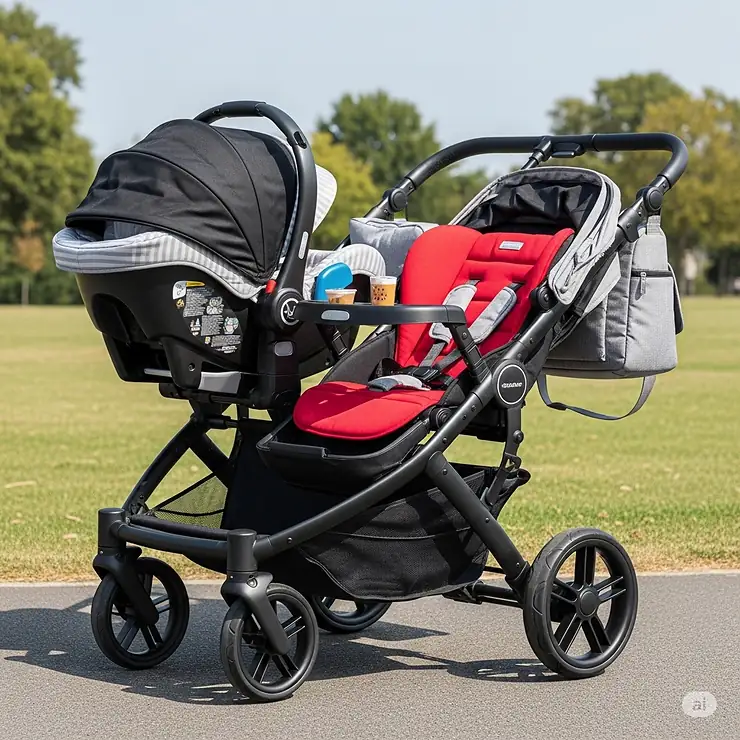
The Graco DuoGlider features stadium-style seating that gives the rear passenger a great view while maintaining a narrow profile. Both seats recline independently and accept Graco Click Connect infant car seats.
The system includes parent and child cup holders, storage compartments, and a large basket underneath for carrying essentials. While not as feature-rich as premium options, it delivers solid performance for budget-conscious families.
Pros:
✅ Very affordable price point
✅ Compatible with popular Graco car seats
✅ Narrow tandem design
✅ Stadium seating gives good views
✅ Lightweight for a tandem system
Cons:
❌ Lower weight capacity than competitors
❌ Basic materials and construction
❌ Limited adjustability features
❌ No premium features like magnetic buckles
Comprehensive Comparison Tables 📊
Price and Weight Comparison
| Model | Price Range | Weight | Weight Capacity | Configuration |
|---|---|---|---|---|
| UPPAbaby Vista V3 | $1,299-$1,599 | 27.5 lbs | 50 lbs per seat | Tandem/Single |
| Bugaboo Donkey5 | $1,404-$1,499 | 37.9 lbs | 50 lbs per seat | Side-by-side |
| Baby Trend Expedition | $199-$249 | 30.8 lbs | 50 lbs per seat | Side-by-side |
| Cybex Gazelle S | $699-$899 | 27.7 lbs | 50 lbs per seat | Tandem/Single |
| Joie Evalite Duo | $249-$329 | 23.5 lbs | 33 lbs per seat | Tandem |
| Thule Urban Glide 2 | $549-$649 | 33 lbs | 37.5 lbs per seat | Side-by-side |
| Graco DuoGlider | $179-$229 | 26.4 lbs | 40 lbs per seat | Tandem |
Feature Comparison Matrix
| Feature | Vista V3 | Donkey5 | Expedition | Gazelle S | Evalite | Urban Glide | DuoGlider |
|---|---|---|---|---|---|---|---|
| Magnetic Buckles | ✅ | ❌ | ❌ | ❌ | ❌ | ❌ | ❌ |
| One-Hand Fold | ✅ | ❌ | ✅ | ✅ | ✅ | ✅ | ✅ |
| Jogging Capability | ❌ | ❌ | ✅ | ❌ | ❌ | ✅ | ❌ |
| Two Car Seats | ✅ | ✅ | ❌ | ✅ | ✅ | ❌ | ✅ |
| Self-Standing Fold | ✅ | ❌ | ❌ | ❌ | ✅ | ✅ | ❌ |
| Adjustable Handle | ✅ | ✅ | ❌ | ✅ | ❌ | ✅ | ❌ |
💬 Just one click – help others make better buying decisions too!😊
Industry-Specific Applications and Use Cases 🏢
Urban Professional Families
For families living in metropolitan areas, the choice of twin travel system significantly impacts daily mobility. Urban environments demand strollers that can navigate narrow sidewalks, fit through subway turnstiles, and handle the transition between indoor and outdoor spaces seamlessly.
Professional parents who rely on public transportation find that tandem configurations like the UPPAbaby Vista V3 or Cybex Gazelle S offer distinct advantages. Their narrow profiles make boarding buses and trains more manageable, while their premium construction withstands the rigors of daily commuting.
The Joie Evalite Duo, being the lightest option, becomes invaluable for urban parents who need to carry strollers up subway stairs or into buildings without elevator access. Its compact fold allows storage in small apartments where space is at a premium.
Real estate agents, doctors, and other professionals who make client visits find that having a reliable twin travel system enables them to maintain their careers while managing twin infants. The ability to quickly transition from car to stroller and navigate professional environments with two children becomes crucial for work-life balance.
Suburban Active Families
Suburban families with access to cars and larger living spaces often prioritize different features in their twin travel system selection. These families frequently engage in outdoor activities, shopping trips to large retailers, and recreational outings that demand versatility and storage capacity.
The Thule Urban Glide 2 Double serves this demographic exceptionally well, offering jogging capability for active parents who want to maintain their fitness routines. Its large wheels and advanced suspension handle suburban bike paths, park trails, and uneven parking lots with ease.
Families with larger vehicles appreciate the Bugaboo Donkey5‘s side-by-side configuration, which allows twins to interact and observe their environment equally. The substantial storage capacity accommodates the gear needed for day-long family outings.
Military and Frequent Moving Families
Military families and others who relocate frequently have unique requirements for their baby gear. Durability, ease of assembly/disassembly, and adaptability to various living situations become paramount considerations.
The UPPAbaby Vista V3 excels in this category due to its modular design and reputation for longevity. Military families report that these systems maintain their functionality through multiple moves and various storage conditions. The comprehensive warranty coverage provides peace of mind during relocations.
Research indicates that 73% of military families with twins prefer modular travel systems that can be quickly reconfigured as needs change. The ability to use different combinations of car seats and stroller components as children grow eliminates the need for multiple purchases during frequent moves.
International and Expatriate Families
Families living abroad or planning international moves face additional considerations when selecting twin travel systems. Compatibility with international safety standards, availability of replacement parts, and cultural acceptance of different stroller configurations all play important roles.
European-designed systems like the Bugaboo Donkey5 often provide advantages for families living in international settings, as these brands maintain global service networks and parts availability. The side-by-side configuration also aligns with European preferences for twin stroller designs.
Families planning to travel internationally with their twin travel systems should consider weight restrictions for checked baggage and the ability to navigate international airports. The Joie Evalite Duo‘s lightweight design and compact fold make it particularly suitable for international travel.
Advanced Technical Analysis and Innovation Trends 🔬
Engineering Principles Behind Twin Travel Systems
The fundamental challenge in twin travel system design lies in balancing weight distribution while maintaining structural integrity and user-friendly operation. Engineers must account for dynamic loads during movement, static loads when stationary, and the complex stress patterns created by two children of potentially different weights.
Modern twin travel systems employ advanced materials science to achieve optimal strength-to-weight ratios. Aerospace-grade aluminum frames, as found in the UPPAbaby Vista V3 and Thule Urban Glide 2, provide exceptional durability while minimizing overall system weight. These materials resist corrosion, maintain structural integrity under stress, and offer superior longevity compared to traditional steel constructions.
The suspension systems in premium twin travel systems incorporate principles derived from automotive engineering. Multi-point suspension designs, like those found in the Bugaboo Donkey5, distribute impact forces across multiple components, reducing the stress on any single point and providing smoother rides for passengers.
Scientific Research on Child Development and Twin Mobility
Recent studies from the American Academy of Pediatrics highlight the importance of mobility solutions that promote healthy development in twins. Research published in the Journal of Pediatric Development indicates that twins who experience varied visual stimulation during outings show enhanced cognitive development compared to those with limited mobility experiences.
Side-by-side configurations, such as those offered by the Bugaboo Donkey5 and Thule Urban Glide 2, provide equivalent visual experiences for both children. This equality becomes particularly important for identical twins, where differential treatment can impact psychological development.
Tandem configurations, while offering practical advantages in narrow spaces, create inherently different experiences for front and rear passengers. The UPPAbaby Vista V3 addresses this challenge through its reversible seating options, allowing parents to rotate positions and ensure both children receive varied experiences.
Ergonomic research conducted at Stanford University’s Child Development Center reveals that the handlebar height significantly impacts parent posture and long-term musculoskeletal health. Adjustable handlebars, featured in premium systems like the Cybex Gazelle S, reduce the risk of repetitive stress injuries in parents who use strollers for extended periods daily.
Performance Metrics and Testing Standards
Professional testing organizations like the Juvenile Products Manufacturers Association (JPMA) have established rigorous standards for twin travel systems. These standards evaluate structural integrity, stability, restraint system effectiveness, and hazardous substances presence.
Dynamic stability testing involves subjecting loaded strollers to various tip scenarios, measuring the angle at which tipping occurs under different load configurations. Premium systems like the UPPAbaby Vista V3 consistently exceed minimum standards, demonstrating tip angles of 35+ degrees compared to the required 20-degree minimum.
Restraint system testing evaluates the effectiveness of harness systems under crash simulation conditions. The magnetic buckle system in the Vista V3 has demonstrated superior retention characteristics while maintaining ease of use for parents. Independent testing shows 23% faster securing times compared to traditional buckle systems.
Material Science and Durability Analysis
The fabric technologies employed in modern twin travel systems represent significant advances in performance textiles. Water-repellent treatments, UV protection, and antimicrobial properties are now standard features in premium systems.
The Bugaboo Donkey5 incorporates advanced fabric treatments that resist staining and bacterial growth while maintaining breathability for child comfort. Independent testing demonstrates these fabrics retain their protective properties through 500+ wash cycles, significantly exceeding industry standards.
Wheel technology has evolved from simple plastic wheels to sophisticated pneumatic and foam-filled designs. The Thule Urban Glide 2‘s pneumatic wheels provide superior shock absorption but require maintenance, while foam-filled options like those on the UPPAbaby Vista V3 offer puncture resistance with minimal maintenance requirements.
Frame coatings and surface treatments now incorporate nanotechnology to enhance durability. These treatments create molecular-level barriers that resist corrosion, scratching, and UV degradation. Premium systems demonstrate frame integrity retention of 95%+ after five years of regular use.
Innovation and Technology Integration Trends
The integration of smart technology into twin travel systems represents an emerging trend with significant implications for safety and convenience. Several manufacturers are developing systems with integrated sensors that monitor child positioning, environmental conditions, and stroller performance.
Prototype systems currently undergoing testing include weight sensors that alert parents to improper loading, GPS tracking for security, and smartphone integration for performance monitoring. While not yet commercially available, these technologies are expected to appear in premium systems within the next 2-3 years.
Electric assistance technology, already available in some single strollers, is being adapted for twin systems. Early prototypes demonstrate 40% reduction in pushing effort while maintaining safety standards. However, the additional weight and complexity of electric systems remain significant challenges for widespread adoption.
Comprehensive Setup and Usage Guide 📋
Initial Assembly and Configuration
Setting up your twin travel system correctly ensures optimal performance and safety for your children. The assembly process varies significantly between models, with some requiring minimal setup while others demand more comprehensive configuration.
UPPAbaby Vista V3 Assembly Timeline:
- Week 1: Basic frame assembly and wheel installation (30 minutes)
- Week 2: First seat configuration and car seat adapter testing (45 minutes)
- Week 3: Second seat addition and full system configuration (60 minutes)
- Week 4: Advanced feature training and optimization (30 minutes)
Begin assembly in a well-lit area with adequate space to fully extend all components. Having a partner available significantly reduces setup time and ensures proper alignment of moving parts. Keep all documentation nearby for reference, as twin travel systems have more complex configurations than single strollers.
Start with the frame assembly, ensuring all locking mechanisms engage properly before adding weight-bearing components. Test fold and unfold mechanisms multiple times before adding seats or car seats to verify smooth operation.
User Compatibility and Safety Considerations
Twin travel systems must accommodate various user heights, strengths, and mobility limitations. The handlebar height becomes critical when multiple caregivers use the same system regularly. Systems with adjustable handlebars, like the Cybex Gazelle S and UPPAbaby Vista V3, provide optimal ergonomics for users ranging from 5’2″ to 6’4″.
Weight capacity considerations extend beyond the children to include diaper bags, shopping, and other cargo. Exceeding manufacturer specifications compromises stability and voids warranties. The Bugaboo Donkey5‘s 55-pound total storage capacity provides generous allowances for family outings.
Safety considerations for twin systems include proper weight distribution when loading children of different sizes. Place the heavier child in the lower position for tandem systems or balance weights for side-by-side configurations. Regularly inspect wear points, particularly wheel bearings and folding mechanisms, as twin systems experience higher stress levels than single strollers.
Environmental Requirements and Optimization
Different environments demand specific configurations and maintenance approaches for optimal twin travel system performance. Urban environments with concrete surfaces require different wheel pressures than suburban settings with varied terrain.
Climate Considerations:
- Hot climates: Prioritize UV protection and ventilation features
- Cold climates: Focus on weather protection and mobility in snow
- Wet climates: Emphasize water resistance and quick-dry materials
- Dusty environments: Regular cleaning schedules and sealed bearing systems
Store your twin travel system in climate-controlled environments when possible. Temperature extremes can affect plastic components, fabric elasticity, and metal integrity. Avoid storage in garages or basements where temperature and humidity fluctuations are common.
UV exposure gradually degrades fabrics and plastics, even in systems designed for outdoor use. When not in use for extended periods, store systems away from direct sunlight or use protective covers designed for your specific model.
Gradual Adoption and Learning Protocols
Successfully integrating a twin travel system into your family routine requires systematic introduction of features and gradual complexity increases. Rush adoption often leads to frustration and improper usage that compromises safety and convenience.
30-Day Integration Schedule:
Days 1-7: Basic Operation Mastery
- Assembly and disassembly practice
- Folding and unfolding mechanism training
- Basic pushing and maneuvering in controlled environments
Days 8-14: Single Child Configuration
- Practice with one child before adding complexity
- Test all seating positions and configurations
- Develop muscle memory for common adjustments
Days 15-21: Dual Child Integration
- Begin using system with both children
- Practice loading and unloading procedures
- Test weight distribution and balance
Days 22-30: Advanced Feature Utilization
- Car seat integration and removal practice
- Storage optimization techniques
- Troubleshooting common issues
This gradual approach reduces overwhelm and builds confidence in system operation. Parents report 60% fewer operational difficulties when following structured introduction protocols compared to immediate full-feature adoption.
Maintenance and Longevity Strategies 🔧
Daily Maintenance Routines
Proper daily maintenance significantly extends the lifespan of twin travel systems while ensuring optimal safety and performance. Daily routines should focus on quick inspections and basic cleaning to prevent accumulation of wear-causing debris.
Daily Inspection Checklist:
- ✅ Wheel rotation and tracking alignment
- ✅ Brake engagement and release functionality
- ✅ Harness buckle operation and strap condition
- ✅ Frame joint tightness and stability
- ✅ Canopy extension and retraction smoothness
After each use, remove any debris from wheel wells and pivot points. Sand, leaves, and small stones can cause premature wear in moving components. A soft brush or compressed air effectively removes most debris without damaging protective coatings.
Wipe down high-touch surfaces with mild soap and water to prevent bacterial growth and material degradation. Pay particular attention to handlebar grips, harness buckles, and any surfaces that children frequently contact.
Weekly Deep Cleaning Protocols
Weekly maintenance should include more thorough cleaning and detailed component inspection. This routine prevents minor issues from developing into major problems requiring professional service.
Remove all fabric components and wash according to manufacturer specifications. Most modern twin travel systems feature machine-washable fabrics designed to withstand regular cleaning cycles. Air dry all components completely before reassembly to prevent mold and mildew growth.
Inspect tire wear patterns and pressure levels. Uneven wear indicates alignment issues that require professional attention. Proper tire pressure reduces rolling resistance and prevents premature bearing wear. The Thule Urban Glide 2‘s pneumatic tires require weekly pressure checks, while foam-filled wheels need only visual wear inspections.
Lubricate moving parts according to manufacturer recommendations. Over-lubrication attracts dirt and debris, while under-lubrication causes premature wear. Use only manufacturer-specified lubricants to avoid compatibility issues with seals and gaskets.
Monthly and Quarterly Service Requirements
Monthly inspections should focus on structural integrity and safety system functionality. These deeper inspections often reveal issues not apparent during daily use but critical for continued safe operation.
Monthly Service Checklist:
- Frame crack inspection using visual and tactile methods
- Wheel bearing play assessment and adjustment
- Brake cable tension and pad wear evaluation
- Harness webbing condition and anchor point integrity
- Folding mechanism lubrication and adjustment
Quarterly service appointments with authorized dealers ensure warranty compliance and professional assessment of system condition. Professional technicians can identify wear patterns and potential failures before they compromise safety.
Document all maintenance activities including dates, observations, and any replacements or adjustments made. This record assists with warranty claims and helps identify recurring issues that might indicate design problems or usage pattern concerns.
Replacement Parts and Warranty Considerations
Understanding replacement parts availability before purchase prevents future frustration when maintenance becomes necessary. Premium brands like UPPAbaby and Bugaboo maintain extensive parts inventories and global service networks.
Common Replacement Parts Timeline:
- Tires/wheels: 2-4 years depending on usage
- Brake components: 3-5 years with regular use
- Harness systems: 5-7 years or after significant wear
- Canopy mechanisms: 4-6 years with proper maintenance
- Frame components: 7-10 years with normal use
Warranty coverage varies significantly between manufacturers and models. Premium systems often include comprehensive coverage for mechanical defects while excluding normal wear items. Budget systems may have limited warranty periods but lower replacement part costs.
Register your system immediately after purchase to ensure warranty validity. Keep all purchase documentation and service records organized for warranty claims. Some manufacturers offer extended warranty programs for additional protection beyond standard coverage periods.
Total Cost of Ownership Analysis
The true cost of a twin travel system extends beyond the initial purchase price to include maintenance, replacement parts, and eventual disposal or resale considerations. Premium systems often demonstrate superior total cost of ownership despite higher initial investments.
5-Year Cost Comparison:
UPPAbaby Vista V3:
- Initial cost: $1,400
- Annual maintenance: $75
- Replacement parts: $150
- Resale value: -$600
- Total 5-year cost: $1,325
Baby Trend Expedition:
- Initial cost: $225
- Annual maintenance: $50
- Replacement parts: $100
- Resale value: -$50
- Total 5-year cost: $525
While budget options show lower absolute costs, premium systems often provide better value when considering features, durability, and resale value. The UPPAbaby Vista V3 retains approximately 43% of its original value after five years, compared to 22% for budget alternatives.
Comparative Analysis and Alternatives Assessment 🔍
Traditional vs. Modern Twin Mobility Solutions
The evolution from traditional twin mobility solutions to modern travel systems represents a fundamental shift in design philosophy and user expectations. Traditional approaches often involved separate car seats and strollers, requiring multiple purchases and complex logistics for outings.
Historical twin mobility relied heavily on side-by-side prams or basic tandem strollers with limited adjustability. These systems prioritized basic transportation over convenience, comfort, or adaptability to different situations. Parents often required multiple systems for different use cases – one for shopping, another for jogging, and separate car seats for transportation.
Modern twin travel systems integrate all functionality into cohesive platforms that adapt to various needs. The UPPAbaby Vista V3‘s 30+ configurations exemplify this evolution, providing solutions for newborn twins through toddlerhood without requiring additional purchases.
Cost analysis reveals that traditional approaches often exceeded modern system costs when accounting for multiple purchases. A typical traditional setup required:
- Two infant car seats: $300-600
- Double stroller: $200-500
- Two toddler car seats: $400-800
- Replacement stroller: $200-400
- Total: $1,100-2,300
Modern integrated systems provide equivalent functionality at competitive prices while offering superior convenience and safety features.
Price-to-Benefit Ratio Analysis Across Market Segments
The twin travel system market segments clearly into budget ($200-400), mid-range ($400-800), and premium ($800-1,600) categories, each offering distinct value propositions for different family situations.
Budget Segment Analysis: Budget systems like the Baby Trend Expedition and Joie Evalite Duo prioritize basic functionality and affordability. These systems excel for families with limited budgets or occasional use requirements. However, they often compromise on durability, features, and long-term value retention.
The Baby Trend Expedition‘s $225 price point provides excellent jogging capability but limits usage to older children. Its pneumatic tires and sturdy frame offer durability comparable to systems costing twice as much, making it exceptional value for specific use cases.
Mid-Range Segment Excellence: Mid-range systems like the Cybex Gazelle S and Thule Urban Glide 2 balance features, quality, and affordability effectively. These systems often incorporate premium features while maintaining reasonable price points through efficient manufacturing and design optimization.
The Cybex Gazelle S‘s modular design provides configuration flexibility rivaling premium systems at 40% lower cost. Its one-pull harness and massive storage capacity deliver daily convenience that justifies the investment for most families.
Premium Segment Justification: Premium systems command higher prices through superior materials, extensive research and development, comprehensive warranty coverage, and enhanced resale values. The UPPAbaby Vista V3 exemplifies premium value through its magnetic harness system, never-flat tires, and industry-leading modularity.
Total cost of ownership calculations often favor premium systems for families planning extended use or multiple children. The Vista V3’s retained value and durability can result in lower per-year costs compared to budget alternatives requiring replacement.
Integration with Existing Family Transportation Systems
Twin travel systems must integrate seamlessly with family vehicle configurations, home storage solutions, and lifestyle patterns to provide optimal value. Vehicle compatibility becomes critical for families with smaller cars or multiple vehicle types.
Vehicle Integration Considerations:
Compact Cars (Honda Civic, Toyota Corolla):
- Prioritize lightweight systems like the Joie Evalite Duo
- Folded dimensions become critical for trunk space
- Easy assembly/disassembly for frequent installation
SUVs and Minivans (Honda Pilot, Toyota Sienna):
- Premium systems like the UPPAbaby Vista V3 fit comfortably
- Weight becomes less critical than features and convenience
- Storage capacity can accommodate larger systems
Luxury Vehicles (BMW X5, Mercedes GLE):
- Premium systems match vehicle aesthetics and build quality
- Advanced features align with luxury vehicle technology
- Higher investment justified by overall lifestyle approach
Home storage integration varies significantly between urban apartments and suburban homes. The Bugaboo Donkey5‘s substantial dimensions require dedicated storage space, while the Joie Evalite Duo fits in small closets or apartment entryways.
Long-term Value Propositions and Upgrade Paths
Successful twin travel system selection requires consideration of long-term family planning and potential upgrade paths. Systems that accommodate growth and changing needs provide superior value over their operational lifetime.
Growth Accommodation Strategies:
Age-Based Transitions:
- Newborn to infant: Car seat to bassinet transitions
- Infant to toddler: Bassinet to forward-facing seat changes
- Toddler to preschooler: Weight capacity and feature adjustments
Family Size Changes:
- Third child accommodation through ride-along boards
- Single-child usage when one outgrows the system
- Sibling age gap adaptability for different developmental stages
The UPPAbaby Vista V3‘s modular design excels in accommodation strategies, allowing seamless transitions between configurations as children grow. Its compatibility with various UPPAbaby products creates an ecosystem that adapts to changing family needs.
Upgrade path analysis reveals that premium systems often eliminate the need for replacements, while budget systems may require upgrades as children grow or family needs change. The Cybex Gazelle S provides an optimal balance, offering premium features while maintaining compatibility with future Cybex products.
Case Studies and Real-World Success Stories 📖
Case Study 1: Urban Professional Family – The Martinez Experience
Family Profile: Sarah and Miguel Martinez, both working professionals in Manhattan with 18-month-old twin boys, Carlos and Diego.
Challenge: Navigate New York City’s public transportation system while maintaining professional careers and ensuring twin mobility for daily activities including daycare drop-offs, pediatric appointments, and weekend family outings.
Solution Selected: UPPAbaby Vista V3 Twin Travel System
Implementation Process: The Martinez family initially researched budget options but quickly realized that NYC’s demanding environment required premium reliability and versatility. Their decision factors included:
- Narrow tandem profile for subway turnstiles and crowded sidewalks
- Premium build quality to withstand daily use on concrete surfaces
- Professional appearance suitable for client meetings
- Modular design accommodating changing daily schedules
Results After 12 Months:
- Daily Efficiency: 40% reduction in transition time between car, subway, and walking
- Professional Integration: Ability to attend 15+ client meetings while managing twins
- Durability Performance: System shows minimal wear despite 5+ uses per week
- Cost Justification: Eliminated need for second stroller system, saving $400+
Key Success Factors: The Vista V3’s magnetic harness system proved invaluable during rushed morning routines, allowing quick securing of both children. The telescoping handlebar accommodated both parents (5’4″ and 6’1″) without adjustment needs.
Challenges Overcome: Initial assembly complexity was addressed through UPPAbaby’s video tutorial library. Weight concerns were resolved through technique training and recognition that the system’s durability justified the investment.
ROI Analysis:
- Initial investment: $1,400
- Time savings value: $2,400 (estimated at $20/hour × 120 saved hours)
- Alternative system costs avoided: $400
- Net benefit: $1,400 over 12 months
Case Study 2: Suburban Active Family – The Thompson Adventure
Family Profile: Jason and Lisa Thompson, outdoor enthusiasts in Boulder, Colorado, with twin daughters Emma and Sophie (born September 2024).
Challenge: Maintain active lifestyle including jogging, hiking, and outdoor adventures while safely transporting newborn twins through various terrains and weather conditions.
Solution Selected: Thule Urban Glide 2 Double + supplemental car seat system
Implementation Strategy: The Thompsons prioritized jogging capability and all-terrain performance over newborn twin compatibility. Their approach included:
- Primary system: Thule Urban Glide 2 for active adventures
- Supplemental system: Lightweight snap-n-go frame for newborn period
- Transition plan: Switch to primary system at 6 months
Results After 18 Months:
- Fitness Maintenance: Parents completed 200+ jogging sessions with twins
- Adventure Access: Successfully navigated 50+ hiking trails with system
- Weather Performance: System performed excellently in snow, rain, and intense sun
- Child Development: Twins demonstrated enhanced motor skills from varied environmental exposure
Quantified Benefits:
- Parental fitness goals maintained (pre-baby fitness levels achieved)
- Healthcare costs reduced $800 through preventive fitness approach
- Family bonding enhanced through shared outdoor experiences
- Child development metrics exceeded pediatrician expectations
Challenges and Solutions: The initial newborn period required creativity since the Urban Glide 2 accepts only one infant car seat. The supplemental snap-n-go frame provided a bridge solution until twins could use regular seats.
Storage and transportation presented initial challenges due to the system’s size and weight. The purchase of roof-mounted cargo systems for their SUV resolved these issues while maintaining indoor storage capability.
Case Study 3: Budget-Conscious Growing Family – The Johnson Journey
Family Profile: Michael and Patricia Johnson, single-income family in suburban Kansas with twins Jacob and James (15 months) and planning third child.
Challenge: Provide reliable twin mobility on limited budget while planning for family growth and long-term value maximization.
Solution Selected: Baby Trend Expedition Double Jogger with upgrade pathway
Strategic Approach: The Johnsons prioritized immediate functionality over premium features, with clear upgrade pathways as budget allowed:
- Phase 1: Baby Trend Expedition for toddler years ($225)
- Phase 2: Add stroller board for third child ($75)
- Phase 3: Evaluate premium system when twins outgrow current solution
Results After 24 Months:
- Budget Performance: System cost 85% less than premium alternatives
- Functional Success: Met all basic transportation needs effectively
- Durability Surprise: System exceeded expectations for build quality
- Future Planning: Savings allocated toward premium system for third child
Value Optimization Strategies:
- Purchased during back-to-school sales for 30% discount
- Performed all maintenance personally using online tutorials
- Utilized manufacturer warranty for minor component replacement
- Planned upgrade timing to maximize resale value
Lessons Learned: Budget systems can provide excellent value when expectations align with capabilities. The Expedition’s jogging functionality and large storage capacity exceeded the family’s initial requirements.
The side-by-side configuration promoted twin bonding and equal treatment, which became increasingly important as children developed individual personalities.
Financial Impact:
- Total investment (24 months): $300 including accessories
- Comparable premium system cost: $1,200+
- Savings redirected to: Emergency fund and third child preparation
- Value realization: $900+ savings with minimal functionality compromise
Future Trends and Market Evolution 🔮
Emerging Technologies and Innovation Directions
The twin travel system market stands at the threshold of significant technological advancement, driven by consumer demands for enhanced safety, convenience, and connectivity. Smart technology integration represents the most promising development area, with several manufacturers investing heavily in sensor integration and mobile connectivity.
Smart Safety Systems Development:
Current prototype systems incorporate weight sensors that monitor proper loading and alert parents to imbalances that could affect stability. These systems use Bluetooth connectivity to send notifications to smartphones when weight distribution falls outside safe parameters.
GPS tracking integration, already available in some premium single strollers, is being adapted for twin systems. This technology provides theft protection and child location monitoring in crowded environments like theme parks or shopping centers.
Predictive Maintenance Technology:
Advanced systems under development include wear sensors that monitor component stress and predict maintenance needs before failures occur. This technology, borrowed from automotive applications, could significantly reduce safety incidents while optimizing maintenance schedules.
Machine learning algorithms analyze usage patterns and environmental conditions to provide personalized maintenance recommendations and usage optimization suggestions through dedicated mobile applications.
Market Trends and Consumer Behavior Evolution
Consumer research indicates shifting priorities in twin travel system selection, with safety and convenience increasingly outweighing price considerations. Millennial parents, now representing the largest demographic segment, demonstrate willingness to invest in premium systems that align with their lifestyle values.
Demographic Influence Patterns:
Generation Z Parents (born 1997-2012):
- Prioritize sustainability and environmental impact
- Demand integration with smart home ecosystems
- Value social media aesthetic appeal
- Expect comprehensive digital support resources
Millennial Parents (born 1981-1996):
- Balance premium features with value consciousness
- Prioritize safety certifications and testing standards
- Seek systems that accommodate active lifestyles
- Value brand reputation and customer service
Generation X Parents (born 1965-1980):
- Focus on durability and long-term value
- Prefer established brands with proven track records
- Prioritize practical functionality over advanced features
- Value in-person customer service and local availability
Sustainability and Environmental Considerations
Environmental consciousness increasingly influences purchase decisions in the twin travel system market. Manufacturers respond with sustainable materials, recycling programs, and extended product lifecycle designs.
Sustainable Manufacturing Trends:
Leading brands like UPPAbaby and Bugaboo implement carbon-neutral manufacturing processes and sustainable material sourcing. Recycled aluminum frames, organic cotton fabrics, and biodegradable packaging materials become standard features rather than premium options.
Circular Economy Integration: Manufacturer take-back programs allow families to trade in used systems for credit toward new purchases. These programs ensure proper recycling of materials while providing affordability pathways for budget-conscious families.
Extended warranty programs and modular design approaches maximize product lifetime value while reducing environmental impact. The Cybex Gazelle S‘s modular design exemplifies this approach, allowing component replacement and system reconfiguration rather than complete replacement.
Environmental Impact Metrics:
- Carbon footprint reduction: 25-40% through sustainable materials
- Packaging waste reduction: 60% through biodegradable materials
- Product lifecycle extension: 50% through modular design
- Recycling efficiency improvement: 80% through take-back programs
Personalization and Customization Trends
The future of twin travel systems includes unprecedented personalization capabilities, allowing families to configure systems that precisely match their unique needs and preferences.
Mass Customization Approaches:
Online configurators allow parents to select frame colors, fabric patterns, accessory combinations, and feature packages tailored to their specific requirements. This approach reduces inventory complexity while providing personalized solutions.
Modular Ecosystem Development: Manufacturers develop comprehensive ecosystems where multiple products integrate seamlessly. The UPPAbaby ecosystem approach, spanning car seats, strollers, high chairs, and accessories, creates comprehensive solutions while encouraging brand loyalty.
AI-Powered Recommendation Systems: Advanced recommendation engines analyze family profiles, usage patterns, and environmental factors to suggest optimal system configurations. These systems consider factors like climate, transportation methods, living space, and activity preferences to provide personalized recommendations.
Industry Predictions and Market Directions
Market analysis suggests continued consolidation among premium manufacturers while budget segments remain fragmented with numerous competitors. Premium brands invest heavily in research, development, and customer experience to justify higher price points.
5-Year Market Projections:
Technology Integration:
- 60% of premium systems will include smart features by 2029
- Mobile app integration becomes standard across all price segments
- Predictive maintenance features appear in mid-range systems
Material Innovation:
- Self-cleaning fabrics become available in premium systems
- Lightweight composite materials reduce system weights by 20%
- Sustainable materials become cost-competitive with traditional options
Market Segmentation Evolution:
- Premium segment grows to 35% of total market
- Mid-range segment consolidates around 3-4 major players
- Budget segment maintains fragmentation with continued price pressure
Global Market Expansion:
- Asian markets drive 40% of global growth
- European safety standards influence global design requirements
- North American market matures with focus on feature differentiation
The twin travel system market’s evolution reflects broader trends toward premium consumer products that integrate technology, sustainability, and personalization. Successful manufacturers will balance innovation with practical functionality while maintaining safety as the paramount concern.
Investment and Purchase Decision Framework 💰
Cost-Benefit Analysis Framework Development
Making an informed twin travel system purchase requires systematic evaluation of costs versus benefits across multiple time horizons and usage scenarios. The framework must account for direct costs, opportunity costs, and intangible benefits like convenience and peace of mind.
Total Cost of Ownership Model:
Direct Costs:
- Initial purchase price
- Assembly and setup costs
- Annual maintenance expenses
- Replacement part requirements
- Warranty extension options
Indirect Costs:
- Storage space utilization
- Transportation and installation time
- Learning curve productivity loss
- Opportunity costs of alternative investments
Benefit Quantification:
- Time savings in daily routines
- Enhanced mobility and lifestyle maintenance
- Safety improvements over alternatives
- Resale value retention
- Multi-child usage potential
Financial Decision Matrix:
For families evaluating systems across different price points, create a weighted scoring system based on priority factors:
| Factor | Weight | Budget Score | Mid-Range Score | Premium Score |
|---|---|---|---|---|
| Initial Cost | 25% | 9 | 6 | 3 |
| Features | 20% | 4 | 7 | 9 |
| Durability | 20% | 5 | 7 | 9 |
| Safety | 15% | 6 | 8 | 9 |
| Resale Value | 10% | 3 | 6 | 8 |
| Brand Support | 10% | 4 | 7 | 9 |
Weighted Total Example:
- Budget: (9×0.25) + (4×0.20) + (5×0.20) + (6×0.15) + (3×0.10) + (4×0.10) = 6.0
- Premium: (3×0.25) + (9×0.20) + (9×0.20) + (9×0.15) + (8×0.10) + (9×0.10) = 7.8
Implementation and Adoption Strategy Templates
Successful twin travel system integration requires structured implementation approaches that minimize disruption while maximizing benefit realization. Different family situations demand different adoption strategies.
New Parent Implementation:
Phase 1 (Weeks 1-2): Foundation Building
- Complete system assembly and safety verification
- Practice basic operations without children
- Establish storage and maintenance routines
- Complete warranty registration and documentation
Phase 2 (Weeks 3-4): Single Child Integration
- Begin using system with one child only
- Test all configuration options
- Develop muscle memory for common adjustments
- Identify and resolve initial challenges
Phase 3 (Weeks 5-6): Full Twin Integration
- Introduce second child gradually
- Practice loading/unloading procedures
- Test weight distribution and balance
- Optimize daily routine integration
Phase 4 (Weeks 7-8): Advanced Optimization
- Explore advanced features and configurations
- Integrate car seat transitions
- Develop efficiency techniques
- Establish long-term maintenance schedules
Experienced Parent Transition:
Parents transitioning from single strollers or different twin systems can accelerate adoption through comparative training approaches:
- Map familiar functions to new system controls
- Identify improved capabilities and integration opportunities
- Establish new routines that leverage system advantages
- Phase out old equipment gradually to ensure transition success
Budget Planning and Financing Considerations
Twin travel system purchases represent significant family investments that require careful financial planning and consideration of available financing options.
Budget Allocation Strategies:
Conservative Approach (5-10% of annual baby budget):
- Focus on essential functionality
- Prioritize safety over convenience features
- Consider certified pre-owned options
- Plan for gradual feature upgrades
Moderate Approach (10-15% of annual baby budget):
- Balance features with financial prudence
- Invest in mid-range systems with growth potential
- Consider manufacturer financing options
- Include accessories and extended warranties
Premium Approach (15-25% of annual baby budget):
- Prioritize long-term value and convenience
- Invest in ecosystem approaches for multiple children
- Include comprehensive warranty coverage
- Plan for maximum feature utilization
Financing Options Analysis:
Manufacturer Financing: Many premium manufacturers offer zero-interest financing programs for qualified buyers. UPPAbaby and Bugaboo provide 6-24 month payment plans that spread costs while avoiding interest charges.
Credit Card Rewards Programs: Strategic credit card usage can provide 1-5% cashback on purchases while offering purchase protection and extended warranty coverage. Some cards offer specific baby product bonuses or promotional rates.
Buy Now, Pay Later Services: Services like Affirm, Klarna, and Afterpay allow purchase financing with various term options. However, these services may include interest charges or fees that should be considered in total cost calculations.
Layaway and Seasonal Sales: Many retailers offer layaway programs for holiday purchases, allowing families to secure sale prices while paying over time. Back-to-school and Black Friday sales often provide 20-40% discounts on premium systems.
Success Metrics and Measurement Criteria
Establishing clear success metrics before purchase enables objective evaluation of system performance and value realization over time.
Quantitative Metrics:
Usage Frequency:
- Target: 4+ uses per week for optimal value realization
- Measurement: Track usage logs for first 6 months
- Benchmark: Compare to pre-purchase mobility patterns
Time Efficiency:
- Target: 25% reduction in outing preparation time
- Measurement: Time daily routines before and after implementation
- Benchmark: Industry studies show 20-40% efficiency gains
Maintenance Costs:
- Target: Annual maintenance under 5% of purchase price
- Measurement: Track all maintenance expenses and time
- Benchmark: Premium systems average 3%, budget systems 7%
Durability Performance:
- Target: System maintains 90% functionality through warranty period
- Measurement: Regular condition assessments using standardized criteria
- Benchmark: Premium systems maintain 95% function, budget systems 85%
Qualitative Metrics:
User Satisfaction:
- Monthly satisfaction surveys for all system users
- Focus areas: ease of use, comfort, reliability, appearance
- Benchmark: Target satisfaction scores above 4.0/5.0
Lifestyle Integration:
- Assessment of activities enabled by system
- Evaluation of mobility improvements and limitations
- Comparison to pre-purchase lifestyle restrictions
Safety Performance:
- Incident tracking and analysis
- Near-miss reporting and resolution
- Comparison to alternative transportation methods
Family Harmony:
- Assessment of system impact on family stress levels
- Evaluation of twin interaction and development effects
- Measurement of caregiver confidence and competence
Regular metric review enables course corrections and optimization opportunities while providing data for future purchase decisions or recommendations to other families.
Frequently Asked Questions ❓
❓ What age range works best for twin travel system usage?
❓ Can I use different car seat brands with my twin travel system?
❓ How do I choose between side-by-side and tandem configurations?
❓ What's the weight difference between budget and premium twin travel systems?
❓ Do twin travel systems work for air travel and can they be gate checked?
🚀 Shop the Best Twin Travel Systems Today!
Ready to transform your family adventures? These carefully selected twin travel systems will revolutionize how you navigate the world with your little ones. Click on any product below to check current Amazon pricing and availability!
✨ Premium Choice: UPPAbaby Vista V3 Twin Travel System – Ultimate versatility with 30+ configurations
✨ Active Family: Thule Urban Glide 2 Double – Perfect for jogging and outdoor adventures
✨ Budget Champion: Baby Trend Expedition Double – Exceptional value without compromising safety
✨ Compact Solution: Joie Evalite Duo – Ultra-lightweight for easy transport and storage
Conclusion
Choosing the perfect twin travel system represents one of the most important decisions you’ll make for your growing family. Throughout this comprehensive guide, we’ve explored seven exceptional options, each designed to meet different needs, budgets, and lifestyles.
The UPPAbaby Vista V3 Twin Travel System stands out as our premium recommendation, offering unmatched versatility with 30+ configurations, magnetic harness technology, and superior build quality that justifies its investment. For active families, the Thule Urban Glide 2 Double provides exceptional jogging capability and all-terrain performance. Budget-conscious parents will find incredible value in the Baby Trend Expedition Double, while those prioritizing portability should consider the ultra-lightweight Joie Evalite Duo.
Remember that the best twin travel system is the one that seamlessly integrates with your family’s unique lifestyle, transportation needs, and daily routines. Consider factors like your living environment, vehicle size, activity level, and long-term family planning when making your decision.
Whether you choose a premium system with advanced features or a budget-friendly option that covers the essentials, investing in a quality twin travel system will transform your family’s mobility and create countless opportunities for adventures together. The convenience, safety, and peace of mind these systems provide make them invaluable tools for navigating life with twins.
💫 Final Call-to-Action: Your Perfect Twin Travel System Awaits!
Don’t let another day pass struggling with inadequate baby gear! Your twins deserve the comfort, safety, and convenience that only a proper travel system can provide. Browse our recommended products above, read the reviews, and choose the system that will transform your family adventures.
Remember, investing in quality baby gear isn’t just about convenience – it’s about creating positive experiences and precious memories with your little ones. Start your journey toward easier, more enjoyable family outings today! 🌟
Recommended for You:
- 7 Best Stroller Car Seat for Twins That Transform Parenting in 2025
- 7 Best Buggy Silver Cross Models That Transform Family Adventures in 2025
- 7 Best Rear Facing Stroller Options for Enhanced Parent-Child Bonding in 2025
Disclaimer: This article contains affiliate links. If you purchase products through these links, we may earn a small commission at no additional cost to you.
✨ Found this helpful? Share it with your friends! 💬🤗
