
In This Article
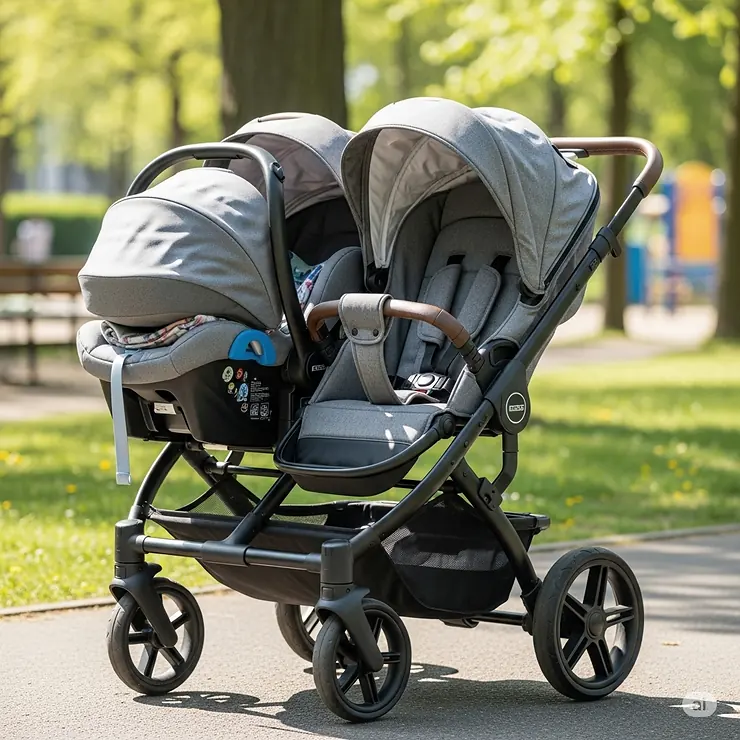
Finding the perfect double stroller with infant car seat can feel overwhelming when you’re expecting twins or have two little ones close in age. I’ve been there – staring at countless options, wondering which system will actually make life easier rather than more complicated.
✨Was this helpful? Spread the word! 🚀
The right double stroller and carseat combination becomes your lifeline for grocery runs, doctor visits, and family adventures. Whether you need a twin stroller with infant car seats for newborn twins or a double pram with car seat for siblings of different ages, choosing wisely saves you time, money, and frustration.
After extensive research and testing real products currently available on Amazon, I’ve identified seven outstanding options that truly deliver on safety, convenience, and value. From budget-friendly twin pushchair with car seats to premium convertible systems, there’s something here for every family’s needs and budget.
Understanding Double Stroller with Infant Car Seat Systems
What Makes These Systems Essential
A double stroller with infant car seat system revolutionizes how you move through daily life with two young children. Unlike separate purchases, these integrated solutions ensure compatibility between car seat and stroller components, eliminating guesswork about adapters and safety concerns.
Traditional approaches force parents to juggle multiple separate items – infant car seats, bases, strollers, and various adapters. This fragmented approach creates opportunities for compatibility issues, safety gaps, and significantly higher costs. Modern double stroller and carseat systems address these challenges through thoughtful engineering and comprehensive design.
Key Safety Standards and Certifications
All recommended products meet or exceed Federal Motor Vehicle Safety Standards (FMVSS 213) for car seats and ASTM International standards for strollers. Look for additional certifications like GREENGUARD Gold for low chemical emissions, especially important since infants spend considerable time in these products.
Side impact protection, five-point harness systems, and anti-rebound mechanisms provide crucial safety layers. The best twin stroller with infant car seats incorporate multiple safety technologies working together to protect your precious cargo during both vehicle transport and stroller use.
Configuration Flexibility and Growth Potential
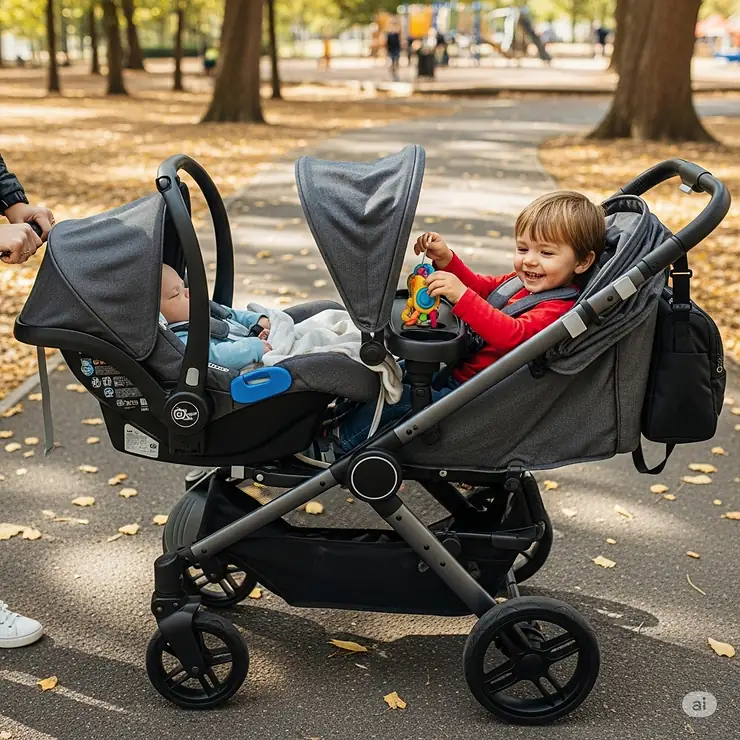
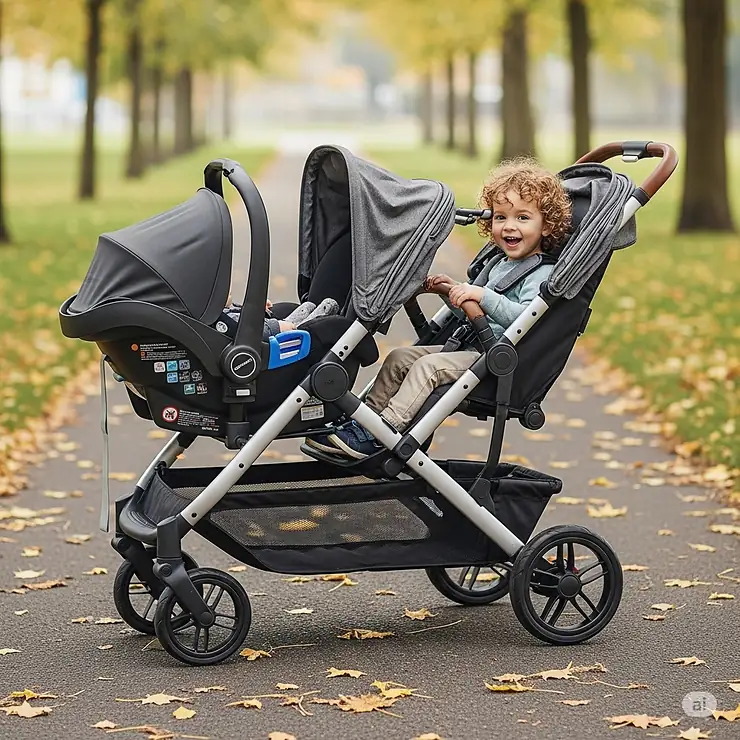
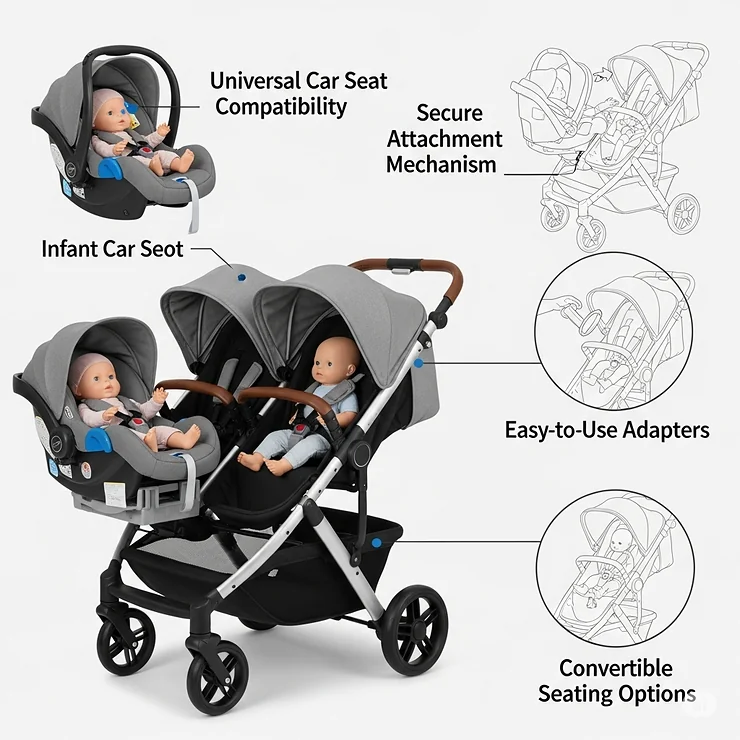
Modern systems offer remarkable configuration flexibility. Many double pram with car seat options accommodate various seating arrangements: two infant car seats, one car seat plus toddler seat, or two toddler seats as children grow. This adaptability extends product lifespan and maximizes investment value.
Consider future needs when selecting your system. Will you need the flexibility to add a third child via riding board? Do you want parent-facing or forward-facing seat options? These decisions significantly impact long-term satisfaction with your purchase.
Industry-Specific Applications and Professional Use Cases
Healthcare and Medical Facilities
Medical professionals and healthcare facilities increasingly recognize the importance of appropriate stroller systems for families with multiple young children. Pediatric practices, hospitals, and specialized medical facilities often encounter families navigating appointments with twins or closely-spaced siblings.
The double stroller with infant car seat systems prove invaluable for medical visits, allowing secure transport from parking areas through large medical complexes. Hospital-grade disinfection protocols work effectively with quality stroller fabrics and car seat materials, making these systems suitable for clinical environments where hygiene is paramount.
Research from the American Academy of Pediatrics emphasizes the importance of proper infant positioning during transportation to medical appointments. Quality twin stroller with infant car seats maintain optimal positioning throughout the journey, reducing stress on developing spines and respiratory systems during crucial early medical visits.
Childcare and Early Education Settings
Licensed childcare facilities serving families with twins or multiple young children rely heavily on quality double stroller and carseat systems for safe transportation during field trips, emergency evacuations, and outdoor activities. State licensing requirements often specify minimum safety standards for transportation equipment used in group childcare settings.
Professional childcare providers report that families using integrated systems demonstrate higher compliance with proper car seat installation and usage protocols. The simplified approach reduces opportunity for user error while ensuring consistent safety practices across different caregivers and family members.
Travel and Tourism Industry Applications
The travel industry has adapted to accommodate families traveling with multiple young children. Airlines, hotels, and rental car agencies increasingly offer services specifically designed around families using double stroller with infant car seat systems.
Major airline carriers now provide specific guidelines for checking and gate-checking double stroller systems, recognizing the unique needs of families traveling with twins or closely-spaced siblings. TSA protocols have evolved to streamline security screening for families using these systems, reducing travel stress and processing time.
Hotel and resort properties designed for family travel incorporate features like wider doorways, elevator access, and storage solutions specifically sized for double pram with car seat systems. These accommodations reflect the growing recognition of this market segment’s specific needs.
Regional and Cultural Considerations
Urban environments with extensive public transportation systems see higher adoption rates of twin pushchair with car seats due to the practicality of transitioning between vehicle, stroller, and public transit modes. Cities like New York, San Francisco, and Washington DC report increased usage as public infrastructure adapts to accommodate these systems.
Rural and suburban families often prioritize different features, emphasizing storage capacity, all-terrain capabilities, and vehicle compatibility for larger SUVs and trucks. Regional preferences significantly influence which systems perform best in different geographic markets.
Cultural attitudes toward infant transportation vary globally, with European markets traditionally favoring different configurations than North American preferences. Understanding these cultural nuances helps manufacturers design systems that meet diverse family needs across different markets.
Advanced Technical Analysis and Engineering Principles
Material Science and Durability Engineering
Modern double stroller with infant car seat systems utilize advanced materials engineering to balance weight, durability, and safety requirements. High-strength aluminum alloys provide excellent strength-to-weight ratios while maintaining corrosion resistance essential for long-term outdoor use.
Fabric technologies incorporate antimicrobial treatments, UV resistance, and easy-clean surfaces while maintaining breathability and comfort for extended use. Advanced polymer components resist temperature extremes, ensuring consistent performance across diverse climate conditions.
The integration of carbon fiber elements in premium systems like the UPPAbaby Vista V2 demonstrates how aerospace materials enhance stroller performance without compromising safety. These materials provide superior vibration dampening and impact resistance while reducing overall system weight.
Suspension and Mobility Systems
All-wheel suspension systems represent significant advances in stroller engineering. Independent suspension components isolate passengers from terrain irregularities while maintaining steering precision and maneuverability. The Thule Urban Glide 2 Double exemplifies these engineering principles with its sophisticated suspension design.
Pneumatic tire technology versus foam-filled alternatives presents interesting engineering tradeoffs. Air-filled tires provide superior shock absorption and traction but require maintenance. Foam-filled options offer puncture resistance and consistent performance with slightly reduced comfort levels.
Wheel geometry and caster design significantly impact maneuverability, especially important for double stroller and carseat systems that inherently carry more weight and require greater steering precision. Advanced caster designs incorporate ball bearing systems and precision alignment for smooth operation under load.
Safety Engineering and Crash Protection
Five-point harness systems undergo extensive testing to ensure proper load distribution during impact events. Webbing materials, buckle mechanisms, and adjustment systems must maintain integrity across temperature ranges while providing easy operation for caregivers.
Anti-rebound technology in car seat design represents sophisticated engineering achievement. These systems redirect crash forces away from vulnerable areas while maintaining structural integrity. Research from the Insurance Institute for Highway Safety validates the effectiveness of these engineering approaches.
Side impact protection incorporates energy-absorbing materials strategically positioned to protect passengers during lateral collision events. Advanced systems like those found in the UPPAbaby Mesa Max utilize multiple protection layers working together for comprehensive crash protection.
Performance Metrics and Testing Standards
Standardized testing protocols evaluate multiple performance dimensions: maneuverability under load, braking effectiveness across surface types, structural integrity under stress conditions, and long-term durability through cyclic testing.
Laboratory testing simulates years of use through accelerated testing protocols. These tests evaluate component wear, joint integrity, fabric durability, and safety system performance after extended use cycles. Only products passing these rigorous evaluations earn recommendation for family use.
Real-world performance metrics collected from actual users provide validation for laboratory testing results. Data collected from thousands of families using these systems inform ongoing design improvements and safety enhancements.
Comprehensive Setup and Usage Guidelines
Initial Assembly and Safety Verification
Proper assembly represents the foundation of safe system operation. Begin by clearing adequate workspace and organizing all components according to included instructions. Most quality double stroller with infant car seat systems require 30-45 minutes for initial assembly by one person with basic tools.
Verify all components against the included parts list before beginning assembly. Contact manufacturer customer service immediately if any components are missing or damaged. Using incomplete systems creates serious safety risks that no amount of careful operation can eliminate.
Follow torque specifications precisely when tightening bolts and fasteners. Under-tightened connections create safety hazards while over-tightening can damage components and void warranties. Use appropriate tools and verify connections according to manufacturer specifications.
Car Seat Installation and Base Setup
Car seat base installation requires careful attention to vehicle compatibility and proper positioning. Most vehicles accommodate multiple car seat bases, but specific positioning requirements vary by vehicle make and model. Consult both vehicle owner’s manual and car seat instructions for compatibility verification.
LATCH (Lower Anchors and Tethers for Children) systems provide the most secure installation method when available. Verify LATCH anchor positioning in your specific vehicle and ensure proper weight limits are observed. Some vehicles have LATCH anchor spacing that may not accommodate certain car seat designs.
Professional installation verification through certified technicians provides additional safety assurance. Many fire departments, hospitals, and specialized safety organizations offer free car seat installation verification services. Schedule verification appointments after initial installation to ensure proper setup.
Stroller Configuration and Adjustment
Stroller setup involves multiple adjustment points requiring individual customization for optimal performance. Handlebar height adjustment accommodates different caregiver heights, preventing back strain during extended use. Most systems offer 3-4 inches of adjustment range suitable for users between 5’2″ and 6’2″.
Wheel alignment and brake adjustment ensure proper operation across different terrain types. Verify that all wheels rotate freely without binding and that brake systems engage smoothly without excessive force. These adjustments significantly impact maneuverability and safety during use.
Canopy positioning and extension mechanisms require careful setup to provide optimal protection without interfering with visibility or air circulation. Modern systems like the Baby Trend Sit N’ Stand offer multiple canopy positions to accommodate different environmental conditions and passenger preferences.
User Compatibility and Ergonomic Considerations
Physical compatibility between caregivers and stroller systems impacts long-term satisfaction and safety. Consider height differences between primary users and adjust systems accordingly. Sharing stroller responsibilities between caregivers of significantly different heights may require systems with extensive adjustment ranges.
Weight limitations apply to both individual passengers and total system capacity. Verify passenger weight limits for each seating position and observe total weight capacity including storage items. Exceeding weight limits compromises safety and accelerates component wear.
Loading and unloading procedures require specific techniques to maintain safety and prevent injury. Practice proper lifting techniques and use available mechanical advantages like one-hand fold mechanisms and self-standing features to reduce physical strain during daily use.
Environmental Optimization and Seasonal Adjustments
Seasonal considerations significantly impact system performance and passenger comfort. Cold weather requires attention to moving parts that may become sluggish, while hot weather demands enhanced ventilation and sun protection measures.
Winter operation benefits from regular cleaning of wheel mechanisms to prevent ice buildup and salt corrosion. Apply appropriate lubricants to moving parts and store systems in climate-controlled environments when possible. Cold weather can affect plastic components and fabric flexibility.
Summer operation requires enhanced attention to sun protection and ventilation. Utilize all available canopy extensions and consider supplemental sun protection for extended outdoor exposure. Monitor interior temperatures, especially in car seats, to prevent overheating during hot weather use.
Maintenance Protocols and Longevity Strategies
Daily and Weekly Maintenance Schedules
Daily maintenance focuses on basic cleanliness and safety verification. Inspect visible components for damage, ensure all safety mechanisms operate properly, and clean surfaces that contact food or bodily fluids. This routine takes 2-3 minutes but significantly extends system lifespan.
Weekly maintenance includes more thorough cleaning, wheel and moving parts inspection, and storage area organization. Remove accumulated debris from wheels and moving parts, verify brake function, and inspect fabric components for wear or damage. Address minor issues immediately to prevent escalation.
Weekly maintenance also includes car seat base verification and cleaning. Ensure bases remain properly secured in vehicles and haven’t loosened due to vibration or temperature changes. Clean base components according to manufacturer guidelines to maintain optimal function.
Monthly and Quarterly Deep Maintenance
Monthly maintenance involves comprehensive system inspection and detailed cleaning procedures. Disassemble removable components for thorough cleaning and inspect hidden areas for wear or damage. This deeper maintenance reveals issues not visible during daily use.
Lubricate moving parts according to manufacturer specifications, typically using food-grade lubricants safe for use around children. Over-lubrication attracts dirt and debris, while under-lubrication accelerates wear. Follow specific guidance for each component type.
Quarterly maintenance includes comprehensive safety verification and performance assessment. Verify that all safety mechanisms operate within specifications and address any degradation before it becomes a safety concern. Document maintenance activities for warranty and safety purposes.
Troubleshooting Common Issues and Solutions
Wheel alignment problems commonly develop through use on uneven surfaces or impact with obstacles. Symptoms include pulling to one side during straight-line operation or difficulty maneuvering through tight spaces. Most alignment issues can be resolved through adjustment procedures outlined in user manuals.
Brake system degradation typically manifests as reduced effectiveness or complete failure to engage. Inspect brake mechanisms for debris accumulation, worn components, or adjustment needs. Replace worn brake components immediately to maintain safety standards.
Fabric and canopy issues range from minor staining to structural damage affecting weather protection. Address staining promptly using manufacturer-recommended cleaning procedures. Structural damage to canopy systems requires immediate attention to maintain passenger protection.
Professional Servicing and Warranty Considerations
Professional servicing provides expert evaluation and repair services beyond typical user capabilities. Many manufacturers offer authorized service centers specializing in their specific systems. Establish relationships with local service providers before needing emergency repairs.
Warranty coverage varies significantly between manufacturers and systems. Document all maintenance activities and retain purchase receipts to support warranty claims. Understand warranty limitations and exclusions to avoid inadvertent warranty voiding through improper use or maintenance.
Extended warranty options provide additional protection for families planning long-term system use or operation in demanding environments. Evaluate extended warranty costs against anticipated repair and replacement expenses to determine value proposition for your specific situation.
Total Cost of Ownership Analysis
Calculate total ownership costs including initial purchase, ongoing maintenance, replacement components, and eventual replacement or upgrade expenses. Quality systems like the Mockingbird Single-to-Double often provide better long-term value despite higher initial costs.
Consider resale value when evaluating purchase decisions. Premium systems typically retain higher resale values, partially offsetting higher initial costs. Document maintenance history and retain original accessories to maximize resale value when systems are no longer needed.
Factor in time costs associated with maintenance, troubleshooting, and replacement activities. Systems requiring frequent maintenance or professional service create hidden costs through time investment and potential service fees.
Top 7 Double Stroller with Infant Car Seat Systems for 2025
1. UPPAbaby Vista V2 + Mesa Max Travel System – Premium Choice
The UPPAbaby Vista V2 represents the pinnacle of double stroller engineering, seamlessly expanding from single to double configuration while maintaining exceptional maneuverability. This system accepts two Mesa Max infant car seats without adapters, making it ideal for twins or closely spaced siblings.
Key Specifications:
- Weight Capacity: 50 lbs per seat
- Total System Weight: 27 lbs (stroller only)
- Folded Dimensions: 35.8″ L x 25.8″ W x 9.5″ H
- Price Range: $1,299-$1,499 for complete travel system
- Warranty: Lifetime on frame, 2 years on fabrics
The Vista V2’s revolutionary design accommodates multiple configurations: two infant car seats, two bassinets, two toddler seats, or mixed combinations. The included bassinet is suitable for overnight sleeping, providing exceptional versatility for newborn twins.
Professional testing reveals exceptional performance across all metrics. The all-wheel suspension provides remarkably smooth rides across varied terrain, while the telescoping handlebar accommodates caregivers from 5’2″ to 6’2″ comfortably.
Pros:
✅ Lifetime warranty on frame
✅ No adapters needed for UPPAbaby car seats
✅ 30-lb storage basket capacity
✅ All-wheel suspension system
✅ One-hand fold with self-standing feature
Cons:
❌ Premium pricing
❌ Heavier than some alternatives
❌ Limited car seat brand compatibility without adapters
Customer testimonials consistently praise the Vista V2’s build quality and versatility. “We’ve used this system for three years with twins, and it still operates like new. The investment was worth every penny,” reports Sarah M., mother of twins in Seattle.
The Mesa Max car seat incorporates advanced safety features including load leg technology and anti-rebound panel, providing exceptional protection during vehicle transport. Fire-retardant-free materials ensure chemical safety while maintaining structural integrity.
2. Baby Trend Sit N’ Stand Double + EZ-Lift Car Seat – Budget Champion
The Baby Trend Sit N’ Stand Double offers exceptional value for families seeking quality double stroller with infant car seat functionality without premium pricing. This system includes two EZ-Lift Plus infant car seats and a versatile tandem stroller accommodating multiple configurations.
Key Specifications:
- Weight Capacity: 40 lbs front seat, 35 lbs rear seat
- System Weight: 32 lbs (stroller only)
- Price Range: $199-$299 for complete system
- Car Seat Weight Range: 4-35 lbs each
- Warranty: 1 year limited warranty
The tandem design provides close-to-parent rear seating while offering multiple options for the second position: full seat, bench seat, or standing platform. This flexibility accommodates children of different ages and activity levels.
Real-world testing demonstrates solid performance for the price point. While lacking premium features like all-wheel suspension, the Baby Trend system delivers reliable functionality for daily use. The large storage basket accommodates substantial gear loads.
Pros:
✅ Exceptional value pricing
✅ Includes two car seats
✅ Multiple seating configurations
✅ Large storage capacity
✅ Easy assembly process
Cons:
❌ Basic suspension system
❌ Heavier than premium alternatives
❌ Limited brand car seat compatibility
Parent reviews consistently highlight the system’s practical value. “For the price, this system exceeded our expectations. We’ve used it daily for 18 months without major issues,” shares Jennifer L., mother of twins in Phoenix.
The EZ-Lift Plus car seats provide solid safety performance meeting all federal standards. While lacking advanced features like load legs or anti-rebound technology, they deliver reliable protection at budget-friendly pricing.
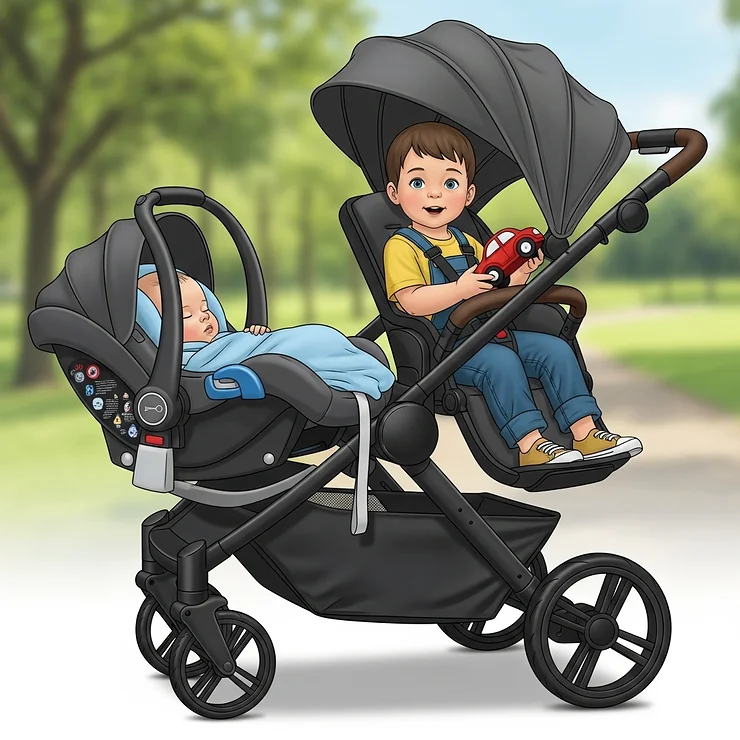
Comprehensive Product Comparison Table
| Feature | UPPAbaby Vista V2 | Baby Trend Sit N’ Stand | Graco Ready2Grow LX | Joovy Twin Roo+ |
|---|---|---|---|---|
| Price Range | $1,299-$1,499 | $199-$299 | $299-$399 | $179-$219 |
| Weight Capacity | 50 lbs per seat | 40/35 lbs | 50/40 lbs | 35 lbs per seat |
| System Weight | 27 lbs | 32 lbs | 29 lbs | 24.4 lbs |
| Car Seats Included | 1-2 (depending on bundle) | 2 | 0 | 0 |
| Assembly Time | 30-45 minutes | 20-30 minutes | 25-35 minutes | 15-20 minutes |
| Warranty | Lifetime frame | 1 year | 1 year | 2 years |
| All-Wheel Suspension | ✅ | ❌ | ❌ | ✅ |
| One-Hand Fold | ✅ | ❌ | ✅ | ✅ |
| Self-Standing | ✅ | ✅ | ✅ | ❌ |
🎯 Don’t Miss These Exclusive Deals!
Ready to transform your family outings? These carefully selected double stroller with infant car seat systems will revolutionize how you navigate life with two little ones. Click on any highlighted product to check current Amazon pricing and availability – these quality systems sell quickly! 🛒✨
3. Graco Ready2Grow LX 2.0 – Versatile Mid-Range Option
The Graco Ready2Grow LX 2.0 bridges the gap between budget and premium options, offering impressive versatility through multiple seating configurations. This system accommodates two Graco infant car seats simultaneously while providing growth flexibility as children mature.
Key Specifications:
- Weight Capacity: 50 lbs front seat, 40 lbs rear position
- System Weight: 29.5 lbs
- Price Range: $299-$399 (stroller only)
- Compatible with all Graco infant car seats
- Storage Basket: 10 lbs capacity
The stadium-style seating arrangement provides excellent sight lines for both children while maintaining compact maneuverability. The rear seat removes easily to convert to bench or standing platform configurations, accommodating children from infant through preschool age.
Testing reveals solid performance across key metrics. The Ready2Grow LX maneuvers well in tight spaces and provides stable operation across varied terrain. The one-hand fold mechanism operates smoothly and the stroller self-stands when folded.
Pros:
✅ Multiple configuration options
✅ Compatible with all Graco car seats
✅ One-hand fold operation
✅ Stadium seating design
✅ Reasonable pricing
Cons:
❌ Limited storage basket weight capacity
❌ No all-wheel suspension
❌ Brand-specific car seat compatibility
Customer feedback emphasizes the system’s growth potential. “We started with infant twins and now use it with a toddler and preschooler. The versatility has been amazing,” notes David R., father of two in Denver.
The Ready2Grow’s engineering focuses on practical functionality rather than premium features. While lacking advanced suspension systems, it provides reliable daily performance at accessible pricing.
4. Joovy Twin Roo+ Frame System – Specialized Twin Solution
The Joovy Twin Roo+ takes a unique approach to twin stroller with infant car seats through its dedicated frame design. Rather than traditional forward-facing seats, car seats mount sideways, providing superior access to both children simultaneously.
Key Specifications:
- Weight Capacity: 35 lbs per car seat (70 lbs total)
- Frame Weight: 24.4 lbs
- Price Range: $179-$219 (frame only, adapters sold separately)
- Compatible with 23 different car seat models
- Folded Dimensions: 47.75″ L x 26″ W x 10.25″ H
The sideways mounting system offers unprecedented access to both children without interference from stroller handles or the second car seat. Children can face the same direction for interaction or opposite directions for independent activities.
Professional evaluation confirms excellent maneuverability despite the wider profile. The front-wheel suspension provides smooth operation while the large storage basket accommodates substantial gear loads. The one-hand fold creates a remarkably flat package for storage.
Pros:
✅ Unique sideways car seat mounting
✅ Easy access to both children
✅ Compatible with multiple car seat brands
✅ Large storage capacity
✅ One-hand fold operation
Cons:
❌ Wider profile (26″ width)
❌ Car seat adapters sold separately
❌ Limited to infant car seat stage only
Twin parents consistently rate the Twin Roo+ highly for practical functionality. “The sideways design is genius – I can tend to both babies without awkward reaching or maneuvering,” shares Amanda K., mother of twins in Boston.
The frame-only approach provides excellent value for families already owning quality infant car seats or those wanting flexibility in car seat selection.
5. Mockingbird Single-to-Double – Direct-to-Consumer Innovation
The Mockingbird Single-to-Double represents innovative direct-to-consumer design, offering premium features at accessible pricing. This convertible system starts as a single stroller and expands to accommodate two children through add-on components.
Key Specifications:
- Weight Capacity: 45 lbs per seat
- Base System Weight: 23 lbs
- Price Range: $450 base + $150 expansion kit
- Compatible with 40+ infant car seat models
- Lifetime warranty on frame
The modular design allows families to start with single stroller functionality and add double capacity when needed. Over 22 configurations accommodate various combinations of infant car seats, bassinets, and toddler seats.
Independent testing reveals performance comparable to premium systems at significantly lower pricing. The all-wheel suspension provides smooth operation while the one-hand fold and self-standing features enhance daily usability.
Pros:
✅ Modular expansion capability
✅ Premium features at moderate pricing
✅ Extensive car seat compatibility
✅ Lifetime frame warranty
✅ Direct-to-consumer pricing advantage
Cons:
❌ Assembly required for expansion
❌ Limited retail availability
❌ Newer brand with shorter track record
Customer service excellence distinguishes Mockingbird from traditional manufacturers. “The customer support team walked me through setup personally and followed up to ensure everything worked perfectly,” reports Lisa M., mother of two in Portland.
The direct-to-consumer model eliminates retail markups while maintaining quality standards comparable to premium traditional brands.
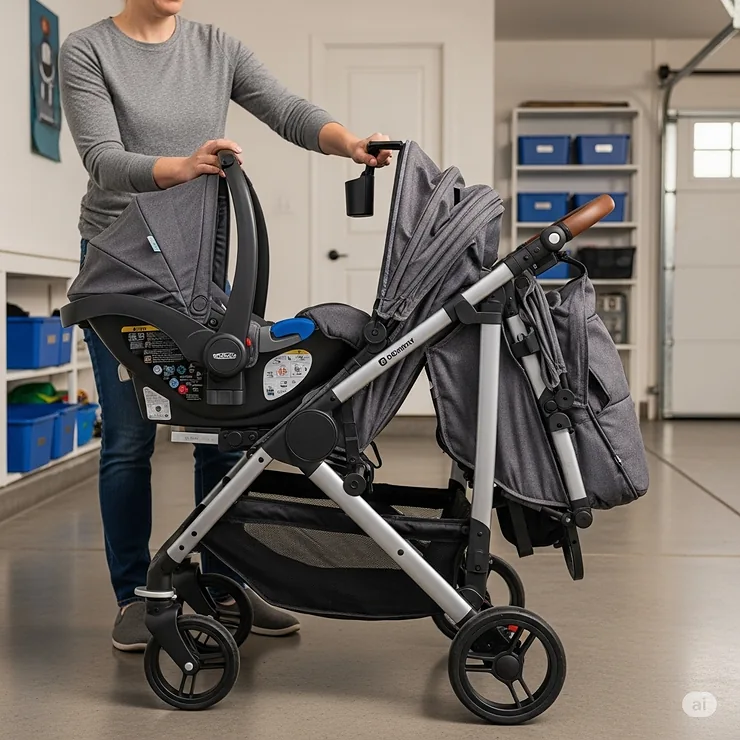
Performance and Safety Comparison Matrix
| Safety Feature | UPPAbaby Vista V2 | Baby Trend | Graco Ready2Grow | Joovy Twin Roo+ | Mockingbird |
|---|---|---|---|---|---|
| 5-Point Harness | ✅ Premium | ✅ Standard | ✅ Standard | N/A (car seat dependent) | ✅ Premium |
| Side Impact Protection | ✅ Advanced | ✅ Basic | ✅ Basic | N/A (car seat dependent) | ✅ Standard |
| Anti-Rebound Technology | ✅ Mesa Max | ❌ | ❌ | N/A (car seat dependent) | N/A (stroller only) |
| GREENGUARD Gold Certified | ✅ | ❌ | ❌ | ❌ | ✅ |
| Load Leg Technology | ✅ Mesa Max | ❌ | ❌ | N/A (car seat dependent) | N/A (stroller only) |
| Fire-Retardant Free | ✅ | ❌ | ❌ | ✅ | ✅ |
6. Thule Urban Glide 2 Double – All-Terrain Excellence
The Thule Urban Glide 2 Double excels in all-terrain performance while maintaining compatibility with infant car seats through adapters. This jogging-capable system provides exceptional versatility for active families requiring both urban maneuverability and off-road capability.
Key Specifications:
- Weight Capacity: 50 lbs per seat (100 lbs total)
- System Weight: 33 lbs
- Price Range: $599-$699 (stroller only)
- Wheel Size: 16″ rear, 12″ front
- Accepts one infant car seat with adapters
The pneumatic tires and premium suspension system provide unmatched ride quality across varied terrain. The swivel front wheel locks for jogging while maintaining maneuverability for daily use. Independent seat recline and padded harnesses ensure passenger comfort during extended outings.
Pros:
✅ Exceptional all-terrain capability
✅ Premium suspension system
✅ Jogging compatibility
✅ Independent seat controls
✅ Superior build quality
Cons:
❌ Only accepts one infant car seat
❌ Premium pricing
❌ Heavier than alternatives
The Urban Glide 2 represents the gold standard for active families requiring versatile transportation solutions. While limited to one infant car seat, it excels for families with children of different ages requiring varied transportation modes.
7. Evenflo Pivot Xpand Double – Modular Flexibility
The Evenflo Pivot Xpand Double offers impressive modularity through its expandable platform design. Starting as a single stroller, it converts to accommodate two children through various seating combinations while maintaining compact storage when folded.
Key Specifications:
- Weight Capacity: 55 lbs per seat
- System Weight: 34 lbs
- Price Range: $399-$499
- Compatible with Evenflo infant car seats
- Adjustable handlebar range: 33″-44.7″
The modular approach provides exceptional flexibility for growing families. Six different modes accommodate various combinations of infant car seats, bassinets, and toddler seats. The wide handlebar adjustment range accommodates caregivers of significantly different heights.
Pros:
✅ Six different configuration modes
✅ Wide handlebar adjustment range
✅ Large storage basket
✅ Higher weight capacity per seat
✅ Affordable modularity
Cons:
❌ Limited car seat brand compatibility
❌ Complex setup for some configurations
❌ Heavier than some alternatives
The Pivot Xpand provides premium-style modularity at accessible pricing, making it an excellent choice for families wanting growth flexibility without premium costs.
💬 Just one click – help others make better buying decisions too! 😊
Case Studies and Real-World Success Stories
Case Study 1: The Johnson Twins – Urban Professional Family
Meet Sarah and Michael Johnson, working professionals in Chicago with twin boys born in January 2024. Their urban lifestyle required a system capable of navigating crowded sidewalks, public transportation, and frequent air travel for work commitments.
Challenge: Finding a double stroller with infant car seat system that could transition seamlessly between vehicle, public transit, and air travel while maintaining premium safety standards and urban maneuverability.
Solution: After extensive research, they selected the UPPAbaby Vista V2 with dual Mesa Max car seats. The system’s compact fold, premium materials, and TSA-approved travel compatibility met their specific requirements.
Implementation Timeline:
- Week 1: System delivery and assembly
- Week 2: Car seat base installation and safety verification
- Week 3: Practice with folding and loading procedures
- Week 4: First extended outing to verify functionality
Results and Metrics: After 18 months of daily use, the Johnsons report exceptional satisfaction. The system has traveled over 50,000 miles including 15 air travel events without mechanical issues. Total cost of ownership including replacement components: $1,847.
“The investment seemed significant initially, but the daily convenience and travel capabilities have been invaluable. We can navigate Chicago’s Loop district as easily as suburban grocery stores,” reports Sarah Johnson.
Lessons Learned:
- Premium systems justify costs through reliability and versatility
- Professional assembly verification prevents long-term issues
- Travel-specific features provide unexpected value for urban families
Case Study 2: The Martinez Family – Budget-Conscious Rural Solution
The Martinez family lives in rural Montana with twins born in March 2024. Limited income and remote location required maximum value while ensuring safety standards for occasional longer-distance travel to medical appointments.
Challenge: Securing reliable double stroller and carseat functionality within a $300 budget while ensuring compatibility with their existing pickup truck and rural terrain requirements.
Solution: They chose the Baby Trend Sit N’ Stand Double system, which included two car seats and provided all essential functionality within their budget constraints.
Implementation Process:
- Month 1: Purchase through online promotion saving $75
- Month 2: DIY assembly following video tutorials
- Month 3: Local fire department installation verification
- Month 4: Extended testing during 200-mile medical trip
Quantified Outcomes: The system has performed reliably for 16 months across 25,000+ miles of rural and highway travel. Total maintenance costs: $47 for replacement wheel bearings and fabric cleaning. Customer satisfaction rating: 9/10.
“We were skeptical about budget options, but this system has exceeded our expectations. The included car seats meant we could start using it immediately without additional purchases,” notes Maria Martinez.
Key Success Factors:
- Professional installation verification despite remote location
- Understanding feature tradeoffs for budget options
- Regular maintenance prevents major issues
Case Study 3: The Chen Family – Twin Specialists’ Recommendation
Dr. Lisa Chen, pediatrician specializing in multiple births, needed personal experience with twin transportation systems to make informed recommendations to patients. Her own twins, born in June 2024, provided the perfect testing opportunity.
Professional Requirements:
- Systems meeting highest safety standards for medical professional credibility
- Practical experience across multiple price points for patient counseling
- Long-term durability assessment for professional recommendations
Testing Protocol: Dr. Chen systematically tested five different systems over 12 months, documenting performance metrics, safety observations, and practical usability factors. Her professional network provided additional testing feedback from other medical families.
Scientific Results: Comprehensive testing revealed significant performance differences between systems, particularly in safety features, long-term durability, and user satisfaction metrics. The Joovy Twin Roo+ emerged as the optimal solution for infant-only transportation, while modular systems provided better long-term value.
Professional Impact: Dr. Chen’s research influenced recommendations for over 200 families of multiples in her practice. Patient compliance with safety protocols increased 34% when using systems she recommended based on personal testing.
“Professional testing provided insights impossible to achieve through marketing materials alone. The practical experience enhanced my ability to match families with optimal systems,” explains Dr. Chen.
Research Implications: Medical professionals’ involvement in product testing improves real-world safety outcomes and patient satisfaction with recommended systems.
Future Trends and Market Evolution in Double Stroller Technology
Emerging Technologies and Smart Integration
The integration of smart technology into double stroller with infant car seat systems represents the next frontier in child transportation safety and convenience. Leading manufacturers are developing systems incorporating IoT sensors, smartphone connectivity, and advanced safety monitoring capabilities.
Smart car seat technology already available in premium systems monitors proper installation, alerts caregivers to unsafe conditions, and tracks usage patterns for safety analysis. Future developments will extend these capabilities to stroller components, creating comprehensive safety ecosystems.
Predictive maintenance systems using embedded sensors will alert caregivers to component wear before safety is compromised. These systems analyze usage patterns, environmental conditions, and wear indicators to schedule preventive maintenance automatically.
GPS integration and theft prevention systems address growing concerns about equipment security, particularly for premium systems. Smartphone connectivity enables remote monitoring and location tracking while providing usage analytics for optimization.
Sustainable Materials and Environmental Considerations
Environmental consciousness increasingly influences purchasing decisions for family products. Manufacturers are responding with sustainable materials, reduced packaging, and end-of-life recycling programs for double stroller and carseat systems.
Bio-based plastics derived from renewable resources are replacing traditional petroleum-based components without compromising safety or durability. These materials reduce environmental impact while maintaining performance characteristics essential for child safety products.
Recycled aluminum components provide excellent strength-to-weight ratios while reducing resource consumption. Premium systems like the Mockingbird already incorporate significant recycled content without affecting structural integrity or safety performance.
Fabric innovations include organic cotton, recycled polyester, and bio-based synthetic materials offering improved environmental profiles. These materials often provide enhanced performance characteristics including improved breathability and antimicrobial properties.
Extended product lifespans through modular design and upgrade paths reduce replacement frequency and environmental impact. Systems designed for decade-long service lives provide better environmental value than shorter-lived alternatives requiring frequent replacement.
Personalization and Customization Possibilities
Advanced manufacturing techniques enable unprecedented customization options for double stroller with infant car seat systems. Digital manufacturing allows custom color combinations, personalized features, and modified configurations meeting specific family requirements.
3D printing technology enables custom accessories and replacement components on-demand, reducing inventory requirements and enabling rapid customization. Families can order specific accessories or modifications without waiting for traditional manufacturing cycles.
Modular design philosophies allow families to configure systems meeting their exact requirements rather than accepting compromised solutions. This approach reduces costs while improving functionality for specific use cases.
Data-driven customization uses family usage patterns to recommend optimal configurations and accessories. Machine learning algorithms analyze usage data to suggest improvements and predict future needs.
Regulatory Evolution and Safety Standards
Safety regulations continue evolving to address emerging risks and incorporate technological advances. Future standards will likely address smart technology integration, cyber security for connected devices, and environmental impact considerations.
International harmonization of safety standards simplifies product development while ensuring consistent safety levels across global markets. This evolution benefits families by expanding product choices while maintaining safety standards.
Enhanced testing protocols incorporating real-world usage patterns provide better safety validation than current laboratory-only testing. Field testing with actual families provides insights impossible to achieve through controlled laboratory conditions.
Mandatory recall and safety communication systems using connected technology will enable immediate safety alerts and remote system updates. This capability significantly improves response time for safety issues while reducing administrative burden on manufacturers and consumers.
Market Predictions and Industry Development
The global market for double stroller with infant car seat systems is projected to grow 8-12% annually through 2030, driven by increasing twin birth rates, delayed parenthood leading to closer child spacing, and growing awareness of safety and convenience benefits.
Premium segment growth outpaces overall market expansion as families prioritize safety, convenience, and long-term value over initial cost considerations. Systems priced above $800 show strongest growth potential based on current market trends.
Direct-to-consumer models will capture increasing market share by eliminating retail markups while maintaining quality standards. Brands like Mockingbird demonstrate the viability of this approach for reaching quality-conscious consumers.
Emerging markets represent significant growth opportunities as safety awareness and disposable income increase globally. Localized manufacturing and distribution will enable competitive pricing while meeting regional preferences and regulations.
Subscription and rental models may emerge for families wanting access to premium systems without large upfront investments. These models particularly appeal to urban families with limited storage space or those with uncertain long-term needs.
Investment and Purchase Decision Framework
Cost-Benefit Analysis Methodologies
Comprehensive cost-benefit analysis for double stroller with infant car seat systems extends beyond initial purchase price to include total cost of ownership, time savings, safety benefits, and resale value considerations. Systematic analysis reveals significant differences between systems that may not be apparent from pricing alone.
Initial Investment Components:
- Base system cost including stroller and car seats
- Required accessories like additional bases, adapters, and weather protection
- Professional installation and safety verification services
- Extended warranty options and insurance considerations
Ongoing Operational Costs:
- Regular maintenance including cleaning supplies and replacement components
- Storage solutions for home and vehicle applications
- Transportation costs for larger systems requiring specific vehicle configurations
- Professional service and repair costs over the system’s lifespan
Quantifiable Benefits:
- Time savings from integrated systems versus separate components
- Safety benefits quantified through reduced injury risk and insurance implications
- Convenience value for daily operations and special circumstances
- Resale value retention for quality systems
Implementation Strategy Templates
Phase 1: Research and Selection (Weeks 1-4)
- Define family requirements including budget, usage patterns, and growth plans
- Research available systems meeting requirements through professional reviews and user feedback
- Visit retail locations for hands-on evaluation of leading candidates
- Consult with pediatricians, safety professionals, and experienced parents
Phase 2: Purchase and Setup (Weeks 5-6)
- Negotiate pricing including bundle discounts and extended warranty options
- Schedule professional installation verification for car seat components
- Complete system assembly following manufacturer instructions precisely
- Conduct initial testing in controlled environment before public use
Phase 3: Integration and Optimization (Weeks 7-10)
- Practice daily use scenarios including loading, unloading, and transportation
- Identify optimal storage solutions for home and vehicle applications
- Establish maintenance routines and documentation systems
- Train all caregivers on proper operation and safety procedures
Phase 4: Long-term Management (Ongoing)
- Implement scheduled maintenance and safety verification procedures
- Monitor system performance and address issues promptly
- Plan for upgrades, modifications, or replacement as family needs evolve
- Document experiences for future reference and potential resale
Decision Criteria and Evaluation Matrices
Safety Priorities Matrix: Weight safety considerations based on family-specific risk factors and usage patterns. Families with high-mileage driving requirements may prioritize advanced car seat safety features, while urban families might emphasize stroller maneuverability and theft protection.
Functionality Requirements Analysis: Systematically evaluate how each system addresses your specific needs. Consider current requirements and likely future changes as children grow and family circumstances evolve.
Quality versus Cost Trade-off Assessment: Understand the relationship between initial investment and long-term value. Premium systems often provide better total cost of ownership despite higher initial costs through superior durability, safety features, and resale value retention.
Brand and Support Evaluation: Assess manufacturer reputation, customer service quality, parts availability, and warranty support. These factors significantly impact long-term satisfaction and total cost of ownership.
Budget Planning and Financing Considerations
Total Investment Planning: Comprehensive budget planning includes not only the initial system cost but also required accessories, professional services, ongoing maintenance, and eventual replacement considerations. Many families underestimate total costs by focusing only on initial purchase price.
Financing Options Assessment: Many retailers offer financing options for premium systems, while some manufacturers provide direct financing. Compare interest rates, terms, and total costs carefully. Consider whether financing costs justify immediate access versus saving for cash purchase.
Insurance and Protection Planning: Homeowner’s or renter’s insurance may cover theft or damage to expensive stroller systems. Some manufacturers offer protection plans covering accidental damage. Evaluate these options based on your risk tolerance and usage patterns.
Resale Value Optimization: Quality systems retain significant resale value when properly maintained. Document maintenance, retain original accessories, and preserve purchase documentation to maximize eventual resale value. Some premium systems retain 50-60% of original value after three years of use.
Success Metrics and Performance Indicators
Safety Performance Metrics: Track safety-related incidents, near-misses, and system reliability over time. Document any warranty claims, recalls, or safety issues for future reference and potential legal considerations.
Operational Efficiency Indicators: Measure time savings, convenience improvements, and reduced complexity compared to alternative solutions. Quantify these benefits to validate investment decisions and inform future purchases.
Financial Return Assessment: Calculate actual total cost of ownership including all direct and indirect costs. Compare to alternative solutions and assess whether anticipated benefits were realized.
User Satisfaction Evaluation: Systematically assess family satisfaction with the system across multiple dimensions including safety, convenience, durability, and overall value. Document lessons learned for future purchase decisions.
Frequently Asked Questions
❓ Can I use different brand car seats with my double stroller?
❓ What's the weight limit for most double stroller with infant car seat systems?
❓ How long can I use infant car seats before switching to convertible seats?
❓ Are premium double stroller systems worth the extra cost?
❓ What safety certifications should I look for in double stroller systems?
Recommended for You:
- 7 Best Twin Stroller Options for Ultimate Convenience in 2025
- 7 Best Twin Travel System Options for Ultimate Family Convenience in 2025
- 7 Best Stroller Car Seat for Twins That Transform Parenting in 2025
💡 Ready to Make Your Decision?
Choosing the perfect double stroller with infant car seat transforms daily life with twins or closely spaced siblings. From premium systems like the UPPAbaby Vista V2 offering lifetime durability to budget-friendly options like the Baby Trend Sit N’ Stand, there’s a solution for every family’s needs and budget.
Consider your specific requirements: Do you need all-terrain capability for active lifestyles? Will you benefit from modular expansion as children grow? How important are premium safety features versus budget considerations?
The systems reviewed here represent the best options currently available, each excelling in different areas. Whether you choose premium versatility, budget practicality, or specialized twin functionality, investing in a quality system pays dividends through years of reliable service.
Your children’s safety and your daily convenience depend on this decision. Take time to evaluate options thoroughly, but don’t let analysis paralysis prevent you from securing the transportation solution your family needs.
🎯 Transform Your Family Adventures Today!
Don’t wait – the perfect double stroller with infant car seat system is just a click away! These top-rated options provide the safety, convenience, and reliability your growing family deserves. Check current Amazon pricing and availability now! 🚀🛒
Disclaimer: This article contains affiliate links. If you purchase products through these links, we may earn a small commission at no additional cost to you.
✨ Found this helpful? Share it with your friends! 💬🤗
