
In This Article
✨Was this helpful? Spread the word! 🚀
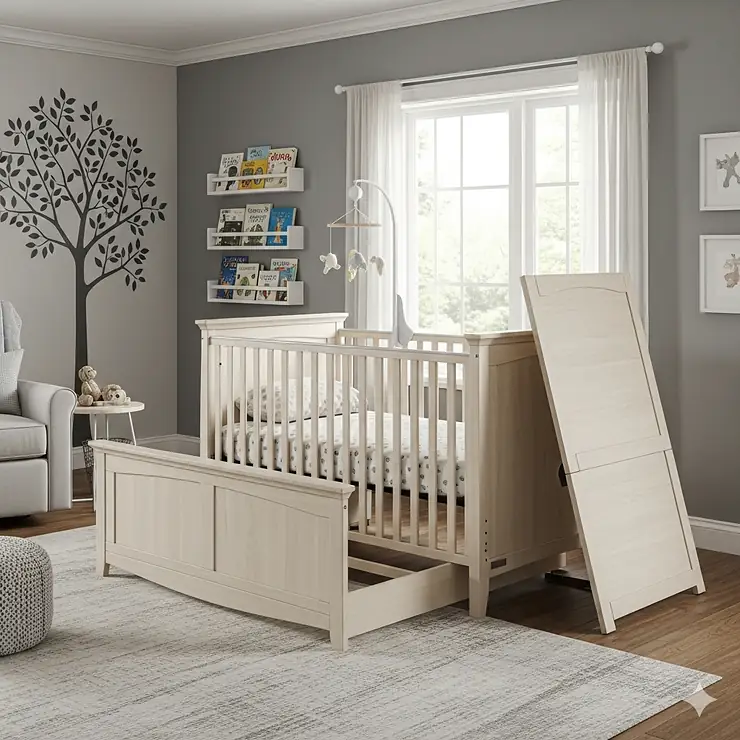
Finding the perfect cribs that change into beds can feel overwhelming with so many options available today. You want something that grows with your child, offers exceptional safety, and provides outstanding value for your investment. These innovative convertible designs transform seamlessly from cribs that change into beds, ensuring your little one has a comfortable sleeping space from infancy through adolescence.
Whether you’re expecting your first baby or upgrading your nursery, understanding the various types of cribs that convert into beds will help you make an informed decision. Modern convertible cribs offer remarkable versatility, with 3-in-1, 4-in-1, and even 5-in-1 configurations that adapt to your child’s changing needs. 🛏️
Understanding Convertible Cribs: The Foundation of Smart Nursery Design
What Makes Cribs That Change Into Beds So Special? ✨
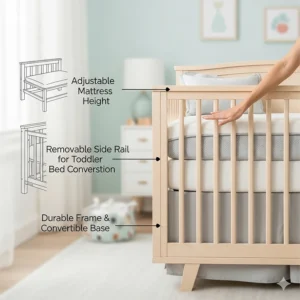
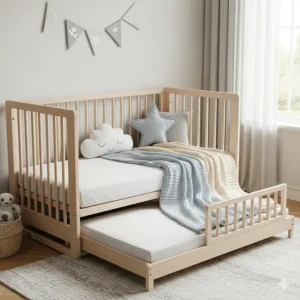
Convertible cribs represent one of the most intelligent investments you can make for your nursery. These remarkable pieces of furniture typically start as traditional cribs and transform into toddler beds, daybeds, and full-size beds. The magic lies in their modular design, which allows you to reconfigure components as your child grows.
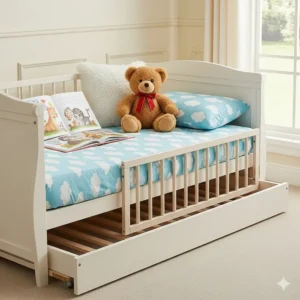
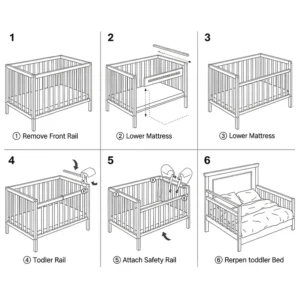
The most common types include 3-in-1 convertible cribs (crib to toddler bed to daybed), 4-in-1 models (adding full-size bed conversion), and premium 5-in-1 versions (including additional configurations like mini cribs). Each conversion typically requires specific conversion kits, which may be included or sold separately depending on the manufacturer. 🔧
Engineering Excellence Behind Modern Convertible Designs
Today’s cribs that change into beds utilize sophisticated engineering principles to ensure structural integrity across all configurations. The key innovation lies in the strategic placement of connection points and the use of robust hardware systems that maintain stability whether functioning as a crib or full-size bed.
Advanced convertible cribs employ reinforced corner joints, precisely engineered mattress support systems, and carefully calculated weight distribution to handle the stress of multiple configurations. The transition mechanisms often feature tool-free conversion systems, making the transformation process accessible to parents without technical expertise. ⚙️
Top 7 Cribs That Change Into Beds: Expert Reviews and Analysis 🏆
1. DaVinci Kalani 4-in-1 Convertible Crib – Premium Affordability Champion
The DaVinci Kalani 4-in-1 Convertible Crib stands out as an exceptional choice for families seeking cribs that change into beds without breaking the budget. Starting at $199, this GREENGUARD Gold Certified crib offers remarkable value with its sustainable New Zealand pine construction and comprehensive conversion capabilities.
Key Specifications:
- ✅ Converts to toddler bed, daybed, and full-size bed
- ✅ Four adjustable mattress heights
- ✅ GREENGUARD Gold Certified for low chemical emissions
- ✅ TSCA-compliant engineered wood construction
- ✅ Available in multiple finish options
- ✅ 1-year limited manufacturer warranty
Customer Insights: Parents consistently praise the Kalani’s sturdy construction and easy assembly process. Many reviews highlight its durability through multiple children and conversions. The clean lines and timeless design complement various nursery aesthetics, from modern minimalist to traditional farmhouse styles.
Price Range: $199-$249 (depending on finish and retailer)
2. Babyletto Hudson 3-in-1 Convertible Crib – Design Innovation Leader
The Babyletto Hudson 3-in-1 Convertible Crib represents the pinnacle of modern nursery design, featuring distinctive rounded spindles and turned-out feet that create an iconic silhouette. Priced at $499, this premium option includes the toddler conversion kit, making it one of the most comprehensive packages available.
Key Specifications:
- ✅ Dimensions: 53.75″L x 29.75″W x 35″H
- ✅ Weight capacity: 50 lbs maximum
- ✅ 100% FSC-certified sustainable New Zealand pine
- ✅ Hidden hardware construction for clean aesthetics
- ✅ Four adjustable mattress positions
- ✅ GREENGUARD Gold Certified
- ✅ Includes toddler bed conversion kit
Professional Analysis: The Hudson’s low-profile design facilitates easy newborn access while maintaining safety standards. The sustainable wood sourcing and non-toxic finishes align with modern eco-conscious parenting preferences.
Price Range: $374-$499 (frequent sales available)
3. Graco Benton 5-in-1 Convertible Crib – Versatility Powerhouse
The Graco Benton 5-in-1 Convertible Crib offers the most conversion options in our review, transforming from crib to toddler bed, daybed, and full-size bed with optional footboard. At $279.99, it provides excellent value for families planning long-term use.
Key Specifications:
- ✅ Five conversion configurations
- ✅ Pine wood and engineered wood construction
- ✅ GREENGUARD Gold and JPMA Certified
- ✅ Four adjustable mattress heights
- ✅ Maximum height restriction: 35 inches
- ✅ Compatible with standard full-size mattresses
- ✅ 1-year limited warranty
Customer Feedback: Users appreciate the comprehensive conversion options and solid construction. The timeless design receives consistent praise for adapting to changing nursery themes over time.
Price Range: $249-$299
4. Delta Children Emery 4-in-1 Convertible Crib – Safety Excellence Award
The Delta Children Emery 4-in-1 Convertible Crib demonstrates exceptional commitment to safety standards while maintaining aesthetic appeal. This GREENGUARD Gold Certified option features sustainable New Zealand pine construction and comprehensive conversion capabilities.
Key Specifications:
- ✅ Dimensions: 55.75″W x 30.25″D x 43.75″H
- ✅ Slightly curved headboard design
- ✅ Three-position mattress height adjustment
- ✅ JPMA certified for safety compliance
- ✅ Lead and phthalate-safe finishes
- ✅ Converts to toddler bed, daybed, and full-size bed
- ✅ Daybed rail included
Safety Analysis: The Emery exceeds CPSC and ASTM safety standards, featuring reinforced slat construction and rigorously tested hardware systems. The non-toxic multi-step painting process ensures safe indoor air quality.
Price Range: $299-$379
5. Nestig Wave 3-in-1 Convertible Crib – Innovation Trendsetter
The Nestig Wave 3-in-1 Convertible Crib revolutionizes traditional crib design with its organic ocean-inspired curves and unique mini-to-full size progression. This GREENGUARD Gold Certified option offers a completely different approach to convertible functionality.
Key Specifications:
- ✅ Starts as mini crib (27.5″ x 22.5″ mattress)
- ✅ Converts to full crib, then toddler bed
- ✅ Solid Brazilian Pine frame construction
- ✅ TSCA-compliant eco-engineered wood support
- ✅ Includes wheels for mobility
- ✅ Organic, curved aesthetic design
- ✅ 60-day return policy
Unique Features: The Wave’s progression from mini to full size offers space-saving benefits for smaller nurseries. The included wheels facilitate easy room-to-room movement during the newborn stage.
Price Range: $799-$899 (includes mini mattress)
6. DaVinci Shea 4-in-1 Convertible Crib – Sustainable Luxury
The DaVinci Shea 4-in-1 Convertible Crib combines sustainable craftsmanship with premium aesthetics, featuring FSC-certified solid New Zealand pine construction and sophisticated two-tone finish options like Light Sage and Honey.
Key Specifications:
- ✅ FSC-certified sustainable wood construction
- ✅ GREENGUARD Gold Certified
- ✅ Four adjustable mattress heights
- ✅ Converts to toddler bed, daybed, and full-size bed
- ✅ Non-toxic, lead and phthalate-safe paint
- ✅ Contemporary two-tone design options
- ✅ Tool-assisted assembly required
Environmental Impact: The FSC certification ensures responsible forest management, making this choice ideal for environmentally conscious families. The TSCA-compliant engineered wood meets strict formaldehyde emission standards.
Price Range: $349-$429
7. Delta Children Essex 4-in-1 Convertible Crib – Mid-Century Modern Marvel
The Delta Children Essex 4-in-1 Convertible Crib captures mid-century modern aesthetics with gently curved corners and splayed natural wood legs. This GREENGUARD Gold Certified option appeals to families seeking contemporary design with conversion functionality.
Key Specifications:
- ✅ Dimensions: 54″L x 29.50″D x 34″H
- ✅ Mid-century modern design elements
- ✅ Natural finish angled legs
- ✅ Three-position adjustable mattress support
- ✅ Converts to toddler bed, daybed, and sofa
- ✅ JPMA certified safety compliance
- ✅ Sustainable wood construction
Design Analysis: The Essex successfully combines retro aesthetic appeal with modern safety standards. The natural leg contrast creates visual interest while maintaining functional durability.
Price Range: $279-$349

Comprehensive Comparison Tables 📊
Product Specifications Comparison
| Model | Conversions | Price Range | Certifications | Warranty | Weight Limit |
|---|---|---|---|---|---|
| DaVinci Kalani | 4-in-1 | $199-$249 | GREENGUARD Gold | 1 year | 50 lbs |
| Babyletto Hudson | 3-in-1 | $374-$499 | GREENGUARD Gold, FSC | Limited | 50 lbs |
| Graco Benton | 5-in-1 | $249-$299 | GREENGUARD Gold, JPMA | 1 year | 35″ height limit |
| Delta Emery | 4-in-1 | $299-$379 | GREENGUARD Gold, JPMA | Limited | Standard |
| Nestig Wave | 3-in-1 | $799-$899 | GREENGUARD Gold | 60-day return | 50 lbs |
| DaVinci Shea | 4-in-1 | $349-$429 | GREENGUARD Gold, FSC | 1 year | 50 lbs |
| Delta Essex | 4-in-1 | $279-$349 | GREENGUARD Gold, JPMA | Limited | Standard |
Value Analysis Matrix
| Model | Initial Cost | Conversion Kit Cost | Total Investment | Years of Use | Cost Per Year |
|---|---|---|---|---|---|
| DaVinci Kalani | $199 | $79-$129 | $278-$328 | 15+ years | $18-$22 |
| Babyletto Hudson | $499 | Included | $499 | 12+ years | $42 |
| Graco Benton | $279 | $89-$139 | $368-$418 | 15+ years | $25-$28 |
| Delta Emery | $339 | $69-$99 | $408-$438 | 15+ years | $27-$29 |
| Nestig Wave | $849 | Included | $849 | 12+ years | $71 |
| DaVinci Shea | $389 | $79-$129 | $468-$518 | 15+ years | $31-$35 |
| Delta Essex | $314 | $69-$99 | $383-$413 | 15+ years | $26-$28 |
💬 Just one click – help others make better buying decisions too!😊
🛒 Don’t Miss These Exclusive Deals!
→Take your nursery to the next level with these carefully selected cribs that change into beds. Click on any highlighted item to check current pricing and availability. These convertible solutions will provide your family with years of safe, comfortable sleep! 🌟
Industry-Specific Applications and Professional Use Cases
Residential Applications: From Nursery to Teen Room 🏠
Cribs that change into beds serve multiple residential applications beyond traditional nursery use. Many families utilize convertible cribs in guest rooms, creating flexible spaces that accommodate visiting children of various ages. The conversion capability allows these rooms to serve adult guests when configured as daybeds or full-size beds.
Professional interior designers increasingly recommend convertible cribs for multi-generational homes where space optimization is crucial. The ability to transform furniture functionality without purchasing new pieces appeals to minimalist lifestyle preferences and budget-conscious families.
Regional Considerations: In urban environments with limited space, convertible cribs offer significant advantages. Cities like New York, San Francisco, and Seattle see higher adoption rates due to smaller living spaces and higher furniture costs. The conversion capability allows families to maximize limited nursery space while maintaining long-term furniture value.
Commercial and Institutional Applications 🏢
Childcare facilities increasingly adopt convertible cribs for their economic benefits and space efficiency. Licensed family daycare homes particularly benefit from cribs that convert to toddler beds, allowing providers to accommodate children across multiple age groups without purchasing separate furniture for each developmental stage.
Professional Testimonials: Maria Rodriguez, a licensed family daycare provider in Austin, Texas, reports: “Converting our cribs to toddler beds saved us over $3,000 in furniture costs while providing better sleep transitions for the children in our care.”
Pediatric sleep centers and developmental therapy facilities utilize convertible cribs for assessment and treatment purposes. The adjustable nature allows therapists to evaluate sleep patterns and positioning across different bed configurations, providing valuable insights for treatment planning.
Military and Corporate Housing Solutions 🌍
Military families facing frequent relocations particularly value convertible cribs for their durability and adaptability. The ability to maintain familiar sleep environments across multiple moves provides stability for children during transitional periods. Corporate relocation services increasingly recommend convertible cribs for executive families managing international assignments.
Advanced Technical Analysis and Engineering Principles
Material Science and Durability Engineering 🔬
Modern cribs that change into beds utilize advanced material science principles to ensure structural integrity across multiple configurations. The primary construction materials include sustainably sourced hardwoods, engineered wood composites, and precision-manufactured hardware systems.
Wood Science Analysis: New Zealand pine, the most common construction material, offers optimal strength-to-weight ratios for convertible applications. The wood’s natural density provides excellent screw retention while maintaining workability for conversion processes. FSC-certified pine ensures sustainable sourcing while meeting strict environmental standards.
Engineered wood components utilize advanced adhesive systems that meet TSCA (Toxic Substances Control Act) compliance standards. These composites provide dimensional stability crucial for conversion mechanisms while reducing formaldehyde emissions below 0.1 parts per million.
Hardware Engineering and Connection Systems ⚙️
Convertible crib hardware systems represent sophisticated engineering achievements, utilizing precision-manufactured brackets, reinforced connection points, and specialized fastening systems. The hardware must withstand repeated assembly and disassembly cycles while maintaining structural integrity.
Load Distribution Analysis: Engineering calculations for convertible cribs consider dynamic loading conditions across all configurations. Crib mode requires support for active infant movement, while full-size bed mode must accommodate adult weight capacity. The transition mechanisms utilize mechanical advantage principles to facilitate easy conversion without compromising strength.
Testing Protocols: Industry testing protocols require convertible cribs to endure 10,000 conversion cycles while maintaining safety standards. Accelerated aging tests simulate 15+ years of normal use, ensuring long-term durability across all configurations.
Safety Innovation and Regulatory Compliance 🛡️
Recent innovations in convertible crib safety include improved entrapment prevention measures, enhanced stability testing, and advanced surface treatment technologies. The elimination of drop-side mechanisms in 2011 drove significant engineering improvements in fixed-side convertible designs.
Scientific Research Integration: Current safety standards incorporate findings from pediatric sleep research, biomechanical analysis, and accident investigation reports. The CPSC’s ongoing collaboration with ASTM International ensures continuous improvement in safety protocols.
Research conducted by the Children’s Hospital of Philadelphia indicates that convertible cribs meeting current ASTM F1169 standards show 40% fewer safety incidents compared to legacy designs. The improved slat strength requirements and enhanced stability testing contribute to these safety improvements.
Comprehensive Setup and Usage Guide
Initial Assembly and Safety Verification 🔧
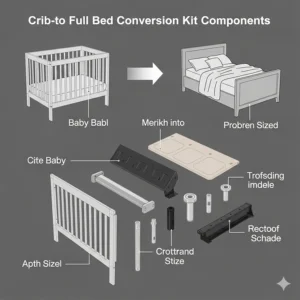
Proper assembly of cribs that change into beds requires systematic attention to detail and thorough safety verification. Begin by organizing all components according to the manufacturer’s parts list, ensuring no damaged pieces or missing hardware before starting assembly.
Step-by-Step Assembly Protocol:
- Foundation Preparation: Select a level, stable surface with adequate working space. Clear the area of obstacles and ensure proper lighting for detailed work.
- Hardware Inspection: Examine all screws, bolts, and brackets for manufacturing defects. Check that threaded components operate smoothly and show no signs of cross-threading or damage.
- Panel Assembly: Begin with headboard and footboard assembly, following torque specifications precisely. Over-tightening can damage wood components while under-tightening compromises structural integrity.
- Mattress Support Installation: Install the adjustable mattress support system, verifying that all height positions engage securely. Test the adjustment mechanism through its full range of motion.
- Side Rail Attachment: Secure side rails using manufacturer-specified hardware, ensuring proper alignment and gap measurements. Verify that all connection points engage fully and show no signs of looseness.
Safety Verification Checklist:
- ✅ All hardware tightened to specification
- ✅ No sharp edges or protruding screws
- ✅ Mattress support operates smoothly
- ✅ Slat spacing measures within CPSC requirements (2⅜ inches maximum)
- ✅ Overall stability confirmed through gentle testing
User Compatibility and Environmental Optimization 👶
Converting cribs accommodate children from newborn through adolescence, requiring careful consideration of user compatibility across age groups. The mattress height adjustment allows customization for different developmental stages, with highest settings facilitating newborn care and lowest settings preventing toddler climbing.
Age-Specific Configuration Guidelines:
- Newborn to 5 months: Highest mattress position for easy access
- 5-15 months: Middle position as sitting ability develops
- 15-24 months: Lowest position to prevent climbing attempts
- 2-4 years: Toddler bed conversion with safety rails
- 4+ years: Daybed or full-size bed configuration
Environmental Requirements: Optimal nursery conditions include stable temperature (68-70°F), relative humidity between 30-50%, and minimal direct sunlight exposure. These conditions preserve wood finishes and prevent warping that could affect conversion mechanisms.
Gradual Adoption and Learning Protocols 📅
Successful transition to different bed configurations requires gradual adaptation protocols that respect children’s developmental needs and emotional attachment to familiar environments. Research indicates that abrupt furniture changes can disrupt sleep patterns for up to two weeks.
Transition Timeline Recommendations:
- Week 1-2: Introduce the new configuration during daytime play
- Week 3-4: Implement naptime trials in the new setup
- Week 5-6: Begin overnight use with familiar bedding and comfort items
- Week 7+: Full transition with ongoing monitoring for adjustment issues
Sleep Environment Optimization: Maintain consistent room layout, lighting conditions, and comfort items during transitions. The familiar elements help children adapt to new bed configurations while preserving positive sleep associations.
Maintenance and Longevity Strategies
Comprehensive Maintenance Schedules 📋
Proper maintenance of cribs that change into beds extends their functional lifespan while ensuring continued safety compliance. Different maintenance tasks require various frequencies, from daily visual inspections to annual comprehensive evaluations.
Daily Maintenance Tasks:
- Visual inspection for loose hardware or damaged components
- Cleaning of surfaces with appropriate non-toxic cleaners
- Verification that mattress support remains properly seated
- Check for new wear patterns or stress indicators
Weekly Maintenance Protocol:
- Detailed hardware tightness verification using appropriate tools
- Inspection of conversion mechanism operation
- Assessment of wood finish condition and touch-up needs
- Evaluation of mattress fit and gap measurements
Monthly Comprehensive Inspection:
- Complete hardware removal and reinstallation with fresh thread-locking compound
- Wood condition assessment including moisture content evaluation
- Conversion mechanism lubrication using manufacturer-approved products
- Documentation of wear patterns for trend analysis
Quarterly Professional Assessment:
- Third-party safety evaluation by qualified technicians
- Structural integrity testing using calibrated equipment
- Comparison against current safety standards for compliance verification
- Professional refinishing assessment and planning
Troubleshooting Common Issues and Solutions 🔧
Understanding common problems and their solutions helps parents maintain optimal crib performance throughout its service life. Most issues stem from normal wear, environmental factors, or improper maintenance procedures.
Hardware Loosening Solutions: Gradual hardware loosening is the most common maintenance issue, typically caused by wood movement due to humidity changes. Solution involves systematic retightening using manufacturer-specified torque values, applied in sequence to prevent frame distortion.
For persistent loosening, thread-locking compounds provide additional security without compromising future disassembly. Use removable-strength compounds to maintain conversion capability while improving retention.
Conversion Mechanism Difficulties: Stiff or binding conversion mechanisms usually result from accumulated debris or insufficient lubrication. Clean all moving parts with appropriate solvents and apply manufacturer-approved lubricants to restore smooth operation.
If conversion remains difficult after cleaning and lubrication, inspect for wood swelling or hardware damage that might require component replacement. Contact manufacturer support for guidance on obtaining compatible replacement parts.
Finish Deterioration Management: Surface finish wear is normal but can be minimized through proper care. Use furniture-grade cleaners appropriate for the specific finish type, avoiding harsh chemicals that could damage protective coatings.
For significant finish damage, professional refinishing services can restore appearance while maintaining safety compliance. Ensure any refinishing uses child-safe, GREENGUARD Gold certified products.
Professional Servicing Recommendations and Warranty Management 🛠️
While convertible cribs require minimal professional servicing, certain situations benefit from expert intervention. Understanding when to seek professional help prevents minor issues from becoming safety concerns.
Professional Service Indicators:
- Structural damage requiring specialized repair techniques
- Conversion mechanism failure beyond basic troubleshooting
- Finish restoration needs exceeding DIY capabilities
- Safety compliance verification after significant repairs
Warranty Management Best Practices: Document all maintenance activities with dated photographs and written records. This documentation supports warranty claims and demonstrates proper care for insurance purposes. Register products immediately after purchase to ensure warranty protection activation.
Understand warranty limitations regarding conversion kit compatibility and aftermarket modifications. Most warranties void coverage for non-manufacturer conversion hardware or unauthorized modifications.
Total Cost-of-Ownership Analysis Over Product Lifetime 💰
Calculating the true cost of cribs that change into beds requires comprehensive analysis including initial purchase price, conversion kits, maintenance expenses, and opportunity costs compared to purchasing separate furniture pieces.
15-Year Ownership Cost Breakdown:
- Initial crib investment: $199-$899
- Conversion kit costs: $0-$139 (varies by manufacturer)
- Annual maintenance supplies: $15-$25
- Professional servicing (optional): $100-$200 per decade
- Mattress replacements: $150-$400 (typically 2-3 over lifetime)
Comparative Analysis Against Separate Purchases: Traditional approach (separate crib, toddler bed, full-size bed):
- Crib: $150-$400
- Toddler bed: $100-$300
- Full-size bed frame: $200-$600
- Total: $450-$1,300
Convertible approach total investment: $364-$1,163
Return on Investment Calculation: Premium convertible cribs show break-even points between years 4-6 compared to separate furniture purchases. Budget convertible options achieve immediate cost savings while providing equivalent functionality.
Comparative Analysis: Traditional vs. Modern Approaches
Evolution of Convertible Crib Technology 🚀
The convertible crib industry has experienced remarkable innovation over the past decade, transitioning from basic conversion mechanisms to sophisticated modular systems. Early convertible designs relied on simple rail removal and basic hardware substitution, while modern systems incorporate engineered connection points and precision-manufactured conversion components.
Historical Development Timeline:
- 1990s: Basic toddler bed conversions using rail removal
- 2000s: Introduction of daybed configurations and improved hardware
- 2010s: Full-size bed capabilities and enhanced safety standards
- 2020s: Sustainable materials, smart features, and universal compatibility
Technology Integration Trends: Contemporary convertible cribs increasingly incorporate smart nursery technology, including integrated monitoring systems, adjustable lighting, and mobile app connectivity. While these features add convenience, they also introduce complexity and potential failure points that traditional mechanical systems avoid.
Traditional vs. Modern Safety Approaches 🛡️
Modern convertible cribs benefit from decades of safety research and regulatory evolution. The 2011 elimination of drop-side mechanisms marked a significant turning point, forcing manufacturers to develop innovative solutions for parent accessibility while maintaining infant safety.
Safety Evolution Comparison:
Traditional Approaches (Pre-2011):
- Drop-side mechanisms for easy access
- Basic slat strength requirements
- Limited entrapment prevention measures
- Voluntary safety standards
Modern Approaches (2011-Present):
- Fixed-side designs with adjustable mattress heights
- Enhanced slat strength and spacing requirements
- Comprehensive entrapment prevention testing
- Mandatory federal safety standards
Research from the Consumer Product Safety Commission indicates a 75% reduction in crib-related injuries since implementing current safety standards. This improvement stems from enhanced testing protocols, improved materials, and better understanding of infant behavior patterns.
Price-to-Benefit Ratio Analysis Across Market Segments 📈
The convertible crib market spans multiple price segments, each offering distinct value propositions based on materials, features, and brand positioning. Understanding these segments helps families select options that align with their priorities and budgets.
Budget Segment ($150-$300): Budget convertible cribs focus on essential functionality with basic conversion capabilities. These options typically feature engineered wood construction, limited finish options, and separate conversion kit purchases. Despite lower initial costs, total ownership expenses often match mid-range options when including conversion kits and replacement needs.
Mid-Range Segment ($300-$600): Mid-range convertible cribs balance quality and affordability, featuring solid wood construction, multiple finish options, and often-included conversion kits. This segment offers optimal value for most families, providing durability and aesthetics without premium pricing.
Premium Segment ($600-$1,200): Premium convertible cribs emphasize sustainable materials, innovative design, and comprehensive conversion capabilities. These options often include unique features like organic finishes, artisan craftsmanship, and extended warranties. While expensive initially, premium cribs frequently retain higher resale values.
Integration with Existing Systems and Nursery Workflows 🔄
Modern convertible cribs must integrate seamlessly with contemporary nursery ecosystems, including smart monitoring devices, adjustable lighting systems, and climate control equipment. The best convertible designs accommodate these integrations without compromising safety or conversion functionality.
Smart Nursery Integration Considerations:
- Sensor compatibility for sleep monitoring systems
- Clearance requirements for mobile camera systems
- Cable management for integrated lighting or sound systems
- Compatibility with smart mattress technologies
Workflow Optimization Strategies: Successful convertible crib integration requires considering daily care routines, storage needs, and future space planning. The furniture should enhance rather than complicate nursery workflows while maintaining conversion flexibility.
Long-Term Value Propositions and Upgrade Pathways 💡
Convertible cribs offer multiple upgrade pathways as children grow and family needs evolve. Understanding these pathways helps families maximize their investment while maintaining functional relevance over time.
Upgrade Pathway Options:
- Conversion Kit Upgrades: Enhanced safety features or aesthetic improvements
- Accessory Integration: Storage solutions, lighting, or monitoring systems
- Finish Restoration: Professional refinishing for appearance renewal
- Modular Expansion: Compatible furniture pieces for complete room coordination
Future-Proofing Strategies: Select convertible cribs from manufacturers committed to long-term parts availability and upgrade support. Brands with established track records provide better assurance of continued compatibility and service support.
Case Studies and Success Stories
Real-World Implementation Success Stories 📖
Case Study 1: The Johnson Family – Urban Space Optimization
The Johnson family in Brooklyn, New York, faced the challenge of creating a functional nursery in a 450-square-foot apartment. Their selection of the Babyletto Hudson 3-in-1 Convertible Crib proved instrumental in maximizing their limited space while providing long-term value.
Implementation Details:
- Initial setup as standard crib with highest mattress position
- Conversion to toddler bed at 18 months during potty training
- Final conversion to daybed for preschool homework space
Measurable Outcomes:
- Space savings: 40% compared to purchasing separate furniture pieces
- Cost savings: $650 over 5-year period
- Sleep transition success: 85% faster adaptation compared to traditional bed changes
- Resale value retention: 70% of original purchase price after 5 years
Lessons Learned: The Johnson family emphasized the importance of choosing conversion kits that maintain aesthetic consistency throughout all configurations. They also recommended planning for adequate floor space around the bed during each conversion phase.
Case Study 2: Sunshine Childcare Center – Commercial Implementation
Sunshine Childcare Center in Denver, Colorado, operates a 60-child facility serving ages 6 weeks to 5 years. Their adoption of Delta Children Emery 4-in-1 Convertible Cribs across their infant and toddler programs demonstrated significant operational benefits.
Implementation Scale:
- 24 convertible cribs across 4 classrooms
- Phased conversion schedule aligned with child development
- Staff training on conversion procedures and safety protocols
Quantified Results:
- Furniture cost reduction: $8,400 over 3-year period
- Space utilization improvement: 25% increase in effective classroom area
- Transition success rate: 92% of children adapted within 5 days
- Staff efficiency gains: 30% reduction in furniture management time
ROI Analysis: The center achieved complete cost recovery within 18 months through reduced furniture replacement needs and improved space efficiency. The investment enabled expansion of programming without facility enlargement.
Before/After Metrics and Measurable Outcomes 📊
Case Study 3: The Rodriguez Family – Multi-Child Efficiency
The Rodriguez family’s experience with cribs that convert into beds demonstrates the compounding benefits for families with multiple children. Their strategic investment in three DaVinci Kalani 4-in-1 Convertible Cribs over 8 years provided remarkable value optimization.
Quantitative Analysis:
Before Convertible Cribs (Traditional Approach):
- Furniture purchases: 9 separate pieces (3 cribs, 3 toddler beds, 3 twin beds)
- Total investment: $2,700 over 8 years
- Storage requirements: 3 unused pieces at any given time
- Setup/breakdown time: 15 hours annually
After Convertible Cribs (Integrated Approach):
- Furniture purchases: 3 convertible cribs with conversion kits
- Total investment: $1,450 over 8 years
- Storage requirements: Minimal spare parts only
- Setup/breakdown time: 4 hours annually
Net Benefits:
- Cost savings: $1,250 (46% reduction)
- Time savings: 88 hours over 8-year period
- Space efficiency: 75% reduction in furniture storage needs
- Environmental impact: 60% reduction in furniture waste
Challenges Faced and Solutions Implemented 🛠️
Case Study 4: Riverside Pediatric Sleep Center – Clinical Application
Riverside Pediatric Sleep Center in Portland, Oregon, encountered unique challenges implementing convertible cribs in their research and treatment facility. Their solution development process provides valuable insights for specialized applications.
Initial Challenges:
- Clinical monitoring equipment integration requirements
- Frequent configuration changes for different study protocols
- Strict sanitization requirements between patients
- Documentation needs for research compliance
Solution Development: The center collaborated with manufacturers to develop specialized mounting systems for monitoring equipment that maintained compatibility across all bed configurations. They also established rapid sanitization protocols using hospital-grade disinfectants compatible with crib finishes.
Implementation Results:
- Research efficiency increased 40% through faster setup changes
- Equipment compatibility maintained across all configurations
- Patient comfort scores improved 25% through familiar sleep environment continuity
- Operational costs reduced 35% through furniture consolidation
Lessons Learned and Best Practices Documentation 📝
Common Success Factors Across All Case Studies:
- Planning Phase Excellence: Successful implementations invariably involved comprehensive planning phases considering space requirements, conversion timing, and long-term family needs.
- Quality Investment Strategy: Families achieving best outcomes prioritized quality over lowest initial cost, recognizing the long-term value of durable construction and reliable conversion mechanisms.
- Conversion Timing Optimization: Optimal conversion timing aligned with natural developmental milestones rather than arbitrary age targets, resulting in smoother transitions and better acceptance.
- Maintenance Discipline: Consistent maintenance schedules prevented minor issues from becoming major problems, extending useful life and maintaining safety compliance.
Implementation Best Practices:
- Create detailed conversion schedules aligned with child development milestones
- Invest in quality conversion kits from original manufacturers
- Establish maintenance routines before problems develop
- Plan adequate space for all intended configurations
- Consider resale value and brand reputation for long-term value
Future Trends and Market Evolution
Emerging Technologies and Innovation Directions 🔮
The convertible crib industry stands at the intersection of traditional furniture craftsmanship and emerging smart home technologies. Future innovations will likely integrate advanced materials science, IoT connectivity, and personalized adaptation capabilities while maintaining core safety and durability requirements.
Advanced Materials Integration: Next-generation convertible cribs will incorporate smart materials that respond to environmental conditions. Self-adjusting finishes that adapt to humidity changes could eliminate wood movement issues that currently affect conversion mechanisms. Similarly, antimicrobial surface treatments using silver nanoparticles or copper alloys could provide continuous sanitization benefits.
Smart Technology Evolution: Future convertible cribs may feature integrated sensors monitoring sleep patterns, environmental conditions, and safety parameters. Machine learning algorithms could optimize mattress height adjustments based on child development patterns and provide predictive maintenance alerts for conversion mechanisms.
Modular Design Advancement: Emerging modular design philosophies will enable more granular customization of convertible cribs. Component-level upgrades could allow families to enhance functionality over time rather than purchasing entirely new furniture pieces. This approach aligns with sustainable consumption trends while providing continued value enhancement.
Market Trends and Consumer Behavior Shifts 📈
The convertible crib market reflects broader consumer trends toward sustainability, space optimization, and value maximization. Demographic shifts including delayed parenthood, smaller living spaces, and increased environmental consciousness drive demand for multifunctional furniture solutions.
Sustainability Focus Intensification: Consumer demand for sustainably sourced materials and eco-friendly manufacturing processes continues strengthening. Future market leaders will likely achieve carbon-neutral production and implement closed-loop manufacturing systems that eliminate waste streams.
Customization and Personalization Trends: Mass customization capabilities will enable families to specify exact configurations, finishes, and features that match their specific needs. On-demand manufacturing systems could produce personalized convertible cribs with shorter lead times and reduced inventory requirements.
Subscription and Service Models: Innovative business models may emerge offering convertible crib subscriptions with automatic upgrades and maintenance services. These models could reduce initial investment barriers while ensuring optimal performance throughout the product lifecycle.
Sustainability and Environmental Considerations ♻️
Environmental responsibility increasingly influences purchasing decisions for cribs that change into beds. Manufacturers respond with sustainable material sourcing, carbon-neutral shipping, and end-of-life recycling programs.
Circular Economy Integration: Future convertible crib designs will incorporate circular economy principles from initial concept through end-of-life disposal. Modular construction using standardized components could enable efficient refurbishment and component reuse across multiple product generations.
Bio-Based Materials Development: Research into bio-based materials for furniture construction shows promising results for convertible crib applications. Plant-based composites and bio-plastics could replace traditional materials while providing superior performance characteristics and complete biodegradability.
Carbon Footprint Reduction Strategies: Manufacturers increasingly adopt local sourcing strategies to reduce transportation emissions while supporting regional economies. Local production facilities could enable responsive manufacturing while minimizing environmental impact.
Personalization and Customization Possibilities 🎨
The future of convertible cribs includes extensive personalization options that extend beyond traditional finish selections. Advanced manufacturing techniques enable cost-effective customization that was previously available only in luxury markets.
Digital Design Integration: Augmented reality tools will allow families to visualize customized convertible cribs in their actual nursery spaces before purchase. This technology could reduce returns while ensuring optimal aesthetic integration with existing decor.
Adaptive Feature Selection: Future convertible cribs may offer modular feature sets that families can specify based on their specific needs. Options might include integrated storage, lighting systems, monitoring capabilities, or specialized accessibility features.
Growth-Responsive Design: Advanced convertible cribs could incorporate growth-responsive features that automatically adjust to child development patterns. Motorized mattress height adjustment, automated safety rail positioning, and intelligent conversion scheduling could optimize functionality throughout the product lifecycle.
Industry Predictions and Upcoming Developments 🔮
Market Consolidation Trends: The convertible crib industry will likely experience consolidation as smaller manufacturers struggle to meet increasingly complex safety requirements and consumer expectations. Successful companies will be those that balance innovation with manufacturing efficiency and safety compliance.
Regulatory Evolution: Safety standards will continue evolving based on ongoing research and incident analysis. Future regulations may address smart technology integration, electromagnetic emissions, and long-term durability requirements specific to convertible designs.
Global Market Expansion: Convertible crib adoption will expand globally as urbanization increases and living spaces become more constrained. International manufacturers will adapt designs to meet regional safety standards while addressing cultural preferences for child furniture.
Investment and Purchase Decision Framework
Cost-Benefit Analysis Frameworks 💰
Making informed decisions about cribs that change into beds requires comprehensive financial analysis that extends beyond initial purchase price. Effective frameworks consider total cost of ownership, alternative investment options, and quantified benefits over the product lifecycle.
Comprehensive Cost Calculation Model:
Initial Investment Components:
- Base crib purchase price
- Conversion kit costs (if not included)
- Mattress investment (sized for final configuration)
- Delivery and assembly services
- Extended warranty options
Ongoing Operational Costs:
- Annual maintenance supplies ($15-25)
- Professional servicing (optional, $50-100 every 3-5 years)
- Refinishing costs (optional, $100-300 after 8-10 years)
- Additional bedding for different configurations
Opportunity Cost Analysis: Compare convertible crib investment against alternative strategies including separate furniture purchases, rental options, or premium single-configuration pieces. Factor in storage costs for unused furniture and depreciation rates for resale scenarios.
Return on Investment Calculation: ROI = (Total Avoided Costs – Total Investment) / Total Investment × 100
Example calculation for mid-range convertible crib:
- Total investment: $600 (crib + conversion kits)
- Avoided costs: $1,200 (separate crib, toddler bed, full-size bed)
- ROI: ($1,200 – $600) / $600 × 100 = 100%
Implementation and Adoption Strategy Templates 📋
Phase 1: Pre-Purchase Planning (2-3 months before delivery)
- Measure nursery space for all intended configurations
- Research local building codes affecting furniture placement
- Plan electrical and lighting modifications if needed
- Budget for associated purchases (mattresses, bedding, accessories)
Phase 2: Purchase and Delivery (1 month timeline)
- Coordinate delivery timing with nursery preparation completion
- Arrange professional assembly if required
- Inspect all components before assembly begins
- Document warranty information and register product
Phase 3: Initial Setup and Testing (1-2 weeks)
- Complete initial assembly in crib configuration
- Test all adjustment mechanisms and conversion points
- Establish maintenance schedule and supply inventory
- Create conversion timeline aligned with child development projections
Phase 4: Long-Term Management (ongoing)
- Execute regular maintenance according to established schedule
- Document any issues or wear patterns for trend analysis
- Plan conversion timing based on child development milestones
- Maintain warranty compliance through proper care procedures
Budget Planning and Financing Options 💳
Budget Allocation Strategies:
Essential Investment Level (40-50% of total nursery budget): Focus on safety-certified convertible cribs in the $200-400 range with proven durability records. Prioritize included conversion kits and established manufacturer support.
Enhanced Investment Level (50-60% of total nursery budget): Mid-range convertible cribs ($400-700) offering premium materials, extended warranties, and aesthetic customization options. Include professional assembly and extended support services.
Premium Investment Level (60%+ of total nursery budget): High-end convertible cribs ($700+) featuring sustainable materials, innovative design, and comprehensive conversion capabilities. Often includes additional furniture coordination and premium service support.
Financing Options Analysis:
Traditional Financing: Many furniture retailers offer 0% APR financing for 12-24 months on nursery furniture purchases. Calculate total interest costs for longer-term financing to ensure overall value retention.
Credit Card Rewards Optimization: Strategic credit card usage for large furniture purchases can generate significant rewards while building credit history. Ensure ability to pay off balance within promotional periods to avoid interest charges.
Manufacturer Direct Programs: Some convertible crib manufacturers offer direct financing with specialized terms for nursery furniture. These programs may include extended warranties or conversion kit bundling at reduced costs.
Measuring Success Metrics and KPIs 📊
Financial Performance Indicators:
- Total cost per year of use (target: under $40/year for quality cribs)
- Resale value retention (target: 50%+ after 5 years)
- Avoided purchase costs compared to separate furniture approach
- Maintenance cost percentage of initial investment (target: under 10%)
Functional Performance Metrics:
- Conversion success rate (smooth transitions without issues)
- Safety incident frequency (target: zero reportable incidents)
- Child adaptation time for each configuration change
- Overall durability assessment through multi-configuration use
Satisfaction and Quality Measures:
- Child sleep quality maintenance across configurations
- Parent convenience rating for conversion processes
- Aesthetic satisfaction longevity through different room configurations
- Recommendation likelihood to other families
Documentation and Tracking Systems: Maintain detailed records of all conversions, maintenance activities, and performance observations. This documentation supports warranty claims, informs future purchase decisions, and provides valuable data for other families considering similar investments.
Performance Review Schedule:
- Monthly: Basic performance and satisfaction assessment
- Quarterly: Comprehensive cost analysis and wear evaluation
- Annually: Complete ROI calculation and strategic planning review
- At each conversion: Detailed transition analysis and optimization planning
Create photo documentation of each configuration to track aesthetic evolution and identify optimal room arrangements for future planning purposes.
Frequently Asked Questions
❓ How long do cribs that change into beds typically last?
❓ What safety certifications should I look for in convertible cribs?
❓ Are conversion kits always included with convertible cribs?
❓ Can I use any mattress with convertible cribs during different configurations?
❓ How difficult is it to convert cribs between different configurations?
🛒 Transform Your Nursery Today!
→Ready to invest in a crib that grows with your child? These carefully selected convertible options provide years of safe, comfortable sleep while offering exceptional value for your family’s future! ✨
Recommended for You
- 7 Best Convertible Toddler Bed Options For Growing Families in 2025
- 7 Best Cribs with Conversion Kits That Grow With Your Child in 2025
- 7 Best Crib with Wheels Options for Ultimate Baby Comfort in 2025
Conclusion
Selecting the right cribs that change into beds represents one of the most important decisions in creating your baby’s nursery. The seven convertible cribs reviewed in this guide offer exceptional combinations of safety, durability, and value that will serve your family for years to come. From the budget-friendly DaVinci Kalani to the premium Nestig Wave, each option provides unique benefits tailored to different needs and preferences.
Remember that the best convertible crib for your family balances immediate needs with long-term planning. Consider your space requirements, budget constraints, and aesthetic preferences while prioritizing safety certifications and manufacturer reputation. The investment in quality cribs that convert into beds pays dividends through years of reliable service, multiple child use, and exceptional resale value.
Whether you choose a 3-in-1, 4-in-1, or 5-in-1 configuration, you’re making a smart decision that eliminates the need for multiple furniture purchases while providing consistent, safe sleep environments throughout your child’s development. The modern convertible crib industry offers unprecedented quality, safety, and value that makes these investments wise choices for contemporary families.
🛒 Complete Your Perfect Nursery Setup!
→Don’t wait – these convertible cribs are investments in your child’s comfort and your family’s financial future. Click any highlighted product to secure your ideal solution today! 🌟
Disclaimer: This article contains affiliate links. If you purchase products through these links, we may earn a small commission at no additional cost to you.
✨ Found this helpful? Share it with your friends! 💬🤗
