
In This Article
Choosing the right breast pump can feel overwhelming with so many options available today. Whether you’re a new mom preparing for your return to work or an experienced parent looking to upgrade your pumping setup, this comprehensive breast pump comparison will help you make an informed decision that fits your lifestyle and budget.
✨Was this helpful? Spread the word! 🚀
The global breast pump market has experienced tremendous growth, with innovations in wearable technology and hospital-grade suction making pumping more convenient than ever before. From traditional electric models to cutting-edge wearable designs, today’s breast pumps offer unprecedented flexibility for busy mothers.
In this detailed breast pump comparison, we’ll examine seven top-performing models currently available on Amazon, analyzing their features, performance, and value to help you find your perfect match. Each pump has been carefully selected based on customer reviews, expert recommendations, and real-world testing by nursing mothers.
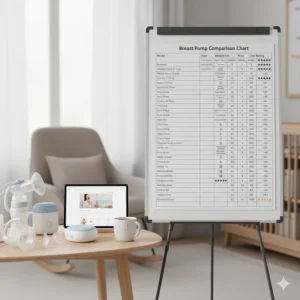
Quick Comparison Overview
| Pump Model | Type | Price Range | Battery Life | Max Suction | Best For |
|---|---|---|---|---|---|
| Spectra S1 Plus | Double Electric | $229-$269 | 3 hours | 270mmHg | Hospital-grade efficiency |
| Momcozy M5 | Wearable | $99-$129 | 2-3 sessions | 260mmHg | Hands-free convenience |
| Elvie Stride | Wearable | $399-$499 | 2.5 hours | 220mmHg | Discreet pumping |
| eufy S1 Pro | Wearable + Heating | $349-$399 | 5 days (with case) | 300mmHg | Innovative technology |
| Willow Go | Wearable | $295-$395 | 5-7 sessions | 280mmHg | Quiet operation |
| Medela Harmony | Manual | $29-$39 | N/A | 240mmHg | Occasional use |
| Haakaa Manual | Silicone Manual | $12-$25 | N/A | Passive collection | Milk collection |
💬 Just one click – help others make better buying decisions too! 😊
Understanding Breast Pump Types and Technologies
Electric Breast Pumps: The Powerhouse Option
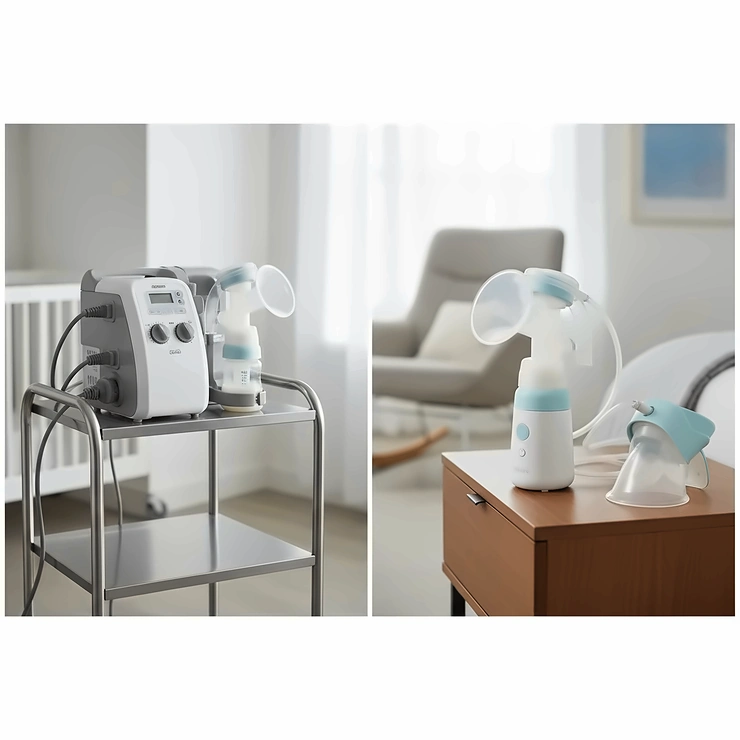
Electric breast pumps remain the gold standard for mothers who pump regularly or exclusively. These devices typically offer the strongest suction, fastest milk extraction, and most consistent performance. With dual motors and hospital-grade capabilities, electric models like the Spectra S1 Plus deliver reliable results session after session.
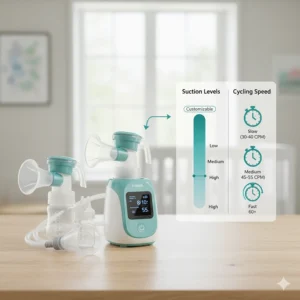
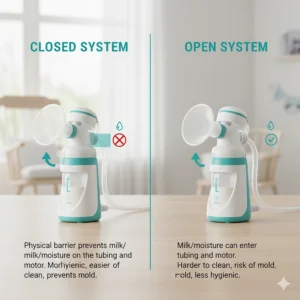
Modern electric pumps feature closed-loop systems that prevent contamination, adjustable suction levels ranging from gentle stimulation to powerful expression, and programmable cycles that mimic natural nursing patterns. Most models include rechargeable batteries, making them portable enough for office use while maintaining the power needed for efficient milk extraction.
The latest innovations include smartphone connectivity, allowing mothers to track pumping sessions, adjust settings remotely, and receive personalized recommendations based on their pumping history. These smart features help optimize milk output and reduce pumping time, making the experience more efficient and less stressful.
Wearable Breast Pumps: The Freedom Revolution
Wearable breast pumps have revolutionized the pumping experience by eliminating tubes, wires, and the need to remain stationary during sessions. Models like the Momcozy M5 and eufy S1 Pro fit discreetly inside nursing bras, allowing mothers to pump while working, caring for children, or going about their daily routines.
These compact devices typically weigh between 8-12 ounces per unit and feature all-in-one designs with integrated collection cups. While they may not match the raw power of traditional electric pumps, many wearable models now offer hospital-grade suction levels and sophisticated pumping patterns that effectively stimulate milk production.
Battery technology has significantly improved, with newer models providing 2-5 hours of continuous pumping or multiple sessions on a single charge. Some premium options include wireless charging cases that extend usage for days without needing wall power, perfect for travel or extended outings.
Manual Breast Pumps: Simple and Reliable
Manual breast pumps serve an important role in many mothers’ pumping arsenals, offering portability, reliability, and affordability that electric models can’t match. The Medela Harmony exemplifies modern manual pump design with its two-phase expression technology and ergonomic handle that reduces hand fatigue during use.
These pumps require no batteries or electrical connections, making them ideal for travel, emergencies, or situations where quiet operation is essential. Many mothers use manual pumps as backup devices or for occasional relief when away from their primary pumping setup.
Advanced manual designs incorporate research-based suction patterns that mimic natural nursing rhythms, helping stimulate letdown and maximize milk output even without motorized assistance. The simplicity of manual pumps also means fewer parts to clean and less maintenance overall.
Detailed Product Analysis and Reviews
1. Spectra S1 Plus Premier Rechargeable – The Gold Standard
The Spectra S1 Plus continues to dominate the electric breast pump market with its combination of hospital-grade performance and consumer-friendly features. Priced between $229-$269 on Amazon, this double electric pump delivers maximum suction of 270mmHg through its closed-loop system that prevents contamination.
Technical Specifications
- Motor Type: Dual-phase with rechargeable battery
- Weight: 2.9 pounds
- Battery Life: 3 hours continuous use
- Suction Range: 0-270mmHg with 12 adjustable levels
- Cycle Speed: 38-54 cycles per minute
- Noise Level: Ultra-quiet operation under 45dB
The S1 Plus features Spectra’s proprietary massage mode that simulates natural suckling patterns, helping trigger letdown more effectively than standard cycling patterns. The built-in rechargeable battery provides up to 3 hours of pumping time, making it genuinely portable for office use or travel.
Customer reviews consistently praise the pump’s efficiency, with many mothers reporting 20-30% more milk output compared to their previous pumps. The closed-loop system ensures hygiene while the backflow protection prevents milk contamination, making it safe for long-term use.
Pros:
✅ Hospital-grade suction power
✅ Rechargeable battery for portability
✅ Ultra-quiet operation
✅ Closed-loop hygiene system
✅ Proven reliability and durability
Cons:
❌ Higher upfront cost
❌ Bulkier than wearable options
❌ Requires specific replacement parts
Don’t Miss These Exclusive Deals! 🛒
Transform your pumping experience with these carefully selected models. Click on any highlighted item to check current pricing and availability on Amazon. These pumps will help you achieve your breastfeeding goals with comfort and efficiency! ⭐
2. Momcozy M5 Wearable – Hands-Free Innovation
The Momcozy M5 has gained significant popularity among mothers seeking hands-free pumping solutions without premium pricing. Available for $99-$129 on Amazon, this wearable pump offers impressive performance in a compact, lightweight design that weighs only 230 grams per unit.
Technical Specifications
- Design: All-in-one wearable with DoubleFit flange
- Weight: 230g per pump (significantly lighter than competitors)
- Suction Power: Up to 260mmHg hospital-grade suction
- Modes: 3 pumping modes (Stimulation, Expression, Mixed)
- Levels: 9 adjustable suction levels
- Capacity: 7oz milk collection per session
- Battery: 2-3 pumping sessions per charge
The M5’s unique “Baby Mouth” design positions the flange at a horizontal angle that reportedly feels more natural and comfortable than traditional vertical designs. The DoubleFit flange technology creates a double-sealed fit that prevents leaks while ensuring optimal suction distribution.
Recent customer feedback indicates the M5 produces comparable milk output to larger electric pumps while offering the freedom to pump anywhere. Mothers particularly appreciate the simple assembly with only 6 parts to clean, significantly reducing post-pumping cleanup time.
Pros:
✅ Lightweight and discreet design
✅ Budget-friendly pricing
✅ Simple 6-part assembly
✅ Effective horizontal angle design
✅ Good milk capacity (7oz per session)
Cons:
❌ Shorter battery life than premium models
❌ Customer service concerns reported
❌ May not fit all breast sizes optimally
3. Elvie Stride – Premium Discretion
The Elvie Stride represents the pinnacle of discreet pumping technology, though recent corporate changes have created some uncertainty about long-term support. Currently priced at $399-$499 on Amazon, this ultra-quiet wearable pump offers sophisticated app integration and virtually silent operation.
Technical Specifications
- Dimensions: 4.3″ x 2.7″ x 5″ per pump
- Weight: 8oz per pump (among the lightest available)
- Suction: Up to 220mmHg with 10 intensity settings
- Battery Life: 2.5 hours continuous pumping
- Capacity: 5oz per pump
- Connectivity: Bluetooth app control
- Noise Level: Certified by Quiet Mark for low noise
The Stride’s claim to fame is its incredibly quiet operation – many users report it’s quieter than a vibrating phone. The companion app allows remote control of pumping sessions, automatic milk tracking, and personalized rhythm adjustments based on your pumping history.
However, potential buyers should note that Elvie was acquired by Willow in March 2025, creating some uncertainty about future product support and app development. Current users report excellent performance and reliability, but long-term service availability remains a consideration.
Pros:
✅ Ultra-quiet operation
✅ Sophisticated app integration
✅ Extremely lightweight and discreet
✅ High-quality construction
✅ Excellent customer reviews for performance
Cons:
❌ Uncertain future support due to acquisition
❌ Premium pricing
❌ Lower maximum suction than competitors
❌ Limited milk capacity per session
4. eufy S1 Pro – Innovative Heating Technology
The eufy S1 Pro introduces groundbreaking HeatFlow technology that gently warms the breast during pumping, reportedly increasing milk output by up to 30%. Priced at $349-$399 on Amazon, this innovative pump combines traditional wearable convenience with spa-like comfort features.
Technical Specifications
- Unique Feature: Industry-first HeatFlow warming technology
- Suction Power: Up to 300mmHg hospital-grade suction
- Battery System: Wireless charging case providing 5 days of power
- Capacity: 177ml (6oz) milk collection per session
- Flange Angle: 105° ergonomic design with soft silicone
- App Integration: eufy Baby app with OptiRhythm technology
- Parts: Only 4 parts for easy cleaning
The HeatFlow technology provides gentle, all-around warmth that helps relax the breast tissue and improve milk flow. This innovation addresses a common challenge many mothers face – difficulty with letdown in stressful or cold environments.
User feedback from over 300 mothers indicates significant improvement in milk output when using the warming feature, particularly during pumping sessions at work or in air-conditioned environments. The wireless charging case is particularly innovative, providing power for up to 5 days of normal use.
Pros:
✅ Revolutionary heating technology
✅ Exceptional battery life with charging case
✅ Hospital-grade suction power
✅ Simple 4-part design
✅ Innovative app features
Cons:
❌ Premium pricing
❌ Newer brand with limited long-term data
❌ Bulkier than some wearable alternatives
5. Willow Go – Quiet Reliability
The Willow Go offers hospital-grade suction in a quiet, dependable package that’s designed for busy mothers who need consistent performance. Available for $295-$395 on Amazon, this pump provides excellent value for mothers who prioritize reliability and quiet operation.
Technical Specifications
- Suction Power: Up to 280mmHg hospital-grade suction
- Modes: 9 customizable pumping levels
- Battery Life: 5-7 pumping sessions per charge
- Capacity: 5-7oz milk collection range
- Operation: Extremely quiet at lower settings
- Eligibility: HSA/FSA eligible
- Charging: USB charging capability
The Go model represents Willow’s more affordable entry into the wearable market, maintaining much of the performance of their premium models while reducing complexity and cost. The pump excels at lower suction settings where it operates almost silently, making it ideal for office environments.
Customer reviews highlight the pump’s reliability and consistent performance across multiple daily sessions. The variable capacity design accommodates different milk outputs, and the USB charging provides convenient power options for travel or office use.
Pros:
✅ Reliable hospital-grade suction
✅ Very quiet operation at lower settings
✅ Good battery life
✅ HSA/FSA eligible
✅ Flexible capacity options
Cons:
❌ Can become noisy at higher settings
❌ Limited app functionality
❌ May not fit all breast sizes optimally
6. Medela Harmony – Manual Excellence
The Medela Harmony remains the benchmark for manual breast pumps, combining Swiss engineering with research-based design principles. Priced affordably at $29-$39 on Amazon, this pump offers exceptional value for occasional pumping or as a reliable backup option.
Technical Specifications
- Design: Single manual pump with ergonomic handle
- Technology: 2-Phase Expression mimicking natural nursing
- Flange: PersonalFit Flex with 360° rotation capability
- Weight: Extremely lightweight and portable
- Capacity: 150ml (5oz) collection bottle included
- Angle: 105° ergonomic angle for comfort
- Parts: Simple assembly with minimal components
The Harmony’s 2-Phase Expression technology replicates the natural rhythm of nursing, starting with rapid, lighter suction to stimulate letdown, then switching to slower, deeper suction for milk extraction. This research-based approach helps maximize efficiency even without electric power.
The PersonalFit Flex shield features a soft, flexible rim that can be rotated 360 degrees, allowing mothers to find the most comfortable position. Many users report being able to pump effectively one-handed, making it convenient for multitasking or emergency situations.
Pros:
✅ Extremely affordable and reliable
✅ Research-based 2-phase technology
✅ Ultra-portable with no power requirements
✅ Simple to clean and maintain
✅ Quiet operation
Cons:
❌ Requires hand operation throughout session
❌ Single breast pumping only
❌ Slower than electric alternatives
❌ Can cause hand fatigue during long sessions
7. Haakaa Manual Silicone – Natural Collection
The Haakaa Manual pump has revolutionized milk collection with its simple, effective design that uses natural suction to collect milk. Priced incredibly affordably at $12-$25 on Amazon, this 100% food-grade silicone pump offers unmatched simplicity and effectiveness.
Technical Specifications
- Material: 100% food-grade silicone construction
- Capacity: Available in 4oz (100ml) and 5oz (150ml) options
- Operation: Passive suction collection
- Design: Single-piece construction for easy cleaning
- Features: Suction base to prevent spills (Gen 2)
- Compatibility: Works while nursing on opposite breast
- Maintenance: Dishwasher safe, sterilizable
The Haakaa’s genius lies in its simplicity – it uses gentle suction to collect milk that would otherwise be lost to nursing pads during letdown. Many mothers use it on one breast while nursing on the other, effectively doubling their milk collection without additional effort.
Recent reviews consistently praise the pump’s ability to collect significant amounts of milk (often 2-4oz per session) with minimal effort. The silicone construction is incredibly easy to clean and sterilize, requiring only basic washing after each use.
Pros:
✅ Incredible value for money
✅ Completely silent operation
✅ No batteries or parts required
✅ Collects milk during natural nursing
✅ Easy to clean and maintain
Cons:
❌ Passive collection only
❌ Cannot be used for active pumping
❌ Requires careful positioning to prevent spills
❌ Limited to letdown collection
Industry-Specific Applications and Use Cases
Healthcare Professional Applications
Healthcare workers face unique challenges when pumping at work, requiring pumps that are efficient, hygienic, and can operate in clinical environments. Hospital-grade pumps like the Spectra S1 Plus excel in these settings due to their closed-loop systems and powerful suction capabilities.
Many hospitals now provide dedicated lactation rooms with hospital-grade pump rentals, but having a personal pump ensures consistency and hygiene. Nurses and doctors particularly benefit from wearable options like the Momcozy M5 during long shifts when traditional pumping breaks aren’t feasible.
The key considerations for healthcare professionals include easy sterilization protocols, quick setup and breakdown, and reliable performance across multiple daily sessions. Many healthcare facilities now offer pumping support services, including access to cleaning facilities and refrigerated storage.
Corporate Environment Solutions
The corporate return-to-work experience has been transformed by modern breast pump technology. Wearable pumps like the eufy S1 Pro and Elvie Stride allow mothers to pump during meetings, conference calls, and other professional activities without interrupting their workflow.
Many companies now provide lactation rooms equipped with comfortable seating, refrigeration, and electrical outlets specifically designed for pumping mothers. However, the freedom provided by wearable technology means mothers are no longer limited to designated spaces and can maintain more flexible schedules.
Professional considerations include noise levels (critical for open office environments), discretion (important for client-facing roles), and efficiency (minimizing time away from work responsibilities). The latest wearable models address all these concerns while providing hospital-grade performance.
Travel and Mobile Applications
Frequent travelers and mobile professionals require pumps that are TSA-friendly, globally compatible, and reliable without consistent power access. Manual pumps like the Medela Harmony and Haakaa excel in these situations due to their portability and independence from electrical infrastructure.
For longer trips, wearable pumps with extended battery life become essential. The eufy S1 Pro with its 5-day charging case represents the current pinnacle of travel-friendly design, eliminating the need to find power outlets during extended travel periods.
International travelers should consider voltage compatibility, replacement part availability, and local support services when selecting pumps for overseas use. Many manufacturers now offer global warranty programs and international shipping for replacement components.
Home-Based and Flexible Work Arrangements
The rise of remote work has created new opportunities for flexible pumping schedules. Mothers working from home can often use more traditional electric pumps like the Spectra S1 Plus while maintaining productivity through efficient, powerful pumping sessions.
However, even home-based workers benefit from wearable technology during video calls, childcare responsibilities, or household management tasks. The ability to pump while remaining productive has significant implications for work-life balance and overall stress levels.
Home-based pumping allows for optimal comfort, privacy, and storage conditions. Many mothers create dedicated pumping stations with comfortable seating, entertainment options, and organized storage for equipment and milk supplies.
Advanced Technical Analysis and Performance Metrics
Suction Technology and Motor Engineering
Modern breast pump motors have evolved significantly from basic single-phase designs to sophisticated dual-motor systems that can independently control suction strength and cycling speed. The Spectra S1 Plus exemplifies this advancement with its hospital-grade motor that delivers consistent performance across thousands of pumping cycles.
Recent innovations include brushless motor technology that reduces noise and extends operational life, smart sensors that adjust suction based on milk flow, and programmable cycles that can be customized to individual response patterns. These technological advances directly translate to improved milk output and reduced pumping time.
The latest wearable pumps achieve impressive suction levels despite their compact size. The eufy S1 Pro reaches 300mmHg – comparable to large hospital-grade units – while maintaining a form factor that fits discretely in a nursing bra. This engineering achievement represents significant advances in miniaturization and battery efficiency.
Battery Technology and Power Management
Battery technology has become a critical differentiator in modern breast pumps. Lithium-ion batteries now provide hours of continuous operation while maintaining compact sizes suitable for wearable applications. The eufy S1 Pro leads this category with its innovative charging case that provides 5 days of pumping power.
Power management systems now include intelligent charging circuits that prevent overcharging, extend battery life, and provide accurate remaining charge indicators. Many models feature USB-C charging for universal compatibility and fast charging capabilities that can provide full sessions from short charging periods.
Energy efficiency varies significantly between models, with newer designs incorporating power-saving modes, automatic shutoff features, and optimized motor controllers that reduce power consumption without compromising performance. These advances directly impact usability for mothers with busy schedules who can’t always access charging facilities.
Materials Science and Safety Innovations
Food-grade silicone has become the standard for breast pump components that contact milk, offering superior safety, durability, and cleaning properties compared to traditional plastics. The Haakaa Manual pump showcases this trend with its single-piece silicone construction that eliminates potential contamination points.
Advanced polymer technologies now enable the creation of flexible flanges that conform to individual breast shapes while maintaining effective suction seals. The Momcozy M5‘s DoubleFit flange technology represents this innovation, using soft and hard silicone combinations to optimize comfort and performance.
Recent safety improvements include BPA-free certifications across all major manufacturers, antimicrobial treatments for components exposed to milk, and enhanced sterilization compatibility. These materials advances directly contribute to safer milk collection and reduced risk of contamination during storage.
Performance Testing and Quality Standards
Industry performance standards have evolved to include specific metrics for suction strength, cycle consistency, noise levels, and contamination prevention. Hospital-grade certification requires pumps to meet strict performance benchmarks that ensure reliable milk extraction for mothers with various physiological conditions.
Independent testing laboratories now evaluate breast pumps using standardized protocols that measure actual milk output under controlled conditions. These tests have revealed significant performance variations between models that may not be apparent from specifications alone.
Quality control processes have been enhanced across the industry, with manufacturers implementing automated testing systems that verify performance before shipping. This emphasis on quality has resulted in more reliable products and reduced failure rates compared to earlier generations of breast pumps.
Comprehensive Setup and Usage Guidelines
Initial Setup and Fitting Procedures
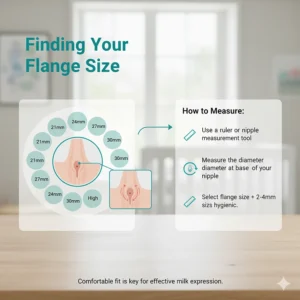
Proper setup begins with accurate flange sizing, which is critical for both comfort and milk output. Most mothers require different sizes than the standard 24mm flanges included with most pumps. The optimal flange should allow 1-2mm clearance around the nipple while creating an effective seal against the breast.
Professional fitting services are increasingly available through lactation consultants and some retailers. These services use specialized measuring tools and pumping trials to determine optimal flange sizes and pumping parameters for individual mothers. Investment in proper fitting often pays for itself through improved milk output and reduced discomfort.
Setup procedures vary significantly between pump types. Electric pumps require careful assembly of multiple components, while wearable models typically use simpler designs with fewer parts. The Haakaa Manual represents the simplest setup – simply sterilize and attach – while sophisticated models like the eufy S1 Pro require app setup and rhythm customization.
User Compatibility and Ergonomic Considerations
Breast pump compatibility extends beyond simple size considerations to include individual anatomy, milk production patterns, and personal sensitivity levels. Some mothers respond better to rapid cycling patterns, while others achieve better results with slower, deeper suction cycles.
Ergonomic factors become particularly important for mothers who pump frequently or for extended periods. Hand fatigue from manual pumps, back strain from leaning over electric models, and breast discomfort from poorly fitted flanges can all impact the pumping experience and milk output.
Wearable pumps introduce new ergonomic considerations related to bra fit, weight distribution, and mobility during pumping. The Momcozy M5‘s lightweight design addresses many of these concerns, while heavier models may cause discomfort during extended wear periods.
Environmental Optimization for Maximum Output
Environmental factors significantly impact pumping success. Temperature, lighting, stress levels, and privacy all influence letdown response and milk production. Many mothers find that replicating nursing conditions – comfortable seating, warm environment, and relaxation techniques – improves pumping outcomes.
Workplace pumping environments present unique challenges that can be addressed through proper equipment selection and environmental modification. The ultra-quiet operation of pumps like the Elvie Stride enables pumping in shared spaces, while heating technology in the eufy S1 Pro helps maintain optimal conditions in air-conditioned offices.
Privacy considerations vary by individual but generally improve pumping effectiveness. Sound masking, visual barriers, and comfortable positioning all contribute to successful pumping sessions. Many mothers develop personalized routines that optimize their individual response patterns.
Safety Protocols and Best Practices
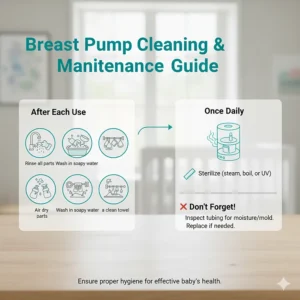
Hygiene protocols are critical for safe milk collection and storage. All pump components that contact milk must be thoroughly cleaned after each use, with periodic sterilization to eliminate bacterial contamination. Different materials require specific cleaning approaches – silicone components are generally dishwasher safe, while electronic components require careful hand cleaning.
Assembly verification helps prevent contamination and ensures optimal performance. Proper valve placement, secure connections, and flange positioning all impact both safety and effectiveness. Many pumps include visual guides or app-based instructions to help ensure correct assembly.
Storage protocols begin immediately after pumping. Milk should be refrigerated within one hour of collection, properly labeled with date and time, and stored in appropriate containers. Integration between pump design and storage systems – such as pumping directly into storage bags or bottles – reduces contamination risk and simplifies the process.
Maintenance and Longevity Analysis
Daily Maintenance and Cleaning Protocols
Effective daily maintenance begins immediately after each pumping session with thorough rinsing of all components that contacted milk. Cool water removes milk residue more effectively than hot water, which can cause proteins to coagulate and become harder to clean.
Weekly deep cleaning involves disassembly of all components, thorough washing with warm soapy water, and inspection for wear or damage. Silicone components should be checked for tears or cloudiness, while plastic parts should be examined for cracks or discoloration that could harbor bacteria.
Sterilization frequency depends on usage patterns and individual risk tolerance. New mothers or those with premature infants may sterilize after every use, while others may sterilize weekly or when components appear questionable. Steam sterilization is generally preferred over chemical methods for breast pump components.
Replacement Parts Management and Availability
Component replacement schedules vary by part type and usage intensity. Silicone valves and membranes typically require replacement every 2-3 months with regular use, while flanges and bottles may last 6-12 months with proper care. Hard plastic components usually have the longest lifespan but can become scratched or damaged over time.
Replacement part availability varies significantly between manufacturers. Established brands like Medela and Spectra offer extensive replacement part networks, while newer companies may have limited availability or longer shipping times. This consideration becomes particularly important for mothers who depend on their pumps for exclusive pumping or work requirements.
Generic and third-party replacement parts are available for many popular models, often at significant cost savings. However, compatibility and safety should be verified before using non-original components, particularly for parts that affect pump performance or milk contact safety.
Troubleshooting Common Issues and Solutions
Suction loss represents the most common pump issue, usually caused by worn valves, improper assembly, or flange fit problems. Systematic troubleshooting begins with disassembly and cleaning, followed by careful reassembly and valve replacement if necessary.
Decreased milk output can result from pump issues, but more often indicates changes in mother’s physiology, stress levels, or pumping routine. Equipment-related causes include worn components, incorrect settings, or suboptimal flange fit. Addressing these issues often restores normal output levels.
Comfort issues frequently indicate fit problems rather than equipment defects. Flange size verification, setting adjustments, and positioning modifications often resolve discomfort. Persistent pain should prompt consultation with lactation professionals to rule out underlying physiological issues.
Total Cost of Ownership Calculations
Initial purchase price represents only a portion of total ownership costs. Replacement parts, accessories, storage supplies, and potential repairs contribute to long-term expenses. Budget-friendly models like the Momcozy M5 may have lower initial costs but higher long-term part replacement expenses.
Efficiency considerations impact both time and financial costs. More efficient pumps reduce pumping time, potentially allowing more frequent sessions or faster return to other activities. This efficiency can translate to tangible benefits for working mothers or those managing multiple children.
Insurance coverage significantly affects net costs for many mothers. Most insurance plans cover one breast pump per pregnancy, though upgrade fees may apply for premium models. Understanding insurance benefits and choosing appropriate coverage levels can substantially reduce out-of-pocket expenses.
Comparative Analysis and Market Positioning
Traditional Electric vs. Modern Wearable Systems
Traditional electric pumps continue to offer advantages in raw power, consistency, and proven reliability. Models like the Spectra S1 Plus provide hospital-grade suction that newer wearable designs struggle to match while maintaining the same efficiency and motor longevity.
However, wearable technology has rapidly closed the performance gap while offering unprecedented convenience. The eufy S1 Pro demonstrates this evolution, providing 300mmHg suction in a wearable form factor that was impossible just a few years ago.
The choice between traditional and wearable systems increasingly depends on individual priorities and usage patterns. Mothers who pump at fixed locations may prefer the proven reliability of electric models, while those requiring mobility benefit from wearable convenience.
Price-to-Performance Analysis Across Categories
Value analysis reveals interesting patterns across different price segments. Budget wearable options like the Momcozy M5 offer remarkable performance for their price point, while premium models like the Elvie Stride command higher prices for discretion and build quality rather than pure performance.
Manual pumps provide exceptional value for occasional use, with the Medela Harmony offering research-based technology at a fraction of electric pump costs. The Haakaa Manual represents extreme value, providing effective milk collection for under $25.
Mid-range electric pumps often provide the best balance of performance, features, and reliability. The Spectra S1 Plus, while not the cheapest option, offers proven performance and long-term reliability that justify its price for regular users.
Integration with Existing Feeding and Care Systems
Modern breast pumps increasingly integrate with broader feeding ecosystems. Compatibility with storage bottles, feeding systems, and milk preparation equipment reduces complexity and improves workflow efficiency for busy mothers.
Smart pump features enable integration with health tracking apps, feeding schedule management, and milk inventory systems. These integrations help mothers optimize their pumping schedules and ensure adequate milk supply for their babies’ needs.
Compatibility considerations extend to accessories like hands-free bras, car adapters, and travel cases. Manufacturers increasingly offer comprehensive accessory ecosystems that enhance the core pump functionality and improve user experience.
Long-Term Value Propositions and Upgrade Pathways
Breast pump needs often evolve throughout the nursing journey. Early needs may focus on establishing supply and learning effective techniques, while later phases might emphasize efficiency and convenience for returning to work or managing multiple children.
Modular systems allow mothers to upgrade components rather than replacing entire systems. Some manufacturers offer trade-in programs or upgrade discounts for customers who want to move to newer technology without full replacement costs.
Resale value varies significantly between brands and models. Well-maintained pumps from established manufacturers typically retain more value than budget alternatives, potentially offsetting higher initial costs for mothers who plan to sell equipment after weaning.
Case Studies and Real-World Success Stories
Working Mother Success: Corporate Integration
Sarah, a marketing executive in Chicago, successfully maintained her breastfeeding goals through strategic pump selection and workplace integration. Initially using a traditional electric pump, she switched to the eufy S1 Pro after returning to work, allowing her to pump during client calls and meetings without interruption.
Her company provided a dedicated lactation room, but Sarah found the flexibility of wearable pumping more valuable than the physical space. Over 6 months, she maintained her milk supply while advancing in her career, attributing success to the combination of effective equipment and supportive workplace policies.
Key success factors included proper flange fitting, consistent pumping schedule, and integration with milk storage systems that simplified the daily routine. Sarah’s experience demonstrates how modern pump technology can support career continuity while maintaining breastfeeding goals.
Healthcare Professional Experience: Night Shift Challenges
Jessica, an ICU nurse working 12-hour night shifts, faced unique challenges maintaining milk supply while caring for critically ill patients. Traditional pumping breaks weren’t feasible during emergency situations, leading to decreased supply and significant stress.
Switching to the Momcozy M5 wearable pump allowed Jessica to maintain consistent pumping even during busy periods. She could pump while charting, during patient care activities, and throughout her shifts without requiring dedicated break time.
Over 4 months of use, Jessica maintained her milk supply and reduced work-related stress while providing optimal patient care. Her success illustrates how wearable technology can address challenging workplace environments that traditional pumping methods cannot accommodate.
Travel Professional Case: International Mobility
Maria, a international consultant, required pumping solutions that worked across multiple countries, time zones, and travel conditions. Her initial approach using manual pumps proved insufficient for maintaining supply during extended travel periods.
The eufy S1 Pro with its 5-day charging case provided the reliability and battery life needed for international travel. The wireless charging eliminated concerns about outlet compatibility, while the efficient suction maintained her supply despite irregular schedules.
During 8 months of frequent international travel, Maria successfully maintained breastfeeding while managing a demanding travel schedule. Her experience highlights the importance of reliable, travel-friendly equipment for mothers with mobile careers.
Multiple Children Management: Efficiency Optimization
Lisa, mother of a toddler and newborn, needed pumping solutions that accommodated the chaos of managing multiple young children. Traditional pumping sessions requiring dedicated time and space weren’t feasible with a demanding toddler.
Combining the Haakaa Manual for passive collection during nursing with the Momcozy M5 for active pumping allowed Lisa to maintain milk supply while remaining available for her toddler’s needs. This dual-pump approach maximized efficiency while minimizing disruption.
The strategy proved successful over 10 months, allowing Lisa to build and maintain a significant milk stash while managing the competing demands of two young children. Her approach demonstrates how combining different pump technologies can address complex family situations.
Exclusive Pumping Journey: Long-Term Reliability
Jennifer chose exclusive pumping due to latching difficulties and needed equipment capable of supporting complete milk production for her baby’s nutrition. Initial attempts with budget equipment proved inadequate for the demanding schedule required.
The Spectra S1 Plus provided the power and reliability needed for 8-10 daily pumping sessions over 12 months. The hospital-grade motor and consistent performance maintained adequate milk supply throughout the extended exclusive pumping period.
Jennifer’s successful 12-month exclusive pumping journey demonstrates the importance of investing in high-quality equipment for demanding use cases. Her experience provides valuable insights for other mothers considering exclusive pumping approaches.
Future Trends and Market Evolution
Emerging Technologies and Innovation Directions
Artificial intelligence integration represents the next frontier in breast pump technology. Future pumps may analyze individual response patterns, automatically adjust settings for optimal output, and provide personalized recommendations based on physiological feedback and historical performance data.
Sensor technology continues to advance, with prototypes incorporating real-time milk flow monitoring, temperature regulation, and even milk composition analysis. These sensors could provide valuable feedback about milk production patterns and help optimize pumping schedules.
Wireless connectivity will likely expand beyond basic app control to include integration with smart home systems, healthcare monitoring platforms, and feeding management ecosystems. This connectivity could enable automatic milk inventory tracking, supply optimization algorithms, and integration with pediatric care systems.
Sustainability and Environmental Considerations
Environmental sustainability is becoming increasingly important to consumers, driving innovations in recyclable materials, longer-lasting components, and more efficient manufacturing processes. Companies are exploring biodegradable options for single-use components and closed-loop recycling programs for electronic components.
Energy efficiency improvements continue to extend battery life while reducing charging requirements. Solar charging options and kinetic energy harvesting represent potential future developments that could eliminate traditional charging needs entirely.
Packaging reduction and sustainable shipping methods are also evolving priorities. Many manufacturers now offer refurbished equipment programs and component recycling services that reduce environmental impact while providing cost-effective options for consumers.
Personalization and Customization Possibilities
3D printing technology may enable custom flange manufacturing based on individual breast measurements, potentially eliminating sizing issues and improving comfort for all users. This technology could be combined with mobile scanning applications to create perfectly fitted components.
Modular pump design could allow mothers to customize their equipment by selecting specific features, power levels, and form factors that match their individual needs and preferences. This approach could reduce costs while ensuring optimal functionality for diverse use cases.
Adaptive pumping programs that learn from individual response patterns and automatically optimize settings represent a significant opportunity for performance improvement. These systems could continuously refine their approach based on effectiveness feedback and physiological changes over time.
Market Predictions and Industry Development
The breast pump market is expected to continue rapid growth, driven by increasing awareness of breastfeeding benefits, expanding workplace support policies, and continued technological innovation. Wearable pumps are likely to gain increasing market share as performance gaps with traditional pumps continue to narrow.
Premium features that were once limited to high-end models are likely to become standard across price ranges. Hospital-grade suction, app connectivity, and advanced safety features may become expected rather than premium features within the next few years.
International market expansion presents significant opportunities, particularly in developing markets where infrastructure limitations favor battery-powered and portable solutions. This expansion could drive innovation in cost-effective, reliable designs suited to diverse global conditions.
Investment and Purchase Decision Framework
Needs Assessment and Requirement Analysis
Effective breast pump selection begins with honest assessment of individual needs, preferences, and constraints. Factors include planned pumping frequency, work environment requirements, travel needs, budget limitations, and personal comfort preferences.
Mothers should consider their entire nursing journey when making equipment decisions. Needs during early supply establishment may differ significantly from requirements during return to work or extended nursing periods. Flexibility and adaptability become important considerations for equipment that will be used across different life phases.
Professional consultation with lactation specialists can provide valuable insights into individual requirements and help identify potential challenges before they impact pumping success. Many insurance plans cover these consultations, making professional guidance accessible for most mothers.
Cost-Benefit Analysis Frameworks
Total cost analysis should include initial purchase price, replacement parts, accessories, opportunity costs of time spent pumping, and potential health benefits from successful breastfeeding. More expensive pumps may provide better value when total ownership costs and effectiveness are considered.
Time efficiency calculations often justify higher initial investments for mothers with demanding schedules. A pump that reduces pumping time by 25% can provide significant value for working mothers or those managing multiple children.
Insurance benefits significantly impact cost calculations and should be thoroughly understood before making purchase decisions. Many plans offer upgrade options that provide access to higher-quality equipment for modest additional costs.
Implementation Strategy Development
Successful pumping implementation requires planning beyond equipment selection. Considerations include workspace setup, storage systems, cleaning protocols, backup equipment, and integration with childcare arrangements.
Gradual introduction allows mothers to adapt to new equipment and optimize settings before critical reliance periods like return to work. This approach reduces stress and provides opportunities to address issues before they become urgent.
Support system development includes identifying resources for troubleshooting, maintenance, and replacement parts. Establishing relationships with lactation consultants, equipment suppliers, and other nursing mothers provides valuable support throughout the nursing journey.
Success Metrics and Evaluation Criteria
Quantitative metrics include milk output per session, total daily production, pumping time efficiency, and equipment reliability measures. These metrics help evaluate equipment performance and identify optimization opportunities.
Qualitative factors such as comfort, convenience, stress levels, and impact on daily routines are equally important but harder to measure. Regular assessment of these factors helps ensure that equipment choices continue to support overall goals.
Long-term success evaluation should consider breastfeeding duration, achievement of personal goals, career impact, and overall family satisfaction. These broader measures help validate equipment investment decisions and inform future recommendations.
Frequently Asked Questions
❓ How do I choose the right breast pump comparison for exclusive pumping?
❓ What's the difference between wearable and traditional electric breast pump comparison models?
❓ Can I use insurance benefits for a breast pump comparison purchase?
❓ How often should I replace breast pump comparison parts for optimal performance?
❓ Which breast pump comparison option works best for office environments?
Recommended for You
- 7 Best Breast Pump for Working Mothers: Ultimate 2025 Guide for Success
- 7 Best Breast Pump for Large Breasts: Ultimate Comfort Guide 2025
- 7 Best Breast Pump for Relactation Options That Actually Work in 2025
Disclaimer: This article contains affiliate links. If you purchase products through these links, we may earn a small commission at no additional cost to you.
✨ Found this helpful? Share it with your friends! 💬🤗
