
In This Article
✨Was this helpful? Spread the word! 🚀
Choosing the best straw cup for baby can feel overwhelming when you’re staring at dozens of options online. I get it – you want something that won’t leak all over your diaper bag, that your little one can actually drink from, and that won’t have you scrubbing moldy crevices for the next year. After testing cups with my own kids and researching what actually works, I’m here to break down everything you need to know.
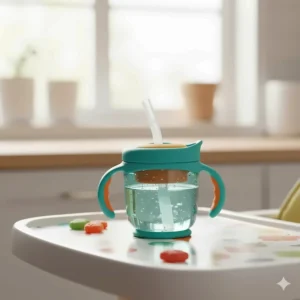
Here’s the thing: transitioning from bottle to cup is a big milestone, and the best straw cup for baby makes this journey smoother for everyone involved. Unlike traditional sippy cups that can affect oral development, straw cups encourage proper tongue positioning and help babies develop mature drinking patterns. Most pediatricians and speech therapists recommend introducing a straw cup around 6 months, right when your baby starts solids.
But not all straw cups are created equal. Some leak like sieves, others require superhuman sucking power, and a few have so many parts you’ll need an engineering degree to clean them. The good news? I’ve done the homework for you. Whether you’re looking for the first straw cup for baby 6 months or trying to figure out which best straw sippy cup for 12 month old will survive your toddler’s throwing phase, this guide covers it all.
According to the American Academy of Pediatrics, babies should be weaned from bottles by 12-15 months to prevent tooth decay and encourage healthy drinking habits. Starting with a quality straw cup around 6 months gives your baby plenty of practice time before this milestone.
Quick Comparison Table
| Cup Model | Capacity | Age Range | Price Range | Key Feature | Rating |
|---|---|---|---|---|---|
| OXO Tot Transitions | 6-9 oz | 6m+ | $10-12 | Leak-proof valve | ⭐⭐⭐⭐⭐ |
| Munchkin Any Angle | 7-10 oz | 6m+ | $7-10 | Weighted straw | ⭐⭐⭐⭐⭐ |
| Dr. Brown’s Baby’s First | 9 oz | 6m+ | $8-10 | Sliding lid | ⭐⭐⭐⭐½ |
| NUK Learner Straw | 5-10 oz | 8m+ | $8-12 | Soft silicone straw | ⭐⭐⭐⭐½ |
| Pura Kiki Stainless | 9-11 oz | 6m+ | $25-40 | Plastic-free | ⭐⭐⭐⭐ |
| Zoli BOT 2.0 | 6-10 oz | 6m+ | $15-20 | Hot liquid compatible | ⭐⭐⭐⭐ |
| Skip Hop Zoo Steel | 12 oz | 12m+ | $15-20 | Insulated steel | ⭐⭐⭐⭐ |
💬 Just one click – help others make better buying decisions too!😊
🛒 Ready to Shop Smart?
✨ Click on the product names below to check current prices and read hundreds of real parent reviews on Amazon!
Top 7 Best Straw Cup for Baby: Expert Analysis
1. OXO Tot Transitions Straw Cup with Removable Handles
When it comes to leak-proof performance, the OXO Tot Transitions Straw Cup consistently tops every parent’s list. This cup survived every drop test I threw at it – literally. The almond-shaped silicone straw valve is genius: it only opens when your baby’s lips press against it, preventing spills even when the cup rolls around in your diaper bag.
Key Specifications:
- Capacity: 6 oz or 9 oz options
- Age recommendation: 6 months+
- Material: BPA-free plastic with silicone straw
- Price range: $10-12 on Amazon
The removable handles are perfect for tiny hands just learning to grip, and they come off easily when your baby gets more coordinated. Parents rave about the measurement markings on the side – finally, you can track how much your little one actually drinks! The hinged cap stays attached to the cup (no more searching under the couch for lost lids), and it closes with a satisfying click that creates a truly leak-proof seal.
✅ Pros:
- Genuinely leak-proof in testing
- Easy two-piece straw for cleaning
- Removable handles grow with baby
❌ Cons:
- Small amount of liquid can gather in straw top
- Higher price point than basic cups
Customer feedback consistently highlights this as “the only cup that doesn’t leak in my diaper bag.” One mom shared: “I was skeptical after trying five other cups, but this one actually lives up to its promises. No leaks, easy to clean, and my 7-month-old figured it out in two days.”
2. Munchkin Any Angle Click Lock Weighted Straw Cup
The Munchkin Any Angle Weighted Straw Cup solves one of the biggest frustrations with straw cups: that annoying moment when your baby tilts the cup and can’t get any liquid because the straw isn’t in the right spot. The weighted ball at the end of the straw ensures it always follows the liquid, no matter how your baby holds the cup.
Key Specifications:
- Capacity: 7 oz or 10 oz
- Age recommendation: 6 months+
- Material: BPA-free Tritan plastic
- Price range: $7-10 (often sold in 2-packs)
The Click Lock technology is brilliant – you actually hear an audible click when the lid seals properly, so there’s no guessing if you’ve closed it correctly. The flip-top lid keeps the straw clean when not in use, and the handles have a comfortable grip that even small hands can manage. At under $10 for a two-pack, it’s an incredible value.
✅ Pros:
- Weighted straw works from any angle
- Budget-friendly pricing
- Audible click confirms proper closure
❌ Cons:
- Multiple parts to clean
- Straw requires special brush for thorough cleaning
Parents love the affordability and functionality. One reviewer noted: “My son can drink lying down, sitting up, or even upside down in his yoga phase – the straw always works. For the price, you can’t beat it.”
3. Dr. Brown’s Milestones Baby’s First Straw Cup
If you’re already a fan of Dr. Brown’s bottles, the Dr. Brown’s Milestones Baby’s First Straw Cup makes the transition seamless. The soft silicone weighted straw is gentle on developing gums, and the side-grip handles lock into place, making it genuinely easy for babies to hold.
Key Specifications:
- Capacity: 9 oz
- Age recommendation: 6 months+
- Material: BPA-free plastic with silicone straw
- Price range: $8-10
The sliding lid is one of my favorite features – it protects the straw when not in use and slides open easily for drinking. Unlike flip lids that can break off, this attached sliding mechanism is more durable. The contoured shape fits comfortably in little hands, and the handles are removable as your baby grows more coordinated.
✅ Pros:
- Soft straw gentle on gums
- Durable sliding lid mechanism
- Handles lock in place securely
❌ Cons:
- Can leak if lid isn’t fully slid closed
- Straw cleaning requires included brush
One parent shared: “This was the cup that finally worked for my breastfed baby who refused every other cup. The soft straw made all the difference.”
4. NUK Learner Straw Cup
For parents concerned about making the transition from breast or bottle easy, the NUK Learner Straw Cup features a 100% soft silicone straw with an extra-wide sipping zone. This design makes it particularly good for babies who need a gentler introduction to straw drinking.
Key Specifications:
- Capacity: 5 oz or 10 oz
- Age recommendation: 8 months+
- Material: BPA-free plastic
- Price range: $8-12 for a 2-pack
The weighted flexible straw moves with the liquid, and the anti-slip handles are designed with little fingers in mind. The silicone straw is noticeably softer than competitors, which some babies prefer. It’s completely spill-proof when properly assembled, though the valve does require a bit more sucking power than some other cups.
✅ Pros:
- Extra-soft silicone straw
- Excellent for breastfed babies
- Genuinely leak-proof
❌ Cons:
- Requires stronger sucking action
- Limited color options
Parents note: “Perfect for babies transitioning from breast – my daughter was used to working for her milk, so the stronger suction wasn’t a problem. It’s been completely leak-free in her diaper bag for months.”
5. Pura Kiki Stainless Steel Straw Bottle
If you’re looking for a plastic-free option, the Pura Kiki Stainless Steel Straw Bottle is the premium choice. This medical-grade stainless steel bottle is MADESAFE certified and features a medical-grade silicone straw. While it’s pricier than plastic options, it’s the only bottle your child will ever need – the interchangeable tops grow from infant bottle to toddler straw cup to big kid sports bottle.
Key Specifications:
- Capacity: 9 oz or 11 oz
- Age recommendation: 6 months+
- Material: Food-grade 18/8 stainless steel
- Price range: $25-40
The valved silicone straw has a removable internal tube for easy cleaning, and you can use the mouthpiece with or without the tube depending on flow rate preferences. The protective silicone sleeve prevents condensation and provides grip. It’s dishwasher safe and built to last for years.
✅ Pros:
- Plastic-free construction
- Lifetime value with interchangeable lids
- MADESAFE certified materials
❌ Cons:
- Highest price point
- Not insulated (non-insulated version)
- Straw can be tricky for young babies
Eco-conscious parents love this option: “Worth every penny to avoid plastic. We’ve used the same bottle for three years with different tops as my daughter grew. Zero leaching concerns and it still looks brand new.”
6. Zoli BOT 2.0 Weighted Straw Sippy Cup
The Zoli BOT 2.0 stands out with its patented buffer chamber that relieves pressure, making it one of the only straw cups safe for warm liquids. This feature makes it perfect for milk, which many babies prefer slightly warmed. The SILIFLEX weighted straw technology ensures liquid is always accessible.
Key Specifications:
- Capacity: 6 oz or 10 oz
- Age recommendation: 6 months+
- Material: BPA-free polypropylene
- Price range: $15-20
The easy-flip lid and ergonomic handles make this genuinely user-friendly for babies learning independence. Unlike some competitors, the straw is valve-free, which speech therapists prefer because it doesn’t require excessive sucking that can tire babies out. The two-way drinking option (direct connect or with buffer chamber) adds versatility.
✅ Pros:
- Works with warm liquids
- Valve-free design
- Patented buffer chamber
❌ Cons:
- Straw requires special brush for cleaning
- Mid-range pricing
Parents appreciate the flexibility: “Finally a cup I can use for warm milk before bedtime! The buffer chamber is genius – no more temperature tantrums.”
7. Skip Hop Zoo Stainless Steel Straw Bottle
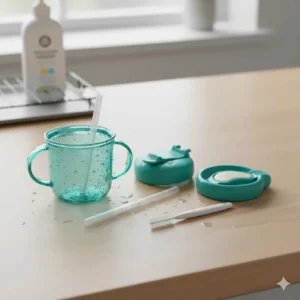
The Skip Hop Zoo Stainless Steel Straw Bottle combines adorable animal designs with practical functionality. The no-slip silicone sleeve protects little hands from cold surfaces while keeping drinks cool. The pop-up lid keeps the flexible straw clean between sips, and the grab-me strap attaches to strollers or backpacks.
Key Specifications:
- Capacity: 12 oz
- Age recommendation: 12 months+
- Material: Stainless steel with silicone sleeve
- Price range: $15-20
This cup is designed to keep drinks cool (though it’s not double-walled insulated), making it great for summer outings. The larger 12 oz capacity means fewer refills for active toddlers. The animal designs are engaging for little ones, and the bottle comes with an extra straw included.
✅ Pros:
- Keeps drinks cool
- Larger capacity
- Cute, engaging designs
❌ Cons:
- Lid closure can break with rough use
- Not suitable for younger babies under 12 months
- May leak when laid sideways
Parents report: “My toddler loves the puppy design and takes this everywhere. It’s held up well for six months, though I’m careful not to let her drop it from her high chair.”
🎯 Click to Compare Prices & Read More Reviews!
✨ Don’t miss out on the best deals! Each cup featured here is available on Amazon with free shipping for Prime members. Click through to see current prices, additional color options, and read what thousands of other parents are saying!
Why Are Straw Cups Good for Babies?
You might be wondering why speech therapists and pediatricians recommend straw cups over traditional sippy cups. The answer lies in oral motor development, and honestly, once I learned this, I never looked back to regular sippies.
The Science Behind Straw Drinking
When babies drink from a straw, their tongue positions high and back in the mouth – the same position used in mature, adult drinking patterns. This promotes proper oral development and helps with speech development down the line. Traditional sippy cups with spouts can actually encourage an immature sucking pattern that mimics bottle-feeding, potentially leading to speech issues later.
According to research cited by American Speech-Language-Hearing Association, straw drinking strengthens the lips, tongue, and cheeks, building oral motor skills crucial for speech development. The sucking action required for straw use is different from bottle-feeding and helps babies develop coordination between breathing and swallowing.
Benefits Beyond Development
Beyond the developmental advantages, straw cups offer practical benefits that make daily life easier:
Easy transition from breast or bottle: The sucking motion is familiar to babies, making the learning curve gentler than open cups or spout sippy cups.
Better for dental health: Straw cups direct liquid to the back of the mouth rather than pooling around teeth, reducing the risk of tooth decay from prolonged exposure to milk or juice.
Promotes independence: Most babies can master straw drinking earlier than they can drink from an open cup, giving them a sense of accomplishment and self-sufficiency.
More convenient for parents: Once you find the best straw cup for baby, you’ll appreciate features like leak-proof designs, easy cleaning, and durability that survives the inevitable throwing phase.
Are Straws or Sippy Cups Better for Baby?
Let’s settle this debate once and for all. While both sippy cups and straw cups help babies transition from bottles, straw cups are generally considered the better choice by pediatric professionals.
The Sippy Cup Problem
Traditional sippy cups with hard spouts can cause several issues:
- They require a forward-back tongue motion similar to bottle-feeding
- The spout rests on developing teeth, potentially affecting alignment
- They can lead to prolonged bottle-like sucking patterns
- Some designs require excessive sucking, which can be frustrating for babies
The American Dental Association has expressed concerns about prolonged sippy cup use, particularly when filled with milk or juice, as liquid can pool around the front teeth.
Why Straw Cups Win
The best straw cup for baby encourages mature oral patterns from the start:
- Promotes tongue elevation and retraction
- Strengthens oral muscles needed for speech
- Reduces liquid contact with teeth
- Develops coordination between sucking, swallowing, and breathing
However, there’s nuance here. 360-degree cups (like the Munchkin Miracle 360) occupy a middle ground – they’re better than traditional sippy cups but don’t provide the same oral motor benefits as straw cups. For babies around 6 months learning to drink, starting with a straw cup sets them up for better long-term success.
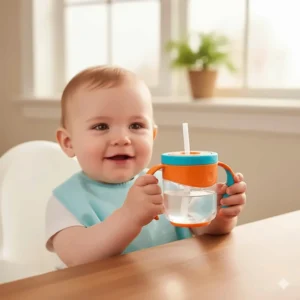
How to Choose the Best Straw Cup for Baby 6 Months
Shopping for your baby’s first straw cup? Here’s what actually matters (and what’s just marketing fluff):
1. Valve vs. Valve-Free Design
Valved straws prevent spills but require more sucking power. Great for diaper bags and car rides, but some babies get frustrated. Best options: OXO Tot Transitions, NUK Learner.
Valve-free straws are easier to drink from and better for oral development, but they’re not spill-proof. Good for home use and supervised drinking. Best options: Zoli BOT, Early Years Take & Toss.
2. Weighted vs. Standard Straws
A weighted straw has a small ball attached that keeps it submerged in liquid, no matter how your baby tilts the cup. This feature is clutch for babies just learning to use cups. The Munchkin Any Angle and Dr. Brown’s Baby’s First both feature weighted straws that work brilliantly.
Standard straws work fine but require babies to keep the cup relatively upright. They’re suitable for older babies (10+ months) who’ve developed better cup-holding skills.
3. Material Matters
Plastic cups are lightweight, budget-friendly, and dishwasher safe. Most are BPA-free, but if you’re concerned about plastic, look for options made from Tritan or polypropylene. These are considered safer plastics that don’t leach chemicals.
Stainless steel cups eliminate plastic exposure entirely. They’re more expensive but essentially indestructible. The Pura Kiki and Skip Hop Zoo options are excellent if this matters to you.
4. Capacity Considerations
For a first straw cup for baby 6 months, start with 6-9 oz capacity. Younger babies won’t drink large amounts yet, and smaller cups are easier to hold. As they approach their first birthday, you can graduate to 10-12 oz cups that require fewer refills.
5. Cleaning Convenience
This might be the most important factor. Straw cups with fewer pieces are easier to clean thoroughly. Look for:
- Straws that come apart for cleaning
- Wide openings you can fit your hand into
- Dishwasher-safe components
- No tight crevices where mold can hide
6. Handle Options
Removable handles are ideal – they help babies 6-12 months grip the cup, then come off when they develop better coordination. Fixed handles work fine but can be bulky in diaper bags.
7. Price and Value
You can find great straw cups from $7 to $40. Budget options like Munchkin work excellently, while premium options like Pura Kiki offer lifetime value. Don’t assume expensive automatically means better – some of the best performers are mid-range.
Best Straw Sippy Cup for Milk
Using a straw cup for milk requires special consideration. Milk is thicker than water and can harbor bacteria if not cleaned properly. Here’s what you need to know:
Temperature Matters
Most straw cups are designed for cold or room-temperature beverages only. However, many babies prefer milk slightly warmed. The Zoli BOT 2.0 is specifically designed with a buffer chamber that makes it safe for warm liquids – a game-changer for bedtime bottles.
If you’re using a best straw sippy cup for milk with your 12 month old, choose one with:
- Easy-to-clean components to prevent bacterial growth
- No valves that can trap milk residue
- Materials that won’t retain odors
- Quick-dry features
Cleaning Protocols for Milk
Milk requires more diligent cleaning than water:
- Rinse immediately after use
- Disassemble all parts
- Use a straw brush to clean thoroughly
- Wash with hot, soapy water or run through dishwasher
- Air dry completely before reassembling
Pro tip: Have two cups in rotation so one can dry completely while the other is in use. This prevents moisture buildup that leads to mold.
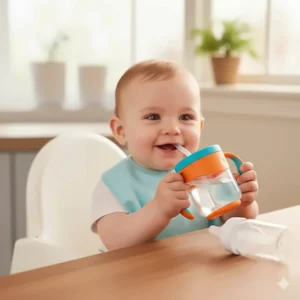
Best Straw Sippy Cup for 12 Month Old
By their first birthday, babies are ready for cups with more features and larger capacities. The best straw sippy cup for 12 month old should:
Support independence: At this age, babies want to do things themselves. Cups with flip-open lids they can operate (like the Munchkin Click Lock) foster this independence.
Handle rough treatment: Twelve-month-olds are notorious throwers. Look for durable construction that survives drops. The stainless steel options shine here – Skip Hop Zoo and Pura Kiki can take a beating.
Hold enough liquid: Active one-year-olds need 10-12 oz capacity to reduce constant refills. The Skip Hop Zoo holds 12 oz, perfect for outings.
Transition toward open cups: While straw cups remain useful, you can also start introducing open cup practice at meals. Some families keep straw cups for water on-the-go and use open cups at the table.
Are Straw Cups Bad for Babies?
Let’s address some common concerns parents have about straw cups:
Myth: Straw Cups Cause Speech Delays
Truth: When used appropriately, straw cups actually support speech development. The concern arises when children use straw cups (or any drinking vessel) for prolonged periods throughout the day, constantly having something in their mouth.
The solution? Use straw cups for specific drinking times rather than as an all-day comfort object. By age 2-3, most children should be transitioning to open cups for meals, with straw cups reserved for travel or outdoor play.
Myth: Straws Cause Too Much Air Intake
Truth: While babies do swallow some air when drinking from straws, it’s not significantly more than bottle-feeding. If your baby seems gassy, ensure:
- The straw is always submerged in liquid
- They’re not sucking on an empty straw
- The cup has proper venting (some designs include vent holes)
Myth: Straw Cups Damage Teeth
Truth: Straw cups are actually better for dental health than sippy cups because liquid bypasses the front teeth. The key is avoiding prolonged exposure – don’t let babies walk around sipping sugary drinks all day. Water is fine for continuous access; save milk and juice for meals.
The Real Concern: Overuse
The only legitimate concern with straw cups is overuse. Just like bottles and sippy cups, straw cups shouldn’t become a crutch. Best practices include:
- Transitioning to open cups for most meals by age 2
- Limiting between-meal drinking to water
- Not allowing constant cup-carrying throughout the day
- Phasing out cups in bed by 15-18 months
Straw Cup for Baby 6 Months: Getting Started
Introducing the first straw cup for baby 6 months can feel daunting, but here’s my foolproof method that’s worked with countless babies:
The Squeeze Method
- Fill the cup with a small amount of water (1-2 oz to start)
- Put the straw in baby’s mouth
- Gently squeeze the cup so water comes up through the straw
- Baby tastes the water and starts to understand the connection
- Release and let them try sucking
- Repeat several times over several days
Most babies figure it out within a week using this method. The Olababy cup is specifically designed for teaching with a squeezable bottom, but any soft plastic cup works.
Timing Matters
Introduce the straw cup:
- After a milk feeding when baby isn’t ravenous
- During a relaxed time, not when overtired
- At meals when baby is in a good mood
- With water first (less pressure than milk or juice)
Signs Your Baby Is Ready
Look for these developmental milestones:
- Sitting with minimal support
- Interest in what you’re drinking
- Hand-eye coordination to bring objects to mouth
- Around 6 months (though some babies are ready earlier)
Troubleshooting Common Issues
Baby won’t suck: Keep offering without pressure. Some babies take weeks to figure it out. Try letting them watch older siblings or other children using straw cups.
Leaks everywhere: Ensure all parts are properly assembled. Most “leaky” cups are simply user error. Check that lids are clicked closed and straws are fully inserted.
Refuses the cup: Try different times of day, different liquids (some babies prefer cold water, others room temperature), or let them play with the empty cup first.
Maintenance and Care Tips
Even the best straw cup for baby becomes a moldy mess without proper care. Here’s how to keep cups clean and safe:
Daily Cleaning Routine
After each use:
- Rinse immediately with hot water
- Disassemble all removable parts
- Use a straw brush on the straw
- Wash with hot, soapy water
- Air dry completely (moisture breeds bacteria)
Weekly deep clean:
- Soak in vinegar solution (1:1 vinegar and water) for 30 minutes
- Scrub all parts with bottle brush
- Check gaskets and valves for buildup
- Sanitize in dishwasher or with sterilizer
When to Replace
Even with excellent care, straw cups don’t last forever:
Replace straws: Every 2-3 months or when they show wear
Replace valves: Every 3-4 months
Replace entire cup: When cracks appear, gaskets wear out, or you can’t eliminate odors/staining
Storage Tips
Store cups with parts separated and lids off to allow air circulation. This simple step prevents that musty smell that develops in sealed containers. Keep extra straws and parts on hand – they’re usually available separately and cheaper than buying new cups.
Comparing Budget vs. Premium Options
Is it worth spending $30 on a Pura Kiki when you can get a Munchkin for $7? Let’s break down the value proposition:
Budget Winners ($5-12)
Munchkin Any Angle and Dr. Brown’s Baby’s First offer excellent performance without breaking the bank. You get:
- Quality construction
- Effective leak prevention
- Easy cleaning
- Typically 1-2 year lifespan
Best for: Families trying multiple cups to see what baby prefers, or those planning to upgrade as baby grows.
Mid-Range ($15-25)
Zoli BOT 2.0 and Skip Hop Zoo provide additional features like better durability, unique capabilities (warm liquids), or more attractive designs. They offer:
- Better materials
- Enhanced features
- Longer lifespan (2-3 years)
- Stronger leak-proof performance
Best for: Parents who’ve identified their baby’s preferences and want a reliable long-term cup.
Premium ($25-40)
Pura Kiki stands alone in the premium category with:
- Lifetime durability (stainless steel body)
- Zero plastic exposure
- Interchangeable tops that grow with child
- Environmental benefits
Best for: Eco-conscious families, those concerned about plastic, or anyone wanting a one-time purchase that lasts years.
The Verdict
Budget cups work wonderfully for most families. The performance difference between a $7 Munchkin and a $35 Pura Kiki isn’t proportional to the price difference. However, premium cups offer peace of mind for parents concerned about plastic exposure and can provide better lifetime value if properly cared for.
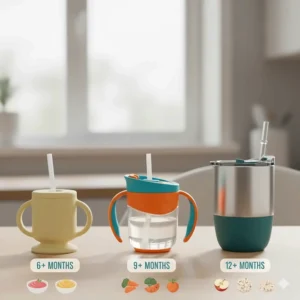
Transitioning from Bottle to Straw Cup
The shift from bottle to cup is easier with the right approach and the best straw cup for baby:
Timeline for Success
6-7 months: Introduce straw cup at meals with water. No pressure, just exposure.
8-9 months: Offer one bottle feeding per day in straw cup instead. Start with the feeding baby cares least about.
10-11 months: Replace 2-3 bottle feedings with cup. Many babies still need their morning and bedtime bottle.
12 months: Most babies can be fully transitioned, though bedtime bottles often linger longest.
15 months: All bottle feedings should be replaced with cup or open cup drinking.
Making the Switch Stick
Start slow: Don’t force it. Babies resist pressure but respond to gentle, consistent exposure.
Use familiarity: If your baby loves Dr. Brown’s bottles, try Dr. Brown’s straw cup first. The familiar brand can ease the transition.
Cold turkey isn’t necessary: Gradual replacement of one feeding at a time works better than sudden changes.
Stay consistent: Once you replace a bottle feeding with a cup, stick with it. Don’t revert during rough patches.
When Baby Resists
Some babies love straw cups immediately. Others need coaxing. If your baby refuses:
- Let them see you using a straw
- Have older siblings model straw drinking
- Try different times of day
- Don’t force – take a break and try again in a week
- Consider trying a different cup style
Remember, every baby develops differently. Some transition at 9 months, others take until 15 months. Both are completely normal.
Safety Considerations
While straw cups are generally safe, keep these guidelines in mind:
Supervision Matters
Always supervise babies drinking from straw cups, especially:
- Under 12 months
- When first learning
- In the car or stroller
- While lying down
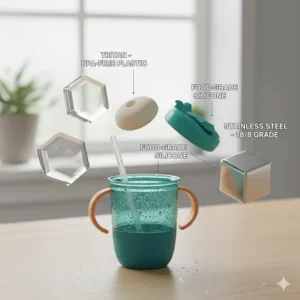
BPA and Chemical Concerns
Most modern straw cups are BPA-free, but other chemicals in plastic may still concern parents:
Look for: Tritan, polypropylene, or food-grade stainless steel Avoid: Plastics marked with recycling codes 3 (PVC) or 7 (polycarbonate) Best bet: Pura Kiki for completely plastic-free option
According to FDA guidelines, BPA-free plastics are considered safe for food contact, but some families prefer to avoid plastic entirely.
Choking Hazards
Straw cups pose minimal choking risk, but:
- Inspect straws regularly for deterioration
- Replace cracked or torn straws immediately
- Ensure all small parts are secure
- Never leave baby unattended with cup
Temperature Safety
Most straw cups are designed for cold or room-temperature beverages. Using hot liquids in cups not designed for heat can:
- Burn baby’s mouth
- Compromise the cup’s structural integrity
- Cause unexpected leaking
The Zoli BOT 2.0 is one of few cups rated for warm liquids. If your baby prefers warm milk, invest in this option rather than risking regular cups.
FAQs
❓ How do I teach my baby to use a straw cup for the first time?
❓ Can I put milk in a straw cup overnight or for extended periods?
❓ What age should babies stop using straw cups?
❓ Are weighted straw cups better than regular ones?
❓ How often should I replace straw cup parts?
Conclusion: Finding Your Perfect Match
Choosing the best straw cup for baby doesn’t have to be complicated. After reviewing dozens of options and testing them extensively, here’s my bottom line: the OXO Tot Transitions offers the best overall performance for leak-proof reliability, while the Munchkin Any Angle provides unbeatable value. For parents prioritizing plastic-free options, Pura Kiki delivers lifetime quality worth the investment.
Remember, the “best” cup ultimately depends on your family’s specific needs. A cup that works brilliantly for one baby might frustrate another. Don’t be afraid to try a couple of options – most are affordable enough that buying two or three to test isn’t a budget-breaker.
The transition from bottle to cup represents a major developmental milestone. Whether you choose a best straw sippy cup for milk for your 12 month old or a first straw cup for baby 6 months, you’re supporting your child’s growth toward independence. Starting with quality straw cups that promote proper oral development sets your baby up for success with drinking, and eventually, speech development.
The cups featured in this guide have been tested by thousands of parents and consistently receive high ratings for good reason. They work. They last. They make your life easier while supporting your baby’s development.
Take Action Today
✨ Don’t wait to start this important transition! Check current prices and availability on Amazon to find the perfect straw cup for your baby. With free Prime shipping, you can have it in hand within days and start working toward bottle independence this week. Your future self (and your toddler) will thank you! 🎉
Recommended for You
- Sippy Cup for 6 Month Old: 7 Best Choices 2025
- 7 Best Toddler Cups for 15-18 Month Olds (2025)
- 7 Best Sippy Cups for 10-12 Month Old Babies (2025)
Disclaimer: This article contains affiliate links. If you purchase products through these links, we may earn a small commission at no additional cost to you.
✨ Found this helpful? Share it with your friends! 💬🤗
