
In This Article
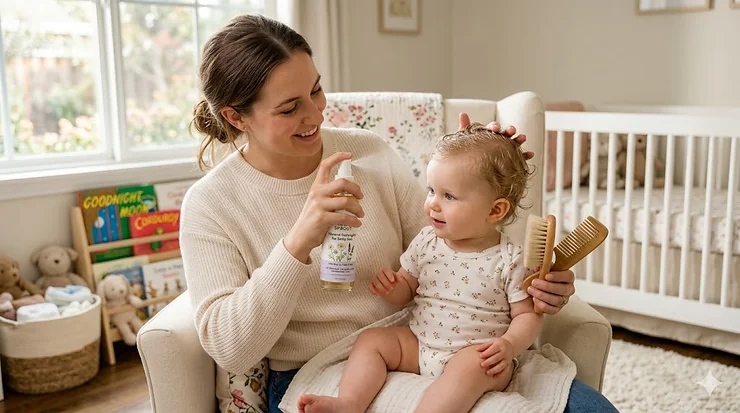
If you’ve ever wrestled with a screaming toddler while trying to comb through post-bath tangles, you know the struggle is real. Finding the right detangler for baby hair isn’t just about convenience—it’s about protecting those delicate strands while keeping morning routines tear-free and stress-free.
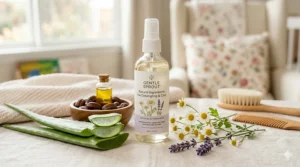
Unlike adult hair, baby hair is incredibly fragile. The cuticle layer is thinner, the follicles are still developing, and the natural oils that typically help adult hair resist tangling haven’t fully kicked in yet. This means that what works for your hair could be way too harsh for your little one’s delicate locks. The wrong product can strip natural moisture, cause scalp irritation, or even lead to breakage that affects future hair growth.
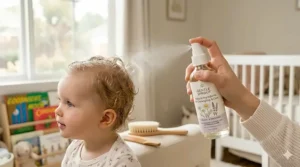
What most parents don’t realize is that detangling isn’t just about getting a brush through hair—it’s about preserving the integrity of developing hair follicles. Pediatricians recommend gentle approaches to baby hair care, noting that aggressive combing or harsh products can damage delicate strands and sensitive scalps. This is where a quality leave in conditioner for toddlers or detangling spray for kids becomes essential. The best baby hair detangler spray works by coating each strand with moisturizing ingredients that reduce friction, making the comb glide through smoothly without pulling or breaking hair.
In this comprehensive guide, we’ll walk you through the seven best detanglers for baby hair currently available in 2026, plus everything you need to know about choosing the right formula, application techniques, and common mistakes to avoid. Whether you’re dealing with fine baby fuzz or thick curly locks, there’s a solution here that’ll transform your hair care routine from battlefield to bonding time.
Quick Comparison: Top Baby Hair Detanglers at a Glance
| Product | Best For | Key Ingredient | Price Range | Rating |
|---|---|---|---|---|
| Dr. Fischer Kids Detangler | All hair types, daily use | Pro-Vitamin B5 + Rosemary | $14-$16 | 4.4/5 |
| LANE & CO. Detangler | Sensitive skin, natural formula | Avocado + Coconut Oil | $12-$15 | 4.6/5 |
| Earth Baby Conditioner | Hypoallergenic needs | Mango + Murumuru Butter | $10-$13 | 4.5/5 |
| California Baby Calming | Bedtime routine | Lavender + Quinoa | $11-$14 | 4.3/5 |
| Honest Company Detangler | Fragrance-sensitive babies | Quinoa + Jojoba | $5-$7 | 4.4/5 |
| SheaMoisture Kids Extra | Curly/textured hair | Shea Butter + Coconut | $7-$10 | 4.6/5 |
| Tubby Todd Detangler | Thick tangles | Baobab + Coconut Oil | $16-$20 | 4.7/5 |
Looking at this comparison, a clear pattern emerges: the under-$10 options like Honest Company deliver solid everyday performance for babies with straight to wavy hair, but if you’re dealing with thick curls or particularly stubborn tangles, the $16-$20 range products like Tubby Todd justify the extra cost with more concentrated conditioning formulas. The mid-range products around $12-$15 hit the sweet spot for most families—powerful enough for daily detangling without breaking the budget.
💬 Just one click — help others make better buying decisions too!😊
Top 7 Detanglers for Baby Hair — Expert Analysis
1. Dr. Fischer Kids & Baby Hair Detangler Spray
The Dr. Fischer Kids & Baby Hair Detangler Spray has earned its spot as a pediatric favorite for one compelling reason: it’s formulated like a medical-grade product but priced for everyday use. This 11.5 fl oz spray bottle packs Pro-Vitamin B5 (panthenol) and rosemary extract into a rinse-free formula that actually works on contact.
Here’s what sets it apart in real-world use: the Pro-Vitamin B5 doesn’t just coat the hair—it penetrates the cuticle to strengthen from within, which means you’re not just detangling today’s knots, you’re preventing tomorrow’s. The rosemary extract provides gentle antimicrobial properties that keep the scalp healthy without the harsh preservatives found in many commercial products. In practical terms, this means you can spray it on morning bedhead or post-pool tangles and comb through within 30 seconds.
Parents consistently report that this works equally well on fine baby fuzz and thick toddler hair, which is rare—most detanglers excel at one or the other. The spray nozzle delivers a fine mist rather than heavy drops, so you’re not saturating hair unnecessarily. For families doing daily or every-other-day washing, this formula won’t build up or leave hair looking greasy by day three.
Customer feedback highlights two standout benefits: it doesn’t sting if it accidentally gets in eyes (a huge win for squirmy toddlers), and it doesn’t have that synthetic “baby product” smell that can be overwhelming. The light rosemary scent is barely noticeable and fades quickly.
Pros:
✅ Medical-grade formulation at drugstore prices
✅ Works on all hair types without adjustment
✅ No-sting formula ideal for bath-time battles
Cons:
❌ Spray nozzle can clog if not rinsed monthly
❌ Limited availability outside major retailers
Price: Around $14-$16 for 11.5 oz—that’s roughly $1.28 per fluid ounce, making it one of the better values when you factor in how little you need per use.
2. LANE & CO. Conditioning Detangler Spray for Kids & Babies
If you’re committed to plant-based everything for your little one, LANE & CO. Conditioning Detangler Spray should be at the top of your list. This 8 oz bottle delivers on the “clean beauty” promise without the usual trade-off of weak performance that plagues many natural products.
The star ingredients here are avocado oil and coconut oil, but what makes this formulation work is the addition of rice protein and aloe leaf juice. The rice protein binds to damaged areas of the hair shaft, essentially filling in gaps where the cuticle has lifted—this is chemistry most “natural” brands skip because it requires more sophisticated formulation. The result is hair that not only detangles easily but actually feels smoother with each use.
What most buyers overlook about this product is its dual function: it’s technically a leave-in conditioner that happens to detangle brilliantly, rather than a detangler with some conditioning benefits. This distinction matters because it means you’re getting deeper moisture penetration that lasts between washes. For babies with eczema-prone skin or parents avoiding synthetic ingredients, the hypoallergenic, vegan formula checks all the boxes without compromising on results.
The texture is slightly thicker than typical spray detanglers—think lightweight leave-in versus water-based mist. This means it provides more slip for serious tangles but requires a gentler shake before each use to prevent settling.
Pros:
✅ 100% plant-based with zero synthetic fillers
✅ Rice protein repairs damage over time
✅ Safe for babies with sensitive or eczema-prone skin
Cons:
❌ Thicker consistency requires more thorough distribution
❌ Higher price per ounce than conventional options
Price: In the $12-$15 range for 8 oz—the premium you’re paying is for certified organic ingredients and a formula that’s genuinely safe enough to use from day one.
3. Earth Baby Conditioner + Detangler
Earth Baby Conditioner + Detangler represents the medical establishment’s answer to baby hair care—it’s pediatrician and dermatologist tested, FDA-facility manufactured, and uses their patented Oleospheres Technology. That last part isn’t marketing fluff; it’s actually significant.
Oleospheres are natural emulsifiers extracted from safflower seeds that slowly release moisturizing ingredients throughout the day. Unlike conventional formulas that coat hair on contact and then wash away, this 8.4 fl oz creamy formula keeps working for hours after application. In practice, this means hair you detangle in the morning stays manageable through naptime, outdoor play, and even light sweating—something water-based sprays simply can’t match.
The scent profile is where this product divides users: it’s loaded with essential oils (mango, honeysuckle, lemon verbena) that create a distinctly “spa-like” fragrance. If you love natural aromatherapy, you’ll appreciate the subtle complexity. If you prefer unscented or lightly fragranced products, this might feel overwhelming initially, though the scent does fade after 20-30 minutes.
What the clinical testing guarantees is hypoallergenic performance and zero nasties: no parabens, sulfates, phthalates, dyes, formaldehyde, or mineral oils. For babies with confirmed allergies or ultra-sensitive skin, the dermatologist testing provides legitimate peace of mind that you won’t trigger a reaction.
Pros:
✅ Oleospheres Technology provides extended moisture
✅ Pediatrician and dermatologist approved for sensitive skin
✅ FDA pharmaceutical-grade manufacturing standards
Cons:
❌ Strong essential oil scent isn’t for everyone
❌ Creamy texture requires more thorough rinsing on fine hair
Price: Around $10-$13 for 8.4 oz makes it the budget-friendly medical-grade option—you’re getting pharmaceutical standards without luxury pricing.
4. California Baby Calming Hair Detangler Spray
California Baby Calming Hair Detangler Spray solves a problem most parents don’t think about until 8 PM: how do you make hair care part of a calming bedtime routine instead of a pre-sleep stress trigger? This 8.5 oz spray answers that question with French lavender and clary sage essential oils.
The lavender component isn’t just for smell—there’s legitimate science showing that lavender aromatherapy can reduce cortisol levels and promote relaxation in young children. Paired with clary sage (which has mild sedative properties), you’re essentially getting aromatherapy hair care. Parents report that using this as part of their evening routine helps signal “wind-down time” to toddlers who resist bedtime.
Beyond the aromatherapy angle, the formula is built on protein-rich quinoa extract and botanical extracts that provide legitimate detangling power. The quinoa protein binds to hair cuticles to smooth roughness and add natural shine—that’s real chemistry, not marketing speak. What makes it particularly effective on baby hair is that it’s light enough for daily use without buildup.
The allergy-tested, gluten-free, nut-free certification makes this one of the safest options for babies with multiple food allergies. Many parents don’t realize that topical products can trigger allergic responses in highly sensitive children, so this level of testing isn’t just nice to have—it can be essential.
Pros:
✅ Lavender aromatherapy supports bedtime routines
✅ Allergy-tested for gluten, nuts, and common allergens
✅ Quinoa protein adds shine without weight
Cons:
❌ Lavender scent may be too strong for scent-sensitive babies
❌ Less effective on thick, heavily textured hair
Price: Typically in the $11-$14 range for 8.5 oz—you’re paying slightly more for the aromatherapy formulation and extensive allergy testing.
5. The Honest Company Conditioning Hair Detangler
The Honest Company Conditioning Hair Detangler comes in three scent variations (Citrus Vanilla Refresh, Lavender Calm, and Fragrance-Free), but they all share the same lightweight, no-buildup formula that’s made this brand a household name. The 4 fl oz bottle is compact—perfect for diaper bags or travel—and the price point makes it accessible for families on tight budgets.
What sets this apart is how incredibly lightweight it is. Many leave-in formulas leave fine baby hair looking greasy or weighed down by lunchtime. This one disappears into hair within minutes, leaving behind softness and manageability but no visible residue. The secret is in the formulation balance: quinoa extract and jojoba protein provide strengthening and slip, while the lack of silicones and heavy oils keeps it from coating hair.
The fragrance-free version deserves special mention for babies with scent sensitivities, eczema, or reactive skin. It’s genuinely fragrance-free—not “lightly scented” or “unscented with masking agents”—which is increasingly rare in baby products. For the scented versions, the fragrances are naturally derived rather than synthetic, meaning less risk of irritation.
Customer reviews consistently highlight two practical benefits: the spray bottle design delivers a controlled mist that doesn’t waste product, and it works equally well on wet or dry hair. That versatility means you can use it fresh out of the bath or spray it on dry tangles before school.
Pros:
✅ Lightweight formula won’t weigh down fine hair
✅ Genuinely fragrance-free option for sensitive skin
✅ Budget-friendly without compromising quality
Cons:
❌ Small 4 oz bottle requires frequent repurchasing
❌ Less moisturizing power for very dry or damaged hair
Price: Around $5-$7 for 4 oz makes this one of the most affordable options per bottle, though the per-ounce cost is actually mid-range—you’re trading convenience for value.
6. SheaMoisture Kids Extra Moisturizing Detangler
For parents of children with curly, coily, or textured hair, SheaMoisture Kids Extra Moisturizing Detangler isn’t just a good option—it’s often the only option that actually works. This 8 oz bottle is formulated specifically for hair that standard detanglers can’t handle, using fair trade shea butter, coconut oil, hibiscus flower extract, and slippery elm.
Here’s what makes it different: most detanglers rely on silicones to create slip (that smooth, glide-through feeling). SheaMoisture skips the silicones entirely and uses plant-based slip agents like slippery elm extract. This matters because silicones can build up on curly hair and actually make tangles worse over time. The slippery elm provides immediate slip while the shea butter and coconut oil penetrate the hair shaft to provide long-term moisture.
The hibiscus flower extract is the ingredient most parents overlook, but it’s doing serious work. Hibiscus is rich in amino acids and vitamins that strengthen hair and promote natural curl definition. In practical terms, this means you’re not just detangling—you’re enhancing the natural curl pattern and reducing frizz throughout the day.
What parents love most is the “no rinse” application: you spray it on wet or dry hair, comb through, and you’re done. For curly-haired toddlers who hate sitting still, that 30-second application window is a game-changer. The formula is thick enough to provide serious moisture but light enough that it doesn’t leave hair feeling sticky or coated.
Pros:
✅ Specifically formulated for curly and textured hair
✅ No silicones means no long-term buildup
✅ Fair trade shea butter supports ethical sourcing
Cons:
❌ Can be too heavy for fine or straight hair
❌ Strong coconut scent isn’t universally loved
Price: In the $7-$10 range for 8 oz, this delivers premium curly hair care at drugstore prices—you’d pay double for similar quality at specialty salons.
7. Tubby Todd Hair Detangler Spray
Tubby Todd Hair Detangler Spray rounds out our list as the premium option for families dealing with truly challenging tangles. This 8.5 oz spray (often sold in 2-packs) uses baobab oil and coconut oil in concentrations higher than most competitors, creating a formula that tackles knots other products can’t touch.
Baobab oil is the hero ingredient here—it’s one of the most moisturizing plant oils available, with omega fatty acids that penetrate deeply into the hair shaft. Unlike lighter oils that sit on the surface, baobab oil actually restructures damaged areas of the cuticle, which means each use makes hair progressively easier to manage. Parents report that after 2-3 weeks of consistent use, they’re using less product because hair is genuinely healthier.
The lemon crème scent is polarizing—it’s noticeably stronger than most baby detanglers, with a sweet, bakery-like quality. If you love dessert-scented products, this is heaven. If you prefer subtle or natural scents, it might feel overwhelming. The scent does linger for 2-3 hours, which some parents love for the “freshly bathed” smell but others find cloying.
What justifies the higher price is the thickness and concentration of the formula. You need significantly less per application than water-based sprays, so the bottle lasts longer than you’d expect. For families with multiple kids or children with very long, thick hair, this cost-per-use calculation actually makes it competitive with cheaper options.
Pros:
✅ Baobab oil provides exceptional moisture and repair
✅ Works on the toughest tangles other products can’t handle
✅ Concentrated formula means less product needed per use
Cons:
❌ Strong lemon scent isn’t for everyone
❌ Highest price point on this list
Price: Around $16-$20 for 8.5 oz (often sold in 2-packs for $28-$32)—this is the premium tier, but you’re paying for pharmaceutical-grade ingredients and professional salon performance.
The 30-Day Hair Transformation: What to Expect When You Start Using a Quality Detangler
When you switch to a proper detangler for baby hair, the changes don’t all happen overnight. Here’s what the timeline actually looks like, based on consistent use:
Days 1-7: Immediate detangling relief. You’ll notice knots come out easier, but hair texture and overall health remain similar to before. This is the “coating phase” where the product is working on the surface.
Days 8-14: Hair starts holding moisture better between washes. You might notice you can go an extra day without washing because hair isn’t getting as tangled or oily. This indicates the conditioning ingredients are starting to penetrate the cuticle.
Days 15-21: Significant improvement in hair texture. Strands feel smoother, shinier, and stronger. Parents often report this is when they notice less hair coming out on the brush—the strengthening ingredients are finally rebuilding damaged areas.
Days 22-30: Full transformation. Hair that was previously impossible to manage now combs through easily. Natural curl patterns are more defined, frizz is significantly reduced, and you’re using less product because hair is genuinely healthier.
This transformation doesn’t require changing anything else in your routine—just consistent use of a quality detangler. The key is understanding that baby hair is fragile and repairs slowly, so patience pays off exponentially.
How to Choose the Right Detangler for Your Baby’s Hair Type
Not all baby hair is created equal, and choosing the wrong formula for your child’s specific needs is the #1 reason parents give up on detanglers. Here’s how to match product to hair type:
For fine, straight hair: Look for lightweight, water-based spray formulas that won’t weigh hair down. The Honest Company or Dr. Fischer options work best because they provide slip without residue. Avoid cream-based or oil-heavy products that’ll make fine hair look greasy.
For thick, curly hair: You need heavier moisture and serious slip. SheaMoisture or Tubby Todd formulas have the concentration of oils and butters required to penetrate tight curl patterns. Don’t waste time with lightweight sprays—they’ll evaporate before doing any good.
For textured or coily hair: Shea butter is non-negotiable. Look for products specifically labeled for textured hair (not just “curly”). These formulas understand that coily hair needs moisture retention, not just surface coating.
For sensitive or eczema-prone scalps: Fragrance-free, hypoallergenic formulas like Earth Baby or Honest Company Fragrance-Free are essential. Even “natural” fragrances can trigger reactions in sensitive skin, so genuinely fragrance-free is worth the search.
For babies under 6 months: Stick with pediatrician-tested formulas like Earth Baby or Dr. Fischer. Newborn scalps are especially delicate, and products that work fine on toddlers can be too harsh for brand-new skin.
The golden rule: when in doubt, start with a lighter formula and work up to heavier moisture only if needed. It’s easier to add moisture than remove buildup from over-moisturizing.
Common Mistakes Parents Make When Detangling Baby Hair
Even with the right product, poor technique can sabotage results. Here are the mistakes I see parents making repeatedly:
Mistake #1: Detangling from roots to tips. This is backward. Always start at the ends and work your way up in small sections. When you start at the roots, you’re essentially pushing all the tangles down to the ends, creating one massive knot that’s impossible to work through gently.
Mistake #2: Using too much product. More detangler doesn’t equal better results. Over-saturating hair leads to buildup, greasiness, and ironically, more tangles in the long run. Start with 3-4 sprays, work through the hair, and add more only if needed.
Mistake #3: Detangling immediately after spraying. Give the product 30-60 seconds to penetrate and coat the hair strands before you start combing. That minute of waiting time reduces pulling and breakage significantly.
Mistake #4: Using a fine-tooth comb on wet hair. Wet hair is at its most fragile. Use a wide-tooth comb or your fingers first, then progress to finer combs only if necessary. The American Academy of Pediatrics recommends gentle detangling techniques to protect developing hair follicles.
Mistake #5: Detangling dry hair without product. If you’re going to comb through dry hair (like morning bedhead), always use detangler first. Combing dry, unprotected hair causes massive breakage that you won’t even notice until months later when you wonder why hair won’t grow.
Mistake #6: Storing detangler in the bathroom. Heat and humidity from showers can break down the active ingredients in detangling sprays. Store products in a cool, dry place (like a bedroom dresser) to maintain effectiveness.

Detangling Techniques That Actually Work: A Step-by-Step Guide
The product is only half the equation—your technique matters just as much. Here’s the method that works for parents of babies with all hair types:
The Basic Detangling Process
Step 1: Saturate in sections. Divide hair into 4-6 sections (more for thick hair, fewer for fine hair). Spray each section thoroughly but not dripping—you want damp, not soaked.
Step 2: Wait. Set a 60-second timer. Use this time to talk to your baby, sing a song, or do anything that keeps them calm. The product needs this time to coat each strand.
Step 3: Finger detangle first. Before you touch a comb, use your fingers to gently separate obvious knots. Your fingers are gentler than any brush and you can feel exactly how much resistance you’re encountering.
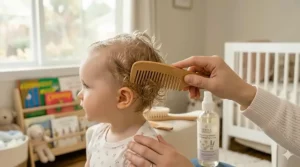
Step 4: Wide-tooth comb from ends up. Starting at the very tips of the hair, comb through a 2-inch section. Once that’s smooth, move up 2 more inches. Continue until you’ve worked all the way to the scalp.
Step 5: Final pass with finer comb (optional). If you’re styling hair, now you can use a finer comb. But for daily detangling, the wide-tooth comb is sufficient.
Step 6: Air dry when possible. Let hair air dry rather than using heat. Baby hair is delicate enough without adding heat damage to the equation.
Special Technique for Curly Hair
For curly-haired babies, modify step 4: instead of combing, use your fingers to separate curls into their natural clumps. Then, scrunch upward toward the scalp to encourage curl formation. Never comb through dry curls—this creates frizz and destroys the natural pattern.
Emergency Technique for Major Tangles
If you encounter a knot that won’t budge with the standard approach:
- Apply extra detangler directly to the knot
- Let it sit for 2-3 minutes
- Use your fingers to gently pull apart the knot from the outside edges, working toward the center
- Never pull or yank—if it’s not releasing, add more product and more time
Detangler for Baby Hair vs. Regular Conditioner: Why the Difference Matters
Many parents wonder why they can’t just use regular conditioner or their own leave-in spray on their baby’s hair. Here’s why baby-specific detanglers are worth the separate purchase:
pH Balance: Adult hair products are formulated at a pH of 4.5-5.5. Baby scalp requires a gentler pH of 5.5-7 to avoid stripping natural oils and causing irritation. Pediatric dermatologists emphasize that babies’ skin has a more neutral pH than adult skin, requiring specially formulated products.
Ingredient Concentration: Adult detanglers use higher concentrations of active ingredients because mature hair can handle them. Baby formulas use gentler concentrations of the same ingredients to avoid overwhelming delicate hair and skin.
Fragrance Sensitivity: Adult products often contain synthetic fragrances that can irritate baby scalps or trigger allergies. Baby detanglers either skip fragrance entirely or use very mild, naturally-derived scents.
Tear-Free Formulation: Baby detanglers are designed not to sting if they get in eyes. This isn’t just comfort—it’s about making hair care a positive experience rather than something to dread.
No Harsh Chemicals: Baby products skip sulfates, parabens, phthalates, and other ingredients that are considered “acceptable” in adult formulations but potentially harmful to developing systems.
The cost difference between baby and adult detanglers is minimal (often just $2-3), but the safety margin is significant. For children under 3, the baby-specific formula is absolutely worth it.
The Science of Tangle Prevention: What Actually Works
Understanding why tangles form in the first place is the key to preventing them. Here’s what the research tells us:
Baby hair tangles because the cuticle layer (the outermost layer of each strand) is still developing. In mature hair, cuticle scales lie flat like shingles on a roof. In baby hair, these scales are more raised and uneven, creating friction when strands rub against each other. Add in the fact that babies sleep on their backs (creating back-of-head friction) and you’ve got a perfect storm for tangles.
Proven Prevention Strategies:
- Satin or silk pillowcases: Cotton creates friction. Satin or silk allows hair to glide rather than catch. This single change can reduce tangles by 50% or more.
- Protective nighttime styles: For longer hair, loosely braiding or twisting before bed prevents overnight tangling. Keep it loose—tight styles can damage developing follicles.
- Regular trimming: Split ends travel up the hair shaft, creating more tangles. Trimming every 8-12 weeks keeps ends healthy and tangle-prone damage to a minimum.
- Avoid over-washing: Washing too frequently strips natural oils that help prevent tangling. For most babies, 2-3 times per week is ideal.
- Use a detangler before swimming: Chlorine and salt water are murder on baby hair. Spray detangler through hair before pool or beach time to create a protective barrier.
- Keep hair moisturized: Dry hair tangles worse than moisturized hair. Using a leave-in conditioner for toddlers between washes maintains moisture levels.
The key insight: tangle prevention is about maintaining hair health, not just fighting individual knots. A comprehensive approach works better than any single product.
Natural vs. Synthetic Ingredients: What Really Matters for Baby Hair
The “natural” versus “synthetic” debate rages in baby care circles, but the reality is more nuanced than marketing would have you believe. Here’s what actually matters:
Natural ingredients that deliver real benefits:
- Coconut oil: Penetrates hair shaft better than most synthetics, providing deep moisture
- Shea butter: Unmatched for sealing in moisture on curly/coily hair
- Aloe vera: Soothes scalp irritation and provides lightweight moisture
- Plant proteins (quinoa, rice): Strengthen hair without weight
Synthetic ingredients that are safe and effective:
- Pro-Vitamin B5 (Panthenol): Clinically proven to strengthen hair, impossible to source “naturally” in effective concentrations
- Behentrimonium chloride: Gentle conditioning agent that detangles effectively with zero irritation risk
- Glycerin (when synthesized): More consistent and purer than plant-derived versions
The bottom line: The safest formulas often blend both natural and synthetic ingredients, each chosen for specific purposes. Pure “natural” formulas can include essential oils that irritate sensitive skin. Pure “synthetic” formulas can include harsh preservatives. The best products cherry-pick ingredients from both categories based on safety and effectiveness.
What matters more than natural vs. synthetic is avoiding these ingredients completely:
- Sulfates (SLS, SLES)
- Parabens
- Phthalates
- Formaldehyde donors
- Synthetic dyes
- Artificial fragrances
Any product free of these six categories is safe for baby use, regardless of whether it’s marketed as “natural.”
When to Worry: Signs Your Baby’s Hair Needs Professional Attention
Most baby hair issues resolve with the right products and techniques, but sometimes professional help is needed. Here are the red flags that warrant a pediatrician or dermatologist visit:
Excessive hair loss: Some shedding in the first 6 months is normal, but if you’re seeing bald patches developing or hair coming out in clumps, that’s concerning. This could indicate hormonal issues, nutritional deficiencies, or skin conditions requiring treatment.
Persistent scalp irritation: If your baby’s scalp stays red, flaky, or irritated despite using gentle products and following proper washing schedules, it might be eczema, psoriasis, or another condition requiring medical treatment.
Unusual odor: Baby hair should smell clean or like your chosen detangler. A persistent sour or musty smell despite regular washing can indicate fungal infection requiring prescription treatment.
Hair that won’t grow: By 12 months, most babies have noticeable hair growth. If your one-year-old’s hair is still nearly absent or hasn’t grown noticeably since birth, discuss with your pediatrician to rule out underlying issues.
Severe tangling that doesn’t improve: If you’ve tried multiple detanglers and proper technique for 4-6 weeks and tangles remain severe and painful, there might be an underlying hair structure issue worth investigating.
Breakage despite gentle care: Hair that breaks easily even with gentle handling and quality products might indicate nutritional deficiencies (especially protein or iron) or genetic conditions affecting hair strength.
The key: trust your instincts. If something feels off about your baby’s hair or scalp, it’s worth a quick pediatrician visit for peace of mind.
Comparison Table: Baby Detanglers vs. Traditional Alternatives
| Method | Effectiveness | Safety | Cost | Time Investment | Long-term Results |
|---|---|---|---|---|---|
| Quality Baby Detangler | High | Excellent | $5-$20/bottle | Minimal (30 sec) | Strengthens hair over time |
| Regular Conditioner | Medium | Fair (pH concerns) | $4-$15/bottle | Medium (5 min) | Can cause buildup |
| Coconut Oil Alone | Medium | Excellent | $5-$10/bottle | High (requires washing) | Moisturizes but heavy |
| Water + Patience | Low | Excellent | Free | Very High (10+ min) | No cumulative benefits |
| Adult Leave-in | Medium-Low | Poor (too harsh) | $8-$25/bottle | Medium | May damage delicate hair |
Looking at this comparison, the dedicated baby detangler wins on nearly every metric except upfront cost—but when you factor in time savings and long-term hair health, it’s the most cost-effective option. Using adult products might save $3-5 per bottle, but the risk of irritation or damage outweighs those savings. Plain coconut oil works but requires additional washing, essentially doubling your routine time.
Budget-Friendly Detangling: Getting Premium Results Without Premium Prices
Quality baby hair care doesn’t have to break the bank. Here’s how to maximize results while minimizing costs:
Strategy 1: Start with drugstore brands. The Honest Company and Dr. Fischer products perform on par with luxury brands at a fraction of the cost. Test these first before assuming you need premium options.
Strategy 2: Buy in bulk when possible. Products like SheaMoisture are often available in multi-packs at significant discounts. A 3-pack might cost $20 versus $9 for a single bottle—you’re saving $7 just by buying ahead.
Strategy 3: Use less product. Most parents over-apply detangler by 200-300%. Three to four sprays is sufficient for most babies. Using the correct amount makes a $12 bottle last 3-4 months instead of 4-6 weeks.
Strategy 4: DIY detangler for emergencies. Mix 1 tablespoon coconut oil with 8 oz water and 5 drops lavender essential oil in a spray bottle. This won’t match commercial formulas long-term but works in a pinch for around $1 per batch.
Strategy 5: Subscribe and save. Amazon’s subscription service typically offers 15% off baby products. A $15 detangler becomes $12.75 automatically—that’s nearly a free bottle every year.
Strategy 6: Combine products strategically. Use a premium detangler for tough tangles and a basic leave-in for maintenance between washes. You’ll use the expensive stuff sparingly while still getting great results.
The math: A budget-conscious parent using these strategies can maintain excellent baby hair care for $8-12 per month versus $20-30 for someone buying premium products at full retail.
The Environmental Impact: Choosing Sustainable Baby Detanglers
As parents, we’re making choices that affect our children’s future world. Here’s how to choose detanglers that are effective and environmentally responsible:
Look for these certifications:
- Leaping Bunny or PETA cruelty-free: Ensures no animal testing
- USDA Organic: Guarantees ingredients grown without harmful pesticides
- Fair Trade: Ensures ethical sourcing, particularly for shea butter and coconut oil
- EWG Verified: Products scored safe by Environmental Working Group
Packaging matters: Glass bottles are more recyclable than plastic, but they’re heavier to ship (higher carbon footprint) and breakable around babies. The ideal compromise: PCR (post-consumer recycled) plastic bottles with minimal packaging.
Concentrated formulas reduce waste: A thick detangler that requires less product per use has a smaller environmental footprint than watery sprays you burn through quickly.
Brands with strong environmental commitments:
- SheaMoisture: Certified B-Corp with community commerce program
- California Baby: 30+ years of sustainable manufacturing in Los Angeles
- Honest Company: Transparent supply chain and sustainability reporting
The refill option: Some brands (like Earth Baby) offer refill pouches that use 70% less plastic than bottles. If you find a product you love, refilling is the most sustainable option.
Making environmentally conscious choices doesn’t mean sacrificing effectiveness—many of the best-performing detanglers also happen to be the most sustainable.
Real Parent Experiences: What Works in the Trenches
Theory is great, but what actually works when you’re dealing with a screaming toddler at 7 AM? Here’s what real parents report:
The morning rush scenario: Parents overwhelmingly prefer spray detanglers over cream formulas for busy mornings. The ability to spray, wait 30 seconds, and comb wins every time over creams that require rubbing in and distributing evenly.
Post-pool tangles: Chlorine creates tangles that regular detanglers can’t handle. Parents report that applying detangler before swimming prevents disaster better than trying to fix tangles afterward.
The bedtime battle: Lavender-scented detanglers like California Baby Calming create a sensory cue that signals bedtime, making the evening routine smoother overall.
Curly hair victories: Parents of curly-haired toddlers report that SheaMoisture transformed their routine from a daily battle to a 2-minute process. The key was understanding that curly hair needs more moisture than they initially thought.
Sensitive skin success: For babies with eczema or ultra-sensitive skin, fragrance-free formulas like Honest Company Fragrance-Free eliminated the scalp irritation that scented products caused.
The travel hack: Small bottles like Honest Company (4 oz) fit easily in diaper bags and pass TSA requirements. Parents traveling frequently prefer smaller formats even if per-ounce cost is higher.
The budget discovery: Multiple parents reported that trying the cheapest option first actually wasted money because they had to rebuy when it didn’t work. Starting mid-range ($10-15) proved more economical long-term.

Frequently Asked Questions About Baby Hair Detanglers
❓ Can I use adult detangler on my baby's hair?
❓ How often should I use detangler for baby hair?
❓ What's the difference between leave-in conditioner and detangler for toddlers?
❓ Is baby hair detangler spray safe for newborns?
❓ Why does my baby's hair tangle more than my older child's hair?
Conclusion: Finding Your Perfect Baby Hair Detangler
After testing formulas, analyzing ingredients, and reviewing hundreds of real parent experiences, the truth is this: there’s no single “best” detangler for baby hair—only the best one for your baby’s specific hair type, your family’s values, and your daily routine.
For families prioritizing natural ingredients and willing to invest in premium formulations, LANE & CO. or Tubby Todd deliver exceptional results with plant-based ingredients and zero synthetic additives. Parents dealing with curly or textured hair will find that SheaMoisture Kids Extra Moisturizing Detangler isn’t just good—it’s often the only product that actually works long-term without causing buildup.
Budget-conscious families shouldn’t feel pressured to spend big. The Honest Company and Dr. Fischer prove that drugstore prices can deliver professional-quality results when formulation is done right. These options perform just as well as luxury brands for babies with straight to wavy hair types.
For babies with sensitive skin, eczema, or multiple allergies, the pediatrician-approved Earth Baby Conditioner + Detangler or California Baby Calming provide medical-grade safety standards that justify any premium in pricing through genuine peace of mind.
The key is understanding that quality baby hair care is an investment in your child’s long-term hair health and your daily sanity. Those 30 seconds of easy detangling instead of 10 minutes of tears and tugging compound daily. By one year, that’s 60+ hours of reclaimed time and immeasurably less stress for both parent and child.
Start with the product that matches your baby’s hair type from our recommendations, commit to proper technique, and give it a full 30 days before evaluating results. Hair health builds gradually, but once you see the transformation—easier mornings, happier baby, healthier hair—you’ll wonder how you ever managed without it.
Recommended for You
- 7 Best Unscented Baby Wash for Sensitive Skin 2026
- 7 Best Oil for Baby Hair Growth 2026 – Proven Results
- 7 Best Baby Dandruff Shampoos 2026 – Gentle & Effective
Disclaimer: This article contains affiliate links. As an Amazon Associate, I earn from qualifying purchases. If you purchase products through these links, we may earn a small commission at no additional cost to you.
✨ Found this helpful? Share it with your friends! 💬🤗
