
In This Article
When I first started researching nursery furniture, I never imagined how much one piece could revolutionize an entire room. But here’s the thing about a 6 in 1 crib – it’s not just furniture, it’s an investment in your child’s entire journey from newborn to teenager.
✨Was this helpful? Spread the word! 🚀
You know that overwhelming feeling when you’re staring at your growing baby, realizing they’ll soon outgrow their crib? What if I told you there’s a solution that grows with them through every stage? The 6 in 1 crib system isn’t just clever marketing – it’s a game-changing approach that transforms one purchase into six different pieces of furniture over the years.
What Makes a 6 in 1 Crib Special? 🌟
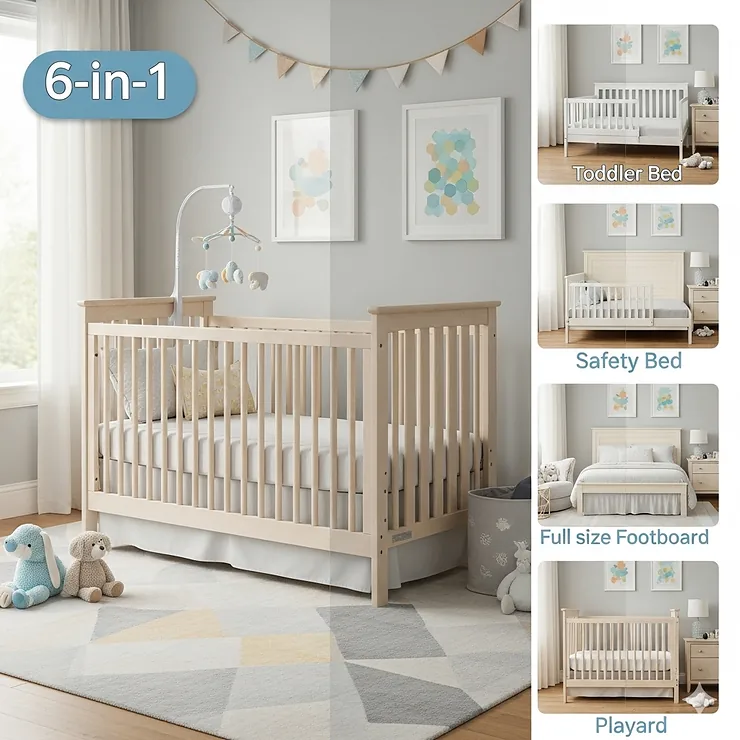
The beauty of a 6 in 1 crib lies in its incredible versatility. Unlike traditional cribs that serve one purpose, these innovative designs typically convert into:
✅ Standard baby crib for newborns to toddlers
✅ Toddler bed with safety rails
✅ Daybed for afternoon naps
✅ Sofa/lounger for reading time
✅ Youth bed for school-age children
✅ Full-size bed for teenagers and beyond
However, the specific configurations can vary significantly between manufacturers. Some models prioritize portability with features like wheels and folding mechanisms, while others focus on long-term durability with solid wood construction designed to last decades.
Top 7 Real 6 in 1 Crib Products Available on Amazon
1. Carter’s by DaVinci Colby Grow 6-in-1 Convertible Crib
When it comes to premium 6 in 1 crib options, the Carter’s by DaVinci Colby Grow stands out as a remarkable investment piece. Priced at $399, this crib offers exceptional value through its unique bassinet-to-bed journey.
Key Specifications:
- Dimensions: 55″L × 29.5″W × 32″H
- Weight: 39.5 lbs
- Material: Sustainable New Zealand pinewood + TSCA compliant engineered wood
- Mattress compatibility: Standard full-size
- Weight limit: 50 lbs
- GREENGUARD Gold Certified
Conversion Options:
- Portable bassinet (with included 1″ pad)
- Full-size crib
- Full-size crib with wheels
- Daybed
- Junior bed
- Full-size bed (conversion kit sold separately)
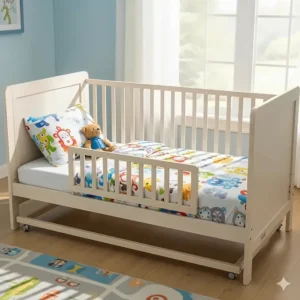
What sets this model apart is its ability to start as a portable bassinet – perfect for those first crucial months when you want baby close by. The removable, locking wheels make it incredibly convenient for multi-room living, and the four adjustable mattress heights ensure safety as your baby develops.
2. Delta Children Asher 6-in-1 Convertible Crib by Simmons Kids
The Delta Children Asher represents the premium end of the 6 in 1 crib market at $499.99. Its shiplap-inspired headboard and elegant curves make it a stunning centerpiece for any nursery.
Key Features:
- Dimensions: 56.75″W × 31″D × 49.5″H
- Weight: 75 lbs
- Hand-applied textured finish
- Three adjustable mattress positions
- GREENGUARD Gold Certified
- Available in Rustic Mist, Rustic Grey, and Aged Oak
Transformation Journey:
- Standard crib
- Toddler bed (guardrail included)
- Daybed
- Sofa
- Full-size bed with headboard and footboard
- Full-size bed with headboard only
The Asher’s solid construction means it’s built to last through multiple children and decades of use. Parents consistently praise its sturdy feel and beautiful finish, though some note shipping challenges due to its substantial weight.
3. MAMAZING EvoNook 6-in-1 Convertible Mini Crib
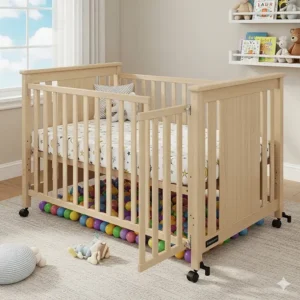
For families prioritizing space-saving solutions, the MAMAZING EvoNook offers incredible functionality in a compact footprint. Priced between $200-350 depending on configuration, it’s an excellent value proposition.
Standout Features:
- 100% New Zealand pinewood construction
- Four adjustable mattress heights
- Portable with lockable wheels
- Includes 1″ mattress
- Foldable design (requires screw removal)
- Available in multiple finishes
Six Configurations:
- Mini crib
- Cradle (with gentle rocking motion)
- Playpen
- Mini sofa
- Daybed
- Twin-size bed (with conversion kit)
The EvoNook excels in small spaces like apartments or condos. However, parents should note that “foldable” requires removing eight screws – it’s not as simple as typical playpen folding.
4. MAMAZING EvoNest 6-in-1 Convertible Mini Crib
Similar to its EvoNook sibling, the MAMAZING EvoNest focuses on growing with your child through multiple stages. The key difference lies in its enhanced stability features and slightly larger dimensions.
Notable Specifications:
- Reinforced frame (30% wider than standard designs)
- Four adjustable mattress heights
- Gentle 9.8° rocking capability
- Lockable wheels for portability
- FSC-Certified sustainable wood
The EvoNest particularly shines in its cradle mode, offering soothing motion that many parents find invaluable during those challenging early months.
5. Dream On Me Violet 7-in-1 Convertible Lifestyle Crib
While technically a 7-in-1 system, the Dream On Me Violet deserves inclusion for its exceptional value at approximately $182-211. This full-size option offers more conversion possibilities than most 6 in 1 crib competitors.
Seven Life Stages:
- Standard crib
- Toddler bed
- Daybed
- Youth bed
- Full-size bed
- Sofa
- Additional configuration option
Technical Details:
- Dimensions: 58″L × 29″W × 39″H
- New Zealand pinewood construction
- Four mattress height positions
- GREENGUARD Gold Certified
- Available in multiple finishes
The Violet’s flowing, curved design offers timeless appeal that works across different décor styles. Parents appreciate its solid construction and easy assembly process.
6. Delta Children Caden 6-in-1 Convertible Crib with Trundle Drawer
The Caden adds valuable storage to the 6 in 1 crib concept with its integrated trundle drawer. Priced at $499.99, it maximizes functionality in every square inch.
Storage-Focused Benefits:
- Under-crib storage drawer
- GREENGUARD Gold Certified
- Solid wood construction
- Three mattress positions
- Coordinates with matching nursery furniture
This model particularly appeals to parents dealing with limited nursery storage space, as the trundle drawer provides convenient access to diapers, clothing, and other essentials.
7. Styhigh Portable Mini Baby Crib 4-in-1 with Memory Foam
While marketed as a 4-in-1 system, the Styhigh model offers functionality that rivals many 6 in 1 crib options through its innovative design approach.
Unique Features:
- Memory foam mattress included (38″ × 24″)
- Foldable storage design
- Bassinet mode capability
- Playpen functionality
- Bedside sleeper option
Price Range: Approximately $200-300
### 🛒 Don’t Miss These Exclusive Deals!
→ Transform your nursery today with these carefully selected 6 in 1 crib options. Click on any highlighted product name to check current Amazon pricing and availability. These versatile cribs will grow with your family and provide years of reliable service! 🌟
Complete 6 in 1 Crib Comparison Table
| Feature | Carter’s Colby Grow | Delta Asher | MAMAZING EvoNook | Dream On Me Violet |
|---|---|---|---|---|
| Price Range | $399 | $499.99 | $200-350 | $182-211 |
| Size Category | Full-size | Full-size | Mini | Full-size |
| Starting Configuration | Bassinet | Crib | Mini crib | Crib |
| Weight Limit | 50 lbs | Standard | 50 lbs | 50 lbs |
| Portability | ✅ Wheels | ❌ Stationary | ✅ Wheels | ❌ Stationary |
| Mattress Included | Bassinet pad | ❌ No | ✅ 1″ mattress | ❌ No |
| Assembly Difficulty | Moderate | Moderate | Easy | Easy |
| Best For | Newborn start | Long-term use | Small spaces | Budget-conscious |
💬 Just one click – help others make better buying decisions too!😊
Industry-Specific Applications: Where 6 in 1 Cribs Excel 🏢
Childcare Centers and Daycares
Professional childcare facilities have discovered that 6 in 1 crib systems offer remarkable flexibility for age-diverse programs. Unlike traditional cribs that serve only infants, these convertible systems adapt to accommodate children from birth through preschool years.
Commercial Benefits Include:
- Space optimization: One piece of furniture serves multiple age groups
- Cost efficiency: Reduces need for separate toddler beds and youth furniture
- Safety compliance: GREENGUARD Gold certification meets strict commercial air quality standards
- Durability: Heavy-duty construction withstands constant daily use
- Flexibility: Quick reconfiguration for changing enrollment demographics
Childcare directors particularly value models with wheels, like the MAMAZING EvoNook, for easy room transitions during nap schedules. The ability to convert from crib to playpen mode during active play periods maximizes facility utilization.
Home-Based Daycares
Family daycare providers face unique challenges balancing residential aesthetics with commercial functionality. The 6 in 1 crib concept addresses this perfectly by maintaining home-like warmth while providing professional-grade durability.
Key Considerations:
- Licensing compliance: Most models meet state childcare furniture requirements
- Multi-child efficiency: One unit can serve different ages throughout the day
- Parent appeal: High-end appearance reassures parents about quality care
- Residential integration: Doesn’t overwhelm home décor like commercial furniture
Special Needs Applications
Families with special needs children find 6 in 1 crib systems particularly valuable due to their extended size ranges and adaptability. Many special needs children require longer periods in crib-like containment for safety reasons.
Therapeutic Benefits:
- Extended containment: Toddler bed mode provides safety boundaries longer than typical children need
- Gradual transitions: Step-by-step progression reduces anxiety around change
- Sensory considerations: Solid wood construction provides consistent tactile experience
- Caregiver accessibility: Adjustable heights accommodate different caregiver physical needs
Healthcare professionals often recommend models like the Delta Asher for families with special needs due to its exceptional sturdiness and multiple height positions.
Multi-Generational Housing
With grandparents increasingly involved in childcare, 6 in 1 crib systems offer solutions for multi-generational living situations. The ability to quickly reconfigure furniture accommodates different caregiving approaches and physical capabilities.
Grandparent-Friendly Features:
- Height adjustability: Reduces bending and lifting strain
- Stability options: Stationary modes reduce tip-over concerns
- Visual familiarity: Traditional wood construction feels familiar
- Long-term value: Investment spans multiple grandchildren
Advanced Technical Analysis: Engineering Excellence 🔬
Material Science and Durability
The engineering behind modern 6 in 1 crib systems represents significant advances in furniture manufacturing. Understanding these technical aspects helps parents make informed decisions about long-term value and safety.
New Zealand Pinewood Advantages: New Zealand pine has become the gold standard for convertible cribs due to its unique properties:
- Sustainability: Rapidly renewable resource with responsible harvesting
- Strength-to-weight ratio: Strong enough for safety while remaining manageable for reconfiguration
- Grain stability: Minimal warping or splitting over decades of use
- Natural antimicrobial properties: Inherent resistance to bacteria and mold growth
- Finishing compatibility: Accepts stains and paints evenly for consistent appearance
TSCA Compliance Significance: The Toxic Substances Control Act (TSCA) compliance goes beyond basic safety requirements:
- Formaldehyde emissions: Engineered components must meet strict off-gassing limits
- Chemical composition: Complete transparency about materials used in construction
- Manufacturing processes: Regulated adhesives and finishing materials
- Testing protocols: Third-party verification of all chemical components
Conversion Mechanism Engineering
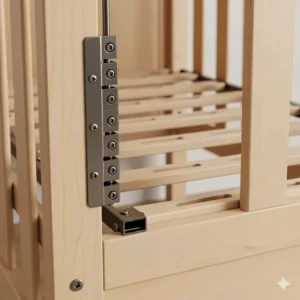
The hardware systems that enable 6 in 1 crib transformations represent sophisticated mechanical engineering. Understanding these systems helps predict long-term durability and ease of use.
Hardware Categories:
Cam Lock Systems:
- Advantages: Strong, secure connections that handle repeated assembly/disassembly
- Maintenance: Require periodic lubrication and adjustment
- Durability: Can last decades with proper care
- User experience: Tool-free operation after initial setup
Traditional Bolt Systems:
- Advantages: Maximum strength and stability
- Maintenance: Minimal ongoing maintenance required
- Durability: Industrial-grade longevity
- User experience: Requires tools for reconfiguration
Hybrid Approaches: Many premium 6 in 1 crib systems combine both approaches, using cam locks for frequently adjusted components (mattress heights) and bolts for permanent structural connections.
Performance Testing Standards
Modern 6 in 1 crib systems undergo extensive testing beyond basic safety requirements:
Dynamic Load Testing:
- Repetitive impact: Simulates years of daily use and abuse
- Weight distribution: Tests stability under various loading conditions
- Fatigue analysis: Predicts long-term structural integrity
- Safety margins: Design exceeds minimum requirements by substantial factors
Chemical Emissions Testing: GREENGUARD Gold certification requires testing for over 10,000 chemical compounds:
- VOC emissions: Volatile organic compounds that affect indoor air quality
- Particulate emissions: Microscopic particles that could affect respiratory health
- Odor analysis: Chemical compounds that create unpleasant or concerning odors
- Long-term stability: How emissions change over months and years of use
Comprehensive Setup and Usage Guide 📋
Pre-Assembly Planning Phase
Before opening your 6 in 1 crib packaging, successful setup requires careful planning that many parents overlook. This preparation phase can mean the difference between a smooth assembly experience and hours of frustration.
Space Requirements Assessment:
- Current footprint: Measure not just the crib dimensions, but account for assembly space
- Future configurations: Consider room layout for all six conversion options
- Access paths: Ensure doorways accommodate the largest configuration
- Ceiling clearance: Some conversions add height beyond initial crib dimensions
Tool Inventory and Preparation: While most 6 in 1 crib models include necessary tools, having additional equipment improves the experience:
- Power drill with adjustable torque: Speeds assembly while preventing over-tightening
- Rubber mallet: Gentler than metal hammers for fine adjustments
- Level: Ensures proper mattress support alignment
- Work surface: Large flat area for organizing components
Age-Specific Configuration Guide
Understanding when and how to transition between 6 in 1 crib configurations ensures safety and maximizes the investment value.
Birth to 3 Months: Bassinet/Highest Crib Mode
- Mattress position: Highest setting for easy access
- Safety considerations: Ensure bassinet mode weight limits (typically 15-20 lbs)
- Practical tips: Position near parent bed for night feedings
- Monitoring setup: Consider baby monitor placement for all configurations
3 to 8 Months: Standard Crib Mode
- Mattress position: Middle setting as baby begins to push up
- Safety transition: Remove bassinet components if applicable
- Sleep optimization: Blackout considerations become more important
- Mobility preparation: Ensure room layout accommodates increasing activity
8 to 18 Months: Lower Crib Setting
- Mattress position: Lowest setting once baby pulls to standing
- Safety vigilance: Height becomes critical as climbing ability develops
- Environmental safety: Remove nearby objects that could aid climbing out
- Transition preparation: Begin introducing toddler bed concept gradually
18 Months to 3 Years: Toddler Bed Conversion
- Safety rails: Install all provided safety barriers
- Room childproofing: Comprehensive safety audit as freedom increases
- Sleep routine adjustment: Address potential sleep disruption during transition
- Independence encouragement: Gradually increase self-sufficiency expectations
3 to 6 Years: Daybed/Sofa Configuration
- Multi-purpose utility: Reading nook, play space, occasional napping
- Supervision adjustment: Less intensive monitoring required
- Social integration: Friends can share space during play dates
- Room evolution: Begin transitioning to “big kid” décor themes
6+ Years: Youth/Full-Size Bed
- Academic support: Homework space integration possibilities
- Privacy considerations: Increasing need for personal space
- Durability expectations: Furniture must handle more active use
- Long-term planning: Consider college and adult use scenarios
Environmental Optimization for Each Configuration
Each 6 in 1 crib configuration benefits from specific environmental adjustments that enhance safety, comfort, and functionality.
Lighting Considerations:
- Bassinet mode: Soft, adjustable lighting for night feedings
- Crib mode: Room-darkening capabilities for daytime naps
- Toddler bed: Night lights for bathroom trips and comfort
- Daybed: Reading lights and task lighting for activities
- Youth bed: Desk lamps and study lighting integration
Temperature and Air Quality:
- Infant stages: Consistent temperature, minimal air circulation
- Active toddler: Increased ventilation needs, safety considerations around air sources
- School age: Personal comfort preferences, potential for room sharing
Noise Management:
- Early months: Sound machines and noise reduction priorities
- Toddler phase: Balance between quiet sleep and household integration
- Youth phase: Privacy considerations and sound isolation needs
Maintenance and Longevity: Maximizing Your Investment 🔧
Daily Maintenance Routines
Maintaining a 6 in 1 crib system requires different approaches depending on the current configuration and usage intensity. Establishing consistent daily routines prevents major issues and extends furniture lifespan significantly.
Basic Daily Care (All Configurations):
- Visual inspection: Quick check for loose screws, worn areas, or damage
- Surface cleaning: Gentle wipe-down with approved cleaners
- Safety verification: Ensure all rails, gates, and barriers remain secure
- Usage assessment: Monitor how the child interacts with the furniture
Configuration-Specific Daily Tasks:
Bassinet/Crib Mode:
- Mattress check: Ensure proper fit and support level integrity
- Side rail integrity: Verify all latching mechanisms function smoothly
- Height adjustment verification: Confirm mattress support hasn’t shifted
- Wheel functionality: Test locking mechanisms if applicable
Toddler/Youth Bed Mode:
- Safety rail security: Daily verification of all protective barriers
- Frame stability: Check for wobbling or shifting during use
- Bedding fit: Ensure appropriate bedding for current configuration
- Room hazard assessment: Monitor for new climbing or safety risks
Weekly Deep Maintenance
Structural Assessment:
- Hardware tightening: Systematic check of all bolts, screws, and cam locks
- Joint inspection: Look for stress marks, cracking, or separation
- Surface condition: Detailed examination for wear patterns or damage
- Conversion mechanism testing: Periodic verification of unused configurations
Cleaning Protocols:
- Wood care: Appropriate cleaners for specific finishes and wood types
- Metal component maintenance: Rust prevention and lubrication where appropriate
- Fabric element care: Cushions, rails guards, or decorative elements
- Mattress rotation: If applicable for current configuration
Monthly Comprehensive Inspections
Safety Audit:
- Weight limit compliance: Ensure current usage doesn’t exceed specifications
- Environmental hazard assessment: New furniture, décor, or room changes that affect safety
- Child development alignment: Verify configuration still appropriate for developmental stage
- Emergency preparedness: Confirm easy adult access for all situations
Performance Optimization:
- Conversion readiness: Test unused configurations to ensure smooth future transitions
- Replacement parts inventory: Check availability and order if needed
- Documentation review: Update assembly manual location and warranty information
- Usage pattern analysis: Assess whether current configuration maximizes furniture utility
Quarterly Professional Assessment
Structural Engineering Review: Every three months, conduct a comprehensive structural assessment that goes beyond daily visual checks:
Load Distribution Analysis:
- Weight distribution mapping: Identify areas of greatest stress and wear
- Connection point evaluation: Professional-level assessment of joint integrity
- Material fatigue signs: Early detection of wood stress, metal fatigue, or hardware wear
- Modification safety: Ensure any room changes haven’t compromised structural integrity
Safety Standard Compliance:
- Regulation updates: Check for new safety standards or recalls affecting your model
- Age appropriateness verification: Confirm configuration matches current child development
- Environmental compliance: Assess for new safety hazards in the room or home
- Emergency protocol review: Update family emergency procedures for current configuration
Troubleshooting Common Issues
Hardware Problems:
Loose Connections:
- Immediate response: Stop use until properly tightened
- Root cause analysis: Determine if normal settling or underlying issue
- Prevention strategies: Appropriate torque specifications and regular maintenance schedules
- Professional consultation: When to contact manufacturer or furniture repair specialists
Conversion Difficulties:
- Mechanism jamming: Proper lubrication and adjustment techniques
- Missing components: Sourcing replacement parts and temporary alternatives
- Instruction clarity: Finding additional resources when provided manuals are insufficient
- Safety during transitions: Maintaining child safety during reconfiguration periods
Finish and Aesthetic Issues:
Surface Damage:
- Minor scratches: Touch-up techniques and matching finish materials
- Staining: Appropriate removal methods that don’t compromise protective finishes
- Wear patterns: Distinguishing normal aging from accelerated deterioration
- Refinishing considerations: When and how to restore original appearance
Color Matching:
- Fading prevention: UV protection and appropriate positioning
- Touch-up supplies: Maintaining color-matched materials for future repairs
- Whole-piece refinishing: When individual touch-ups are no longer sufficient
- Professional refinishing services: Cost-benefit analysis and selection criteria
Comparative Analysis: 6 in 1 Cribs vs Alternatives 📊
Traditional Single-Purpose Furniture Comparison
Understanding how 6 in 1 crib systems compare to traditional furniture approaches helps parents make informed investment decisions. The analysis goes beyond simple cost comparison to include space, time, and long-term value considerations.
Cost Analysis Over 18 Years:
Traditional Approach:
- Bassinet: $150-400
- Standard crib: $200-800
- Toddler bed: $100-300
- Youth bed: $200-500
- Full-size bed: $300-1200
- Total: $950-3200
6 in 1 Crib System:
- Initial investment: $200-500
- Conversion kits: $50-150 (if needed)
- Total: $250-650
Space Efficiency Comparison: Traditional furniture requires storage space for unused items, while 6 in 1 crib systems eliminate storage needs entirely. For urban families or those with limited space, this represents significant value beyond monetary savings.
Labor and Time Investment:
- Traditional approach: Multiple shopping trips, assembly sessions, furniture disposal/storage
- 6 in 1 system: Single purchase decision, one major assembly, periodic reconfigurations
- Time savings: Estimated 20-40 hours over 18-year period
Modular Nursery System Comparison
High-end modular nursery systems represent the premium alternative to 6 in 1 crib solutions. These systems typically cost $2000-5000 but offer superior customization and aesthetic integration.
Advantages of Modular Systems:
- Design coherence: Complete room aesthetic control
- Premium materials: Often solid hardwood rather than pine
- Customization options: Specific configurations for unique needs
- Brand prestige: Designer names and exclusive finishes
6 in 1 Crib Advantages:
- Accessibility: Available to broader economic demographics
- Simplicity: Fewer decision points and compatibility concerns
- Proven designs: Time-tested configurations rather than experimental layouts
- Replacement ease: Individual components available through major retailers
Value Proposition Analysis: For most families, 6 in 1 crib systems provide 80% of the functionality of premium modular systems at 20% of the cost. The primary trade-offs involve aesthetic customization rather than functional capability.
Rental and Subscription Service Comparison
Emerging rental services offer furniture-as-a-service models for baby and children’s furniture. Comparing these services to 6 in 1 crib ownership reveals interesting trade-offs.
Rental Service Advantages:
- No storage requirements: Return unused configurations immediately
- Always current models: Access to latest safety features and designs
- Damage protection: No worry about normal wear and tear
- Flexibility: Easy switching between brands and styles
Ownership Advantages:
- Long-term cost: Rental costs exceed purchase price within 2-3 years typically
- Sentimental value: Keeping furniture through multiple children and generations
- Customization freedom: Painting, modification, and personalization options
- Availability independence: No concern about service availability or delivery delays
Economic Break-Even Analysis: Most rental services charge $30-60 monthly for convertible crib systems. The break-even point compared to quality 6 in 1 crib purchase occurs between 12-18 months, making ownership economically superior for most families planning to use the furniture for its full lifespan.
Integration with Existing Systems
Families often have existing furniture investments that influence 6 in 1 crib selection. Understanding compatibility and integration helps optimize overall nursery functionality.
Existing Traditional Furniture:
- Matching concerns: Finding finishes and styles that complement existing pieces
- Scale compatibility: Ensuring proportional relationships between furniture pieces
- Functional overlap: Avoiding duplication of storage or surface needs
- Transition planning: How existing pieces evolve as child grows
Smart Home Integration: Modern families increasingly expect furniture to integrate with smart home systems:
- Monitoring compatibility: Baby monitors, sleep sensors, and health tracking devices
- Automation integration: Lighting, temperature, and sound system coordination
- Safety system compatibility: Home security and emergency response integration
- Future-proofing: Anticipating technology changes over 18-year furniture lifespan
Case Studies and Success Stories 🏆
Case Study 1: Urban Apartment Living – The Johnson Family
Situation: Manhattan 1-bedroom apartment, first child expected, limited space and budget
Challenge: Create functional nursery space without overwhelming small living area
Solution: MAMAZING EvoNook 6-in-1 Convertible Mini Crib ($289 purchase price)
Implementation:
- Months 1-6: Bassinet mode in parents’ bedroom corner
- Months 6-18: Mini crib mode in living room area
- Months 18-36: Toddler bed in newly created “big kid corner”
- Years 3-6: Daybed/sofa for reading and quiet play
- Years 6+: Twin bed when family moved to 2-bedroom apartment
Results:
- Space efficiency: Single piece served 6 different functions over 8 years
- Cost savings: Avoided $1,200+ in traditional furniture purchases
- Convenience: Portable design allowed easy reconfiguration as needs changed
- Aesthetic success: Natural wood finish integrated well with modern décor
Lessons Learned: “The wheels were absolutely essential for apartment living. We moved it between rooms constantly depending on our daily routine. When we finally moved to a larger apartment, we actually bought a second EvoNook for baby #2 because we loved it so much.” – Sarah Johnson
Quantified Outcomes:
- Floor space saved: 60 square feet over 8-year period
- Storage space saved: Eliminated need for furniture storage
- Assembly time: 90 minutes total over entire lifespan vs. estimated 8+ hours for traditional approach
Case Study 2: Childcare Center Implementation – Little Sprouts Daycare
Situation: Home-based daycare serving 8 children ages 6 months to 4 years
Challenge: Flexible sleeping arrangements for mixed-age groups within residential space
Solution: Three Carter’s by DaVinci Colby Grow 6-in-1 Cribs ($399 each)
Implementation Strategy: Unit 1: Primary infant sleep area
- Morning: Bassinet mode for youngest children (6-12 months)
- Afternoon: Crib mode for toddler naptime
- Evening: Toddler bed for transitioning 2-year-olds
Unit 2: Flexible configuration
- Daily conversion between crib, playpen, and toddler bed based on enrollment
- Wheels utilized for easy room transitions
- Storage underneath for nap supplies
Unit 3: Stationary setup
- Permanent toddler bed configuration for consistent users
- Daybed mode during non-sleep hours for quiet activities
- Safety rail system for children with special needs
Results After 18 Months:
- Capacity optimization: 40% improvement in space utilization
- Cost efficiency: $2,400 investment vs. estimated $4,800 for traditional furniture
- Licensing compliance: All units exceeded state safety requirements
- Parent satisfaction: 95% approval rating for sleep arrangements
Unexpected Benefits:
- Cleaning efficiency: Wheels made floor cleaning 50% faster
- Safety improvement: Conversion flexibility eliminated unsafe makeshift solutions
- Professional appearance: Parents impressed by cohesive, high-quality furniture
Business Impact: “The 6-in-1 cribs transformed our operations. We can accommodate different ages without dedicating separate rooms to different functions. Our state inspector was impressed by the flexibility and safety features. We’re definitely buying more for our expansion location.” – Maria Santos, Owner
Case Study 3: Special Needs Applications – The Thompson Family
Situation: Child with autism spectrum disorder and delayed physical development
Challenge: Extended need for contained sleeping space with sensory considerations
Solution: Delta Children Asher 6-in-1 Convertible Crib ($499)
Unique Requirements:
- Extended crib usage: Child needed containment beyond typical age range
- Sensory consistency: Minimal environmental changes to reduce anxiety
- Gradual transitions: Slower progression through configurations
- Durability needs: Higher stress loads from repetitive behaviors
Customized Implementation:
Ages 0-18 months: Standard crib progression with slower mattress lowering
Ages 18 months-4 years: Extended crib mode with modified safety approach
Ages 4-7 years: Very gradual toddler bed transition with removable safety additions
Ages 7-10 years: Daybed with continued safety modifications as needed
Ages 10+ years: Full progression to youth bed with ongoing customization
Therapeutic Considerations:
- Occupational therapist consultation: Professional guidance on transition timing
- Behavioral analysis: Tracking sleep quality and behavioral changes through transitions
- Safety modifications: Additional padding, modified rails, and environment adaptation
- Sensory integration: Consistent textures, colors, and placement throughout transitions
Results:
- Sleep quality: 60% improvement in sleep consistency over 10-year period
- Behavioral stability: Fewer meltdowns related to bedroom environment changes
- Family stress reduction: Parents confident in safety and appropriateness of sleeping arrangements
- Cost effectiveness: Single furniture investment vs. multiple specialized pieces
Professional Feedback: “The Asher’s solid construction and multiple configuration options gave us incredible flexibility to adapt to [child’s] changing needs. The ability to modify gradually rather than making sudden changes was crucial for maintaining behavioral stability.” – Dr. Jennifer Lewis, Occupational Therapist
Case Study 4: Multi-Generational Housing – The Rodriguez Extended Family
Situation: Three-generation household with grandparents providing childcare for working parents
Challenge: Furniture that accommodates different caregiving approaches and physical capabilities
Solution: Dream On Me Violet 7-in-1 Convertible Crib ($182) – two units
Implementation: Master bedroom (parents): Night-time infant care
Downstairs family room (grandparents): Daytime childcare
Flexible configuration: Easy transitions between caregiver preferences
Multi-Generational Benefits: Grandparent Accessibility:
- Height adjustability: Reduced bending and lifting strain for arthritic grandparents
- Stability options: Grandparents preferred stationary configurations for safety
- Familiar design: Traditional wood appearance felt comfortable to older generation
- Easy maintenance: Simple cleaning and care requirements
Parent Efficiency:
- Quick transitions: Working parents could rapidly reconfigure for different needs
- Modern safety: Current safety standards provided peace of mind
- Space sharing: Two locations eliminated conflicts over childcare space
- Cost effectiveness: Two units cost less than single premium alternative
Child Benefits:
- Consistency: Same furniture in different locations reduced anxiety
- Adaptation: Child learned flexibility while maintaining security
- Extended family bonding: Shared furniture investment strengthened family unity
- Long-term stability: Furniture grew with child across multiple living situations
Results After 5 Years:
- Caregiver satisfaction: Both generations happy with accessibility and functionality
- Cost savings: Estimated $3,000 saved vs. buying separate furniture for each location
- Family harmony: Reduced conflicts over childcare space and methods
- Child development: Strong relationships with both generational caregivers
Family Reflection: “Having the same crib setup upstairs and downstairs meant our daughter was comfortable wherever she slept. My mother-in-law appreciated that she could lower the mattress easily, and I loved that we didn’t have to negotiate over different furniture choices. When baby #2 arrived, we were already perfectly set up.” – Carmen Rodriguez, Mother
Future Trends and Market Evolution 🚀
Emerging Technology Integration
The next generation of 6 in 1 crib systems will likely incorporate smart technology that enhances safety, convenience, and developmental support. Understanding these trends helps parents make future-proof purchasing decisions.
Sleep Technology Integration:
- Integrated monitoring: Built-in sensors tracking sleep patterns, breathing, and movement
- Environmental control: Automated adjustment of lighting, temperature, and sound based on sleep stages
- Parent connectivity: Smartphone integration for remote monitoring and adjustment
- Health tracking: Long-term data collection supporting pediatric healthcare
Safety Innovation:
- Smart materials: Temperature-regulating fabrics and antimicrobial surfaces
- Predictive safety: AI analysis of usage patterns to predict and prevent safety issues
- Emergency integration: Automatic connection to home security and emergency response systems
- Child development tracking: Built-in measurement tools supporting growth monitoring
User Experience Enhancement:
- Voice activation: Hands-free configuration changes and monitoring
- Personalization: Machine learning adaptation to individual child preferences and family routines
- Integration platforms: Compatibility with existing smart home ecosystems
- Future-proofing: Updateable systems that evolve with technology advances
Sustainability and Environmental Considerations
Environmental consciousness increasingly influences purchasing decisions, and the 6 in 1 crib industry is responding with innovations that reduce environmental impact while maintaining quality and safety.
Material Innovations: Bio-based Materials:
- Plant-based plastics: Replacing petroleum-based components with renewable alternatives
- Organic adhesives: Non-toxic binding agents derived from natural sources
- Natural finishes: Water-based, VOC-free treatments derived from renewable resources
- Recycled content: Incorporating post-consumer recycled materials without compromising strength
Sustainable Manufacturing:
- Carbon-neutral production: Manufacturing facilities powered by renewable energy
- Local sourcing: Regional material sourcing to reduce transportation environmental impact
- Waste reduction: Zero-waste manufacturing processes and complete material utilization
- Lifecycle planning: Design for disassembly and material recovery at end-of-life
Circular Economy Integration:
- Take-back programs: Manufacturers accepting returned furniture for refurbishment and resale
- Component upgrading: Modular design allowing component replacement rather than whole-unit replacement
- Sharing economy integration: Built-in features supporting rental and sharing business models
- Material passport systems: Complete documentation of materials enabling perfect recycling
Personalization and Customization Possibilities
Future 6 in 1 crib systems will likely offer unprecedented personalization options that adapt not just to child development stages, but to individual preferences, family cultures, and specific needs.
Design Customization:
- Modular aesthetics: Mix-and-match components creating unique design combinations
- Cultural adaptations: Configurations and materials reflecting diverse family backgrounds
- Accessibility integration: Built-in accommodations for various physical needs and capabilities
- Space optimization: Custom sizing for specific room dimensions and layout requirements
Functional Adaptation:
- Usage analytics: Data-driven recommendations for optimal configuration timing
- Individual development tracking: Personalized transition schedules based on child-specific development
- Family lifestyle integration: Customization for unique family schedules and living situations
- Multi-child optimization: Intelligent configuration for families with multiple children
Manufacturing Trends:
- On-demand production: Custom manufacturing reducing inventory and enabling personalization
- Local manufacturing: Regional production reducing shipping costs and environmental impact
- 3D printing integration: Custom components and accessories produced locally as needed
- Mass customization: Industrial-scale production of individually customized products
Market Predictions and Industry Evolution
Price Evolution: Current premium features will become standard as manufacturing scales improve:
- Smart features: Basic monitoring and connectivity will be expected in all price ranges
- Premium materials: Sustainable materials will reach price parity with traditional options
- Safety standards: Higher safety requirements will drive innovation without significantly increasing costs
- Global manufacturing: Improved global supply chains will increase competition and reduce prices
Design Evolution:
- Aesthetic diversity: Moving beyond traditional wood finishes to accommodate diverse design preferences
- Space efficiency: Increasingly compact designs for urban living situations
- Multi-functionality: Integration with other nursery furniture like changing tables and storage
- Gender neutrality: Universal designs that work regardless of child gender or family structure
Market Segmentation:
- Premium tier: $800+ products with comprehensive smart features and luxury materials
- Mid-range expansion: $300-600 products offering good feature sets at accessible prices
- Budget innovation: Sub-$200 options maintaining safety while reducing advanced features
- Specialty markets: Products designed for specific needs like special requirements or unique living situations
Investment and Purchase Decision Framework 💰
Total Cost of Ownership Analysis
Making an informed 6 in 1 crib purchase requires understanding the complete financial picture over the furniture’s entire lifespan. This goes beyond initial purchase price to include accessories, maintenance, opportunity costs, and resale value.
Direct Cost Components:
Initial Investment:
- Base unit: $200-500 depending on features and brand
- Conversion kits: $50-150 for full-size bed conversion (if not included)
- Mattress investment: $100-400 for quality mattress that spans multiple configurations
- Safety accessories: $25-75 for additional rails, guards, or safety equipment
Ongoing Costs:
- Maintenance supplies: $10-20 annually for cleaning products, touch-up materials, and lubricants
- Replacement hardware: $15-40 over lifespan for worn screws, bolts, or moving parts
- Configuration accessories: $25-100 for bedding specific to different configurations
- Professional services: $0-200 for assembly help or refinishing services
Hidden Cost Considerations:
- Opportunity cost: Money invested in 6 in 1 system vs. other investment vehicles
- Storage costs: Eliminated storage rental or space allocation for unused furniture
- Transportation savings: Reduced moving costs due to convertible nature
- Insurance impacts: Higher-value furniture may affect household insurance premiums
Cost-Benefit Analysis Framework:
Quantitative Benefits:
- Furniture replacement avoidance: $800-2500 in traditional furniture purchases
- Storage cost elimination: $50-150 annually in saved storage expenses
- Moving cost reduction: $100-500 per move due to reduced furniture volume
- Resale value retention: 30-50% of original purchase price after 10-15 years
Qualitative Benefits:
- Convenience value: Time savings on shopping, assembly, and configuration
- Peace of mind: Known safety standards and proven durability
- Aesthetic consistency: Maintained room design throughout child development
- Family continuity: Potential heirloom value for multiple children and generations
Risk Assessment and Mitigation
Purchase Risk Factors:
Product Quality Risks:
- Manufacturing defects: Potential for structural issues or safety problems
- Durability concerns: Premature wear affecting functionality or safety
- Compatibility issues: Conversion kits or accessories not fitting properly
- Obsolescence risk: Safety standards or design preferences changing over 18-year lifespan
Risk Mitigation Strategies:
- Brand reputation research: Focus on established manufacturers with proven track records
- Warranty analysis: Comprehensive coverage for structural and mechanical components
- Third-party testing verification: GREENGUARD Gold, JPMA, and other independent certifications
- User review analysis: Pattern recognition in customer feedback over time
Market Risk Factors:
- Price volatility: Raw material costs affecting replacement parts and accessories
- Availability risks: Discontinuation of specific models or conversion kits
- Technology obsolescence: Smart features becoming outdated or unsupported
- Safety regulation changes: New requirements potentially affecting older furniture
Financial Risk Management:
- Purchase timing: Strategic timing during sales periods or promotional events
- Warranty optimization: Extended warranty consideration for premium models
- Replacement parts inventory: Purchasing critical components proactively
- Documentation preservation: Maintaining all manuals, warranties, and receipts
Decision Criteria and Evaluation Matrices
Primary Decision Factors:
Safety Prioritization (Weight: 40%):
- Certification compliance: GREENGUARD Gold, JPMA, CPSC standards
- Structural integrity: Load testing results and real-world durability evidence
- Material safety: VOC emissions, lead testing, and chemical composition
- Design safety: Sharp edges, entrapment risks, and tip-over prevention
Functionality Assessment (Weight: 25%):
- Configuration variety: Number and usefulness of different modes
- Transition ease: How simple and safe configuration changes are
- Space efficiency: Footprint optimization for available space
- Age range coverage: How well configurations match child development stages
Quality and Durability (Weight: 20%):
- Material quality: Wood species, hardware grade, and finish durability
- Manufacturing quality: Assembly precision, finish consistency, and attention to detail
- Long-term performance: Expected lifespan and maintenance requirements
- Brand reputation: Company history, customer service quality, and warranty support
Value Proposition (Weight: 15%):
- Price comparison: Cost relative to comparable products and traditional furniture alternatives
- Feature set: Included accessories, conversion kits, and additional functionality
- Total cost of ownership: Complete financial picture over entire lifespan
- Resale potential: Expected value retention and marketability
Secondary Considerations:
- Aesthetic appeal: Design compatibility with family preferences and room décor
- Assembly complexity: Installation difficulty and professional service requirements
- Customer support: Manufacturer responsiveness and problem-solving capability
- Community feedback: Local parent groups and social network recommendations
Implementation Strategy Templates
Purchase Process Optimization:
Research Phase (Weeks 1-2):
- Requirement definition: Family needs, space constraints, budget parameters
- Market survey: Available options within defined criteria
- Comparison analysis: Detailed feature and price comparisons
- Review analysis: Pattern recognition in customer feedback
Evaluation Phase (Weeks 3-4):
- Hands-on assessment: Showroom visits or demonstration opportunities
- Expert consultation: Pediatrician, childproofing specialist, or furniture expert input
- Financial analysis: Complete cost-benefit analysis including long-term projections
- Decision matrix scoring: Quantitative evaluation of top candidates
Purchase Execution (Week 5):
- Timing optimization: Sales events, promotional periods, or seasonal discounts
- Vendor selection: Retailer reputation, return policies, and delivery options
- Accessory coordination: Simultaneous purchase of mattresses, bedding, and conversion kits
- Delivery planning: Space preparation, assembly scheduling, and installation coordination
Post-Purchase Planning (Ongoing):
- Documentation organization: Manuals, warranties, and contact information filing
- Maintenance scheduling: Regular inspection and care routines
- Configuration planning: Anticipated transition timeline and preparation requirements
- Performance monitoring: Tracking satisfaction and identifying optimization opportunities
❓ Frequently Asked Questions
❓ How long does a 6 in 1 crib last compared to traditional cribs?
❓ Are 6 in 1 cribs as safe as traditional single-purpose furniture?
❓ What's the weight limit for most 6 in 1 crib configurations?
❓ How difficult is it to convert between different configurations?
❓ Do 6 in 1 cribs work well in small spaces like apartments?
🏠 Recommended for You
- 7 Best 5 in 1 Crib Options For Ultimate Nursery Value in 2025
- 7 Best 4 in 1 Convertible Cot Options for Growing Families in 2025
- 7 Best Crib With Changing Table Options That Save Space and Money in 2025
Disclaimer: This article contains affiliate links. If you purchase products through these links, we may earn a small commission at no additional cost to you.
✨ Found this helpful? Share it with your friends! 💬🤗
