
In This Article
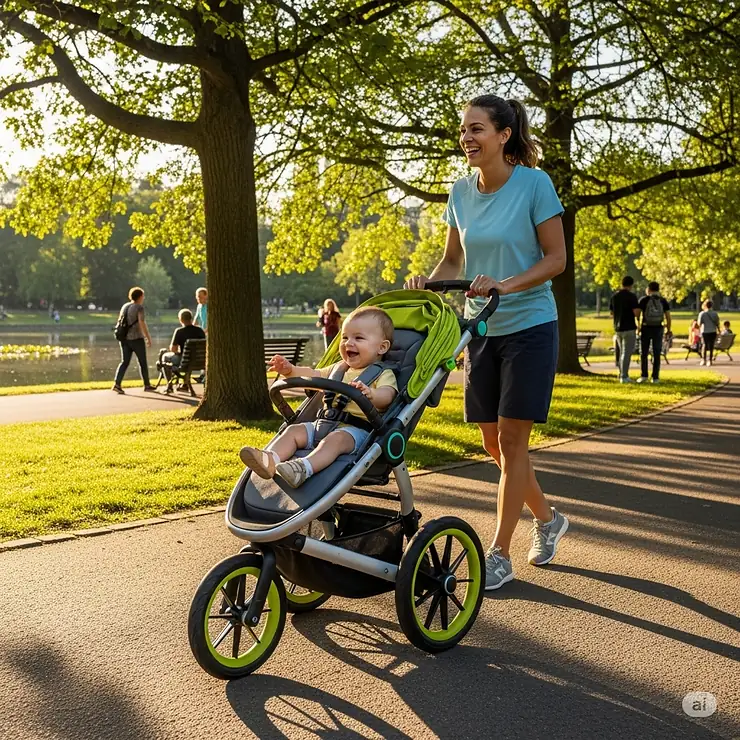
Are you an active parent looking for the perfect stroller that can keep up with your lifestyle? Whether you’re planning morning jogs, navigating city streets, or exploring off-road trails, 3 wheel strollers offer unmatched versatility and performance that traditional four-wheel strollers simply can’t match.
The three-wheel design provides superior maneuverability, making it effortless to navigate tight spaces, sharp turns, and various terrains. From budget-friendly options under $200 to premium models exceeding $600, the 3 wheel stroller market offers something for every family’s needs and budget.
✨Was this helpful? Spread the word! 🚀
In this comprehensive guide, I’ll walk you through everything you need to know about 3 wheel strollers, from essential safety features to detailed product comparisons. You’ll discover which models offer the best value, performance, and durability for your specific lifestyle needs.
What Makes 3 Wheel Strollers Special? 🚴♂️
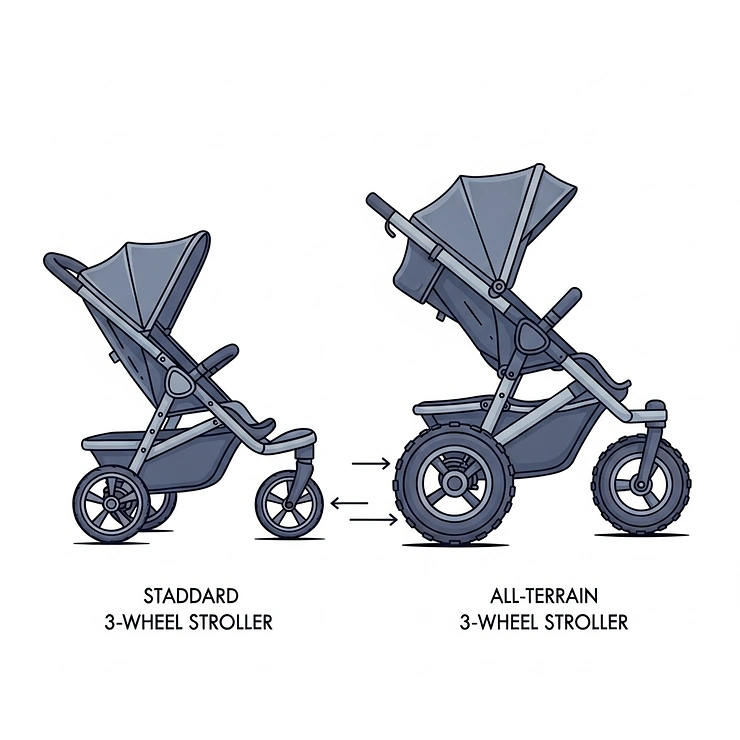
Three wheel strollers, also known as jogging strollers or all-terrain strollers, represent a revolutionary approach to baby transportation. Unlike traditional four-wheel designs, these strollers feature one front wheel and two rear wheels, creating a triangle configuration that offers several distinct advantages.
The single front wheel design allows for exceptional maneuverability, making it easy to navigate around obstacles and through narrow spaces. Most quality three wheel strollers feature pneumatic (air-filled) tires that provide superior shock absorption and smoother rides over various terrains, from sidewalks to gravel paths.
Key Advantages of 3 Wheel Design ✅
The triangular wheel configuration provides enhanced stability during motion while reducing the overall turning radius significantly. This makes 3 wheel strollers ideal for urban environments where quick direction changes are essential. Additionally, the design typically incorporates larger wheels compared to standard strollers, with front wheels measuring 12 inches and rear wheels 16 inches or larger, contributing to a smoother ride experience.
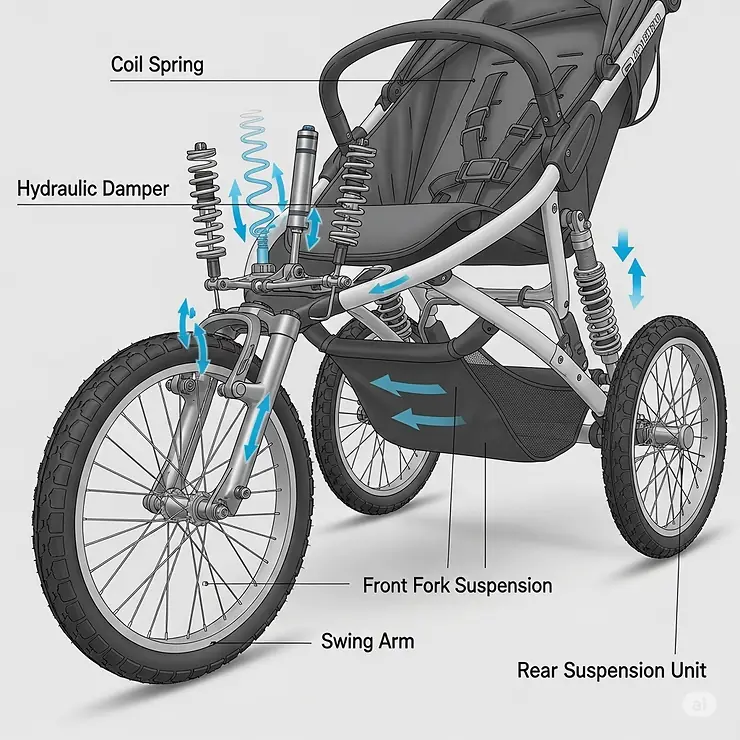
Furthermore, many three wheel strollers come equipped with advanced suspension systems that absorb bumps and vibrations, ensuring your child remains comfortable even on rougher surfaces. The aerodynamic design also reduces wind resistance during jogging or brisk walking, making it easier for parents to maintain their pace.
Industry-Specific Applications and User Demographics 🏃♀️
Professional and Recreational Use Cases
Three wheel strollers serve diverse user groups across multiple applications. Fitness enthusiasts and professional runners appreciate the performance-oriented features that support active lifestyles. According to the American Academy of Pediatrics, jogging strollers should only be used for running when babies are at least six months old and can control their head and neck independently.
Healthcare professionals, including physical therapists and pediatricians, often recommend 3 wheel strollers for parents recovering from childbirth who want to gradually return to exercise routines. The ergonomic design reduces strain on the parent’s back and shoulders compared to pushing traditional strollers.
Regional and Cultural Considerations
In urban environments across the United States, 3 wheel strollers have become increasingly popular due to their ability to navigate crowded sidewalks and public transportation systems. Parents in suburban areas appreciate the versatility for both neighborhood walks and more adventurous outdoor activities.
Different regions show varying preferences for specific features. Parents in hilly areas prioritize hand brakes and enhanced suspension, while those in flat urban areas focus more on compact folding mechanisms and storage capacity. Weather considerations also influence purchasing decisions, with all-weather canopies and water-resistant materials being more important in regions with variable climates.
Professional Applications in Healthcare and Fitness
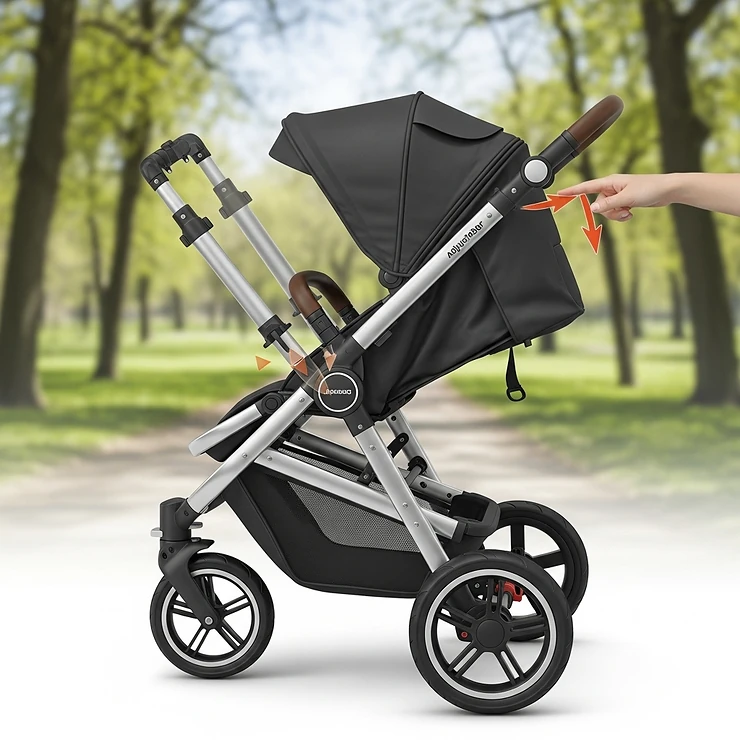
Physical therapists working with postpartum clients often recommend specific 3 wheel stroller models that provide optimal ergonomics for gradual fitness recovery. The adjustable handlebar heights accommodate different user heights and can be modified as parents progress through their recovery phases.
Similarly, fitness instructors leading stroller-based exercise classes prefer models with enhanced stability and safety features. These professionals require strollers that can handle group exercise movements while ensuring child safety throughout dynamic workout sessions.
Advanced Technical Analysis and Engineering Principles ⚡
Suspension System Engineering
The suspension systems in modern 3 wheel strollers employ sophisticated engineering principles borrowed from bicycle and automotive industries. Premium models like the BOB Revolution Flex 3.0 feature adjustable suspension systems that can be customized based on the child’s weight and terrain conditions.
The suspension mechanism typically consists of coil springs or elastomer systems positioned near the rear axle. These components work in conjunction with pneumatic tires to create a multi-layer shock absorption system. The engineering challenge lies in balancing comfort for the child with stability for the parent, requiring precise calibration of spring rates and damping coefficients.
Wheel and Tire Technology
Pneumatic tire technology in 3 wheel strollers utilizes similar principles to bicycle tires but requires modifications for the unique demands of child transportation. The tire compounds must provide adequate grip on various surfaces while maintaining durability under frequent use and weight variations.
Tire pressure specifications are crucial for optimal performance, with recommended pressures often differing from what’s printed on the tire sidewall. Proper inflation ensures optimal rolling resistance, shock absorption, and handling characteristics. Under-inflated tires increase rolling resistance and parent fatigue, while over-inflation reduces comfort and traction.
Frame Materials and Construction
Modern 3 wheel strollers employ various frame materials, each with specific performance characteristics. Aluminum frames offer the best strength-to-weight ratio, making them ideal for performance-oriented models. Steel frames provide enhanced durability and lower costs but increase overall weight.
The frame geometry plays a crucial role in stability and handling. The wheelbase length affects stability during high-speed movement, while the front wheel positioning influences steering responsiveness. Engineers must balance these factors to create strollers that perform well across various use cases.
Safety Engineering and Testing Standards
All quality 3 wheel strollers must meet ASTM F833 safety standards and Consumer Product Safety Commission (CPSC) requirements. These standards require extensive testing including stability tests, strength assessments, and safety harness evaluations.
The testing protocols simulate real-world usage scenarios, including sudden stops, obstacle navigation, and various loading conditions. Dynamic testing evaluates the stroller’s behavior during jogging movements, ensuring that the design remains stable under the rhythmic forces generated during running.
Comprehensive Setup and Usage Guide 🔧
Initial Assembly and Safety Checks
Proper assembly of your 3 wheel stroller is crucial for safety and optimal performance. Most models arrive partially assembled, requiring wheel installation, handlebar attachment, and safety feature verification. The assembly process typically takes 15-30 minutes and requires basic tools, though many modern designs feature tool-free assembly systems.
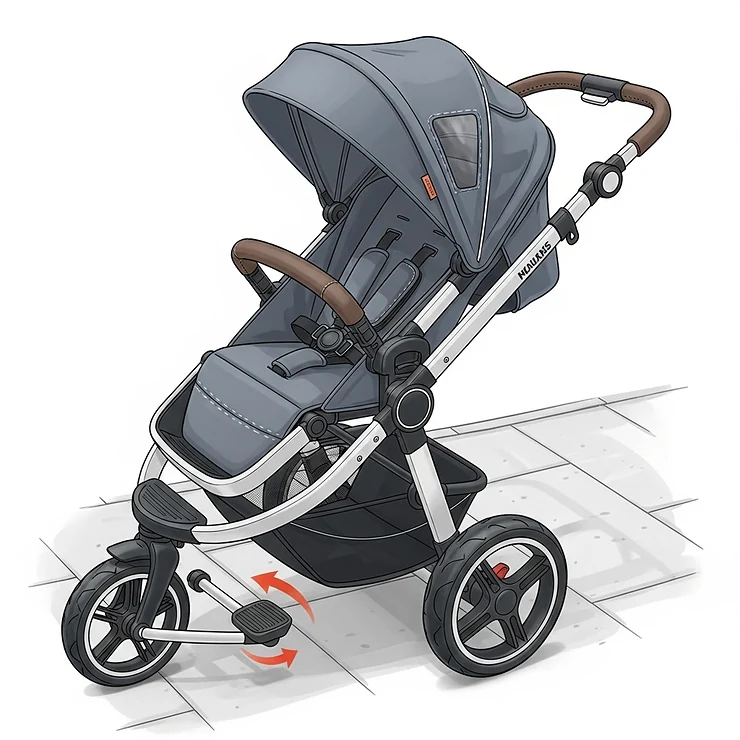
Begin by carefully reading the manufacturer’s instructions and identifying all components. Install the rear wheels first, ensuring they click securely into place and that the quick-release mechanisms function properly. The front wheel installation varies by model, with some featuring fixed wheels and others offering swivel-lock functionality.
User Compatibility and Ergonomic Adjustments
Proper fit between the user and stroller significantly impacts comfort and safety during use. Adjustable handlebars typically range from 34 inches to 48 inches in height, accommodating users from approximately 5 feet to over 6 feet tall.
To determine optimal handlebar height, stand behind the stroller with your arms relaxed at your sides. The handlebar should align with your waist level, allowing for a slight bend in your elbows when gripping. This positioning reduces strain on your back and shoulders during extended use.
Environmental Considerations and Terrain Selection
Different terrains require specific setup adjustments and safety considerations. For smooth pavement jogging, ensure the front wheel is locked in the forward position and properly inflated. Rough terrain navigation benefits from slightly reduced tire pressure, which increases the contact patch and improves traction.
Weather conditions also influence setup requirements. Windy conditions may require adjusting the canopy position and ensuring all safety straps are properly secured. Wet conditions demand extra attention to brake function and tire grip, potentially requiring route modifications for safety.
Age-Appropriate Usage Guidelines
The American Academy of Pediatrics recommends waiting until babies are at least six months old before using jogging strollers for running, though they can be used for walking with proper car seat adapters from birth. This age restriction exists because younger infants lack the neck and core strength necessary to handle the additional forces generated during jogging.
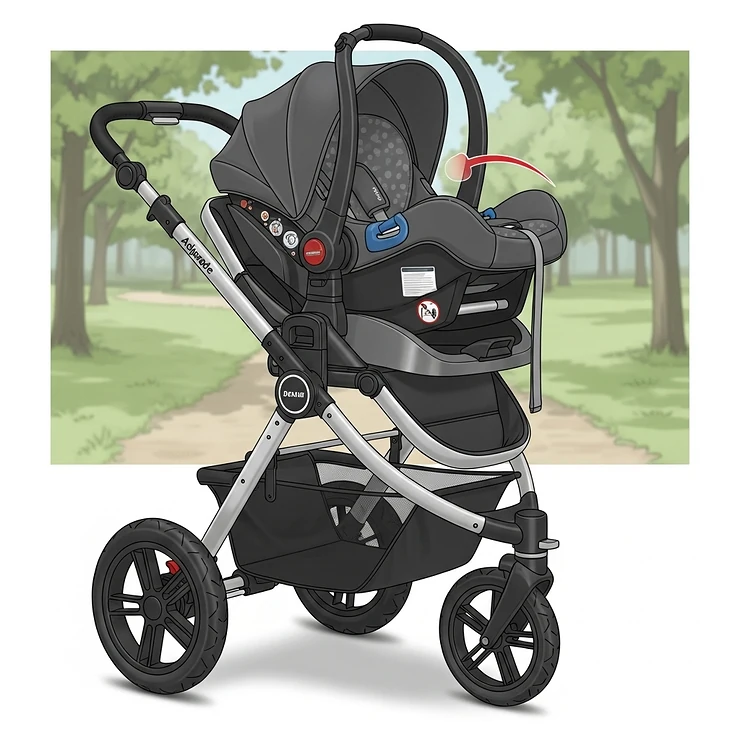
For infants under six months, 3 wheel strollers can be used with compatible infant car seat adapters, allowing for gentle walks and stationary activities. The transition to direct stroller seating should occur gradually, starting with short walks before progressing to more dynamic activities.
Top 7 Three Wheel Strollers: Detailed Analysis 🏆
Premium Performance Category
BOB Revolution Flex 3.0 – The Gold Standard
Priced around $650, the BOB Revolution Flex 3.0 represents the pinnacle of jogging stroller engineering. This premium option accommodates children from birth (with car seat adapter) up to 75 pounds, making it a long-term investment that grows with your family.
Key Specifications:
- Weight: 27.3 pounds
- Maximum child weight: 75 pounds
- Handlebar height: Adjustable (9 positions)
- Tire size: 16″ pneumatic
- Suspension: Adjustable mountain bike-style
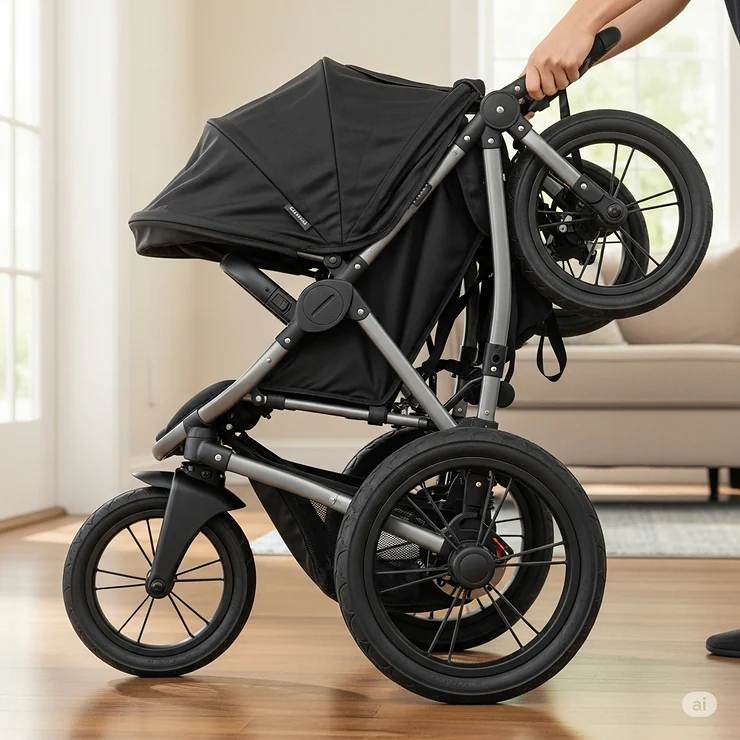
- Folding: Two-step, two-handed
The BOB Revolution Flex 3.0 features industry-leading adjustable suspension that can be customized based on your child’s weight and terrain conditions. The adjustable tracking system and rotating handlebar allow for precise customization to match individual running styles.
Pros:
✅ Exceptional build quality and durability
✅ Adjustable suspension system
✅ Large weight capacity (75 lbs)
✅ Superior all-terrain performance
✅ Lifetime warranty on frame
Cons:
❌ Higher price point
❌ Heavier than competitors
❌ Two-handed folding mechanism
Thule Urban Glide 2 – Swedish Engineering Excellence
The Thule Urban Glide 2, priced between $549-$699, combines Scandinavian design principles with practical functionality. This premium jogger weighs only 24.4 pounds while maintaining robust construction and performance capabilities.
Key Specifications:
- Weight: 24.4 pounds
- Maximum child weight: 75 pounds
- Handlebar height: Adjustable (38.5″ – 45.3″)
- Tire size: 16″ pneumatic rear wheels
- Suspension: Rear suspension system
- Folding: One-handed compact fold
The Thule Urban Glide 2 excels in urban environments where quick folding and maneuverability are essential. Its covered storage bin with zippered closure keeps items secure and clean, even during off-road adventures.
Pros:
✅ Lightweight yet sturdy construction
✅ One-handed folding mechanism
✅ Covered storage compartment
✅ Integrated twist hand brake
✅ Excellent urban maneuverability
Cons:
❌ Premium pricing
❌ Limited storage weight capacity (10 lbs)
❌ May not fit taller toddlers comfortably
Mid-Range Excellence
Baby Jogger Summit X3 – American Innovation
The Baby Jogger Summit X3 combines all-wheel suspension with air-filled rubber tires for superior performance across all terrains. This American-designed stroller offers premium features at a more accessible price point.
Key Specifications:
- Weight: Approximately 26 pounds
- Maximum child weight: 75 pounds
- Tire size: Air-filled rubber
- Suspension: All-wheel suspension
- Special features: Hand-operated deceleration brake
- Warranty: Limited lifetime on frame
The Baby Jogger Summit X3 features a unique hand-operated deceleration brake system that provides enhanced control during downhill sections. The signature one-hand compact fold makes storage and transportation exceptionally convenient.
Pros:
✅ All-wheel suspension system
✅ Hand brake for enhanced control
✅ One-hand compact fold
✅ Near-flat seat recline
✅ Large UV 50+ canopy
Cons:
❌ Some users report wheel bearing issues
❌ May require initial maintenance
❌ Heavier than some competitors
Budget-Friendly Champions
Baby Trend Expedition – Exceptional Value
The Baby Trend Expedition offers impressive features at an unbeatable price point, typically under $200. This budget-friendly option proves that quality 3 wheel stroller performance doesn’t require a premium investment.
Key Specifications:
- Weight: 23.6 pounds
- Maximum child weight: 50 pounds
- Tire size: 16″ rear, 12″ front pneumatic
- Folding: Two-handed trigger fold
- Special features: Parent and child trays
- Price range: $150-$200
The Baby Trend Expedition provides all essential jogging stroller features without premium pricing. It performs well in rolling resistance tests and offers adequate performance for occasional jogging and regular all-terrain use.
Pros:
✅ Outstanding value for money
✅ Lightweight construction
✅ Dual cup holder trays
✅ Easy assembly process
✅ Compact folded size
Cons:
❌ No adjustable handlebar
❌ Limited suspension system
❌ Lower weight capacity
❌ Basic brake system
Graco FastAction Jogger LX – Convenience Focus
The Graco FastAction Jogger LX emphasizes convenience with its signature one-second, one-hand fold mechanism. This mid-range option balances features with affordability, though performance reviews are mixed.
Key Specifications:
- Weight: Approximately 30 pounds
- Maximum child weight: 50 pounds
- Folding: One-hand FastAction fold
- Special features: Self-standing when folded
- Car seat compatibility: All Graco Click Connect seats
The Graco FastAction Jogger LX shines in convenience features but struggles with performance consistency. Testing reveals issues with wheel tracking and random front wheel locking during use.
Pros:
✅ Ultra-convenient folding system
✅ Self-standing design
✅ Integrated car seat compatibility
✅ Large storage basket
✅ Adjustable handlebar
Cons:
❌ Poor tracking performance
❌ Front wheel locking issues
❌ Shallow cup holders
❌ Not recommended for serious running
Specialized Options
Century Stroll On 3-Wheel – Eco-Conscious Choice
The Century Stroll On 3-Wheel features fabrics made with recycled materials as part of their environmental commitment. This lightweight travel system provides good value for environmentally conscious families.
Key Specifications:
- Includes Carry On 35 Lightweight Infant Car Seat
- Self-standing compact fold
- Large adjustable canopy with peekaboo window
- Child and parent trays with cup holders
- Eco-friendly fabric construction
The Century Stroll On 3-Wheel offers complete travel system functionality with environmental responsibility. The lightweight design makes it easy to maneuver and transport.
Pros:
✅ Complete travel system included
✅ Environmentally friendly materials
✅ Lightweight construction
✅ Self-standing fold
✅ Good value proposition
Cons:
❌ Limited performance reviews available
❌ May not suit serious joggers
❌ Smaller brand recognition
🛍️ Don’t Miss These Top Picks!
Ready to find your perfect 3 wheel stroller? These carefully selected models offer the best combination of performance, safety, and value. Click on any highlighted product to check current pricing and availability on Amazon – many offer fast, free shipping! 🚚✨
Detailed Comparison Tables 📊
Performance and Specifications Comparison
| Model | Weight | Max Child Weight | Tire Size | Suspension | Price Range | Best For |
|---|---|---|---|---|---|---|
| BOB Revolution Flex 3.0 | 27.3 lbs | 75 lbs | 16″ pneumatic | Adjustable | $600-$700 | Serious runners |
| Thule Urban Glide 2 | 24.4 lbs | 75 lbs | 16″ rear pneumatic | Rear only | $550-$700 | Urban parents |
| Baby Jogger Summit X3 | 26 lbs | 75 lbs | Air-filled rubber | All-wheel | $400-$500 | All-terrain use |
| Baby Trend Expedition | 23.6 lbs | 50 lbs | 16″ rear, 12″ front | None | $150-$200 | Budget-conscious |
| Graco FastAction LX | 30 lbs | 50 lbs | Rubber | None | $200-$300 | Convenience seekers |
| Century Stroll On 3-Wheel | Not specified | Not specified | Standard | Basic | $150-$250 | Eco-conscious |
Safety and Convenience Features Matrix
| Feature | BOB Flex 3.0 | Thule Urban Glide 2 | Baby Jogger Summit X3 | Baby Trend Expedition | Graco FastAction |
|---|---|---|---|---|---|
| 5-Point Harness | ✅ | ✅ | ✅ | ✅ | ✅ |
| Hand Brake | ❌ | ✅ | ✅ | ❌ | ❌ |
| One-Hand Fold | ❌ | ✅ | ✅ | ❌ | ✅ |
| Adjustable Handlebar | ✅ | ✅ | ❌ | ❌ | ✅ |
| Car Seat Compatible | ✅ | ✅ | ✅ | ✅ | ✅ |
| Self-Standing Fold | ❌ | ❌ | ❌ | ❌ | ✅ |
| Adjustable Tracking | ✅ | ✅ | ❌ | ❌ | ❌ |
💬 Just one click – help others make better buying decisions too! 😊
Maintenance and Longevity Strategies 🔧
Daily and Weekly Maintenance Protocols
Proper maintenance significantly extends the lifespan of your 3 wheel stroller while ensuring optimal safety and performance. Daily maintenance should include a quick visual inspection of the harness system, brake functionality, and wheel integrity before each use.
Weekly maintenance involves more thorough checks of tire pressure, which should be verified using a reliable gauge. Proper tire pressure is crucial for performance, and manufacturer specifications often differ from tire sidewall markings. Clean the frame and fabric components with mild soap and water, paying special attention to the folding mechanisms and pivot points.
Seasonal and Long-Term Care
Quarterly maintenance should include a comprehensive inspection of all moving parts, lubrication of wheel bearings if accessible, and thorough cleaning of the suspension components. Remove any debris from the wheels and check for wear patterns that might indicate alignment issues.
Annual maintenance may require professional service for complex suspension systems, especially on premium models. This service typically includes complete disassembly of the suspension components, inspection of internal parts, and replacement of worn elements.
Troubleshooting Common Issues
The most frequent issues with 3 wheel strollers involve wheel alignment, brake adjustment, and fabric wear. Wheel alignment problems often manifest as the stroller pulling to one side during use. This can usually be corrected by adjusting the tracking mechanism or ensuring equal tire pressure.
Brake issues typically involve cable stretch or pad wear in hand brake systems. Most brake adjustments can be performed at home using basic tools, though complex systems may require professional service. Regular brake testing before each use is essential for safety.
Replacement Parts and Warranty Considerations
Premium brands like BOB offer lifetime warranties on frames, while most manufacturers provide 1-3 year warranties on components. Understanding warranty coverage helps determine when to repair versus replace components.
Common replacement parts include tires, tubes, brake pads, and fabric components. Establishing relationships with local bike shops can provide convenient service for tire-related maintenance, as many 3 wheel strollers use standard bicycle valve systems.
Investment Decision Framework and Cost Analysis 💰
Total Cost of Ownership Analysis
When evaluating 3 wheel strollers, consider the total cost over the product’s lifetime, not just the initial purchase price. Premium models like the BOB Revolution Flex 3.0 may cost $600-700 initially but can last through multiple children with minimal additional investment.
Budget models like the Baby Trend Expedition offer lower entry costs but may require replacement sooner, especially with heavy use. Calculate the cost per year of use to make meaningful comparisons between price points.
Value Proposition Assessment
The value proposition extends beyond price to include features that match your specific needs. Active parents who plan regular jogging sessions benefit more from premium features like adjustable suspension and tracking systems. Occasional users may find budget models perfectly adequate for their needs.
Consider resale value when making your decision. Premium brands typically retain value better, potentially offsetting higher initial costs through stronger resale markets.
Financing and Budget Planning
Many retailers offer financing options for premium strollers, making higher-end models more accessible. Compare interest rates and terms to ensure financing makes financial sense for your situation.
Consider timing purchases around sales events like Black Friday, end-of-season clearances, or model year transitions when substantial discounts are common.
Safety Considerations and Best Practices 🛡️
Age-Appropriate Usage Guidelines
Safety experts and the American Academy of Pediatrics emphasize that babies must be at least six months old and have adequate head and neck control before being used in jogging strollers for running activities. This age restriction exists because younger infants cannot handle the additional forces and vibrations generated during jogging.
For younger infants, 3 wheel strollers can be used for walking with compatible car seat adapters. The transition to direct stroller seating should be gradual, starting with short walks before progressing to more vigorous activities.
Pre-Activity Safety Checks
Before each use, perform a comprehensive safety check that includes harness inspection, brake testing, and wheel security verification. The five-point harness should be properly adjusted and securely fastened, with all connection points verified.
Test both parking brakes and hand brakes (if equipped) to ensure proper function. Check wheel attachment by pulling firmly on each wheel, and verify that quick-release mechanisms are properly secured.
Environmental Safety Considerations
Front wheels must be locked in the forward position before jogging to prevent dangerous steering instability. Unlocked swivel wheels can catch on obstacles and cause sudden direction changes that could result in accidents.
Weather conditions significantly impact safety requirements. Avoid jogging in high winds, icy conditions, or during storms. Wet conditions require extra caution with braking distances and surface traction.
Traffic and Terrain Safety
When jogging near traffic, always follow pedestrian safety rules and maintain high visibility through reflective clothing and stroller accessories. Many premium strollers include reflective elements, but additional visibility aids are recommended for dawn or dusk activities.
Terrain selection should match your child’s age and development, with smooth surfaces recommended until at least 12 months when babies develop better core strength for handling uneven terrain.
Future Trends and Market Evolution 🚀
Technological Innovation Directions
The 3 wheel stroller market continues evolving with smart technology integration, including GPS tracking, smartphone connectivity, and activity monitoring systems. Some manufacturers are experimenting with app-controlled features that monitor stroller performance and maintenance needs.
Battery-powered assistance systems represent an emerging trend, particularly for parents dealing with challenging terrain or mobility limitations. These systems provide subtle motor assistance during uphill climbs while maintaining the exercise benefits of stroller running.
Sustainability and Environmental Considerations
Environmental consciousness is driving innovation in materials and manufacturing processes. Brands like Century are incorporating recycled materials into fabric construction, reflecting growing consumer demand for sustainable products.
Modular design approaches allow parents to upgrade or replace specific components rather than purchasing entirely new strollers, reducing environmental impact while extending product lifespan.
Market Trends and Consumer Behavior
The premium segment continues growing as parents prioritize quality and longevity over initial cost savings. This trend is driven by increased awareness of total cost of ownership and desire for products that can serve multiple children.
Customization options are becoming more prevalent, with manufacturers offering color choices, accessory packages, and feature combinations that allow parents to tailor strollers to their specific needs and preferences.
Industry Predictions and Development
Experts predict continued consolidation in the premium segment, with established brands like BOB, Thule, and Baby Jogger strengthening their market positions through innovation and quality improvements. The budget segment may see increased competition from international manufacturers offering improved feature sets at competitive prices.
Safety regulations are expected to become more stringent, potentially requiring additional testing and certification processes. This evolution may increase costs but should result in safer, more reliable products across all price segments.
Case Studies and Real-World Applications 🏃♀️
Case Study 1: Urban Professional Parent
Sarah, a marketing executive in Chicago, needed a stroller that could handle daily commutes via public transportation while supporting her weekend running routine. After researching options, she chose the Thule Urban Glide 2 for its one-handed folding capability and urban maneuverability.
Results: The compact fold allowed easy navigation through subway turnstiles, while the robust construction handled weekend trail runs. After 18 months of use, Sarah reported excellent durability with minimal maintenance requirements. The covered storage compartment proved invaluable for protecting items during varied weather conditions.
Key Success Factors: Proper size selection for intended use environment, emphasis on convenience features for daily use, and investment in quality construction for longevity.
Case Study 2: Suburban Family with Multiple Children
The Johnson family in Denver required a stroller that could accommodate their growing family while supporting an active outdoor lifestyle. They selected the BOB Revolution Flex 3.0 based on its 75-pound weight capacity and adjustable suspension system.
Results: The stroller successfully served three children over five years, from infancy through toddlerhood. The adjustable suspension proved valuable as child weights increased, and the robust construction withstood regular use on mountain trails. Total cost per child per year averaged $44, demonstrating excellent value for a premium product.
Lessons Learned: Higher initial investment in quality products can provide superior long-term value, especially for families planning multiple children or intensive use patterns.
Case Study 3: Budget-Conscious First-Time Parents
Mike and Jennifer, college students expecting their first child, needed an affordable solution that wouldn’t compromise safety or basic functionality. They chose the Baby Trend Expedition based on positive reviews and budget constraints.
Results: The stroller provided reliable service for daily walks and occasional jogging over two years. While it lacked premium features, it met all essential safety requirements and performed adequately for their usage patterns. The lower weight capacity became limiting as their child approached 40 pounds.
Strategic Insights: Budget options can provide adequate functionality for basic needs, but may require earlier replacement as families’ requirements evolve.
Frequently Asked Questions 🤔
❓ How old should my baby be before using a 3 wheel stroller for jogging?
❓ What's the difference between fixed and swivel front wheels on 3 wheel strollers?
❓ How much should I expect to spend on a quality 3 wheel stroller?
❓ Can 3 wheel strollers handle all terrain types safely?
❓ What maintenance do 3 wheel strollers require?
🛒 Ready to Choose Your Perfect 3 Wheel Stroller?
Finding the right 3 wheel stroller transforms your parenting experience, enabling active lifestyles while ensuring your child’s safety and comfort. Whether you prioritize premium performance, budget-friendly functionality, or convenience features, there’s a perfect match for your family’s needs.
Remember to consider your long-term usage patterns, terrain preferences, and growth requirements when making your selection. The investment in a quality 3 wheel stroller pays dividends through years of reliable service and memorable adventures with your child. 🌟👶
Recommended for You:
- 7 Best Graco Click Connect Modes Travel System Options For Smart Parents in 2025
- 7 Best Safety 1st Stroller Models Revolutionizing Baby Travel in 2025
- 7 Best Single to Double Stroller Options for Ultimate Family Flexibility in 2025
Disclaimer: This article contains affiliate links. If you purchase products through these links, we may earn a small commission at no additional cost to you.
✨ Found this helpful? Share it with your friends! 💬🤗
