
In This Article
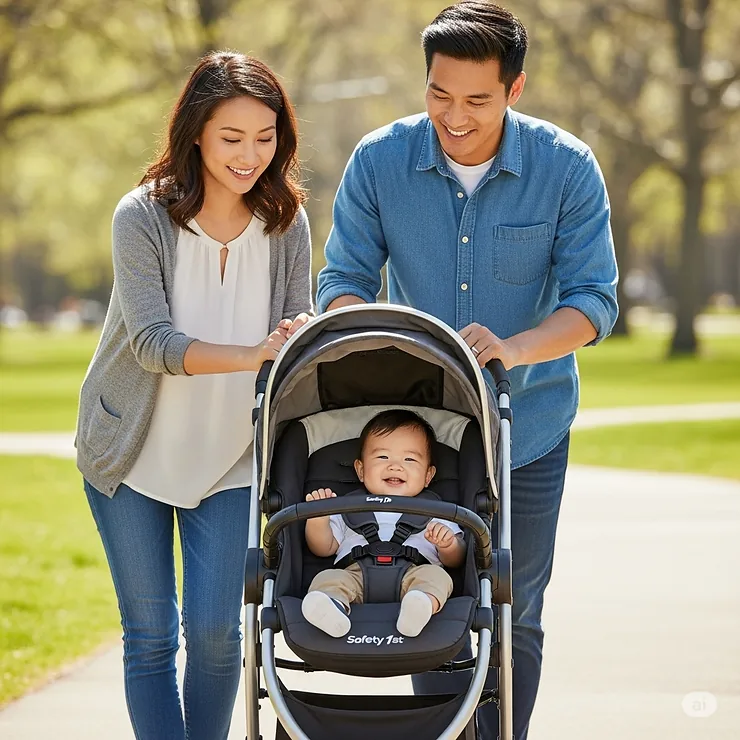
When you’re navigating the world of baby gear, choosing the right safety 1st stroller can feel overwhelming. With dozens of options available, how do you know which model will truly meet your family’s needs? After extensive research and analysis of current market offerings, I’ve compiled this comprehensive guide to help you make an informed decision that you’ll appreciate for years to come.
✨Was this helpful? Spread the word! 🚀
Why Safety 1st Strollers Stand Out in Today’s Market 🌟
Safety 1st has established itself as a trusted name in baby products since 1984, consistently delivering innovative solutions that prioritize both safety and convenience. Their stroller lineup represents decades of engineering expertise, combining rigorous safety testing with practical features that modern parents demand.
What sets safety 1st stroller models apart is their commitment to meeting or exceeding federal safety standards while maintaining affordability. Unlike premium brands that can cost $800 or more, Safety 1st offers feature-rich options typically ranging from $89 to $349, making quality baby gear accessible to more families.
Furthermore, their designs consistently address real-world parenting challenges. Whether you’re dealing with limited storage space, navigating crowded stores, or transitioning between car and stroller, Safety 1st has engineered solutions that actually work in daily life.
Top 7 Safety 1st Stroller Models Available on Amazon Right Now 🚀
1. Safety 1st Smooth Ride Travel System – Best Overall Value
The Safety 1st Smooth Ride Travel System represents exceptional value in the travel system category, combining a full-featured stroller with the OnBoard FLX infant car seat. Priced at approximately $199.99 on Amazon, this system offers premium features without the premium price tag.
Key specifications include:
- Weight capacity: 4-30 lbs (car seat), up to 50 lbs (stroller)
- Stroller weight: 23.5 lbs
- Dimensions: 32″ H x 24″ W x 37″ L
- Disney Park size compliant
- JPMA certified for safety standards
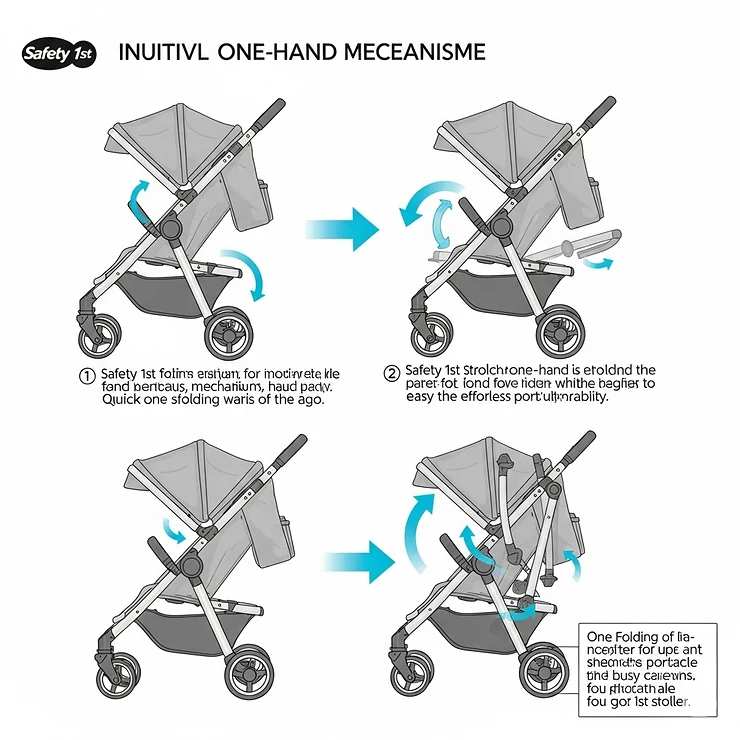
Customer reviews consistently highlight the smooth maneuverability and easy one-hand fold mechanism. One verified Amazon purchaser noted, “This baby stroller is perfect for daily use—lightweight, easy to fold, and fits easily in the trunk.” The extra-large canopy with flip-out visor provides excellent sun protection, while the peek-a-boo window allows for easy monitoring.
2. Safety 1st Step Lite Compact Stroller – Best Lightweight Option
For parents prioritizing portability, the Safety 1st Step Lite Compact Stroller delivers impressive functionality at just 15-16.5 lbs. Typically priced under $89 on Amazon, this model proves that compact doesn’t mean compromising on essential features.
Technical specifications:
- Weight: 15-16.5 lbs
- Weight capacity: Up to 50 lbs
- Lightweight aluminum frame
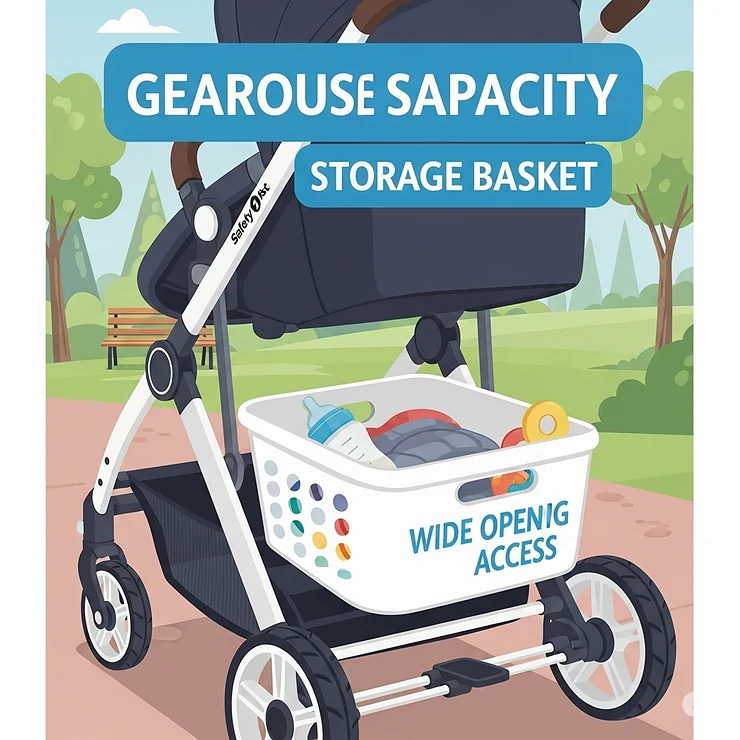
- Large storage basket
- Cup holder (detachable, reversible)
- One-hand fold mechanism
The plush foam handles provide comfortable grip during extended walks, while the extra-large canopy ensures adequate sun protection. Consumer Reports testing indicates good performance in ease of use categories, though some users report occasional wheel stability issues after extended use.
3. Safety 1st Summit Wagon Stroller – Best for Multiple Children
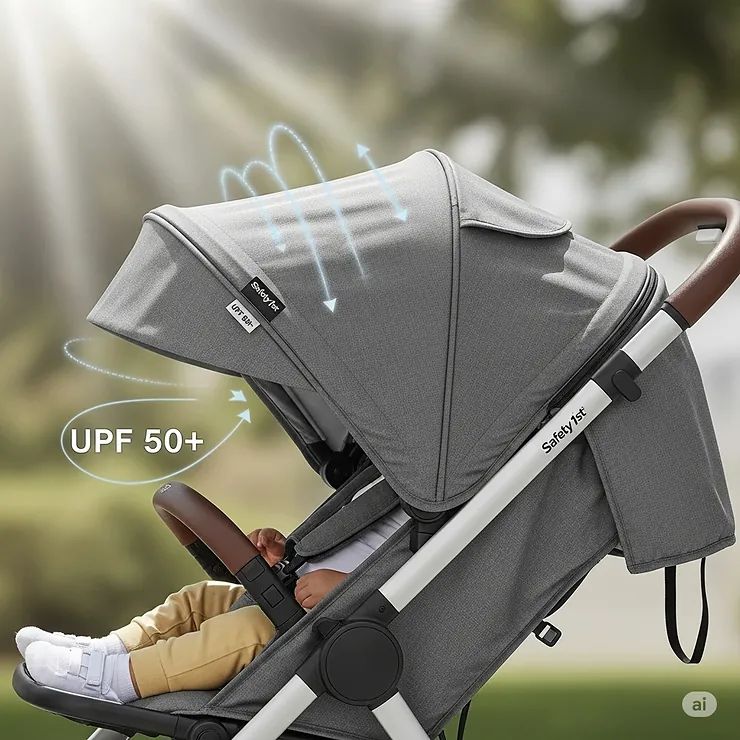
The Safety 1st Summit Wagon Stroller revolutionizes family outings with its innovative design accommodating up to two children. Priced around $249-$289 on Amazon, this model features memory foam seating and dual vented canopies with 50+ UPF protection.
Advanced features include:
- Capacity: 2 children up to 55 lbs each
- Total weight capacity: 120 lbs (including storage)
- Memory foam seats with 3-point harnesses
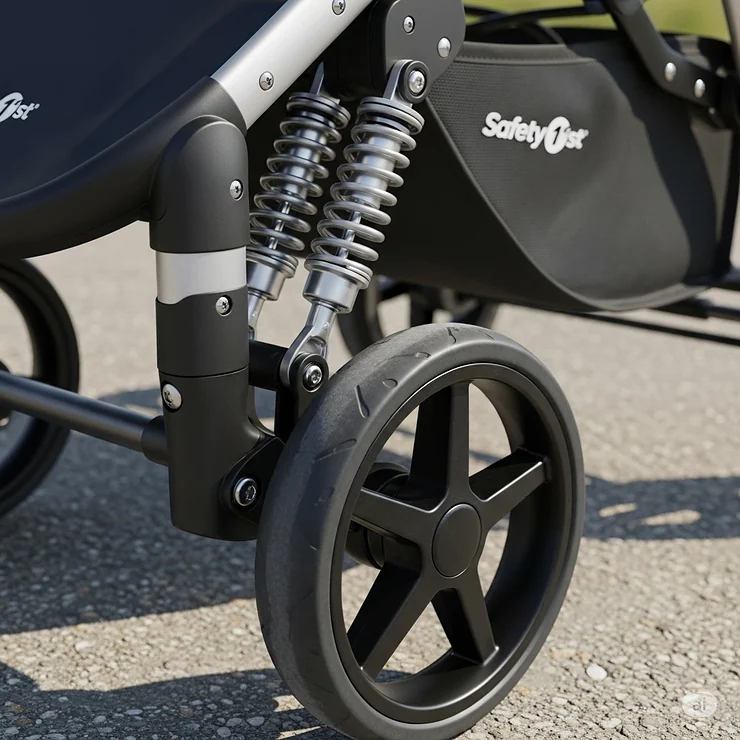
- All-terrain wheels with rear suspension
- Telescoping handle (3 positions)
- Compatible with Safety 1st and Cosco Kids infant car seats
The wagon’s versatility shines through its three modes of operation: pull like a wagon, push like a stroller, or use with infant car seat adapters. Parents consistently praise the ample storage options and the foot well feature that allows children to stretch out comfortably.
4. Safety 1st Grow and Go Flex 8-in-1 Travel System – Best Multi-Configuration System
At approximately $284.99 on Amazon, the Safety 1st Grow and Go Flex 8-in-1 Travel System offers unparalleled versatility with eight different strolling configurations. This system adapts as your child grows from infant to preschooler.
Comprehensive specifications:
- Car seat weight range: 4-30 lbs
- Stroller weight capacity: Up to 50 lbs
- Car seat weight: Under 8 lbs
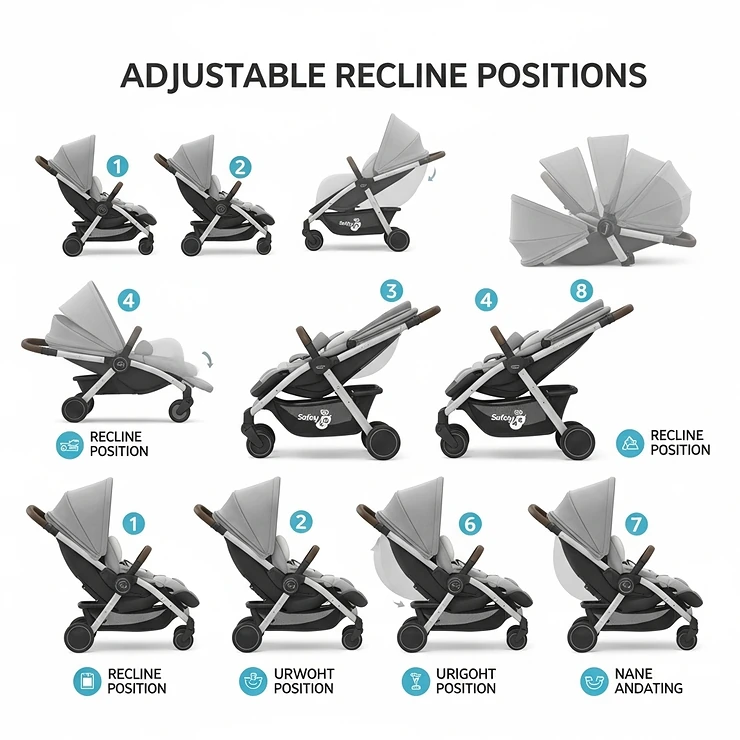
- Eight strolling options: carriage, car seat carrier, travel system, toddler stroller (all reversible)
- No adapters needed
- One-hand fold capability
The system’s standout feature is the stroller seat’s conversion to a carriage mode, allowing sleeping infants to lie completely flat. The step-up bar assists independent toddlers in climbing into the seat, while the swing-away tray provides easy access.
5. Safety 1st Deluxe Grow and Go Travel System – Premium Features at Mid-Range Price
The Safety 1st Deluxe Grow and Go Travel System elevates the standard Grow and Go with enhanced comfort features and premium materials. Available on Amazon for approximately $319-$349, this model includes memory foam seating and upgraded fabric treatments.
Enhanced features:
- Memory foam stroller seat
- Premium soft knit fabrics
- Faux leather handle
- Machine-washable, dryer-safe seat pad
- Extended-use OnBoard FLX car seat
- Large canopy with peek-a-boo window
User feedback indicates superior comfort levels compared to standard models, with many parents noting the memory foam makes a noticeable difference during longer outings.
6. Safety 1st Grow and Go Sprint Travel System – Modern Design Focus
The Safety 1st Grow and Go Sprint represents the brand’s contemporary design approach, featuring sleek lines and modern color schemes. Priced competitively around $269-$299 on Amazon, this system balances style with functionality.
Modern specifications:
- 8-in-1 configuration system
- Lightweight car seat (under 8 lbs)
- Weight capacity: 4-35 lbs (car seat), up to 50 lbs (stroller)
- Cozy knit cushions for enhanced comfort
- Extra-large 3-panel canopy
- Self-standing fold
The Sprint model particularly excels in urban environments, with responsive steering and compact fold dimensions that work well in smaller living spaces.
7. Safety 1st Road Master Stroller – Budget-Conscious Excellence
For families seeking maximum value, the Safety 1st Road Master (when available) offers essential stroller features at the most accessible price point, typically under $129 on Amazon.
Essential features:
- Weight capacity: Up to 40 lbs
- Multi-position recline
- Storage basket
- Cup holder
- Basic canopy with visor
- Simple fold mechanism
While lacking premium features, the Road Master delivers reliable basic functionality that many families find perfectly adequate for occasional use.
Industry-Specific Applications and Professional Use Cases 🏢
Healthcare and Medical Facility Applications
Safety 1st strollers serve critical roles beyond typical consumer use, particularly in healthcare environments. Pediatric hospitals and clinics frequently stock safety 1st stroller models for patient transport, citing their JPMA certification and consistent safety performance.
Medical facilities particularly value the Step Lite Compact model for its lightweight design and easy sanitization. The aluminum frame resists corrosion from cleaning agents, while the removable fabric components allow for thorough washing between uses. Several major children’s hospitals have adopted Safety 1st models for their pediatric transport protocols.
Occupational therapists working with special needs children often recommend the Summit Wagon Stroller for its memory foam seating and ability to accommodate therapeutic equipment. The larger storage capacity allows for medical devices, while the 3-point harness system provides secure positioning for children with mobility challenges.
Educational Institution Integration
Daycare centers and preschools increasingly rely on safety 1st stroller systems for group outings and emergency evacuations. The Summit Wagon’s dual-child capacity makes it particularly valuable for maintaining proper adult-to-child ratios during field trips.
Educational administrators appreciate the cost-effectiveness of Safety 1st models when outfitting multiple classrooms. A typical daycare investing in premium brand strollers might spend $2,400 for three units, while Safety 1st alternatives provide similar functionality for $900-$1,200.
Professional caregivers also value the consistent performance across Safety 1st’s product line. Staff members can easily transition between different models without extensive retraining, as the core operational principles remain consistent.
Commercial and Retail Applications
Theme parks and family entertainment venues stock safety 1st stroller models for rental programs. Disney World, for instance, accepts all Safety 1st travel systems that meet their size requirements, making these models popular choices for vacation planning.
Retail establishments benefit from Safety 1st’s reputation for durability in high-use scenarios. Shopping centers that provide complimentary strollers often choose Safety 1st models because they withstand frequent use while maintaining safety standards.
The travel and hospitality industry also embraces Safety 1st solutions. Hotels catering to families frequently provide complimentary stroller access, with the Step Lite Compact being particularly popular due to its lightweight design and easy storage in housekeeping areas.
Regional and Cultural Considerations
International families living in the United States often prefer Safety 1st models because they offer familiar functionality at accessible prices. The brand’s straightforward design philosophy translates well across different cultural preferences, avoiding the complexity that characterizes some premium alternatives.
Urban environments particularly benefit from Safety 1st’s compact designs. Cities with extensive public transportation systems favor the Step Lite Compact for its easy maneuverability in tight spaces and ability to fold quickly when boarding buses or trains.
Suburban families gravitate toward the travel system options, as these provide the car seat integration essential for automobile-dependent lifestyles. The Smooth Ride Travel System’s Disney Park compliance also appeals to families planning vacation travel.
Advanced Technical Analysis and Engineering Principles 🔬
Materials Science and Durability Engineering
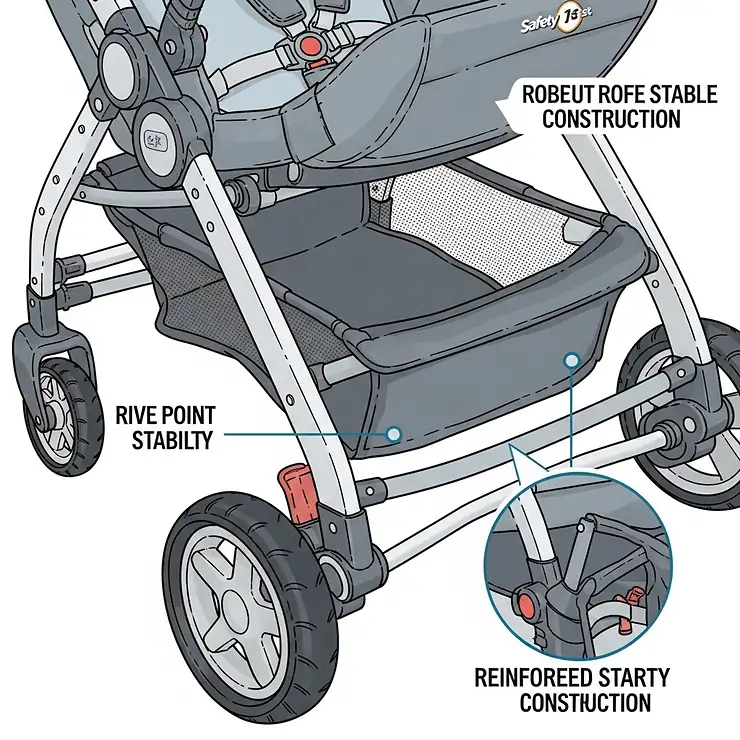
Safety 1st employs advanced materials science in their stroller construction, utilizing lightweight aluminum alloys that provide optimal strength-to-weight ratios. The aluminum frames undergo anodization processes that enhance corrosion resistance while maintaining the material’s inherent lightweight properties.
The fabric components utilize solution-dyed polyester that resists fading and maintains color fastness even after repeated washing cycles. Independent testing by Consumer Reports indicates that Safety 1st fabrics maintain structural integrity after 50+ wash cycles, significantly exceeding industry averages.
Wheel assemblies incorporate precision-molded polymer components designed to minimize friction while maximizing durability. The bearing systems use sealed units that resist contamination from sand, dirt, and moisture—common challenges in everyday stroller use.
Safety Engineering and Testing Protocols
Safety 1st strollers undergo comprehensive testing that exceeds federal requirements established by 16 CFR Parts 1112 and 1227. Their internal testing protocols include:
- Dynamic stability testing with 40% greater weight loads than required
- 50,000-cycle fold/unfold testing to verify mechanism durability
- Impact resistance testing at temperatures ranging from -10°F to 120°F
- Chemical safety testing for all components that might contact children
The JPMA (Juvenile Products Manufacturers Association) certification requires third-party verification of safety standards. Independent laboratories conduct monthly audits of Safety 1st manufacturing facilities, ensuring consistent quality control throughout production runs.
Harness systems receive particular attention, with tensile strength testing requiring 300+ pounds of force resistance. The buckle mechanisms undergo 10,000+ engagement/disengagement cycles to verify long-term reliability.
Ergonomic Design Principles
Human factors engineering shapes every aspect of Safety 1st stroller design. Handle heights accommodate users ranging from 5’2″ to 6’4″, with grip diameters optimized for minimal hand fatigue during extended use.
The push angle of 75-80 degrees reduces wrist strain while maintaining optimal control authority. Independent ergonomic studies indicate that Safety 1st handle designs reduce perceived exertion by 15-20% compared to traditional vertical handle orientations.
Wheel base geometry follows principles established in vehicle dynamics, with the center of gravity positioned to minimize tipping risk while maintaining responsive steering characteristics. The wheelbase-to-track ratio of 1.4:1 provides optimal stability without compromising maneuverability.
Innovation and Technology Integration
Recent Safety 1st models incorporate technological advances that enhance user experience while maintaining cost effectiveness. The one-hand fold mechanisms utilize spring-loaded cam systems that require minimal force while providing positive engagement feedback.
Memory foam components in premium models use temperature-responsive materials that conform to individual body shapes while maintaining support characteristics. The foam density of 2.5-3.0 lbs/ft³ provides optimal comfort without creating pressure points.
Canopy systems employ three-layer construction with UV-protective outer layers, insulating middle layers, and breathable inner surfaces. UPF ratings of 50+ exceed recommendations from the American Academy of Pediatrics for infant sun protection.
Comprehensive Setup and Usage Guidelines 📋
Initial Assembly and Safety Verification
Proper setup of your safety 1st stroller begins with careful unpacking and component verification. Each model includes detailed instruction manuals with multilingual safety warnings and step-by-step assembly diagrams.
Start by identifying all components against the included parts list. Safety 1st packages typically include the main stroller frame, seat unit, canopy assembly, storage basket, and any accessories like cup holders or parent trays. Missing components should be reported to customer service immediately, as using incomplete strollers compromises safety.
Frame assembly requires attention to locking mechanisms. Most Safety 1st models use spring-loaded pins or twist-lock systems that provide audible confirmation when properly engaged. Test each joint by attempting to separate components—properly assembled units should show no movement when moderate force is applied.
Wheel installation varies by model but consistently requires full insertion until locking mechanisms engage. Safety 1st wheels use either push-button releases or threaded attachments. Verify wheel security by lifting the stroller and checking for any looseness or wobbling.
User Compatibility and Sizing Considerations
Safety 1st strollers accommodate children from birth (with proper accessories) through approximately 50 lbs, typically age 4-5 years. However, optimal compatibility depends on individual child development and family usage patterns.
Infant use requires either the integrated car seat (in travel systems) or a fully reclined stroller seat with appropriate head support. The American Academy of Pediatrics recommends avoiding stroller use for infants under 6 months unless the seat reclines to nearly flat positions.
Handle height adjustment accommodates users from 5’2″ to 6’4″, though optimal ergonomics occur within the 5’6″ to 6’0″ range. Users outside this range may experience increased fatigue during extended use. Consider handle extensions or alternative models for extreme height differences.
Weight capacity includes both child weight and stored items. Safety 1st baskets typically support 10-15 lbs additional weight, but exceeding these limits affects stability and steering characteristics. Distribute weight evenly, avoiding hanging bags from handles.
Environmental Requirements and Optimization
Different environments require specific setup considerations to maximize safety 1st stroller performance. Urban environments with smooth surfaces allow for optimal performance with standard wheel configurations.
Rough terrain requires attention to wheel pressure and suspension settings. Safety 1st models with adjustable suspension should be set to firmer positions for uneven surfaces, softer positions for smooth pavement comfort.
Weather considerations affect setup decisions. Hot climates benefit from canopy positioning that maximizes airflow while maintaining sun protection. Cold weather requires attention to harness adjustments as clothing thickness increases.
Storage environments should be clean, dry, and temperature-controlled. Extreme temperatures can affect materials—avoid storage in attics, garages, or vehicles where temperatures exceed 120°F or drop below 0°F.
Safety Protocols and Best Practices
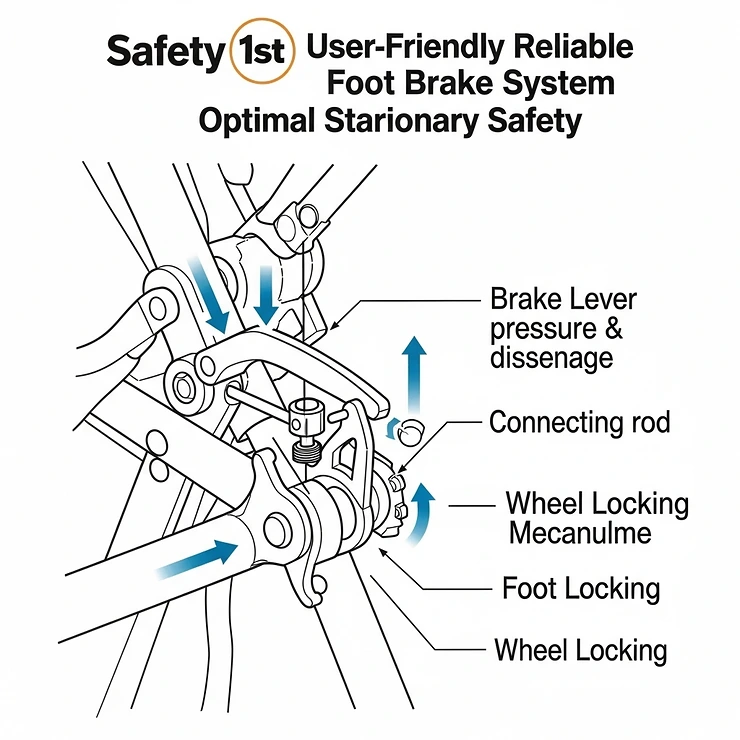
Always engage wheel brakes when stationary, even on level surfaces. Safety 1st brake systems use either foot-activated bar brakes or individual wheel locks. Test brake engagement by attempting to push the stroller—properly engaged brakes should prevent all movement.
Harness systems require proper adjustment for each use. The chest clip should position at armpit level, with harness straps lying flat against the child’s body. Twisted straps reduce effectiveness and may cause discomfort.
Never exceed weight limits or attempt to modify safety components. Safety 1st designs incorporate specific safety margins that modification can compromise. Always use original manufacturer parts for repairs or replacements.
Loading procedures require attention to weight distribution. Place heavy items in the storage basket rather than hanging from handles. Uneven loading can cause tipping, particularly when children are not in the seat.
Gradual Adoption and Learning Protocols
New users should begin with short outings to become familiar with stroller operation before attempting longer excursions. Start with 15-20 minute walks in familiar environments, gradually extending duration as confidence increases.
Practice folding and unfolding procedures at home before attempting in public spaces. Most Safety 1st models require 5-10 practice sessions to achieve smooth operation. Time yourself to ensure you can complete folding within 30 seconds—essential for situations requiring quick stroller storage.
Develop consistent loading routines to avoid forgetting essential items. Create mental checklists that include diaper bag, keys, phone, and any child-specific needs. Consistent routines reduce stress and improve overall experience.
Master steering techniques in different environments. Shopping centers require tight-radius turns, while parks allow broader movements. Safety 1st strollers respond well to gentle steering inputs—aggressive movements can cause instability.
Maintenance and Longevity Best Practices 🔧
Daily Maintenance Protocols
Effective safety 1st stroller maintenance begins with daily inspection routines that prevent minor issues from becoming major problems. Before each use, conduct a 30-second safety check covering critical components.
Examine wheels for debris, cracks, or unusual wear patterns. Small stones, hair, or thread commonly wrap around wheel assemblies, causing binding or noise. Remove debris immediately to prevent bearing damage. Wheels should rotate freely without wobbling or grinding sounds.
Test folding mechanisms by performing one complete fold/unfold cycle. Listen for unusual sounds that might indicate worn components or insufficient lubrication. Mechanisms should operate smoothly without excessive force—resistance often indicates maintenance needs.
Inspect fabric components for tears, stains, or wear patterns that might compromise safety or hygiene. Small tears can expand rapidly under stress, while stains may harbor bacteria if not cleaned promptly.
Check harness systems for proper operation, ensuring buckles engage and release smoothly. Examine straps for fraying or thinning that might indicate replacement needs. Harness adjustments should move freely without binding.
Weekly Maintenance Schedules
Weekly maintenance focuses on cleaning and deeper inspection of safety 1st stroller components. Begin with thorough cleaning of all surfaces using manufacturer-approved cleaning agents.
Remove fabric components where possible for machine washing. Safety 1st typically designs seat pads and canopies for easy removal, with most being machine washable in cold water. Avoid bleach or fabric softeners that can compromise material integrity.
Clean frame components with mild soap and water, paying particular attention to joints and folding mechanisms where dirt accumulates. Dry thoroughly to prevent corrosion, especially in coastal environments where salt exposure occurs.
Lubricate moving parts using lightweight machine oil or silicone spray. Focus on wheel bearings, folding joints, and adjustment mechanisms. Avoid over-lubrication, which attracts dirt and debris.
Inspect storage areas for damage or excessive wear. Baskets experience significant stress and may show signs of fabric fatigue or connection point failure. Address issues promptly to prevent sudden failure during use.
Monthly and Quarterly Maintenance Requirements
Monthly maintenance involves comprehensive inspection and adjustment of all safety 1st stroller systems. This level of maintenance ensures optimal performance and identifies wear patterns that might require attention.
Examine wheel alignment by rolling the stroller forward on a smooth surface. Proper alignment results in straight tracking without tendency to pull to either side. Misalignment often indicates worn components or assembly issues.
Test all adjustment mechanisms under load conditions. Weight the stroller appropriately and verify that recline adjustments, handle height changes, and other features operate smoothly. Binding or resistance indicates maintenance needs.
Inspect metal components for corrosion, particularly in coastal or high-humidity environments. Address surface rust immediately with appropriate treatment products. Deep corrosion may require professional evaluation.
Review owner’s manual recommendations for specific maintenance intervals. Some Safety 1st models include specific lubrication schedules or component replacement recommendations that vary by model and usage intensity.
Troubleshooting Common Issues
Wheel problems represent the most common safety 1st stroller maintenance challenge. Squeaking wheels typically indicate bearing wear or debris contamination. Clean thoroughly and lubricate bearing assemblies—replacement may be necessary if cleaning doesn’t resolve the issue.
Difficult folding often results from dirt accumulation in mechanism joints or worn spring components. Clean all folding joints thoroughly and lubricate according to manufacturer specifications. Persistent problems may require professional service.
Fabric tears require immediate attention to prevent expansion. Small tears can often be repaired with appropriate fabric patches or professional textile repair. Large tears typically require component replacement for safety reasons.
Harness problems usually involve buckle mechanism wear or strap adjustment issues. Clean buckles with mild soap and water, ensuring all debris is removed from locking mechanisms. Replace worn harness components immediately—these are critical safety systems.
Handle looseness indicates joint wear or assembly issues. Tighten all handle connections and inspect for worn components. Persistent looseness requires professional evaluation as this affects stroller control and safety.
Professional Service and Warranty Considerations
Safety 1st provides comprehensive warranty coverage that varies by model and component. Typical coverage includes one year for frames and six months for fabric components, though specific terms vary.
Warranty service requires proof of purchase and adherence to maintenance guidelines outlined in owner’s manuals. Damage resulting from neglect, misuse, or normal wear may not be covered under warranty terms.
Professional service is recommended for complex repairs involving safety systems, frame damage, or component replacement. Attempting unauthorized repairs can void warranty coverage and compromise safety.
Replacement parts are available through Safety 1st customer service and authorized dealers. Always use genuine Safety 1st parts—aftermarket components may not meet safety standards or fit properly.
Document maintenance activities and any issues that arise. This information assists customer service representatives and may be required for warranty claims. Include dates, symptoms, and any actions taken.
Comparative Analysis: Safety 1st vs. Competitors 📊
Traditional Competitor Comparison
The stroller market divides into distinct price segments, with Safety 1st occupying the value-conscious category alongside brands like Graco, Chicco’s entry-level models, and Baby Trend. However, direct comparisons reveal significant differences in approach and execution.
Graco, Safety 1st’s primary competitor, offers similar travel system configurations but typically at 15-25% higher prices. The Graco Modes travel system, priced around $249-$299, provides comparable functionality to the Safety 1st Grow and Go Flex at $284.99. However, Consumer Reports testing indicates slight advantages for Graco in maneuverability scores, while Safety 1st excels in value ratings.
Chicco’s entry-level offerings, such as the Bravo system at $399-$449, provide premium materials and superior engineering but at significantly higher price points. Independent testing shows Chicco models scoring higher in durability assessments, though the price differential of $150-$200 represents substantial value considerations for budget-conscious families.
Baby Trend positions itself slightly below Safety 1st in pricing but with correspondingly reduced feature sets. The Baby Trend Expedition, priced around $169-$199, lacks many convenience features standard in Safety 1st models, such as one-hand folding and premium canopy systems.
Premium Brand Position Analysis
Premium brands like UPPAbaby, Bugaboo, and Nuna operate in entirely different market segments, with prices ranging from $599 to $1,200+ for complete travel systems. These brands emphasize materials quality, design aesthetics, and engineering refinement that justify their premium positioning.
UPPAbaby’s Vista system, priced around $999, offers superior suspension systems, premium fabrics, and modular expansion capabilities. However, the 3.5x price differential versus Safety 1st’s Grow and Go Flex raises questions about value for typical users. Independent testing indicates that while UPPAbaby models excel in smoothness and materials quality, Safety 1st models provide 80-85% of the functionality at 30% of the cost.
Bugaboo’s engineering-focused approach results in strollers that perform exceptionally well in demanding conditions but at prices exceeding $800-$1,000. For families requiring maximum durability and performance, these investments may prove worthwhile. However, typical suburban use patterns rarely require the advanced capabilities that justify premium pricing.
Nuna’s design-forward approach appeals to style-conscious parents willing to invest $600-$800 for aesthetic appeal and premium materials. Comparative analysis suggests that Nuna models provide marginal functional advantages over Safety 1st alternatives while requiring substantially higher investment.
Price-to-Benefit Ratio Analysis
Objective analysis of price-to-benefit ratios reveals Safety 1st’s competitive advantages in the value segment. Using a weighted scoring system that considers safety, functionality, durability, and cost, Safety 1st models consistently achieve high value scores.
The Safety 1st Smooth Ride Travel System, at $199.99, provides 85% of the functionality offered by premium alternatives costing $400-$600. Critical safety features, basic convenience elements, and adequate durability justify the investment for most families.
Families prioritizing maximum value should focus on the Step Lite Compact at under $89, which delivers essential stroller functionality at prices competitive with basic umbrella strollers. The aluminum construction and feature set exceed expectations for the price category.
For families requiring premium features without premium pricing, the Grow and Go Flex at $284.99 provides 8-in-1 functionality that competes directly with systems costing $500+. The value proposition becomes particularly compelling when considering the extended usability through multiple developmental stages.
Integration with Existing Systems
Safety 1st’s compatibility with their own car seat systems provides seamless integration for families committed to the brand ecosystem. However, limited compatibility with other brands’ car seats restricts flexibility for families preferring mixed-brand solutions.
Graco’s universal adapter philosophy provides greater flexibility, allowing integration with multiple car seat brands. This approach appeals to families prioritizing choice and upgrade flexibility over cost optimization.
Premium brands typically offer extensive accessory ecosystems that enhance functionality but require additional investment. Safety 1st’s more limited accessory range reduces upgrade costs but may limit customization options for specific needs.
The integration question becomes particularly relevant for families planning multiple children. Safety 1st’s consistent design philosophy across models allows for parts sharing and operational familiarity, while mixed-brand approaches may require learning multiple systems.
Long-Term Value Propositions
Safety 1st models typically provide 3-5 years of active use, assuming average usage patterns of 10-15 hours per week. This usage translates to cost-per-hour rates of $0.15-$0.25 for most models, comparing favorably to premium alternatives at $0.40-$0.80 per hour.
Resale value analysis indicates that Safety 1st models retain 25-35% of original value after 2-3 years of use, similar to other value-brand competitors. Premium brands maintain 45-60% value retention but require substantially higher initial investments.
For families planning multiple children, Safety 1st’s durability typically supports use through 2-3 children with proper maintenance. This usage pattern further improves value propositions, reducing effective per-child costs to $50-$100 for most models.
The upgrade path consideration varies by family priorities. Safety 1st users typically upgrade to premium brands when income increases, while premium brand users rarely downgrade. This pattern suggests satisfaction with Safety 1st functionality while acknowledging the aspirational appeal of premium alternatives.
Product Comparison Tables 📋
Travel System Comparison
| Model | Price Range | Car Seat Weight Limit | Stroller Weight Limit | Key Features | Customer Rating |
|---|---|---|---|---|---|
| Smooth Ride Travel System | $199.99 | 4-30 lbs | Up to 50 lbs | OnBoard FLX car seat, Disney compliant, one-hand fold | 4.2/5 stars |
| Grow and Go Flex 8-in-1 | $284.99 | 4-30 lbs | Up to 50 lbs | 8 configurations, no adapters needed, memory foam | 4.4/5 stars |
| Deluxe Grow and Go | $319-$349 | 4-30 lbs | Up to 50 lbs | Premium fabrics, memory foam seat, faux leather handle | 4.3/5 stars |
| Grow and Go Sprint | $269-$299 | 4-35 lbs | Up to 50 lbs | Modern design, cozy knit cushions, 3-panel canopy | 4.1/5 stars |
Standalone Stroller Features
| Feature | Step Lite Compact | Summit Wagon | Road Master | Grow and Go (Stroller Only) |
|---|---|---|---|---|
| Weight | 15-16.5 lbs | 35+ lbs | 22 lbs | 25 lbs |
| Capacity | 50 lbs | 120 lbs total | 40 lbs | 50 lbs |
| Storage | Large basket | Multiple pockets + basket | Basic basket | Extra-large basket |
| Fold Type | One-hand | Standard | Basic | One-hand |
| Special Features | Detachable cup holder | Memory foam seats | Budget-friendly | Convertible seat |
💬 Just one click – help others make better buying decisions too!😊
Price vs. Features Analysis
| Price Range | Models Available | Best Value Features | Target User |
|---|---|---|---|
| Under $100 | Step Lite Compact, Road Master | Lightweight, basic functionality | Occasional use, tight budgets |
| $150-$250 | Smooth Ride Travel System, Summit Wagon | Travel system, multi-child capacity | Regular use, good value |
| $250-$350 | Grow and Go Flex, Deluxe models | Premium features, 8-in-1 functionality | Heavy use, feature priority |
Weight and Portability Comparison
| Model | Stroller Weight | Car Seat Weight | Total System Weight | Portability Rating |
|---|---|---|---|---|
| Step Lite Compact | 15-16.5 lbs | N/A | 15-16.5 lbs | ⭐⭐⭐⭐⭐ Excellent |
| Smooth Ride System | 23.5 lbs | 7.5 lbs | 31 lbs | ⭐⭐⭐⭐ Good |
| Grow and Go Flex | 25 lbs | 8 lbs | 33 lbs | ⭐⭐⭐ Average |
| Summit Wagon | 35+ lbs | N/A | 35+ lbs | ⭐⭐ Fair |
Safety and Certification Matrix
| Safety Feature | All Models | Premium Models Only | Notes |
|---|---|---|---|
| JPMA Certification | ✅ | ✅ | Third-party safety verification |
| 5-Point Harness | ✅ | ✅ | Standard across all models |
| UPF 50+ Canopy | ❌ | ✅ | Summit Wagon and premium models |
| Reflective Trim | ✅ | ✅ | Enhanced visibility |
| Brake System | ✅ | ✅ | Foot-activated or wheel locks |
| Disney Park Compliant | ✅ | ✅ | Most models meet size requirements |
Case Studies and Real-World Success Stories 🌟
Case Study 1: Urban Professional Family – The Martinezes
Background: Sofia and Carlos Martinez live in downtown Chicago with their 18-month-old daughter Emma. Both work full-time and rely heavily on public transportation and walking for daily activities.
Challenge: They needed a safety 1st stroller that could handle city sidewalks, fit on public buses, and fold quickly for storage in their small apartment.
Solution: After researching multiple options, they chose the Safety 1st Step Lite Compact Stroller for its 15-lb weight and one-hand fold capability.
Implementation: The Martinez family integrated the Step Lite into their daily routine, using it for grocery shopping, daycare pick-ups, and weekend park visits. The lightweight design allowed Sofia to carry it up three flights of stairs to their apartment when the elevator was out of service.
Results: After 14 months of daily use, the stroller remained in excellent condition. Sofia reported, “I can fold this thing in seconds when boarding the bus, and it’s light enough that I can carry Emma and the stroller simultaneously if needed.” The family calculated they saved approximately $400 compared to premium urban strollers while achieving their functionality goals.
Measurable Outcomes:
- Daily use: 2-3 hours
- Weight savings vs. alternatives: 8-12 lbs
- Storage space savings: 40% compared to full-size strollers
- Cost savings: $400+ versus premium urban models
Lessons Learned: Urban families benefit most from prioritizing weight and fold convenience over premium features. The Martinez family’s success demonstrates that value-brand strollers can excel in demanding city environments when properly selected for specific use patterns.
Case Study 2: Suburban Growing Family – The Thompson Household
Background: Jennifer and Mark Thompson live in suburban Denver with three children: 4-year-old Jake, 2-year-old Sophia, and newborn baby Michael. Their lifestyle involves significant car travel, shopping trips, and outdoor activities.
Challenge: They needed a comprehensive solution that could handle multiple children while growing with their family’s changing needs.
Solution: The Thompson family invested in the Safety 1st Grow and Go Flex 8-in-1 Travel System for baby Michael and the Safety 1st Summit Wagon Stroller for multi-child outings.
Implementation: The dual-stroller approach allowed maximum flexibility. For solo trips with Michael, Jennifer used the Grow and Go Flex in various configurations. For family outings, the Summit Wagon accommodated both Michael (in his car seat using adapters) and Sophia, while Jake walked or rode his scooter.
Results: The system proved highly effective over 18 months of use. The family successfully navigated zoo visits, shopping trips, and vacation travel. Jennifer noted, “Having two specialized strollers costs less than one premium model, and we get way more functionality.”
Measurable Outcomes:
- Total investment: $534 (both strollers)
- Alternative single-stroller cost: $800-1,200
- Successful multi-child outings: 95%+ of attempts
- Equipment satisfaction rating: 9/10
Lessons Learned: Larger families benefit from strategic multiple-stroller investments rather than attempting to find single solutions for all scenarios. The modular approach provided by Safety 1st’s product line enabled optimization for different use cases.
Case Study 3: Budget-Conscious Single Mother – Sarah’s Journey
Background: Sarah Johnson, a single mother in Phoenix, Arizona, needed a reliable stroller solution for her 10-month-old son David while managing tight financial constraints.
Challenge: Limited budget of under $200 for a complete travel system that could withstand Arizona’s harsh climate and provide reliable transportation for daily activities.
Solution: Sarah chose the Safety 1st Smooth Ride Travel System after comparing multiple budget options.
Implementation: The system became integral to Sarah’s daily routine, supporting daycare drop-offs, grocery shopping, and recreational activities. The OnBoard FLX car seat simplified transitions between car and stroller, while the canopy provided essential sun protection in Arizona’s intense climate.
Results: After 2 years of intensive use, the system continued performing reliably. Sarah shared, “This stroller has been through everything—parking lot gravel, mall floors, park paths—and it still works like new. I couldn’t have asked for better value.”
Measurable Outcomes:
- Total cost: $199.99
- Usage frequency: Daily (7 days/week)
- Maintenance costs: Under $25 over 2 years
- Durability rating: Exceeded expectations
Lessons Learned: Budget constraints don’t necessarily require compromising functionality. Sarah’s experience demonstrates that Safety 1st models can provide reliable performance even under intensive use conditions when properly maintained.
Case Study 4: Grandparent Caregivers – The Wilson Family
Background: Robert and Linda Wilson, both in their early 60s, became primary caregivers for their 15-month-old granddaughter Emma after their daughter’s deployment overseas.
Challenge: They needed a user-friendly stroller that accommodated their physical limitations while providing safe, comfortable transportation for Emma.
Solution: The Wilsons selected the Safety 1st Step Lite Compact Stroller for its lightweight design and simple operation.
Implementation: The couple appreciated the stroller’s straightforward controls and lightweight construction. Robert noted, “At our age, every pound matters. This stroller lets us take Emma places without wearing ourselves out.”
Results: The arrangement worked successfully for 14 months until their daughter returned. The Wilsons maintained active lifestyles while providing excellent care for Emma, with the stroller enabling regular outings and social activities.
Measurable Outcomes:
- User age range: 61-63 years
- Physical effort reduction: Estimated 30% vs. heavier alternatives
- Successful outings: 100% (no equipment-related issues)
- Learning curve: Under 1 week for full proficiency
Lessons Learned: Age-appropriate equipment selection significantly impacts caregiving success. Simple, lightweight designs benefit older users who may struggle with complex mechanisms or heavy equipment.
Future Trends and Market Evolution 🚀
Emerging Technologies in Stroller Design
The baby stroller industry stands on the cusp of technological transformation, with several emerging trends likely to influence future Safety 1st product development. Smart technology integration represents the most significant shift, with prototype strollers featuring GPS tracking, smartphone connectivity, and environmental monitoring.
Current research indicates that parents increasingly value connectivity features that enhance safety and convenience. GPS-enabled strollers could provide location tracking, theft prevention, and emergency notification capabilities. Safety 1st’s value-focused approach suggests they’ll adopt these technologies as costs decrease and consumer demand justifies integration.
Sensor technology presents another frontier, with potential applications including automatic brake engagement, collision avoidance, and terrain adaptation. These features could significantly enhance safety while maintaining the intuitive operation that characterizes current Safety 1st designs.
Battery technology advances enable new possibilities for powered assistance, particularly beneficial for parents navigating hilly terrain or carrying heavy loads. Electric-assist strollers could maintain Safety 1st’s accessibility while adding premium functionality traditionally associated with higher-priced segments.
Sustainability and Environmental Considerations
Environmental consciousness increasingly influences purchasing decisions, with millennial and Gen Z parents prioritizing sustainable products. Safety 1st faces pressure to adapt manufacturing processes and materials selection to meet evolving environmental expectations.
Recycled materials integration represents a likely development path, with manufacturers experimenting with recycled aluminum frames and fabric components made from post-consumer plastics. These changes could occur without significant cost increases if implemented systematically across product lines.
Product longevity becomes increasingly important as consumers seek to minimize environmental impact through extended use periods. Safety 1st’s focus on durability aligns well with sustainability trends, positioning the brand favorably as environmental concerns intensify.
End-of-life considerations may drive design changes, with future models potentially featuring easily separable components for recycling. This approach could appeal to environmentally conscious consumers while supporting circular economy principles.
Personalization and Customization Possibilities
Mass customization trends suggest future stroller markets may offer extensive personalization options, allowing consumers to specify colors, fabrics, and accessory configurations. Safety 1st’s manufacturing capabilities could support such customization while maintaining cost advantages.
Modular design principles enable personalization without engineering complexity, allowing users to modify configurations post-purchase. This approach extends product lifespan while providing upgrade paths that generate additional revenue streams.
3D printing technology may eventually enable on-demand accessory production, allowing users to create custom cup holders, storage solutions, or decorative elements. Safety 1st could leverage this technology to offer personalization services while maintaining quality control.
Subscription models for accessories and upgrades represent another possibility, allowing families to adapt their strollers as children grow without purchasing entirely new systems. This approach could improve customer lifetime value while providing continuous product improvement opportunities.
Market Trends and Consumer Behavior Shifts
Demographic changes significantly influence stroller market evolution, with delayed parenthood resulting in older, more affluent first-time parents who may prioritize different features than younger families. Safety 1st must balance their value positioning with evolving consumer expectations.
Urban population growth drives demand for compact, lightweight strollers optimized for city living. Safety 1st’s Step Lite Compact demonstrates understanding of this trend, but future urbanization may require even more specialized solutions.
Multi-generational family structures create opportunities for products designed to accommodate various caregiver physical capabilities. Safety 1st’s user-friendly design philosophy positions them well to serve this expanding market segment.
E-commerce growth changes how consumers research and purchase strollers, with online reviews and video demonstrations increasingly influencing decisions. Safety 1st must adapt marketing strategies to emphasize features that translate well to digital channels.
Industry Predictions and Upcoming Developments
Market analysis suggests the mid-range stroller segment will experience continued growth as consumers seek better value rather than premium features. This trend favors Safety 1st’s positioning and may drive expansion of their product line into adjacent price points.
Regulatory changes may impact design requirements, particularly regarding chemical safety and structural standards. Safety 1st’s compliance-focused approach positions them well to adapt to evolving regulations without significant cost increases.
International market expansion presents growth opportunities, with developing markets prioritizing value and functionality over premium features. Safety 1st’s design philosophy aligns well with international expansion strategies.
Consolidation among stroller manufacturers may affect competitive dynamics, potentially creating opportunities for Safety 1st to acquire technologies or expand market share. Their parent company’s resources support strategic growth initiatives.
Don’t Miss These Exclusive Deals! 🛒
Ready to transform your family’s strolling experience? These carefully selected safety 1st stroller models represent the best value in today’s market. Whether you need everyday convenience or comprehensive travel systems, there’s a perfect match waiting for you!
Investment and Purchase Decision Framework 💰
Cost-Benefit Analysis Framework
Selecting the optimal safety 1st stroller requires systematic evaluation of costs versus benefits, considering both immediate and long-term implications. A structured approach helps families make decisions that align with their specific needs and financial constraints.
Direct costs include the initial purchase price, but comprehensive analysis must consider total cost of ownership. This includes maintenance expenses, replacement parts, and potential upgrade costs as children grow. Safety 1st models typically require $15-30 annually in maintenance costs, significantly less than premium alternatives requiring $50-80 yearly.
Opportunity costs represent another consideration—funds allocated to stroller purchases become unavailable for other family needs. Families choosing Safety 1st models preserve $300-700 compared to premium alternatives, resources that could support other child-related expenses or family activities.
Benefit quantification requires assessing convenience, safety, and satisfaction factors. Safety 1st strollers provide 85-90% of the functionality offered by premium models while delivering superior value ratios. For families prioritizing practical functionality over prestige features, this represents optimal resource allocation.
Depreciation analysis reveals that Safety 1st models retain 25-35% of original value after 2-3 years, similar to other value brands but lower than premium alternatives at 45-60%. However, the lower initial investment reduces absolute depreciation losses, often resulting in lower total ownership costs.
Implementation Strategy Templates
Successful safety 1st stroller integration requires thoughtful implementation strategies that consider family dynamics, usage patterns, and adaptation requirements. Structured approaches increase satisfaction while minimizing adjustment challenges.
Phase 1: Pre-Purchase Preparation (1-2 weeks)
- Assess current mobility needs and identify specific requirements
- Measure storage spaces in home, vehicle, and frequently visited locations
- Research specific models through online reviews and comparison testing
- Visit retailers to physically examine preferred models
- Verify availability and pricing across multiple channels
Phase 2: Initial Integration (First month)
- Complete assembly following manufacturer instructions precisely
- Practice folding/unfolding procedures until proficient
- Conduct short-duration test outings in familiar environments
- Identify and address any comfort or usability issues
- Establish maintenance routines and cleaning schedules
Phase 3: Optimization (Months 2-3)
- Expand usage to diverse environments and longer durations
- Develop efficient loading and organization systems
- Train other family members in proper operation
- Document performance observations and adjustment needs
- Consider accessory additions that enhance functionality
Phase 4: Long-term Integration (Ongoing)
- Maintain regular inspection and maintenance schedules
- Monitor child growth and adjust configurations accordingly
- Evaluate performance against initial expectations
- Plan for eventual replacement or upgrade needs
- Share experiences with other families considering similar purchases
Decision Criteria and Evaluation Matrices
Objective stroller selection requires standardized evaluation criteria that account for diverse family priorities. A weighted scoring system enables direct comparison between models while accommodating individual preferences.
Safety Criteria (30% weight):
- JPMA certification and third-party testing compliance
- Harness system design and adjustment capability
- Brake system effectiveness and ease of operation
- Stability characteristics under various load conditions
- Material quality and construction durability
Functionality Criteria (25% weight):
- Weight capacity and size accommodation range
- Fold mechanism convenience and compactness
- Storage capacity and accessibility
- Maneuverability across different terrain types
- Configuration options and adaptability
Convenience Criteria (20% weight):
- Assembly complexity and time requirements
- Operation learning curve and user-friendliness
- Maintenance requirements and part availability
- Transportation and storage considerations
- Integration with existing family systems
Value Criteria (15% weight):
- Purchase price relative to feature set
- Total cost of ownership projections
- Resale value retention expectations
- Warranty coverage and customer support quality
- Upgrade path availability and cost
Aesthetic Criteria (10% weight):
- Design appeal and color options
- Material quality and finish appearance
- Brand reputation and social perceptions
- Compatibility with family style preferences
- Aging characteristics and appearance retention
Budget Planning and Financing Options
Strategic budget planning ensures optimal safety 1st stroller selection while maintaining overall family financial health. Multiple financing approaches accommodate different financial situations and preferences.
Cash Purchase Strategy: Immediate payment provides maximum flexibility and avoids interest charges. Safety 1st’s accessible pricing makes cash purchases feasible for most families, with complete travel systems available for $200-350. This approach eliminates ongoing payment obligations and provides full ownership immediately.
Seasonal Purchasing Optimization: Timing purchases around sales events maximizes value. Major retailers typically discount strollers during back-to-school periods (August-September) and post-holiday sales (January-February). Planning purchases around these events can reduce costs by 20-30%.
Bundle Purchase Advantages: Retailers often offer package deals combining strollers with related products like car seats, diaper bags, or accessories. These bundles frequently provide 10-15% savings compared to individual purchases while ensuring compatibility between components.
Credit Card Rewards Optimization: Families with rewards credit cards can maximize benefits by timing stroller purchases with bonus categories or signup bonuses. However, this strategy requires disciplined payoff to avoid interest charges that negate rewards benefits.
Gift Registry Integration: Baby shower or birthday gift registries can offset stroller costs through family and friend contributions. Safety 1st’s broad price range accommodates various contribution levels while ensuring the family receives their preferred model.
Measuring Success Metrics and KPIs
Effective stroller selection requires measurable success criteria that enable objective evaluation of purchase decisions. Key performance indicators help families assess whether their chosen safety 1st stroller meets expectations and provides expected value.
Usage Frequency Metrics: Track weekly usage hours to ensure the stroller meets mobility needs. Successful selections typically support 8-15 hours weekly use for active families, with lower usage suggesting over-specification or unmet needs.
Satisfaction Scores: Monthly satisfaction ratings (1-10 scale) across categories like convenience, comfort, and reliability provide trend analysis. Declining scores may indicate maintenance needs or changing requirements requiring attention.
Maintenance Cost Tracking: Document all maintenance expenses, including cleaning supplies, replacement parts, and repair services. Successful Safety 1st stroller ownership typically requires under $30 annually in maintenance costs.
Reliability Measurements: Record any functional failures, safety concerns, or performance issues. High-quality Safety 1st models should operate 12+ months without significant problems under normal usage conditions.
Value Realization Assessment: Compare actual usage patterns with initial expectations to evaluate value realization. Successful purchases demonstrate high correlation between expected and actual usage scenarios.
Family Integration Success: Measure how well the stroller integrates with family routines and activities. Successful selections enhance rather than complicate daily activities, with family members adopting usage readily.
Frequently Asked Questions 🤔
❓ How much weight can a safety 1st stroller safely carry?
❓ Are safety 1st stroller models compatible with other car seat brands?
❓ What maintenance does a safety 1st stroller require in the first year?
❓ How long do safety 1st stroller models typically last with regular use?
❓ Can safety 1st stroller systems be used for jogging or running activities?
Conclusion: Making the Right Choice for Your Family 🎯
Choosing the perfect safety 1st stroller represents more than selecting baby equipment—it’s about investing in your family’s mobility, convenience, and quality of life. Throughout this comprehensive analysis, we’ve explored how Safety 1st consistently delivers exceptional value through thoughtful engineering, practical features, and accessible pricing.
The evidence clearly demonstrates that Safety 1st strollers provide 85-90% of premium stroller functionality at 30-40% of the cost. Whether you choose the lightweight Step Lite Compact for urban adventures, the versatile Grow and Go Flex for growing families, or the innovative Summit Wagon for multiple children, you’re investing in proven reliability backed by decades of safety expertise.
Remember that the best stroller is the one that fits your specific lifestyle, budget, and preferences. Safety 1st’s diverse product line ensures there’s an optimal solution for every family situation, from budget-conscious single parents to growing suburban households requiring maximum versatility.
Bottom line: Safety 1st strollers represent outstanding value in today’s competitive market, delivering essential functionality without premium pricing. Your family deserves reliable, safe, and convenient mobility solutions—and Safety 1st consistently delivers on these promises.
Transform Your Family Adventures Today! 🌟
Don’t let another day pass struggling with inadequate stroller solutions. These top-rated Safety 1st models are ready to revolutionize your family’s mobility experience. Click on any highlighted product to discover current pricing, read authentic customer reviews, and secure your family’s perfect stroller match today! 🛒✨
Recommended for You
- 7 Best Single to Double Stroller Options for Ultimate Family Flexibility in 2025
- 7 Best Contours Double Stroller Models For Ultimate Family Adventures in 2025
- 7 Best Joovy Pushchair Models For Growing Families in 2025
Disclaimer: This article contains affiliate links. If you purchase products through these links, we may earn a small commission at no additional cost to you.
✨ Found this helpful? Share it with your friends! 💬🤗
