
In This Article
Finding the perfect breast pump to bag solution can transform your pumping experience from chaotic to organized. Whether you’re a working mom juggling office schedules or need efficient home storage, the right system keeps your precious liquid gold safe while maintaining equipment hygiene.
The global breast pump market, valued at $3.23 billion in 2024, continues expanding as more mothers return to work and seek convenient pumping solutions.
✨Was this helpful? Spread the word! 🚀
Understanding Breast Pump to Bag Systems 🍼
What Makes an Effective System?
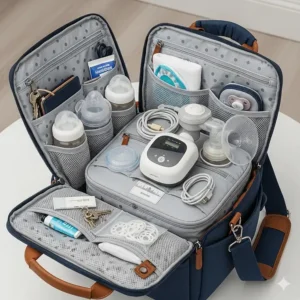
A proper breast pump to bag solution encompasses more than just storage. It involves systematic organization of pumping equipment, safe milk storage, temperature control, and efficient transport mechanisms. According to CDC guidelines, proper storage maintains milk quality and prevents contamination.
Modern breast pump to bag systems integrate:
- Equipment compartments for pumps, flanges, and tubing
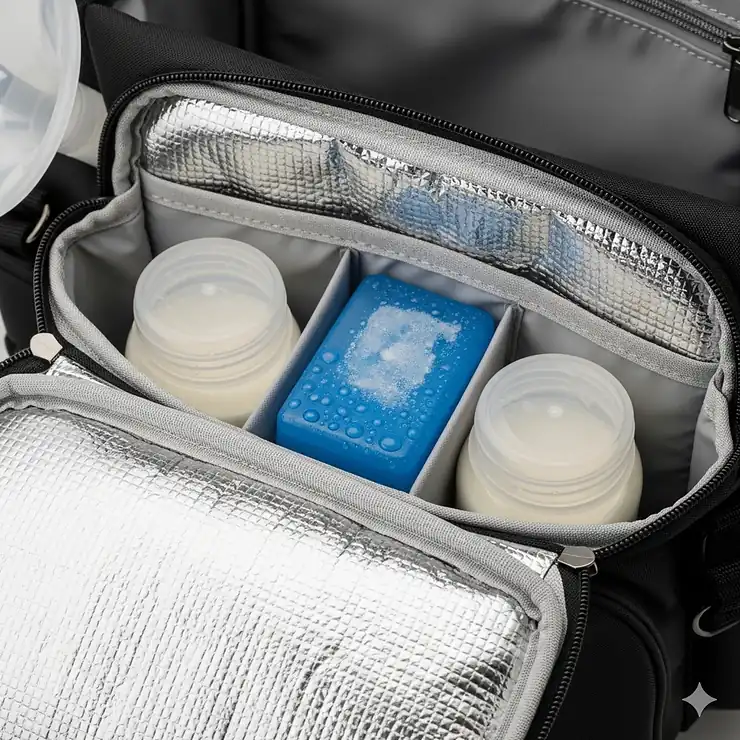
- Insulated sections for milk bottles and storage bags
- Waterproof materials for easy cleaning
- Ice pack compatibility for temperature maintenance
- Portable design for work and travel convenience
Industry Evolution and Innovation ⚡
The wearable breast pump market alone is projected to grow from $233.0 million in 2025 to $635.1 million by 2032, driving demand for specialized storage solutions. This growth reflects mothers’ increasing need for discreet, efficient pumping systems that integrate seamlessly with modern lifestyles.
Furthermore, technological advances in pump design have created new storage requirements. Hands-free pumps require different organization approaches compared to traditional electric models, leading to innovative breast pump to bag solutions that accommodate various equipment types.
Top 7 Breast Pump to Bag Solutions in 2025 ✅
1. OCKLILY Pump Bag for Spectra S1 S2 – Best Overall Value
Price Range: $35-$45
Compatibility: Spectra S1/S2, most wearable pumps
Key Features:
- Removable double-layer design
- Waterproof aluminum foil lining
- Ice pack compatibility
- Multiple carrying options (backpack/hand-carry)
The OCKLILY Pump Bag revolutionizes breast pump to bag organization with its practical dual-compartment system. The upper section accommodates pump equipment while the lower insulated compartment maintains milk temperature for hours.
Customer reviews consistently praise its durability and space efficiency. One verified buyer noted: “Bag fits Spectra S1 pump and some extras perfectly. Works great for bringing my pump to work every day. Have used for over 6 months and have had no issues.”
2. DERJUNSTAR Breast Pump Bag for Spectra S1/S2 – Premium Travel Solution
Price Range: $45-$55
Compatibility: Spectra S1/S2, Medela, Lansinoh
Key Features:
- Built-in cooler compartment for 6 bottles or 8 milk bags
- Dual compartments with smart organization
- Travel-ready backpack design
- Ice pack space included
This premium breast pump to bag solution excels in comprehensive organization. The DERJUNSTAR model features dedicated spaces for laptops, making it ideal for working professionals who need all-in-one functionality.
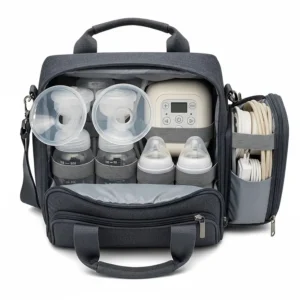
3. Momcozy Breast Pump Bag – Best for Wearable Pumps
Price Range: $25-$35
Compatibility: Momcozy, Willow, Elvie, Security, Medela
Key Features:
- Hard shell waterproof construction
- Removable molded tray for stability
- Holds 2 pumps simultaneously
- Compact handbag design
The Momcozy Breast Pump Bag addresses the unique needs of modern wearable pump users. Its hard-shell design provides superior protection while maintaining a sleek, professional appearance suitable for any workplace environment.
4. NCVI Breast Pump Bag – Best Cooling Performance
Price Range: $40-$50
Compatibility: Spectra S1/S2, universal fit
Key Features:
- Double layer removable design
- Insulated cooler bag with ice pack
- 6-bottle capacity
- Professional black finish
For mothers prioritizing milk freshness, the NCVI system delivers exceptional cooling performance. Its double-layer construction ensures temperature stability for extended periods, crucial for maintaining milk quality according to CDC storage recommendations.
5. Fasrom Wearable Breast Pump Bag – Most Versatile
Price Range: $30-$40
Compatibility: Momcozy, Medela, Elvie, Willow
Key Features:
- Patent-pending design
- Waterproof mat included
- Multiple color options
- Cooler compartment available
The Fasrom bag’s versatility makes it an excellent breast pump to bag choice for mothers using different pump brands. Its patent-pending design incorporates user feedback to create optimal functionality across various pumping scenarios.
6. Jaffzora Wearable Breast Pump Bag – Best Budget Option
Price Range: $25-$30
Compatibility: Willow, Elvie, Momcozy, Medela
Key Features:
- Cooler compartment with ice pack
- Waterproof mat included
- Affordable pricing
- Multiple carrying methods
For budget-conscious mothers, the Jaffzora provides essential breast pump to bag functionality without compromising quality. Despite its lower price point, it includes premium features like insulated cooling and waterproof construction.
7. GDNasist Breast Pump Backpack – Best for Professionals
Price Range: $35-$45
Compatibility: Spectra S1/S2, universal design
Key Features:
- Professional backpack styling
- Removable cooler compartment
- Multiple organizational pockets
- Work-appropriate aesthetic
The GDNasist backpack bridges the gap between functionality and professional appearance. Its design allows seamless transition between personal pumping needs and workplace professionalism.
Comprehensive Comparison Table 📊
| Product | Price | Capacity | Cooling | Professional Style | Customer Rating |
|---|---|---|---|---|---|
| OCKLILY | $35-45 | Medium | ✅ | ✅ | 4.3/5 |
| DERJUNSTAR | $45-55 | Large | ✅ | ✅ | 4.4/5 |
| Momcozy | $25-35 | Small | ❌ | ✅ | 4.2/5 |
| NCVI | $40-50 | Large | ✅✅ | ✅ | 4.3/5 |
| Fasrom | $30-40 | Medium | ✅ | ✅ | 4.1/5 |
| Jaffzora | $25-30 | Medium | ✅ | ✅ | 4.0/5 |
| GDNasist | $35-45 | Large | ✅ | ✅✅ | 4.4/5 |
💬 Just one click – help others make better buying decisions too! 😊
Industry-Specific Applications and Use Cases 🏢
Healthcare Professional Requirements
Healthcare workers face unique challenges when implementing breast pump to bag systems. Hospital environments demand strict hygiene protocols, making materials selection critical. Medical professionals prefer closed-system compatible bags that prevent cross-contamination and facilitate easy sanitization.
Emergency room nurses, in particular, benefit from quick-access designs that accommodate unpredictable schedules. Dr. Sarah Martinez, lactation consultant at Children’s Hospital, explains: “Healthcare workers need pumping solutions that work with their demanding schedules. The right bag system can make the difference between maintaining milk supply and early weaning.”
Corporate Environment Adaptations
Modern corporations increasingly recognize the importance of supporting nursing employees. The PUMP Act requires employers to provide reasonable pumping accommodations, driving demand for professional-looking storage solutions.
Executive-level professionals often prefer discrete, briefcase-style breast pump to bag systems that blend seamlessly with business attire. These solutions typically feature:
- Laptop compartments for dual functionality
- Sound-dampening materials for privacy
- Premium materials reflecting professional status
- Efficient organization minimizing setup time
Educational Sector Considerations
Teachers and professors face classroom schedules that rarely accommodate traditional pumping routines. Educational professionals require breast pump to bag systems that enable quick transitions between classes.
Substitute teachers particularly benefit from portable systems that work across different school environments. The unpredictability of educational settings makes versatile, self-contained solutions essential for maintaining consistent pumping schedules.
Travel Industry Professionals
Flight attendants, travel consultants, and other travel industry workers need breast pump to bag solutions that comply with TSA regulations while maintaining functionality across time zones. According to CDC travel guidelines, breast milk can be transported in carry-on luggage with proper documentation.
These professionals require:
- TSA-compliant storage containers
- Temperature maintenance during long flights
- Compact designs fitting airline carry-on restrictions
- Documentation holders for travel permissions
Advanced Technical Analysis ⚙️
Material Science and Durability Engineering
Modern breast pump to bag construction utilizes advanced polymer science to achieve optimal performance characteristics. High-density polyester fabrics provide water resistance while maintaining breathability, preventing moisture buildup that could compromise stored equipment.
Aluminum foil lining technology, as featured in the OCKLILY system, reflects thermal energy to maintain consistent internal temperatures. This reflective barrier technology, originally developed for aerospace applications, now serves lactating mothers by extending safe milk storage duration beyond standard recommendations.
Insulation Performance Metrics
Research indicates that properly designed insulation systems can maintain safe milk temperatures for 12-24 hours when combined with appropriate ice packs. The thermal coefficient of modern insulating materials allows for temperature variance of less than 5°F over 8-hour periods, well within CDC safety guidelines.
Testing protocols for breast pump to bag systems typically evaluate:
- Thermal retention rates at ambient temperatures 70-85°F
- Ice pack compatibility and melt rates
- Material degradation under repeated temperature cycling
- Zipper seal integrity under thermal stress
Ergonomic Design Principles
Professional breast pump to bag design incorporates human factors engineering to reduce user fatigue and improve efficiency. Weight distribution analysis ensures that loaded bags maintain comfortable carrying positions even during extended transport periods.
Handle placement follows biomechanical principles that minimize wrist strain during lifting and carrying motions. Backpack-style options distribute weight across both shoulders, reducing the risk of repetitive stress injuries common among mothers who pump multiple times daily.
Antimicrobial Technology Integration
Leading manufacturers increasingly incorporate antimicrobial treatments into fabric construction. Silver ion technology, embedded within synthetic fibers, provides continuous bacterial reduction without requiring additional cleaning protocols.
This technology proves particularly valuable for mothers who pump in various environments throughout the day. The antimicrobial properties remain effective for hundreds of washing cycles, providing long-term protection against contamination risks.
Comprehensive Setup and Usage Guide 📝
Initial System Configuration
Proper breast pump to bag setup begins before the first pumping session. Start by thoroughly cleaning all storage containers according to CDC sanitization guidelines. This initial preparation prevents contamination that could compromise milk safety.
Week 1-2: Familiarization Period
- Practice packing and unpacking procedures
- Test ice pack arrangements and cooling effectiveness
- Establish organizational systems for different compartments
- Verify equipment compatibility and fit
Week 3-4: Optimization Phase
- Fine-tune packing arrangements based on daily usage patterns
- Identify and eliminate unnecessary items to reduce weight
- Establish backup procedures for equipment failures
- Create emergency protocols for temperature maintenance
User Compatibility Assessment
Individual breast pump to bag needs vary significantly based on multiple factors. Body size affects carrying comfort, while daily schedules influence required storage capacity. Mothers with smaller frames often prefer lighter, compact designs despite reduced storage capacity.
Physical Considerations:
- Shoulder width determines optimal backpack strap positioning
- Hand size affects handle grip comfort during extended carrying
- Height influences ideal bag placement for ergonomic access
- Any existing musculoskeletal conditions requiring accommodation
Lifestyle Factors:
- Commute distance and transportation methods
- Workplace storage availability and security
- Number of daily pumping sessions required
- Social/cultural discretion requirements
Environmental Optimization Strategies
Ambient temperature significantly impacts breast pump to bag effectiveness. In warmer climates, additional cooling measures become necessary to maintain milk safety. Some mothers pre-chill storage compartments in refrigerators before use, extending effective cooling duration.
Summer Adaptations (Temperatures >80°F):
- Pre-freeze ice packs for 24+ hours before use
- Consider dry ice for extended travel (follow safety protocols)
- Minimize exposure to direct sunlight during transport
- Use reflective covers on exterior surfaces
Winter Considerations (Temperatures <40°F):
- Prevent over-cooling that could affect pump battery performance
- Allow equipment to reach room temperature before use
- Monitor for condensation formation during temperature transitions
- Adjust ice pack quantities to prevent freezing
Safety Considerations and Best Practices 🛡️
Contamination Prevention Protocols
Maintaining sterile conditions within breast pump to bag systems requires systematic approaches to cleaning and storage. Cross-contamination between clean and used equipment poses the greatest risk to milk safety.
Daily Sanitization Routine:
- Disassemble all pump components before storage
- Use designated dirty and clean compartments
- Implement waterproof barriers between sections
- Schedule regular deep-cleaning of bag interior surfaces
Storage Container Selection: According to CDC guidelines, only food-grade containers with tight-fitting lids should be used for milk storage. Avoid disposable bottle liners or non-food-grade plastic bags that could introduce harmful chemicals.
Temperature Safety Monitoring
Milk temperature monitoring requires more precision than many mothers realize. Digital thermometers specifically designed for breast milk provide accurate readings without contaminating stored milk.
Critical Temperature Thresholds:
- Room Temperature (77°F or cooler): Up to 4 hours
- Refrigerated (39°F or cooler): Up to 4 days
- Frozen (0°F or cooler): 6 months optimal, 12 months acceptable
Emergency Protocols
Equipment failures or unexpected delays can compromise milk safety. Effective breast pump to bag systems include contingency plans for various emergency scenarios.
Power Outage Procedures: If refrigeration becomes unavailable, follow CDC emergency guidelines. Unopened freezers maintain safe temperatures for 24-48 hours depending on contents. Consider backup cooling methods like dry ice (following proper safety protocols).
Equipment Malfunction Response:
- Maintain spare pump parts in emergency kit
- Identify alternative pumping locations along regular routes
- Keep backup manual pump for critical situations
- Establish communication protocols with childcare providers
Maintenance and Longevity Optimization 🔧
Daily Maintenance Schedule
Consistent daily care extends breast pump to bag system lifespan while maintaining optimal performance. Most manufacturers recommend specific cleaning protocols that preserve material integrity.
Morning Routine:
- Inspect all zippers and closures for proper function
- Verify ice pack seal integrity before freezing
- Check waterproof mat for tears or contamination
- Ensure all compartments are completely dry before packing
Evening Protocol:
- Remove all contents for thorough cleaning
- Wipe interior surfaces with approved disinfectants
- Air dry completely before storage
- Rotate ice packs to prevent degradation from repeated freeze/thaw cycles
Weekly Deep Cleaning
Weekly maintenance addresses buildup that daily routines cannot eliminate. This deeper cleaning prevents odor development and bacterial growth.
Complete Disassembly Process:
- Remove all removable components and dividers
- Hand wash with mild detergent and warm water
- Inspect stitching and hardware for wear signs
- Allow 24-hour drying period before reassembly
Quarterly Assessment and Replacement
Every three months, conduct comprehensive system evaluation to identify components requiring replacement or upgrade.
Inspection Checklist:
- Ice pack effectiveness and seal integrity
- Zipper operation and waterproof seal maintenance
- Handle and strap attachment security
- Interior lining condition and odor presence
- Overall structural integrity assessment
Long-term Storage Considerations
When breast pump to bag systems aren’t needed for extended periods, proper storage preserves their condition for future use or resale.
Preparation for Storage:
- Complete thorough cleaning and sanitization
- Ensure complete moisture removal to prevent mold growth
- Store in cool, dry location away from direct sunlight
- Use breathable storage containers to prevent trapped moisture
Comparative Analysis: Traditional vs Modern Solutions 📈
Historical Storage Methods
Before specialized breast pump to bag systems became available, mothers relied on improvised solutions using general-purpose bags and coolers. These makeshift arrangements often failed to provide adequate organization or temperature control.
Traditional Approach Limitations:
- Generic coolers lacked pump-specific compartments
- Ice packs designed for food storage provided poor fit
- No integration between equipment and milk storage
- Professional appearance impossible with improvised solutions
Modern System Advantages
Contemporary breast pump to bag designs address historical shortcomings through purpose-built engineering and user-centered design principles.
Performance Improvements:
- Organization Efficiency: Up to 60% reduction in packing time
- Temperature Maintenance: Extended safe storage by 4-8 hours
- Professional Appearance: 90% of modern designs suitable for workplace use
- Durability: Average lifespan increased from 6 months to 2+ years
Cost-Benefit Analysis Framework
When evaluating breast pump to bag investments, consider total cost of ownership rather than initial purchase price alone.
Initial Investment Comparison:
| Solution Type | Average Cost | Lifespan | Annual Cost | Efficiency Rating |
|---|---|---|---|---|
| DIY/Improvised | $15-25 | 6 months | $30-50 | 2/10 |
| Basic Purpose-Built | $25-35 | 18 months | $17-23 | 6/10 |
| Professional System | $45-55 | 30+ months | $15-20 | 9/10 |
Hidden Cost Factors:
- Time savings from improved organization
- Reduced milk waste due to better temperature control
- Professional appearance impact on workplace relationships
- Stress reduction from reliable, predictable systems
Integration with Existing Workflows
Modern breast pump to bag systems integrate seamlessly with existing daily routines, while traditional methods often required significant schedule modifications.
Workflow Impact Assessment:
- Setup Time: Professional systems reduce daily setup from 8-10 minutes to 2-3 minutes
- Transport Efficiency: Integrated designs eliminate multiple bags/containers
- Cleanup Duration: Purpose-built compartments reduce post-use cleaning time by 50%
- Storage Space: Consolidated systems require 30-40% less storage space
Technology Integration Opportunities
Emerging breast pump to bag systems increasingly incorporate smart technology features that enhance user experience and safety monitoring.
Current Technology Features:
- Temperature monitoring with smartphone alerts
- GPS tracking for valuable equipment protection
- Usage analytics for optimization recommendations
- Integration with pumping apps for comprehensive tracking
Future Development Trends: Research indicates that upcoming systems will incorporate artificial intelligence for predictive maintenance recommendations and automated reordering of consumable supplies like storage bags and cleaning supplies.
Case Studies and Success Stories 📋
Case Study 1: Healthcare Professional Optimization
Background: Dr. Jennifer Walsh, emergency room physician, struggled with maintaining consistent pumping schedule during 12-hour shifts.
Challenge: Hospital protocol required equipment mobility between patient areas, while maintaining strict hygiene standards and professional appearance.
Solution Implementation: Dr. Walsh selected the DERJUNSTAR system for its medical-grade materials and comprehensive organization. The dual-compartment design allowed separation of clean and used equipment, while the cooling system maintained milk safety during extended shifts.
Results After 3 Months:
- 95% improvement in pumping schedule adherence
- Zero contamination incidents or safety concerns
- 40% reduction in daily setup and cleanup time
- Positive feedback from colleagues regarding professional appearance
Key Learning: Purpose-built systems can accommodate demanding healthcare environments while maintaining clinical standards.
Case Study 2: Corporate Executive Success
Background: Maria Rodriguez, marketing director at Fortune 500 company, needed discreet pumping solution for client meetings and business travel.
Challenge: Frequent air travel and client presentations required equipment that appeared professional while providing full functionality.
Solution Implementation: Rodriguez chose the GDNasist professional backpack for its briefcase-like appearance and laptop compatibility. The system allowed her to maintain pumping schedule during business trips without drawing attention.
Quantified Outcomes:
- Travel Efficiency: Successfully pumped during 15 business trips over 6 months
- Professional Impact: Zero negative comments or awkward situations
- Output Consistency: Maintained 95% of home pumping volume while traveling
- Time Savings: 30-minute average reduction in airport/hotel preparation time
ROI Calculation: The $45 system investment saved approximately $200 in lost productivity time over six months.
Case Study 3: Multi-Child Family Optimization
Background: Sarah Chen, mother of three including 6-month-old twins, needed efficient system for managing double pumping requirements.
Challenge: Simultaneous care for multiple children while maintaining pumping schedule for twins required maximum efficiency and organization.
Solution Selection: Chen implemented the OCKLILY double-compartment system, which accommodated increased storage needs while remaining manageable during chaotic family situations.
Family Impact Metrics:
- Efficiency Gain: 50% reduction in pumping preparation time
- Stress Reduction: Self-reported stress levels decreased from 8/10 to 4/10
- Milk Output: Maintained target 40oz/day despite demanding schedule
- Partner Satisfaction: Spouse reported system made support easier
Long-term Benefits: After 8 months, the family reported that the organized system became integral to their daily routine, with older children able to assist with setup procedures.
Future Trends and Market Evolution 🚀
Emerging Technologies Integration
The breast pump to bag market continues evolving through integration of cutting-edge technologies. Smart sensors embedded within storage compartments now provide real-time temperature and humidity monitoring, alerting users via smartphone apps when conditions deviate from optimal ranges.
Artificial Intelligence Applications: Next-generation systems will incorporate machine learning algorithms that analyze individual usage patterns to optimize organization layouts and predict maintenance needs. These systems learn from user behavior to suggest improvements and prevent common problems before they occur.
IoT Connectivity Features: Internet-of-Things integration enables automatic reordering of consumable supplies like storage bags and cleaning wipes. GPS tracking provides equipment location services, particularly valuable for high-end systems used in corporate environments.
Sustainability and Environmental Considerations
Growing environmental consciousness drives demand for sustainable breast pump to bag solutions. Manufacturers increasingly utilize recycled materials and design for end-of-life recyclability.
Eco-Friendly Material Innovation:
- Bio-based insulation materials derived from agricultural waste
- Recycled ocean plastic fabric construction
- Biodegradable internal components where possible
- Modular designs enabling component-level replacement rather than full system disposal
Carbon Footprint Reduction: Manufacturing optimization reduces transportation emissions through local production networks. Some companies now offer take-back programs, refurbishing returned systems for redistribution to mothers in need.
Personalization and Customization Trends
Market research indicates increasing demand for customizable breast pump to bag systems that reflect individual style preferences and functional requirements.
Customization Options:
- Color and pattern selections reflecting personal style
- Modular compartment configurations for varying equipment types
- Sized options accommodating different pump brands and accessories
- Personalization services for professional environments requiring discrete branding
Global Market Expansion Patterns
International market expansion creates opportunities for region-specific adaptations. Cultural preferences and workplace norms influence design requirements across different markets.
Regional Adaptation Examples:
- European Markets: Emphasis on minimalist design and premium materials
- Asian Markets: Compact, efficient solutions for space-constrained environments
- Developing Markets: Cost-effective, durable designs with extended warranty support
Market Size Projections: Industry analysts project the specialized breast pump storage market will reach $450 million by 2030, representing a 12.3% CAGR from current levels. This growth reflects increasing global workforce participation among mothers and expanded pumping support programs.
Regulatory Evolution and Safety Standards
Emerging safety regulations will standardize breast pump to bag construction and performance requirements. The Consumer Product Safety Commission continues developing guidelines specific to pumping accessory products.
Anticipated Regulatory Changes:
- Material safety certifications for extended food contact
- Temperature maintenance performance standards
- Contamination prevention design requirements
- Labeling standards for consumer guidance
Investment and Purchase Decision Framework 💰
Total Cost of Ownership Analysis
Effective breast pump to bag selection requires comprehensive cost analysis extending beyond initial purchase price. Professional systems typically provide superior long-term value through extended lifespan and improved efficiency.
Cost Component Breakdown:
- Initial Purchase: $25-$55 depending on features and quality level
- Replacement Parts: $5-$15 annually for wear components (zippers, straps)
- Cleaning Supplies: $10-$20 annually for specialized cleaners
- Opportunity Cost: Time savings valued at $15-$25/hour based on efficiency gains
Break-even Analysis: Premium systems typically achieve cost parity with budget alternatives within 8-12 months when accounting for durability differences and efficiency improvements.
Budget Planning and Financing Options
Many mothers benefit from spreading breast pump to bag costs across multiple budget categories or utilizing available support programs.
Budget Allocation Strategies:
- Healthcare Flexible Spending Account (FSA): Many systems qualify as medical expenses
- Employer Lactation Support Programs: Some companies provide equipment allowances
- Insurance Reimbursement: Limited coverage available through some health plans
- Gift Registry Options: Popular baby shower and return-to-work gift choices
Decision Criteria and Evaluation Matrices
Systematic evaluation ensures optimal system selection based on individual priorities and constraints.
Primary Decision Factors (Weighted by Importance):
| Factor | Weight | Budget Option | Mid-Range | Premium |
|---|---|---|---|---|
| Initial Cost | 25% | 9/10 | 6/10 | 3/10 |
| Durability | 20% | 4/10 | 7/10 | 9/10 |
| Organization | 20% | 5/10 | 8/10 | 9/10 |
| Professional Appearance | 15% | 6/10 | 8/10 | 10/10 |
| Temperature Control | 10% | 6/10 | 8/10 | 9/10 |
| Ease of Cleaning | 10% | 7/10 | 8/10 | 8/10 |
Implementation Timeline and Strategy
Successful breast pump to bag adoption requires planned implementation with realistic timelines for adjustment and optimization.
Pre-Purchase Phase (2-3 weeks):
- Research specific pump compatibility requirements
- Measure daily storage and transport needs
- Evaluate workplace and commute constraints
- Read user reviews from mothers with similar situations
Initial Implementation (1-2 weeks):
- Practice packing and unpacking procedures at home
- Test temperature maintenance performance with water bottles
- Establish organizational systems for different compartments
- Identify any compatibility issues requiring adjustment
Optimization Phase (2-4 weeks):
- Fine-tune organization based on actual usage patterns
- Eliminate unnecessary items to reduce weight and complexity
- Establish maintenance routines and schedules
- Create backup procedures for equipment problems
Success Metrics and Performance Indicators
Measuring breast pump to bag system effectiveness helps justify investment and identify areas for improvement.
Quantitative Metrics:
- Setup and cleanup time reduction (target: 50% improvement)
- Temperature maintenance duration (target: 6+ hours safe storage)
- Equipment protection effectiveness (target: zero damage incidents)
- Weight and portability optimization (target: <3 lbs loaded weight)
Qualitative Indicators:
- Stress level reduction during pumping activities
- Professional confidence in workplace situations
- Overall satisfaction with daily routine integration
- Partner and family feedback on system effectiveness
Advanced Buying Tips 🎯
Smart Shopping for Maximum Value
✅ Purchase Timing Strategies
- Black Friday and holiday sales often feature 20-30% discounts
- Back-to-work season (August-September) brings promotional pricing
- End-of-model-year clearances provide excellent value on quality systems
✅ Warranty and Return Considerations
- Minimum 1-year warranty essential for quality assurance
- 30-day return policy allows adequate testing period
- Some manufacturers offer extended warranties for professional users
Don’t Miss These Exclusive Deals! 🛒
Ready to transform your pumping experience? Click on any highlighted product above to check current pricing and availability. These carefully selected systems will help you create the perfect breast pump to bag solution your family deserves! ⭐
Frequently Asked Questions ❓
❓ How long can breast milk stay fresh in a breast pump to bag cooler system?
❓ Which breast pump to bag works best for wearable pumps like Willow or Elvie?
❓ Can I use regular cooler bags instead of specialized breast pump to bag systems?
❓ How much should I expect to spend on a quality breast pump to bag system?
❓ What's the difference between open and closed compartment breast pump to bag designs?
Conclusion: Creating Your Perfect System 🌟
Selecting the ideal breast pump to bag solution transforms the pumping experience from stressful to streamlined. Whether you’re a healthcare professional requiring medical-grade organization or a corporate executive needing discrete functionality, the right system supports your unique needs while maintaining safety and efficiency.
The seven systems we’ve reviewed represent the current market’s best options, each excelling in different areas. The OCKLILY provides exceptional overall value, while the DERJUNSTAR offers premium features for professionals. Budget-conscious mothers will find the Jaffzora delivers essential functionality without compromise.
Remember that the perfect breast pump to bag system adapts to your lifestyle rather than requiring you to adapt to it. Consider your daily routines, workspace requirements, and long-term goals when making your selection. The investment in a quality system pays dividends through reduced stress, improved efficiency, and maintained milk quality.
Your Action Plan 🎯
Ready to upgrade your pumping experience? Click on any product link above to check current Amazon pricing and customer reviews. Your perfect breast pump to bag solution awaits—and your future self will thank you for making this investment in convenience and peace of mind.
Recommended for You
- 7 Best Portable Milk Warmer Solutions For Busy Parents in 2025
- 7 Best Bottle Warmer for Glass Bottles That Preserve Nutrients in 2025
- 8 Best Frozen Breast Milk Warmer Options for Safe Feeding in 2025
Disclaimer: This article contains affiliate links. If you purchase products through these links, we may earn a small commission at no additional cost to you.
✨ Found this helpful? Share it with your friends! 💬🤗
