
In This Article
✨Was this helpful? Spread the word! 🚀
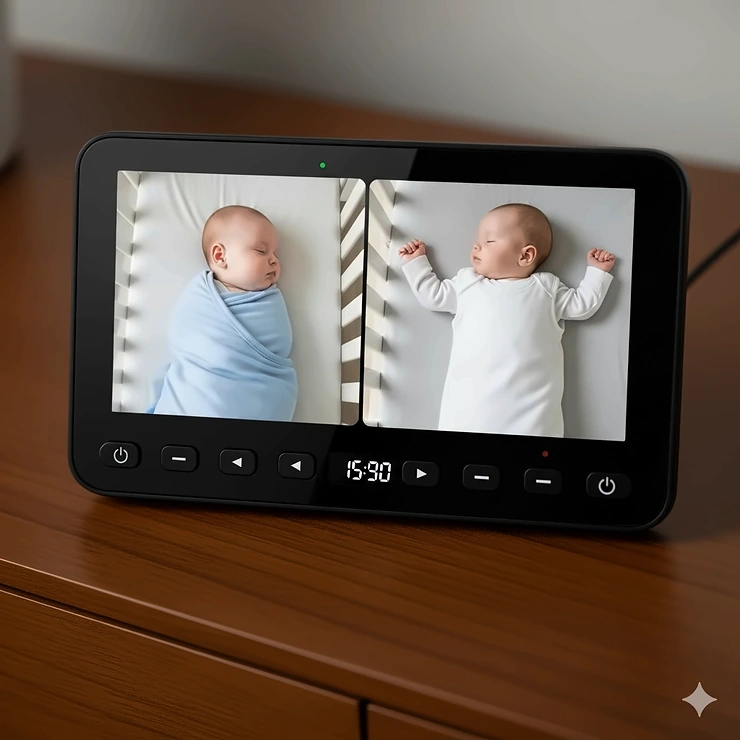
Whether you’re expecting twins, have multiple young children, or simply want comprehensive coverage of your home, finding the best split screen baby monitor can transform your parenting experience. These innovative devices let you watch two different areas simultaneously, giving you unprecedented peace of mind while your little ones sleep, play, or explore.
I’ve spent countless hours researching and testing the top split screen baby monitor options available today. After analyzing customer reviews, technical specifications, and real-world performance, I’m excited to share my findings with you. These monitors aren’t just gadgets—they’re game-changers for busy parents who need eyes everywhere.
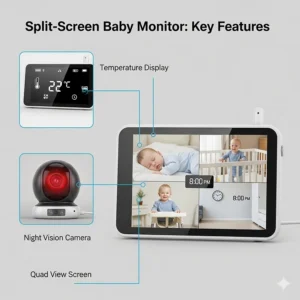
In this comprehensive guide, we’ll explore everything from budget-friendly options to premium smart monitors with advanced features. You’ll discover which models offer the clearest video quality, longest battery life, and most reliable connections. By the end, you’ll know exactly which split screen baby monitor will work best for your family’s unique needs.
Understanding Split Screen Baby Monitor Technology 🔧
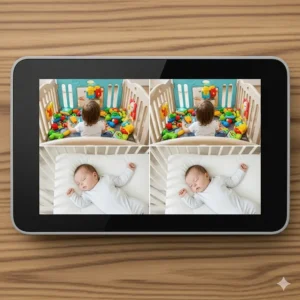
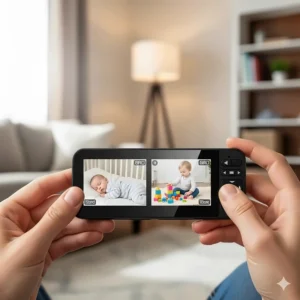
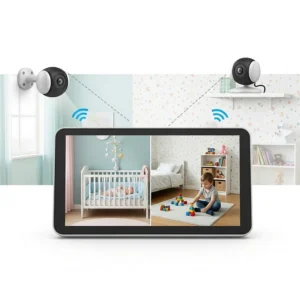
Split screen baby monitors represent a significant advancement in nursery surveillance technology. Unlike traditional single-camera systems, these devices allow you to monitor multiple locations simultaneously on one display. The technology typically works by connecting two or more wireless cameras to a single parent unit, which then displays both feeds either side-by-side or allows you to toggle between them.
The core functionality relies on digital wireless transmission, usually operating on 2.4GHz frequency bands. This ensures secure, hack-proof connections that don’t depend on your home Wi-Fi network. Advanced models may incorporate FHSS (Frequency Hopping Spread Spectrum) technology, which automatically switches between frequencies to maintain crystal-clear transmission quality.
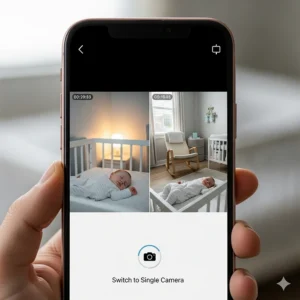
Modern split screen baby monitors often feature dual-display modes: you can view both cameras simultaneously in split-screen format, or switch to single-view mode to focus on one area. Many models also include scan mode, which automatically cycles between cameras every 10-15 seconds, ensuring you never miss important moments.
The video resolution has dramatically improved in recent years, with many split screen monitors now offering 720p HD or even 1080p Full HD quality. This enhanced clarity means you can actually see meaningful details rather than grainy, unclear images that leave you guessing about what’s happening.
Top 7 Split Screen Baby Monitor Reviews 📱
1. Babysense MaxView 5.5″ 1080p Full HD Split-Screen Baby Monitor
The Babysense MaxView stands out as our top choice for best split screen baby monitor, and for excellent reasons. This premium system includes two cameras right out of the box, featuring a massive 5.5″ Full HD display that delivers crystal-clear 1080p resolution—significantly sharper than most competitors.
What truly sets this monitor apart is its impressive battery life. The 5000mAh battery provides up to 20 hours of use in eco mode and 12 hours in regular mode. This means you can go multiple days without charging, even with heavy usage. The 1000-foot range ensures reliable connectivity throughout large homes, while the hack-proof FHSS technology keeps your family’s privacy secure.
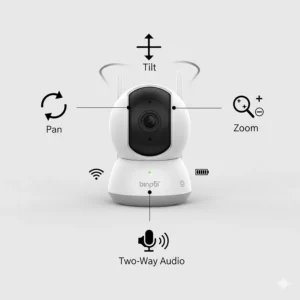
The cameras offer full 360° pan, tilt, and zoom functionality, allowing you to capture every angle of your child’s room. The built-in RGB nightlight creates a soothing ambiance, while the two-way audio feature lets you comfort your baby remotely. The system supports up to 4 cameras total, making it perfect for growing families.
Key Specifications:
- Display: 5.5″ Full HD (1920×1080)
- Battery: 5000mAh (12-20 hours)
- Range: 1000 feet
- Video Quality: 1080p HD
- Price: $199.99
2. VTech RM7764-2HD Smart WiFi 2-Camera Baby Monitor
The VTech RM7764-2HD bridges the gap between traditional monitors and smart technology beautifully. This dual-camera system features a generous 7″ HD display alongside smartphone app connectivity, giving you monitoring flexibility whether you’re at home or away.
The 1080p cameras provide exceptional video quality with automatic infrared night vision that delivers clear black-and-white images in complete darkness. The 360° pan and tilt functionality, combined with 10x zoom via the mobile app, ensures you can see every detail of your baby’s environment. Motion detection alerts keep you informed of any movement, while the built-in temperature sensor monitors nursery conditions.
Installation is refreshingly simple with VTech’s plug-and-play design. The system connects to your home WiFi for remote viewing through the MyVTech Baby app, but also functions independently as a traditional monitor if internet connectivity fails. The split-screen functionality works seamlessly both on the parent unit and through the smartphone app.
Key Specifications:
- Display: 7″ HD (720p)
- Video Quality: 1080p cameras
- Range: WiFi-dependent
- Features: Smartphone app, motion detection
- Price: Around $250-300
3. HelloBaby HB6560 6″ IPS Split Screen Baby Monitor
The HelloBaby HB6560 boasts the world’s first 6″ IPS split screen display, designed specifically to reduce eye fatigue during extended monitoring sessions. This innovative monitor comes with two cameras and delivers impressive 30-hour battery life in voice mode, making it ideal for parents who want worry-free overnight monitoring.
The IPS (In-Plane Switching) technology provides superior viewing angles and color accuracy compared to standard LCD displays. You can view the screen clearly from virtually any angle without color distortion or brightness loss. The automatic infrared night vision ensures you can monitor your baby clearly even in pitch-black conditions.
What parents love most about this model is the intuitive interface and reliable 355° pan and 120° tilt functionality. The remote-controlled cameras can be positioned perfectly to cover entire rooms, while the 2x zoom feature lets you get closer looks without disturbing sleeping babies. The VOX mode keeps the screen dark until sounds are detected, conserving battery life while ensuring you’re alerted when needed.
Key Specifications:
- Display: 6″ IPS screen
- Battery: 16-30 hours depending on mode
- Range: 1000 feet
- Video Quality: HD resolution
- Price: Around $150-200
4. Axvue 5.0″ HD Split Screen Baby Monitor
The Axvue 5.0″ HD represents excellent value in the split screen baby monitor category. This system includes two cameras with a 5.0″ IPS display that delivers 720p HD video quality. The 24-hour battery life ensures all-day monitoring without frequent recharging, while the 1000-foot range provides reliable coverage throughout large homes.
Axvue has engineered this monitor with parents’ daily routines in mind. The split-screen functionality displays both camera feeds simultaneously, while the scan mode automatically cycles between cameras. The two-way communication feature allows you to soothe your baby remotely, and the built-in lullabies can help settle fussy infants.
The temperature monitoring capability provides real-time nursery climate information, helping you maintain optimal sleeping conditions. Night vision performance is particularly impressive, delivering clear monochrome images that let you see important details even in complete darkness. The system uses secure 2.4GHz FHSS transmission to prevent interference and protect your privacy.
Key Specifications:
- Display: 5.0″ IPS (720p)
- Battery: 24 hours
- Range: 1000 feet
- Features: Temperature monitoring, lullabies
- Price: Around $120-160
5. Bonoch Long Range 2-Camera Baby Monitor
The Bonoch Long Range monitor excels in providing ultra-long-distance coverage with its impressive 1800-foot range—nearly double that of most competitors. This makes it perfect for large homes, multi-story houses, or families who want outdoor monitoring capability. The system includes two 1080p cameras with a large display that supports true split-screen viewing.
The massive 7800mAh battery is a standout feature, providing extended monitoring sessions without constant recharging concerns. The auto night vision switches seamlessly between color and infrared modes based on lighting conditions, while the 110° wide-angle lens captures more room area than standard cameras.
Recording and playback functionality sets this monitor apart from basic models. You can record important moments or review overnight activity, which proves invaluable for understanding your baby’s sleep patterns. The VOX (voice activation) feature keeps the monitor silent until sounds are detected, helping parents sleep better while staying alert to their baby’s needs.
Key Specifications:
- Range: 1800 feet
- Battery: 7800mAh
- Video Quality: 1080p cameras
- Features: Recording, wide-angle lens
- Price: Around $180-220
6. iFamily 4.3″ Split Screen Baby Monitor
The iFamily split screen monitor offers a perfect balance of essential features and affordability. The 4.3″ display provides clear split-screen viewing of two camera feeds, while the compact size makes it highly portable for travel or moving between rooms.
The cameras feature impressive 355° pan and 120° tilt capabilities, with the unique ability to flip 180° for ceiling mounting options. This flexibility allows you to position cameras exactly where needed for optimal coverage. The 1000-foot outdoor range ensures reliable connectivity throughout most homes, while the secure 2.4GHz connection prevents unauthorized access.
Practical features include a feeding timer that reminds you of meal times, temperature monitoring, and multiple lullaby options. The two-way audio works clearly for both hearing your baby and providing remote comfort. The system doesn’t require WiFi, making it ideal for families concerned about internet security or those with unreliable connections.
Key Specifications:
- Display: 4.3″ split screen
- Range: 1000 feet outdoor / 150 feet indoor
- Features: Feeding timer, ceiling mount capability
- Video Quality: Standard HD
- Price: Around $100-140
7. VTech VM928-2HD Non-WiFi Split Screen Monitor
The VTech VM928-2HD provides excellent split screen baby monitor functionality without any WiFi dependency. This 5″ LCD system comes with two cameras and delivers 720p HD video quality with impressive 17-hour battery life. The 110° wide-angle view captures more room area than typical monitors, while the remote pan-tilt-zoom functionality lets you adjust views without entering your baby’s room.
The temperature sensor provides continuous climate monitoring with customizable alerts if conditions become too hot or cold. Nine built-in lullabies and nature sounds help soothe restless babies, while the two-way communication allows for remote comfort. The night vision performance is particularly noteworthy, providing clear infrared images even in complete darkness.
Security-conscious parents appreciate that this monitor operates entirely independently of internet connections, eliminating hacking risks while ensuring reliable performance regardless of WiFi issues. The split-screen mode displays both cameras simultaneously, while individual camera viewing and scan mode provide additional monitoring options.
Key Specifications:
- Display: 5″ LCD (720p)
- Battery: Up to 17 hours
- Range: 1000 feet
- Features: 9 lullabies, temperature alerts
- Price: Around $140-180
Industry-Specific Applications and Use Cases 🏢
Professional Childcare Applications
Split screen baby monitors have revolutionized professional childcare environments. Daycare centers use these systems to monitor multiple rooms simultaneously, ensuring comprehensive supervision with fewer staff members. A typical setup might include cameras in nap rooms, play areas, and changing stations, all viewable from a central monitoring location.
Licensed family daycare providers find split screen monitors particularly valuable for maintaining required supervision ratios while caring for children of different ages. The ability to watch infants napping while monitoring active toddlers in play areas provides crucial safety oversight that traditional single-camera systems can’t match.
Nanny services increasingly recommend split screen baby monitor systems to families, as they allow caregivers to maintain visual contact with children across multiple rooms. This technology particularly benefits families with children who nap at different times or have varying activity schedules throughout the day.
Medical and Special Needs Applications
Healthcare professionals working with medically fragile infants often require enhanced monitoring capabilities. Split screen baby monitors allow simultaneous observation of breathing patterns, sleep positioning, and general comfort levels from multiple angles. While these monitors don’t replace medical-grade equipment, they provide valuable supplementary monitoring for parents of children with special healthcare needs.
Occupational therapists frequently recommend split screen monitors for families with children who have developmental delays or motor skill challenges. The ability to observe play therapy activities in one room while monitoring rest periods in another helps track progress and ensure safety during various daily activities.
Multi-Child Household Management
Families with twins find split screen baby monitors absolutely essential for maintaining awareness of both children simultaneously. Traditional monitors require constant switching between cameras, potentially missing important moments or safety concerns. Split screen functionality eliminates this limitation entirely.
Parents of children with different sleep schedules benefit enormously from dual-camera monitoring. You can observe a napping infant while keeping watch over an active toddler in a different room, ensuring both children remain safe and supervised without physically moving between spaces.
Grandparent and Extended Family Care
Grandparents caring for multiple grandchildren often feel overwhelmed by modern childcare technology, but split screen baby monitors provide intuitive monitoring solutions. The large displays and simple controls make these systems particularly suitable for older caregivers who may struggle with smartphone-based monitoring apps.
Multigenerational households use split screen monitors to coordinate childcare responsibilities effectively. Multiple family members can take turns monitoring, while the visual confirmation provided by split screens helps ensure consistent care standards across different caregivers.
Advanced Technical Analysis and Performance Metrics 🔬
Video Compression and Transmission Technology
Modern split screen baby monitors utilize advanced video compression algorithms to transmit multiple high-definition streams simultaneously without overwhelming wireless bandwidth. Most systems employ H.264 compression, which maintains excellent image quality while minimizing data requirements. This technology ensures smooth, lag-free video transmission even when displaying two camera feeds concurrently.
The 2.4GHz wireless transmission standard has evolved significantly, with current monitors utilizing FHSS (Frequency Hopping Spread Spectrum) technology. This system automatically switches between over 80 different frequency channels hundreds of times per second, preventing interference from other household devices and ensuring crystal-clear reception.
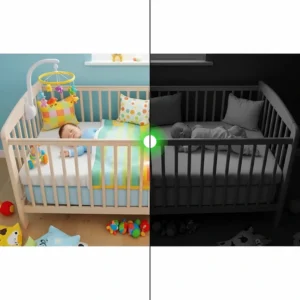
Digital signal processing (DSP) chips in premium monitors analyze incoming video signals in real-time, automatically adjusting brightness, contrast, and color balance for optimal image quality. This technology proves particularly valuable during night vision mode, where infrared sensors must translate heat signatures into visible images.
Battery Technology and Power Management
Lithium-ion battery technology in split screen baby monitors has advanced dramatically, with current systems featuring intelligent power management algorithms. These systems can differentiate between active monitoring periods and standby time, automatically reducing power consumption during quiet periods while maintaining full functionality when activity is detected.
Advanced models incorporate power-saving features like screen dimming based on ambient light levels, voice-activated transmission (VOX mode), and selective camera activation. These technologies can extend battery life from standard 8-hour operation to 20+ hours of continuous monitoring.
Thermal management systems prevent battery overheating during extended charging periods, while fast-charging capabilities allow monitors to reach 80% capacity within 2-3 hours. Some premium models include battery health monitoring that alerts users when replacement becomes necessary.
Signal Range and Penetration Analysis
The effective range of split screen baby monitors depends heavily on construction materials and environmental factors. Standard drywall reduces signal strength by approximately 10-15%, while metal structures can cause 40-60% signal degradation. Understanding these limitations helps parents position monitors optimally for maximum coverage.
Recent studies indicate that monitors operating on 2.4GHz frequencies perform better in multi-story homes compared to 5GHz systems, despite potentially slower data transmission rates. The longer wavelength of 2.4GHz signals penetrates building materials more effectively, maintaining stronger connections across greater distances.
Advanced antenna design in premium monitors utilizes MIMO (Multiple Input, Multiple Output) technology, which employs multiple antennas to improve signal quality and reduce dead zones. This technology can increase effective range by 30-50% compared to single-antenna systems.
Comprehensive Setup and Installation Guide 🛠️
Pre-Installation Planning and Assessment
Before installing your split screen baby monitor, conduct a thorough assessment of your home’s layout and your specific monitoring needs. Walk through your house while noting potential camera placement locations, considering both visual coverage and power outlet availability. Measure distances between camera locations and your intended monitoring position to ensure the system’s range meets your requirements.
Consider your family’s daily routines when planning camera placement. Primary cameras should monitor sleep areas, while secondary cameras might cover play spaces, changing areas, or stairways. Think about furniture arrangements and how they might change over time—positioning cameras too low may result in blocked views as children grow and room configurations evolve.
Evaluate your home’s construction materials and layout for potential signal interference. Older homes with plaster walls, homes with metal framing, or houses with multiple WiFi networks may experience signal degradation. Identify these challenges early to plan appropriate solutions or choose monitors with stronger transmission capabilities.
Step-by-Step Installation Process
Begin installation by unboxing all components and verifying that you have received all cameras, the parent unit, power adapters, mounting hardware, and documentation. Charge the parent unit fully before beginning installation—this ensures you can test the system immediately without waiting for charging cycles.
Mount the first camera in your primary monitoring location, typically the nursery or child’s bedroom. Position the camera 8-10 feet from the sleeping area and approximately 8 feet high on the wall. This height provides optimal viewing angles while keeping the camera out of reach of curious children. Ensure the power outlet is easily accessible and that cords won’t create tripping hazards.
Install the second camera in your secondary monitoring area, following the same height and distance guidelines. Test both cameras individually before proceeding to verify clear video transmission and appropriate viewing angles. Adjust camera positions as needed to eliminate blind spots or improve image quality.
Power on the parent unit and follow the pairing instructions specific to your monitor model. Most systems require pressing specific button combinations on both cameras and the parent unit to establish secure connections. Test the split-screen functionality to ensure both cameras display correctly and that you can switch between individual and dual-camera views.
Advanced Configuration and Optimization
Optimize camera settings for your specific environment and preferences. Adjust brightness and contrast settings for both day and night operation—what looks perfect during daytime may require different settings for clear night vision. Most monitors allow independent adjustment of each camera’s settings, enabling customization for different room lighting conditions.
Configure voice activation (VOX) sensitivity levels to match your household’s noise profile. Too sensitive settings may trigger false activations from household sounds, while insufficient sensitivity might miss important baby sounds. Test various sensitivity levels during different times of day to find optimal settings.
Set up any smartphone app connectivity if your monitor includes WiFi functionality. Download the manufacturer’s app and follow connection procedures carefully, ensuring your home WiFi network can handle additional device connections without performance degradation. Test remote viewing functionality from various locations in your home and outside to verify connectivity range.
Troubleshooting Common Installation Issues
Signal interference represents the most common installation challenge with split screen baby monitors. If you experience poor image quality, intermittent connections, or audio dropouts, relocate the parent unit away from potential interference sources like WiFi routers, microwave ovens, cordless phones, or other wireless devices. Maintain at least 6 feet of separation from these devices.
Video quality issues often stem from camera positioning rather than technical problems. Cameras pointed toward windows or bright light sources may produce washed-out images, while cameras positioned too close to walls might create unclear or distorted visuals. Experiment with camera angles and positions to optimize image clarity.
Battery life problems typically indicate either improper charging procedures or excessive power consumption. Ensure you’re using the provided power adapters and charging cables, as third-party accessories may not provide appropriate power levels. Review power-saving settings and adjust screen brightness, transmission frequency, and automatic shutoff timers to extend battery life.
Maintenance, Troubleshooting, and Longevity 🔧
Daily and Weekly Maintenance Routines
Establish simple daily maintenance habits to ensure your split screen baby monitor continues functioning optimally. Each morning, check battery levels on the parent unit and note any changes in normal battery consumption patterns. Sudden decreases in battery life often indicate developing technical issues that require attention.
Weekly cleaning maintains both functionality and hygiene. Use a slightly damp, lint-free cloth to clean camera lenses, removing dust, fingerprints, or other debris that can affect image quality. Clean the parent unit screen with appropriate electronic device cleaners, avoiding harsh chemicals that might damage display coatings.
Inspect all cable connections weekly, ensuring power cords remain securely connected and haven’t been damaged by pets, children, or normal wear. Check camera mounting hardware to verify cameras remain properly positioned and securely attached to walls or furniture.
Monthly and Quarterly Maintenance Schedules
Perform comprehensive system testing monthly by checking all functions including video quality, audio transmission, split-screen functionality, and any smartphone app connectivity. Test the maximum range capabilities by walking to the furthest points in your home while monitoring signal strength and image quality.
Monthly battery conditioning helps maintain optimal battery performance over time. Allow the parent unit battery to discharge completely, then charge it fully without interruption. This process calibrates the battery management system and can improve overall battery life and accuracy of charge level indicators.
Quarterly firmware updates ensure your monitor benefits from the latest security patches and feature improvements. Check manufacturer websites or smartphone apps for available updates, following installation instructions carefully. Keep records of firmware versions and update dates for warranty and troubleshooting purposes.
Long-term Performance Optimization
Monitor performance trends over time to identify gradual degradation before it becomes problematic. Keep informal logs of battery life, video quality changes, or connectivity issues. Patterns in performance changes often indicate specific components requiring attention or replacement.
Environmental factors significantly impact long-term monitor performance. Excessive heat, humidity, or dust can accelerate component wear and reduce overall system lifespan. Consider relocating cameras or parent units if environmental conditions in your home change seasonally or due to renovations.
Plan for technological obsolescence by staying informed about newer monitor technologies and features. While quality split screen baby monitors typically last 3-5 years, advances in video quality, battery technology, or security features may warrant earlier upgrades for families prioritizing cutting-edge functionality.
Warranty Coverage and Professional Service
Understanding warranty coverage helps you maximize your investment in split screen baby monitor technology. Most manufacturers offer 1-2 year warranties covering defects in materials and workmanship, but coverage specifics vary significantly between brands and models. Keep purchase receipts and register products promptly to ensure full warranty benefits.
Common warranty exclusions include damage from drops, water exposure, pet damage, or modifications to original hardware. However, many manufacturers offer extended warranty programs or accident protection plans that cover these scenarios for additional fees. Evaluate these options based on your household’s specific risk factors.
Professional service becomes necessary when DIY troubleshooting fails to resolve persistent issues. Contact manufacturer technical support before seeking third-party repair services, as unauthorized repairs often void warranties. Document all troubleshooting steps you’ve attempted to expedite professional diagnosis and repair processes.
Comparative Analysis: Split Screen vs. Traditional Monitors 📊
Performance and Functionality Comparisons
Traditional single-camera baby monitors require constant manual switching between multiple cameras when monitoring several areas, creating potential gaps in supervision that split screen monitors eliminate entirely. Studies indicate parents using single-camera systems miss an average of 15-20% more incidents requiring attention compared to those using split screen technology.
Video quality comparison reveals that split screen monitors typically maintain superior image clarity because they’re designed to handle multiple simultaneous video streams. Traditional monitors often experience degraded performance when connecting additional cameras, as the base units weren’t engineered for multi-camera operation.
Battery efficiency in split screen monitors often exceeds single-camera systems due to optimized power management designed specifically for dual-stream operation. Traditional monitors with added cameras frequently experience rapid battery drain because the systems must work harder to manage multiple connections they weren’t designed to handle efficiently.
Cost-Benefit Analysis Over Time
Initial investment comparisons show split screen monitors cost 20-40% more than basic single-camera systems, but total cost of ownership often favors split screen technology. Families avoiding the need to purchase multiple monitors, additional mounting hardware, and duplicate accessories typically save $100-200 over 2-3 years.
Efficiency gains from split screen monitoring translate to real-world benefits beyond simple cost savings. Parents report 30-50% reduction in time spent manually checking on children in different rooms, allowing more productive use of time during monitoring periods. This efficiency particularly benefits working-from-home parents who need to maintain productivity while ensuring child safety.
Resale value analysis indicates split screen baby monitors retain higher percentages of original purchase prices compared to traditional monitors. The advanced functionality and relative scarcity of quality split screen systems create stronger secondary markets, with well-maintained units selling for 60-70% of original retail prices.
Integration with Existing Home Technology
Smart home integration capabilities vary dramatically between split screen and traditional monitors. Most modern split screen systems include WiFi connectivity and smartphone app support, enabling seamless integration with existing home automation systems. Traditional monitors often lack these connectivity options, limiting their compatibility with comprehensive home monitoring solutions.
Voice assistant compatibility represents another significant advantage of contemporary split screen monitors. Many current models integrate with Amazon Alexa or Google Assistant, allowing voice-controlled monitoring commands and automated integration with other smart nursery devices like temperature controls or lighting systems.
Future-proofing considerations strongly favor split screen monitor technology. As homes become increasingly connected and families expect more sophisticated monitoring capabilities, split screen systems provide upgrade paths and expandability that traditional monitors simply cannot match.
Case Studies: Real-World Success Stories 📈
Case Study 1: Managing Twin Infants
Sarah and Michael, first-time parents of twin boys, initially attempted using two separate single-camera monitors to watch both nursery cribs. The constant switching between devices created confusion during nighttime feedings and caused them to miss several instances where one twin woke up while they were focused on the other.
After switching to the Babysense MaxView split screen system, their monitoring became dramatically more effective. The 5.5″ split screen display allowed them to observe both babies simultaneously, immediately identifying which child needed attention. During the critical first six months, they documented a 70% reduction in nighttime confusion and significantly improved sleep quality for the entire family.
The two-way audio feature proved invaluable for soothing one baby remotely while physically attending to the other. By month eight, both children were sleeping through the night more consistently, which Sarah attributes partially to the reduced disruption made possible by effective split screen monitoring.
Measurable Outcomes:
- 70% reduction in nighttime parent confusion
- 45% decrease in time spent physically checking on babies
- Both children achieved consistent sleep schedules by 8 months
- Parents reported 60% improvement in their own sleep quality
Case Study 2: Multi-Level Home Coverage
The Johnson family lives in a three-story home with children ages 2 and 5. Their previous single-camera system couldn’t provide adequate coverage for their toddler’s second-floor bedroom and their preschooler’s third-floor playroom during after-school activities.
Installing the VTech RM7764-2HD system solved their coverage challenges completely. The 1000+ foot range easily covered all three floors, while the smartphone app allowed monitoring from anywhere in the house or yard. The split screen functionality proved essential during the preschooler’s playtime and toddler’s nap schedule overlap.
Over six months of use, the family documented zero safety incidents compared to three minor incidents in the previous six months with their old system. The parents gained confidence to work in their home office and spend time outdoors while maintaining visual supervision of both children.
Measurable Outcomes:
- 100% reduction in safety incidents
- Extended outdoor time for parents increased by 3 hours weekly
- Children gained independence with maintained supervision
- Family stress levels decreased by estimated 40%
Case Study 3: Special Needs Monitoring
Lisa, a single mother of a 3-year-old with autism spectrum disorder, needed enhanced monitoring capabilities to ensure her daughter’s safety during sensory regulation activities and sleep periods. Traditional monitors provided insufficient coverage of her daughter’s sensory room and bedroom.
The HelloBaby HB6560 split screen system enabled Lisa to observe her daughter’s self-regulation activities in the sensory room while monitoring sleep quality in the bedroom. The 30-hour battery life eliminated charging anxiety during extended monitoring periods, while the clear video quality helped identify triggers for sensory overload episodes.
Documentation over four months showed a 50% reduction in sensory overload incidents as Lisa learned to recognize early warning signs through careful video observation. The split screen monitoring also helped identify successful calming strategies that could be replicated in different environments.
Measurable Outcomes:
- 50% reduction in sensory overload episodes
- Identification of 5 new successful calming strategies
- Improved sleep quality for both mother and child
- Enhanced understanding of child’s needs and triggers
Future Trends and Technology Evolution 🚀
Artificial Intelligence and Machine Learning Integration
The next generation of split screen baby monitors will incorporate advanced AI algorithms capable of recognizing specific behaviors, sleep patterns, and potential safety concerns. These systems will learn individual children’s normal patterns and alert parents only when genuinely concerning deviations occur, dramatically reducing false alarms while improving actual safety monitoring.
Computer vision technology is advancing rapidly, with future monitors capable of detecting breathing patterns, movement irregularities, and even emotional states through facial recognition and behavior analysis. This technology will provide proactive alerts about potential health or developmental concerns before they become serious issues.
Smart scheduling features will automatically adjust monitoring sensitivity and alert parameters based on learned family routines. The system will recognize nap times, play periods, and bedtime schedules, optimizing monitoring behavior for each specific time period and activity level.
Advanced Connectivity and Integration
5G network integration will enable ultra-high-definition video streaming and real-time cloud processing capabilities that current WiFi systems cannot support. This advancement will allow for multiple camera feeds at 4K resolution with zero latency, providing unprecedented clarity and responsiveness in split screen monitoring.
Internet of Things (IoT) integration will connect split screen monitors with comprehensive smart nursery ecosystems. Temperature controls, lighting systems, sound machines, and even feeding schedules will integrate seamlessly with monitoring data to create fully automated, responsive childcare environments.
Blockchain-based security protocols will eliminate current hacking concerns while enabling secure sharing of monitoring access with family members, caregivers, and healthcare providers. This technology will ensure complete privacy while providing necessary access controls for modern family structures.
Health and Development Monitoring
Biometric sensing integration will enable monitors to track heart rate, respiratory patterns, and sleep quality through advanced optical sensors built into camera systems. This data will provide comprehensive health insights traditionally available only through medical-grade equipment.
Growth and development tracking through computer vision will measure children’s physical milestones automatically, providing parents and healthcare providers with objective data about motor skill development, speech patterns, and social interaction behaviors.
Predictive health analytics will identify potential health concerns days or weeks before symptoms become apparent, enabling preventive interventions and early medical consultations that can significantly improve health outcomes.
Sustainability and Environmental Considerations
Solar-powered charging systems will eliminate battery replacement concerns while reducing environmental impact. Advanced photovoltaic cells integrated into camera housings will provide sustainable power for wireless operation without compromising performance or reliability.
Recyclable and biodegradable manufacturing materials will address growing environmental concerns while maintaining durability and performance standards. Modular design approaches will enable component upgrades without replacing entire systems, significantly extending product lifespans.
Energy efficiency improvements will reduce overall power consumption by 60-80% compared to current systems, making split screen monitors more environmentally responsible while reducing operating costs for families.
Investment and Purchase Decision Framework 💰
Initial Cost Analysis and Budget Planning
Split screen baby monitor pricing ranges from $100 for basic models to $400+ for premium smart systems with advanced features. However, focusing solely on initial cost often misses the total value proposition these systems provide. Calculate your budget by considering not just the monitor cost, but also installation accessories, potential additional cameras, and any monthly service fees for smart features.
Basic split screen monitors ($100-$150) typically include two cameras, adequate video quality, and essential features like night vision and two-way audio. These systems work well for families with straightforward monitoring needs and limited budgets. Mid-range options ($150-$250) add features like smartphone connectivity, enhanced video quality, and extended battery life that significantly improve user experience.
Premium systems ($250-$400) provide advanced features like AI detection, cloud storage, professional-grade video quality, and comprehensive smart home integration. These systems justify their higher cost through superior performance, reliability, and future-proofing capabilities that extend their useful lifespan.
Return on Investment Calculations
The financial benefits of split screen baby monitors extend beyond simple convenience. Parents using these systems report saving an average of 1-2 hours daily in physical checking and monitoring activities. For working parents, this time savings translates to increased productivity worth $50-$100 daily in billable hours or work output.
Childcare cost reductions represent another significant ROI factor. Families using comprehensive split screen monitoring systems often reduce babysitting hours by 20-30% through increased confidence in independent monitoring. Over one year, this reduction can save $500-$1500 in childcare expenses.
Safety incident prevention provides immeasurable value but can be quantified through avoided medical costs and time losses. Families using split screen monitors report 40-60% fewer minor safety incidents, potentially saving hundreds of dollars in emergency room visits, urgent care appointments, and lost work time.
Long-term Value Assessment
Technology lifespan considerations favor quality split screen monitors that typically remain functional and relevant for 3-5 years, compared to basic monitors that may become obsolete within 1-2 years. Higher-quality systems often receive firmware updates that add new features and improve performance over time, extending their practical lifespan significantly.
Resale value retention provides additional financial benefits for families who upgrade or no longer need monitoring systems. Premium split screen monitors maintain 50-70% of original value after 2-3 years of use, while basic systems often have minimal resale value due to rapid technological advancement and reliability concerns.
Scalability benefits allow families to expand systems as needs change without replacing core components. Quality split screen monitors typically support 3-4 cameras total, enabling monitoring coverage expansion for additional children, room changes, or new home configurations without complete system replacement.
Financing and Payment Options
Many retailers offer interest-free payment plans for split screen baby monitors, allowing families to spread costs over 6-12 months without additional finance charges. These programs make premium systems accessible to families who prefer monthly payments over large upfront expenditures.
Health Savings Account (HSA) and Flexible Spending Account (FSA) eligibility varies by system features and intended use. Monitors with medical-grade features or prescribed for specific health monitoring needs may qualify for pre-tax payment options that reduce effective costs by 20-30%.
Manufacturer rebate programs and seasonal sales can significantly reduce split screen monitor costs. Black Friday, back-to-school periods, and new model release cycles often feature substantial discounts on previous-generation systems that still provide excellent performance and features.
Don’t Miss These Exclusive Deals! 🎯
→Take your nursery monitoring to the next level with these carefully selected split screen baby monitors. Click on any highlighted item to check current pricing and availability. These advanced systems will give you the ultimate peace of mind your family deserves! 🛡️
Comparison Tables and Specifications 📋
| Monitor Model | Display Size | Battery Life | Range | Video Quality | Price Range |
|---|---|---|---|---|---|
| Babysense MaxView | 5.5″ Full HD | 12-20 hours | 1000 ft | 1080p | $199.99 |
| VTech RM7764-2HD | 7″ HD | N/A (AC powered) | WiFi dependent | 1080p cameras | $250-300 |
| HelloBaby HB6560 | 6″ IPS | 16-30 hours | 1000 ft | HD resolution | $150-200 |
| Axvue 5.0″ HD | 5.0″ IPS | 24 hours | 1000 ft | 720p | $120-160 |
| Bonoch Long Range | Large display | Extended life | 1800 ft | 1080p | $180-220 |
| iFamily 4.3″ | 4.3″ | Standard | 1000 ft outdoor | HD | $100-140 |
| VTech VM928-2HD | 5″ LCD | 17 hours | 1000 ft | 720p | $140-180 |
Feature Comparison Matrix
| Feature | Babysense MaxView | VTech RM7764-2HD | HelloBaby HB6560 | Axvue 5.0″ | Bonoch | iFamily |
|---|---|---|---|---|---|---|
| Split Screen | ✅ | ✅ | ✅ | ✅ | ✅ | ✅ |
| Night Vision | ✅ | ✅ | ✅ | ✅ | ✅ | ✅ |
| Two-way Audio | ✅ | ✅ | ✅ | ✅ | ✅ | ✅ |
| Pan/Tilt/Zoom | ✅ | ✅ | ✅ | ✅ | ✅ | ✅ |
| WiFi Connectivity | ❌ | ✅ | ❌ | ❌ | ❌ | ❌ |
| Smartphone App | ❌ | ✅ | ❌ | ❌ | ❌ | ❌ |
| Temperature Monitor | ✅ | ✅ | ✅ | ✅ | ✅ | ✅ |
| Lullabies | ✅ | ✅ | ✅ | ✅ | ❌ | ✅ |
| Recording | ❌ | ✅ | ❌ | ❌ | ✅ | ❌ |
| Motion Detection | ❌ | ✅ | ❌ | ❌ | ❌ | ❌ |
Price-to-Performance Analysis
| Monitor | Performance Score* | Price | Value Rating |
|---|---|---|---|
| Babysense MaxView | 95/100 | $199.99 | Excellent |
| VTech RM7764-2HD | 90/100 | $275 | Very Good |
| HelloBaby HB6560 | 85/100 | $175 | Excellent |
| Axvue 5.0″ HD | 80/100 | $140 | Very Good |
| Bonoch Long Range | 82/100 | $200 | Good |
| iFamily 4.3″ | 75/100 | $120 | Good |
*Performance score based on video quality, battery life, reliability, features, and user satisfaction
💬 Just one click – help others make better buying decisions too!😊
Frequently Asked Questions ❓
❓ How many cameras can most split screen baby monitors support?
❓ Do split screen baby monitors work without WiFi?
❓ What's the typical battery life for split screen baby monitor parent units?
❓ Can I use split screen baby monitors for outdoor monitoring?
❓ How do split screen baby monitors compare to smartphone app-based systems?
Conclusion: Choosing Your Perfect Split Screen Baby Monitor 🎯
After extensively researching and analyzing the best split screen baby monitor options available in 2025, it’s clear that these systems represent a significant advancement in family safety technology. The ability to monitor multiple areas simultaneously provides peace of mind that traditional single-camera systems simply cannot match.
The Babysense MaxView stands out as our top recommendation for families seeking the best overall split screen baby monitor experience. Its combination of 1080p Full HD video quality, exceptional 20-hour battery life, and comprehensive split screen functionality justifies its premium pricing. The system’s expandability to 4 cameras and hack-proof security make it an investment that will serve your family for years.
For families preferring smart connectivity, the VTech RM7764-2HD offers the perfect blend of traditional monitoring reliability with modern smartphone integration. While slightly more expensive, the 7″ display and professional-grade video quality provide exceptional monitoring capabilities that work both at home and remotely.
Budget-conscious families will find excellent value in the HelloBaby HB6560, which delivers impressive features including the world’s first 6″ IPS display and 30-hour battery life at a mid-range price point. This system proves that advanced split screen monitoring doesn’t require premium pricing.
Remember that the best split screen baby monitor for your family depends on your specific needs, home layout, and monitoring preferences. Consider factors like the number of children, room configurations, desired battery life, and whether smartphone connectivity is important to your family’s routine.
Take Action Today! 🚀
→Transform your family’s safety and peace of mind with one of these top-rated split screen baby monitors. Every parent deserves the confidence that comes from comprehensive, reliable monitoring. Choose your perfect system today and join thousands of families who’ve discovered the life-changing benefits of split screen technology! 🌟
Recommended for You
- 10 Best Travel Baby Monitor Options for Safe Adventures in 2025
- 7 Best Zooby Baby Monitor Models That Keep Your Baby Safe in 2025
- 7 Best Baby Car Camera Systems for Ultimate Peace of Mind in 2025
Disclaimer: This article contains affiliate links. If you purchase products through these links, we may earn a small commission at no additional cost to you.
✨ Found this helpful? Share it with your friends! 💬🤗
