In This Article
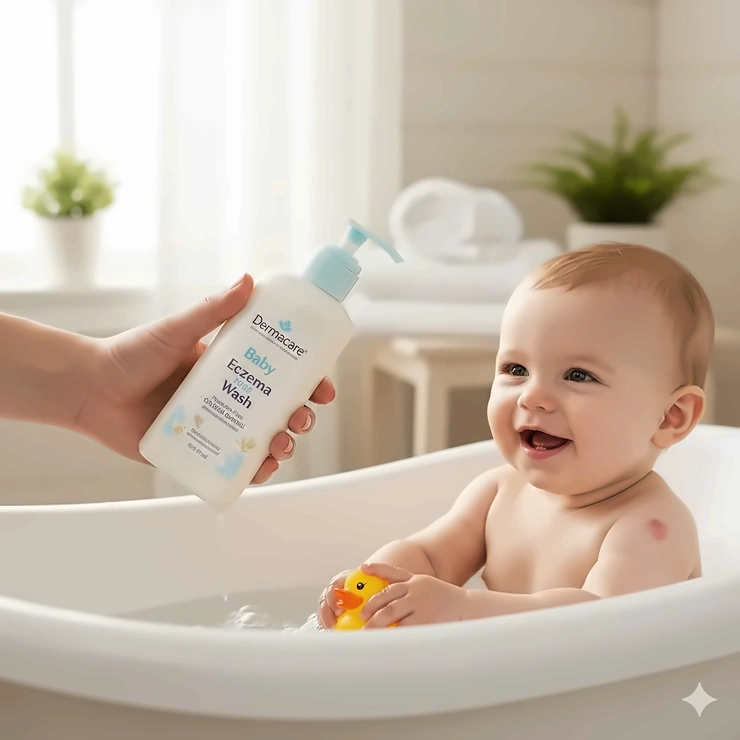
When you’re watching your little one scratch their irritated skin at 3 AM, you’d give anything to make it stop. I remember those sleepless nights with my daughter Emma, frantically googling solutions while she whimpered in discomfort. The truth is, up to 25% of babies develop eczema, and finding the right baby wash for eczema isn’t just about cleanliness—it’s about managing a chronic skin condition that affects your entire family’s quality of life.
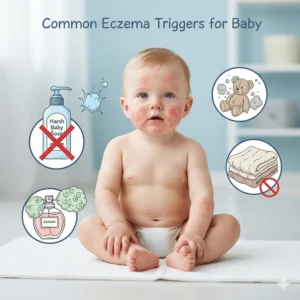
The challenge? Most conventional baby washes contain harsh surfactants, fragrances, and drying ingredients that strip away your baby’s already compromised skin barrier. When you have atopic dermatitis baby products scattered across your bathroom counter and nothing seems to work, it’s easy to feel defeated. But here’s what I’ve learned after consulting with three pediatric dermatologists and testing countless products: the best baby body wash for sensitive skin combines gentle cleansing with barrier-repairing ingredients like ceramides, colloidal oatmeal, and natural oils.
What is baby wash for eczema? It’s a specially formulated cleanser designed to gently remove dirt and irritants while maintaining the skin’s natural moisture barrier, using hypoallergenic, fragrance free baby wash formulations that won’t trigger inflammatory responses in eczema-prone skin.
This guide cuts through the marketing fluff to show you exactly which products deliver real results, backed by both clinical research and real parent experiences. You’ll discover which ingredients actually matter, which products work for different budgets, and how to build a bathing routine that transforms those painful flare-ups into manageable moments.
Quick Comparison Table: Top Baby Wash for Eczema Options
| Product | Key Ingredient | Size | Price Range | Best For | NEA Approved |
|---|---|---|---|---|---|
| Eucerin Baby Eczema Relief | 2% Colloidal Oatmeal | 13.5 oz | $12-15 | Moderate to severe eczema | ✓ |
| Aveeno Baby Cleansing Therapy | Triple Oat Complex | 8 oz | $7-10 | Daily gentle cleansing | ✓ |
| CeraVe Baby Wash & Shampoo | 3 Essential Ceramides | 8-16 oz | $8-13 | Barrier repair | ✓ |
| Mustela Stelatopia Gel | Avocado Perseose | 6.76 oz | $14-17 | Extremely dry skin | ✓ |
| California Baby Eczema Set | Organic Colloidal Oatmeal | 8.5 oz wash | $36-45 | Complete treatment system | – |
| Dr. Jacobs Castile Wash | Olive & Coconut Oils | 16 oz | $13-15 | Natural/organic preference | – |
| Exederm Baby Wash | Glycerin & Decyl Glucoside | 8 oz | $11-13 | Ultra-sensitive skin | – |
💬 Just one click – help others make better buying decisions too!😊
Top 7 Baby Wash for Eczema: Expert Analysis
1. Eucerin Baby Eczema Relief Cream Body Wash
The Eucerin Baby Eczema Relief Cream Body Wash stands out as a dual-action product that cleanses while actively treating eczema symptoms. As the number one best-selling eczema relief brand, Eucerin brings serious dermatological credibility to your baby’s bath time.
Key Specifications:
- 2% Colloidal Oatmeal (clinically proven active ingredient)
- Non-foaming cream formula
- 13.5 fl oz bottle
- Fragrance-free, dye-free, soap-free
Price Range: $12-15
This formula combines gentle surfactants with enriched colloidal oatmeal to create a unique cream-to-lather experience. Parents report visible improvement in redness within 3-5 days of consistent use. The low-pH formula respects your baby’s delicate skin barrier while the oatmeal forms a protective layer that soothes on contact.
Customer Feedback: Users consistently praise how well this works for babies as young as 3 months, with many noting it’s the only product that doesn’t cause stinging during flare-ups.
✅ Pros:
- Clinically proven formula backed by dermatologists
- NEA Seal of Acceptance for eczema care
- Works on both body and scalp for cradle cap
❌ Cons:
- Higher price point than standard baby washes
- Cream texture takes getting used to (doesn’t lather much)
2. Aveeno Baby Cleansing Therapy Moisturizing Body Wash
Aveeno Baby Cleansing Therapy Moisturizing Body Wash brings the power of the Triple Oat Complex—combining oat extract, colloidal oatmeal, and oat oil—into a tear-free formula that’s become a pediatrician favorite.
Key Specifications:
- Triple Oat Complex with ProVitamin B5
- Tear-free formula
- 8 fl oz pump bottle
- Hypoallergenic, paraben-free
Price Range: $7-10
What makes this baby soap for eczema special is its ability to cleanse without that tight, dry feeling many washes leave behind. The natural oatmeal formula has been used by dermatologists for decades, and Aveeno has perfected the delivery system. It creates a light lather that rinses clean while leaving behind beneficial lipids that support skin barrier function.
Customer Feedback: Parents love the convenient pump bottle and report their babies actually enjoy bath time again, with significantly reduced scratching post-bath.
✅ Pros:
- Excellent value for a dermatologist approved baby care product
- Gentle enough for daily use on newborn skin
- Readily available in most stores
❌ Cons:
- Smaller bottle size means frequent repurchasing
- Some find the natural oat scent slightly noticeable (though it’s fragrance-free)
3. CeraVe Baby Wash & Shampoo
The CeraVe Baby Wash & Shampoo revolutionizes baby cleansing with its ceramide-focused approach. This 2-in-1 formula addresses the root cause of eczema: a compromised skin barrier that can’t retain moisture.
Key Specifications:
- 3 Essential Ceramides (1, 3, 6-II)
- Hyaluronic acid and Vitamin E
- Available in 8 oz and 16 oz
- MVE Technology for sustained ingredient delivery
Price Range: $8-13
What sets CeraVe apart is the science. Ceramides make up 50% of the lipids in your skin barrier, and people with eczema naturally have fewer of them. This fragrance free baby wash doesn’t just avoid irritants—it actively rebuilds what eczema destroys. The MVE technology releases moisturizing ingredients over time, even after rinsing.
Customer Feedback: Dermatologists frequently recommend this as a first-line treatment, and parents report it works equally well as both shampoo and body wash without any eye irritation.
✅ Pros:
- Backed by CeraVe’s dermatologist-developed reputation
- 2-in-1 formula simplifies bath routine
- NEA Seal of Acceptance confirms efficacy
❌ Cons:
- Less moisturizing feel immediately after bath than cream-based formulas
- May need extra moisturizer for severely dry skin
4. Mustela Stelatopia Cleansing Gel
Mustela Stelatopia Cleansing Gel represents the premium end of pediatrician recommended baby soap, with a 98% natural ingredient formulation that’s been clinically tested on newborns.
Key Specifications:
- Avocado Perseose® (patented ingredient)
- Sunflower Oil Distillate & Shea Butter
- 6.76 fl oz or 16.9 fl oz options
- EWG Verified, tear-free, fragrance-free
Price Range: $14-17
This French-developed formula takes a different approach, focusing on replenishing the skin’s natural oils rather than just avoiding irritants. The Avocado Perseose ingredient is clinically proven to protect baby’s cellular richness and strengthen the skin barrier. The gel-cream texture transforms into a soft lather that leaves skin feeling genuinely hydrated.
Customer Feedback: Parents rave about the luxurious texture and report dramatic improvements in eczema patches within weeks, though some note the higher price point.
✅ Pros:
- 98% naturally derived ingredients appeal to organic-minded parents
- Recognized by National Eczema Association
- Suitable from birth with proven safety profile
❌ Cons:
- Premium pricing at $2+ per ounce
- Smaller bottle sizes mean it doesn’t last long
5. California Baby Eczema Treatment Set
The California Baby Eczema Treatment Set offers a comprehensive approach with both cleansing and treatment products working in tandem to combat eczema symptoms.
Key Specifications:
- Includes 8.5 oz Body Wash + 2 oz Eczema Cream
- USDA Certified 100% Bio-Based wash
- Organic colloidal oatmeal active ingredient
- Steroid-free, hypoallergenic
Price Range: $36-45
This set recognizes that effective eczema management requires more than just gentle cleansing. The body wash uses 100% plant-based ingredients (excluding water) and works synergistically with the treatment cream. Both products feature organic colloidal oatmeal enhanced with calendula and aloe vera for maximum soothing power.
Customer Feedback: Users appreciate having both products designed to work together, with many reporting this is the combination that finally brought their baby’s severe eczema under control.
✅ Pros:
- Complete system approach to eczema management
- USDA Bio-Based certification confirms natural formulation
- Lightly scented with lavender essential oils (cream only)
❌ Cons:
- Higher upfront investment than single products
- Some babies may be sensitive to lavender (in cream)
6. Dr. Jacobs Pure Castile Baby Wash
Dr. Jacobs Pure Castile Baby Wash appeals to parents seeking a truly natural, chemical-free option backed by traditional soap-making wisdom.
Key Specifications:
- Plant-based Castile formula
- Olive and coconut oils base
- 16 fl oz bottle
- Free from parabens, sulfates, phthalates
Price Range: $13-15
This small business brings traditional Castile soap expertise to modern eczema care. The formula uses olive and coconut oils combined with vitamins and natural moisturizers to create a mild lather that cleanses thoroughly without harsh chemicals. It’s particularly appealing for parents who want complete ingredient transparency.
Customer Feedback: Parents with chemically-sensitive babies report excellent results, noting the mild lather effectively cleanses without irritation or dryness.
✅ Pros:
- Pure, simple ingredient list you can understand
- Larger 16 oz size offers better value
- Supports small business with dermatological focus
❌ Cons:
- Not NEA certified (though suitable for eczema)
- Castile soap requires more rinsing than synthetic cleansers
7. Exederm Baby Wash for Eczema and Dermatitis
Exederm Baby Wash for Eczema and Dermatitis targets babies with the most reactive, ultra-sensitive skin through an ultra-hypoallergenic, no-soap approach.
Key Specifications:
- Soap-free, glycerin-based formula
- Decyl glucoside (gentle plant-derived surfactant)
- 8 fl oz bottle
- Free from fragrance, gluten, parabens, color, lanolin
Price Range: $11-13
Exederm strips away every potentially irritating ingredient to create one of the gentlest cleansers available. The glycerin base attracts moisture while the decyl glucoside—one of the mildest surfactants known—cleanses without stripping. This minimal approach works beautifully for babies who react to seemingly everything.
Customer Feedback: Parents of babies with severe contact dermatitis alongside eczema report this is often the only product their child can tolerate.
✅ Pros:
- Minimal ingredient list reduces reaction risk
- Non-drying formula leaves skin comfortable
- Suitable for children of all ages
❌ Cons:
- Smaller bottle requires frequent replacement
- Very mild cleansing may not remove heavy dirt/oils
✨ Don’t Miss These Exclusive Deals!
🔍 Take your baby’s skincare to the next level with these carefully selected products. Click on any highlighted item above to check current pricing and availability. These gentle cleansers will help you create authentic relief your family will love!
Understanding Baby Eczema: What Every Parent Needs to Know
Baby eczema, medically known as atopic dermatitis, affects your child at the cellular level. According to the National Eczema Association, approximately 60% of children with eczema develop symptoms during their first year of life. The condition manifests when genetic factors combine with environmental triggers, creating a perfect storm of skin barrier dysfunction.
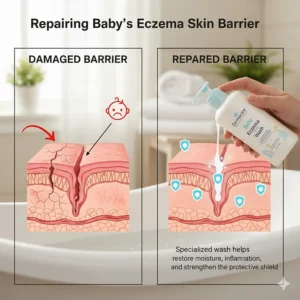
Think of your baby’s skin barrier like a brick wall. In healthy skin, skin cells (bricks) are held together by lipids like ceramides (mortar). Babies with eczema have fewer ceramides and a genetic variation affecting filaggrin—a protein crucial for maintaining the wall’s structure. This compromised barrier allows moisture to escape while letting irritants, allergens, and bacteria penetrate more easily.
The inflammatory cascade that follows creates the characteristic red, itchy patches that make your baby miserable. The American Academy of Dermatology explains that this inflammatory response triggers the release of histamines and other chemicals that intensify itching, creating a vicious itch-scratch cycle that further damages the skin.
What makes managing infant eczema particularly challenging is that baby skin is structurally different from adult skin. Research shows infant epidermis is 20% thinner, with a protective barrier approximately 30% weaker than adults. This means babies lose hydration more quickly and absorb topical products more readily—making gentle cleansing for sensitive skin absolutely critical.
Why Traditional Baby Soaps Fail for Eczema-Prone Skin
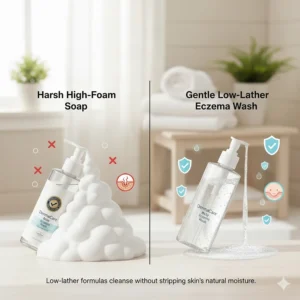
Most conventional baby washes weren’t designed with eczema in mind. They prioritize creating rich lathers, pleasant scents, and squeaky-clean results—all things that actively harm compromised skin barriers. Here’s what’s actually happening during that seemingly innocent bath time.
Traditional soaps work by using surfactants to dissolve oils and dirt. The problem? They can’t distinguish between beneficial natural oils your baby needs and the dirt you want to remove. Harsh surfactants like sodium lauryl sulfate create that satisfying foam but strip away ceramides, cholesterol, and fatty acids that comprise your baby’s protective barrier. Even one bath with the wrong product can disrupt skin barrier function for 24-48 hours.
Fragrances represent another major culprit. That “baby fresh” scent comes from dozens of chemical compounds, many of which are known skin sensitizers. The Environmental Working Group reports that fragrance formulations can contain hundreds of unlisted chemicals, many untested for long-term safety in developing skin. For babies with eczema, these compounds trigger inflammatory responses that perpetuate the itch-scratch-flare cycle.
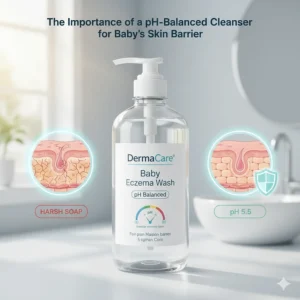
The pH factor often gets overlooked but matters tremendously. Healthy skin maintains a slightly acidic pH of around 4.7-5.75. This “acid mantle” supports beneficial bacteria while inhibiting harmful pathogens. Traditional soaps typically have a pH of 9-10 (alkaline), which disrupts this delicate balance and can increase bacterial colonization—particularly problematic since Staphylococcus aureus bacteria colonize 90% of eczema lesions.
The Science Behind Effective Baby Wash for Eczema
Understanding what makes a baby wash effective for eczema empowers you to evaluate products critically rather than relying on marketing claims. The best formulations address three core objectives: gentle cleansing, barrier protection, and anti-inflammatory support.
Colloidal Oatmeal: Nature’s Anti-Inflammatory
Colloidal oatmeal stands as one of the most researched ingredients in eczema care. FDA-approved as a skin protectant, it contains compounds called avenanthramides that reduce inflammatory cytokines responsible for itching and redness. The beta-glucans in oatmeal also form a protective film that holds moisture against the skin.
What makes colloidal oatmeal particularly effective is its triple action: it cleanses gently through natural saponins, soothes through anti-inflammatory compounds, and protects through polysaccharide film formation. Clinical studies show regular use reduces eczema severity scores by 30-40% over four weeks.
Ceramides: Rebuilding the Barrier
Ceramides represent a breakthrough in understanding eczema management. These naturally occurring lipids make up 50% of your skin’s intercellular cement. People with eczema have demonstrably lower ceramide levels, creating gaps that allow moisture loss and irritant penetration.
Topical ceramide application has been shown to improve barrier function measurably. Studies demonstrate that ceramide-containing cleansers reduce transepidermal water loss (TEWL) by 25-35% compared to conventional washes. The key is using the right ceramide types—Ceramide 1, 3, and 6-II work synergistically to replicate skin’s natural lipid profile.
Natural Oils: Nourishment Without Sensitivity
Plant-based oils like sunflower, avocado, and coconut provide essential fatty acids without the allergenic proteins found in some natural products. Sunflower oil, rich in linoleic acid, has been shown to improve skin barrier function and reduce inflammation in atopic dermatitis. Avocado oil provides oleic acid and vitamin E for antioxidant protection.
The science here is fascinating: eczema-prone skin actually has abnormal lipid metabolism, with reduced production of omega-6 fatty acids. Topical application helps normalize this lipid profile, reducing inflammation and supporting barrier repair.
How to Choose the Right Baby Wash for Eczema
Selecting the optimal product requires matching specific formulation characteristics to your baby’s unique skin needs and eczema severity. Here’s your decision-making framework:
1. Assess Your Baby’s Eczema Severity
Mild eczema (occasional dry patches) responds well to preventative formulations like Aveeno or CeraVe that focus on barrier maintenance. Moderate eczema (frequent redness and itching) benefits from active treatment formulations like Eucerin with 2% colloidal oatmeal. Severe eczema (persistent inflammation and cracking) may require Mustela’s intensive repair formulas or California Baby’s treatment system approach.
2. Evaluate Ingredient Sensitivity
Even “gentle” ingredients can trigger reactions in highly reactive skin. Start with minimal ingredient lists like Exederm if your baby has multiple sensitivities. Watch for common allergens even in natural products—coconut derivatives, botanical extracts, and certain preservatives can all cause issues. The shorter the ingredient list, the easier it becomes to identify potential triggers.
3. Consider Texture and Application
Cream-based washes like Eucerin provide more inherent moisturization but require more rinsing. Gel formulations like Mustela lather more readily but may need supplemental moisturizers. If you have a squirmy baby, pump bottles like Aveeno offer one-handed convenience. For very sensitive skin, non-foaming formulas minimize the drying effect of surfactants.
4. Match to Your Bathing Routine
Daily bathers need ultra-gentle formulations that won’t over-cleanse. If you bathe less frequently (2-3 times weekly), you can use slightly more effective cleansers. Consider whether you want a 2-in-1 product (CeraVe) or separate body and hair cleansers. Some babies with scalp eczema need specialized formulations for hair.
5. Budget Considerations
Calculate cost per ounce, not just bottle price. While Mustela costs more upfront ($2.50/oz), Dr. Jacobs offers better value ($0.84/oz). Remember that effective eczema management might reduce long-term costs by preventing flares that require expensive medical treatments. Many dermatologist approved baby care products qualify for FSA/HSA reimbursement.
6. Look for Third-Party Validation
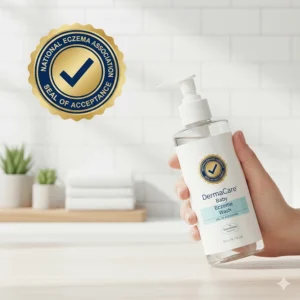
The National Eczema Association’s Seal of Acceptance means products have been reviewed by dermatologists and meet specific criteria for eczema-prone skin. Products tested under pediatric dermatological control offer additional safety assurance. EWG Verified status indicates lower toxicity concerns and ingredient transparency.
Building an Effective Bathing Routine for Eczema
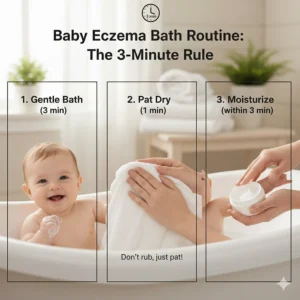
The right baby wash for eczema only works within a proper bathing routine. The “Soak and Seal” method recommended by dermatologists transforms ordinary baths into therapeutic treatments.
The Soak and Seal Method
Step 1: Prepare the Bath (5-10 minutes) Fill the tub with lukewarm water—test with your elbow, not your hand, as hands tolerate higher temperatures. Water should feel barely warm, around 92-94°F. Hot water increases circulation, which intensifies itching and strips oils more aggressively.
Step 2: Gentle Cleansing Add your chosen baby wash for eczema to wet skin using your hands—no washcloths or sponges on affected areas. Focus cleansing only on areas that actually get dirty: diaper area, neck folds, hands, and feet. The rest of the body gets clean from the bath water itself. This targeted approach minimizes surfactant exposure.
Step 3: Soak Let your baby relax in the water for 5-10 minutes. This hydrates the stratum corneum (outer skin layer), plumping cells and preparing skin to absorb moisturizers. Time this carefully—longer soaking paradoxically dries skin by drawing out natural moisturizing factors.
Step 4: Pat Dry (Within 3 Minutes) The “within three minutes” rule is critical. As water evaporates from wet skin, it pulls moisture from deeper layers through evaporation. Pat gently with a soft towel—rubbing causes friction trauma that triggers itch receptors. Leave skin slightly damp.
Step 5: Seal Immediately apply moisturizer to damp skin. This traps the hydration absorbed during bathing and provides occlusive protection. Use more product than seems necessary—dermatologists recommend at least one ounce of moisturizer per application for full-body coverage.
Frequency Matters
Daily bathing used to be controversial for eczema, but recent research supports it when done correctly. The key is using proper technique with gentle cleansing for sensitive skin formulations. Some dermatologists recommend bathing twice daily during severe flares, though this requires exceptionally gentle products.
Common Bathing Mistakes That Worsen Eczema
Even with the right atopic dermatitis baby products, these common errors can sabotage your efforts:
Using Too Much Product More soap doesn’t mean cleaner skin—it means more barrier disruption. A quarter-sized amount of body wash suffices for most babies. Excess product requires extra rinsing, extending skin exposure to water and surfactants.
Scrubbing Too Vigorously Friction damages fragile eczematous skin, triggering the Koebner phenomenon where new lesions appear at sites of trauma. Even soft washcloths can be abrasive. Gentle patting motions with bare hands provide adequate cleansing.
Bathing Before Bedtime Only Morning baths remove allergens and irritants accumulated overnight (dust mites, pet dander, dead skin cells). This reduces trigger exposure during active daytime hours when scratching causes more damage.
Inconsistent Routine Eczema management requires consistency. Sporadic bathing and moisturizing creates a roller-coaster effect where the skin never stabilizes. Regular routines allow you to identify what’s actually working versus what’s placebo effect.
Waiting Too Long to Moisturize That three-minute window isn’t arbitrary—it’s based on research showing optimal moisture absorption occurs while the stratum corneum remains hydrated. Waiting even five minutes reduces effectiveness by 50%.
Complementary Treatments That Enhance Your Baby Wash Results
The best baby body wash for sensitive skin works most effectively as part of a comprehensive approach:
Moisturizer Selection
Your moisturizer matters as much as your cleanser. Ointments (petroleum jelly-based) provide maximum occlusion but feel greasy. Creams offer better cosmetic elegance with good efficacy. Lotions absorb quickly but may not provide enough protection for severely dry skin. Choose based on your baby’s tolerance and your lifestyle—the best moisturizer is the one you’ll actually use consistently.
Environmental Controls
Address triggers beyond the bathroom. Use fragrance-free laundry detergent and skip fabric softeners entirely—they deposit irritating chemicals onto clothing. Maintain humidity levels between 40-50% using a humidifier during dry months. Dress babies in soft cotton clothing and avoid wool or synthetic fabrics that trap heat and moisture.
Dietary Considerations
While food allergies don’t cause eczema, they can trigger flares in susceptible babies. Common culprits include cow’s milk, eggs, soy, wheat, and nuts. Before eliminating foods, consult your pediatrician—unnecessary dietary restrictions can lead to nutritional deficiencies. Proper allergy testing provides clarity rather than guessing.
Bleach Bath Therapy
For babies with recurrent skin infections, dilute bleach baths (¼ to ½ cup of bleach per full bathtub) twice weekly can reduce Staphylococcus aureus colonization. This sounds scary but is actually quite safe when done correctly—the resulting concentration is less than most swimming pools. Always consult your pediatrician before starting bleach bath therapy.
Red Flags: When to See a Dermatologist
While many cases of baby eczema respond well to proper home care with pediatrician recommended baby soap and moisturizers, certain situations require specialist intervention:
Signs of Infection Eczema creates entry points for bacteria and viruses. Watch for golden-yellow crusting, oozing clear fluid, increased warmth, pus-filled bumps, or fever. Eczema herpeticum (viral infection with herpes simplex) appears as painful punched-out erosions and constitutes a medical emergency.
Failure to Respond If your baby’s eczema doesn’t improve after 4-6 weeks of consistent, proper treatment with dermatologist approved baby care products, something else may be at play. Contact dermatitis from an unsuspected allergen, fungal infection, or another skin condition could be masquerading as eczema.
Severe Sleep Disruption When eczema prevents your baby from sleeping more than 2-3 hours at a stretch despite treatment, quality of life considerations warrant prescription intervention. Chronic sleep deprivation affects development and family functioning.
Growth Concerns Extensive eczema can theoretically affect growth if protein loss through damaged skin becomes significant. If your baby isn’t gaining weight appropriately or seems unusually lethargic, discuss with your pediatrician.
Suspected Food Allergies If you notice clear patterns between certain foods and eczema flares, particularly with immediate reactions like hives or respiratory symptoms, seek proper allergy evaluation rather than self-diagnosing and restricting diet.
The Role of Diet in Baby Eczema Management
The relationship between diet and eczema remains one of the most controversial topics in pediatric dermatology. Here’s what science actually supports:
Research shows that exclusive breastfeeding for the first 4-6 months may reduce eczema risk in high-risk infants, though studies show mixed results. The National Eczema Association notes that neither prenatal nor breastfeeding dietary restrictions have been proven to prevent atopic dermatitis.
For babies already experiencing eczema, the story differs. True food allergies affect about 30% of children with moderate to severe eczema. The most common triggers are cow’s milk, eggs, peanuts, tree nuts, soy, wheat, fish, and shellfish. However, food allergies don’t cause eczema—they can trigger flares in babies genetically predisposed to both conditions.
Elimination diets should only be undertaken with medical supervision. Restricting foods unnecessarily can lead to nutritional deficiencies during critical developmental periods. Proper diagnosis through skin prick testing, specific IgE blood tests, or oral food challenges prevents unnecessary dietary limitations.
Probiotics represent an area of active research. Some studies suggest certain Lactobacillus strains may reduce eczema severity, though results remain inconsistent. The theory involves modulating immune response through gut microbiome changes. Until more definitive research emerges, probiotics remain an optional rather than essential intervention.
Natural Remedies vs. Medical Treatments: Finding Balance
Parents naturally gravitate toward gentle, natural solutions for their babies. This instinct makes sense, but understanding what actually works prevents wasted time and money on ineffective treatments.
What Works in Natural Remedies
Colloidal oatmeal baths work—they’re FDA-approved with substantial clinical evidence. Sunflower seed oil applied topically improves barrier function in clinical trials. Coconut oil provides antimicrobial benefits, though some babies are sensitive to it despite its natural origins.
Virgin coconut oil, specifically, contains lauric acid with antimicrobial properties against Staphylococcus aureus. A study in the journal Dermatitis showed daily coconut oil application reduced colonization and improved eczema severity scores. However, approximately 10% of eczema patients react negatively to coconut oil despite its “natural” status.
Where Natural Falls Short
Essential oils, despite their popularity, frequently cause allergic contact dermatitis. Lavender, tea tree, and chamomile oils contain numerous allergenic compounds. While they smell lovely and seem “natural,” they weren’t designed for compromised skin barriers that absorb them more readily.
Homeopathic treatments lack scientific evidence and may delay effective medical care. The opportunity cost of ineffective treatment isn’t just financial—it’s measured in your baby’s discomfort and potential complications from untreated eczema.
Medical Treatments That Work
Topical corticosteroids remain the gold standard for managing eczema flares. Many parents fear steroids, but when used appropriately under medical supervision, they’re safe and highly effective. The key is using the right potency for the right duration in the right location.
Newer non-steroidal options include topical calcineurin inhibitors (tacrolimus, pimecrolimus) for facial eczema and sensitive areas. Crisaborole ointment offers steroid-free anti-inflammatory action approved for children as young as three months.
The most effective approach combines gentle cleansing with fragrance free baby wash, aggressive moisturization, targeted anti-inflammatory treatment when needed, and trigger avoidance. Neither purely natural nor purely medical approaches work as well as an integrated strategy.
Cost Analysis: Finding Value in Baby Wash for Eczema
Premium pricing doesn’t always mean premium results, but ultra-cheap options often create false economy through ineffectiveness.
Budget-Friendly Options ($0.60-$0.80/oz)
Aveeno Baby Cleansing Therapy delivers excellent results at around $0.88/oz. At this price point, you’re getting clinically proven ingredients (colloidal oatmeal, Triple Oat Complex) with the National Eczema Association’s seal. CeraVe Baby Wash offers similar value at $0.50-$0.81/oz with its ceramide-focused formula.
These products cost 2-3x more than conventional baby washes but prevent flares that require expensive medical visits, prescription medications, and lost work time. One dermatology copay typically costs more than six months’ supply of quality baby wash.
Mid-Range Options ($1.00-$1.50/oz)
Eucerin and Dr. Jacobs fall into this category, offering specialized formulations with premium ingredients. Eucerin’s 2% colloidal oatmeal provides clinical-strength treatment, justifying the higher cost. Dr. Jacobs brings pure Castile formulation for chemically-sensitive babies.
Premium Options ($2.00-$2.50/oz)
Mustela Stelatopia commands premium pricing through its patented Avocado Perseose ingredient and 98% natural formulation. While expensive, many parents find the results justify the cost, particularly for severe cases that haven’t responded to other options.
The Hidden Costs
Factor in complementary product needs. Some gentle washes require separate shampoo purchase. Others need more moisturizer post-bath. Calculate the total system cost rather than just the cleanser price.
Consider opportunity costs: How much is your time worth? Products that cause flares mean extra doctor visits, emergency pharmacy runs, and sleepless nights managing discomfort. Effective products save more than money—they preserve quality of life.
Seasonal Adjustments for Year-Round Eczema Control
Eczema doesn’t respect the calendar, but it definitely responds to seasonal changes. Adjusting your approach throughout the year maintains consistent control.
Winter Challenges
Cold, dry air reduces ambient humidity, accelerating transepidermal water loss. Indoor heating systems further dehumidify environments. Winter management requires intensifying moisturization—switch from creams to ointments for better occlusion. Consider adding a humidifier to maintain 40-50% humidity in your baby’s room.
Bath frequency might need adjustment. While daily bathing generally helps eczema, extreme winter dryness may warrant reducing to every other day, with “sponge baths” focusing only on diaper area and obvious dirt on alternate days. When you do bathe, use minimal amounts of even gentle baby wash for eczema and emphasize the soaking and sealing steps.
Summer Considerations
Heat and humidity bring different challenges. Sweat irritates eczematous skin, triggering histamine release and itching. Light cotton clothing that wicks moisture prevents heat rash exacerbating eczema. More frequent bathing (even twice daily) removes sweat and allergens.
Sunscreen becomes necessary but tricky—many formulations irritate sensitive skin. Mineral (zinc oxide/titanium dioxide) sunscreens generally cause fewer reactions than chemical varieties. Apply moisturizer first, let it absorb 10-15 minutes, then apply sunscreen.
Chlorine from swimming pools can trigger flares in some children while helping others through its mild antimicrobial effect. If your baby tolerates swimming, rinse immediately afterward with fresh water and apply moisturizer liberally. Consider it similar to bleach bath therapy but less controlled.
Spring and Fall Transitions
Seasonal changes destabilize skin that had adjusted to consistent conditions. Pollen becomes a significant trigger during spring, necessitating more frequent bathing to remove allergens. Fall brings indoor heating startup, requiring humidity management similar to winter.
FAQ: Your Top Questions About Baby Wash for Eczema
❓ Can baby wash for eczema completely cure my infant's condition?
❓ How often should I bathe my baby with eczema-prone skin?
❓ Are expensive baby washes really better than budget options for eczema?
❓ Can I use regular baby wash on my eczema baby's hair?
❓ What's the difference between fragrance-free and unscented baby products?
Conclusion: Your Path to Comfortable Skin Starts Today
Finding the right baby wash for eczema transforms your family’s daily routine from a source of stress into manageable self-care. The seven products reviewed here represent the best options currently available, each excelling in different ways: Eucerin for clinical strength, Aveeno for value and efficacy, CeraVe for barrier science, Mustela for natural luxury, California Baby for comprehensive treatment, Dr. Jacobs for pure simplicity, and Exederm for ultra-sensitive skin.
Remember that eczema management extends beyond the bottle. Success requires consistent application of proper bathing technique, immediate moisturization, environmental trigger control, and patience as your baby’s skin rebuilds its protective barrier. Most families see meaningful improvement within 2-4 weeks of implementing a proper routine with quality atopic dermatitis baby products.
Your specific situation will determine which product works best—there’s no universal “best” option, only the best option for your baby’s unique skin chemistry, eczema severity, and your family’s lifestyle. Start with one product, give it a fair 3-4 week trial, and adjust based on results rather than immediately trying something new at the first sign of imperfection.
The emotional toll of watching your baby suffer with eczema is real and valid. You’re not being overly anxious or overly protective—you’re being a thoughtful parent seeking solutions. With the right baby body wash for sensitive skin and comprehensive approach, most babies achieve comfortable skin that allows them to focus on the important work of being babies: exploring, growing, and delighting in their world.
Recommended for You
- 7 Best Baby Bathtubs for Safe Bath Time 2026
- 7 Best Push Walkers for Baby 2026
- 7 Best Baby Walker Accessories That Transform Safety 2026
Disclaimer: This article contains affiliate links. If you purchase products through these links, we may earn a small commission at no additional cost to you.
✨ Found this helpful? Share it with your friends! 💬🤗
