
In This Article
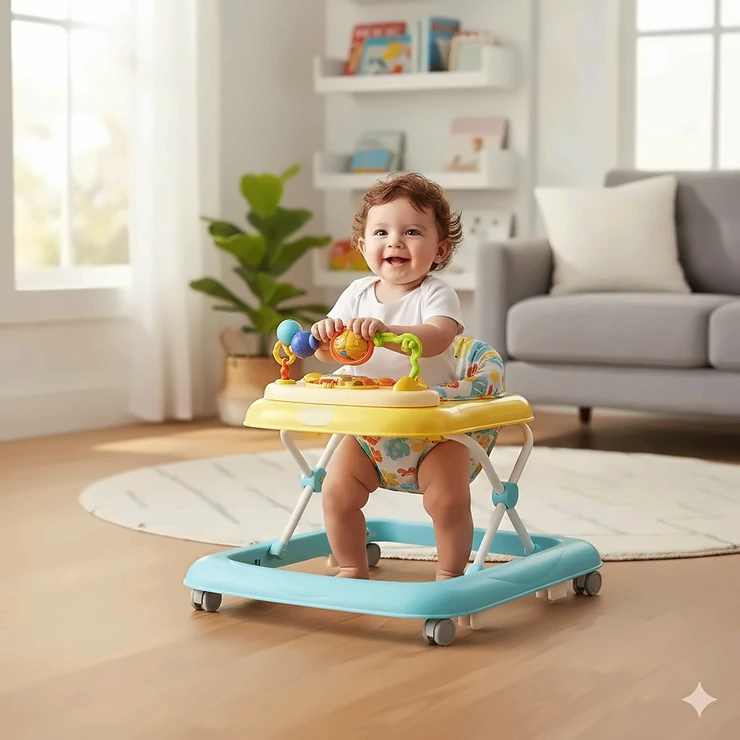
When your little one hits that six-month milestone, you’re probably noticing new signs of curiosity and mobility. Maybe they’re sitting up on their own, reaching for everything in sight, or showing those adorable attempts at scooting. Naturally, you start wondering about tools that might support their development—and that’s where baby walker for 6 month old options enter the picture.
Here’s what most parents don’t realize right away: not all walkers are created equal, and timing matters more than you think. A baby walker for 6 month old should prioritize safety above speed, offering age-appropriate walker support that matches your infant’s developmental stage. Traditional seated walkers with wheels have raised serious safety concerns among pediatricians, while push walkers and stationary activity centers present safer alternatives for babies learning to walk.
The right walker for babies learning to walk serves as more than just entertainment. It’s a beginner mobility device that can encourage muscle development, balance, and confidence—when used correctly. This comprehensive guide examines seven carefully selected products, diving deep into what makes a safe walker for young infants, how to choose age-appropriate walker options, and what features provide genuine developmental milestone support. Whether you’re looking for an early walker solution or a stationary activity center, we’ll help you make an informed decision that keeps your baby both safe and engaged.
Quick Comparison Table
| Product Name | Type | Age Range | Key Features | Price Range | Safety Rating |
|---|---|---|---|---|---|
| BABY JOY 6-in-1 Walker | Multi-function | 6-14 months | 6 modes, anti-slip pads, ASTM certified | $70-90 | ⭐⭐⭐⭐ |
| Fisher-Price Puppy Walker | Push walker | 6+ months | Smart Stages, 75+ songs, stable base | $40-50 | ⭐⭐⭐⭐⭐ |
| Bright Starts JuneBerry | Seated walker | 6+ months | Electronic toys, 3 heights, foldable | $50-65 | ⭐⭐⭐ |
| INFANS 6-in-1 Walker | Convertible | 7-18 months | Trolley mode, anti-tip design, canopy | $85-100 | ⭐⭐⭐⭐ |
| Fisher-Price Panda Walker | 2-sided push | 6+ months | Steady Speed wheels, 100+ songs | $55-70 | ⭐⭐⭐⭐⭐ |
| Boyro Baby 5-in-1 | Multi-mode | 6-12 months | Bouncer combo, adjustable height | $65-80 | ⭐⭐⭐⭐ |
| Bautia Wooden Walker | Push walker | 6-12 months | Montessori design, activity panel | $45-60 | ⭐⭐⭐⭐⭐ |
💬 Just one click – help others make better buying decisions too!😊
Top 7 Baby Walkers for 6 Month Old: Expert Analysis
1. BABY JOY 6-in-1 Baby Walker
When versatility meets safety, you get the BABY JOY 6-in-1. This multi-functional powerhouse transforms through six different modes: traditional walker, rocker, bouncer, walk-behind push walker, feeding tray, and puzzle mode. For parents seeking a baby walker for early walkers that grows with their child, this option delivers exceptional value.
The ASTM and CPSIA certifications aren’t just badges—they represent real safety features. Six anti-slip pads act as auxiliary brakes, eliminating the terrifying possibility of stair falls. The speed-reduction rear wheels ensure your baby can’t suddenly zoom off at dangerous speeds. Parents love the three-level height adjustment system that adapts as baby grows from 6 to 14 months.
The interactive activity center includes rotary balls, lights, a steering wheel, horn, and instrument panel. When mealtime arrives, simply remove the music box to reveal a practical feeding tray. The 95° ergonomic backrest provides optimal spine support, while the breathable, machine-washable cushion makes cleanup effortless.
Price: $70-90
Customer Feedback: Parents appreciate the versatility, though some note assembly requires patience. The anti-slip pads receive consistent praise for effectiveness.
✅ Pros:
- Six versatile modes from infancy through toddlerhood
- ASTM certified with comprehensive safety features
- Foldable design for easy storage
❌ Cons:
- Higher price point than basic models
- Music box requires 3 AA batteries (not included)
2. Fisher-Price Laugh & Learn Smart Stages Puppy Walker
The Fisher-Price Smart Stages Puppy Walker revolutionizes the push walker category with its developmental approach. Designed for babies 6 months and up, this isn’t just a walker for babies learning to walk—it’s a comprehensive learning system disguised as an adorable puppy.
With over 75 songs, sounds, tunes, and phrases, this push walker grows with your child through three Smart Stages levels. Level 1 (6+ months) introduces basic concepts through sitting play. Level 2 encourages standing and cruising. Level 3 supports independent walking with educational content about the alphabet, numbers, colors, and shapes.
The stable four-wheel base and easy-grasp handle transform wobbly first steps into confident strides. Seven hands-on activities keep pre-walkers engaged: flip-board pages, spinning rollers, light-up buttons, and more. Unlike seated walkers, this push design encourages proper posture and muscle development.
Price: $40-50
Customer Feedback: Over 14,900 reviews averaging 4.7 stars. Parents consistently mention it’s one of their baby’s favorite toys and actually helps with walking development.
✅ Pros:
- Encourages natural walking progression with proper posture
- Educational content adapts to developmental stages
- Extremely stable design prevents tipping
❌ Cons:
- Requires 2 AA batteries
- Some parents wish speed control was available
3. Bright Starts JuneBerry Walk-A-Bout Baby Walker
For families preferring traditional seated walkers, the Bright Starts JuneBerry offers a safer take on the classic design. Suitable for babies 6 months and up (sitting independently, up to 26 pounds), it features a removable electronic toy station with lights, melodies, and sounds.
The high seat back provides crucial comfort and support for younger babies still developing trunk stability. Three height positions ensure proper foot placement as your baby grows. The steering wheel activates lights and sounds, while volume control lets you adjust from off to low to high—a feature exhausted parents deeply appreciate.
The easy-fold frame makes storage and travel remarkably simple. When you need to move from room to room or pack for grandma’s house, this walker folds flat in seconds. The seat pad removes for machine washing, addressing the inevitable spills and messes.
Price: $50-65
Customer Feedback: Parents praise the entertainment value and ease of cleaning. Some note it works best on hard floors rather than carpet.
✅ Pros:
- Removable toy station for floor play
- Compact fold for storage
- Adjustable volume control
❌ Cons:
- Traditional seated walker design has inherent safety concerns
- Works better on hard surfaces
4. INFANS 6-in-1 Foldable Baby Walker
The INFANS 6-in-1 takes the concept of adaptability seriously. This convertible walker transforms into a trolley, rocking horse, bouncer, push car, and feeding chair—six modes that support development from 7 to 18 months. While slightly older than our target 6-month age, advanced babies who can sit independently might use it with supervision.
Safety engineering shines through the enlarged base design, seven non-slip pads, and 2-inch all-around protective gap that prevents finger pinching. The anti-tip construction addresses one of the most critical safety concerns in baby walkers. Two lockable rear wheels give you control: unlock for assisted walking practice, lock for bouncing or rocking.
The detachable play panel entertains with a steering wheel, lights, and music. When removed, it converts to a feeding chair—perfect for mealtime or quiet play. The included canopy provides shade for outdoor use, a thoughtful touch rarely seen in baby walkers.
Price: $85-100
Customer Feedback: Parents love the outdoor capability and multiple modes. The higher price reflects the premium features and extended usability.
✅ Pros:
- Outdoor canopy for protected playtime
- Superior anti-tip engineering
- Grows with baby through multiple developmental stages
❌ Cons:
- Recommended for 7+ months (may be too advanced for younger 6-month-olds)
- Premium pricing
5. Fisher-Price 2-Sided Steady Speed Panda Walker
Innovation meets safety in the Fisher-Price Panda Walker. This Amazon Exclusive push walker features a game-changing detail: you can walk from either side. The Steady Speed wheels maintain a slower pace specifically designed for beginner walkers, preventing the frightening speed surges common in standard walkers.
Three Smart Stages learning levels deliver 100+ songs, sounds, and phrases teaching the alphabet, counting, and opposites. Both sides feature engaging activities—one side has a friendly panda steering wheel with light-up nose, while the other offers ABC/123 buttons, shape blocks, and more. This two-sided approach means siblings or friends can play simultaneously.
The sturdy frame supports pulling up and taking those crucial first steps. Unlike seated walkers that can delay development, push walkers like this one encourage natural movement patterns and muscle strengthening. The frame supports babies from 6 months through 3 years as they progress from sitting play to confident walking.
Price: $55-70
Customer Feedback: With 2,602 reviews and a 4.8-star rating, parents rave about the speed control and durability. Many report it lasts through multiple children.
✅ Pros:
- Unique 2-sided design for versatile play
- Steady Speed wheels prevent dangerous acceleration
- Extensive educational content grows with baby
❌ Cons:
- Requires 3 AA batteries
- Larger footprint than some walkers
6. Boyro Baby 5-in-1 Baby Walker
The Boyro Baby 5-in-1 combines walker, bouncer, rocker, push walker, and feeding modes into one affordable package. Designed for babies 6-12 months, it addresses multiple developmental needs without requiring separate products for each stage.
Safety features include a triangular design with enlarged chassis for enhanced stability. Six separate cushion pads prevent slipping on stairs—a critical safety element. Three adjustable height positions ensure your baby’s feet touch the ground properly, promoting healthy leg development.
The music and toy combination stimulates sensory development. The toy shelf cultivates hand-eye coordination and strengthens grasp ability. Parents appreciate that the breathable seat cover keeps babies comfortable during extended play sessions.
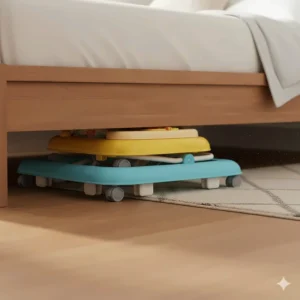
The foldable design stores under beds or sofas, making it ideal for apartments or smaller homes. Assembly requires no tools—just a few simple steps transform it from compact storage to ready-for-play mode.
Price: $65-80
Customer Feedback: Budget-conscious parents praise the value-for-money ratio. The bouncer mode particularly delights babies and gives parents a break.
✅ Pros:
- Affordable multi-mode functionality
- Tool-free assembly
- Compact storage when folded
❌ Cons:
- Cushion quality varies
- Music options more limited than premium models
7. Bautia Wooden Baby Walker
For parents embracing Montessori principles, the Bautia Wooden Walker offers a refreshing alternative to plastic, battery-powered options. This push walker features natural wood construction with smooth edges and sturdy design ensuring safety for babies 6-12 months learning to walk.
The detachable double-sided busy board transforms this from simple walker to comprehensive activity center. One side features interactive elements like a letter wheel, xylophone, flip board, and tracking games. This variety works on hand-eye coordination and cognitive skills while enriching playtime.
The rubber wheels operate silently while protecting floors from scratches—a detail apartment dwellers especially appreciate. The walker’s weight and design provide stability without excessive heft, supporting babies taking first steps without risk of tipping.
Unlike electronic walkers requiring constant battery replacements, this eco-friendly option relies on classic developmental toys that never need charging. The natural aesthetic also photographs beautifully—a bonus for parents documenting milestones.
Price: $45-60
Customer Feedback: Parents value the screen-free play and classic design. Grandparents particularly appreciate the nostalgic, quality construction.
✅ Pros:
- Eco-friendly natural wood construction
- Silent rubber wheels protect floors
- No batteries required
❌ Cons:
- Lacks electronic entertainment features
- May be less exciting for screen-accustomed babies
Understanding Developmental Milestones for 6-Month-Olds
At six months, babies undergo remarkable transformations. Most can sit with minimal support, transfer objects between hands, and show intense curiosity about their environment. They’re not walking yet—in fact, most won’t take independent steps until 12-15 months. This developmental reality is crucial when considering a baby walker for 6 month old.
According to the Centers for Disease Control and Prevention, motor skill development follows a predictable pattern: rolling, sitting, crawling, pulling to stand, cruising, then walking. Each stage builds essential muscle strength and coordination for the next. When parents introduce mobility devices too early or choose inappropriate types, they risk disrupting this natural progression.
The American Academy of Pediatrics has extensively studied infant walkers and their impact on development. Their research reveals that traditional seated walkers don’t accelerate walking—they may actually delay it by reducing opportunities for floor-based movement that builds crucial muscles. Push walkers, stationary activity centers, and proper floor time support natural development far more effectively.
Understanding these milestones helps you recognize which walker features align with age-appropriate expectations. A 6-month-old needs support for sitting play and early standing practice, not devices encouraging premature walking attempts.
Safety Considerations: What the AAP Says About Baby Walkers
The statistics are sobering. Between 1990 and 2014, an estimated 230,676 children under 15 months were treated in U.S. emergency departments for infant walker-related injuries, according to research published in Pediatrics. Most injuries involved head and neck trauma (90.6%), with 74.1% resulting from falls down stairs while in a walker.
The American Academy of Pediatrics has called for a complete ban on the manufacture and sale of mobile infant walkers. They cite the following dangers:
Primary Safety Risks
Stair Falls: Even with safety gates, babies in walkers can tumble down stairs. A child in a walker moves faster than 3 feet per second—faster than most adults can react. The 2010 federal safety standard requires walkers to be wider than 36-inch doorways or have braking mechanisms, but injuries persist.
Burn Hazards: Walkers let babies reach higher. Suddenly, hot coffee on tables, stove handles, and radiators become accessible. Burn injuries from walker use remain a significant concern.
Drowning Risk: Mobility means a baby in a walker can quickly reach pools, bathtubs, or toilets—all drowning hazards. This increased range happens faster than caregivers can intervene.
Poisoning Access: Higher reach means medicines, cleaning products, and other toxins previously out of reach become dangerous possibilities.
Canada banned baby walkers entirely in 2004 under the Canada Consumer Product Safety Act. Experts in Europe, Australia, and New Zealand have similarly called for bans, recognizing that supervision alone cannot prevent walker injuries.
Safer Alternatives
The AAP recommends these safer options for developmental support:
Stationary Activity Centers: These look like walkers but have no wheels. Seats rotate, tip, and bounce while the base stays put, eliminating fall and collision risks.
Play Yards: Safe zones for practicing sitting, crawling, and pulling to stand without danger.
Push Walkers: When babies can pull to standing independently (usually 9-10 months), push walkers support cruising without the hazards of seated walkers.
If you choose to use any walker, constant supervision is mandatory—though AAP emphasizes even supervision cannot prevent all walker-related injuries.
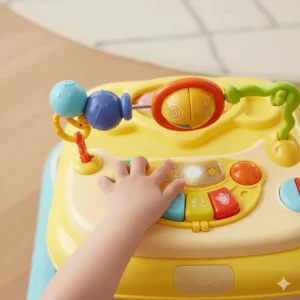
How to Choose the Right Baby Walker for Your 6-Month-Old
Selecting a safe walker for young infants requires evaluating multiple factors beyond marketing claims and cute designs. Let’s break down the essential decision criteria:
Age and Developmental Appropriateness
Your baby’s abilities matter more than their age. A baby walker for 6 month old should match your child’s current skills, not their chronological age. Can they sit independently without support? Are they showing interest in standing? Have they started pulling up on furniture?
For true 6-month-olds who primarily sit and play, stationary activity centers provide entertainment without mobility risks. As babies approach 9-10 months and pull to standing consistently, push walkers become appropriate. Traditional seated walkers aren’t recommended at any age by pediatric safety experts.
Safety Certifications and Features
ASTM Certification: Look for walkers meeting ASTM F977 standards. These must either exceed standard doorway width (preventing access to stairs) or include braking mechanisms that engage when wheels drop off the edge of a step.
Anti-Slip Mechanisms: Quality walkers include friction pads or brakes that prevent stair descents. The BABY JOY 6-in-1 features six separate anti-slip pads specifically for this purpose.
Stable Base Design: Push walkers should have wide, weighted bases that resist tipping. The Fisher-Price Puppy Walker exemplifies this with its four-wheel stable platform.
Speed Control: Push walkers with speed-limiting wheels, like the Fisher-Price Panda’s Steady Speed system, prevent dangerous acceleration that outpaces babies’ balance abilities.
Adjustability and Growth Potential
The best value comes from products that adapt as babies develop. Multi-level height adjustments ensure proper foot placement—essential for healthy hip and leg development. The INFANS 6-in-1 offers three height positions plus mode transitions supporting 7-18 month usage.
Convertible designs provide extended use. A walker that transforms from activity center to push walker to ride-on toy serves multiple developmental stages, justifying higher initial investment.
Material Quality and Construction
Wooden vs. Plastic: Wooden walkers like the Bautia offer durability, eco-friendliness, and timeless aesthetics but usually cost more. High-quality plastic walkers provide lightweight portability and easier cleaning.
Seat Comfort: If considering a seated walker (against AAP recommendations), breathable, machine-washable seats are essential. Babies spend extended periods in these seats, making comfort and hygiene critical.
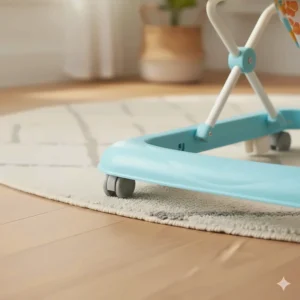
Wheel Quality: Silent rubber wheels protect floors and reduce noise pollution. Ball-bearing wheels on wooden push walkers ensure smooth rolling even on carpet.
Entertainment vs. Development
The line between engagement and overstimulation varies by baby. Some thrive with lights, sounds, and multiple activities. Others become overwhelmed. The Fisher-Price Smart Stages system adapts entertainment levels, while the Bautia Wooden Walker provides screen-free, classic play options.
Consider: does the walker encourage movement and exploration, or does it distract babies with sedentary entertainment? The best developmental milestone support comes from walkers that motivate physical activity rather than passive viewing.
Benefits vs. Traditional Alternatives Comparison
| Feature | Modern Multi-Mode Walkers | Traditional Seated Walkers | Push Walkers | Stationary Activity Centers |
|---|---|---|---|---|
| Safety Profile | Moderate (varies by mode) | Low (AAP warns against) | High (when age-appropriate) | Very High |
| Developmental Support | Good (multiple modes) | Poor (may delay walking) | Excellent (encourages natural movement) | Good (strengthens standing) |
| Mobility Range | Variable by mode | High (safety concern) | Controlled by baby | None |
| Age Suitability | 6-18 months typically | 6+ months (not recommended) | 9+ months ideal | 4-12 months |
| Price Range | $65-100 | $50-70 | $40-70 | $45-80 |
| Floor Space Needed | Moderate-Large | Moderate | Small | Moderate |
| Portability | Fair (most fold) | Good (folds flat) | Excellent | Fair |
Tips for Safe Walker Use (If You Choose to Use One)
Despite AAP recommendations against mobile walkers, many parents still choose to use them. If you’re in this group, these precautions are absolutely critical:
Environment Setup
Block all stairways with secure gates that mount to walls, not pressure-mounted versions that babies in walkers can crash through. Remove the walker before opening any doors that lead to stairs—gates alone aren’t foolproof.
Clear the walking area of cords, rugs, and obstacles. Babies in walkers move too fast to navigate around items that might cause tipping or entanglement.
Lower water heater temperature to 120°F or below to reduce burn severity if baby reaches a hot water source. Keep all hot liquids, foods, and appliances far back from counter edges—remember, walkers add 8-12 inches to your baby’s reach.
Constant Supervision
“Constant” truly means never looking away. In the time it takes to check your phone or stir a pot, a baby in a walker can travel across a room and into danger. The American Academy of Pediatrics notes that most walker injuries occur while adults are watching—babies simply move faster than adult reaction times.
Never leave a baby in a walker when you need to answer the door, use the bathroom, or tend to another task. Take baby out first. The few seconds of convenience aren’t worth the risk.
Time Limitations
Limit walker sessions to 15-20 minutes, twice daily maximum. Extended walker time reduces floor play that builds essential motor skills. Babies learn to walk through crawling, pulling up, cruising along furniture, and taking supported steps—not through sitting in a wheeled seat.
Balance any walker time with plenty of tummy time, floor play, and natural movement opportunities. Your baby’s gross motor development depends on varied physical experiences, not a single device.
Regular Safety Checks
Inspect walkers before each use. Check for loose screws, damaged wheels, torn fabric, or compromised safety mechanisms. Even slight damage can transform a relatively safe walker into a hazard.
Ensure height settings remain proper as baby grows. Feet should rest flat on the floor with slight knee bend. Toes barely touching (tiptoe position) or legs fully extended both indicate incorrect height that could impair development or cause instability.
Price Range and Value Analysis
| Price Category | Range | What You Get | Best For | Example Products |
|---|---|---|---|---|
| Budget | $40-55 | Basic push walkers, simple activity centers, minimal features | First-time buyers testing walker interest | Bautia Wooden Walker ($45-60) |
| Mid-Range | $55-75 | Electronic features, multi-height adjustment, better build quality | Most families seeking balance of features and affordability | Fisher-Price Puppy ($40-50), Boyro 5-in-1 ($65-80) |
| Premium | $75-100+ | Multiple modes, extensive safety features, extended age range, premium materials | Parents wanting maximum versatility and longevity | BABY JOY 6-in-1 ($70-90), INFANS 6-in-1 ($85-100) |
Budget options work well for babies approaching walking age who need minimal support time. The Bautia Wooden Walker provides excellent value through quality construction that lasts through multiple children.
Mid-range products offer the sweet spot for most families. The Fisher-Price line balances engaging features with reasonable pricing, backed by a trusted brand’s safety record and customer service.
Premium walkers justify higher costs through versatility. When one product serves as walker, bouncer, rocker, activity center, and feeding chair, you’re saving money compared to buying each separately. Calculate total cost of alternatives before dismissing premium options.
Consider resale value too. Quality wooden walkers maintain value, while premium branded products resell well on secondhand markets. That $90 walker might cost $50 net after reselling when done, while a $40 budget walker has minimal resale prospects.
Common Mistakes to Avoid When Buying Baby Walkers
Prioritizing Entertainment Over Safety
Flashy lights and 50 songs mean nothing if the walker lacks fundamental safety features. Always check for anti-slip mechanisms, stable base design, and ASTM certification before evaluating entertainment value.
I’ve seen parents choose walkers based entirely on which plays the catchiest tune, only to regret it when realizing the wheels move dangerously fast or the base tips easily. Entertainment matters, but safety isn’t negotiable.
Buying Too Early
A baby walker for 6 month old isn’t appropriate for a baby who can’t sit independently. Walkers require trunk control and back strength that many 6-month-olds haven’t developed. Using walkers before babies are ready can impede natural development.
Watch your baby, not the calendar. When they pull to standing consistently and cruise along furniture, they’re ready for a push walker. Before that milestone, stationary activity centers serve them better.
Ignoring Size and Storage
That huge multi-function walker looks amazing online but might overwhelm your actual living space. Measure your area and doorways before purchasing. Check folded dimensions if storage space is limited.
The BABY JOY 6-in-1 folds easily but still requires adequate storage space. Smaller apartments might better suit compact push walkers like the Bautia Wooden model.
Skipping Safety Research
Reading Amazon reviews reveals real-world safety issues that product descriptions omit. Look for comments about tipping, speed control problems, or difficulty with safety features. Parents sharing injury near-misses provide invaluable warnings.
Cross-reference with Consumer Reports, recall databases, and AAP resources. Five minutes of research can prevent injuries that impact your baby’s health for years.
Maintenance and Care Tips
Regular Cleaning Protocols
Food crumbs, drool, and mystery sticky spots accumulate quickly on walkers. Weekly deep cleans prevent bacterial growth and maintain hygiene:
Remove fabric components and machine wash according to manufacturer instructions (typically cold water, gentle cycle). Air dry rather than using high heat that can damage elastic or cause shrinkage.
Wipe plastic and metal parts with baby-safe disinfectant or soap and water solution. Avoid harsh chemicals that might leave residues touching baby’s skin or mouth.
Clean wheel treads regularly—accumulated debris affects traction and can damage floors. Use a damp cloth or brush to remove hair, dust, and gunk from wheel mechanisms.
Proper Storage
When not in use, store walkers away from direct sunlight and moisture. UV exposure degrades plastic, while moisture promotes mold growth in fabric components.
Foldable models should be stored in their collapsed state to save space and reduce dust accumulation. Ensure safety latches engage properly so walkers don’t accidentally unfold.
For families with multiple children, storing walkers between babies requires extra care. Check thoroughly for wear, damage, or degradation before reintroducing after months in storage. Safety standards evolve—walkers that were acceptable five years ago might not meet current guidelines.
Knowing When to Retire
Replace walkers immediately after any incident involving product failure, even if baby wasn’t injured. A wheel that seized, a height adjustment that slipped, or a seat that tore indicates potential safety compromise.
Follow manufacturer age and weight limits religiously. A walker rated for babies up to 26 pounds isn’t safe for a 30-pound toddler, regardless of how well they fit physically.
Watch for recalls. Consumer Product Safety Commission maintains updated recall lists. Register your walker for recall notifications when purchasing.
❓ Frequently Asked Questions
❓ Can a 6 month old use a baby walker safely?
❓ Do baby walkers actually help babies learn to walk faster?
❓ What age should you stop using a baby walker?
❓ Are push walkers better than seated walkers for development?
❓ How long should babies spend in walkers each day?
Conclusion: Making the Best Choice for Your Baby’s Development
Choosing a baby walker for 6 month old requires balancing your baby’s developmental needs, safety priorities, and family lifestyle. While the market offers numerous options—from traditional seated walkers to modern multi-function systems—not all choices equally support healthy development.
The safest recommendations center on stationary activity centers for younger babies (4-8 months) transitioning to push walkers once babies pull to standing independently (9+ months). Products like the Fisher-Price Laugh & Learn Smart Stages Puppy Walker and Bautia Wooden Baby Walker exemplify this approach, encouraging natural movement patterns without the hazards associated with traditional wheeled walkers.
If opting for multi-mode walkers, prioritize models with robust safety features: anti-slip mechanisms, stable bases, speed control, and ASTM certification. The BABY JOY 6-in-1 and INFANS 6-in-1 demonstrate how versatile products can support multiple developmental stages while maintaining safety standards.
Remember, no walker replaces the developmental value of supervised floor time. Your baby needs opportunities to strengthen muscles through crawling, practice balance while cruising furniture, and build confidence through repeated attempts at independent steps. Walkers serve as supplemental tools, not primary developmental drivers.
Ultimately, the “best” baby walker for early walkers is the one that matches your baby’s current abilities, prioritizes safety over entertainment, and supports—rather than shortcuts—their natural developmental progression. Whether you choose a beginner mobility device with all the bells and whistles or a simple wooden push walker, your informed decision and attentive supervision make the real difference in your baby’s safe exploration and growth.
Recommended for You
- Best Baby Walker for Carpet 2026 – Expert Reviews & Safety Tips
- 7 Best Adjustable Height Baby Walkers 2026
- 7 Best Foldable Baby Walker Models in 2026: Safe & Space-Saving Picks
Disclaimer: This article contains affiliate links. If you purchase products through these links, we may earn a small commission at no additional cost to you.
✨ Found this helpful? Share it with your friends! 💬🤗
